REVIEW · ALICANTE
Alicante: Via Ferrata Hike in Redovan
Book on GetYourGuide →Operated by Jose Francisco Carbonell Oltra · Bookable on GetYourGuide
Steel cables, sea views, and big fun.
This Via Ferrata hike in Redovan turns a mountain walk into a hands-on climbing experience, built around a route that runs more than 700 meters and splits into two zones. You’ll be led along cables, ladders, and suspension bridges with the guidance and safety gear that keep the whole thing feeling bold but controlled.
I especially like two things: first, the choice between K2 for a gentler start (great for families) and K4 for a more demanding finish. Second, I love how the work on the cables pays off with big Vega Baja and coast views, including a high suspension crossing.
One thing to think about: the K4 level is not for everyone. It involves very narrow aerial passages and vertical climbing, plus balance-demanding tension cables and logs/rocks you have to overcome.
In This Review
- Key things to know before you go
- Redovan Via Ferrata: why this hike feels different in the best way
- Meeting at La Pancha and getting geared up (Jose Francisco Carbonell Oltra leads the way)
- The K2 zone first: the confidence-builder that works for families
- The K4 zone: 330 meters, four suspension bridges, and the hinge moment
- Views over the Vega Baja and the coast: when to look up
- Safety and fitness reality check: what you should be ready for
- Price and value: is $77 worth it?
- Who should book this Alicante-to-Redovan Via Ferrata
- Should you book this tour?
- FAQ
- FAQ
- Where is the meeting point for the Alicante: Via Ferrata Hike in Redovan?
- How long is the Via Ferrata hike?
- How big is the group?
- What difficulty options are available on this route?
- What is included in the price?
- What should I bring with me?
- Is the K4 zone for beginners?
- Who should not join this activity?
Key things to know before you go
- Two difficulty zones (K2 and K4) let you match the hike to your comfort level
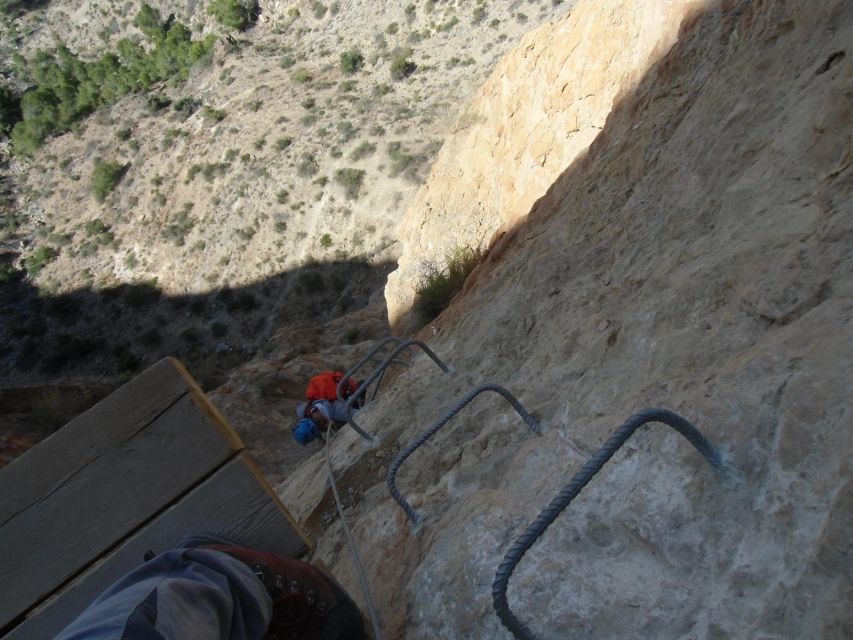
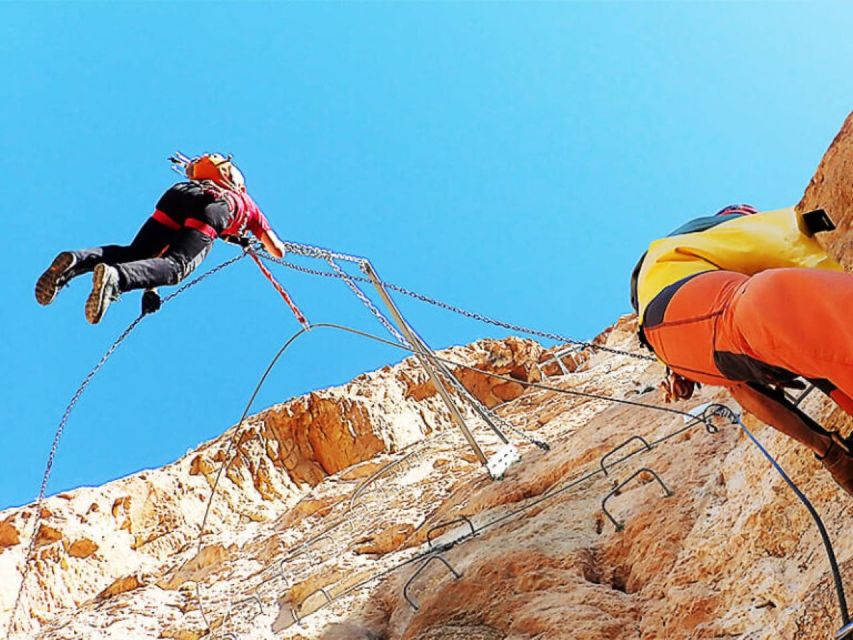
- A “game of the hinge” is part of the fun, including a section that leaves you about 90 meters up and separated from the wall
- K4 is all about suspension bridges, with 330 meters of climbing and four bridges of wood and cable
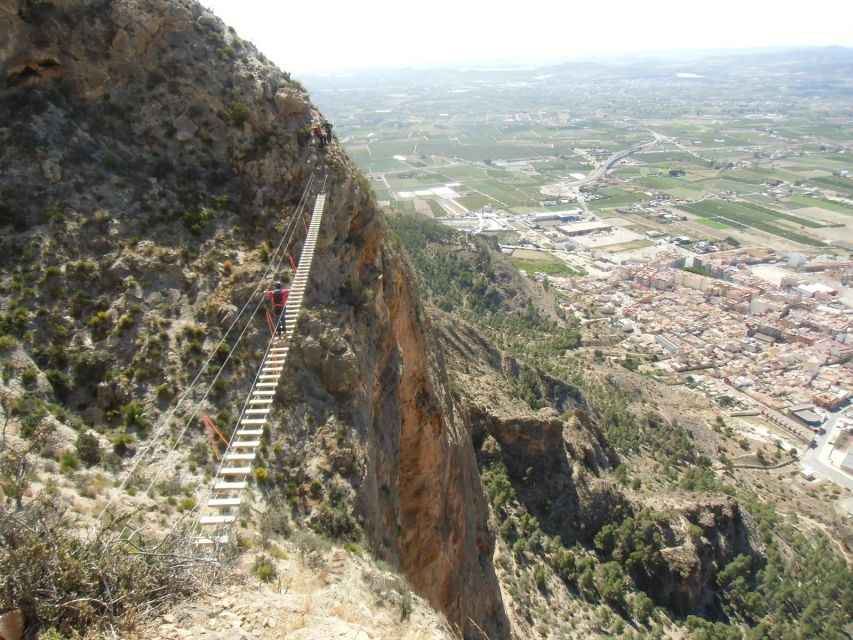
- The views are the payoff, including a 42-meter suspension bridge about 135 meters above the ground
- Small groups (up to 10) mean you get real guidance, not just a quick handoff
Redovan Via Ferrata: why this hike feels different in the best way
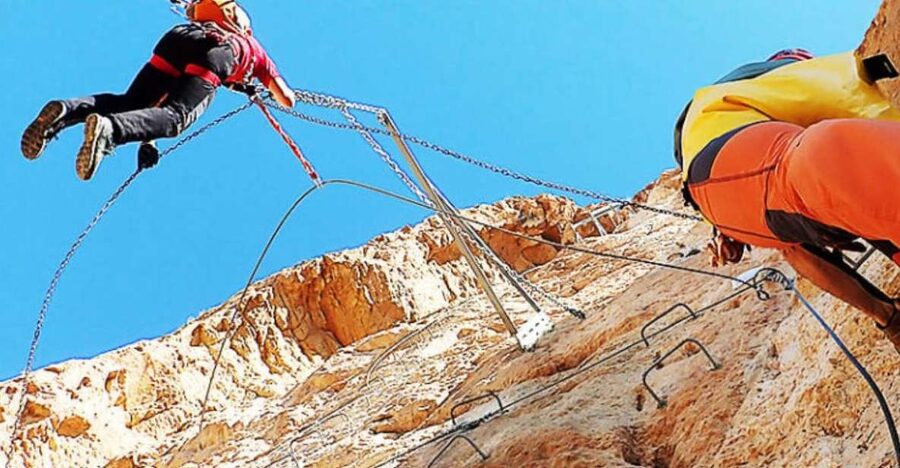
Alicante has plenty of coastal scenery, but this is the kind of outing where the landscape turns practical. You’re not just looking at a view from a trail. You’re moving through the terrain using cables and fixed aids, which changes your body awareness fast—in a good way.
The “game of the hinge” moment is what turns it from exercise into a story you’ll remember. One part lifts you around 90 meters high and shifts you away from the wall, so it feels exposed in the fun way, not the unsafe way. The guides make the difference here by keeping you confident with clear instructions while you’re clipped in and working your way across.
You’ll also enjoy that the route is designed to be approachable. The first zone is set up for beginners (especially families), while the harder zone gives you real challenge if you want it.
You can also read our reviews of more tours and experiences in Alicante.
Meeting at La Pancha and getting geared up (Jose Francisco Carbonell Oltra leads the way)
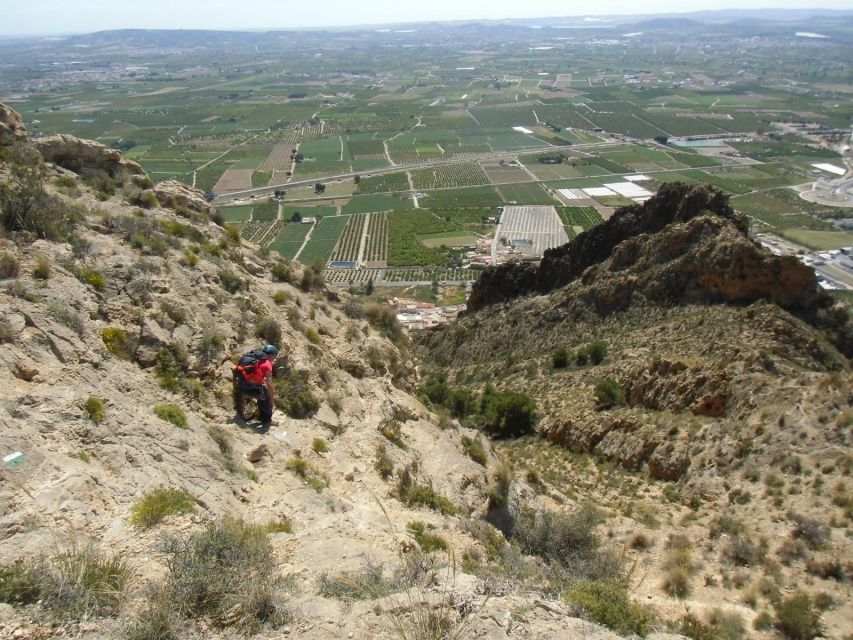
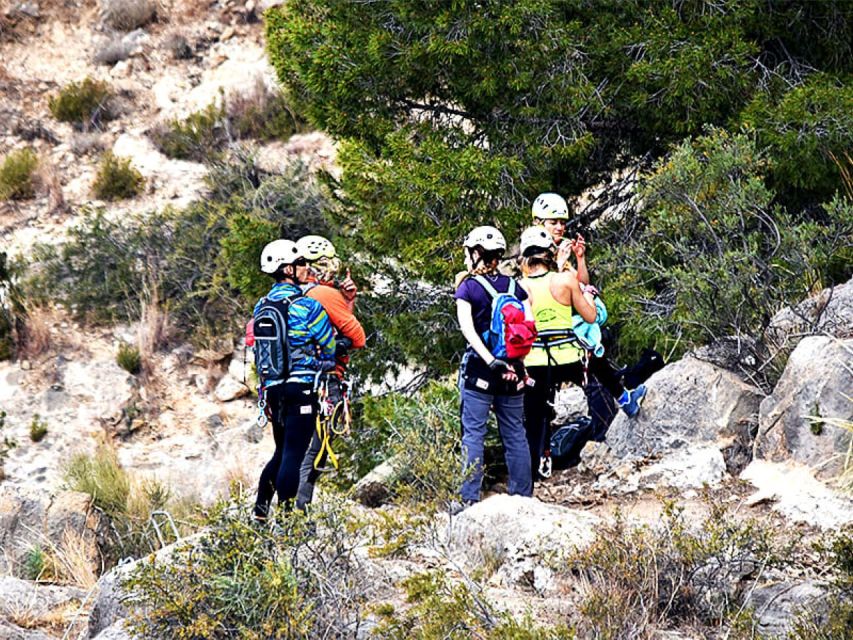
Your meeting point is Parking La Pancha, and your guide will be holding a visible sign. From there, you’ll get set up with what you need for the climb: a guide, safety equipment rental, insurance, and photos are included.
Guide-led time matters on a Via Ferrata. It’s not only about safety gear; it’s about knowing how to use the route. The group size is capped at 10, so the guide can actually watch footing and stance, and adjust when someone needs help choosing a line or timing a transition between cables, ladders, and bridges.
One small but useful point from experience on this kind of activity: I strongly recommend bringing hiking-friendly gloves (or buying them locally) if you have them. A recent participant pointed out that climbing gloves help a lot with the strain on your hands, especially when you’re gripping cables and moving your body through tight sections.
The K2 zone first: the confidence-builder that works for families
The route splits into two zones of different difficulty, covering more than 700 meters total. You can choose your difficulty level, but the overall flow is a classic win: start with the K2 zone and decide from there if you want to continue.
K2 is described as especially good for children and families. That matters because the hike doesn’t feel like a trick. Instead, you get to learn the rhythm: clip, move to the next section, keep your balance on cable segments, and practice crossing points like ladders and suspension sections while someone’s checking in.
What I like about K2 is that it treats learning as part of the experience. You’re not just “passing through.” You’re gaining competence as you go, so when you reach the option to push on, it feels earned rather than scary.
Practical tip: wear proper hiking shoes. The activity assumes you’ll have reliable traction and stable foot placement while you’re on mixed surfaces and transitioning between fixed elements.
The K4 zone: 330 meters, four suspension bridges, and the hinge moment
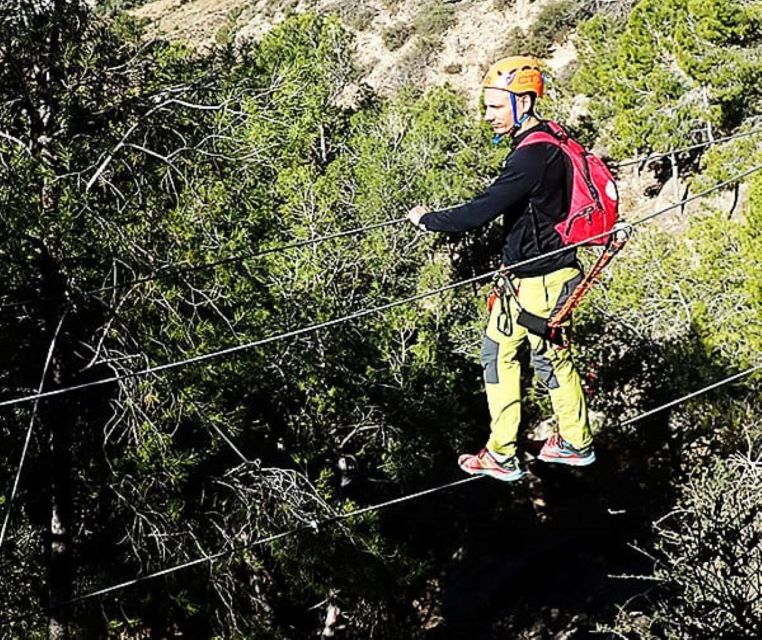
If you’re up for challenge, head to the K4 zone. This is the serious side of the hike: it’s a 330-meter section with vertical climbs and narrow aerial passages that demand concentration. You’re also moving over and around logs and rocks that you must overcome.
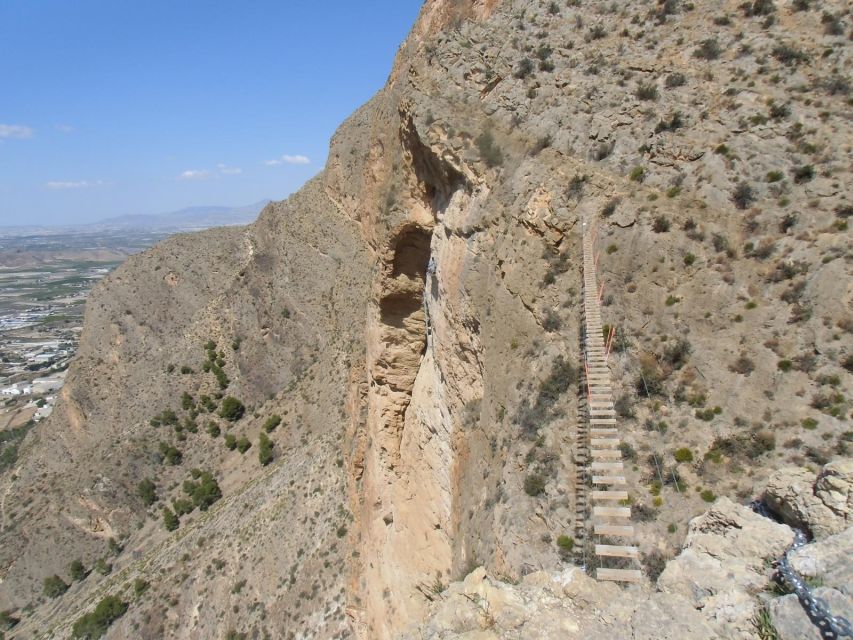
K4 also includes four suspension bridges made of wood and cable. Suspension bridges are where you really feel the difference between “I can climb” and “I can stay steady while the bridge moves.” Expect tension cables too, which means you’re constantly balancing rather than just following a straight path.
And then there’s the part that people remember: the game of the hinge. This isn’t described as a random stunt—it’s part of what defines the K4 experience, designed to add that controlled adrenaline hit while you’re attached and guided.
Views start to stack up here. You’ll get a 42-meter suspension bridge crossing that’s about 135 meters above the ground, with the Vega Baja in view along with the wider sense of coast and sea.
If you have even mild doubts about heights, this is where you should be honest with yourself. The information specifically notes K4 involves passages that can feel unsafe if you lose focus, so don’t treat it like a casual extra.
Views over the Vega Baja and the coast: when to look up
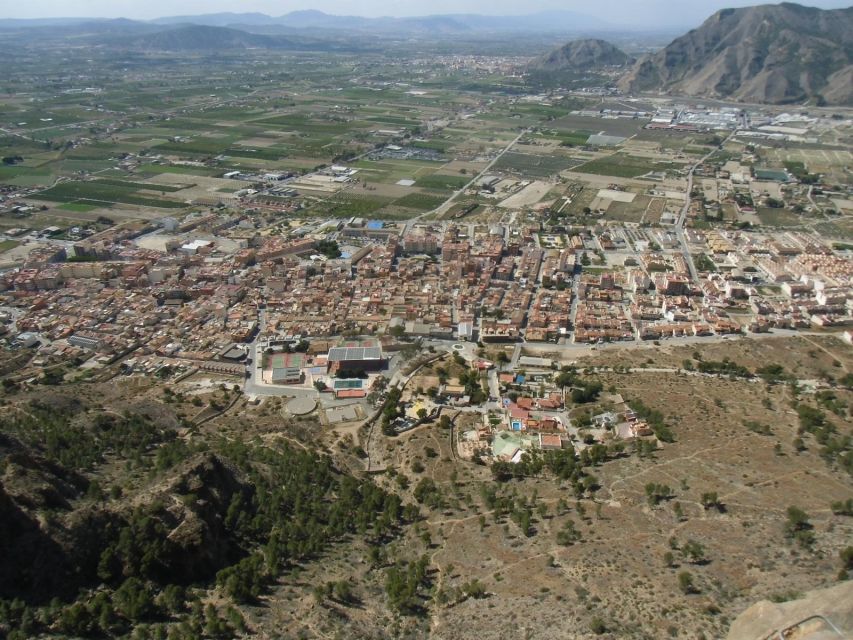
This Via Ferrata is built for sightlines. As you climb, you’re given repeated chances to look out—not just once, but during different stages of the route.
In the easier zone, the views still matter, because you’re already gaining altitude. That’s what makes K2 feel rewarding rather than purely instructional.
In K4, the scenery becomes the payoff you work for. You’re crossing tall suspension structures and moving across segments high enough that the Vega Baja and sea/coast feel close. You don’t need to search for photo spots; the route itself places you in positions where you naturally pause and look.
The guides also include photos, so you’ll have help capturing the big moments without needing to stop and fumble with your phone while you’re on cables. That’s a real quality-of-life win, especially when you’re learning and your attention is already split between balance and movement.
Safety and fitness reality check: what you should be ready for
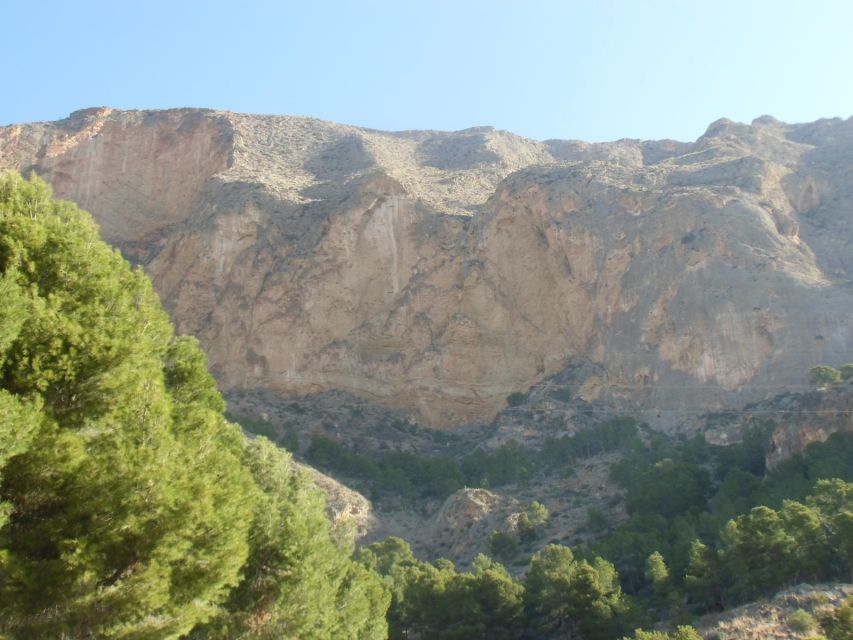
The hike is not described as extreme scrambling, but it is definitely not a stroll. You’ll traverse fixed features like cables, ladders, and suspension bridges, and your rental safety equipment is part of what keeps it manageable.
Before you go, check whether the activity is a mismatch for your body or comfort level. It is not suitable for:
- pregnant women
- people with mobility impairments
- people with vertigo
That last one is the big tell. K4 specifically involves very narrow aerial passages and balance-demanding segments, so even if you’re okay with heights on a normal viewpoint, the narrowness and exposure can still be a problem.
On the fitness side, you should be prepared for a sustained 5-hour outing. It’s a guided 5 hours total, and you’ll be active the whole time, including climbing segments and transitions. I’d also plan on the fact that focus is part of the workload. This is not just cardio; it’s attention.
Price and value: is $77 worth it?
At $77 per person for a roughly 5-hour guided experience, the value comes from what’s included rather than what’s left out.
You get:
- a guide
- safety equipment rental
- insurance
- photos
What you don’t get is food and drinks, so you’ll want to plan your timing so you can eat before and after. That’s the main trade-off.
When you compare it to booking a standalone climbing session, the built-in safety gear and insurance make this feel like a straightforward way to try Via Ferrata without turning your day into logistics. Also, the small group (max 10) reduces the “crowd pressure,” so the guide can help you keep moving smoothly.
If you enjoy guided activities where you learn by doing, this price is in the sweet spot. If you’re only curious and want something scenic with zero challenge, you might find this too hands-on.
Who should book this Alicante-to-Redovan Via Ferrata
Book it if you want:
- a guided first-time-friendly start with K2
- the option to level up to K4 for real challenge
- a fun, structured way to experience a Via Ferrata with suspension bridges and big views
- a day that feels active but not logistically heavy
It’s especially well suited for:
- families who want K2’s route design
- hikers with a bit of confidence who want more than a normal trail and are curious about aerial crossings
- people who like guided photos and clear instruction while they climb
Skip it if:
- heights and narrow exposed passages make you uneasy
- you have mobility limitations that would make climbing transitions unsafe
- vertigo is part of your health picture
Should you book this tour?
Yes, if you’re aiming for a guided adventure that blends learning, real altitude, and sea-and-coast scenery. I’d pick it when you want the chance to do K2 first and then decide on the K4 section based on how you feel in the moment.
I’d think twice if you’re uncertain about heights or if your day needs to be low-stress. In K4, balance and concentration aren’t optional.
If you do book, come prepared with hiking shoes, water, and weather-appropriate clothing. Add gloves if you have them. And when you reach the suspension bridges, take one second to breathe and reset—this activity rewards calm movement more than speed.
FAQ
FAQ
Where is the meeting point for the Alicante: Via Ferrata Hike in Redovan?
You meet your guide at Parking La Pancha. The guide will be holding a visible sign.
How long is the Via Ferrata hike?
The total duration is 5 hours.
How big is the group?
The group is small, limited to 10 participants.
What difficulty options are available on this route?
The hike is graded into two zones: K2 and K4.
What is included in the price?
Included are a guide, safety equipment rental, insurance, and photos.
What should I bring with me?
Bring hiking shoes, water, and weather-appropriate clothing.
Is the K4 zone for beginners?
K4 includes vertical climbs, very narrow and unsafe aerial passages, and obstacles like logs and rocks. It’s also described as requiring constant balance and concentration due to tension cables and suspension bridge movement.
Who should not join this activity?
It is not suitable for pregnant women, people with mobility impairments, or people with vertigo.