REVIEW · EAST JAVA
From Bali or Banyuwangi: Ijen Crater Sunrise Hike
Book on GetYourGuide →Operated by Jogja Borobudur Tour & Travel · Bookable on GetYourGuide
Blue fire or not, Ijen at sunrise hits hard. I like how this trip stacks major crater views with a human moment: watching local miners haul sulfur rocks as part of their daily grind. I also like that you’re not left figuring it out alone—pickup, an Ijen guide, and the basic gear (like a headlamp and gas mask) are part of the plan. One possible drawback: the famous blue flames are not guaranteed, and on the first Friday of the month Ijen is closed to visitors.
If you’re coming from Bali, you’ll start in the evening and route through Ketapang Port in Banyuwangi before the hike day begins. If you’re starting from Banyuwangi, you begin very early—pickup around 12:30 AM—so you can be hiking before sunrise. You may meet guides such as Sena, Malik, Maluk, or Galang, and drivers like Ipung, based on past guests’ experiences, so the tone can feel friendly and well looked-after.
In This Review
- Key Points You’ll Care About
- Why This Ijen Sunrise Hike Feels So Special
- Bali vs Banyuwangi: How Your Start Time Shapes the Day
- The Dark Hike Up: What the Climb Really Demands
- The Crater Moment: Sunrise Over the Acid Lake
- Blue Fire: A Mystical Bonus You Should Treat Correctly
- Miners, Safety, and Why the Gas Mask Matters
- Price and Value: Is $74 a Fair Deal?
- After Sunrise: The Descent and Getting Back
- Who Should Book This Ijen Sunrise Hike?
- Should You Book This Ijen Sunrise Hike?
- FAQ
- How long is the Ijen Crater sunrise hike?
- What time do pickups happen from Bali and from Banyuwangi?
- Is the blue fire guaranteed?
- Is Ijen open every day?
- What’s included in the price?
- Is food included?
Key Points You’ll Care About
Sunrise at Ijen: You hike up in the dark to catch the view over Java’s largest acid lake.
Gear is handled for you: Headlamp and gas mask are included, plus a walking stick if needed.
Blue fire is a bonus, not a promise: It can be visible, but conditions and restrictions can change.
You’ll see sulfur mining up close: It’s one of the most grounded parts of the whole experience.
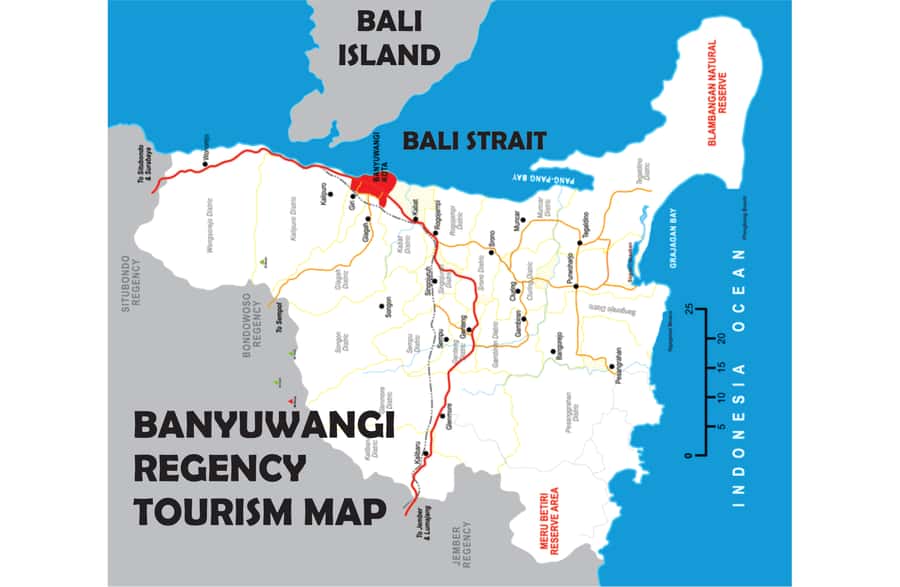
Logistics depend on where you start: Bali routes via Ketapang Port; Banyuwangi starts around 12:30 AM.
You’re paying for the package, not just the hike: Entrance, parking, guide, and transport add real value.
Why This Ijen Sunrise Hike Feels So Special
The Ijen Crater sunrise hike is popular for a reason: it combines big natural spectacle with something more grounded than a standard viewpoint. When you finally look down into the crater, you’re not just seeing a volcano—you’re seeing an active system, including the sulfur that miners have been living with for generations.
One reason this tour works well is the way it frames what you’re walking toward. You’re going up for the view over the acid lake, and you’re also going to the area where miners carry sulfur rocks. That human detail often sticks longer than the photos. If you happen to get an enthusiastic guide like Sena, Malik, Maluk, or Galang, you can also get real context on what you’re seeing—not just where to stand for the best angle.
That said, you need to come with the right expectations. The biggest “wow” item—blue fire—doesn’t come with a guarantee. Even when conditions are good, government rules or other factors can affect access or visibility. This is why I treat blue fire as a bonus and not the core reason to go.
Bali vs Banyuwangi: How Your Start Time Shapes the Day
Your experience depends a lot on whether you’re picked up in Bali or in Banyuwangi.
From Bali, the plan starts the evening before. You travel to Ketapang Port in Banyuwangi, use the time in a lounge area, then meet your team for the next leg toward Ijen Volcano. That means you’re doing a travel-heavy start, but it can feel smoother than trying to squeeze everything into one frantic early morning. You’ll also have a ferry ticket included as part of the Bali option.
From Banyuwangi, the timing is simpler but tougher. Pickup from your accommodation is around 12:30 AM, then you head to the volcano to begin hiking. It’s the classic midnight start: you’ll be walking in the dark, relying on headlamps, and moving with a purpose because you’re chasing sunrise.
Either way, the tour duration is listed as 8–15 hours, and your return time reflects where you started. If you’re staying in Banyuwangi, you’ll get back around 9:00 AM. If you’re heading back to Bali, you return to your accommodation in the afternoon.
The Dark Hike Up: What the Climb Really Demands
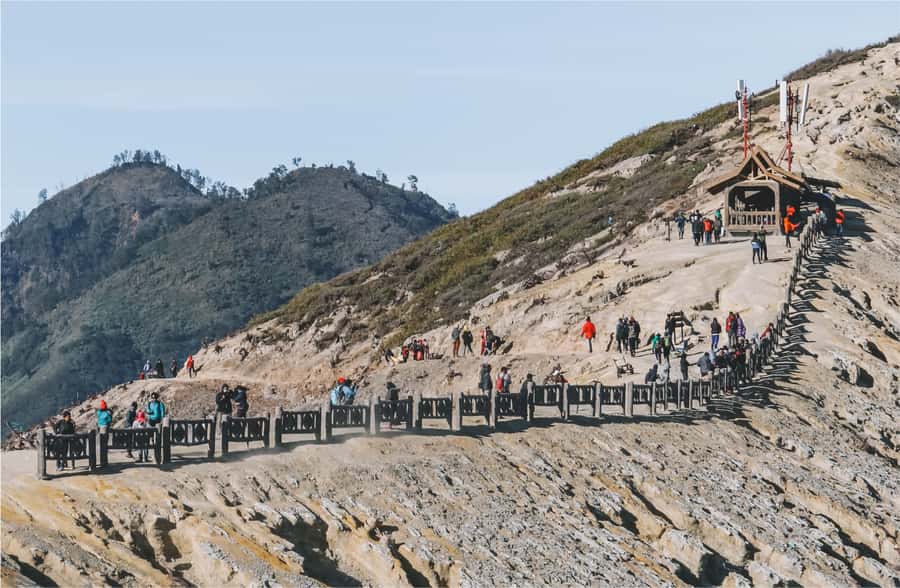
The hike portion is where you feel the tradeoff. This is not a short stroll. You’ll do about 1.5–2 hours up to the Ijen Crater viewpoint, then you’ll trek down and return toward the parking area after sunrise.
The good news is that the essential tools are included. You get a headlamp for the dark sections, plus a gas mask (important at Ijen because of volcanic fumes). You can also get a walking stick if necessary, which helps on uneven footing—especially when you’re tired and it’s cold and dark outside.
From an enjoyment standpoint, the climb is best when you pace yourself. In practice, guides who prioritize safety tend to keep asking if you’re okay and whether you need pauses. That kind of attention matters on a steep, early-morning hike. Even better if you’re paired with someone like Sena, who reportedly checked in often, or guides who answer questions along the way and make the uphill time feel less mechanical.
One thing to plan for: you should be physically ready. If you do regular walking or exercise, you’ll enjoy the experience more. If you’re not, consider that some form of assistance (like trolley options) may exist, but it’s not something I’d count on as your main strategy—think of it as a contingency, not a guarantee.
The Crater Moment: Sunrise Over the Acid Lake
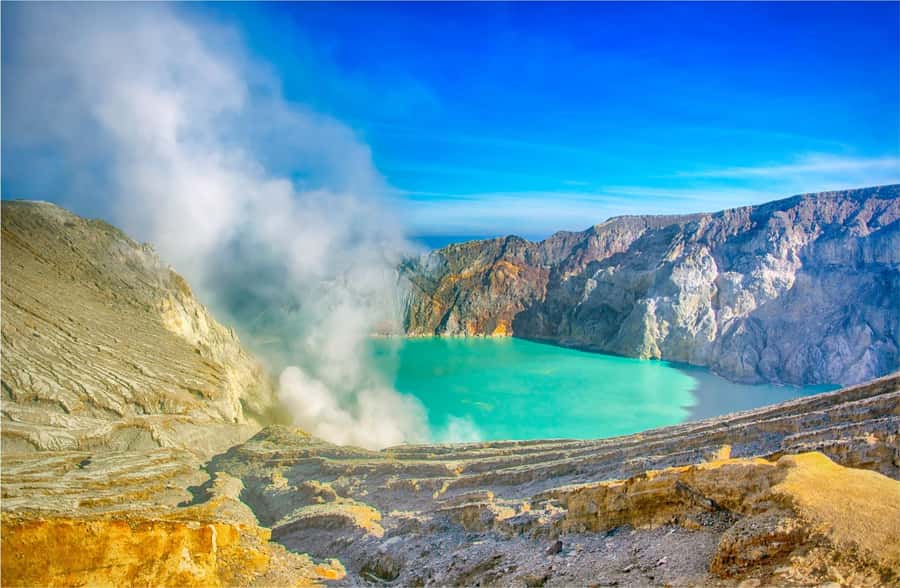
Once you reach the viewpoint, the experience shifts from effort to awe. Sunrise over Ijen means watching the colors change as the crater comes into view. You’re looking at the largest acid lake on Java Island, and that scale shows up fast when you finally stand above it.
I like how this portion rewards patience. Even if clouds roll in, being there early usually means you’re getting a front-row seat to the light shifting across the crater walls. If the sky cooperates, the whole scene feels like it has depth—far beyond what a single photo can capture.
This is also where your guide’s role becomes more than just timing. A good guide helps you avoid rushed viewing spots and get you positioned safely for the moment. Some guides are also known for leading visitors to quieter areas so you can enjoy the sunrise with less crowd pressure.
And then there’s the sulfur reality.
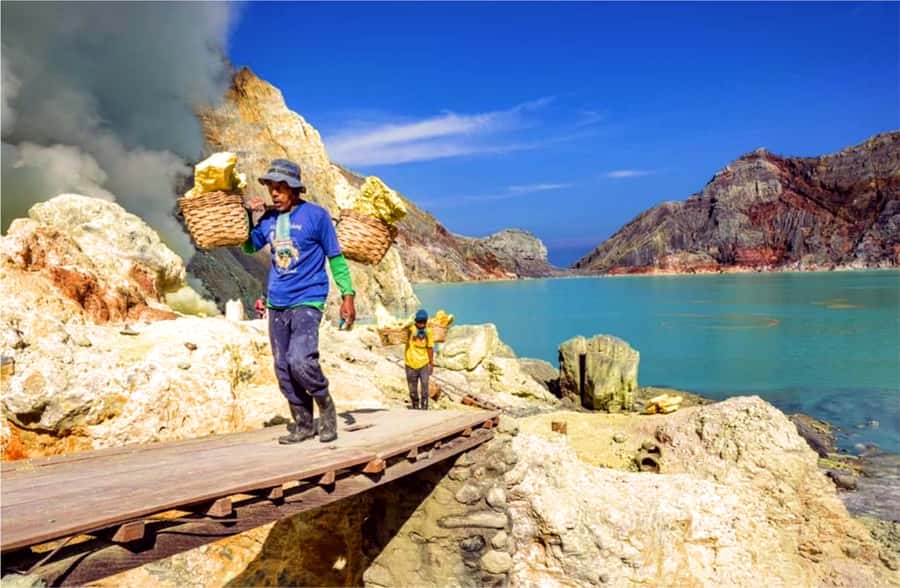
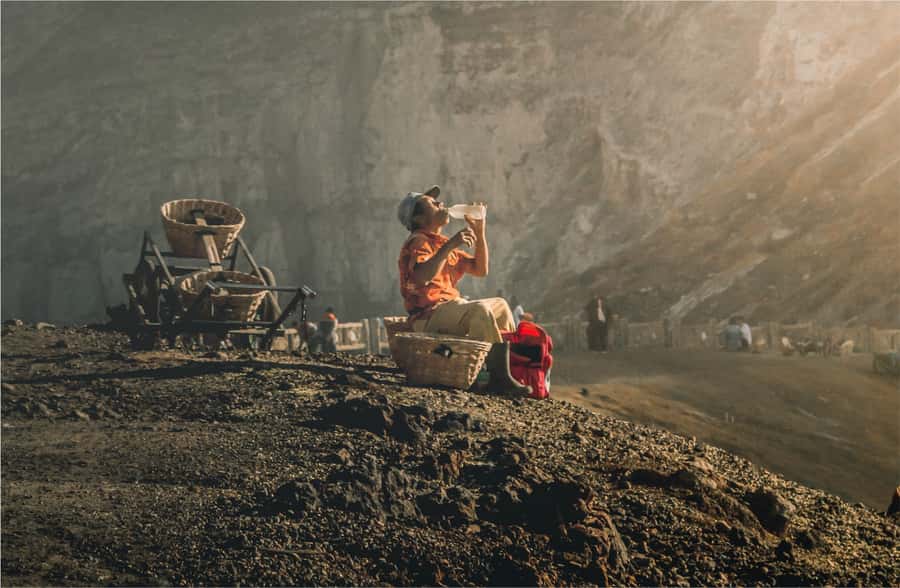
You’re not just watching a dramatic volcano—you’re seeing an area where people work. The miners carrying sulfur rocks is one of the most real-life parts of the tour. The contrast—watching ordinary labor against a world-class volcanic setting—is powerful.
Blue Fire: A Mystical Bonus You Should Treat Correctly
The blue fire at Ijen is famous, and it can be unforgettable when you see it. But it’s also the part you need to accept with flexibility.
The activity information is clear: blue flames are not guaranteed. Conditions change, and on certain days rules can limit what’s possible. There’s also a hard calendar item to know: Ijen is closed to visitors on the first Friday of every month.
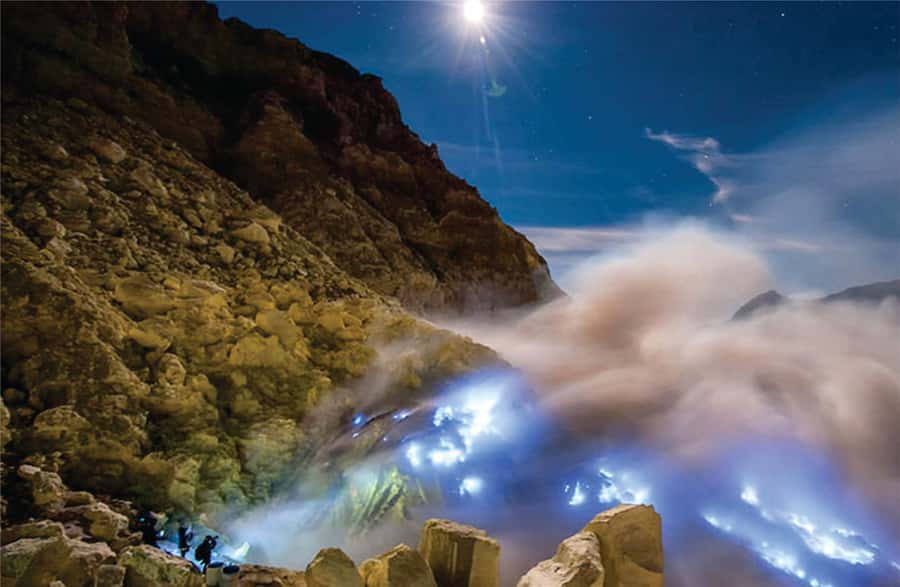
So here’s how I’d plan mentally. Go for the sunrise and crater view, plus the miners and sulfur context. If blue fire appears, it’s a bonus that feels almost unreal—people often describe it as mystical because the color and glow stand out against the darker surroundings.
If blue fire doesn’t show, you’re still getting a rare crater sunrise, and you’re seeing a live working landscape through the lens of everyday people. That shift in mindset will save you from disappointment and help you appreciate what’s still right there in front of you.
Miners, Safety, and Why the Gas Mask Matters
The miners are a key reason this hike feels different from a generic volcano tour. Sulfur rock isn’t background detail—it’s the core of their work. Watching miners carry loads through the environment helps you understand why people live with this volcano instead of treating it as something distant.
That human element also clarifies why the tour includes a gas mask. You’ll want to use it during the parts of the experience where volcanic fumes are relevant. I also like that the trip doesn’t pretend the crater area is a casual picnic zone. It’s a working, active environment, so the gear is there for a reason.
Safety doesn’t just come from equipment. It comes from having a local guide who knows the route and keeps you moving at a workable pace. In past experiences, guides like Sena or Malik have been described as very safety-focused, checking frequently and adjusting as needed.
One more practical note: this tour is not suitable for everyone. It’s listed as not appropriate for pregnant women, and for people with back problems, heart problems, vertigo, or respiratory issues. If any of these apply, don’t treat this like a “maybe” trip—skip it or talk to a medical professional first.
Price and Value: Is $74 a Fair Deal?
At $74 per person with a listed duration of 8–15 hours, this is one of those prices where value depends on what’s included.
Here’s what you get in the basic package:
- Hotel pickup and drop-off
- Local guide at Ijen
- Parking fee and entrance fee
- Gas mask, headlamp, and a walking stick if necessary
- If you start in Bali: a ferry ticket is included
- Driver with English language support is part of the setup
- Important: no food or drink is included
So you’re not just paying for the climb. You’re paying for transportation coordination, access fees, and the gear that matters for comfort and safety. If you tried to DIY it, the cost often creeps up once you add transport, guide time, and entry/parking. In that sense, the price can make sense—especially if you want things handled without stress.
Where the price can feel frustrating is if blue fire is a major goal and you don’t see it. Since it’s not guaranteed, you’re buying the hike and the crater sunrise experience, not a guaranteed “blue fire show.” Also, while the tour lists English language support, there have been cases where language expectations weren’t met in practice—so if communication is crucial for you, consider that you might need patience or simpler expectations about explanations.
For $74, I’d say the best mindset is: this is a managed, early-morning nature-and-people experience. The value is highest when you’re open to the crater sunrise, the miners, and the possibility of blue fire as a bonus.
After Sunrise: The Descent and Getting Back
Once the sunrise moment is done, you’ll trek down and back to the parking lot. The itinerary keeps moving, which is normal for tours built around a sunrise window.
If you started in Banyuwangi, you’re scheduled to return to your hotel around 9:00 AM. If you started in Bali, you’ll get back later in the afternoon. That can feel like a long day—or two long blocks—depending on where you’re staying.
This is also where I’d pay attention to your energy level. The descent can be easier than the ascent in terms of steepness for some people, but it still takes effort on rocky ground. That’s another reason the walking stick option matters.
And since food and drink aren’t included, you’ll want to be ready for that gap. Even a simple plan like bringing snacks and water for before or after (depending on what you’re allowed/expect) can help you avoid feeling run down once the early start catches up.
Who Should Book This Ijen Sunrise Hike?
This tour is a strong fit if you:
- Want a sunrise crater experience with a guide and included gear
- Are curious about volcanic life beyond photos, including sulfur mining
- Can handle an early start and a steep, dark hike
It’s also a better choice if you value guidance and pacing—especially if you’d rather not guess your way through equipment and route decisions at night.
Skip it if you don’t meet the safety expectations. The official list is clear: it’s not suitable for people with back problems, heart problems, vertigo, respiratory issues, or pregnancy.
And if you’re traveling for the blue fire alone, I’d rethink your booking. Blue fire is a bonus and can be absent due to conditions or rules. You’ll still see a dramatic sunrise and an active crater environment, but you shouldn’t build your trip around that single moment.
Should You Book This Ijen Sunrise Hike?
Yes—if you want a guided, gear-supported way to experience Ijen at sunrise and you’re excited by both the crater view and the miners’ real work. The included pickup, guide, entry/parking, and equipment help justify the $74 price, especially for visitors who don’t want to manage logistics at midnight.
Before booking, decide two things: whether you can handle the dark, steep hike, and whether you’re okay with blue fire being optional. If you’re flexible on that point, this is one of the more meaningful ways to experience Ijen, because it’s not just scenery. It’s scenery with people working inside the story.
FAQ
How long is the Ijen Crater sunrise hike?
The total activity duration is listed as 8–15 hours. The hike itself to the crater viewpoint is about 1.5–2 hours one way, followed by a descent back toward the parking lot.
What time do pickups happen from Bali and from Banyuwangi?
From Banyuwangi, pickup from your accommodation is listed as 12:30 AM. For Bali, the tour starts in the evening, with travel toward Ketapang Port in Banyuwangi before continuing to Ijen.
Is the blue fire guaranteed?
No. The activity information says the blue flames are not guaranteed, and there can also be government-related restrictions.
Is Ijen open every day?
No. On the first Friday of the month, Ijen is closed to visitors.
What’s included in the price?
Included items are hotel pickup and drop-off, a local Ijen guide, parking fee, entrance fee, gas mask, headlamp, and walking stick if necessary. If you’re joining from Bali, a ferry ticket is also included.
Is food included?
No. Food or drink is not included, so you’ll want to plan for meals/snacks on your own.