REVIEW · SITKA
Guided Hike | TONGASS NATIONAL FOREST
Book on Viator →Operated by Sitka Walking Tours · Bookable on Viator
That rainforest hit right at the dock. This guided hike in Sitka is a fast way to learn Tongass National Forest flora and fauna without the usual get-lost stress. I also love that the group stays small (max 10), so you can ask real questions, not just listen. One thing to consider: it is more about plants, forest life, and local history than guaranteed big wildlife viewing.
The route layers Sitka’s past and present. You start with imperial-era storytelling at the Russian Bishop’s House, then pivot to fishing-town perspective near Crescent Harbor, and finish with a guided walk into the Tongass. It is ideal if you have limited time on port days and want a structured plan that still feels personal.
Trails are mostly gravel and fairly flat, but you choose your effort level. There’s an option into muskeg via a boardwalk, or a more rigorous climb route. If you come for dramatic mountain viewpoints, you may end up thinking the hike could feel a bit modest, depending on weather and which path you take.
In This Review
- Key highlights you’ll actually feel on the ground
- A 2-hour Tongass hike that fits a cruise port day
- Getting oriented fast: small group, mobile ticket, and local guide energy
- Stop 1: Russian Bishop’s House and the story behind Sitka’s change
- Stop 2: Crescent Harbor and the fishing-town viewpoint
- Stop 3: Seawalk Totem Pole and the walk along Lincoln St.
- Stop 4: Tongass National Forest trail choices—easy gravel, muskeg boardwalk, or a climb
- What’s included (and why it’s a smart Alaska setup)
- Wildlife expectations: beautiful forest life, not a guaranteed animal safari
- Trail comfort: shoes, rain, and how long you’ll be outside
- Guide differences you’ll notice: local storytelling and Q&A time
- End point flexibility: cruise shuttle or food trucks
- Price and value: $119 for a guided forest intro you can trust
- Who should book this hike in Tongass National Forest
- Should you book? My practical take
- FAQ
- How long is the Guided Hike in Tongass National Forest?
- Where does the tour start and where does it end?
- What’s the price per person?
- What is included in the tour price?
- Do I need to bring snacks or water?
- What fitness level do I need?
- What kind of trail should I expect?
- Is it offered in English, and are service animals allowed?
- What happens if weather is poor?
Key highlights you’ll actually feel on the ground
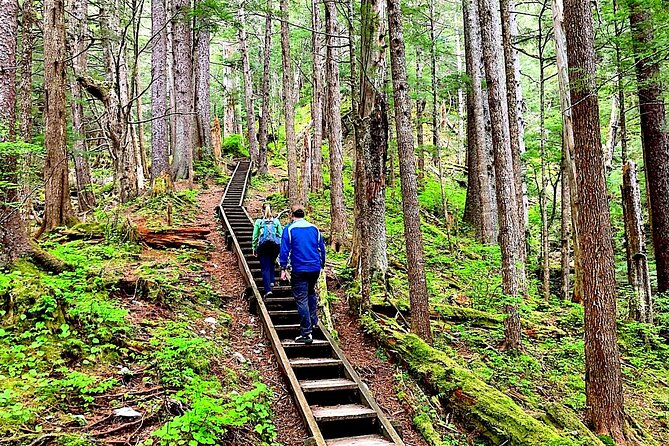
- Small-group pacing (up to 10 people) so questions stay on-topic and you’re not rushed.
- Russian Bishop’s House stop for the Russian Orthodox and colonization impact story tied to the forest.
- Crescent Harbor fishing perspective from a commercial/charter fisherman viewpoint.
- Tongass trail options: easy gravel base, boardwalk into muskeg, or a steeper climb route.
- Included snacks, water, sunscreen, and safety gear so you’re not scrambling in Sitka rain.
- Local guides with Sitka roots, like Brie, Audrey, Haley, John, and David, who connect ecology to everyday life.
A 2-hour Tongass hike that fits a cruise port day
If you’re on a schedule, this one makes sense. The whole outing runs about 2 hours and starts right at the cruise-shuttle world, so you can plan with less uncertainty. You’re not committing to half a day in a car, and you’re not choosing between nature or history—you get both.
The pace also feels built for people who want movement but not punishment. Expect a hike that’s long enough to feel like you left town, short enough to keep your energy for whatever’s next. Several guide-led experiences also get described as around 3.5 to 4 miles depending on route and group.
You can also read our reviews of more tours and experiences in Sitka.
Getting oriented fast: small group, mobile ticket, and local guide energy
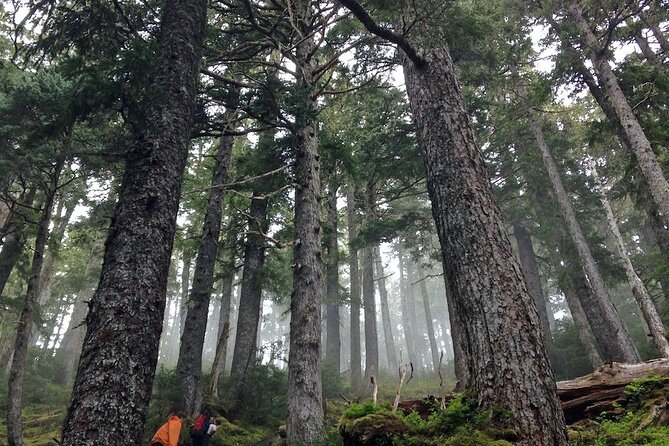
The biggest advantage here is mental. A local guide helps you follow the plan, stay on the right trail, and understand what you’re seeing instead of just walking through green. With a maximum of 10 travelers, you can slow down, ask what something is, and get answers that actually land.
A mobile ticket keeps the pre-hike part simple. And because the tour is offered in English with resident guides, you’re not translating plant names in your head while everyone else moves on.
You’ll also get practical support that matters in Alaska: snacks and bottled water, plus sunscreen and safety equipment with instruction. If you’ve ever arrived on a wet day and realized you forgot the essentials, you’ll appreciate that this one accounts for it.
Stop 1: Russian Bishop’s House and the story behind Sitka’s change
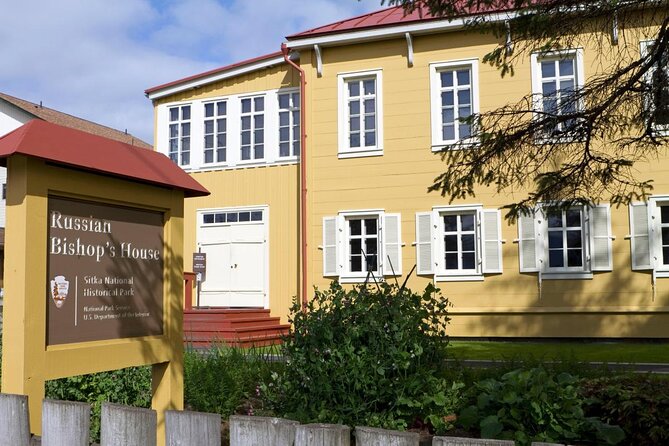
You begin at the Russian Bishop’s House area, where the hike turns into a history lesson you can walk alongside. The focus is imperial history and how Russian colonization affected this region, including the reach of the Russian Orthodox Church.
Why this matters: the Tongass doesn’t exist in a vacuum. When you hear how the land was used, settled, and reshaped, the plants you see later start to feel less random. You start reading the forest as part of a long human story.
A nice detail is that this first stop is short—about 5 minutes—so you don’t get stuck in a lecture before you even find the trail.
Stop 2: Crescent Harbor and the fishing-town viewpoint
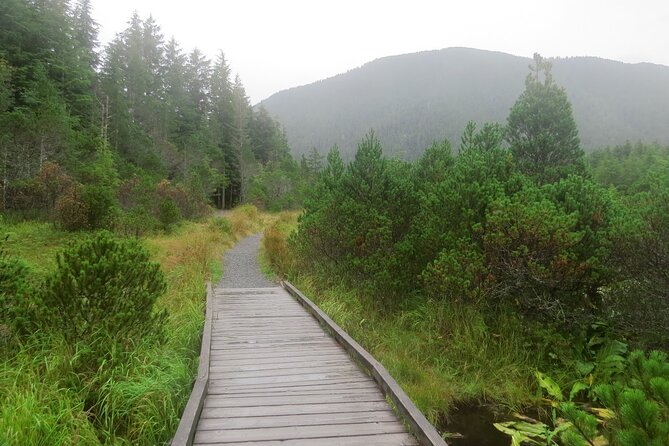
Next comes Crescent Harbor, and the tone shifts from history to work. Your guide explains the daily workings of an Alaskan fishing town through a commercial and charter fisherman perspective.
This is one of those stops that makes your later memories richer. When you understand how fishing life fits into the area, the harbor stops being just scenery and becomes context. Even if you’re not a seafood person, the rhythm of the town helps you understand why the coastline and the forest are both so important.
Again, it stays compact—about 5 minutes—so you’re not losing hiking time.
Stop 3: Seawalk Totem Pole and the walk along Lincoln St.
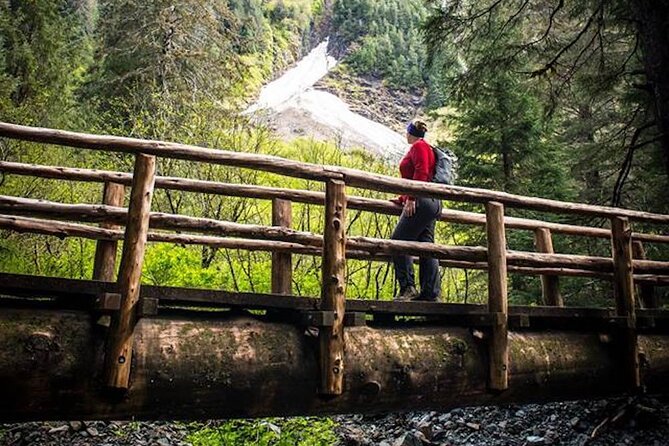
Before you hit the trailhead, you’ll connect the culture part of Sitka with the natural part. You’ll see the Tlingit Totem Pole on Sitka’s Seawalk and discuss what you’re looking at. Then the hike parallels Lincoln St., a straightforward transition from town textures to forest air.
Why this stop works: totems and street-level views keep the story grounded. You’re not only learning what’s in the trees; you’re also reminded of the people and traditions tied to the land.
If you have kids, this section can be a good mental bridge. One family review called out how the guide made it fun, including berries and general geography, which helps younger travelers stay engaged before the trail gets muddy and quiet.
Stop 4: Tongass National Forest trail choices—easy gravel, muskeg boardwalk, or a climb
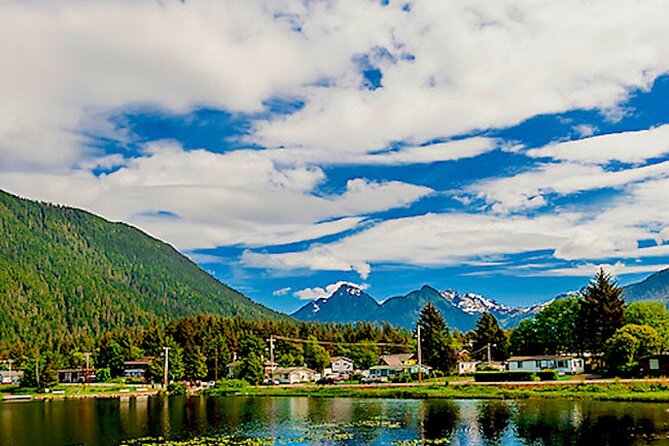
This is the main event. Once you’re in the Tongass National Forest, the group spends about 90 minutes hiking, starting with a base trail that is gravel and fairly flat. That’s a big deal for value, because it means you get meaningful time in the forest without needing advanced trail skills.
You’ll typically have two route options:
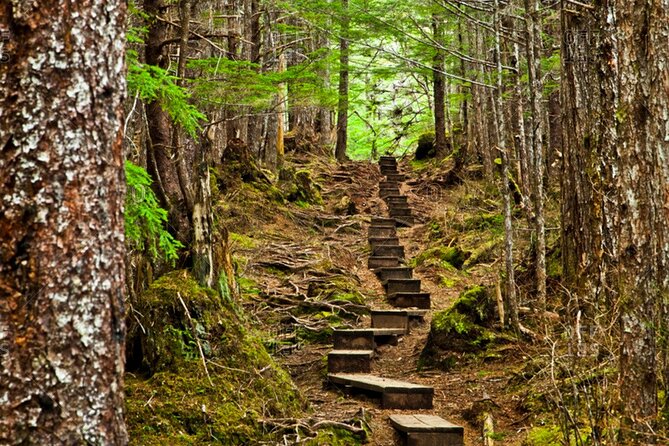
- Follow the boardwalk into the muskeg (the swampland area). This tends to feel more like walking through a carefully managed wetland zone than bushwhacking.
- Take the more rigorous route that climbs up into the mountains. This option is for people who want more effort and a stronger workout.
The “how hard is it” reality check: multiple reviews describe it as easy to moderate, with mild elevation change. One person even noted they wore Converse and had no problem, which tells me the base trail is approachable for a lot of casual footwear—assuming you’re comfortable on gravel and don’t mind wet sections when it rains.
Also, no matter which option you pick, you’ll have a guide who sets the pace for the group. Some reviews mention guides assessing skill level and adjusting accordingly. That matters because one slow or nervous person can ruin a hike for everyone unless someone is actively managing the group.
What’s included (and why it’s a smart Alaska setup)
This tour includes the small things that turn a pleasant outing into a stress-free one:
- Snacks and bottled water
- Safety equipment & instruction
- Sunscreen
- Trekking poles available at special request
- Rain pants available at special request
Here’s how I think about it: Alaska weather can flip fast. When rain shows up, you can either spend your time guarding your day or you can keep moving. Rain pants and safety instruction are not flashy, but they reduce the chance your tour turns into problem-solving.
You should still plan for yourself, though. The tour includes rain gear on request, not automatically. If you tend to get cold easily, pack layers and consider asking ahead about the rain pants and poles.
Wildlife expectations: beautiful forest life, not a guaranteed animal safari
Let’s be honest. If your top priority is wildlife sightings, keep expectations grounded. Some participants report no big animal viewing, and one review even flagged that the opportunity cost may be frustrating if you expected more wildlife.
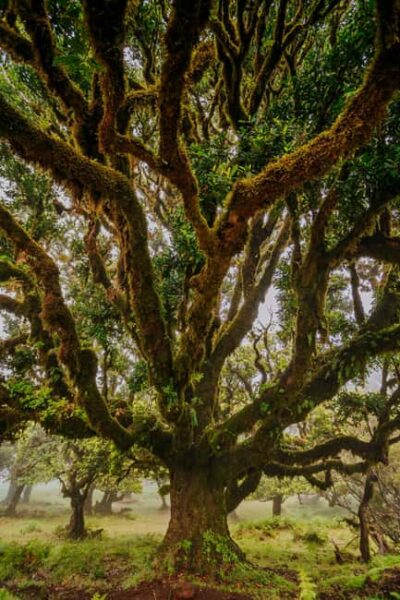
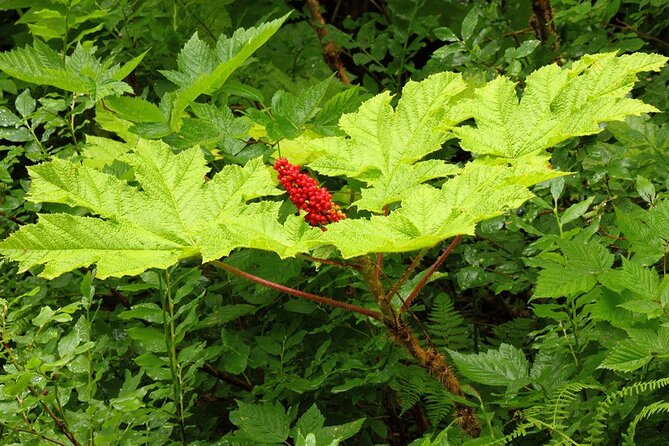
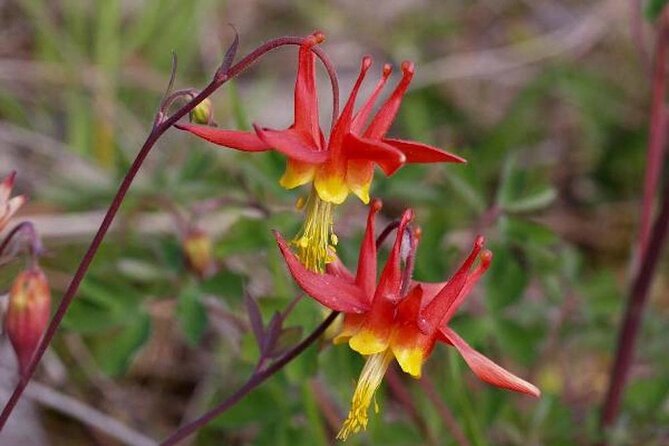
At the same time, the tour is not only a history-and-trail stroll. The focus is on flora and fauna, and that changes how you experience the forest. You might find yourself noticing bird calls, tree textures, understory plants, and the general ecosystem rhythm in a way that you’d miss on a solo walk.
There’s also a possible bonus. The provider notes that eagle, salmon, and sometimes sea lion sightings can happen on hikes. You should treat that as a maybe, not a promise. This is a nature education hike where the main reward is understanding what you’re surrounded by.
Trail comfort: shoes, rain, and how long you’ll be outside
Most of the walking is straightforward gravel, and the route options control how steep things feel. Several reviews describe the trail as easy and well maintained, with a relaxing afternoon pace.
A few practical tips:
- Bring footwear you trust on gravel and damp boardwalk conditions.
- If rain is likely (and in Sitka, it often is), plan for wet days. You can request rain pants, but you’re also wise to bring your own waterproof layer.
- If you’re bringing kids or anyone who wants frequent breaks, the small group format helps. Guides can go at the group’s pace instead of sprinting to a checklist.
Even if the trail is not “hard,” you’re still walking for about 90 minutes in the forest portion. Moderate fitness is what the tour asks for, and reviews back that up with easy-to-moderate descriptions.
Guide differences you’ll notice: local storytelling and Q&A time
This is one of those tours where the guide quality shows up fast. Many reviews praise guides with Sitka ties—Brie, Audrey, Haley, John, David, Juan and Jordan, plus others like Chris, Marshall, and Jason.
Common threads:
- Guides connect history to what’s nearby.
- They explain the trees, plants, and forest life in a way that feels interactive.
- They keep things safe from the start, which matters when the ground turns wet.
One solo traveler even described it as a welcome escape from the cruise-crowd noise—trading that for squirrels and quiet forest sounds. That’s not a hard guarantee, but it’s a good indicator of the vibe: quieter, slower, and more focused than a typical large group excursion.
End point flexibility: cruise shuttle or food trucks
At the end, the tour can finish where you’re most likely to continue your day. Depending on group desires, it ends either at the cruise shuttle pick-up site or at the main gathering of local food trucks.
That flexibility is underrated. When you’re on a port day, the worst outcome is returning to a meeting point and then needing a second plan from scratch. Here, the guide can help you align your hike with dinner and your next activity.
Price and value: $119 for a guided forest intro you can trust
At $119 per person for about 2 hours, you’re paying for more than walking. You’re paying for:
- A guide to interpret the forest
- Access to a structured route that prevents getting lost
- Included snacks, water, sunscreen, and safety guidance
- Multiple theme stops: Russian history, fishing-town life, Tlingit cultural context, and Tongass ecology
Is it the cheapest thing on your list? Probably not. But if your goal is a guided, time-efficient introduction that blends culture and nature, this can be good value—especially compared to self-guiding plus the time you’d spend figuring things out on short port days.
Also, it’s booked fairly far in advance on average. That often means people are choosing it for a reliable plan, not just a random walk.
Who should book this hike in Tongass National Forest
This is a strong fit for:
- Cruise passengers who want a short, structured nature experience
- First-timers to Sitka who want forest education + local history
- Families and groups that prefer an intimate setting with time for questions
- People who want an easy-to-moderate walk and don’t need a full-day commitment
You might choose something else if:
- You’re mainly chasing wildlife on the coast and want nonstop chances at animals
- You need big views on steep terrain right now (you can climb, but the base is still an approachable gravel walk)
Should you book? My practical take
If you want a calm, guided way to understand the Tongass while still staying inside a cruise-day window, I’d book this. The combination of small group, included comfort items, and layered stops makes it feel like a complete mini-experience, not just a trail.
One final gut-check: treat it as a forest learning hike, not a wildlife guarantee. If you come for plants, trees, local stories, and a well-paced walk, you’re likely to feel like it was money well spent.
FAQ
How long is the Guided Hike in Tongass National Forest?
It runs about 2 hours (approx.), with the forest hiking portion taking around 90 minutes.
Where does the tour start and where does it end?
It starts at Harrigan Centennial Hall Visitors Dock at Crescent Harbor, 330 Harbor Dr, Sitka, AK 99835, USA. It ends back at the meeting point, with an option to end at the cruise shuttle pick-up site or the local food truck gathering depending on the group.
What’s the price per person?
The price is $119.00 per person.
What is included in the tour price?
Included items are snacks, sunscreen, safety equipment and instruction, bottled water, and a resident guide. Trekking poles and rain pants are available at special request.
Do I need to bring snacks or water?
No. Snacks and bottled water are included.
What fitness level do I need?
Moderate physical fitness is recommended.
What kind of trail should I expect?
The base trail is gravel and fairly flat, with an option to follow a boardwalk into muskeg (swamplands) or take a more rigorous route that climbs into the mountains.
Is it offered in English, and are service animals allowed?
Yes, it is offered in English, and service animals are allowed.
What happens if weather is poor?
The experience requires good weather. If it’s canceled due to poor weather, you’ll be offered a different date or a full refund.