REVIEW · MEXICO
Hiking to Desert Palm Oases of San Carlos with a Biologist
Book on Viator →Operated by Educational adventure tours of San Carlos · Bookable on Viator
Desert oases hide cooler worlds. This 4.5-hour San Carlos hike with biologist Michael turns dry terrain into a living lesson, with stop one Canyon El Silencio geology and stop two El Ojo de Agua year-round spring. I love how he connects plants, cacti, insects, and geology into one story, and I love the small group size that keeps questions moving. The trade-off: this kind of desert hike is only possible in cooler months, and expect a few loose, rocky sections.
You start at Mariscos El Esterito at 1:00pm, then you’ll drive to the trailheads before you get walking. The day is paced so you hike, rest, and hike again, finishing with freshly prepared ceviche under a shady palapa.
The big win is feeling like you’re not just passing through scenery—you’re learning how the place works. And yes, the end meal is part of why this feels complete, not rushed.
In This Review
- Key things I’d book this for
- Canyon-and-spring hiking near San Carlos
- Meeting at Mariscos El Esterito and how the day is timed
- Canyon El Silencio: geology you can see and desert life you can spot
- El Ojo de Agua spring: mosses, ferns, palms, and coastline views
- Fresh ceviche under a shady palapa
- Price and value: $65 for two hikes plus a real meal
- Who this tour is best for (and who should skip)
- Should you book the Desert Palm Oases hike?
- FAQ
- Where do I meet for the tour?
- How long is the experience?
- Is the tour in English?
- What’s the hiking difficulty like?
- What will I see at El Ojo de Agua?
- Can I get a refund if the weather isn’t good?
Key things I’d book this for
- Michael’s naturalist style: he explains how the desert’s systems connect, in English and Spanish.
- Two standout habitats: canyon walls with desert life first, then a spring-fed mountainside with mosses and ferns.
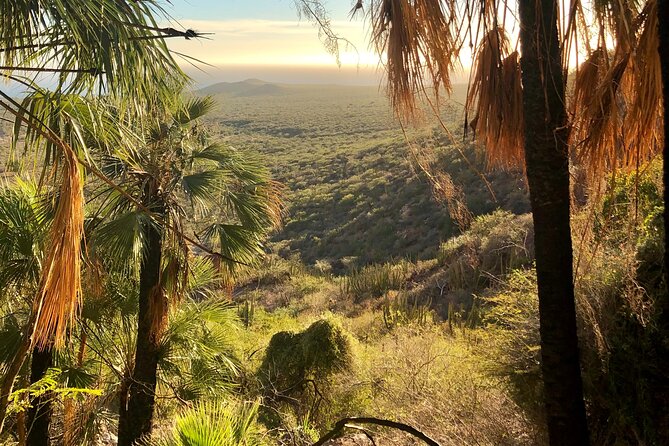
- Desert palm viewing: expect many Mexican fan palms plus big coastline views.
- Hands-on desert watching: cacti, insects, and small wildlife spotting is part of the point.
- A real end reward: freshly prepared fish ceviche served on tostadas with sauce choices.
- Moderate effort, not a stroll: loose rocks and occasional scrambling mean good boots help.
Canyon-and-spring hiking near San Carlos
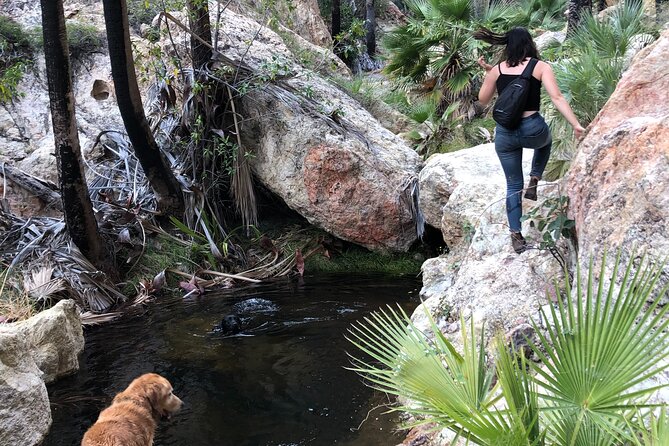
This is the kind of tour where the scenery looks stark at first glance, then changes the moment someone explains what you’re seeing. You’re hiking in a desert setting, but the real magic is how quickly it shifts from dry canyon terrain to a place that stays wet—El Ojo de Agua.
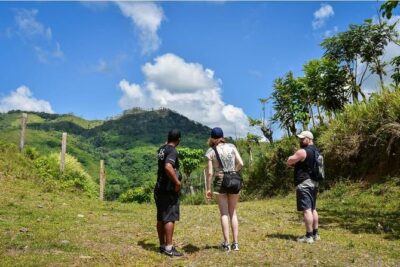
I like that the focus isn’t just photo stops. Michael is a biologist and naturalist who brings attention to how living things survive here, and how geology shapes the plants and animals you’ll notice. The hike also stays small: up to 8 people. That matters because you get actual answers, not just a group lecture.
One caution before you plan around it: the hike described here—especially the canyon hike—can be done only in the cooler months. If you’re visiting during peak heat, you should expect this kind of desert walking to be off limits or uncomfortable.
Meeting at Mariscos El Esterito and how the day is timed
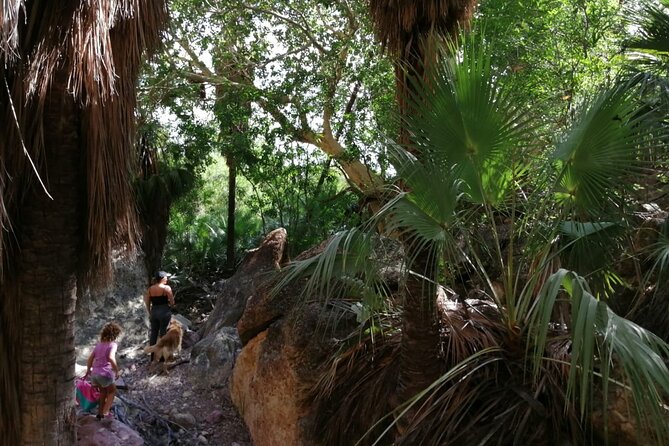
You meet at Mariscos El Esterito at 1:00pm. From there, you’ll leave the restaurant and drive in your own vehicles to the properties where the trailheads start. That structure is simple, but it does mean you’ll want to arrive on time and be ready for short drives between the two hikes.
The schedule is built around two hiking blocks:
- 1:30pm–2:30pm hike to Canyon El Silencio
- 3:00pm–4:30pm hike to the spring of El Ojo de Agua
Between them, you return to your vehicles and move to the next trailhead. The pace isn’t a marathon, but it’s long enough that you’ll feel it in your legs—especially because the walking can include scramble-y spots and loose rocks.
The tour ends back at the meeting point around 5:30pm, after you’ve eaten. If you’re the type who hates “tour-bus time” and prefers time on your feet with a guide, this format works well.
Also, it’s English-offered, and Michael communicates in both English and Spanish, which is handy if you’re bilingual or you just want clear answers the first time.
Canyon El Silencio: geology you can see and desert life you can spot
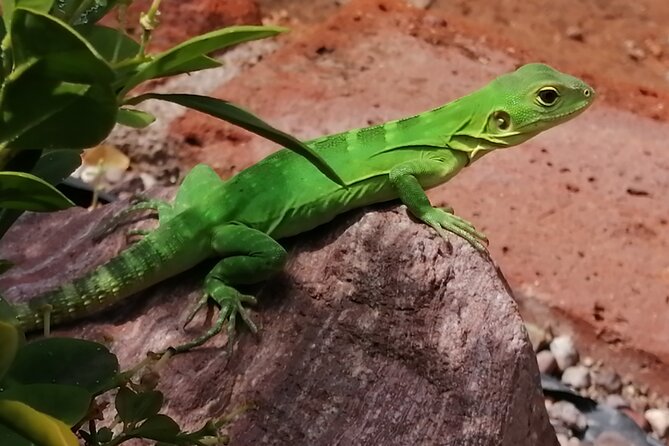
The first hike runs 1:30pm to 2:30pm, and it’s aimed at making you read the canyon. The canyon hike isn’t just walking in a gorge. You’re there to observe geology and look for unique desert plants and animals you may encounter.
This is where the guide’s role really shows. A good nature teacher makes you slow down and notice patterns: how rock shapes shade pockets, how plant growth responds to dryness, and how animal activity uses the terrain. With Michael, the talk tends to link things together—how plants, cacti, and insects relate to the physical features of the canyon.
Expect a moderate hike. One important practical note: loose rocks can make footing tricky. I’d plan on hiking boots rather than sneakers. Even if you’re fit, rocks can steal your confidence when you’re climbing or stepping around uneven ground.
If you’re worried about scrambling, here’s the reality: the canyon section can be a little more than level walking. You don’t need mountain-climbing gear, but you do need balance, steady steps, and a willingness to take the trail slower in the rough parts.
El Ojo de Agua spring: mosses, ferns, palms, and coastline views
After lunch-time heat peaks for many places, this second hike is the payoff: you head to El Ojo de Agua, a mountainside spring with water year-round. That single fact changes the whole hike.
Your walking time here is 3:00pm–4:30pm, and the guide frames it as a special kind of habitat. Because the water doesn’t stop, you can see plants that don’t rely on long-range luck to survive. The spring area has mosses and ferns, which is exactly what makes it feel like a different world compared to the canyon.
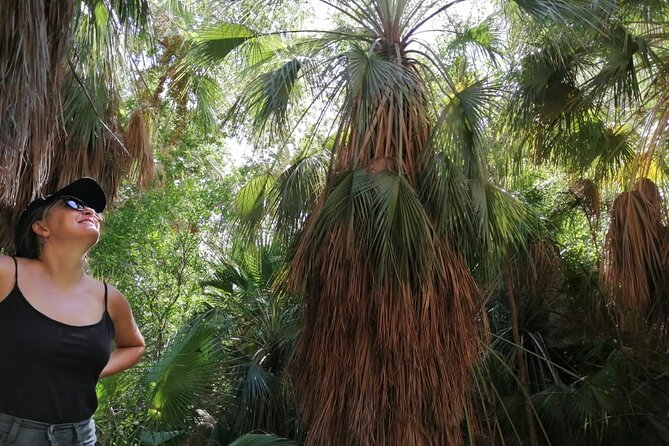
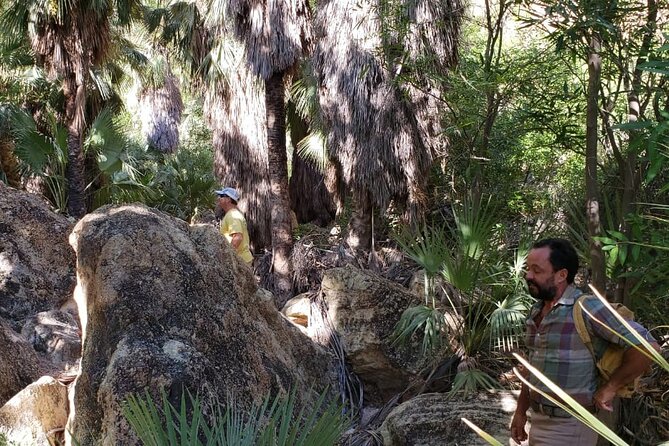
This part of the hike also brings in the famous palm element. You’ll see many Mexican fan palms, and you’ll get stunning views of the coastline along the way. If you like scenery but also enjoy learning what you’re looking at, this section hits both.
There’s a second reason this stop matters: it’s how you learn to notice micro-environments. In desert regions, the difference between “dry ground” and “wet pocket” can be the difference between tiny, shade-loving plants and everything else. Michael’s explanations help you understand how the living parts of the landscape depend on small changes in water and exposure.
The hike to the spring is still in the desert, so you’ll want to keep your pace steady. But if the canyon is about dryness and rock, the spring hike is about survival through water—and it’s the most emotionally satisfying shift of the day.
Fresh ceviche under a shady palapa
At 4:30pm, you reconvene under a shady palapa and enjoy food that feels earned, not tacked on. Dinner here is freshly prepared ceviche made with locally caught fish. It’s served on a tostada, and you can choose from different sauces.
This is one of those details that makes the tour feel more local and more real. You’re not eating a packaged snack that could show up anywhere. You’re sitting down after two hikes, in shade, with a meal that matches the area.
Two practical notes to keep you happy:
- The ceviche is fish-based, so if you don’t eat seafood, you’ll want to plan accordingly.
- The palapa shade is a big deal after desert walking. Even if the weather is cooperating, you’ll likely appreciate the break.
Then around 5:30pm, the tour wraps and you head back to the meeting point.
Price and value: $65 for two hikes plus a real meal
At $65 per person, this tour’s value comes from three things working together.
First, you’re paying for a guide who’s doing more than narrating. Michael’s strength is turning what you see into understandable biology—how plants, cacti, insects, and geology connect. That kind of explanation is what makes a desert hike feel worthwhile, even when the scenery looks simple at first glance.
Second, you get two distinct hiking experiences in one outing: Canyon El Silencio and El Ojo de Agua spring. That’s not just “walk and look.” You’re moving between habitats with different water availability and different plant communities.
Third, there’s the meal. Fresh fish ceviche on tostadas with sauce choices is a tangible end point. It turns the experience into a full afternoon, not a half-day snack and dash.
A final value check: the group is capped at 8 travelers. In small groups, the guide can answer individual questions more easily, and that’s a big part of why the experience scores so high.
Who this tour is best for (and who should skip)
This is best for you if you:
- like learning from a guide who explains how the desert works
- enjoy hiking with a moderate fitness level
- want a small group experience with time to ask questions
- don’t mind uneven, rocky footing
It’s also worth knowing that people have enjoyed this even while taking it steady. If you’re an older hiker, you may still be fine, but you should expect careful foot placement and a slower rhythm.
You should consider skipping if:
- you’re visiting in a hot part of the year when desert hiking like this isn’t feasible
- you want an easy, flat walk with no scrambling
- you don’t eat fish and aren’t okay with a ceviche-based meal
If you’re the kind of traveler who likes to “collect” stories as much as photos, this fits your style.
Should you book the Desert Palm Oases hike?
I’d book it if you’re traveling to San Carlos with a curiosity for natural systems and you’re in the cooler months when desert hiking is possible. The best part isn’t just seeing a canyon and a spring—it’s having a biologist like Michael help you notice how each stop supports life.
It’s also a smart choice if you want value without feeling packed in. The small group cap, the two hikes, and the real sit-down food under a palapa make this feel like a complete afternoon.
Pass on it if you’re visiting during the wrong season for desert hiking or if rocky, scramble-y footing would stress you out.
FAQ
Where do I meet for the tour?
You meet at Mariscos El Esterito at 1:00pm.
How long is the experience?
The experience runs about 4 hours 30 minutes.
Is the tour in English?
Yes. The experience is offered in English.
What’s the hiking difficulty like?
It’s suitable for travelers with moderate physical fitness. The hike can involve uneven ground and loose rocks, so hiking boots are recommended.
What will I see at El Ojo de Agua?
You’ll hike to the spring of El Ojo de Agua, which has water year-round and supports mosses and ferns. You’ll also see Mexican fan palms and coastline views.
Can I get a refund if the weather isn’t good?
Yes. The experience requires good weather. If it’s canceled due to poor weather, you’ll be offered a different date or a full refund. You can also cancel for a full refund up to 24 hours before the experience’s start time.