REVIEW · MAUNA KEA
MaunaKea Summit SUNSET and Star Tour with Photo
Book on GetYourGuide →Operated by Hawaiian Eyes Tours · Bookable on GetYourGuide
Mauna Kea at sunset feels unreal. This 8-hour tour takes you up to the summit area for that first wave of Pacific-into-space light, then down to stargazing height for telescope viewing and a guide-led sky show. I like that you get warm summit-ready gear and a free DSLR photo with you in it.
Two things I really like: first, the tour is built around the altitude reality, with time at the Mauna Kea Visitor Information Station to acclimate before you go higher. Second, the photography is handled for you—your guides use their DSLR to capture sunset and stars, so you’re not stuck playing camera operator in subfreezing wind. Guides I saw credited include James, Koki, Wes, and Francis, and the common thread is careful pacing and lots of photo help.
One possible drawback: weather and moon phase can affect what you see. Even with a clear forecast, star visibility is not guaranteed at this altitude, and you’ll be dealing with cold temperatures, sitting/standing outside, and a set of physical limits (like no participation for people under 16 or over 70, and not suitable for wheelchair users, among others).
In This Review
- Key takeaways before you go
- What this Mauna Kea sunset and stars tour is really about
- The drive: 4×4 van time and why the timing matters
- Stop 1 and the Visitor Information Station: acclimation + getting geared up
- The summit road photo moments and sunset views
- After sunset: dropping to stargazing height and using the telescope
- Gear, comfort, and how to prep so you enjoy it
- Food and drinks: simple but timed for a cold night
- Price and value: is $260 worth it?
- Who this tour fits best (and who should skip it)
- Should you book this Mauna Kea sunset and star tour?
- FAQ
- How long is the Mauna Kea summit sunset and star tour?
- What does the price include?
- Where does the tour start?
- Is there food on the tour?
- What photo do I get, and how will I receive it?
- Will I be able to go inside the observatories?
- What’s the stargazing like?
- What should I bring or wear?
- Is sunset and stargazing guaranteed?
Key takeaways before you go
- A summit sunset plan with built-in acclimation time at the Visitor Information Station
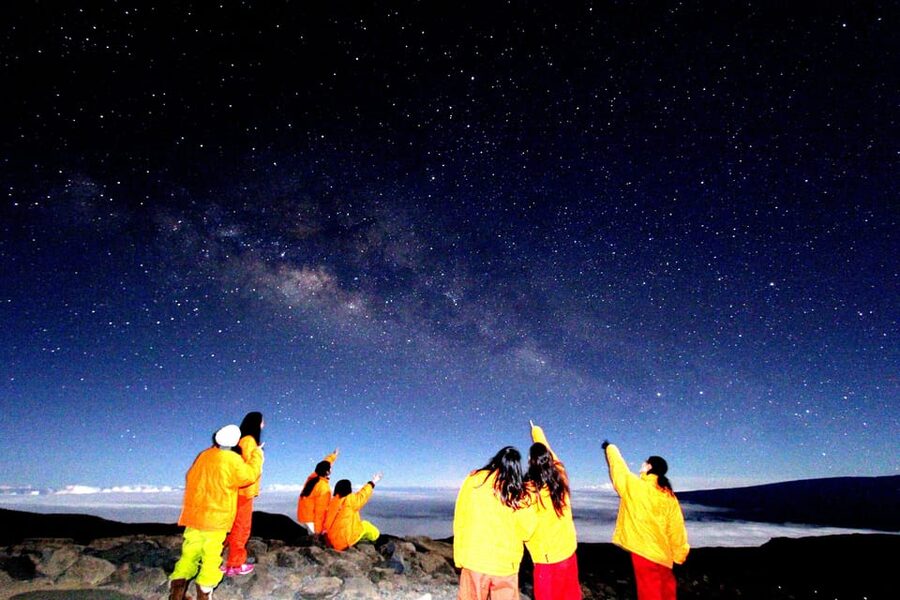
- Free pro DSLR photos of sunset and stars sent to you at the end (on your smartphone)
- Telescope time plus a laser pointer to help you spot planets and celestial objects
- 4×4 access toward Mauna Kea’s high-elevation road, with a timing window around sunset
- Cold-weather gear is provided, including snow parkas, ski pants, and gloves
- An oxygen tank is included for emergency use (comforting when you’re thinking about altitude)
What this Mauna Kea sunset and stars tour is really about
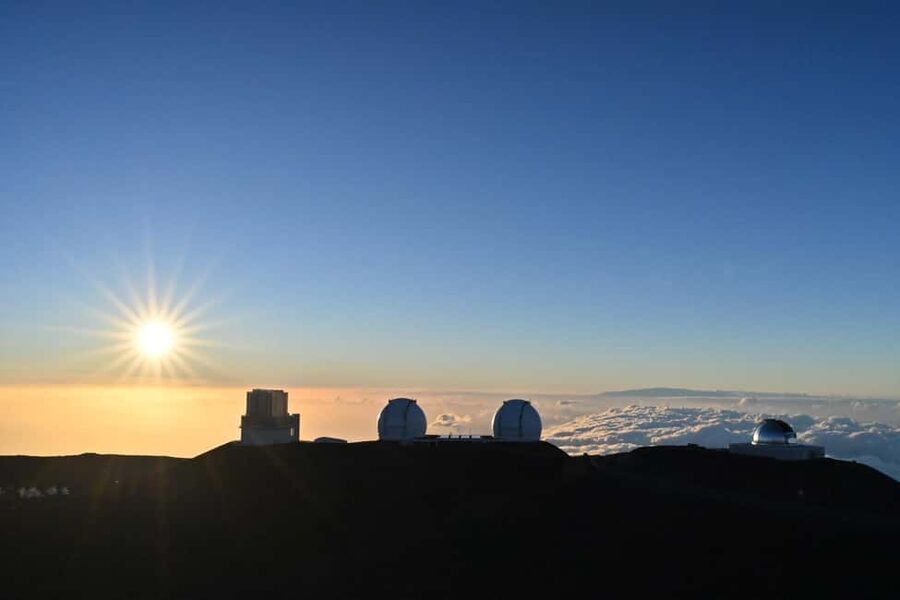
This isn’t a quick “snap a pic and go” outing. The structure is thoughtful: you travel up with enough buffer to reach the summit area before sunset, then you slow down to let you adjust to elevation. After the sun drops, you switch from day views to night sky focus—telescopes out, guide explanations on, and time for you to look for planets and constellations.
You’re paying for the full package at a place where doing it on your own can be time-consuming. Here, the tour handles key pieces: 4×4 transport toward the summit, Mauna Kea admission, cold-weather clothing, telescope support, and the photo work. That’s why the value feels strong at this price point—especially if you care about coming home with more than a blurry sunset screen-shot.
The drive: 4×4 van time and why the timing matters
You start with an easy meetup option in Kona or Waikoloa (meeting points can vary by booking). Then you ride up toward the Mauna Kea Visitor Information Station as your guide shares Big Island context along the way.
The big reason this timing matters: Mauna Kea’s summit experience is time-sensitive. Your group heads to the summit road area about 60 minutes before sunset, which gives you a chance to settle in, queue for a few photo moments, and watch the light shift without feeling rushed. One practical note: this is a high-elevation outing where the cold and the altitude both tighten your schedule. A smooth ride and a good guide help keep the day feeling controlled rather than chaotic.
Also, the 4×4 van ride can feel tight depending on group size and luggage. You’ll want to wear layers that are easy to manage and keep bags close—don’t plan on having a ton of extra space for comfort.
Stop 1 and the Visitor Information Station: acclimation + getting geared up
At the Visitor Information Station, you do two important things before you go higher: you acclimate and you gear up.
You’ll change into provided winter-style clothing—snow parkas, ski pants, and gloves—which is a major comfort win. Even if you think you’re “fine with cold,” Mauna Kea weather is a different game once you’re at elevation. The clothing helps you focus on the experience instead of shivering through it.
This is also where you get time to shop or browse at the visitor center, plus a light meal (BLT or vegan) to keep you comfortable. That food piece matters more than you might expect. A sunset viewpoint is not the place to feel hungry, and then try to power through stargazing while the temperature drops.
A final practical win: you’re not sent straight to the summit without a pause. That acclimation stop is there so your body has a chance to adjust before you go to the summit area around 13,800 ft.
The summit road photo moments and sunset views
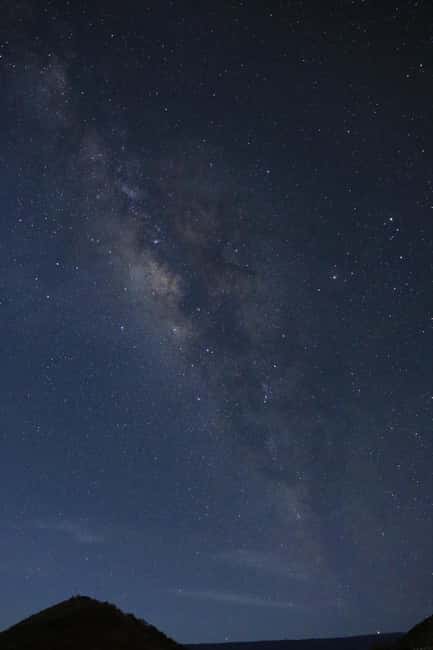
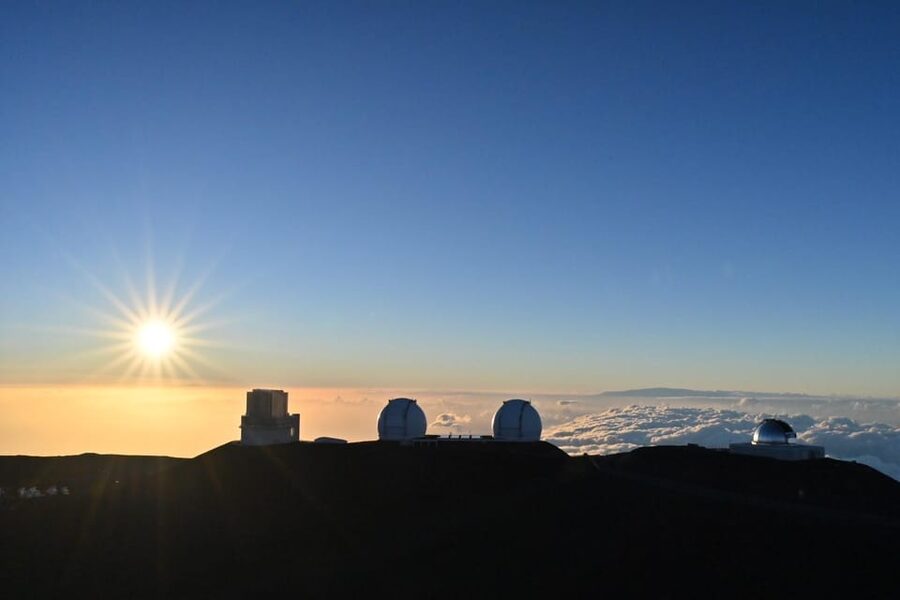
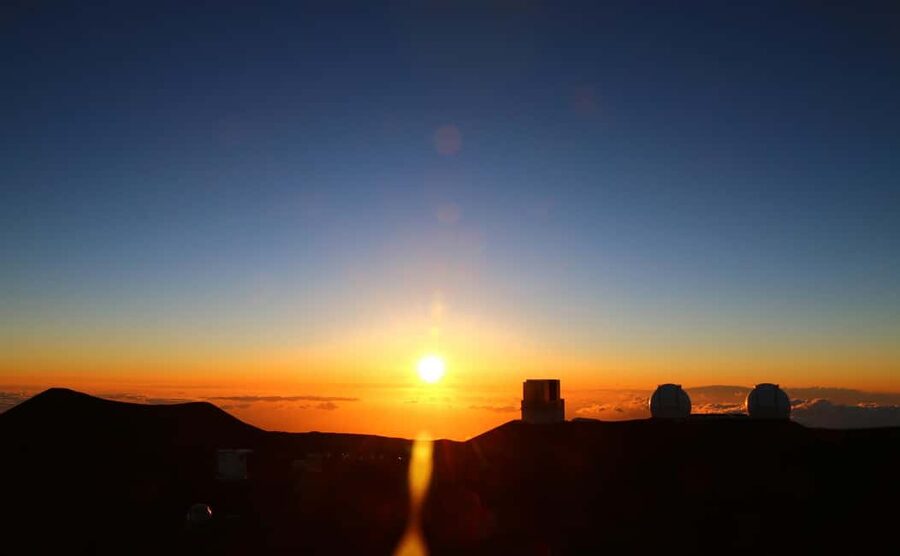
Once you head toward the summit area, expect stops for photo and scenic viewing along the way. Your guide brings the group to the right area for sunset, and you’ll arrive with about an hour before the sun goes down.
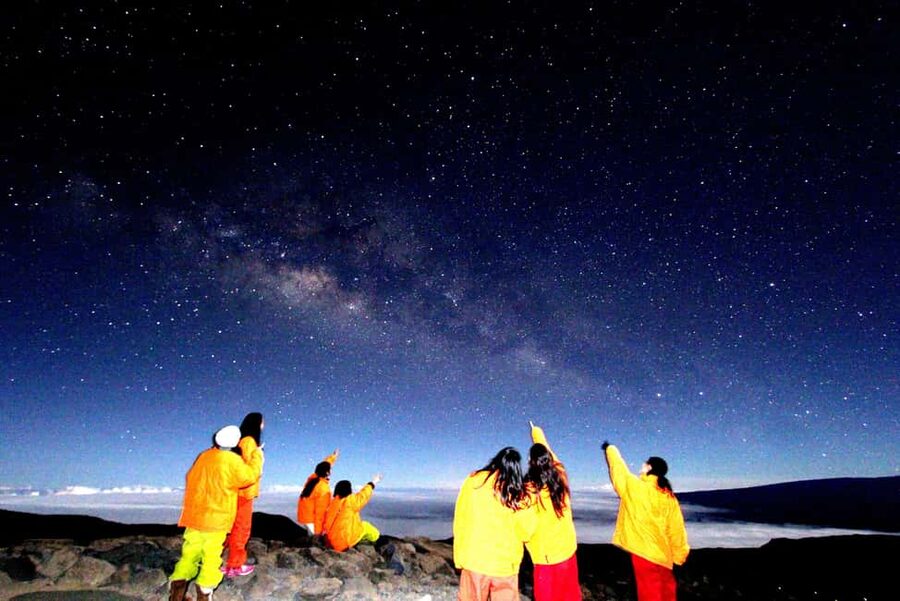
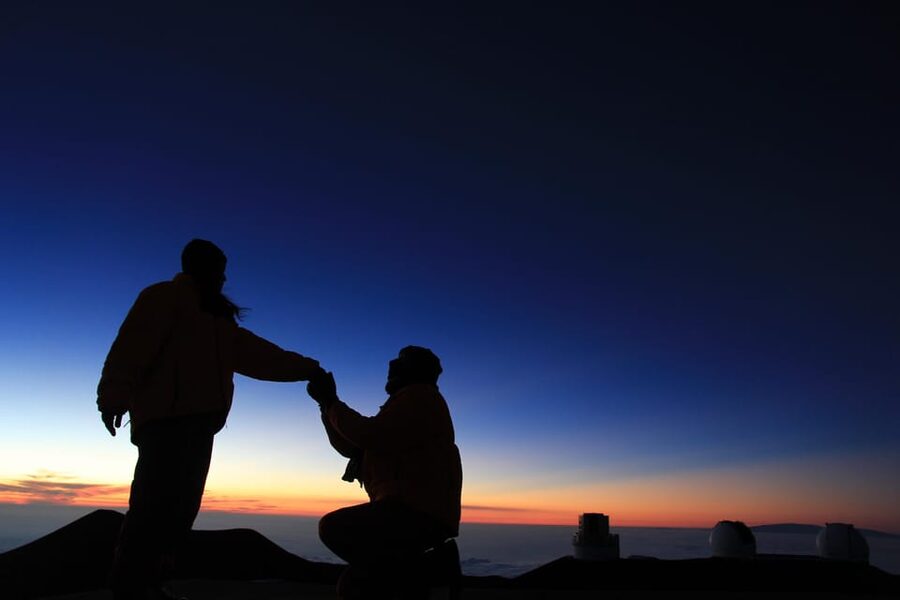
Here’s how the photo experience works: the guides take DSLR pictures of you at multiple points, including sunset and then later during the stars segment. You’ll likely do some posing because it’s your guides who frame you and capture those “we were there” shots—while you still can take your own photos too.
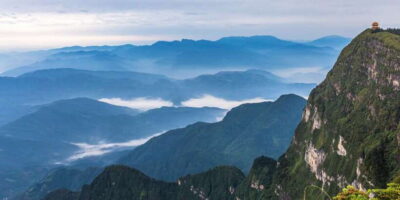
The sunset itself is the main event. You’re at the highest peak in Hawaii, and the view can feel both massive and intimate at the same time: ocean air below, mountains and sky above, and that slow gradient as light fades. It’s the kind of moment where phones struggle to capture what your eyes notice first.
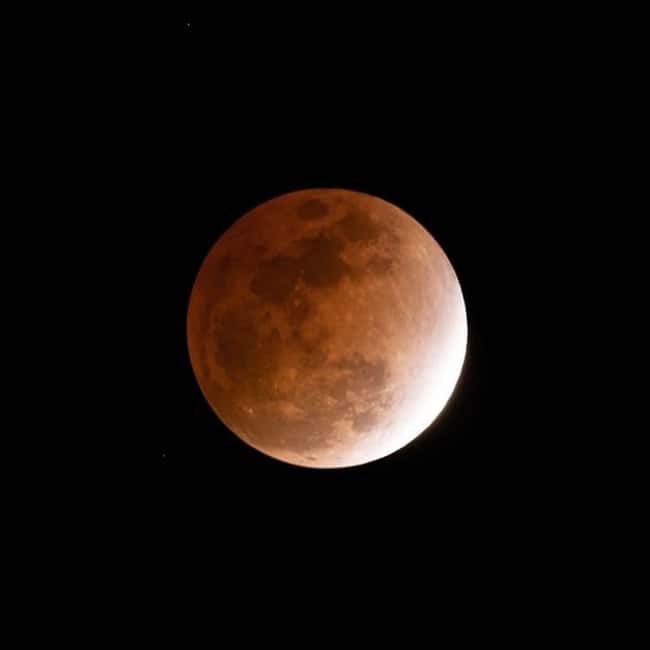
Important context: you’ll be outdoors in cold conditions, and visibility depends on conditions. So if clouds roll in or the moon is bright, the sky session might not look like the dream version you pictured. The tour still aims to get you good time at the summit area, but it can’t control weather.
After sunset: dropping to stargazing height and using the telescope
After the sunset portion, you head back down to around 12,000 ft for stargazing. The stargazing time is about an hour, and the guide explains what you’re seeing—planets, constellations, and other celestial objects.
You’ll also get help actually finding things in the sky. The tour includes a refractor telescope and a laser pointer for pointing out targets. That combination is more useful than you might think: with a laser, you can connect the “where is it?” question to the telescope view. The telescope then helps you see details you’d miss with naked-eye viewing.
One small but valuable detail: the photo location for the stars can change depending on weather. That’s not a flaw—it’s realism. It means your guide is adapting to make the night session work as best as possible.
And yes, you’ll likely be standing around at night. Bundle up. Even with the provided gear, keep your socks and shoes in top shape because closed-toe shoes are required for comfort and safety.
Gear, comfort, and how to prep so you enjoy it
This tour gives you winter gear, but you’re still responsible for smart choices.
Bring:
- Closed-toe shoes (required)
Then plan for cold and dry air:
- Wear layers you can adjust quickly (the provided parka helps, but you’ll still feel temperature swings).
- Keep your hands covered. Gloves are provided, but if you’re the type who gets cold fast, you may want to check your glove comfort once you get there.
Health and comfort considerations matter because this is a high-elevation activity. The tour is not suitable for certain people, including children under 16, pregnant women, people with back problems, claustrophobia, wheelchair users, and people with respiratory issues. It’s also not for people over 70, and there’s an upper weight limit listed at 300 lbs / 136 kg.
If you’re within the allowed range but you’re worried about altitude, the best move is to take the acclimation stop seriously. Slow down, breathe, and don’t treat this like a hike you have to “push through.”
Food and drinks: simple but timed for a cold night
You’ll have a light meal (BLT or vegan) timed around acclimation or when watching sunset from the summit area. During stargazing, you get a hot drink.
That’s enough food to get you through the cold hours without needing a full dinner meal. It also helps your energy while you wait for darkness and then spend time outside looking up. One common practical complaint you might notice on similar tours is that people want more variety or more substantial snacks, but the main point here is timing: the meal and hot drink are scheduled to support the real goal—sunset and stars.
Price and value: is $260 worth it?
At $260 per person, this price isn’t “budget,” but it does include a lot of the cost drivers that add up at Mauna Kea.
What you’re getting for the money:
- 4×4 passenger van access toward the summit area
- Mauna Kea admission
- Winter gear (snow parka, ski pants, gloves)
- Astronomical telescope time plus guide-led stargazing
- Bottled water and a hot drink
- A free DSLR photo of the sunset and stars with you in the frame
- An oxygen tank for emergency use
So the value comes from bundling. If you tried to piece this together yourself—transport, entry, gear, a guide for telescope viewing, and pro photos—you’d likely spend comparable money while taking on more hassle.
If photography is a priority for you, the free DSLR photo is a big part of the value. It reduces the stress of timing, framing, and cold-camera handling. If stargazing and planet spotting are your priority, telescope support and the guide’s sky explanations are what turn “looking up” into a real experience.
Who this tour fits best (and who should skip it)
This works best for people who want a guided, photo-forward sunset and stargazing experience with structured pacing.
You’ll likely love it if:
- You want summit sunset views and a real night-sky session in one day
- You prefer not to self-navigate at high elevation
- You care about coming home with good photos that include you
- You like astronomy and want help spotting planets and constellations
You should consider skipping if:
- You’re sensitive to cold or altitude or you’re in a category listed as not suitable
- You need wheelchair access or have claustrophobia (the tour isn’t suitable)
- You’re expecting guaranteed star visibility no matter what (moon phase and weather can change results)
Should you book this Mauna Kea sunset and star tour?
If you’re doing just one Mauna Kea experience, this is a strong choice because it bundles the key things people actually want: summit timing, acclimation, telescope support, and free pro photos.
Book it if you’re ready for cold and you like being guided through the sky instead of figuring it out alone. Don’t book it if you’re looking for guaranteed clear-sky astronomy, a warm-weather outing, or an activity that fits mobility or altitude-related limits listed for the tour.
One more practical tip: if you’re choosing between sunset-only versus a sunset + stars format, this type of tour makes sense because it keeps you at elevation for both the “light show” and the “space show.” That’s the best way to experience why Mauna Kea is famous: the transition from day grandeur to night precision.
FAQ
How long is the Mauna Kea summit sunset and star tour?
It runs for 8 hours total, with starting times that vary based on availability.
What does the price include?
The price includes a BLT or vegan sandwich, bottled water, a hot drink during stargazing, Mauna Kea admission, snow parkas, ski pants, and gloves, 4×4 passenger van transport to the summit area, a free DSLR camera photo, an astronomical telescope, and an oxygen tank for emergency use.
Where does the tour start?
You’ll be picked up at either the Target store in Kailua Kona or Queens’ Marketplace in Waikoloa Resort (meeting points may vary depending on the option booked).
Is there food on the tour?
Yes. You get a light BLT or vegan sandwich (dietary restrictions may have alternatives), and there is a hot drink during the stargazing portion.
What photo do I get, and how will I receive it?
You get a free photo taken with a DSLR camera during the sunset and stars experience. The tour states you will receive the photos on your smartphone at the end of the tour.
Will I be able to go inside the observatories?
No. The tour notes that there is no entry inside the observatories.
What’s the stargazing like?
After sunset, you head down to about 12,000 ft for roughly an hour of stargazing, using an astronomical telescope. Your guide also uses a laser pointer and explains celestial objects.
What should I bring or wear?
You should bring closed-toe shoes. The tour provides warm gear like snow parkas, ski pants, and gloves.
Is sunset and stargazing guaranteed?
No. The tour states that during bad weather, sunset or stargazing are not 100% guaranteed, and moon phase affects visibility of the stars.