REVIEW · NEPAL
Nagarjun Jamacho Day Hike – Stunning Valley Himalayan Views
Book on GetYourGuide →Operated by Sobit - Bold Himalaya · Bookable on GetYourGuide
A short hike with huge views. This Jamacho day hike gets you into Shivapuri Nagarjun National Park fast, then rewards you with Kathmandu Valley panoramas and far-off Himalayan ridgelines. I especially like the mix of nature and meaning: Bagdwar spring, temple stops, and a sacred stupa along the way. The main consideration is the uphill: it’s moderate but there’s a steady climb, so plan for breaks and wear grippy shoes.
What makes it feel easy to do (and not stressful) is the full support: private pickup from Thamel, an English-speaking guide, and water plus local snacks and fruit. At the highest point (2,130m), altitude is generally mild, but if you’re sensitive, take it slow like the smarter hikers do—short pauses, steady breathing.
In This Review
- Key highlights you’ll actually care about
- Why the Jamacho hike works so well from Kathmandu
- Getting to Shivapuri: Thamel pickup and the drive into nature
- The climb through Shivapuri Nagarjun National Park (and what to notice)
- 1) The air and tree scents change as you go up
- 2) Prayer flags add a sense of place
- 3) Birdsong turns the forest into an audio experience
- Bagdwar spring: a sacred water pause that resets your pace
- Rhododendron season, temple stops, and the spiritual rhythm of the trail
- Reaching the summit area: where the views hit hardest
- Jamacho Stupa: the cultural finish that makes the views feel deeper
- On the way back down: monasteries, villages, and a calmer pace
- What’s included in the $39 price (and why it’s good value)
- How fit you need to be (moderate doesn’t mean lazy)
- Pack and wear like a smart hiker
- The role of the guide: pacing, stories, and comfort
- Who this hike is perfect for (and who should choose something else)
- Should you book the Nagarjun Jamacho day hike?
- FAQ
- How long is the Jamacho hike?
- Where is pickup, and where do you return?
- What’s the difficulty level and altitude?
- What will I see at the top?
- Is a meal included during the hike?
- What’s included in the price?
- What should I bring with me?
- What language is the guide?
- Can I cancel for a full refund?
Key highlights you’ll actually care about
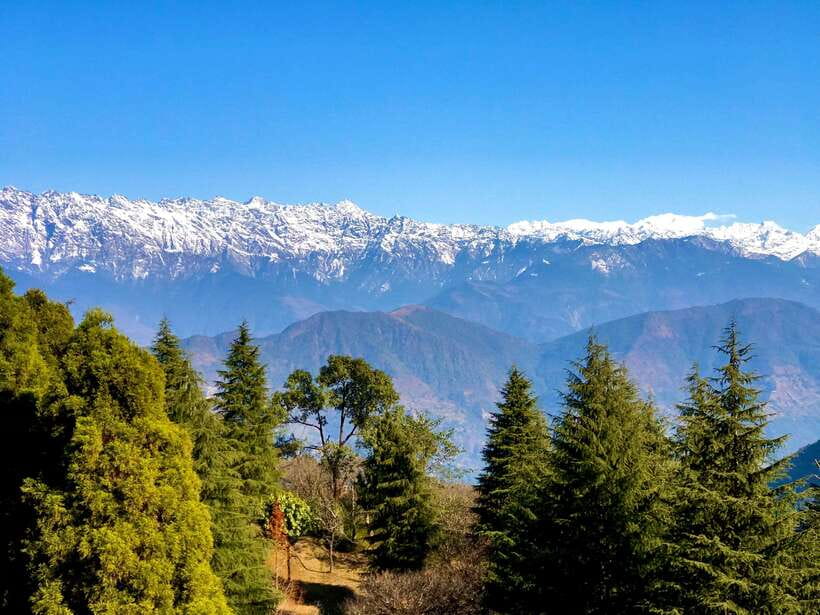
- Himalayas + Kathmandu Valley in one morning: big viewpoints without a multi-day trek.
- Bagdwar spring stop: a sacred natural water source tied to the Bagmati River story.
- Prayer flags, monasteries, and Shivapuri Baba’s ashram: culture shows up on the trail, not just at the summit.
- Rhododendron forest + bird sound track: crisp air, colorful spring foliage (when in season), and real wildlife vibes.
- A guide who paces you: people like Suren or Sirjan (you may meet guides with names like these) are known for patience and step-by-step attention.
- Value-packed inclusions: national park entry, drinking water, and snacks/fruits are included with the $39 price.
Why the Jamacho hike works so well from Kathmandu
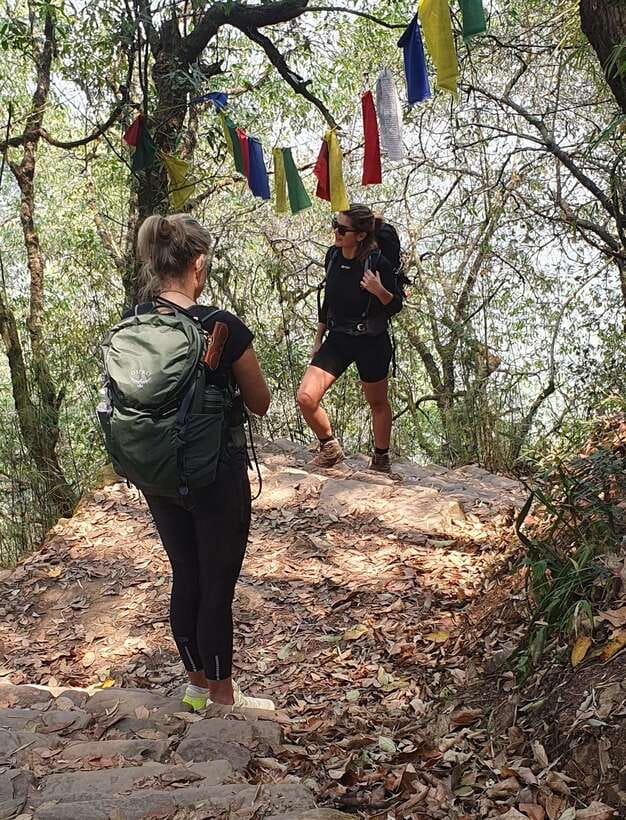
This hike is one of those smart Kathmandu escape plans: you trade city time for mountain time without needing a long itinerary. From the Kathmandu side, Shivapuri Nagarjun National Park is close enough to feel like a day trip, but far enough in feel to act like a reset. You’ll be walking under a forest canopy, hearing birds, and then gradually looking outward—first to the valley, then to the high peaks in the distance.
The best part is how the hike layers three kinds of payoff. You get:
1) physical payoff (a real climb, but not a technical challenge),
2) scenic payoff (Kathmandu below, mountains ahead), and
3) cultural payoff (Bagdwar, monasteries, and the Jamacho Stupa).
That combination makes it work for different styles of travelers. If you love views, you’ll get them. If you like quieter, reflective travel, the trail’s spiritual stops help keep things grounded.
Getting to Shivapuri: Thamel pickup and the drive into nature
Your day starts in Thamel with pickup, and the service includes private car transportation with drop-off back at Thamel. The catch (and it’s important) is the service radius: pickup is included within a 3 km area of Thamel. If your hotel sits farther out, you’ll need to plan how you’ll meet the group or where pickup can happen.
Once you’re on the road, the feeling changes quickly. You’re moving from streets into forest country, and when you arrive at the park entrance, the trail begins under that dense Shivapuri greenery. This shift matters because it sets the mood: you’re not just walking somewhere scenic. You’re walking into a protected area where the forest is part of the experience, not a backdrop.
The climb through Shivapuri Nagarjun National Park (and what to notice)
After the drive, you begin a gradual ascent along serene trails. It’s listed as moderate with a steep stretch at points, and that matches what you’ll feel in your legs: it’s a continuous uphill effort. The good news is that the hike is designed for a doable day. You’ll be able to take short breaks, and your guide will pace you.
As you climb, pay attention to three things that make this walk more interesting than a generic forest hike:
1) The air and tree scents change as you go up
You’ll likely notice air that feels crisp and cooler than the city, with an earthy mix from pine and rhododendron. The temperature shift isn’t just pleasant—it also makes the ascent feel more manageable.
2) Prayer flags add a sense of place
Prayer flags flutter along the route and give the trail a lived-in spiritual atmosphere. Even if you don’t know the meanings behind each flag, you’ll feel that this isn’t a purely tourist trail.
3) Birdsong turns the forest into an audio experience
Shivapuri Nagarjun National Park is known for biodiversity, and the bird sound track is part of why this hike feels alive. If you like birdwatching, slow down at times and look for movement in the canopy. It’s a great way to make the climb feel shorter.
Bagdwar spring: a sacred water pause that resets your pace
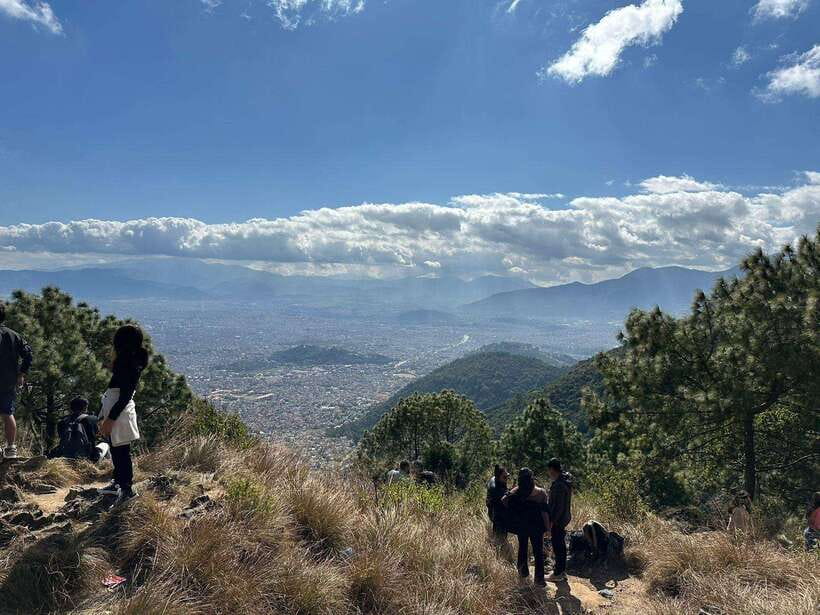
One of the most memorable stops is Bagdwar, a natural spring believed to be the source of the holy Bagmati River. This is more than a quick photo stop. The spring gives you a reason to pause that isn’t about fatigue—it’s about reflection and respect.
Plan for this moment in your timing. Even if you feel strong, take a few minutes here. It helps you mentally separate the hike into “before Bagdwar” and “after Bagdwar,” and after this you’ll usually feel more ready for the continuing ascent and viewpoint goals.
Also, since the hike provides drinking water, you can stay hydrated without needing a big shopping detour. Still, you should bring your own water planning as well—at least 1–1.5 liters is recommended—because conditions vary and you’ll be hiking in the morning or early day when dehydration can sneak up on you.
Rhododendron season, temple stops, and the spiritual rhythm of the trail
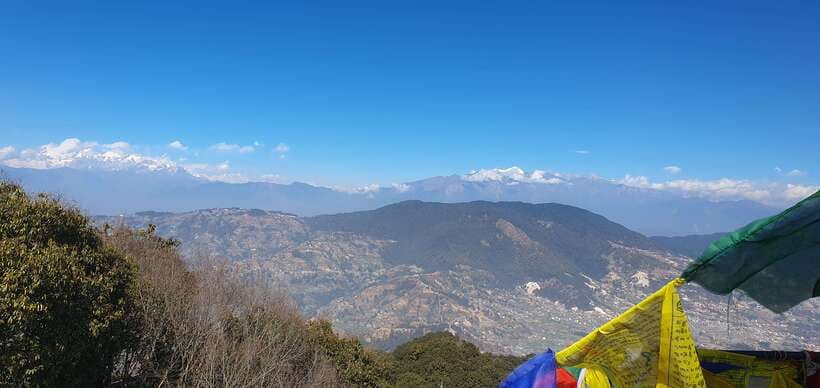
As you continue, the route goes through rhododendron forests where spring can bring color to the landscape (when the season lines up). Even if you’re not there during peak blooms, the forest still feels distinctive—dense, fragrant, and shaded.
Then the hike shifts from “nature first” into “culture shows up on the path,” with monasteries and local sacred sites along the descent and route details. You’ll also visit Shivapuri Baba’s ashram, which adds another layer to the day: this isn’t just about views; it’s about the meaning people attach to these hills.
A helpful way to approach these stops:
- slow down for a minute,
- look around before snapping photos,
- keep your actions calm and respectful.
These places matter to locals. Treat them like living sites, not backdrops.
Reaching the summit area: where the views hit hardest
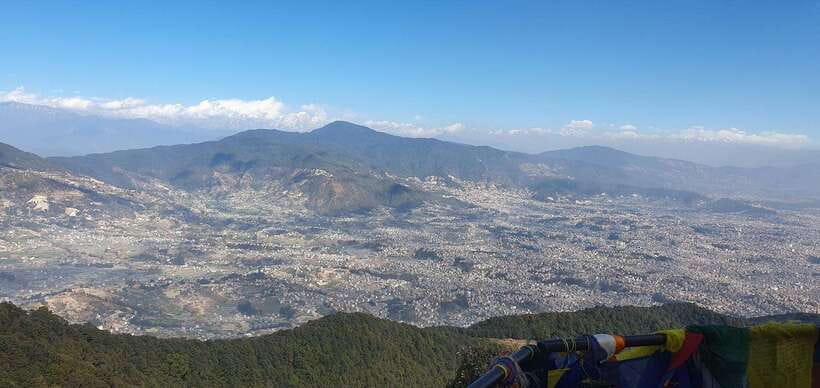
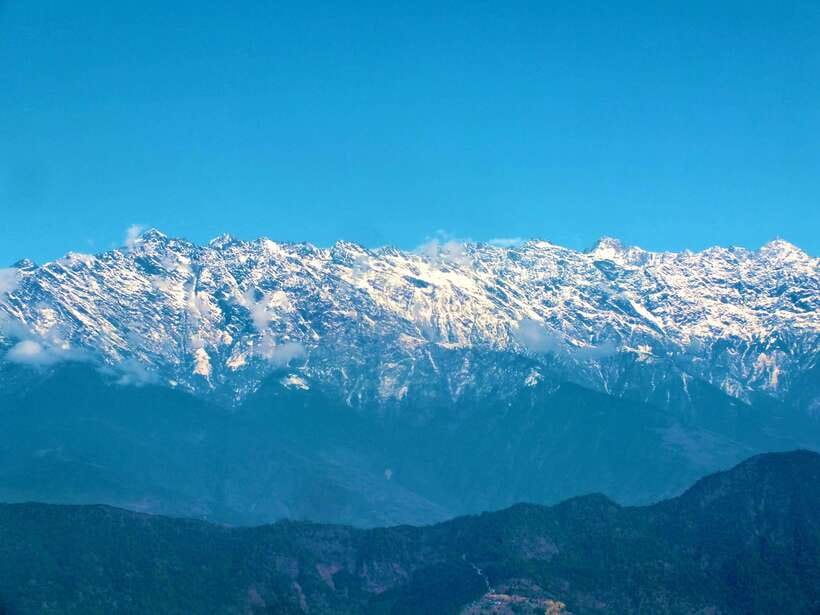
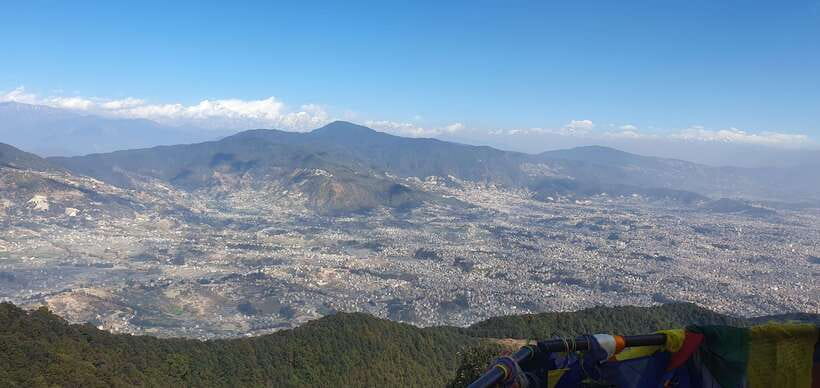
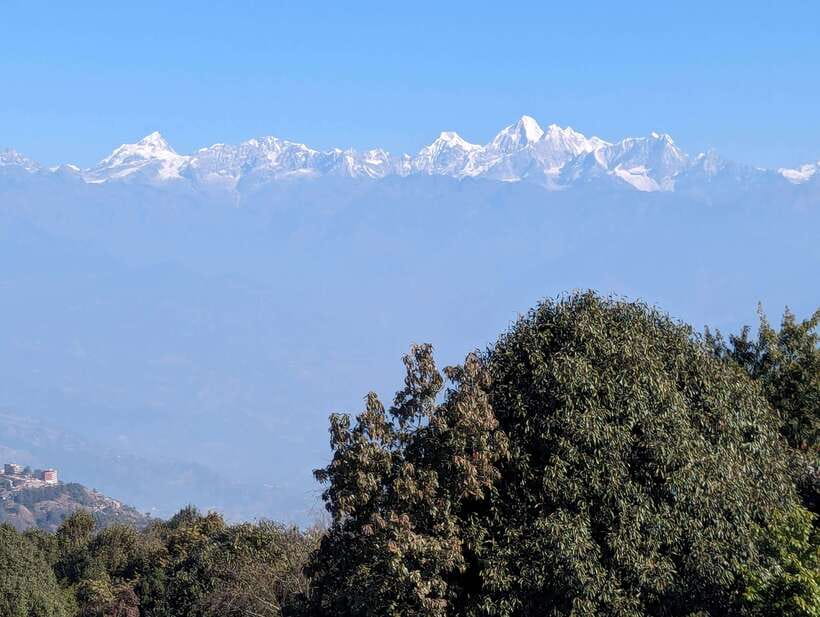
At the highest point of about 2,130m (6,989 ft), you’re in the zone where Kathmandu’s layout becomes visible and the surrounding mountains start to feel close enough to study. The viewpoint is the big reward: Kathmandu cityscape below, layered with the distant Himalayan ranges.
This is one of those moments where the hike pays you back quickly. You worked uphill, then you get the payoff immediately—wide sky, long sightlines, and that special feeling of seeing a huge region from a human-scale trail.
Altitude here is described as mild, and generally most people don’t have issues. Still, don’t treat that as permission to rush. If you want a comfortable summit experience, move steadily and take short breaks on the way up. That’s the simplest “altitude strategy” and it works even when altitude is not a major problem.
Jamacho Stupa: the cultural finish that makes the views feel deeper
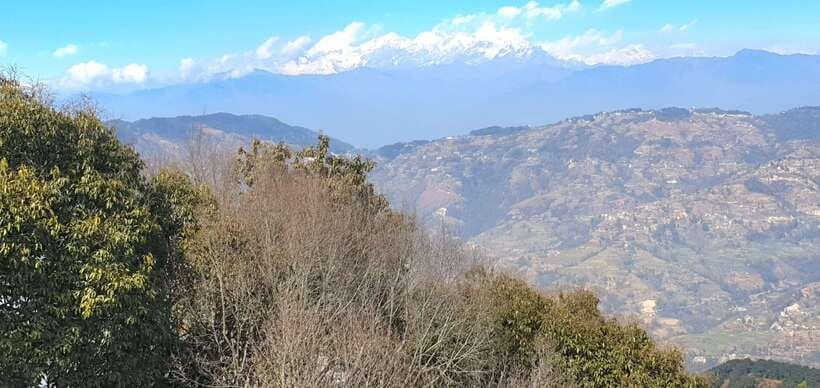
The Jamacho Stupa is part of the route and has cultural importance. What’s nice is that it doesn’t feel like you just walk to a viewpoint and leave. Instead, you finish with a sacred marker that gives the day a clear storyline: forest → spring → spiritual stops → summit views → stupa.
When you combine a stupa visit with the panoramic view, the whole hike becomes more than exercise. It feels like a small pilgrimage, even if you’re not seeking religious meaning. The stupa simply gives the scenery context.
On the way back down: monasteries, villages, and a calmer pace
Descent is where you’ll feel the difference between “I did it” and “I enjoyed it.” The downhill weaves through peaceful monasteries and quaint village areas, so you’re walking with culture in view again—not just trees.
This is also the best time to ask your guide questions. Guides often have stories about Kathmandu and the surrounding mountains, and you’ll get better answers when you’re relaxed. The pace becomes easier, so it’s easier to listen.
What’s included in the $39 price (and why it’s good value)
The price is $39 per person, and for that you get a lot of the stuff that usually costs extra on budget tours:
- private, experienced English-speaking hiking guide
- national park entry fees
- private car transportation with pickup and drop-off from Thamel (within the 3 km radius)
- drinking water provided
- local snacks and fresh fruits
- a first-aid kit carried for safety
That’s the key to the value here. You’re not just paying for a track on a map. You’re paying for access, logistics, guidance, and basic nourishment, all wrapped into a 5-hour day.
What’s not included: any meal during the hike. In real life, the snack and fruit help a lot, but if you’re the type who gets hungry fast, plan your timing so you eat before and after the hike.
How fit you need to be (moderate doesn’t mean lazy)
This hike is labeled moderate. The ascent can be steep in sections, but it’s manageable with normal fitness. If you can handle a steady uphill walk for a few hours, you’re likely fine.
If you’re newer to hiking, don’t worry. The guide’s job is to keep you moving at a pace where you can stay comfortable. Many people end up surprised by how doable it feels once they stop trying to match fast hikers and instead settle into their own rhythm.
Pack and wear like a smart hiker
You’ll have a much better time if you dress for comfort and grip. The essentials to bring:
- comfortable hiking shoes with good grip
- lightweight backpack
- at least 1–1.5 liters of water
- trekking pole (optional but useful)
Clothing recommendations:
- comfortable trekking pants
- breathable T-shirt
- light jacket or windproof layer
- cap/hat, sunglasses, and sunscreen
Even when the highest point is only 2,130m, mornings in the hills can feel cool. A light jacket is often the difference between “pleasant climb” and “I’m thinking about my jacket the whole time.”
The role of the guide: pacing, stories, and comfort
This hike is the kind where a good guide changes everything. You’re in a forest, moving uphill, and navigating cultural stops where you want context. Your guide being English-speaking is a real convenience too.
From the names that have shown up—people like Suren, Sirjan/Srijan, and Sobit with Bold Himalaya style leadership—the common thread is hands-on support. You can expect:
- pacing that keeps you comfortable during the ascent
- attention to your footing and steps
- explanations about what you’re seeing
- snacks and fruit to keep you fueled on the return
If you enjoy a mix of nature talk and local knowledge about Kathmandu and the mountains, this type of guiding is exactly what you want.
Who this hike is perfect for (and who should choose something else)
This works best if you:
- want a morning hike near Kathmandu
- like a moderate challenge with serious viewpoint payoff
- want a day that includes both nature and sacred cultural sites
- prefer an organized plan with private pickup, an English guide, and included entry fees
You might want to skip this (or choose a different plan) if you:
- dislike any steep uphill walking at all
- need a fully flat route
- require a meal included during the hike (since meals aren’t included)
Should you book the Nagarjun Jamacho day hike?
Yes, if you want an efficient day in the hills that delivers both scenery and meaning. For $39, you’re getting a private guided outing, park access, and included water plus snacks/fruits—plus that rare combination of viewpoints and spiritual stops like Bagdwar and the Jamacho Stupa.
Book it especially if you’re short on time in Kathmandu but still want a real escape into Shivapuri Nagarjun National Park. The hike is moderate, altitude is mild, and the whole route is built for a rewarding 5-hour experience that feels calm, not rushed.
FAQ
How long is the Jamacho hike?
The total duration is listed as 5 hours.
Where is pickup, and where do you return?
Pickup is included within 3 km of Thamel, and you’re dropped back at Thamel.
What’s the difficulty level and altitude?
It’s a moderate hike with a steep ascent but manageable with normal fitness. The highest point is 2,130m (6,989 ft), which is described as mild altitude for most people.
What will I see at the top?
You’ll get panoramic views of the Kathmandu Valley and surrounding Himalayan mountain ranges, along with the cultural stop at Jamacho Stupa.
Is a meal included during the hike?
No. Local snacks and fresh fruits are included, but meals are not included.
What’s included in the price?
Included are an English-speaking hiking guide, drinking water, national park entry fees, private car transportation with Thamel pickup/drop-off, local snacks and fresh fruits, and a first-aid kit carried for safety.
What should I bring with me?
Bring comfortable hiking shoes with grip, a lightweight backpack, at least 1–1.5 liters of water, and useful items like a light jacket or windproof layer, sunscreen, sunglasses, and a cap/hat. Trekking poles are optional but helpful.
What language is the guide?
The guide is English-speaking.
Can I cancel for a full refund?
Yes. Free cancellation is available up to 24 hours in advance for a full refund.