REVIEW · MERZOUGA
5-Day Desert Hiking Adventure from Merzouga
Book on Viator →Operated by Berber Adventure Tours · Bookable on Viator
Silence hits fast in the Sahara. This 5-day Merzouga trek takes you off the usual overnight-camp path and onto dunes, dry riverbeds, and ancient mountain layers with sunset climbs and real time at remote camps.
What I really like is how active it feels without turning into a suffering contest: you hike daily, then you get camp time, sunset, and meals prepared for you. I also appreciate that the trip includes tents, mattresses, water, tea, plus luggage support by camel, so you can travel lighter than you might expect for the kind of terrain you’re walking.
One consideration: you should plan for moderate fitness, wind, sand, and bringing your own sleeping bag since it is not included.
In This Review
- Key highlights at a glance
- Why this 5-day desert hike in Merzouga feels different
- Getting oriented: meeting point, start time, and private group feel
- Day 1: leaving Merzouga for dunes, oasis lunch, and a camp behind the dunes
- Day 2: a dry riverbed day toward Hassi Begaa
- Day 3: local mountains, a climb for sunset, and staying put near the same camp
- Day 4: Erg Znigui crossing, abandoned village, and old mines
- Day 5: crossing Erg Chebbi again and returning to Merzouga
- Food, tea, and camp life: what’s included and what to expect at night
- Luggage, camels, and the gear gap: sleeping bag is on you
- Fitness level: moderate doesn’t mean casual
- Who this trek fits best (and who should reconsider)
- Value and price: what you pay for at $2,093.83 per person
- Booking outlook: should you choose this 5-day Merzouga trek
- FAQ
- How long is the 5-day desert hiking adventure?
- What time does the trek start, and where does it end?
- What’s included in the price?
- What is not included?
- Is this a private tour?
- If I cancel, will I get a refund?
Key highlights at a glance
- Real desert hiking route: dunes, dry riverbeds, and big crossings like Erg Znigui
- Camp included, not just sightseeing: you help set up camp and pack up in the morning
- Meals built into the days: 4 breakfasts, 5 lunches, and 4 dinners
- Sunset climbs and changing views: daily opportunities to see the desert light shift
- Luggage support by camel: you carry less, so you can focus on walking
Why this 5-day desert hike in Merzouga feels different
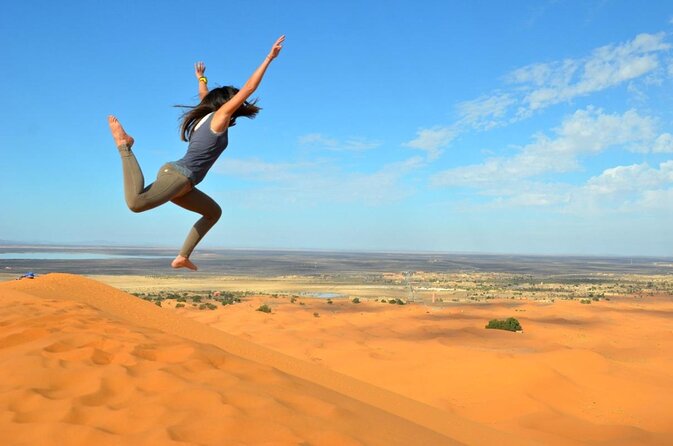
Most people base themselves in Merzouga and then do a quick desert overnight. This works the other way around: the dunes are your road, and the camps feel like a temporary base, not the main event.
You’re moving through places most visitors never bother to look for. The terrain changes daily: soft sand for long stretches, then harder-looking lines where old riverbeds have dried out, and finally bare mountains that show layered geology you don’t usually get to see on foot.
I also like the rhythm. Breakfast starts the day, lunch is taken outside (often in shade), then you hike again in the afternoon. Evenings are slower: free time near camp for the sunset and for exploring the area around where you slept.
Getting oriented: meeting point, start time, and private group feel
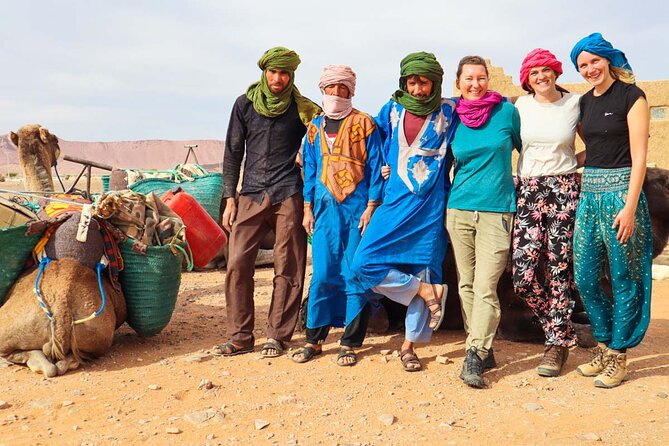
The trek starts at 8:30 am at the meeting point in Merzouga (listed as 3XVV+56 Merzouga, Morocco). The activity ends back at that same meeting point, so you’re not stuck with a one-way transfer deal.
You’re also doing this as a private tour/activity, meaning it’s only your group. That matters in the desert because hiking pace, breaks, and small adjustments feel more personal. If you’ve got a specific comfort level, you tend to get a better match than with big, rigid schedules.
Pickup is offered, but keep your expectations grounded: transport to and from Merzouga is listed as not included. So, you’re responsible for getting yourself to Merzouga first, then the trek logistics take over from there.
Day 1: leaving Merzouga for dunes, oasis lunch, and a camp behind the dunes
On day 1, you leave Merzouga after breakfast. Most of the walking is in sand, and it’s mainly about crossing dunes and getting your body used to the desert pace.
What makes day 1 feel worth it is that you get a proper desert “arrive slowly” moment. Lunch happens in an oasis setting, which is a nice contrast to the surrounding sand. Then you set up camp behind the dunes. There’s also an option for an optional luxury camp depending on conditions.
A practical note: because you’ll help with setting up camp and later packing up in the morning, day 1 is not only about walking. You’re also learning the rhythm of life out there—where things go, how quickly camp becomes home, and how the day ends.
Day 2: a dry riverbed day toward Hassi Begaa
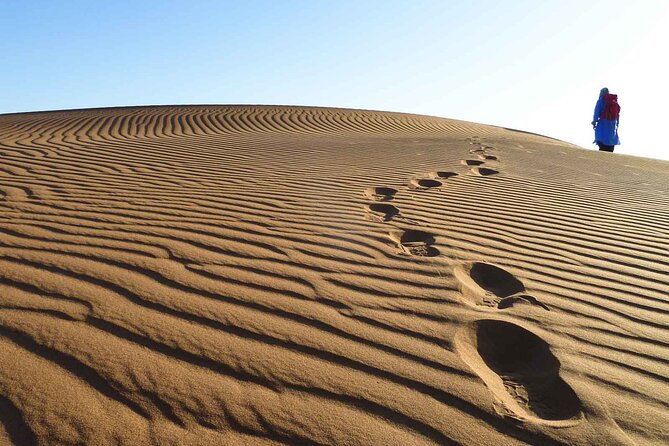
Day 2 shifts the scenery. You hike along a dry river bed, and the views of the dunes stay visible through much of the day. This kind of route feels like a change in “texture,” even when the ground is still demanding.
By evening, you set up camp close to Hassi Begaa. Staying at a defined location like this gives the next day’s hiking a more focused feel. Instead of chasing the “next viewpoint,” you get that desert routine where the camp base becomes your reference point.
What I like here is that the itinerary keeps building the contrast. By day 2, you’ve likely learned how your body handles sand, and then you get this new way the desert forms paths.
Day 3: local mountains, a climb for sunset, and staying put near the same camp
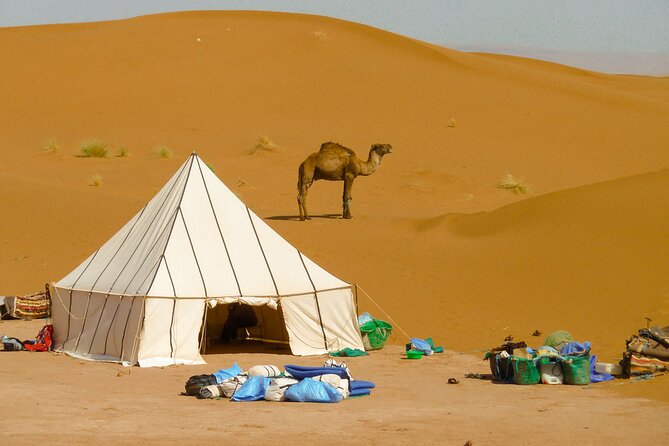
Day 3 is when the trek starts feeling more dramatic. You explore local mountains, then climb up for an amazing sunset view. If you like hikes where the payoff is the last hour of light, this is the day.
You camp in the same place as day 2, which helps with recovery. That sounds minor, but it matters: less time relocating means more time resting, stretching, and settling in—so you can enjoy the sunset climb without feeling like you’re always “in transit.”
Again, you’ll have some free time around camp in the evening. This is where the desert stops being a photo backdrop and becomes your surroundings—wind sounds, dark skies, and the way the light fades over sand.
Day 4: Erg Znigui crossing, abandoned village, and old mines
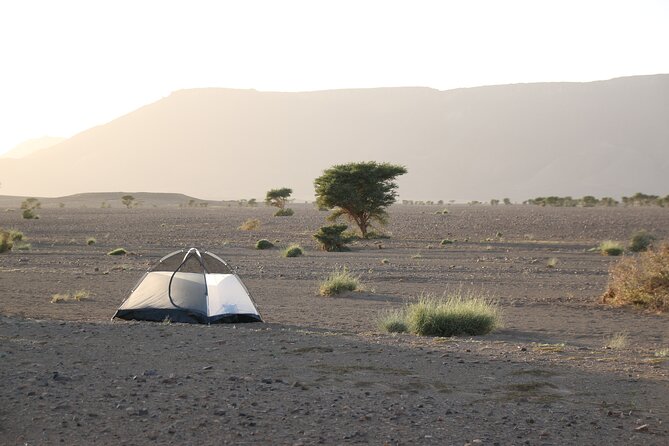
Day 4 brings a big named crossing: you cross Erg Znigui and hike through the surrounding hills. Erg crossings can feel long because the dunes keep their rolling look, but the trick is to keep your effort steady and not sprint into the sand.
This is also the day that adds human texture to the landscape. You visit an abandoned village and old mines. You don’t just see the Sahara as empty space; you see traces of how people once used this region.
You end the day by camping in a nomad village behind the dunes. That makes the evening feel more rooted than another night in a distant camp field. It also gives you a sense of how desert life has historically worked around the environment rather than fighting it.
Day 5: crossing Erg Chebbi again and returning to Merzouga
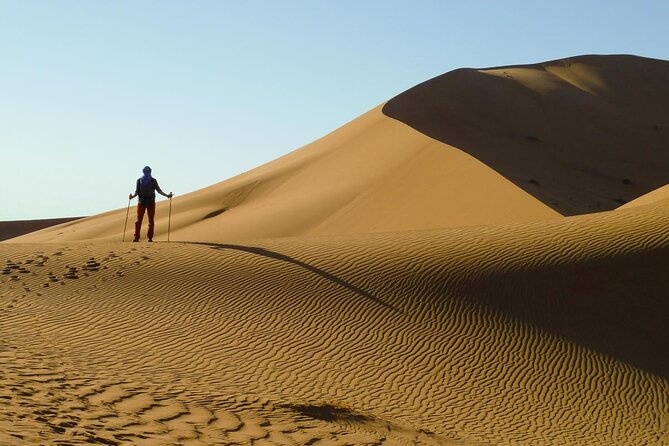
On the last day, you cross Erg Chebbi again to return to Merzouga. Erg Chebbi is one of the classic dune zones people recognize, but the difference here is how you experience it: on foot, over multiple days, not as a quick viewing stop.
You end back at the same meeting point where you started, which makes the wrap-up simple. If you’re the type who likes a clean finish (instead of extra driving at the end), this helps.
Food, tea, and camp life: what’s included and what to expect at night
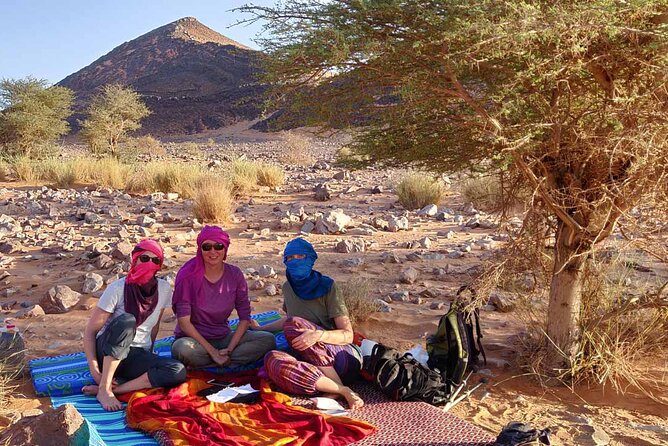
Food is built into the daily pace. The trip includes 4 breakfasts, 5 lunches, and 4 dinners. Tea and water are included as well. That’s a big deal on sand days because you need steady hydration and simple meals you don’t have to hunt for.
Dinner and breakfast are planned for camp settings. Depending on weather conditions, there might be a campfire in the evenings to bake fresh bread for dinner or breakfast. Even if that doesn’t happen, the general idea is the same: your nights revolve around camp, not a restaurant hunt.
You’ll also be expected to help with camp logistics: setting up in the evening and packing up in the morning. If you’re comfortable with shared effort, you’ll probably enjoy this more than you think. It turns “camping” into teamwork instead of just arriving to a prepared setup.
Luggage, camels, and the gear gap: sleeping bag is on you
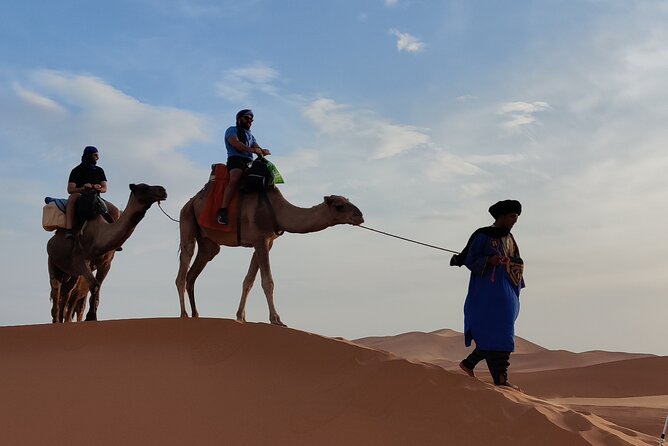
One of the smartest practical touches here is that there are camels for luggage transport. That means your personal backpack load can stay focused on walking comfort rather than turning into an overnight-bag carry.
At the same time, the trip does not include a sleeping bag. You do get tents and mattresses, but you still need your own sleeping bag for warmth. If you show up without one, you’ll likely feel the temperature swing at night.
What else you should plan for (even though it isn’t listed as included): sand stays sand. Pack for sun protection and breathable layering, and keep your routine simple. You’ll be hiking most of the day, then switching into camp mode.
Fitness level: moderate doesn’t mean casual
This experience calls for a moderate physical fitness level. That’s the honest middle ground: you’re not doing a mountain climb with technical steps, but you are walking in sand, and sand has a cost in energy.
Also, the daily rhythm includes more than hiking. You’ll help with camp setup and then pack up again in the morning. So even on “rest” time, you’ll be doing some hands-on desert camp work.
If your goal is a dramatic, active Sahara experience where you still have time to enjoy the sunset and camp atmosphere, this is a strong match. If you want a totally low-effort version where you mostly sit and pose, you may find this more demanding than expected.
Who this trek fits best (and who should reconsider)
I think this trek is ideal for you if you want the Sahara as a walking destination, not just a night in a camp. You’ll get multiple days of route-building scenery: dunes, dry riverbeds, mountains, abandoned villages, mines, and different camp areas.
It also fits well if you like small, team-based travel. This is private for your group, and the pacing includes time to enjoy evenings and surroundings without feeling rushed.
You might want to reconsider if:
- You don’t want to carry personal items in sand (even with camel luggage support)
- You’re not comfortable with shared work like camp setup and pack-down
- You’re missing key comfort items like a sleeping bag
Value and price: what you pay for at $2,093.83 per person
At $2,093.83 per person, this isn’t a cheap add-on. The value comes from what’s wrapped into the price, not just the number of days. You’re paying for:
- Guided multi-day hiking in remote terrain
- Camp infrastructure (tents and mattresses)
- Luggage support by camel
- Daily meals (4 breakfasts, 5 lunches, 4 dinners)
- Water and tea
The big “cost leak” items are outside the package: transport to/from Merzouga, visa and insurance, and a sleeping bag. That means the true cost for you depends on what you already have lined up for getting to Merzouga and packing for desert nights.
Where this price starts to make sense is if you compare it to piecing together transport, guides, food, and camping logistics on your own. Here, it’s structured. The trek isn’t just a hike; it’s a moving campsite with meals, comfort basics, and daily navigation.
Booking outlook: should you choose this 5-day Merzouga trek
I’d book this if your dream is a multi-day Sahara hike with real camp time, not a one-night dune detour. The route choices are practical and varied: dune crossings, dry riverbed walking, a mountain sunset climb, plus the human-landscape stops at an abandoned village and old mines.
I’d hesitate if you’re very sensitive to overnight temperatures or you hate shared camp work. Also, confirm you’re ready to handle a moderate fitness level and bring your own sleeping bag.
If you want, tell me your travel month, how many people are in your group, and your fitness baseline (easy walks, regular hiking, or already doing longer treks). I can help you sanity-check whether the daily sand walking pace will feel right for you.
FAQ
How long is the 5-day desert hiking adventure?
It lasts about 5 days.
What time does the trek start, and where does it end?
The start time is 8:30 am at the meeting point in Merzouga (3XVV+56 Merzouga, Morocco). It ends back at the same meeting point.
What’s included in the price?
The trip includes tents and mattresses, water and tea, camels for luggage transport, and meals: 4 breakfasts, 5 lunches, and 4 dinners.
What is not included?
Transport to/from Merzouga, visa and insurance, and a sleeping bag are not included.
Is this a private tour?
Yes. It’s a private tour/activity, and only your group participates.
If I cancel, will I get a refund?
No. The experience is non-refundable and cannot be changed for any reason. If you cancel or ask for an amendment, the amount you paid will not be refunded.