REVIEW · ANTALYA
Antalya: Hiking in Termessos Ancient City
Book on GetYourGuide →Operated by Antalya Local · Bookable on GetYourGuide
Termessos feels like ancient Turkey with the volume turned down. This small-group hike from Antalya takes you into the Taurus Mountains (about 1,050 m up) to explore one of Turkey’s best-preserved archaeological sites, including a theatre built into the cliffs. I love the mix of ruins + nature here, and I especially love how the guide (often Önder) connects daily life to what you’re standing in front of. The main drawback: you’ll walk on uneven, rocky ground, so it’s not ideal for anyone who struggles with mobility.
You also get real value for your time. It’s a tight, 4-hour outing with transportation included, and you’re back in the city center afterward. Just plan ahead for the practical stuff: entrance tickets are not included, and there’s no eating or drinking in the vehicle—so breakfast matters.
In This Review
- Key highlights in plain words
- Why Termessos feels like a Turkish Machu Picchu in the Taurus Mountains
- OPET GAS STATION pickup and a small-group start before the heat
- The hike to Termessos: comfortable shoes, not technical climbing
- Termessos theatre: the best viewpoint is built into the mountain
- Walking the ancient city: agora, bouleuterion, and everyday power
- Gymnasium, cisterns, and why engineering matters here
- Fortifications, gates, necropolis, and rock tombs
- Artemis and Hadrian’s temple: linking religion and empire
- Price and value: what you pay for, and what to budget
- Who should book this Termessos hike (and who should skip it)
- Quick tips to make your morning smoother
- Should you book the Antalya Termessos hiking tour?
- FAQ
- How long is the Termessos hiking tour?
- Where do I meet the group?
- Are entrance tickets included in the price?
- What payment methods work for the entrance ticket?
- What should I bring?
- Is there food or drink allowed in the vehicle?
- What language is the tour guide?
- Is the tour wheelchair accessible?
- What’s the cancellation policy?
Key highlights in plain words
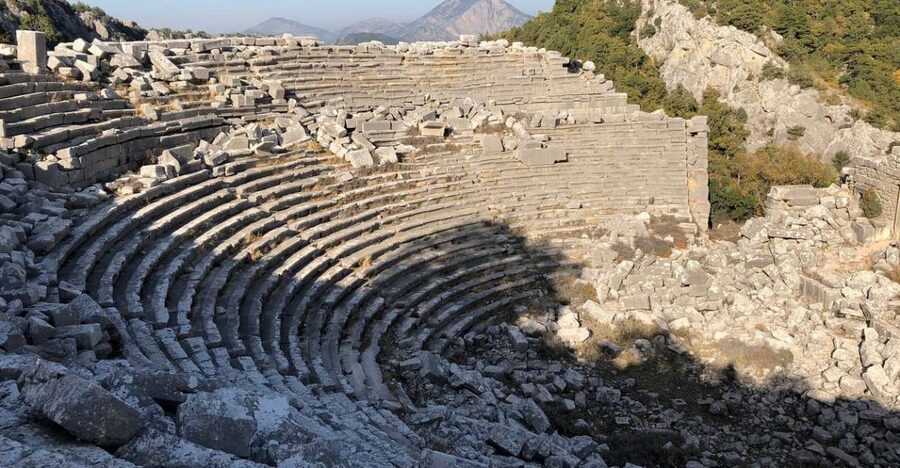
- Eagle’s Nest setting on Gulluk Mountain: dramatic ruins perched between peaks
- Early, low-crowd timing that lets you enjoy the site without the big-tour rush
- A theatre you can feel: the best viewpoints come from the mountain-top design
- Full city walk, not just one photo stop: agora, bouleuterion, cisterns, fortifications
- Easy logistics from Antalya with pickup at OPET GAS STATION and drop-off back into town
Why Termessos feels like a Turkish Machu Picchu in the Taurus Mountains
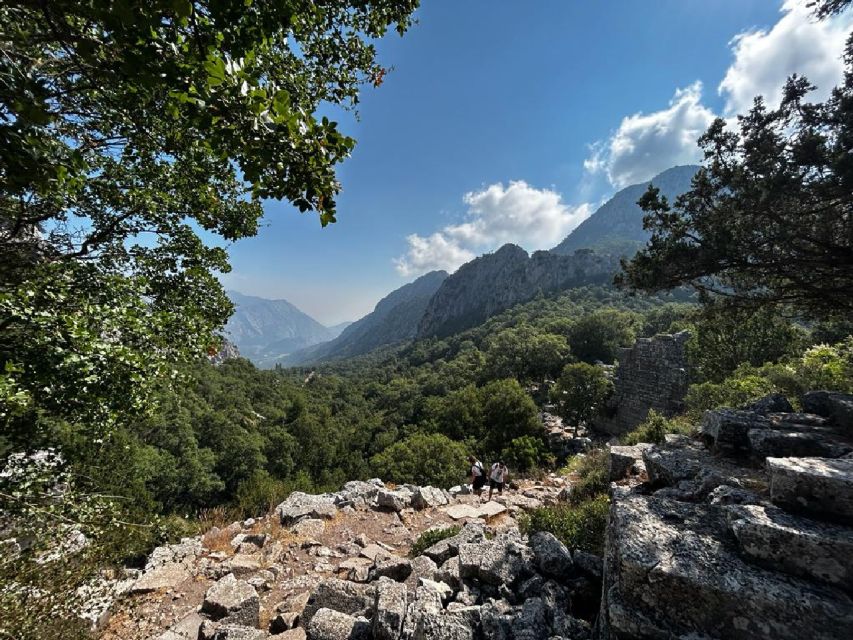
Termessos is the kind of place that makes you understand why people compare it to Machu Picchu. Not because it’s identical, but because it’s high up, remote-feeling, and built into a rugged mountain setting. The site sits on Gulluk Mountain in the Taurus range, which is why you’ll hear it described as the Eagle’s Nest.
You’re at altitude (about 1,050 m), so the air feels different than in Antalya’s coastal heat. And because Termessos is a major archaeological site that’s still not overrun, it’s easier to imagine daily life rather than just ticking off ruins. The UNESCO story helps too: Termessos is on the World Heritage Tentative List, and you can see why—well-preserved structures plus a setting that makes the whole place memorable.
You can also read our reviews of more tours and experiences in Antalya.
OPET GAS STATION pickup and a small-group start before the heat
This tour is designed to be manageable. You meet at OPET GAS STATION, then you’re picked up from Antalya and transported to the site area, with drop-off back in the city center at the end. It’s not a long bus day. It’s a focused half-day plan.
A big reason it works is timing. Many outings aim to arrive earlier, so you can see the ruins in calmer conditions and avoid the worst of the heat. One review even notes the group arrived first, which changes the whole feel of a site like this. Also, the operator states the date/time can be adjusted depending on weather and how the day fits your schedule—so you’re not locked into a rigid plan if conditions aren’t ideal.
One more practical note: the meeting point can be a little tricky to locate if you rely on public transport. Give yourself extra buffer time, or use a taxi if you want stress-free arrival. And try to arrive 10 minutes early, since morning traffic can mess with the plan.
The hike to Termessos: comfortable shoes, not technical climbing
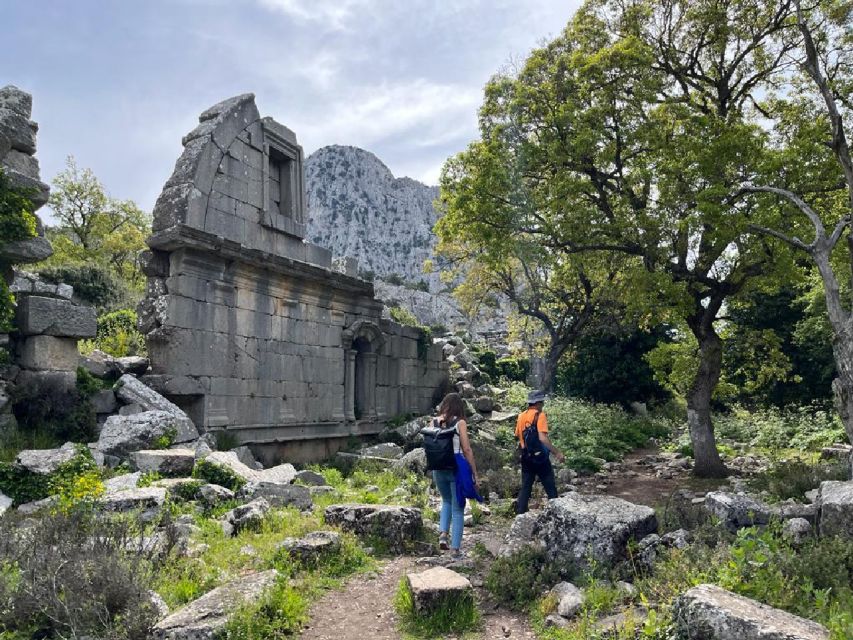
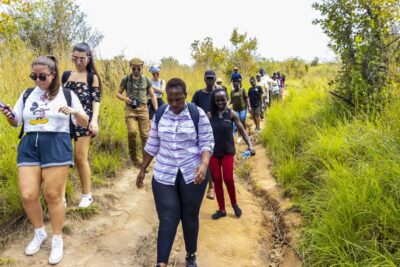
Despite the mountain setting, this is not framed as technical climbing. The tour says there’s a pathway, so you don’t need to scramble. You’re hiking in a national park setting, walking uphill through natural terrain until you reach the ancient city.
Still, your feet will feel it. Expect uneven ground and some rocky sections. One comment specifically mentions slippery surfaces and recommends trekking poles if you have them. Even if the path is straightforward, the altitude and terrain mean comfortable walking shoes matter a lot more than people expect.
What I like about this approach is that it balances effort and payoff. You’re not doing an all-day endurance trek, but you’re also not stuck on a flat, boring route. The walk acts like a warm-up for the moment you reach the theatre area and realize you’re literally walking into a cliffside ancient world.
Termessos theatre: the best viewpoint is built into the mountain
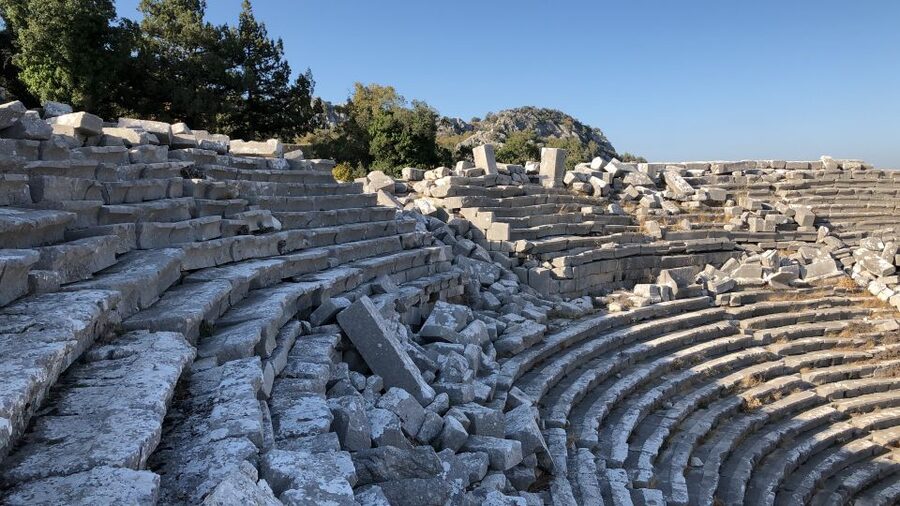
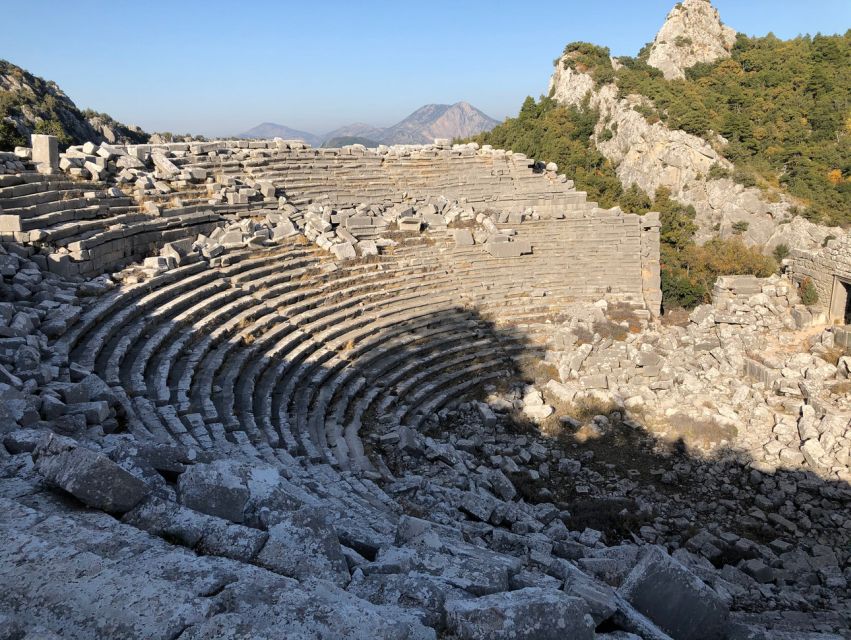
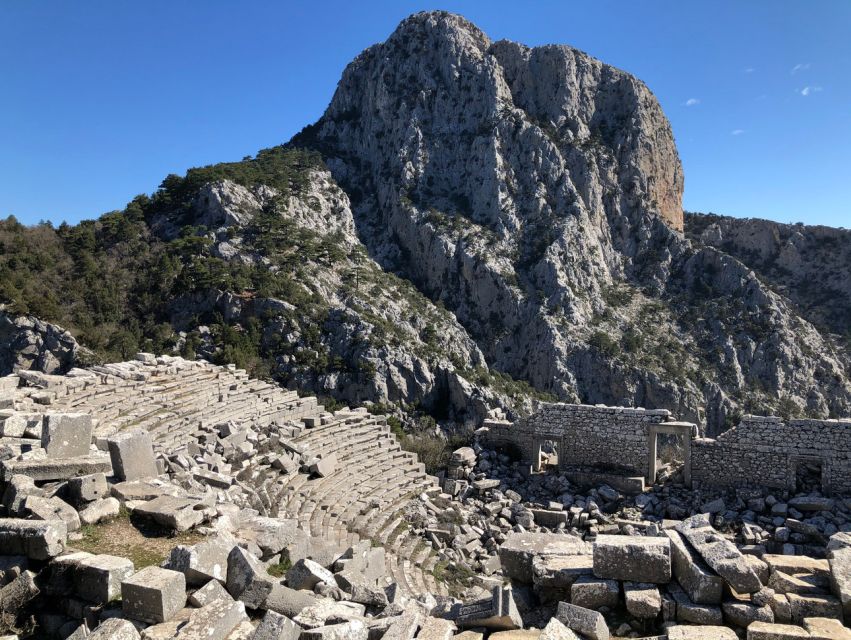
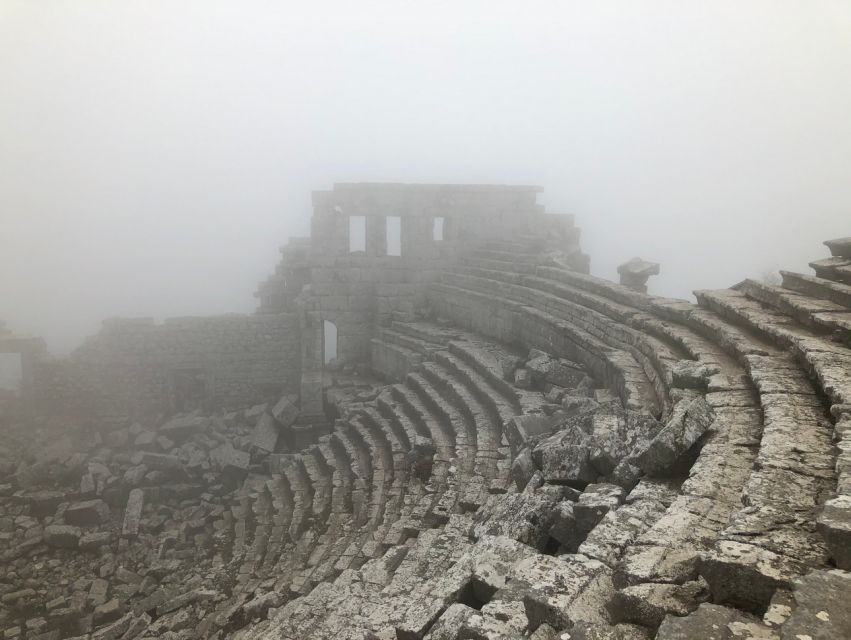
If you want one moment that sells Termessos, it’s the theatre. This isn’t just a ruin you pass on your way to something else. It’s described as being built on top like an Eagle’s Nest, and when you’re there, you get why the site earns that nickname.
You’ll see the ancient theatre layout and get the feeling of scale. One review mentions a capacity of around 5,000 spectators, which helps you picture what this place was for: gatherings, performances, public life—set against a mountain backdrop.
The theatre also makes the architecture easier to understand. The location isn’t random. Termessos was designed to work with the terrain, and the view from the theatre area helps you connect the city plan to its natural setting. You end up seeing why the ruins weren’t just built for beauty. They were built for function and visibility.
Walking the ancient city: agora, bouleuterion, and everyday power
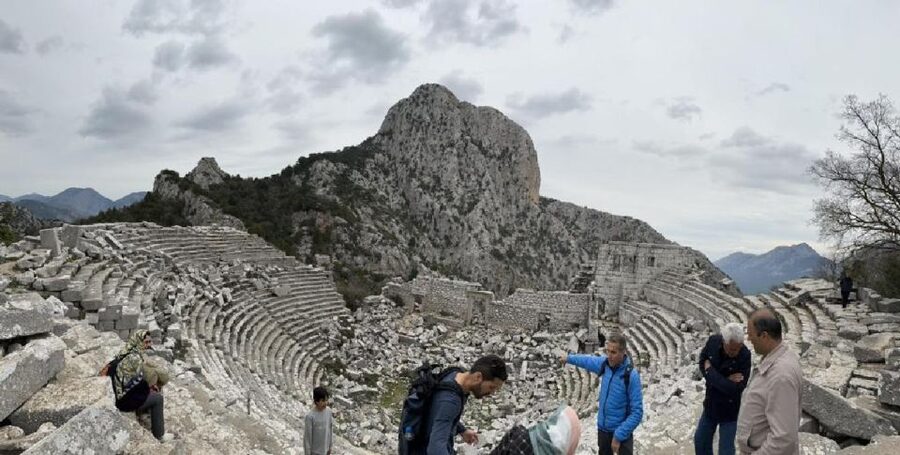
Once you move beyond the initial climb, Termessos opens up into a compact “walkable city,” where you can piece together how people lived and governed. Your guide leads you through major civic spaces, including the agora and the bouleuterion.
Here’s what makes these stops feel more real than typical ruins tours: you’re not only looking at stone. You’re getting a story about how public spaces operated in antiquity. The agora was the commercial and social hub. The bouleuterion was a political assembly space. Even without an art history degree, the way these areas are laid out helps you understand the rhythms of city life.
You’ll also get to see the luxury street—a reminder that Termessos wasn’t only about plain survival. It had wealth, big-city planning, and architectural signals that reflect status.
Gymnasium, cisterns, and why engineering matters here
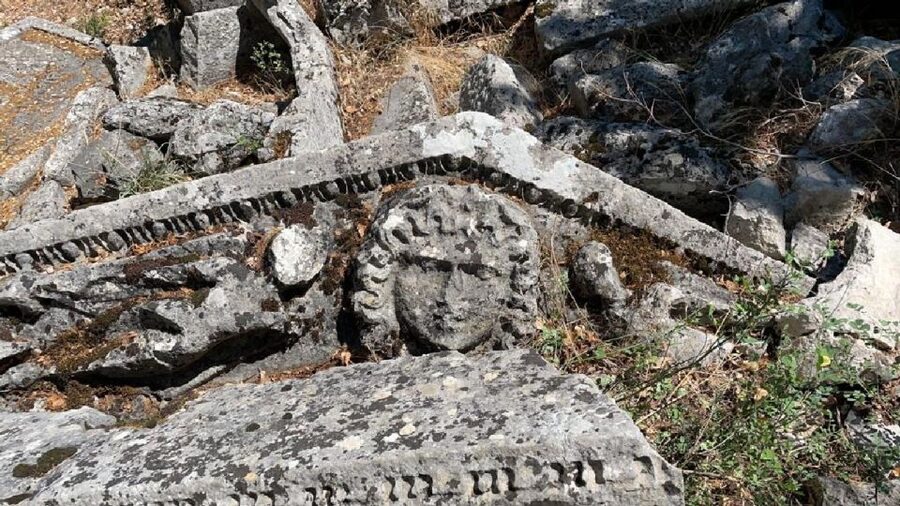
Two parts of Termessos often spark the most “how did they do that?” reactions: the gymnasium and the cisterns.
The gymnasium tells you something about culture. In many ancient cities, these were training spaces tied to public identity and social life—not just fitness. In other words, it’s an architectural clue to what the city valued.
The cisterns are where you get the practical side. Water storage explains how people sustained themselves in a mountain setting. When you understand water logistics, the city stops being a set of isolated monuments. It becomes a working system.
One review also points out that you can notice names carved into stone (donor-style inscriptions). That kind of detail changes ruins from “old rocks” into human records. You start looking at who contributed and why, and you realize the stones were part of public memory.
Fortifications, gates, necropolis, and rock tombs
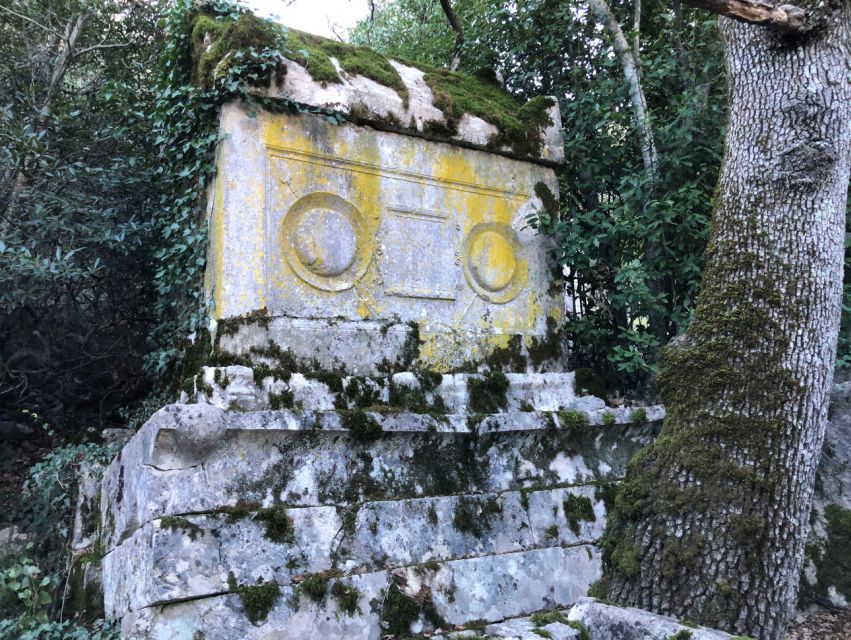
Termessos is surrounded by defensive architecture. You’ll see city fortifications and gates, and you’ll also explore parts of the funerary landscape, including the necropolis and rock tombs.
This section is powerful because it shows you the full life cycle of a community, not just the public-facing buildings. Fortifications tell you the reality of risk. Tombs tell you what people believed about honor and remembrance. Termessos keeps both in view, because the site planning includes spaces for defense and for the dead.
Also, walking among these areas changes your perspective. You stop treating the theatre as the main attraction. Instead, you realize the entire city layout is shaped by topography and need. The stones work together—ruins, fortifications, and burial sites all reinforce the sense that this was a complete settlement, not a scatter of monuments.
Artemis and Hadrian’s temple: linking religion and empire
The tour includes a stop at the temple of Artemis and Hadrian. This matters because it connects everyday religious life with the wider political world of the Roman period. Artemis was a major figure in Greek mythology, and Hadrian’s name tells you the site wasn’t isolated from imperial influence.
What I like here is that you’re not just seeing a single highlight. You’re seeing how Termessos fits into broader Mediterranean patterns while still being shaped by its mountain setting.
If you pay attention to the structural remains and the placement, you’ll get a better feel for how sacred spaces organized movement through the city. Even when the temple isn’t fully intact, its presence anchors the tour’s story.
Price and value: what you pay for, and what to budget
The tour is priced at $62 per person for about 4 hours. For this price, you’re paying for a live guide and transportation from/to Antalya meeting points. Entrance tickets are not included, and you buy at the gate (payment can be by credit card, or Turkish Lira cash).
Is it good value? In my view, yes—if you want a guided interpretation. Termessos is the kind of place where a guide turns scattered stones into a readable city. The reviews repeatedly highlight Önder’s energy and the way he explains structures and history in ways that help you navigate the site and understand what you’re seeing.
Your main “budget items” are simple:
- Entrance ticket purchased at the gate
- Water (bring your own; the tour suggests it because you may get thirsty)
- Comfortable shoes, ideally traction-ready
When you add it up, $62 mostly covers your guide time plus the logistics of getting you out of Antalya and back without hassle.
Who should book this Termessos hike (and who should skip it)
This tour fits best if you want a calmer, more thoughtful way to see archaeology. The site is described as far from mass crowds, and the small-group format helps you get answers and photo stops without feeling rushed.
You’ll also enjoy it if you like learning through place-based details: how civic buildings relate, why water storage matters, and why the theatre location is so dramatic.
Skip it if you have mobility limitations or if you’re pregnant. The tour is listed as not suitable for wheelchair users or people with mobility impairments, and it’s also not recommended for pregnant women. If you’re unsure, think about whether you’re comfortable walking on uneven, possibly slippery ground for the length of the hike.
Quick tips to make your morning smoother
A few things make a real difference on tour day.
- Have breakfast first. You can’t eat or drink in the vehicle, and you’re advised not to show up hungry.
- Bring water in advance. The tour explicitly asks for it because you may get thirsty.
- Wear shoes you trust on uneven surfaces. Leave high heels at home.
- If you have them, trekking poles can help on rocky or slick sections.
Also, keep your expectations right: this is a 4-hour experience with meaningful walking. You’re seeing key areas of Termessos, not every single corner of the site.
Should you book the Antalya Termessos hiking tour?
I’d book it if you want the Termessos experience at human scale: a small group, guided understanding of how the city worked, and that special mountain-theatre view that makes the place feel like something beyond the usual “ruins checklist.” The combination of transport included, a live English-speaking guide, and a focused 4-hour format is a strong match for anyone doing a first (or only) serious ancient site outing from Antalya.
I’d think twice if you need low-impact walking, because this is still an outdoor hike with uneven ground. And if you hate planning for tickets and basic supplies, you’ll want to handle those items early so you don’t feel rushed at the gate.
If you’re aiming for a quieter day, better pictures, and real context instead of just stone photos, this tour is one of the smarter ways to spend your time around Antalya.
FAQ
How long is the Termessos hiking tour?
It lasts about 4 hours.
Where do I meet the group?
You meet at OPET GAS STATION.
Are entrance tickets included in the price?
No. Entrance tickets are not included, and you purchase your ticket at the gate.
What payment methods work for the entrance ticket?
You can pay at the gate with a credit card or with Turkish Lira cash.
What should I bring?
Bring water and wear comfortable shoes. If you have trekking poles, they can be useful on rocky or slippery sections.
Is there food or drink allowed in the vehicle?
No. You’re not allowed to eat or drink in the vehicle, so it’s recommended that you have breakfast before the tour.
What language is the tour guide?
The live tour guide provides the experience in English.
Is the tour wheelchair accessible?
No. It’s listed as not suitable for wheelchair users and people with mobility impairments.
What’s the cancellation policy?
Free cancellation is available up to 24 hours in advance for a full refund.