REVIEW · TERCEIRA
Baías de Agualva hiking – Terceira island
Book on GetYourGuide →Operated by TuriAzores · Bookable on GetYourGuide
Terceira on foot feels like you’re walking through a postcard that moved. This Baías de Agualva hike pairs coastal views with those iconic stone-wall farm fields, all guided so you don’t just see things—you understand them. Add in a volcanic highlight stop on the island loop and you’ve got a half-day that packs real variety without turning into a marathon.
I especially love the mix of scenery: carved sea cliffs, native plants, and paths that hug the coast. I also like that the hike is paced for a small group, where a guide like Rafaela or Elizabeth can tailor attention when someone needs extra support on the steeper bits.
The main thing to consider is footing. Even when the route is described as easy-ish, some sections can feel uneven or steep, so bring proper shoes and expect to work a little.
In This Review
- Key Things You’ll Remember
- Baías de Agualva: Coastal Views and Stone-Wall Fields
- The Trail’s Real Difficulty: Easy End, Uneven Ground
- Your Guide Makes the Difference: Rafaela, Elizabeth, and Leandro
- Minibus Island Loop: How the Driving Time Adds Meaning
- Algar do Carvão: Europe’s Only Empty Volcano Pit
- Baías de Agualva to the Coast: What You’ll See Up Close
- Lunch and Local Food: Plan for What You’ll Order
- Price and Value: Is $64 Worth It?
- What to Bring (So You Enjoy the Views Instead of Fighting Your Feet)
- Who Should Book This Hike on Terceira
- Should You Book Baías de Agualva Hiking?
- FAQ
- How long is the Baías de Agualva hiking experience?
- What is included in the tour price?
- Do I need to bring hiking equipment?
- Is food or drink provided during the tour?
- What should I bring to the hike?
- How many people are in the group?
- What languages are available for the guide?
- Does the tour include a visit to Algar do Carvão?
- What is the cancellation policy?
Key Things You’ll Remember
- Stone-wall fields: Terceira’s agriculture looks almost architectural as you walk through it
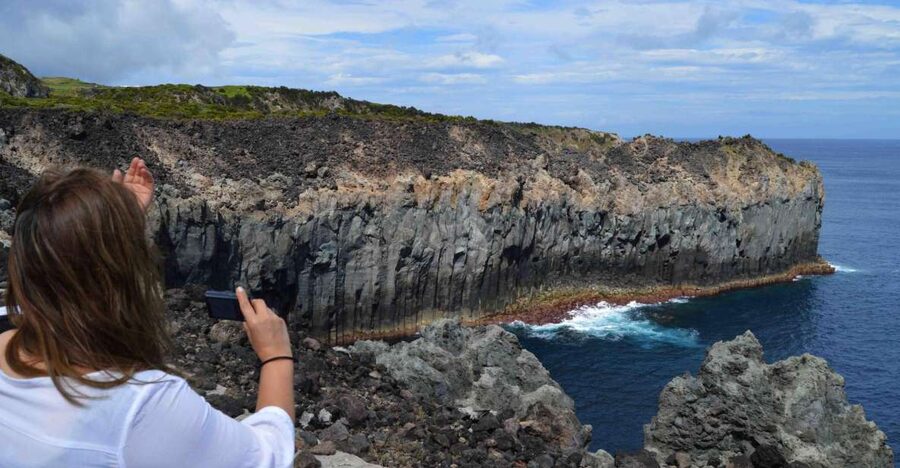
- Carved coastal cliffs: big drop-offs and dramatic views make the hike feel special
- Native vegetation along the trail: you’re not just passing scenery, you’re moving through the island’s living fabric
- Volcanic stop at Algar do Carvão: Europe’s only empty volcano is a memorable contrast to the coast
- Small group energy (max 8): easier questions, better pacing, fewer crowds
- Guide support on tricky parts: Elizabeth’s careful, encouraging supervision is the kind of detail that matters on a hike
Baías de Agualva: Coastal Views and Stone-Wall Fields
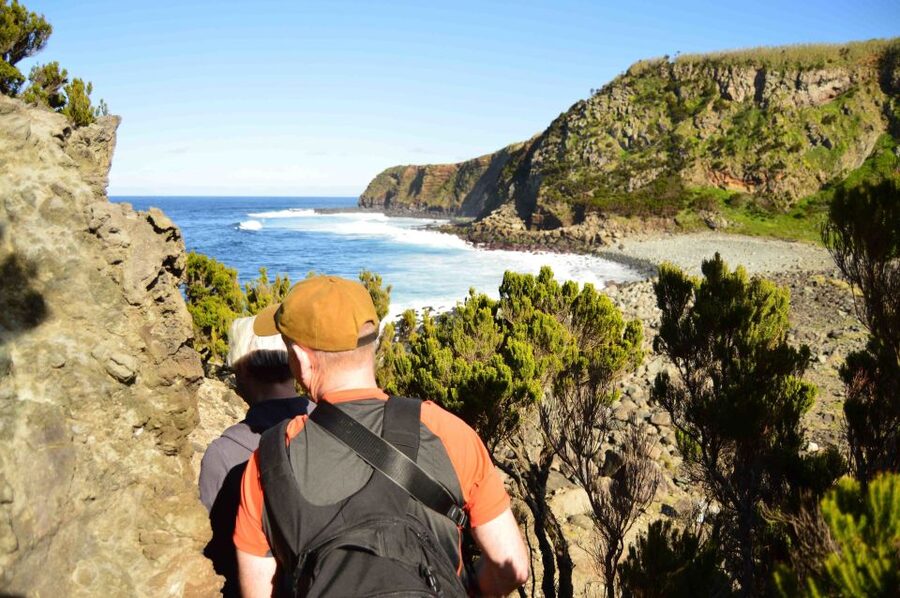
Terceira has a way of making even short walks feel meaningful. Near Agualva, you get the island’s classic look: fields edged by thick stone walls, rounded hills, and then—suddenly—the coast. The result is a hike that doesn’t just go from point A to B. It keeps switching moods: farm country, wild vegetation, and then open sea.
This is also a hike where you’ll notice how the land was shaped. The volcanic origin isn’t hidden. It’s in the cliffs. In the terrain. In the way paths seem to thread through what the landscape allowed. If you like photos, you’ll take plenty. If you prefer to actually understand what you’re looking at, you’ll enjoy the guided commentary on how the island works and why certain places look the way they do.
You can also read our reviews of more tours and experiences in Terceira.
The Trail’s Real Difficulty: Easy End, Uneven Ground
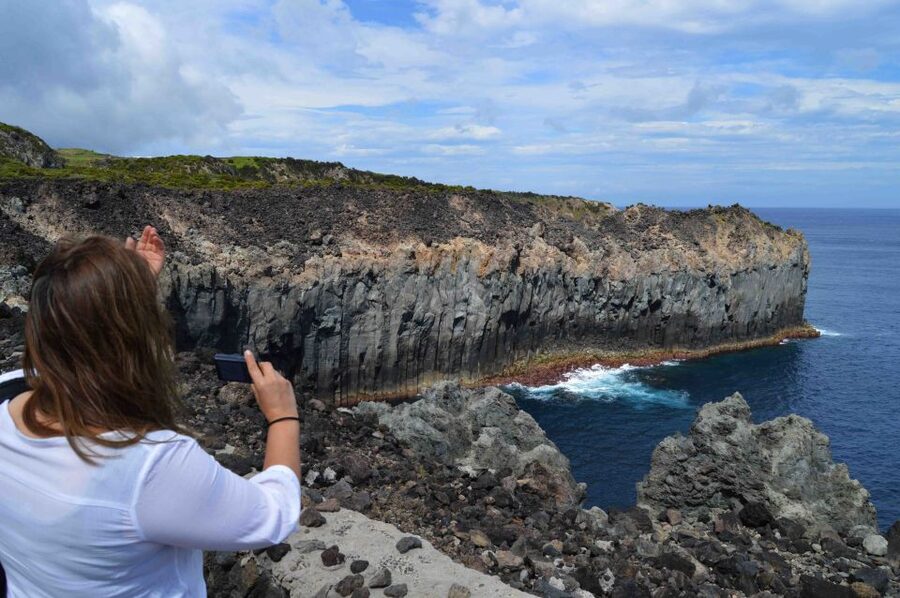
Most people come expecting a gentle coastal walk. That expectation is usually close—until you hit the bits that remind you you’re still on an island trail. One of the helpful things here is that experienced guides pay attention to footing and pacing. When I think about who this hike suits, I don’t picture someone doing a casual stroll in sneakers. I picture someone who can handle irregular ground for a few hours.
Here are the realities you should plan for:
- Expect a route around 5 km for the walking portion (length can vary slightly with the path taken).
- The trail is often described as easy to moderate, but you may find short steep or slick sections.
- If you’re the type who needs breaks, a patient guide makes a difference. You’ll get that kind of support on this hike.
Practical tip: your biggest enemy won’t be distance. It’ll be balance on uneven steps and uneven rock. Hiking shoes aren’t optional if you want to enjoy the views instead of concentrating on your ankles.
Your Guide Makes the Difference: Rafaela, Elizabeth, and Leandro
This tour lives or dies by the guide, and that’s something you should take seriously. Here, the guides are actively shaping the experience with context, pacing, and conversation. A great guide turns Terceira from scenery into a story you can follow.
I’m also encouraged by the variety of guide styles you might experience:
- With guides like Rafaela, you’ll get ongoing insight about the island and the people as you walk.
- With Elizabeth, the focus can get very personal—supportive, encouraging, and careful on challenging sections. If you’re nervous about hills or uneven ground, that kind of supervision helps you relax.
- With Leandro, the tone can be more information-heavy, with lots of island knowledge tied directly to what you’re seeing.
Language coverage is solid. You can get an English, Portuguese, French, or Spanish guide, so you’re not stuck piecing things together with hand gestures.
Minibus Island Loop: How the Driving Time Adds Meaning
You’re not stuck only on the trail. The day includes travel by minibus across Terceira, which matters because it lets you see more than one “type” of island scenery in a short window. That’s where the experience becomes efficient.
Instead of hiking in isolation, the tour sets up contrasts:
- You start with viewpoints and volcanic geography, then
- you get the coastal hike,
- then you shift again toward another signature feature.
That structure is especially good if it’s your first trip to Terceira or you want a taste without building your own route from scratch. You get the logic of where to look and why it matters, without the stress of figuring out timing.
Algar do Carvão: Europe’s Only Empty Volcano Pit
If you like places with instant wow-factor, this stop delivers. Algar do Carvão is famous for being Europe’s only empty volcano. You’re not just looking at a crater from the rim—you’re exploring a volcanic formation that feels otherworldly compared to the fields and coastline.
Why this stop is valuable on your hike day: it reframes everything you saw during the drive and the walk. Coastal cliffs make more sense when you’ve just stood near a major volcanic feature. You’ll also notice how Terceira’s landforms connect—volcanic origin feeding later landscapes and human use.
The vibe here is different, too. The coast tends to feel open and windy, while the volcano pit can feel enclosed and dramatic. That contrast helps keep the day from blending together.
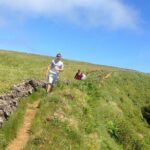
Baías de Agualva to the Coast: What You’ll See Up Close
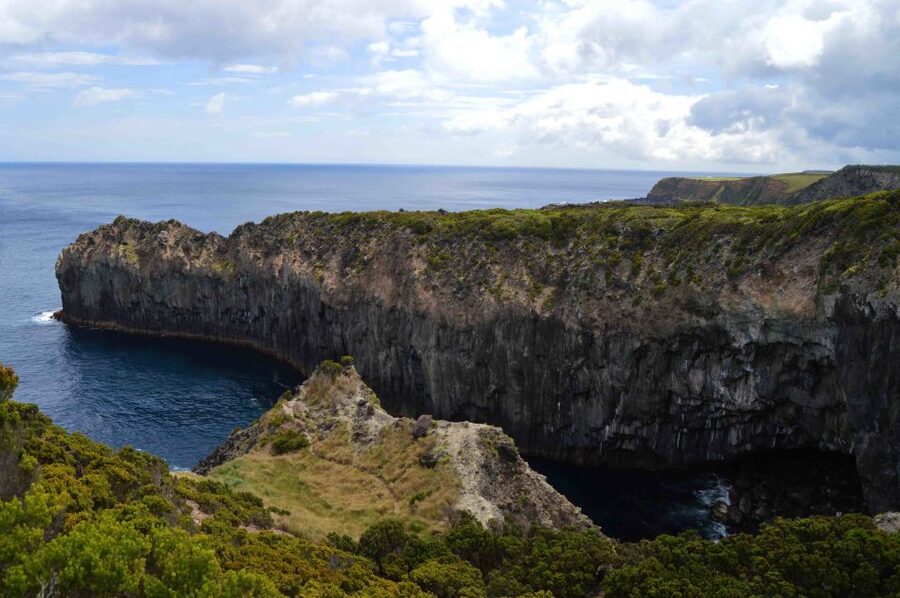
On this hike, the scenery isn’t just distant viewpoints. You’re walking through real patches of Terceira:
- Native vegetation along the way, not just grass and generic greenery
- sections through wild subtropical woods (the kind of path that feels quietly alive)
- climbs and descents that keep you alert to the ground under you
- coastal hiking where the ocean is a constant background element
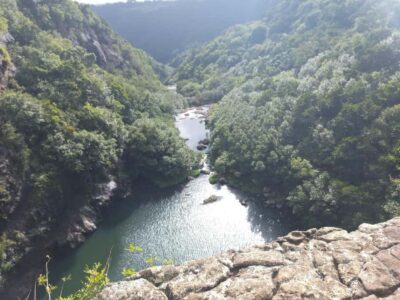
The best part of coastal walking is the way you can read the coastline with your feet. You see what the cliffs do as the path rises. You get a sense of exposure—what it means for weather and for how the cliffs were carved.
Also, the stone-wall fields aren’t static scenery. They’re cues. They show how people worked with volcanic terrain over time, building boundaries, shaping plots, and creating a living patchwork that you move through while the sea waits in the distance.
Lunch and Local Food: Plan for What You’ll Order
The day is built to include lunch at a typical restaurant, and that’s a big part of experiencing Terceira beyond scenery. One classic dish you should know about is alcatra de carne—pot roast cooked in large unglazed red clay pots. It’s the kind of local specialty that tastes like someone took their time.
One caution: the tour info indicates no food or drink is included, even though lunch is part of the day’s flow. So treat lunch like an on-the-day restaurant stop you’ll likely pay for yourself. In practical terms, that means budgeting a little extra and maybe keeping water handy before lunch if you’re sensitive to long gaps.
If you do order alcatra de carne, you’ll be choosing a dish tied to the island’s cooking traditions rather than settling for something that could be anywhere. On a short trip, that’s the kind of local upgrade worth paying for.
Price and Value: Is $64 Worth It?
At $64 per person for about 3.5 hours, the real question isn’t the sticker price—it’s what’s packaged into that time.
You’re getting:
- pickup and drop-off from your hotel
- a live guide
- a small group size (up to 8), which usually means better attention on the trail
- a mix of hiking plus major Terceira highlights
For many visitors, the value is in reducing hassle. You don’t have to map a volcanic stop + coastal hike combo + local restaurant timing. You also don’t have to bring equipment you’re unsure you’ll use again on the island. The only thing you do need to handle is your own hiking shoes and water.
Is it the cheapest option? Maybe not. But for a guided, small-group, “see more in less time” day on Terceira, it lands in the fair-to-good range—especially if you care about interpretation, not just walking.
What to Bring (So You Enjoy the Views Instead of Fighting Your Feet)
This tour is simple, and that’s good. Bring the basics and you’ll be fine.
Pack:
- Hiking shoes (this is the big one)
- Water
If you’re someone who runs cold or plans to start early, you might also consider a light layer, but that’s personal preference rather than a tour requirement. Keep it practical: you’re walking, sometimes uphill, sometimes uneven.
Who Should Book This Hike on Terceira
This experience fits best if you want:
- a guided coastal walk with real context
- small-group dynamics instead of a bus full of people
- a mix of volcanic and seaside scenery without doing logistics yourself
- a guide who can support you on steeper or uneven trail sections
It may be less ideal if:
- you’re looking for flat, stroller-friendly paths (this is not described that way)
- you’re skipping the right footwear
- you prefer total independence over guidance
If you’re traveling as a couple or solo and want a human-sized group, you’ll likely like the format. And if it’s your first time on Terceira, the combination of island highlights plus an on-foot experience is a strong way to get oriented.
Should You Book Baías de Agualva Hiking?
I’d book it if you want your Terceira time to feel purposeful. The best argument for this hike is the pairing: coastal views and stone-wall fields on foot, plus a volcanic stop that gives the whole day a sharper story. The guide component is also a major plus here, with examples of supportive, attentive leadership on trickier trail stretches.
Skip it (or choose a different option) if you want an ultra-easy stroll with perfectly even ground. This is a hike with some real walking effort, even if it’s not a full-on endurance mission.
If you book, go prepared with proper shoes and water, and you’ll earn those cliff views instead of just surviving the steps.
FAQ
How long is the Baías de Agualva hiking experience?
The duration is listed as 3.5 hours.
What is included in the tour price?
The tour includes hotel pickup and drop-off, plus a live guide.
Do I need to bring hiking equipment?
Hiking equipment is not included, so you should bring what you need.
Is food or drink provided during the tour?
No food or drink is included.
What should I bring to the hike?
Bring hiking shoes and water.
How many people are in the group?
The group is limited to a small group of up to 8 participants.
What languages are available for the guide?
The live guide is available in English, Portuguese, French, and Spanish.
Does the tour include a visit to Algar do Carvão?
Yes, the experience includes a visit to Algar do Carvão.
What is the cancellation policy?
You can cancel up to 24 hours in advance for a full refund.