REVIEW · TERCEIRA
Terceira Island: Mistérios Negros Hiking
Book on GetYourGuide →Operated by TuriAzores · Bookable on GetYourGuide
Black lava makes Terceira feel otherworldly. I love the Pico Gaspar climb and how the dark lava rock makes the surrounding vegetation look almost dramatic. I also like that the hike is a 5-kilometer circular route, so you see several landforms without having to backtrack.
One possible drawback: this is not suitable for mobility impairments, and you’ll want solid footwear for volcanic ground. Also, a small number of experiences complained about pickup or cancellation surprises, so I suggest you confirm the plan the day before and stay reachable.
In This Review
- Mistérios Negros on Terceira: why this black-lava walk feels special
- Key highlights you’ll actually care about
- Pico Gaspar: the climb that gives context to every dark-rock step
- Your 5 km loop: how the landforms come in “chapters,” not random stops
- Native vegetation on Terceira: Japanese cedar, juniper, blueberry, and birds
- The pace and the guide: what small-group hikes get right
- Timing and what you’ll do in 3.5 hours (including pickup)
- What to bring: the small list that makes the day smoother
- Price and value: is $84 worth it?
- A balanced reality check: what could go wrong
- Who this hike is best for
- Should you book Mistérios Negros Hiking?
- FAQ
- How long is the Mistérios Negros hike?
- How far do you hike?
- What sights will I see?
- What kind of difficulty is it?
- Where does pickup happen?
- What languages are the guides?
- What’s included in the price?
- Is it suitable for people with mobility impairments?
- What should I bring?
Mistérios Negros on Terceira: why this black-lava walk feels special
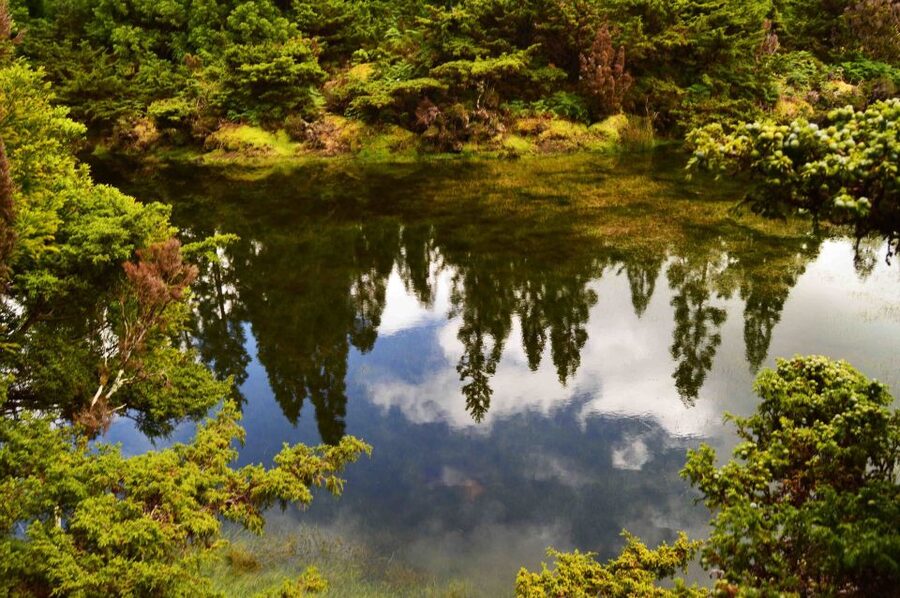
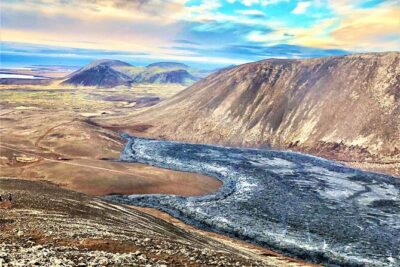
Terceira’s Mistérios Negros area earns its name for a reason. You’re walking on dark volcanic rock, and it changes the whole mood of the trail. Instead of a typical green hike where everything blends together, you get contrast: black ground, fresh leaves, and misty Azores air doing the rest.
What makes this outing particularly appealing is the mix of scenery packed into a short time. You’ll cover roughly 2.5 hours of hiking on a moderate loop, then you’re back before you start craving a long rest. For me, that’s a strong value on an island day—enough time to feel you did something real, without turning the day into a full-on slog.
Key highlights you’ll actually care about
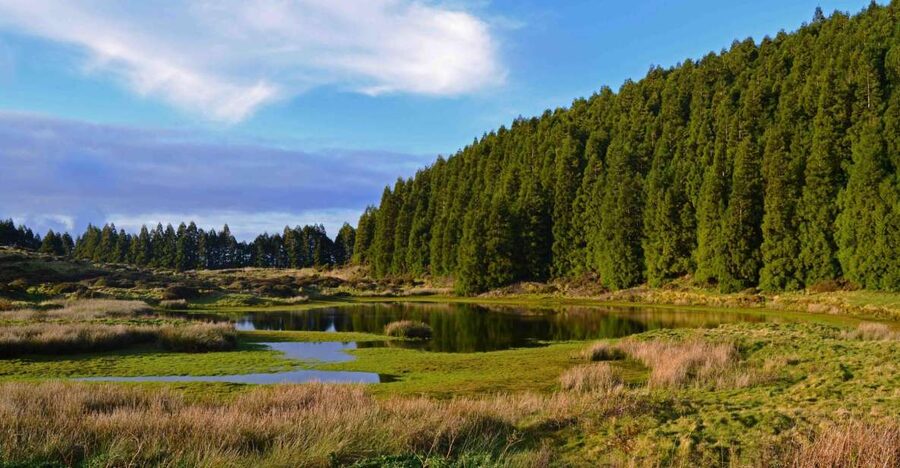
- Pico Gaspar: a climb tied to volcanic activity that erupted about 15,000 years ago
- A circular 5 km loop: different landforms without repetition
- Black-lava scenery: dark rock around the trail that shapes how the whole hike looks
- Native plants and birds: Japanese cedar, juniper, blueberry plants, plus birdlife
- Small lakes and volcanic domes: crater-like shapes and watery pockets along the way
You can also read our reviews of more tours and experiences in Terceira.
Pico Gaspar: the climb that gives context to every dark-rock step
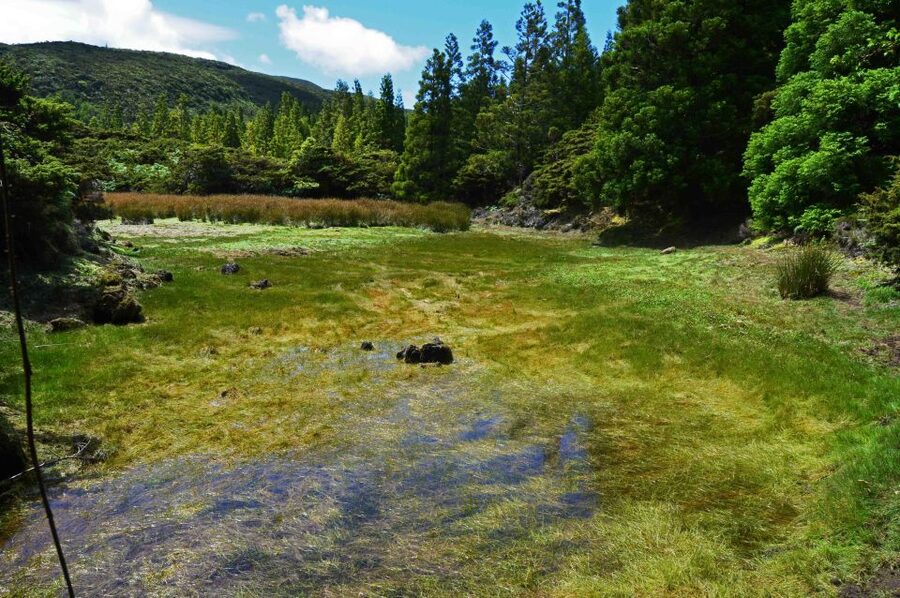
The heart of the experience is the Pico Gaspar portion. Even if you’re not a volcano nerd, this is the part that gives you a clear “why” behind what you’re seeing. The area includes a climb up a volcano that erupted around 15,000 years ago, which helps you connect the trail to real geologic time instead of just guessing what you’re walking past.
As you move up and along, you’ll feel the terrain change. Lava flows don’t just create a one-time feature; they build patterns. On this route, you’re able to watch how the landforms are linked—rock texture, slopes, and how the trail threads through the aftermath of eruption.
The key practical point: treat this like a climb day. Even though the hike is labeled moderate, volcanic ground can be uneven. I’d pace yourself early so the last sections don’t feel like you rushed for no reason.
Your 5 km loop: how the landforms come in “chapters,” not random stops
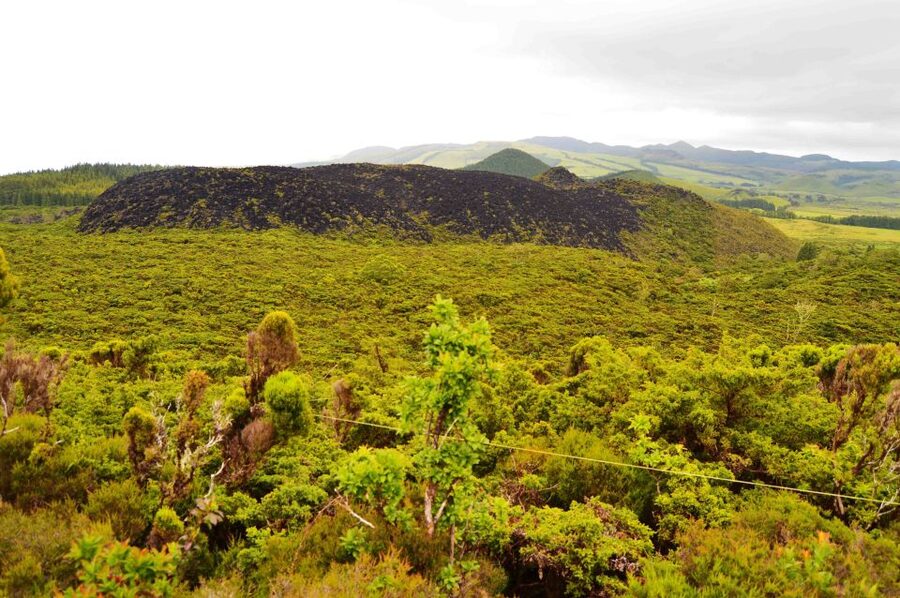
The hike is designed as an approximately 2.5-hour circular trek through landforms shaped by ancient lava flows. A circular route sounds simple, but in practice it helps you avoid the “same view again” problem. You’ll start, rotate through the area, and finish at a similar point, while the scenery shifts under your feet.
Two features stand out in the trail story: small lakes and volcanic domes. You might not see a massive crater like you’d imagine in bigger volcano regions, but those smaller water-and-rock details can be even more interesting because they show micro-environments forming within volcanic terrain. It’s the kind of place where you pause because the ground is doing something unusual.
Here’s the tip I’d give you: stop for a quick look before you take the next step. The trail changes enough that it’s worth catching the moment visually, not just walking through it.
Native vegetation on Terceira: Japanese cedar, juniper, blueberry, and birds
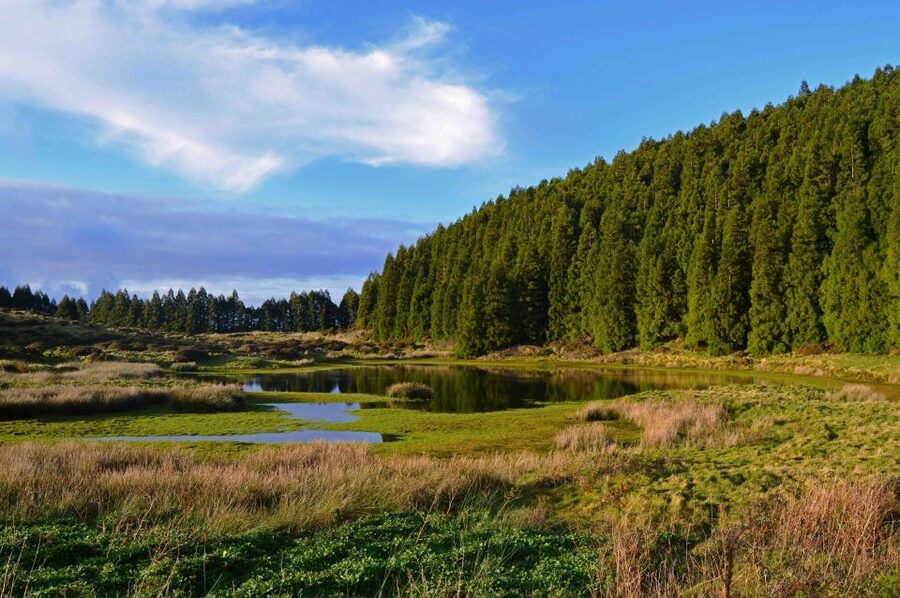
One of the best parts of this hike is that it feels like you’re inside Terceira’s native plant world, not just passing scenic viewpoints. The trail includes native vegetation such as Japanese cedar, juniper, and blueberry plants. If you’re used to hiking in places where everything looks planted or ornamental, this feels more local and grounded.
You’ll likely also notice birdlife as you go. The trail’s countryside air is fresh, and because you’re moving at a moderate pace, you have time to look and listen instead of only focusing on your footing. Birdwatching works best when you slow down for 30 seconds at a time—let the soundscape come to you.
A small mindset shift helps: don’t only watch the horizon. Look down and mid-distance for leaves, textures, and the way plants grow around volcanic rock.
The pace and the guide: what small-group hikes get right
This is a small group tour, limited to 8 participants, with a live guide in English, French, Portuguese, or Spanish. That size matters more than you might think. In a trail setting, smaller groups reduce bottlenecks at photo stops and help the guide manage pacing naturally.
You’ll also get the sense that some guides teach as they walk. For example, feedback highlights guides such as Elisabeth, Miguel, and Leo for sharing a good overview of Terceira and answering questions about what you’re seeing. A good guide can turn a physical hike into a clearer story—lava flows make more sense when someone explains what to notice.
Pacing can also feel flexible. At least one guide allowed the hike to happen at the group’s pace without rushing, and another added an extra portion not listed as part of the standard plan. I wouldn’t count on extras every time, but it’s a nice reminder that you’re in the hands of a guide—not a rigid script.
Timing and what you’ll do in 3.5 hours (including pickup)
Total duration is about 3.5 hours, with approximately 2.5 hours actually spent hiking. That structure is practical: you spend your energy on the trail, and the rest of the time covers movement to and from the start point.
Pickup is included from hotels in Angra do Heroísmo and Praia da Vitória. If you’re basing yourself in one of those towns, you avoid the hassle of figuring out transport just to start walking.
What to expect on the trail itself: a moderate loop over about 5 km, with stops where the scenery (lakes, domes, and lava textures) becomes the main event. The tempo should feel like a “walk and look” day, not a training session.
What to bring: the small list that makes the day smoother
You’ll be outside for several hours and walking on volcanic terrain, so the basics matter. Bring:
- Comfortable shoes (and ideally hiking shoes with traction)
- Sun hat
- Camera
- Sunscreen
I’d add one personal rule: dress in layers if you’re sensitive to changing Azores weather. Even with a sunny morning, volcanic areas can cool off, and being able to adjust without stress is worth it.
Price and value: is $84 worth it?
At $84 per person, this hike sits in the “active day that includes real logistics” category. The price isn’t only paying for the scenery. You’re paying for a guide, the small-group experience, and hotel pickup and drop-off.
For value, ask yourself what you’d spend without the tour: transport to the start, time spent figuring out routes, and the cost of a guide who can point out what matters. If you want the hike plus interpretation, the number starts to feel fair.
Also, the rating is 4 out of 5 (based on 29 reviews). That’s a solid sign of consistency, though not perfect—more on that in the booking advice.
A balanced reality check: what could go wrong
Most of what you’ll hear about this hike is positive: exceptional scenery, strong guiding, and a calm pace that lets you enjoy the trail. But a couple of reports raised concerns about reliability—specifically, instances where people said no one showed up or the tour was canceled with poor communication.
That doesn’t mean the whole experience is doomed. It does mean you should be proactive. If you’re taking this as a key planned day on Terceira, confirm the pickup and stay reachable on the day. Arrive a bit early at the pickup point so you’re not stuck waiting with no clear contact.
If you hit wet weather, expect damp conditions and condensation in vehicles from one report—nothing unsafe necessarily, but worth noting if you’re sensitive to comfort.
Who this hike is best for
This tour fits best if you want:
- A moderate, scenic circular hike on Terceira
- Volcano-themed scenery without an all-day trek
- A guided walk where someone points out plants, terrain features, and what to notice
It’s not for everyone. The activity is listed as not suitable for people with mobility impairments.
If you’re hiking with kids or someone who prefers very flat walking, you might find the volcanic terrain a bit demanding. If you’re comfortable walking for a couple hours at a moderate pace, you’ll likely enjoy it.
Should you book Mistérios Negros Hiking?
I’d book it if you’re the type who likes your travel days to have a clear centerpiece. Mistérios Negros delivers that: black lava, a meaningful volcano climb (Pico Gaspar), native plants, and those small lakes and volcanic domes packed into a loop that doesn’t waste time.
Hold off or be cautious if you strongly dislike any chance of day-of uncertainty. A few negative experiences mention pickup or cancellation issues, so confirm your details and don’t schedule this as your only Plan A.
If you want an authentic Terceira outdoors experience with a guide who can explain the island as you walk, this hike makes sense—especially if you can start from Angra do Heroísmo or Praia da Vitória and let the pickup handle the first step.
FAQ
How long is the Mistérios Negros hike?
The tour lasts about 3.5 hours total, with approximately 2.5 hours on the hiking trail.
How far do you hike?
You’ll do an approximately 5 kilometer circular trek.
What sights will I see?
You’ll see the Pico Gaspar volcano area, dark lava rock terrain, native vegetation, small lakes, and volcanic domes.
What kind of difficulty is it?
It’s described as a moderate level hike.
Where does pickup happen?
Pickup is possible from hotels in Angra do Heroísmo and Praia da Vitória.
What languages are the guides?
The live guide is available in English, French, Portuguese, and Spanish.
What’s included in the price?
Hotel pickup and drop-off are included.
Is it suitable for people with mobility impairments?
No, it is not suitable for people with mobility impairments.
What should I bring?
Bring comfortable shoes (hiking shoes are listed), a sun hat, a camera, and sunscreen.