REVIEW · BUDAPEST
Budapest Exoskeleton Robotics Powered Nature Hike
Book on Viator →Operated by E-Magine Rides Budapest · Bookable on Viator
Walking uphill without drama is possible. This Budapest hike mixes the real Buda Hills with the Hypershell exoskeleton, so the climb feels more playful than punishing. You still hike on forest paths, but the tech gives you extra lift when the trail tilts up.
What I like most is how the route is built around iconic views. You’ll spend real time in the highpoints around János Hill and finish at the Elizabeth Lookout Tower, where 360-degree panoramas make every photo feel worth the effort. The one drawback to consider: you’re still walking on uneven, natural ground, and after you remove the device, your legs can feel noticeably different for a bit.
In This Review
- Key highlights you’ll actually care about
- Why Normafa and János Hill make a robot-powered hike make sense
- Getting fitted with the Hypershell exoskeleton at Normafa
- Stop-by-stop: Normafa to Szépjuhászné Station to János Hill
- Normafa: the warm-up and the tech intro
- Szépjuhászné Station: the dreamy railway pause in the woods
- Jánoshegy / János Hill: the climb that pays you back
- The Elizabeth Lookout Tower: short time, big payoff
- Pace, group size, and what your body will feel on the day
- Price and value: what you’re really paying for
- Who this hike fits best (and who may want a different plan)
- Should you book this Budapest exoskeleton nature hike?
- FAQ
- How long is the Budapest exoskeleton nature hike?
- What is included in the price?
- Where does the tour start?
- What language is the tour offered in?
- How big is the group?
- Can I cancel for a full refund?
Key highlights you’ll actually care about
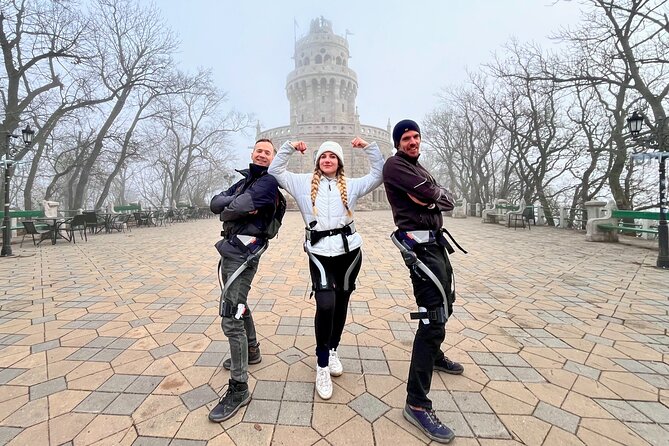
- Hypershell exoskeleton fitting before you start, so you get comfortable with the controls and feel before the first steep sections
- Normafa start in a local-favorite hiking area, not a generic city walk
- Scenic break at Szépjuhászné Station, along the Children’s Railway route through the Buda Hills woods
- János Hill views and easy photo moments, including Elizabeth Lookout Tower at the summit
- Small group size (max 8) with a relaxed, stop-when-you-want pace
Why Normafa and János Hill make a robot-powered hike make sense
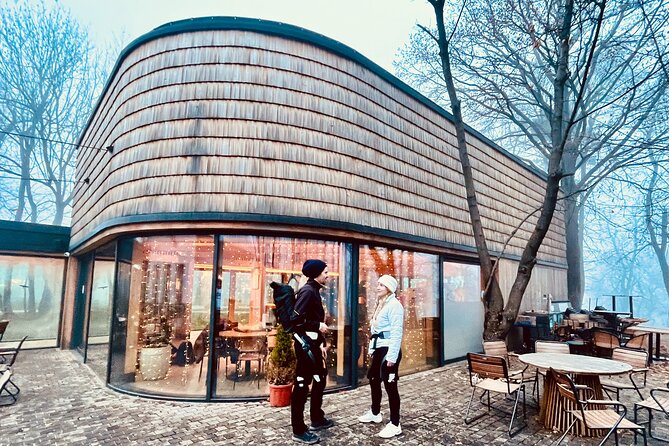
If you want the idea of assisted hiking to feel legit, you need terrain that actually tests you. That’s exactly what you get here. The route starts in the Normafa area, a popular patch of greenery for Budapest locals. You’re not just sightseeing from a platform; you’re moving through the Buda Hills where uphill stretches are part of the experience.
Then the hike ramps toward János Hill, the highest point in Budapest. This matters because the exoskeleton’s assist is most noticeable when the trail rises. On flatter ground, it can feel like a helpful nudge. On steeper sections, it turns the hike into something closer to controlled effort, so you arrive at viewpoints with energy instead of exhaustion.
You also get something that’s rare for gadget-heavy experiences: a classic Budapest payoff. The final viewpoint is the Elizabeth Lookout Tower at the top of János Hill, famous for wide, all-around city views. So even if you’re there to try the tech, the hike still delivers a very human, outdoorsy result.
You can also read our reviews of more tours and experiences in Budapest.


Getting fitted with the Hypershell exoskeleton at Normafa
Before you start walking for real, you’ll do a briefing, fitting, and testing session. This is where the day either clicks or feels stressful, and the good news is that the process is designed to get you moving quickly.
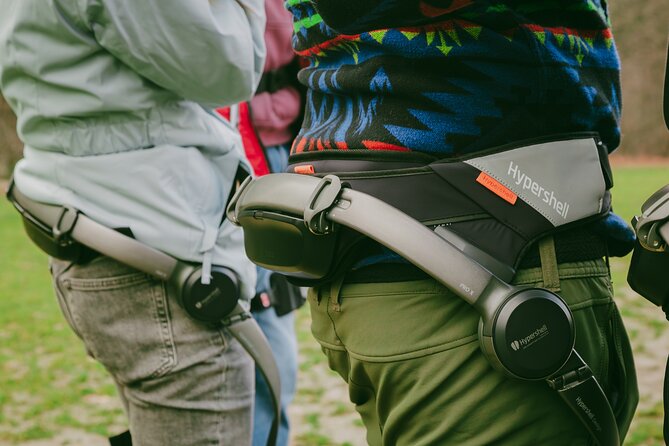
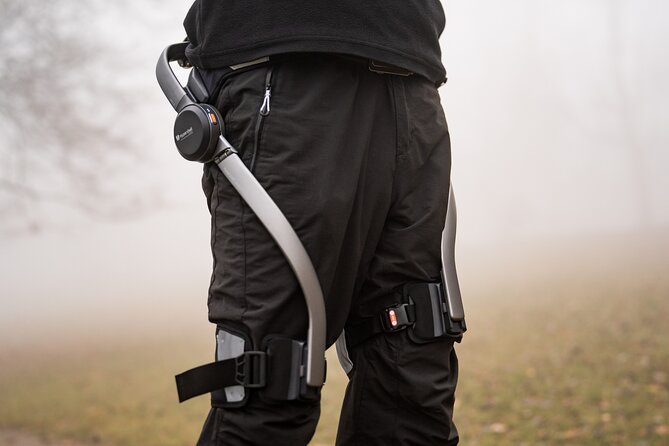
You’ll be fitted with the Hypershell exoskeleton device, which is the core of the experience. You’ll also be guided by a professional and certified tour guide, and the group is small enough that you’re not just a number. The testing portion matters because the exoskeleton isn’t only about power. It’s about learning how you move.
From the experience, the system can adapt based on your walking patterns and terrain. In plain terms: it’s meant to respond when the ground changes. You may also use a phone app to control it or adjust how the help feels, which can be useful if you want to make the hike easier or harder depending on your comfort level.
Practical tip: wear supportive shoes with solid grip. Even if the assist helps your legs on climbs, the terrain is still natural. Good traction keeps you confident and reduces the fiddly, cautious feeling that can ruin the fun.
Also, don’t underestimate the psychological effect. Once the device is on, the hike can feel lighter and more game-like. But when you take it off after the last uphill assist, your legs may feel heavier for a short while. That’s normal—plan for it so you don’t panic mid-stroll.
Stop-by-stop: Normafa to Szépjuhászné Station to János Hill
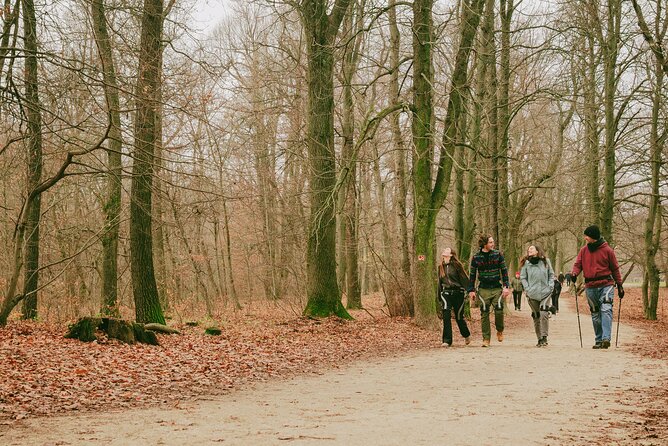
This hike is structured around three main walking phases, with two major “anchor” scenic stops plus time to enjoy the high points.
Normafa: the warm-up and the tech intro
Normafa is a top hiking spot for locals, and it’s a strong start because the area lets you get used to moving with the device before the day gets serious. Expect about 20 minutes here, with the tour beginning and the exoskeleton introduction happening before you head deeper into the route.
What’s great about this setup is that you’re not thrown into the steepest terrain right away. You learn how the system feels while the pace is still controlled.
One note: depending on weather, forest paths can be slick. If it’s damp, take your time on the first stretch. You’ll still get the advantage of the assist, but careful footing keeps the whole experience smoother.
Szépjuhászné Station: the dreamy railway pause in the woods
Between Normafa and the bigger summit push, you pass through Szépjuhászné Station, set in the Buda Hills on the Budapest Children’s Railway route. This stop isn’t about exoskeleton mechanics. It’s about atmosphere.
It’s a scenic starting point for easy trails toward viewpoints like the Kaán Károly Lookout, and the setting is peaceful and wooded, with that nostalgic narrow-gauge railway feel. Even if you don’t ride the train, the station area works as a reset: fresh air, calmer walking, and a chance to take photos without sprinting to the next summit moment.
The only “consideration” here is time balance. Because this is a 4-hour outing, you’ll want to use this stop to regroup rather than get stuck reading every sign or taking dozens of detours.




Jánoshegy / János Hill: the climb that pays you back
Next comes the main elevation. János Hill is the highest point of Budapest, and the views are the reason you’re doing this in the first place. You’ll have about 2 hours in this area, which gives you breathing room to climb, pause, and adjust.
This portion is usually where the exoskeleton feels most useful. The assist can help you keep a steady rhythm on upward stretches, so you don’t feel like you’re fighting the trail at the exact moment you want to enjoy it.
If you’re planning your energy, aim for steady effort rather than speed. You’ll reach the lookout area with enough stamina to actually appreciate it instead of arriving already drained.
The Elizabeth Lookout Tower: short time, big payoff
Elizabeth Lookout (Erzsébet-kilátó) sits at the summit of János Hill and is one of Budapest’s most iconic viewpoints. The stone tower is from 1910 and named for Queen Elisabeth, known as Sisi. When you reach it, you’re not just getting a view—you’re getting a 360-degree panorama that makes Budapest look like it’s layered in every direction.
You’ll spend about 10 minutes at this stop. Ten minutes sounds short on paper, but it’s often enough if you’ve timed your walk well and you’re ready to focus. Bring your camera and expect you’ll want shots from multiple angles: tower base framing, city skyline sweeps, and the wooded hills disappearing in the distance.
The best part is that this final viewpoint ties the whole day together. You start with tech training in Normafa, move through a scenic forest railway area, tackle the hill, then end at a lookout that locals and visitors alike recognize instantly. It’s a logical arc: learn the tool, earn the view, then enjoy the reward.
Pace, group size, and what your body will feel on the day
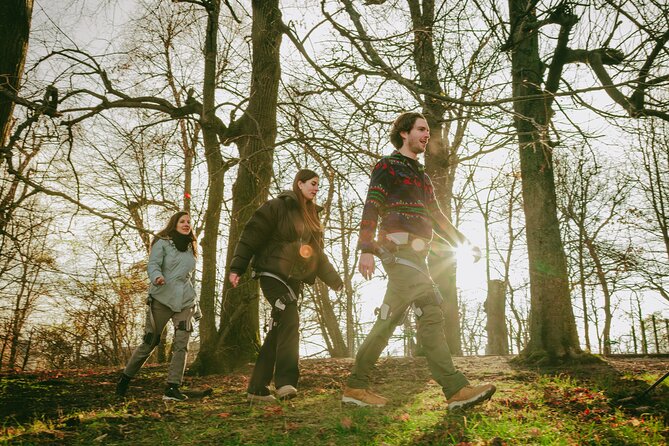
This hike runs about 4 hours total, with a maximum of 8 travelers in the group. That small size changes everything. It makes the exoskeleton fitting and guidance feel personal, and it keeps the day from turning into a stampede.
The pacing is designed to stay relaxed, with room for photo stops and time to enjoy the scenery. That’s a big deal if you’re not a hardcore hiker. A classic challenge with hills is that they can become all effort and no enjoyment. Here, the exoskeleton helps you keep the hike playful, so you can actually look around.
That said, the exoskeleton doesn’t turn the day into a stroller ride. You’ll still walk up and down natural trails. If you’re comfortable hiking for hours on uneven ground, you’ll probably have a great time. If you’re more hesitant about slopes, you’ll likely appreciate the assist, but you still need balance and willingness to move carefully.
One helpful detail: guide quality seems to matter a lot here. People have mentioned guides by name, including Gábor and Janka, and that’s a good sign. When the guide knows how to troubleshoot quickly and explain the tech clearly, you spend less time worrying and more time walking.
Practical packing tips:
- wear shoes with grip (not smooth soles)
- dress in layers (Budapest weather can shift fast)
- bring a phone or at least be ready to use your senses for pacing and stops
- if you’re sensitive to cold, prioritize warm gloves or a hat, since forest starts can feel chilly
Price and value: what you’re really paying for
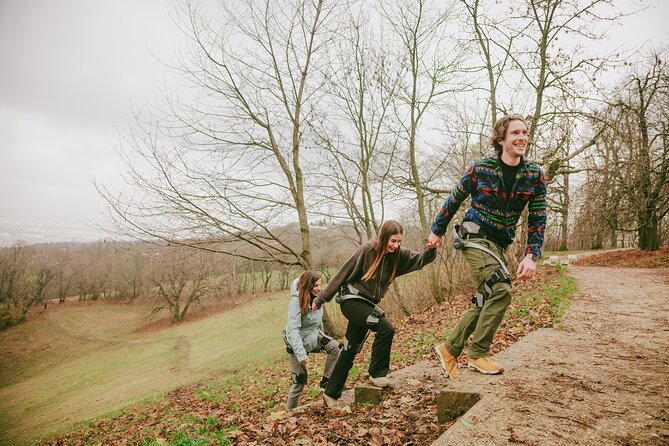
At $107.17 per person for about 4 hours, you’re paying for more than a walk. This price includes private transportation, the exoskeleton device, briefing/fitting/testing, a professional certified guide, plus snacks (energy bar) and bottled water.
Here’s how that becomes good value in real life:
- The exoskeleton isn’t a rental you figure out alone. You get fitting and testing with guidance, which reduces the learning curve and stress.
- You’re not on your own logistically. Private transportation from the meeting point to the start (and back) saves time and keeps you focused on the experience.
- Snacks and water are covered. Small things, but they help you avoid the usual “I should’ve planned better” feeling.
- Small group size keeps the time meaningful. With up to 8 people, the guide can give attention and adjust pace.
If you were to price this kind of guided tech experience separately, the added value is mostly in the combination: guide + device + transport + outdoors time. It’s also a good deal if you want the Buda Hills experience without turning it into a full day of self-planning.
One more angle: this is a “book-it-ahead” kind of activity. On average it’s booked about 8 days in advance, which suggests it doesn’t sit around forever. If you have firm travel dates, don’t wait until the last minute.
Who this hike fits best (and who may want a different plan)
This is an excellent match if you want an outdoor experience but you’re also curious about mobility technology. If you like gadgets, you’ll have fun. If you like views, you’ll get your payoff. If you want a way to tackle hills without making it a suffering contest, this is tailored for that.
It also makes sense for a range of fitness levels because the assist is meant to reduce strain on uphill sections. That flexibility shows up in how the route feels: you can keep walking and still enjoy the scenery instead of spending the entire hike in survival mode.
You might consider skipping (or at least setting expectations carefully) if:
- you don’t want to walk on uneven forest trails at all
- you feel uneasy wearing a device on your body even with briefing and fitting
- you’re the kind of person who needs total predictability and zero surprises (the exoskeleton adds a layer, even if it’s explained well)
Should you book this Budapest exoskeleton nature hike?
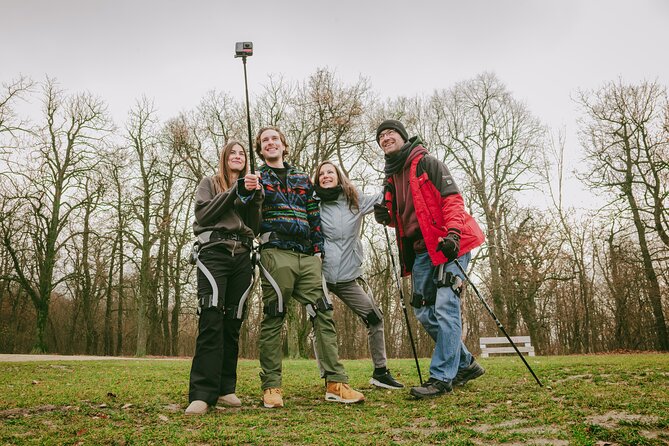
Book it if you want a Budapest day that mixes classic nature routes with something genuinely different. The route makes sense for the tech: start in Normafa, practice before the steep parts, then work toward János Hill and finish at Elizabeth Lookout for the big panoramic reward. The small group and guided fitting are key advantages, and the included transport and snacks reduce the friction that usually comes with specialized activities.
Skip it only if you’re mostly after a casual city stroll or you’re not comfortable walking on natural, uneven ground. Otherwise, this is a fun, practical way to see Budapest from above while trying one of the coolest mobility concepts you’ll find in town.
FAQ
How long is the Budapest exoskeleton nature hike?
It runs about 4 hours.
What is included in the price?
Included are private transportation to and from the starting location, the Hypershell exoskeleton device, briefing/fitting/testing, a professional certified tour guide, and snacks (energy bar) plus bottled water.
Where does the tour start?
The meeting point is at Budapest, Bartók Béla út 39, 1114 Hungary. The activity ends back at the same meeting point.
What language is the tour offered in?
The tour is offered in English.
How big is the group?
The tour has a maximum of 8 travelers.
Can I cancel for a full refund?
Yes. You can cancel for a full refund if you cancel at least 24 hours before the experience start time.