REVIEW · BANFF NATIONAL PARK
Columbia Icefield: Guided Glacier Hike
Book on GetYourGuide →Operated by Icewalks · Bookable on GetYourGuide
A glacier hike is one of the fastest ways to feel small in a good way. On the Columbia Icefield Athabasca Glacier walk, you get guided access on foot, plus close-up views of crevasses and meltwater features. It’s not just a photo stop; it’s a 3-hour lesson in how this ice system works and why guides keep you on safe routes.
I like two things most: the gear support (micro-spikes, rain gear, boots, gloves, and more) and the guide-led interpretive program that turns glacier science into plain language. One thing to consider is altitude: the hike runs at about 2000m, and some people feel short of breath, so pace yourself and be honest about fitness.
In This Review
- Key Highlights That Make This Glacier Hike Worth It
- Walking Onto the Athabasca Glacier: Why This Feels Different
- Meeting at the Icefield Information Centre: Find the Vans, Then Breathe
- What’s Included (and What Isn’t) for a Comfortable Glacier Walk
- The 5 km Route With 200 m Gain: How the Hike Unfolds
- Glacier Features You’ll Actually See: Crevasses, Mill Wells, Meltwater
- The Human Touch: Guides Who Make Glacier Science Feel Simple
- Pace, Elevation, and Who This Tour Fits Best
- Price and Value: Why $96 for 3 Hours Can Be Fair
- IceWalks Timing and Practical Tips Before You Go
- Should You Book the Columbia Icefield Glacier Hike?
- FAQ
- How long is the guided Columbia Icefield glacier hike?
- How much does the tour cost?
- What’s included in the $96?
- What should I bring with me?
- Where do I meet for the tour?
- Is the hike family-friendly?
- Do I need technical climbing experience?
Key Highlights That Make This Glacier Hike Worth It
- ACMG-certified guide focused on safe travel around crevasses
- Micro-spikes and full glacier-ready gear included for traction and comfort
- 5 km roundtrip with 200m elevation gain, moderate effort with big rewards
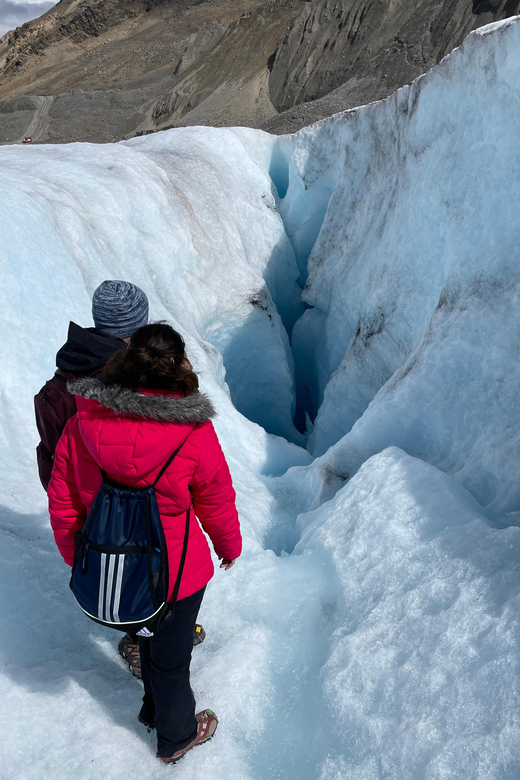
- Crevasses, mill wells, meltwater streams, and icefalls explained during the walk
- Iconic Rocky Mountain views featuring some of the highest peaks in the region
- Short shuttle from the meeting area to the trailhead so you spend more time on ice
Walking Onto the Athabasca Glacier: Why This Feels Different
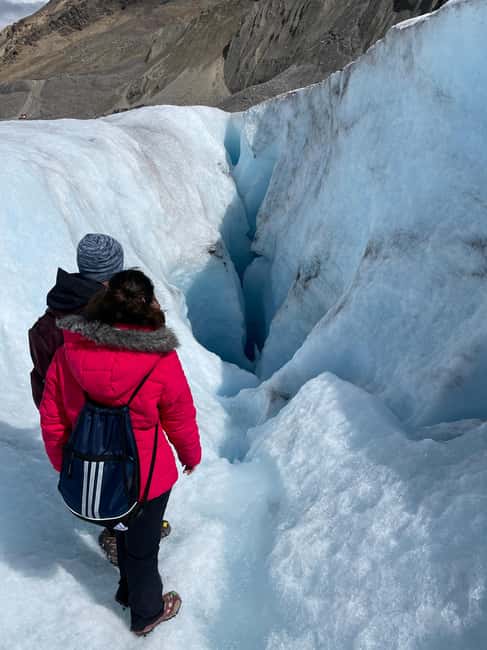
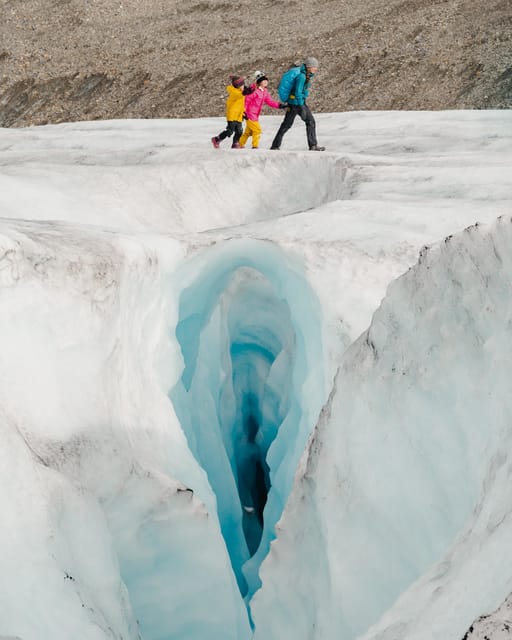
The Columbia Icefield is famous for a reason, but the Athabasca Glacier is where the magic turns physical. Instead of staying back for a distant view, you walk onto the ice itself and see how it changes, cracks, and drains. You’ll peer down into deep crevasses and watch meltwater spill over the edges in dramatic fashion.
This tour also brings context. You’re not left guessing what you’re looking at. The interpretive program helps you connect the visible features on the glacier—like meltwater flows and ice formations—to the bigger story of a moving ice system in Canada’s Rocky Mountains.
If you want a glacier experience that feels active and educational rather than just scenic, this is the kind of outing that clicks fast.
Meeting at the Icefield Information Centre: Find the Vans, Then Breathe
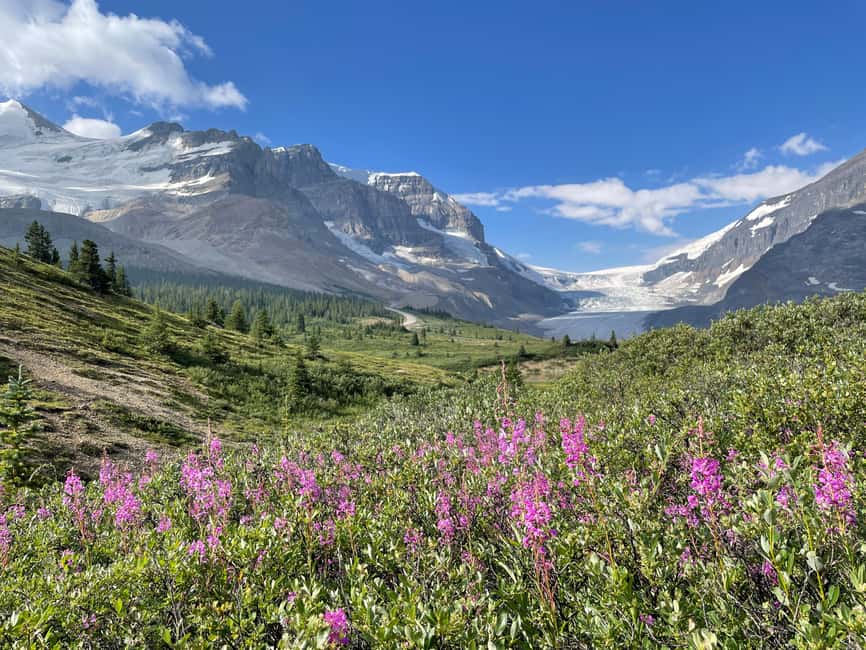
Your start point is easy once you know what to look for, but the details matter.
From HWY 93, turn into the Icefield Information Centre and Glacier Gallery parking lot. The correct lot is on the north side of the highway, opposite the glacier. At the T-junction between the overflow RV parking and the visitor parking, look for a black trailer and white vans with the IceWalks logo.
Skip two common mistakes: don’t go into the building, and don’t park at the Glacier View Hotel Parking lot. After you spot the van, you’re set for the short shuttle ride to the trailhead.
What’s Included (and What Isn’t) for a Comfortable Glacier Walk
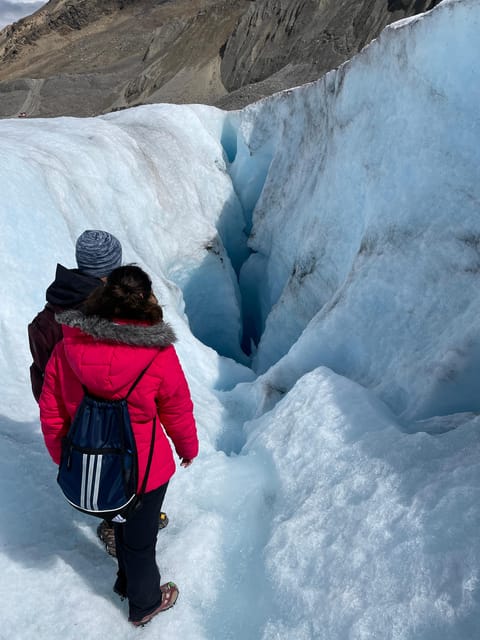
This is one of the best parts of the value equation. You’re paying for guided access to the glacier, but you’re also getting the right equipment so the hike doesn’t turn into a gear scramble.
Included in your tour price:
- A guide
- Micro-spikes for traction
- Rain gear
- Hiking poles
- Hiking boots, gloves, and hats (if you don’t have your own)
- Transport from the meeting location to the trailhead
What you should plan to bring:
- Snacks
- Thermal clothing
Warm layers like sweaters and pants are specifically not included. That doesn’t mean you’ll be cold the whole time, but it does mean you should think in layers and aim for thermal comfort. Since this is glacier walking, a little extra warmth can keep your legs and breath from feeling tougher than they need to.
The 5 km Route With 200 m Gain: How the Hike Unfolds
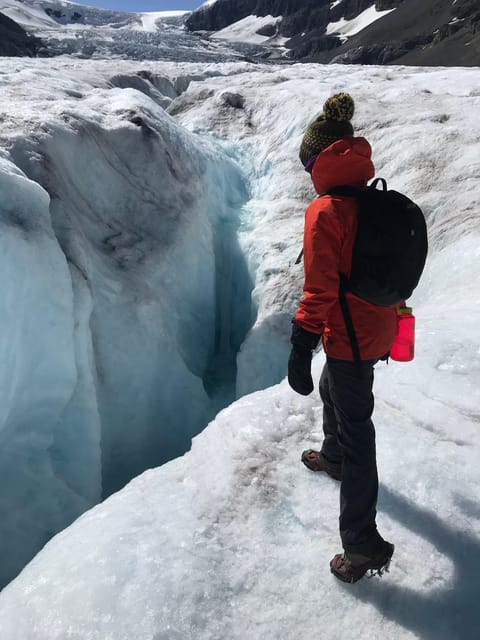
The structure is simple, which is a compliment. You do a 5 km roundtrip with about 200m elevation gain. The difficulty is listed as moderate, and it’s designed for people who enjoy hiking and don’t mind a steady effort.
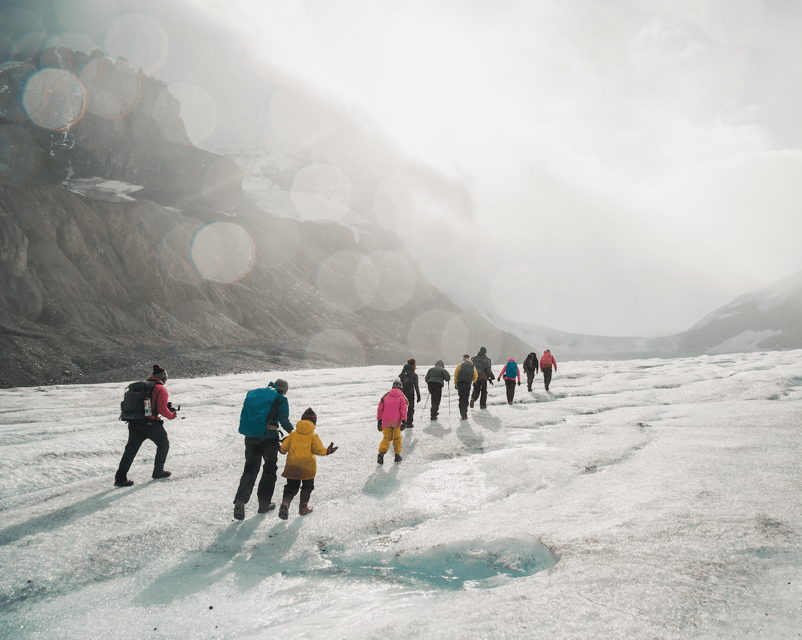
From the meeting point, you’ll take a short shuttle to the trailhead. Then it’s out on foot: you’ll walk along the route and eventually onto the Athabasca Glacier itself. There’s no technical climbing required, so you’re not hauling ropes or using special mountaineering skills.
What makes the hike feel “worth it” is how the guide uses the walk time. You’re not just moving from A to B. The guide stops at key points to show features from safe distances and explain what’s happening on and under the ice. That interpretive pacing is part of the experience: it turns the 3 hours into something that sticks.
Glacier Features You’ll Actually See: Crevasses, Mill Wells, Meltwater
This is the heart of the Columbia Icefield Ice Walk. The glacier has a lot of shapes that look similar at first glance. The guide helps you see differences—and that’s when the ice becomes a whole world.
Here are the main features you should expect during the walk:
- Deep crevasses: You’ll peer into cracks where the depth is hard to appreciate until you’re looking down and the guide directs you to safe angles.
- Meltwater pouring over the edge: You might see water running off the glacier, showing how quickly the ice is changing in warmer conditions.
- Mill wells: These are vertical ice shafts where water funnels downward into the glacier, creating a striking sense of motion beneath your boots.
- Meltwater streams: Watch how runoff travels across and away from the ice.
- Icefalls (from a safe distance): You’ll see parts of the glacier where ice breaks and flows downward features, without needing to approach the danger zone.
A big value here is safety plus education at the same time. An ACMG-certified guide helps you navigate around crevasse danger so you can focus on understanding what you’re seeing.
The Human Touch: Guides Who Make Glacier Science Feel Simple
Guides can make or break a nature tour, and this one has a strong track record for pairing safety with real storytelling. Names show up often: Pete, Troy, Stu, Corin, Larry, and Ann. Across them, the common theme is clear communication—fun, patient instruction that keeps people engaged.
You’ll get an interpretive program during the hike, and the best guides don’t just recite facts. They connect glacier features to how the ice behaves. That matters because otherwise crevasses and meltwater can feel like random cool visuals. With the right explanation, they become a map of processes: cracking, draining, shifting, and melting.
If you’re the kind of person who likes to ask questions—good. If you’re not, you’ll still leave with a better sense of what you were looking at.
Pace, Elevation, and Who This Tour Fits Best
Even if you’re fit, this is a mountain activity. The tour operates at about 2000m, and some guests experience shortness of breath due to elevation. The hike is moderate, but altitude adds a layer of effort that’s easy to underestimate.
Here’s who the tour is meant for:
- People who enjoy hiking
- Young children ages 7–16 who like active outdoor time
- Active seniors who can handle moderate walking
And here are the limits called out by the tour:
- Not suitable for children under 7
- Not for people with mobility impairments
- Not for wheelchair users
- Not for people with heart problems
- Not suitable if you have a cold
- Not suitable for people over 75
- Not for people with pre-existing medical conditions
- Not for people with low level of fitness
If any of those apply, skip this hike and look for a more suitable alternative. Glacier walking involves uneven ice, crampon traction, and changing conditions—so it’s not the place to push through health concerns.
Price and Value: Why $96 for 3 Hours Can Be Fair
At $96 per person for a 3-hour guided experience, you’re buying two things at once:
1) Expert-led access to the glacier environment
2) Gear that would otherwise add up (micro-spikes, rain gear, boots, gloves, and more)
This matters because the cost isn’t only paying for instruction. It’s also covering the equipment required to walk safely on ice. If you’ve ever priced crampons, winter boots, and proper outer layers, you know it can become pricey fast.
Also consider what you’re choosing. This is not a bus-and-look-from-far experience. You’re on the glacier, and you’re getting an interpretive program as you walk—so the time feels purposeful.
If you’re budgeting your time in Alberta, this is one of those “pay once, see it right” tours.
IceWalks Timing and Practical Tips Before You Go
Tours are usually available in the morning and afternoon, and it runs 3 hours total. Since you’re walking for about 5 km and climbing about 200m along the way, you’ll want to treat it like a real hike even if it’s short.
Bring:
- Snacks to keep energy steady during the walk
- Thermal clothing since warm layers aren’t provided
Dress for traction-friendly movement. You’ll have boots and gloves available if needed, but thermal comfort is on you. Since conditions can change, the included rain gear helps, but it won’t replace the need for warmth.
And one more practical note: if you’re sensitive to altitude, go easy at the start. Start slower than you think you need to. You’ll likely feel the difference once the body settles into the effort.
Should You Book the Columbia Icefield Glacier Hike?
Book it if you want an ice experience with real structure. This tour pairs guided safety (ACMG-certified instruction around crevasses) with up-close glacier features you can’t get from a roadside viewpoint. You also get strong value from gear inclusion, so you spend less time shopping and more time on the ice.
Skip it if you know altitude and moderate hiking will be a problem, or if you fall into the tour’s not-suitable categories like heart issues, mobility limitations, or pre-existing medical conditions. Glacier walking is the right kind of challenging, but it’s still a hike at elevation on slick terrain.
If you match the fitness profile and want to come away with glacier science you actually understand, this is one of the most worthwhile ways to experience the Columbia Icefield.
FAQ
How long is the guided Columbia Icefield glacier hike?
The hike lasts 3 hours.
How much does the tour cost?
The price is $96 per person.
What’s included in the $96?
Your tour includes the guide, micro-spikes, rain gear, hiking poles, hiking boots, gloves, and hats if you don’t have your own, plus transport from the meeting location to the trailhead.
What should I bring with me?
Bring snacks and thermal clothing.
Where do I meet for the tour?
Meet at the Icefield Information Centre and Glacier Gallery parking lot on the north side of HWY 93. Look for a black trailer and white IceWalks vans at the T-junction between overflow RV parking and visitor parking.
Is the hike family-friendly?
It’s suitable for children ages 7–16 who enjoy hiking and active seniors. It’s not suitable for children under 7.
Do I need technical climbing experience?
No technical climbing experience is required.