REVIEW · NICOLOSI
Etna Summit Craters
Book on GetYourGuide →Operated by ETNA QUAD E TREKKING · Bookable on GetYourGuide
Sulfur air and volcanic scale hit fast. On this Etna Summit Craters day, you ride up high, then walk through ash, past active mouths, and up to the highest point in Sicily. I especially love the chance to stand close to the crater world—those sulfate-filled depressions where explosive activity concentrates feel strange in the best way. I also like that the hike is guided by qualified alpine and volcanological experts, so the geology makes sense, not just looks cool.
One thing to weigh: this is a real high-altitude trek. The walk lasts about 5–6 hours and includes significant climbing and descending on volcanic terrain. If you have heart issues, recent surgery, mobility limits, or even strong vertigo/fear of heights, skip it.
In This Review
- Key things to know before you go
- From Bar Crateri Silvestri to the Etna high-country start
- The cable car ride: your altitude jump from comfort to challenge
- Walking from 2,800 m toward the summit craters (3,340 m)
- Active crater sights: Bocca Nuova, Voragine, and the summit vents
- Descending to Belvedere della Valle del Bove and the Laghetto area
- Guides, gear, and how safety works on Etna
- Price and value: what you pay vs. what you pay later
- Who should book this Etna summit craters hike
- Who should skip (and why the list is strict)
- What to wear and pack for the summit day
- How the timing works during a 1-day adventure
- Should you book Etna Summit Craters?
- FAQ
- How long is the Etna Summit Craters excursion?
- Where do we meet the guide?
- What does the excursion price include?
- What extra costs are not included?
- How do you get to the crater area?
- What craters will we see?
- Is it suitable for children?
- Is it safe for people with health conditions?
- What language is the guide?
- What should I wear?
Key things to know before you go
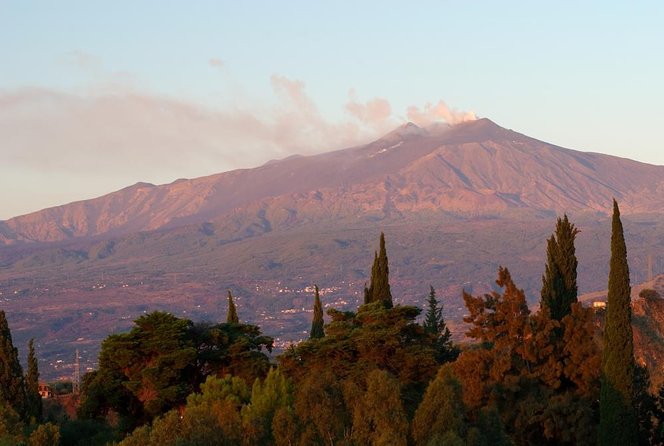
- Cable car + jeep lift you to ~2,800 m, then you hike from there to the summit craters around 3,340 m
- Your crater walk focuses on active areas like Bocca Nuova, Voragine, and the Northeast and Southeast Craters
- You may spot recent lava flows, depending on what Etna has done lately
- You descend through volcanic ash slopes and reach viewpoints over the Valle del Bove caldera
- You get real trekking support: helmet, poles, and high-collar hiking shoes plus a windbreaker
- The day is not for lightweights: it’s meant for people used to challenging hikes
From Bar Crateri Silvestri to the Etna high-country start
Most Etna days feel like a commute. This one starts with clear energy: you meet the guide inside Bar Ristorante Crateri Silvestri. That matters because the day has a strict rhythm—short ride segments, then time on foot where you’ll want to be ready.
From the get-go, the focus is practical. You’ll have a safety briefing before you start walking, and the guides run the day at a pace that works for a mixed group—especially at altitude, where going out too fast can turn a great hike into a miserable one.
If you’re the type who likes understanding what you’re seeing, you’ll appreciate the way the outing frames Etna like a living system: vents, pressure changes, ash, sulfur, and the way the mountain reshapes itself over time.
You can also read our reviews of more tours and experiences in Nicolosi.
The cable car ride: your altitude jump from comfort to challenge
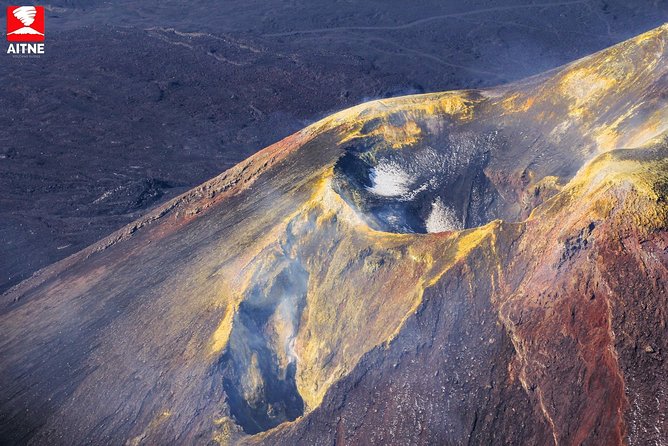
You begin with a 15-minute cable car ride, then a short 4×4/bus coach segment. The big payoff is that you’re not doing a long slog just to reach the real terrain.
But the altitude hits quickly. You go up to about 2,800 meters before switching into hiking mode. Even if you’re fit, treat the first stretch like a warm-up for your lungs. Expect that you’ll feel breathier than normal and that your legs will start working right away—no lounging, no gradual easing into it.
This is also one of those days where wind matters. The higher you go on Etna, the more you’ll notice cold gusts and dust in the air. The windbreaker included with the activity is there for a reason, and you’ll feel it when you stop for photos.
Walking from 2,800 m toward the summit craters (3,340 m)
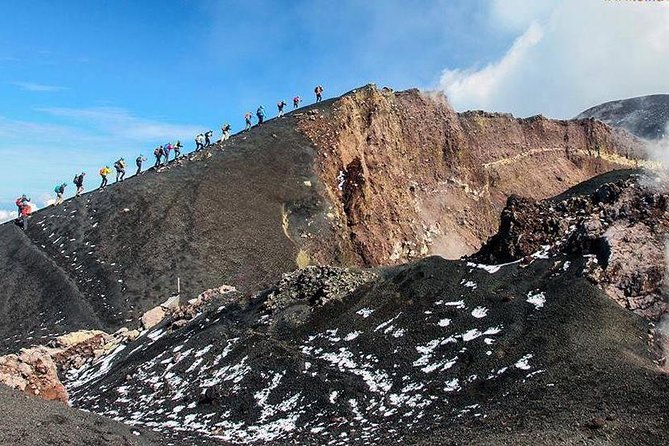
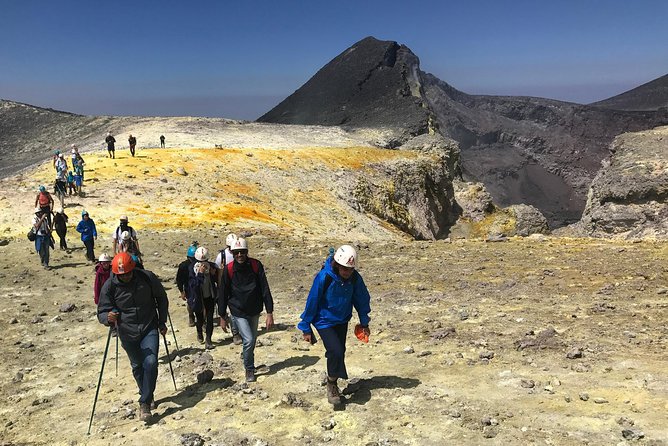
Once you’re at altitude, the hike becomes the main event. You continue on foot up toward the summit craters at about 3,340 meters. This is where you’ll earn your views.
The hike isn’t described as a stroll—and it isn’t. You’re walking on rough volcanic ground, and you’re doing it while high altitude changes how your body handles effort. If you’re used to challenging hikes, you’ll recognize the rhythm: short steady steps, brief pauses, and careful footing on uneven surfaces.
What makes this part special is what’s in front of you. As you rise, you’re not just seeing a mountain peak—you’re seeing a crater world. You’ll observe broad crater depressions filled with sulfur compounds, and the feel is hard to fake. It gives you that sense of scale and power that a scenic viewpoint alone can’t deliver.
And yes, there’s a meaningful chance you’ll see recent lava flows. Not every day brings them, but when the terrain has fresh paths of lava, Etna looks less like a museum and more like an active workshop.
Active crater sights: Bocca Nuova, Voragine, and the summit vents
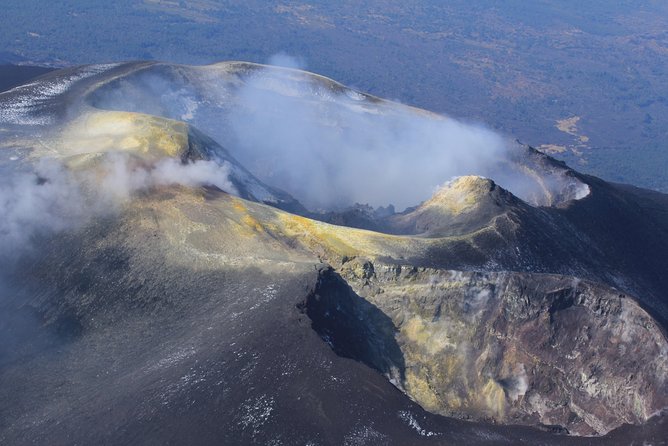
At the summit area, you’re guided through the important names—so you can connect the map in your head to what’s actually happening on the mountain.
You’ll visit and focus on active craters including:
- Bocca Nuova
- Voragine
- Northeast Crater
- Southeast Crater
This naming isn’t just trivia. Each area helps you understand how Etna channels explosive activity across different vents over time. When you’re looking at crater rims from close range, those explanations make the scene click: sulfur zones where gases concentrate, crater depressions shaped by repeated events, and the way vents relate to the larger volcanic structure.
Also, there’s a psychological effect. Standing near active craters makes even experienced hikers feel small in the right way. It’s not just pretty; it’s physical and immediate.
Descending to Belvedere della Valle del Bove and the Laghetto area
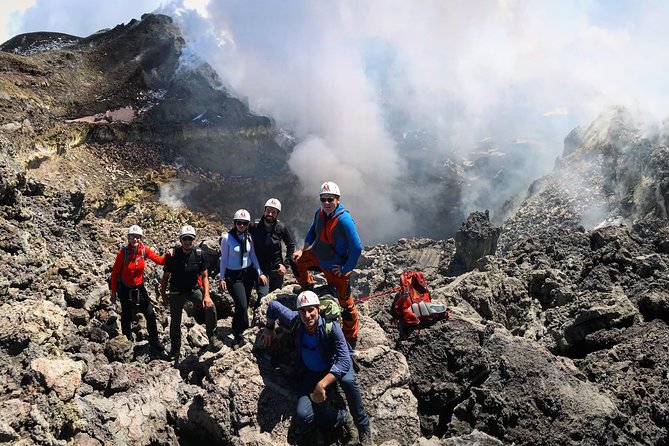
After you’ve spent time at the summit craters, you start descending on foot along slopes of volcanic ash. This is an underrated phase of the day. Going down can be harder than you expect because you’re balancing your weight on loose ground and managing sore knees—especially if you move too fast.
The reward comes as you drop to viewpoint territory. You’ll reach the Belvedere della Valle del Bove, overlooking the Valle del Bove caldera—described as an extraordinary caldera belonging to ancient eruptive centers. Translation: you’re looking at the after-effect of old structures that shaped how the volcano works today.
Then you skirt around the imposing eruptive cone of the Laghetto crater before you work your way back toward the cable car terminal at Rifugio Sapienza (1900 m). That walk back isn’t just “getting to the end.” It’s the transition from the summit’s drama into the lower mountain’s broader volcanic anatomy.
Guides, gear, and how safety works on Etna
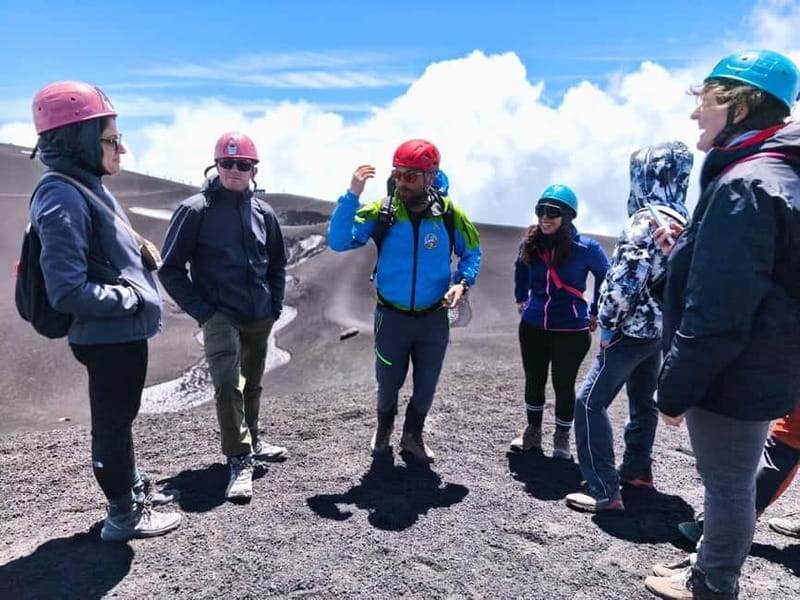
This hike is built around competent leadership. The guides are qualified alpine and volcanological experts, and the outing includes a safety briefing before serious walking begins. On a volcano, that matters. Not because it’s panic—but because good protocols keep you moving confidently through uncertain terrain.
The included gear is also a smart part of the value. You get:
- High-collar hiking shoes
- New socks
- Windbreaker
- Trekking poles
- Protective helmet
If you don’t hike often, that kit is a big deal. Bad shoes and no poles turn steep, uneven ground into a slow injury. With the provided equipment, you show up closer to “ready” than “hopeful.”
Also, consider the tone of the guidance. People come to Etna for a thrill, but the best day is the one where the guide keeps everyone steady. In past experiences with these tours, guides have been described as very attentive—checking in and making sure altitude strain didn’t get ignored. That kind of watchfulness is exactly what you want on a hike with real exposure and real effort.
Price and value: what you pay vs. what you pay later
The activity price is listed at $70 per person, but don’t assume that’s the whole bill. Two major costs are paid on site:
- Cable car ticket: €52
- Bus/4×4 ticket: €25
So your total trip cost is more than the $70 figure once you add those. Still, there’s value in the way the day is packaged:
- You’re paying for guided geology and safe pacing on a challenging high-altitude trek.
- You’re also getting solid trekking gear (shoes, poles, helmet, windbreaker, socks). That’s not common in cheaper “walk and see” excursions.
- You receive a 20% discount on sandwiches, snacks, and drinks—useful on a long mountain day when hunger hits at altitude.
Bottom line: this costs more than a simple tour, but it’s not a bare-bones day. If you were going to rent equipment and hire a guide separately, the math usually looks better for the guided summit version.
Who should book this Etna summit craters hike
This is best for you if:
- You’re comfortable with challenging hikes.
- You want active volcanic features, not just views.
- You enjoy understanding what you see, with a real volcanology guide.
It’s also a good match for people who can handle altitude and uneven ground and who don’t mind that Etna weather can shift fast.
Who should skip (and why the list is strict)
The hike is strictly not recommended for anyone with certain health risks or mobility constraints. Based on the activity rules, it’s not suitable for:
- Children under 10
- Pregnant women
- People with mobility impairments or wheelchair users
- People with heart problems, high blood pressure, recent surgeries, epilepsy, haemophilia
- People with vertigo or a strong fear of heights
- People over 95 years
If any of these apply, don’t “tough it out.” At 2,800 m and above, altitude and exposure can make symptoms worse, and the terrain is not forgiving.
And if you’ve had trouble with height before, be honest with yourself. One person described the hike as very strenuous due to altitude problems—exactly the kind of warning sign worth listening to.
What to wear and pack for the summit day
You’ll be given trekking gear like shoes, poles, and a helmet, but you still need to dress for mountain conditions. Recommended equipment includes:
- Long pants
- Cap
- Gloves
- Sunglasses
- Protective creams
- Scarf
That list is practical. On Etna, sun can be intense at altitude, wind can feel sharp, and volcanic surfaces can be dusty. Sunglasses and a cap help more than you’d think, and gloves matter when the temperature drops and you’re moving slowly or pausing.
Also plan for layers. Even if it’s warm at lower altitudes, summit craters can feel colder and windier.
How the timing works during a 1-day adventure
This is a 1-day outing with a total hiking time around 5–6 hours. You’ll have guided walking time plus photo stops, and you’ll return via cable car to the starting area.
The flow is important: you ride up, hike up, visit craters, then descend and close the loop back to Rifugio Sapienza and the cable car terminal. That structure keeps the day focused instead of dragging.
If you want a single Etna experience that’s worth your energy, this is one of the most intense and geology-heavy options.
Should you book Etna Summit Craters?
Book it if you match the hike level and you want the real Etna story—active vents, sulfur zones, and a terrain walk that feels like you’re stepping into a working volcano. The combination of qualified guides, provided trekking gear, and crater-focused route makes it more than a scenic day trip.
Skip it if you don’t handle altitude and steep, uneven ground well, or if any health or exposure limits apply. The rules are there for a reason, and you’ll get a safer, more enjoyable Etna day by choosing something less demanding.
If you’re on the fence, be honest about your fitness and height comfort. Etna rewards preparation.
FAQ
How long is the Etna Summit Craters excursion?
The hike itself lasts about 5–6 hours, and it’s part of a 1-day outing.
Where do we meet the guide?
Meet your guide inside Bar Ristorante Crateri Silvestri.
What does the excursion price include?
It includes the volcanological or mountain guide service and trekking support items like high-collar hiking shoes, new socks, a windbreaker, trekking poles, and a protective helmet. It also includes a 20% discount on sandwiches, snacks, and drinks.
What extra costs are not included?
The cable car ticket (€52) and the bus/4×4 ticket (€25) are paid on site.
How do you get to the crater area?
You ascend by cable car and then continue by bus/4×4 to around 2,800 meters, then hike on foot to the summit crater area around 3,340 meters.
What craters will we see?
You will focus on active craters including Bocca Nuova, Voragine, the Northeast Crater, and the Southeast Crater.
Is it suitable for children?
No. It’s not suitable for children under 10.
Is it safe for people with health conditions?
It is strictly not recommended for people with heart problems, high blood pressure, recent surgeries, epilepsy, or haemophilia, among other conditions listed.
What language is the guide?
The live guide is available in English and Italian.
What should I wear?
Long pants, a cap, gloves, sunglasses, protective creams, and a scarf are recommended.