REVIEW · RETHYMNO
From Rethymno: Samariá Gorge Full-Day Hike
Book on GetYourGuide →Operated by Allcretetours · Bookable on GetYourGuide
One canyon in Crete can take your legs. This Samariá Gorge day trip from Rethymno is interesting because you get guided hiking through Samariá Gorge and then a coast payoff in Agia Roumeli. I like the chance to spot the Kri-Kri and to pass through the dramatic Iron Gates, and I also like how the day ends with water time instead of dragging home sore. The one drawback: this is a long, serious hike, and rain can make the rocks slippery.
I like that the plan has a clear rhythm: early pickup, a break in Omalos, a downhill grind through the park, then a real reset by the sea. If you’re lucky (or if the guide is), you’ll get thoughtful pacing and safety-first guidance; guides like Maria and Leonidas have come up in recent feedback for being attentive and helpful. Still, expect a full day and a bit of uncertainty with weather, since the gorge can be affected.
You’ll be rewarded with cliff views, wild Cretan plants, and that moment when the gorge narrows hard and the air feels cooler. If you’re fit for hiking and you pack smart, this is one of the most direct ways to see why Crete’s interior feels wild and remote.
In This Review
- Key things to know before you go
- Why Samariá Gorge from Rethymno feels like a real Cretan day
- Pickup from Rethymno and the drive to Omalos
- Omalos to the gorge entrance: the wooden staircase moment
- The 16 km hike: cliffs, springs, and the Iron Gates
- How weather can change your hike (and how to be ready)
- Agia Roumeli: time to swim, eat, and reset
- Ferry to Sougia and the ride back to Rethymno
- Price and logistics: what $37 really buys you
- Guides and safety: why the “human factor” matters here
- Who should book this hike (and who should skip it)
- Quick verdict: should you book the Samariá Gorge day hike?
- FAQ
- How long is the Samariá Gorge full-day hike?
- What distance do I walk through Samariá Gorge?
- What’s included in the tour price?
- What extra costs should I plan for?
- Where are the pickup and drop-off points?
- What should I bring?
Key things to know before you go
- 16 km of hiking: mostly downhill, but still a workout that wears out your legs.
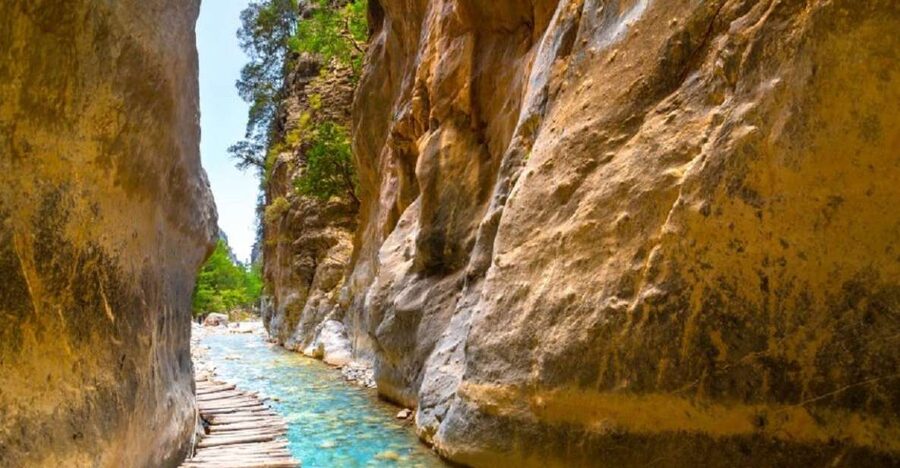
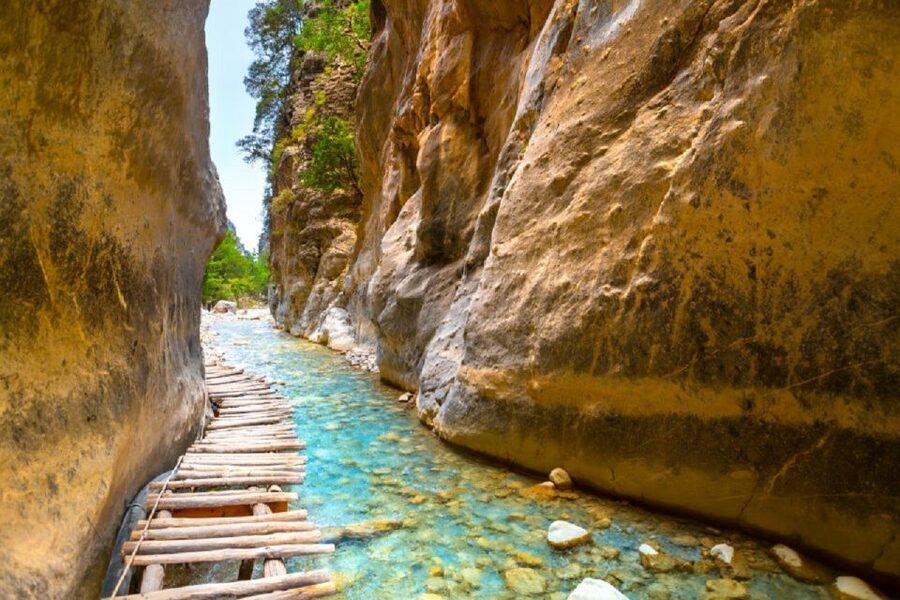
- Iron Gates = nearly 300 m cliffs: the narrow passage is the visual highlight.
- Wildlife is a real possibility: keep an eye out for the Kri-Kri along the trail.
- Agia Roumeli is your reward: you get time to swim and relax by the Libyan Sea.
- Bring cash for extras: you should budget for entry and the boat ticket on top of the tour price.
Why Samariá Gorge from Rethymno feels like a real Cretan day
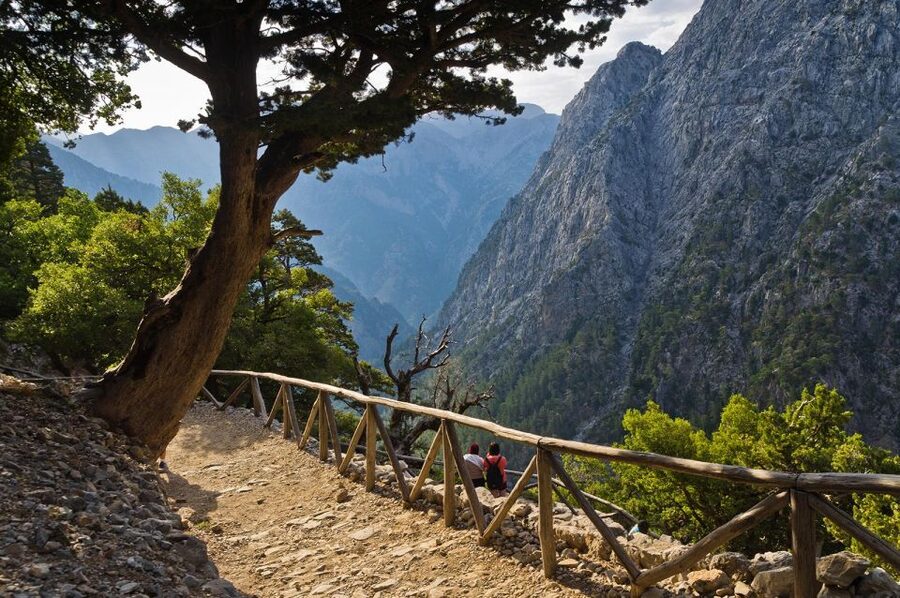
Samariá Gorge is one of those places that makes you stop thinking like a tourist. Even with a guide and a bus schedule, the canyon still feels raw: limestone walls, narrow stretches, and the sense that you’re walking through a real ecosystem rather than a theme park.
What I like most is the structure of the day. You don’t just get dumped at a trailhead. You’re handled from pickup to the end of the gorge, and you get a guided walk plus time to cool down at the sea.
The other big plus is the mix of effort and payoff. Yes, it’s tough, but it’s also one of the few “big hikes” on Crete that ends with a swim chance. That matters because you’re not just walking all day and hoping for the best later.
Pickup from Rethymno and the drive to Omalos
Your day starts with an early morning pickup from one of multiple spots around Rethymno’s area (common pickup zones include places like Skaleta, Panormos, Dramia, Sfakaki, Georgioupoli, Latsima, and several points closer to central Rethymno). The point is simple: you shouldn’t have to figure out how to get across Crete alone that early.
Then you’re on an air-conditioned coach for about two hours toward the White Mountains region, with a short break along the way as the group gets set. This matters for people who don’t hike often. A long drive before a long descent can feel brutal, so having a comfy ride and a real plan beats improvising.
When you reach Omalos, you’ll have a break for photos and a chance to grab breakfast. Some people like to eat at a nearby traditional taverna before the trail; others prefer to wait and keep their stomach steady for the first descent. Either way, this stop is there to help you start with energy, not panic.
Omalos to the gorge entrance: the wooden staircase moment
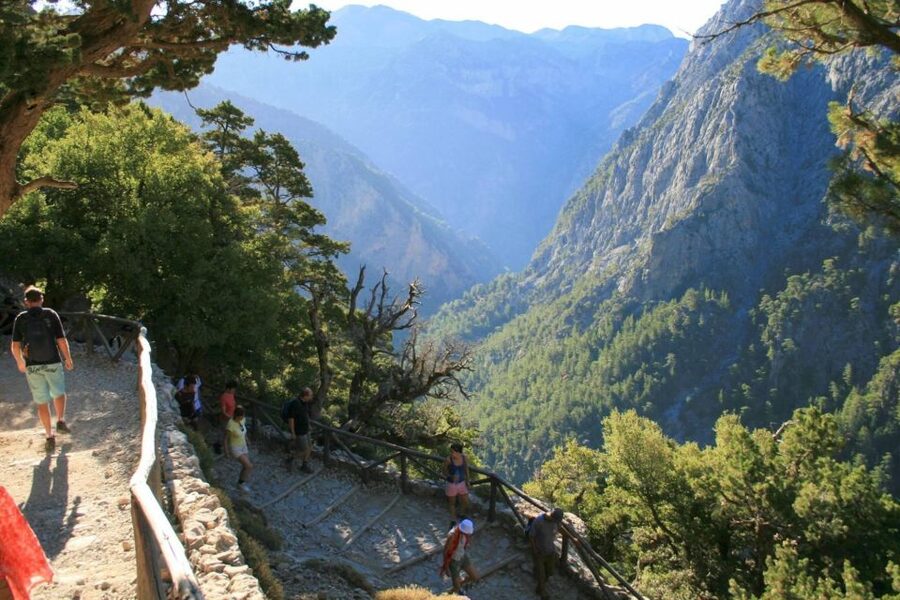
Once you’re at Omalos, you reach the famous entrance marker: a wooden staircase that signals you’re entering the park. It’s one of those small moments that changes your mindset. Up until then, you’re just moving toward a place; after that, you’re committed to the walk.
From there, the tour keeps things moving. You get the guided part inside Samariá Gorge itself, which is important on a route that can feel endless if you’re doing it alone. The guide’s job isn’t just to talk facts. It’s also to help the group manage the terrain and stay together.
If you like nature spotting, this is where your attention can start to sharpen. The trail runs through ancient forest areas and rocky sections, and you may notice rare Cretan flora and aromatic herbs along the way. It’s not just scenery; it’s the kind of detail that makes a gorge feel alive.
The 16 km hike: cliffs, springs, and the Iron Gates
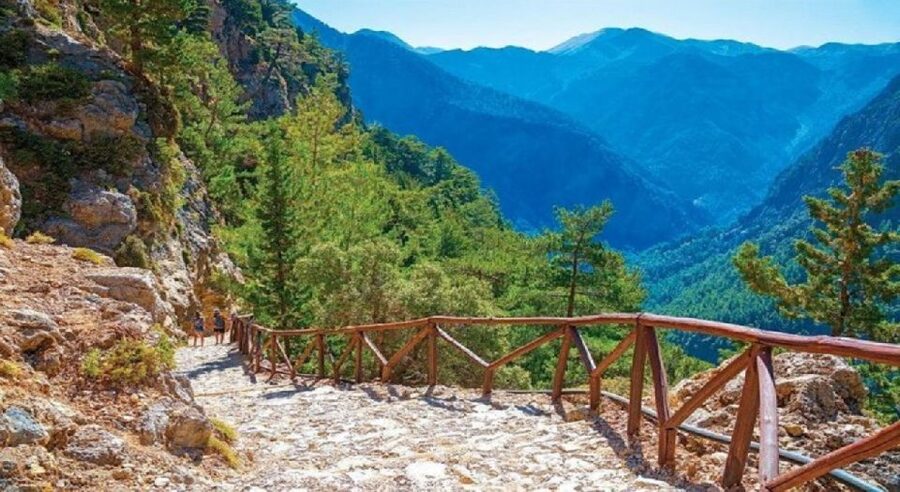
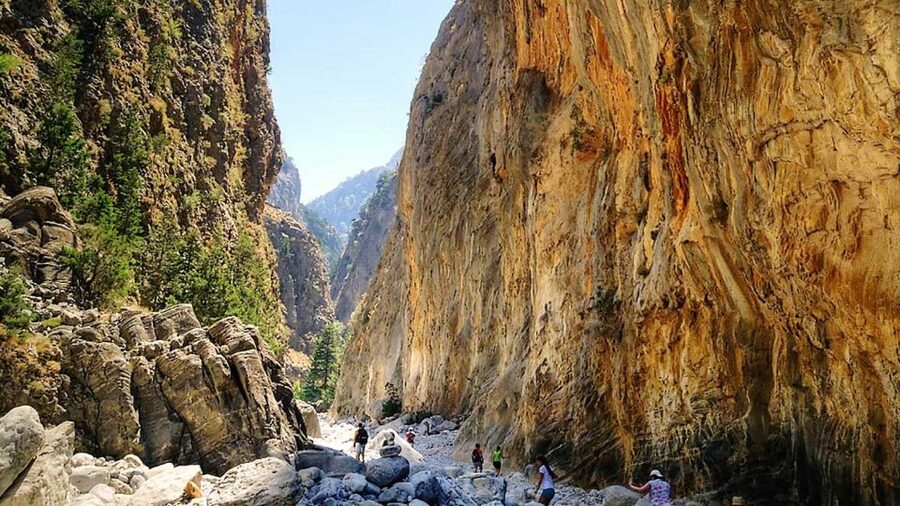
The core of the day is the hike through Samariá Gorge. Expect about 16 kilometers of walking, mostly shaped by the canyon’s downhill flow. Even with the downhill direction, it’s still demanding. Your quads will work, your ankles will get tested, and your mind will need to stay calm when the trail narrows and the walls rise.
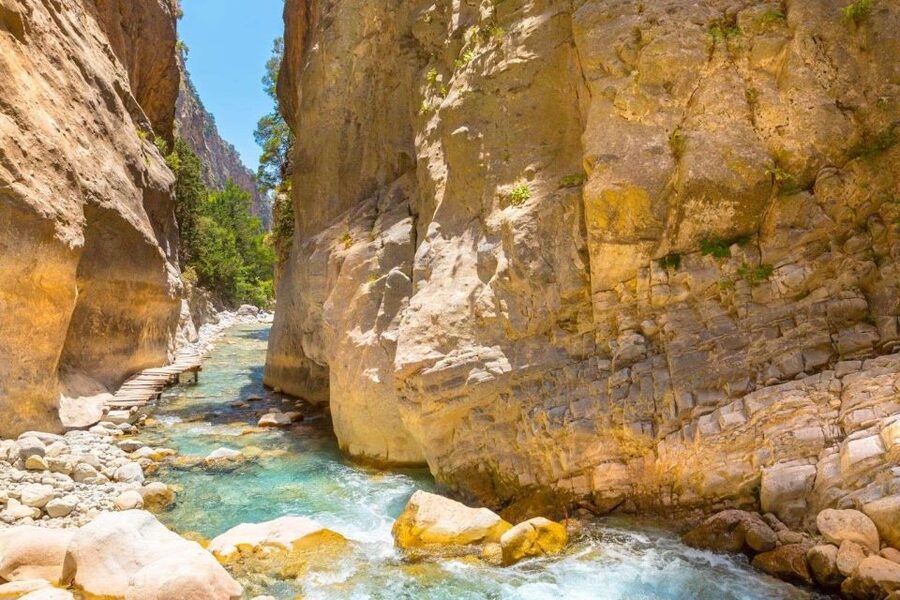
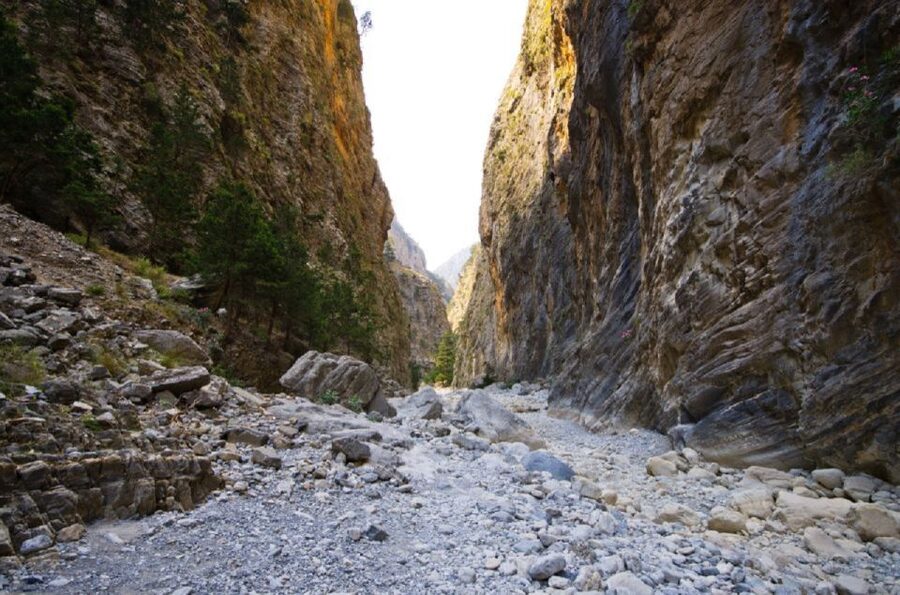
The canyon’s most famous stretch is the Iron Gates. This narrow passage is where the cliffs rise nearly 300 meters. The effect is immediate. The walls feel close in, the sound changes, and the temperature often feels a bit cooler. It’s a great spot to slow down—this isn’t the time to rush.
Along the route, you’ll also pass through areas tied to water. The tour description highlights crystal-clear springs, and you may find moments where the trail feels fresher and more shaded. Those are small mental wins in a long day.
And then there’s the wildlife angle. If you enjoy scanning for movement, keep an eye out for the Kri-Kri, the Cretan wild goat. It’s rare and easy to miss, but this is one of the few chances on the island where you’re specifically traveling with its habitat in mind.
How weather can change your hike (and how to be ready)
Crete’s weather can turn fast, and Samariá Gorge is not a place you want to treat like a casual stroll. One example from recent experience shows that a big storm can hit around the middle of the hike, making conditions harder and slowing the walk because people have to take extra care on slick areas.
So here’s the practical approach I’d use: assume you might hike in mixed conditions. Wear shoes with real grip. Bring sunscreen, but also accept that your hat and water discipline matter when the trail is exposed.
Even if the forecast looks good in Rethymno, the gorge sits in a different world. Be ready for cloud cover, mist, and sudden rain. Your guide will set the pace and safety rules, and it’s better to arrive at Agia Roumeli tired than rushed.
Agia Roumeli: time to swim, eat, and reset
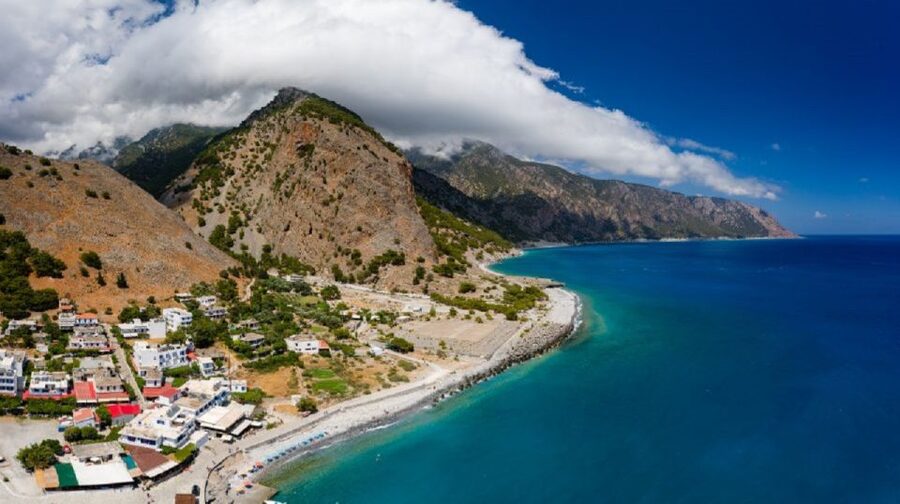
The hike ends in the seaside village of Agia Roumeli, and this is where the day turns from effort to reward.
You’ll get break time and free time, plus the option to walk around the village. Most people come for the water, and the tour builds that in. You’ll have time to swim in the crystal-clear waters of the Libyan Sea. It’s the kind of reset that makes sense after a long descent—cool water helps your body feel human again.
Lunch is typically on your own at a traditional beachfront taverna. That’s not a bad thing. After a structured hike, it’s nice to choose when you eat and what you order rather than being rushed through a set meal.
Also note the timing feel. You’re not just “at the beach for five minutes.” The plan gives you actual room to enjoy the village and recover before the next transport step.
Ferry to Sougia and the ride back to Rethymno
After Agia Roumeli, you board a ferry to Sougia. This part matters more than it might sound. The boat ride lets you look back at the rugged coastline of southern Crete, which is a different angle than the canyon gave you.
Then the coach handles the return to Rethymno, with a ride of about 2.5 hours. On a day this physical, having transportation that’s already lined up means you’re not scrambling for local connections when you’re tired.
If you care about comfort, the coach is air-conditioned, and there’s Wi-Fi onboard according to what’s included. Wi-Fi won’t save your knees, but it can make the long ride back feel shorter.
Price and logistics: what $37 really buys you
At $37 per person, this tour sits in the “good value for a big hike” category—if you plan for the extras.
Two costs commonly come up:
- Entrance fees (about 5 euros)
- Boat tickets (about 14 euros)
That puts the on-top total around 19 euros, before any small changes. One piece of advice based on recent firsthand comments: it’s smart to have more cash than the exact math. A participant suggested bringing around 24 euros in cash just to be safe, since the tour price may not cover everything at the point you expect.
The tour also includes skip-the-ticket-line handling, which can save time when you’re already tired and ready to get moving. And the guide is English-speaking, which matters in a gorge where instructions and pacing are not optional.
Included in the price are the round-trip air-conditioned bus, the guided hike, and Wi-Fi onboard the bus. What isn’t included is your meals on the day and the extra entry/boat costs noted above.
One more note on timing: the whole day runs about 12 hours. It’s not just the hike length. It includes the drive, breaks, and the ferry-to-bus sequence.
Guides and safety: why the “human factor” matters here
A gorge hike is one of those travel moments where the guide makes a real difference. Samariá Gorge involves a long walking day, narrow sections, and the need to keep a group moving safely.
Recent experience reports show guides like Maria being caring and protective, with a real focus on making sure people get through safely. Other feedback highlights Leonidas as very helpful, especially when it comes to keeping things organized during the day.
Also, weather can disrupt plans. In one case, the gorge was shut due to weather on the booked day, and the organizer managed an adjustment so the group could reschedule rather than lose the trip entirely. That’s not something you control—but it’s a reason to choose a company that’s capable of handling changes quickly.
Who should book this hike (and who should skip it)
This is best for active travelers who can handle a long hike. The walking portion is about 16 km, and you’re on uneven terrain in a natural park setting. The tour is also aimed at nature lovers who enjoy walking through forests, spotting plants, and watching for Kri-Kri.
It’s not suitable for:
- children under 6
- people with heart problems
- wheelchair users
- people with diabetes
If you’re on the fence, think about your ability to handle stairs and uneven rock for hours, plus the leg fatigue from a long descent. If that’s a problem area for you, pick a shorter coastal option instead.
Also, this is a day you should respect with your gear. The tour guidance is straightforward: bring hiking shoes, a hat, and sunscreen. You’ll feel grateful later if your shoes grip well and your hat keeps your face from turning into a sunburned tomato.
Quick verdict: should you book the Samariá Gorge day hike?
If you want one standout outdoor day on Crete and you’re fit enough for a long, serious hike, I think booking makes sense. You get the iconic Samariá Gorge experience, the dramatic Iron Gates passage, a nature-focused trail with a real chance to spot the Kri-Kri, and then you end with a swim in Agia Roumeli plus a ferry ride along the southern coast.
Skip it if hiking 16 km is beyond your comfort range, if you have any medical limitations listed by the tour, or if you know your legs (or joints) don’t handle uneven stairs-and-rock days well. Also, if rain makes you anxious, pack extra care for traction and timing—this gorge can turn wet.
For the kind of traveler who wants authentic effort with a payoff that includes real sea time, this is one of the best “go big” options from Rethymno.
FAQ
How long is the Samariá Gorge full-day hike?
The total experience runs about 12 hours.
What distance do I walk through Samariá Gorge?
You’ll hike about 16 kilometers through the gorge.
What’s included in the tour price?
Round-trip transportation by air-conditioned bus, the hike, a live English-speaking guide, and Wi-Fi onboard the bus.
What extra costs should I plan for?
Entrance fees (about 5 euros) and boat tickets (about 14 euros) are not included.
Where are the pickup and drop-off points?
Pickup and drop-off happen at multiple locations around Rethymno, with options including places like Skaleta, Dramia, Panormos, Paralia Kourna, Pigianos Kampos, Rethimno, Georgioupoli, Lavris, Stavromenos, Sfakaki, Latsima.
What should I bring?
Bring hiking shoes, sunscreen, and a hat.