REVIEW · REUNION ISLAND
Hike: On the Piton de la Fournaise volcano
Book on Viator →Operated by Bureau Montagne Reunion · Bookable on Viator
Piton de la Fournaise teaches fast. This guided hike on Réunion Island turns an active volcano into a real-life geology lesson, with professional mountain guidance from Bureau Montagne Réunion and a route built around what the mountain allows on the day. You’re not just walking; you’re learning how the island’s volcanic engine works, while moving through lava terrain that most people only see from far away.
Two things I really like: first, the guide brings the story to your boots—how the crater and the wider volcanic landscape formed—so the hike feels like it has meaning, not just distance. Second, it’s built for the reality of an active volcano: if enclosure access is restricted, you still get a plan, heading toward the Plaine des Sables for a chance to understand or even glimpse what’s happening. The main drawback is practical: you’re climbing in steep, cold, fast-changing conditions above 2000 m, and the terrain can be unforgiving if weather turns.
In This Review
- Key highlights that make this hike worth your time
- Why Piton de la Fournaise feels different from a normal hike
- Your day at a glance: a 7:30 a.m. start and about 6 hours on volcanic ground
- The core route: enclosure descent, lava flows, and the summit crater push
- Off-trail access (and why it’s not something to DIY)
- If the enclosure is closed: Plaine des Sables instead of a wasted morning
- How the hike difficulty feels (9 km, 500 m gain, steep lava terrain)
- Cold weather, fast changes, and staying safe on sharp volcanic rock
- Price and value: what $77.82 buys you on an active volcano day
- Small-group pace and language: French-only affects who can join
- A real guide makes the geology stick (and you’ll notice that quickly)
- Who should book this hike (and who should skip it)
- Should you book this Piton de la Fournaise hike with Bureau Montagne Réunion?
- FAQ
- How long is the Piton de la Fournaise hike?
- Where and when does the hike start?
- What’s the group size?
- Do I need French to join?
- What’s included, and do I need to bring lunch?
- What happens if access to the enclosure is prohibited?
Key highlights that make this hike worth your time
- Small group size (max 12) for a more controlled, informative pace.
- Professional-only off-trail access during the parts that are reserved for trained staff.
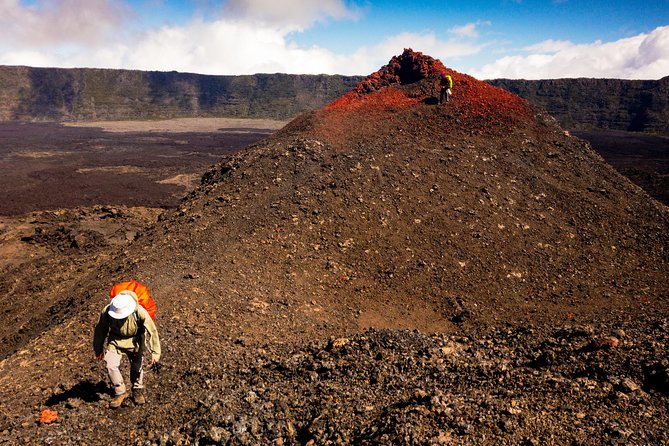
- A real volcano route: descent into the enclosure, lava flows, then ascent toward the summit crater.
- A contingency plan if access is prohibited, with options around the Plaine des Sables.
- Cold altitude + sharp lava terrain means proper readiness matters more than fancy gear.
Why Piton de la Fournaise feels different from a normal hike
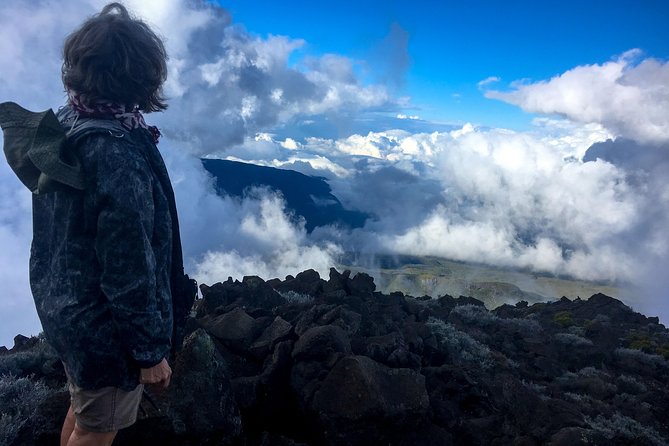
Most hikes are about views and effort. This one is about cause and effect: how volcanic activity shapes the island around you, step by step. You start the day getting a guided framework—how the volcano works and what you’re going to see—so when the ground changes from one lava surface to the next, it actually makes sense.
I also like that the tour is small and led by a mountain guide from Bureau Montagne Réunion. That matters on an active volcano, where rules can tighten quickly and where safety depends on reading terrain. With a max group size of 12, you’re less likely to feel swallowed by the crowd and more likely to get useful attention when conditions shift.
The other big reason it’s special is the learning style. You’re walking through the “mineral universe” of one of the most active volcanoes in the world, and the guide’s explanations connect the geology to what you’re seeing at ground level. If you’ve ever done a hike without understanding what you were looking at, you’ll feel the difference here fast.
You can also read our reviews of more tours and experiences in Reunion Island.
Your day at a glance: a 7:30 a.m. start and about 6 hours on volcanic ground
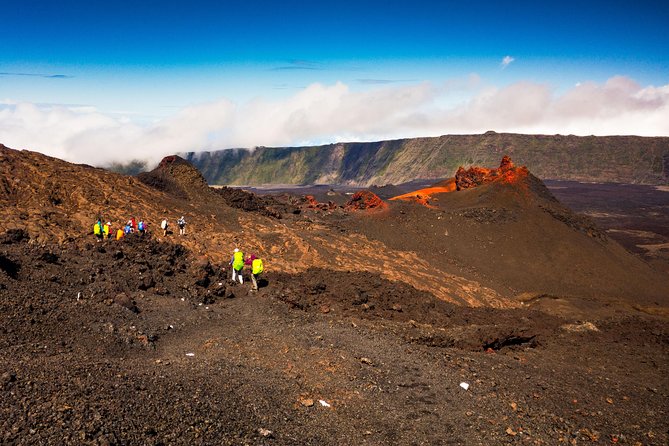
You meet at Parking du Pas de Bellecombe (Rte du Volcan, Sainte-Rose 97439). The start time is 7:30 am, and the hike runs about 6 hours.
Why the early start matters: temperatures can feel much colder as you gain elevation above 2000 m, and weather can flip quickly (rain, fog, wind). A morning departure gives you a better shot at stable conditions, and it also helps keep the group moving while visibility is still decent.
Distance is 9 km with an elevation gain around 500 m. That gain doesn’t sound huge on paper, but don’t get fooled by the number. The steep lava terrain can make every step feel heavier than a typical trail, especially when the ground is uneven or slick.
The core route: enclosure descent, lava flows, and the summit crater push

The hike has a clear shape, and you’ll understand it more the longer you walk.
1) Descent into the enclosure
You begin with a downward move into the enclosure area. This sets the tone: you’re not just approaching a viewpoint; you’re going into the volcanic “workspace.” Expect the guide to explain the geology in practical terms, so you can connect rock surfaces, flow patterns, and the active nature of the volcano.
2) Walking through lava flows to the base of the main cone
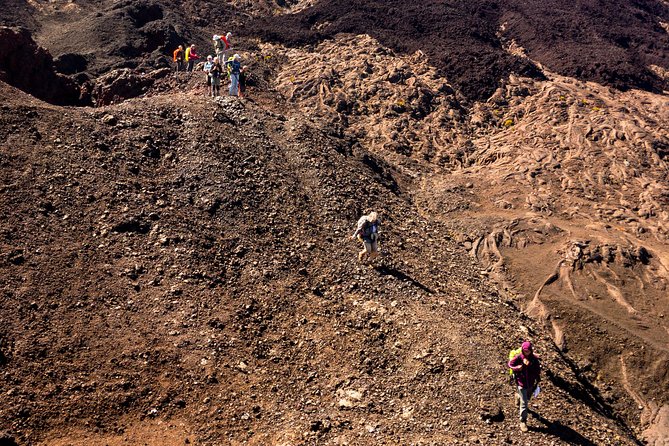
From there, the route continues across lava flows. This is where the geology starts becoming real in your eyes. Lava surfaces tell stories—different flow ages, texture changes, and how the terrain developed around past activity. The guide’s job here is turning what looks like black ground into something you can read.
You’re aiming for the base of the main cone, and reaching that point changes the hike’s feeling. The slope gets more purposeful, and you’ll start shifting from “exploring” to “climbing toward the summit crater.”
3) Ascent toward the summit crater
The last phase is the summit crater approach. This is the part that most people remember, and it’s also where conditions matter most. The terrain is steep, and because the ground is volcanic, a misstep can be worse than on dirt trail.
Also note this: access rules can affect where you can go and how far you can climb, depending on what’s happening around the enclosure.
Off-trail access (and why it’s not something to DIY)
One of the most meaningful features is that the hike includes off-trail portions reserved for professionals. That phrasing matters. It means the route you take isn’t just a standard public footpath. A guide from Bureau Montagne Réunion can move through areas that are otherwise restricted, which gives you a closer look at the volcanic terrain.
This is also where the guide’s presence pays off. You’re dealing with steep slopes, sharp volcanic rock in the event of a fall, and changing conditions at higher altitude. A trained guide helps keep the group aligned on safe footing and helps you interpret what you’re seeing without you needing to guess.
It’s also a value play. You could technically attempt something on your own, but you’ll lose the point: the geology explanations and the route intelligence that keeps you in the right areas for what’s happening that day.
If the enclosure is closed: Plaine des Sables instead of a wasted morning
Active volcanoes don’t follow a schedule, and this tour is built around that reality. If access to the enclosure is prohibited by prefectural decree—or if the enclosure is closed by prefectural order in the event of an eruption in the enclosure—your specialists will offer an alternative route.
That alternative is off the beaten track in the Plaine des Sables. Depending on conditions, the goal is either:
- a chance to glimpse the current eruption, or
- an opportunity to discover past eruptions and how the volcano’s activity has shaped this area over time.
From your perspective, this is the best kind of contingency: it doesn’t turn the day into a generic replacement walk. It keeps the focus on the volcano’s story and your ability to still experience something meaningful, even when one access zone shuts down.
How the hike difficulty feels (9 km, 500 m gain, steep lava terrain)
On paper: 9 km and about 500 m gain in roughly 6 hours. On the ground: steep, rocky, and exposed to fast weather shifts above 2000 m.
You should have strong physical fitness. That isn’t a marketing line here—it’s because the hike is steep and the terrain can be sharp. The tour info also flags that conditions can change quickly: rain, fog, and wind can roll in, and cold can hit hard at altitude.
So how should you judge whether you’re ready?
- You should be comfortable hiking steep trails for hours.
- You should be stable on uneven ground, not just on smooth paths.
- If you’re someone who gets stressed in fog or wind, plan to bring a calm, patient mindset. The guide will adjust, but conditions are real.
This is also why group size matters. A max of 12 lets the guide manage pace and footing more effectively than on big buses.
Cold weather, fast changes, and staying safe on sharp volcanic rock
The tour gives you a clear warning: it can be very cold at the volcano, and weather can change very quickly at higher altitude. You can also run into wind and fog that reduces visibility, making footing more important.
Here’s what I’d treat as non-negotiables based on that:
- Dress in layers you can manage on steep climbs and then cool down in after.
- Bring rain protection suitable for hiking (not just a light umbrella).
- Plan for wind and reduced visibility.
- Wear proper hiking footwear with grip for rocky, volcanic surfaces.
The tour also notes that sharp lava can be dangerous in the event of a fall. Nobody wants to think about that, but the practical takeaway is simple: move deliberately, keep good spacing, and follow the guide’s instructions on where to step.
Price and value: what $77.82 buys you on an active volcano day
At $77.82 per person, this hike sits in a “serious experience” category, not a casual stroll. The value comes from three things:
1) The guide expertise
You get a professional mountain guide from Bureau Montagne Réunion, not just a generic escort. On an active volcano, the difference shows up in route decisions and geology explanations.
2) Access level
Off-trail portions reserved for professionals aren’t common on typical hikes. That access, plus the ability to adapt if enclosure access is restricted, is a big part of why the price makes sense.
3) Time and guidance effort
You’re out for about 6 hours. That’s a long enough chunk of the day that your guide’s explanations and safety management actually matter.
What’s included: a snack plus a local drink. What’s not included: lunch. You should plan to bring a picnic.
In practice, this means you’re paying for a high-stakes, high-education hike where logistics and safety are taken seriously.
Small-group pace and language: French-only affects who can join
There’s one line in the tour info that you should respect: hiking is in French only, and you need a correct understanding of the language to participate.
That matters because volcano hikes aren’t just about scenery. You may get safety guidance and geology explanations that you’ll want to follow quickly, especially when weather changes.
If you’re comfortable with basic French instructions and can understand fast talk, you’ll likely be fine. If French isn’t strong yet, it’s worth thinking twice before booking.
A real guide makes the geology stick (and you’ll notice that quickly)
The praise around this experience has a consistent theme: the hike makes sense because the guide explains it in a way that connects the island’s formation to what you’re seeing. People highlight that it can be done solo, but it’s more interesting with a guide because you learn how the island forms and how the crater forms.
One review specifically calls out a guide named Renaud, described as super, and the value credit goes to clear explanations about how the island and crater took shape. Even if your guide isn’t Renaud, the same idea holds: you’re buying guided understanding, not just movement.
That’s why the tour works so well for first-time visitors. You don’t leave with just photos. You leave with a mental map of how the volcano builds and reshapes Réunion Island.
Who should book this hike (and who should skip it)
This hike is best for you if:
- you want an active-volcano geology experience, not a casual walking tour
- you can handle steep, cold, possibly windy or foggy conditions
- you’re comfortable with French, since the hike is in French
- you’re traveling with a strong physical fitness level and can manage uneven volcanic terrain
It’s a stronger fit than many “summit-ish” tours because it’s guided and structured around safe access rules, with an alternate plan if the enclosure closes.
Age-wise: the recommended minimum age is 12. For any child under 12, you need to contact the operator for more information. Also, minors under 18 can’t be accepted without an adult.
Should you book this Piton de la Fournaise hike with Bureau Montagne Réunion?
If you want a hike with real meaning, not just a box to check, I’d book it—especially if geology and active-volcano dynamics interest you. The combination of professional-only access, small group size, and a contingency that keeps the volcano theme alive (Plaine des Sables if the enclosure is restricted) is the kind of planning that makes a difference on an unpredictable mountain.
Skip it if you’re not ready for steep terrain, sharp volcanic ground, and cold conditions that can change quickly. Also skip if French is a barrier, since the hike is in French only.
FAQ
How long is the Piton de la Fournaise hike?
It lasts about 6 hours.
Where and when does the hike start?
You start at 7:30 am from Parking du Pas de Bellecombe on Rte du Volcan in Sainte-Rose (97439, Réunion).
What’s the group size?
The tour has a maximum of 12 travelers.
Do I need French to join?
Yes. Hiking is in French only, and you need a correct understanding of French to participate.
What’s included, and do I need to bring lunch?
Snacks and a local drink are included. Lunch isn’t included, so you should bring a picnic.
What happens if access to the enclosure is prohibited?
If the enclosure is closed by prefectural order or prohibited by decree, the specialists offer an alternative route in the Plaine des Sables, either to catch a glimpse of the current eruption or to discover past eruptions.