REVIEW · VALENCIA PROVINCE
Hike to the Roman aqueduct Peña Cortada
Book on Viator →Operated by Valencia Mountain Enthusiasts · Bookable on Viator
The aqueduct hike feels like time travel. I love walking through rock-cut tunnels and crossing the aqueduct’s showpiece bridge, while the rest of the day follows Chelva’s water sounds. One consideration: this outing is more trekking than deep, slow history, and parts feel physically demanding with some drop-off exposure.
You’ll start in Valencia at Serranos Towers (Plaça dels Furs) and ride out to the La Serranía countryside in an air-conditioned vehicle. Then you’ll spend about 5 to 6 hours moving on foot along a circular 14 km route with a few stops and rest points.
After the aqueduct highlight, the day turns into a mix of Ruta del Agua walking and a relaxed wander through Chelva’s old neighborhoods. If you want minimal climbing and maximum museum-style explanations, plan to supplement with your own reading before you go.
In This Review
- Key highlights at a glance
- Why the Peña Cortada aqueduct hike is the main event
- Morning drive from Valencia to Calles (plus a real coffee stop)
- Calles to Peña Cortada: gentle climb, rock tunnels, and the bridge crossing
- Ruta del Agua walking: springs, ditches, and the Tuéjar/Chelva river sounds
- Chelva town stroll: why this inland old town feels layered
- Pacing the whole 14 km loop without burning out
- Price and value: what you’re really paying for
- What to bring for a comfortable aqueduct day
- Should you book the Peña Cortada and Chelva water-route hike?
- FAQ
- How long is the hike to the Roman aqueduct Peña Cortada?
- How far is the route?
- Where do we meet, and what time does it start?
- Is transportation included from Valencia?
- Are tickets included for the stops?
- Is lunch included?
- What fitness level is required?
- Can service animals join?
Key highlights at a glance
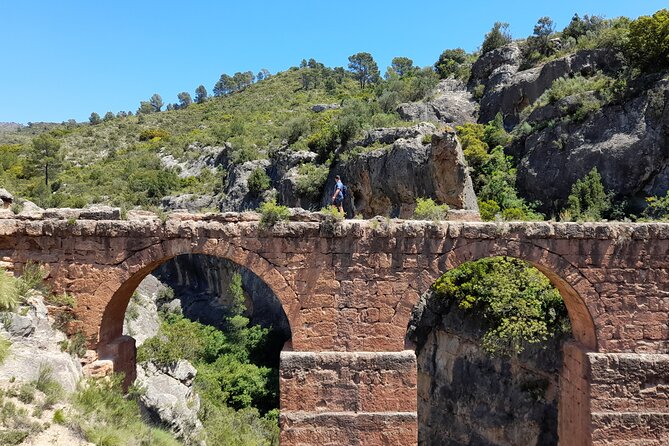
- Roman aqueduct sections you walk through, including tunnels carved into rock
- A standout bridge crossing that’s the visual payoff for the climb
- Ruta del Agua walking with lots of water noise from springs, sources, and ditches
- Chelva’s layered old town with Arab, Jewish, Moorish, and Christian traces
- Small group size (max 8) for a more comfortable hiking day
- Admission ticket free at the included stops, so you’re mostly paying for guiding + transport
Why the Peña Cortada aqueduct hike is the main event
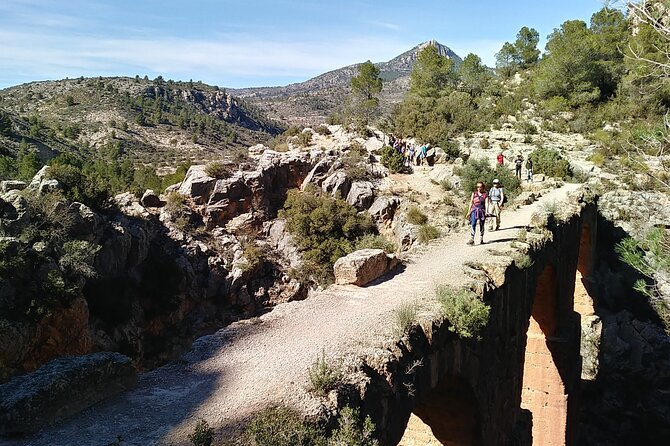
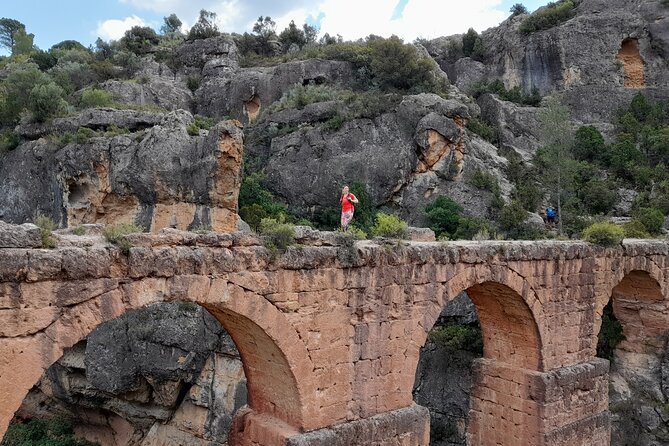
Peña Cortada is one of those places where you don’t just look at the past—you walk inside it. This Roman aqueduct, built more than 2000 years ago, is now accessible on foot, and the route is set up so you can move through tunnels carved in the rock and across impressive bridgework.
What I like about this approach is that the aqueduct becomes a living part of the landscape instead of a photo stop. You get the sound and feel of the area as you go, and the route naturally guides your attention to the structure: first the climb, then the tunnel passages, then the bridge.
And because this day also ties into Chelva’s water route (Ruta del Agua), the scenery and atmosphere shift as you walk. One stretch is about stonework and footing; the next is about listening to water and taking it slower.
You can also read our reviews of more tours and experiences in Valencia Province.
Morning drive from Valencia to Calles (plus a real coffee stop)
The tour meets at Serranos Towers in Valencia, starting at 9:30 am. From there, you’ll drive about 50 minutes to Calles, which is where the hike begins.
It’s a small but smart touch: you’ll stop for coffee in a local bar before you head out on the trail. That matters more than it sounds. When a hike starts gently but ramps up, a warm drink early helps you settle in, and you’ll be ready for the first climb without feeling rushed.
You’ll ride in an air-conditioned vehicle with private transportation included. The group is kept small (up to 8 travelers), so you’re not fighting crowd pacing on narrow trail segments.
One more practical note: this experience requires good weather. If conditions aren’t right, you’ll be offered a different date or a full refund. That’s worth remembering if you’re in town with a tight schedule.
Calles to Peña Cortada: gentle climb, rock tunnels, and the bridge crossing
Your hike starts with the first 3 kilometers as a gentle ascent. This is the kind of “wake-up climb” that gets your legs working without feeling like a wall. It’s a good way to find your rhythm before the trail narrows.
As you get closer to the aqueduct, the path becomes single track and you gain elevation a bit more. The good news: this sharper part is relatively short. The trail then brings you straight to the aqueduct section.
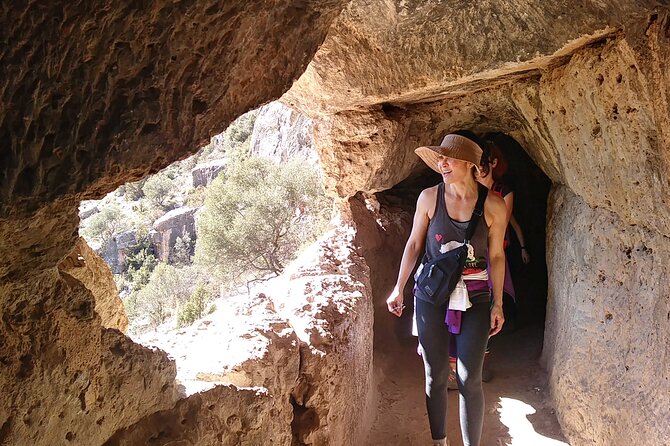
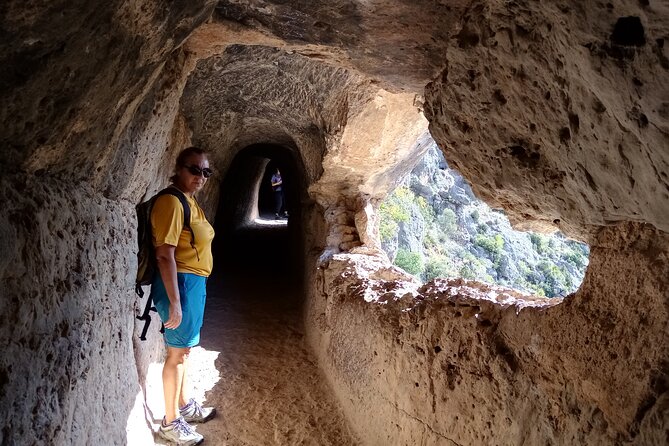
This is where the experience earns its keep. You’ll walk through tunnels carved in rock, so your focus shifts from views to texture—stone walls close to you, the change in air, and that steady sense of moving through an ancient system. It’s also one of the best parts for photos, because the tunnel framing gives you a natural shot composition.
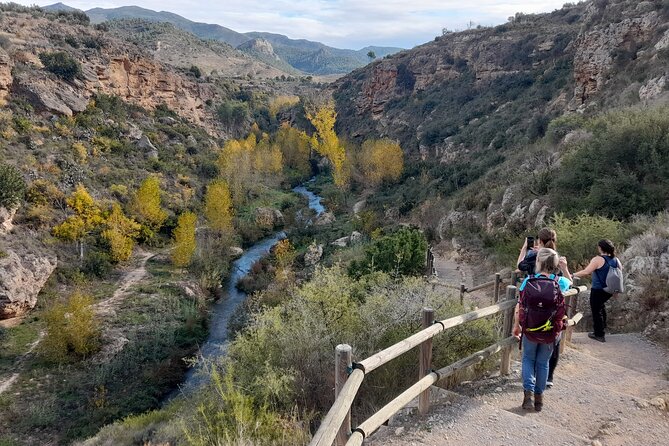
Then comes the most impressive part: the bridge crossing. This is the moment you cross over to the other side and feel the aqueduct’s scale. It’s also where footing and attention matter. A hiking-style review of this day pointed out how more physically demanding it can be than people expect, especially for those in their 50s or anyone who gets nervous near drop-offs.
My advice is simple: slow down before the bridge section, keep your eyes on your steps, and don’t let the “wow” moments rush you. Trekking is the main activity here—so treat it like that.
Ruta del Agua walking: springs, ditches, and the Tuéjar/Chelva river sounds
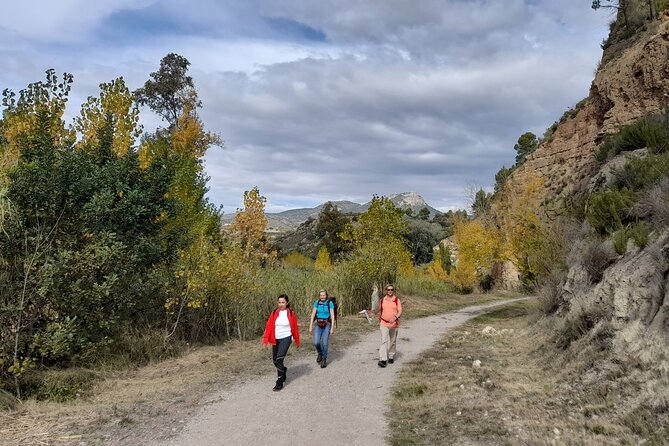
After the aqueduct stretch, the day connects into Chelva’s Ruta del Agua, a circular water route that mixes nature and culture. The walking segment is often described as roughly two hours with rest areas along the way, and it can be done from Chelva or from Calles.
What you’ll notice quickly is the soundtrack. You never stop hearing water—from numerous springs and sources to smaller ditches and the Tuéjar river, which is also sometimes called the Chelva river. That constant murmur does a few useful things for your hike: it makes the walk feel calmer, and it helps you “measure” the route by sound as much as sight.
This part is less about architecture and more about sensory travel. You’re still on foot, but the vibe changes. The water route gives you enough breaks to catch your breath, take photos without sprinting, and enjoy the way the terrain guides your movement.
One balancing thought: some people want more formal historical interpretation. If you’re in that camp, you might find Ruta del Agua is more about walking atmosphere than hands-on storytelling. Still, it’s a beautiful way to stretch the day and avoid turning your afternoon into a second climb.
Chelva town stroll: why this inland old town feels layered
Chelva is where the hike loosens its grip. After you finish the water-route walking, you’ll get a chance to wander the town at a more relaxed pace.
The name is said to come from the silva term meaning forest, and Arabic influence shaped the way the initial sound evolved. Even if you don’t care about linguistics, you’ll feel the historic mix in the streets: Chelva’s urban center carries imprints left by different peoples over time.
This is where you’ll see traces of Arab, Jewish, Moorish, and Christian heritage—often referred to in terms of distinct neighborhoods and construction styles. You’re not looking at one “theme park” attraction. You’re walking through a town where centuries overlap.
Here’s how to get more value from the town time: treat it like a slow loop. Find one or two streets that look different from the others, pause to notice how the buildings and layout change, and let the town do its work. If your brain is still in hike mode from the aqueduct, give it a gentle reset with shade, a short sit-down, and a few careful steps through the old quarters.
Pacing the whole 14 km loop without burning out
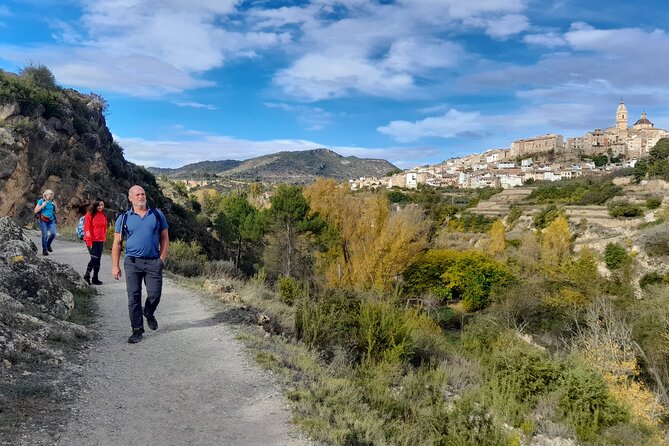
This is listed as an approx 14 kilometer circular route with total time around 5 to 6 hours. That sounds straightforward until you remember you’re mixing rock-carved tunnel passages, a bridge section, water-route walking, and a town stroll.
To enjoy the day, pace isn’t optional—it’s the difference between a great hike and an exhausting one. I’d plan on moving steadily rather than “pushing through.” The aqueduct section may feel exciting, but the physical payoff comes from completing the loop calmly.
Also, lunch isn’t included. You’ll want a snack strategy before the day starts. Bring enough food for your energy, plus a picnic option if that’s your style. Even with rest areas on the water route, you’ll burn calories during the climb segments and you don’t want to end up rationing.
A small practical tip: your timing will be affected by how long you pause for photos inside tunnels and at the bridge. Set expectations early—if you want lots of pictures, build that in rather than hoping you’ll have time later.
Price and value: what you’re really paying for
The listed price is $1,245 for this outing. That number may look steep until you break down what’s included.
You’re getting air-conditioned vehicle transport and private transportation, plus a small group (max 8). You also get a mobile ticket, and admission tickets are indicated as free for the included stops. In other words, the cost is mostly for getting you to the La Serranía trailhead, keeping the group organized, and covering guided coordination during the day.
So the value depends on what you compare it to:
- If you want the convenience of transport out of Valencia and a hassle-free hike day, this can feel like a good deal.
- If you’re a strong independent hiker and already know the route, you may feel the price is paying for structure more than expertise.
One more fairness note from the overall vibe of the experience: it can feel like hiking-first rather than history-first. If you’re hoping for a heavy interpretive program, you might want to come prepared with your own context about Roman water infrastructure and Chelva’s old neighborhoods.
What to bring for a comfortable aqueduct day
I’d pack like you’re going for a serious hike, not a casual nature stroll.
Comfort essentials
- Good hiking shoes with solid grip
- Plenty of water
- Snacks and/or a picnic lunch (lunch isn’t included)
Weather and comfort
- A light layer even if it’s warm when you leave Valencia
- Sun protection, because you’ll be out for hours
- Something small for breaks, like a hat or sunglasses
For the day’s flow
- Your phone for the mobile ticket
- If you’re prone to knee fatigue, go slower on the elevation segments rather than powering through
Also, service animals are allowed, which is a good sign if you travel with one.
Should you book the Peña Cortada and Chelva water-route hike?
Book this if you want a hands-on day with a Roman structure you can actually walk through: tunnels in rock, then a serious bridge moment, then a water-route walk where the sound of springs fills your breaks.
It’s also a great fit if you like small-group hiking days. With a max group size of 8 and private transport, you’ll spend less time herding people and more time moving comfortably.
Skip it or go into it with eyes open if your main goal is deep historical interpretation. This is primarily built around the hike itself. If your ideal tour is lots of guided explanation and museum-style storytelling, you may find you have to do a bit of homework to maximize the history component.
If you’re deciding based on timing: because it depends on good weather, plan it with at least a little schedule flexibility. You can cancel for free up to 24 hours, so you have a safety net if your plans change.
My bottom line: if you’re the kind of traveler who likes to work for your views and walk inside real stonework, this is a fun, memorable day in the La Serranía hills—especially for the aqueduct lovers who don’t need a classroom to enjoy the past.
FAQ
How long is the hike to the Roman aqueduct Peña Cortada?
The tour runs about 5 to 6 hours.
How far is the route?
The route is a circular 14 kilometer hike.
Where do we meet, and what time does it start?
You meet at Serranos Towers (Plaça dels Furs, s/n, Ciutat Vella, 46003 València) and the start time is 9:30 am.
Is transportation included from Valencia?
Yes. Pickup is offered, and the tour includes an air-conditioned vehicle and private transportation.
Are tickets included for the stops?
Admission is listed as free for the included stops.
Is lunch included?
No. Lunch isn’t included, so bring snacks and/or a picnic lunch.
What fitness level is required?
It’s designed for people with moderate physical fitness.
Can service animals join?
Yes. Service animals are allowed.