REVIEW · YOKOHAMA
Kamakura One Day Hike Tour with Government-Licensed Guide
Book on Viator →Operated by Japan Guide Agency · Bookable on Viator
Kamakura rewards slow walking and good context. This one-day hike tour runs about 6 hours and focuses on the Daibutsu Trail (Great Buddha to Jochi-ji), so you get temples and the feel of Kamakura beyond the photo spots. I like the way you can shape the day around your interests with a licensed guide, and I like the mix of big-name stops (like Tsurugaoka Hachimangu and the Great Buddha) plus calmer temple moments. The main thing to consider is simple: it’s a walking-and-hiking day, so you’ll want solid shoes and a realistic pace.
Here’s how it plays out: you meet your guide in the Kamakura/Yokohama area near your hotel or the closest station, then you walk from there. The pace is built for a small group experience, and the itinerary is flexible, but the big hiking segment does mean you shouldn’t plan this as a casual stroll.
In This Review
- Key highlights to know before you go
- Kamakura in one day: what the 6-hour hike tour really delivers
- Government-licensed guide and how the tour can be customized
- Entering Kamakura’s samurai story at Tsurugaoka Hachimangu
- The Great Buddha moment at Kotoku-in (and the start of your hike)
- Walking the Daibutsu Trail: the part you’ll remember most
- Hasedera’s mercy statue and the Kannon effect
- Hokoku-ji’s bamboo grove: quiet contrast in a fast day
- The Zen temple sweep: Engaku-ji and Kencho-ji (and cousins)
- Engaku-ji
- Kencho-ji
- The smaller temple additions (short but meaningful)
- Zeniarai Benten and the hydrangea-style photo stop
- Enoshima island: sea views as a bonus
- Stopping near Engaku-ji’s world: the hills and the pacing
- Time management: why the order of stops feels intentional
- Price and value: does $153.50 make sense for you?
- What to wear and pack for the Daibutsu Trail walk
- Who should book this Kamakura one-day hike tour
- Should you book it?
- FAQ
- How long is the Kamakura hiking day tour?
- Where does the tour start?
- Can I choose which temples and sights we visit?
- What is the hiking portion called, and how long is it?
- Is the Great Buddha included in the tour?
- Are entrance fees included in the price?
- Does the tour include lunch or transportation?
- Is it a private tour or a group tour?
Key highlights to know before you go
- Government-licensed English guide with strong Japanese culture and history knowledge
- Daibutsu Trail focus: about 6 km linking the Great Buddha area toward Jochi-ji
- Pick 3–4 sites from a list, so the day fits your time and interests
- Temple variety: samurai-era shrine + Zen temples + a bamboo grove + a money-washing shrine
- Enoshima island option for sea views when conditions are clear
- Weather-aware walking—a slippery trail can happen, and the guide adjusts accordingly
Kamakura in one day: what the 6-hour hike tour really delivers
Kamakura is about an hour from Tokyo, but doing it right takes time. This tour is built for that middle ground: you’re not stuck in a van all day, and you’re not trying to race through everything solo. Instead, you get a guided route with real narration, then you connect temple points on foot.
The experience centers on the Daibutsu area—start near the Great Buddha of Kamakura (Kotoku-in), then hike the Daibutsu Trail northward toward Jochi-ji. That hiking segment is roughly 3.7 miles (6 km), which is long enough to feel like a day trip, but not so long that you’re committed to an all-day fitness test.
Two things you’ll feel immediately:
- You’re seeing Kamakura in “walking order,” not in map-order. That matters because temples sit where they do for a reason—hillsides, valleys, and paths between them.
- You’re getting context while you’re there, so the places make sense on the spot rather than after the fact.
One drawback to plan around: the trip is about 6 hours, and the scheduled stops include several very short visits. If you want long meditation-time at each temple, you’ll probably feel a bit rushed at the quick-photo stops.
Government-licensed guide and how the tour can be customized
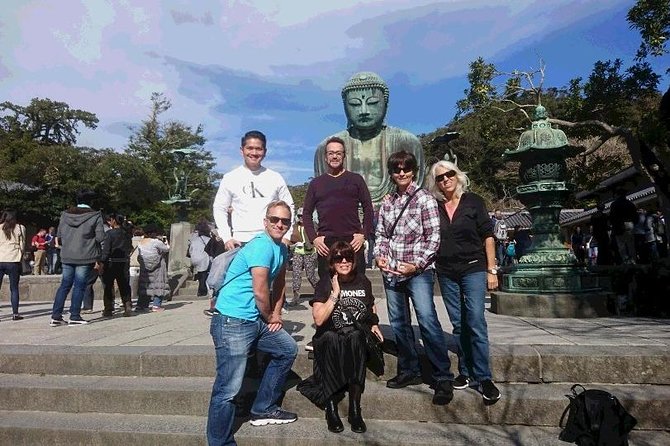
This tour uses a National Government Licensed Guide Interpreter (English). That certification is specifically tied to Japan’s understanding of culture and history, which is what you want for Kamakura—because a lot of the “why this matters” is easy to miss if you’re reading alone while walking uphill.
Customization is a big part of the value. You choose your must-see spots from a list, and the plan aims for about 3–4 sites within the broader Kamakura walking day. You can also request:
- what you want to experience,
- what start time you want,
- where you’re staying (so meeting point is easier).
In practice, this means you can make tradeoffs. If you’re more interested in Zen temples, you can lean that way. If you care more about the samurai and shrine side, you can emphasize Tsurugaoka Hachimangu. If you just want the iconic Great Buddha + a meaningful hike segment, you can build a quieter day.
I also like that the meeting is designed for walking. You meet your guide within a designated area of Kamakura/Yokohama, then you go on foot from there. There’s no need to figure out which train transfers line up with a complex route.
Entering Kamakura’s samurai story at Tsurugaoka Hachimangu
Stop 1: Tsurugaoka Hachimangu Shrine
Time on site: about 30 minutes
Admission: listed as free
This is a strong opener because it frames the samurai angle right away. The shrine honors Hachiman, patron god of the Minamoto family and, more broadly, samurai in general. You’ll also hear religious-political links that help explain why Kamakura became such a key power center.
Why it works well at the start of your day: you get orientation. From here, the rest of the route feels less random. You’re not hopping temple to temple; you’re moving through a place that historically shaped how people thought about authority, duty, and belief.
Potential consideration: 30 minutes sounds like plenty, but shrines can still surprise you with extra side areas and photo points. If you’re the type who wants to slow down for details, give yourself mental room for it.
The Great Buddha moment at Kotoku-in (and the start of your hike)
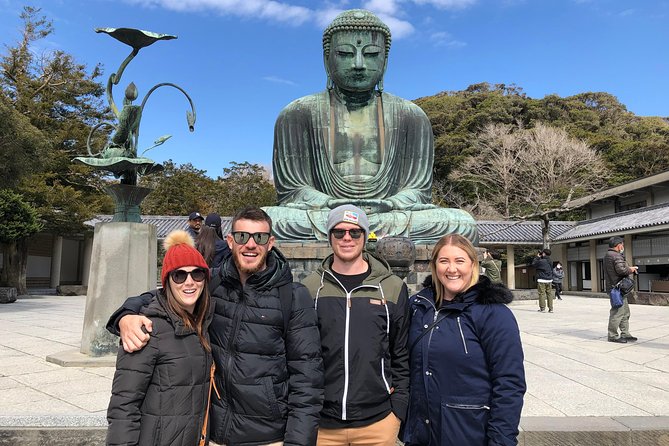
Stop 2: Kotoku-in – Great Buddha of Kamakura
Time on site: about 5 minutes
Admission: listed as not included
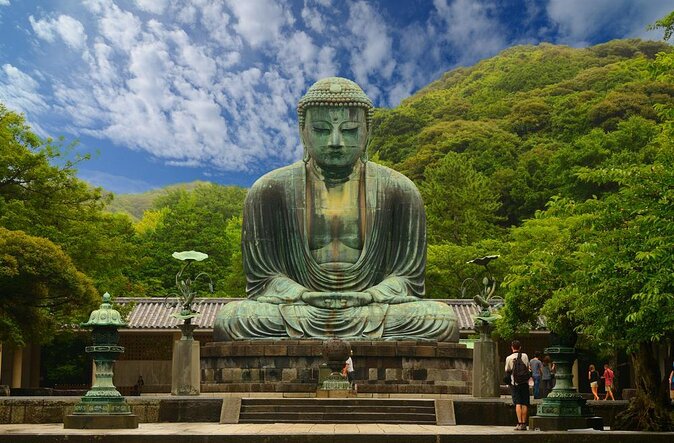
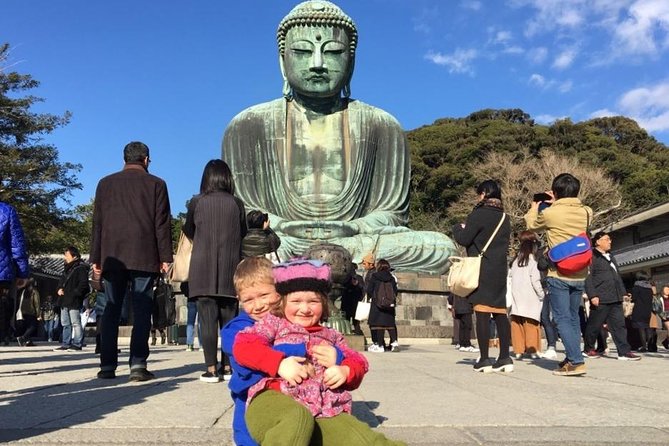
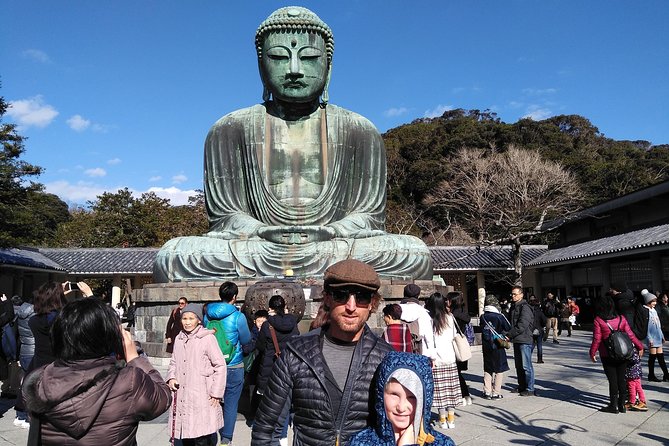
The Great Buddha is one of those sights that hits even if you’ve seen photos before. Standing near a massive bronze Buddha changes the scale feeling—you stop thinking in picture terms and start thinking in “this was built and maintained” terms.
This stop is brief by design, which is both good and slightly tough:
- Good, because it doesn’t swallow your whole day.
- Slightly tough, because if you want a long, unhurried viewing session, you might need to come back later on your own.
This is also where the day’s rhythm shifts into walking mode. From the Great Buddha area, you’ll be set up for the Daibutsu Trail connection toward Jochi-ji, so you’re not just doing a shrine-and-temple checklist.
Walking the Daibutsu Trail: the part you’ll remember most
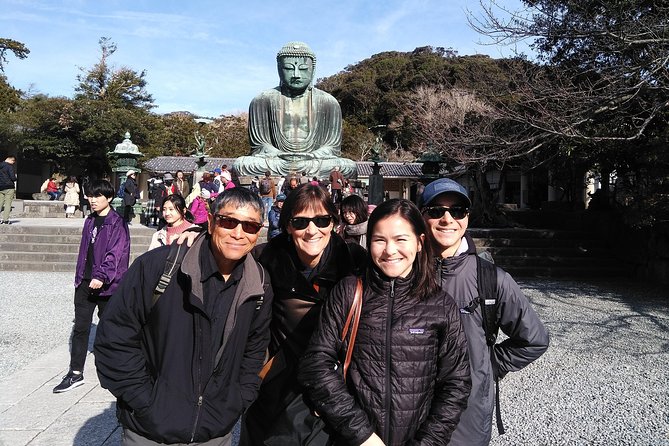
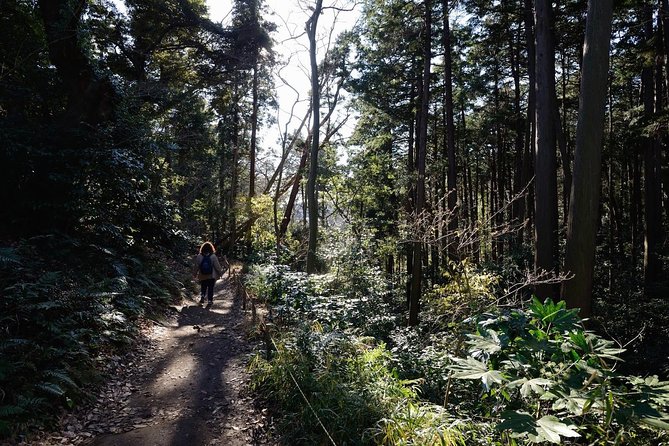
The heart of the tour is the Daibutsu hiking trail, running between the Great Buddha area to Jochi-ji Zen temple to the north. It’s about 6 km total (roughly 3.7 miles), and it’s the segment that turns “sights” into an actual experience.
What you get from hiking this stretch with a guide:
- You understand what you’re passing and why temples appear where they do.
- You get a sense of how Kamakura connects sea-adjacent and hilly areas.
- You learn to watch for the small changes: vegetation, path width, and the way approach routes shape your first view of each temple.
One practical note from the way guides run this day: trail conditions can change. If there’s been rain recently, the path can get slippery. A guide can slow your pace and adjust how you step. That matters because the tour’s value isn’t in speed—it’s in staying stable and enjoying the scenery and stories.
If you hate “moderate hills,” be honest with yourself here. The hiking is not described as extreme, but it is still a real walking day.
Hasedera’s mercy statue and the Kannon effect
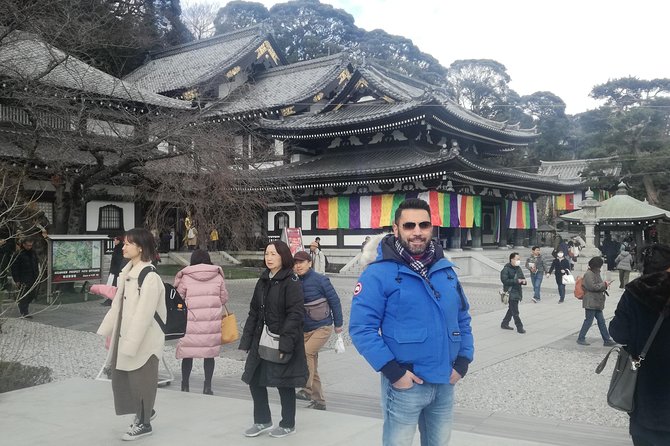
Stop 3: Hasedera Temple
Time on site: about 5 minutes
Admission: listed as not included
Hasedera (長谷寺) is known for a very large eleven-headed statue of Kannon, the goddess of mercy. Even in a short stop, the scale of religious art tends to do the work: it’s not just decoration, it’s meant to communicate compassion in a physical way.
The short time is the drawback here. Five minutes can feel like a teaser if you like art and want to look closely. Still, paired with the rest of the day’s temple stops and hike, it gives you variety without turning the day into a slow crawl.
If you’re aiming for photos, arrive mentally ready to capture the statue quickly and then move on. Your guide will likely help you focus on what’s most important in the limited time.
Hokoku-ji’s bamboo grove: quiet contrast in a fast day
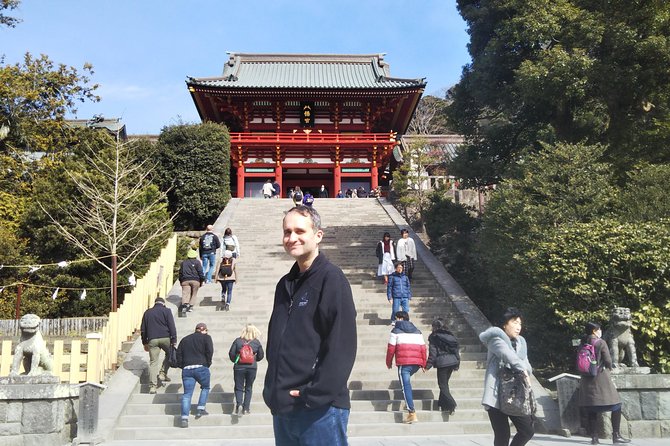
Stop 4: Hokoku-ji Temple
Time on site: about 30 minutes
Admission: listed as not included
This one is built for a different mood. Hokoku-ji is famous for the bamboo grove behind the main hall—over 2000 dark green bamboo stalks. You’re basically walking into a tunnel of sound and shade, and it resets your brain after the bigger, brighter stops.
Why it’s worth time: it’s not just “pretty bamboo.” It also changes how you experience the temple atmosphere. The narrow pathways and the density of stalks create a sense of enclosure that feels distinctly different from open shrine grounds.
If you dislike crowds, this is one of the spots where a timed stop can help. Thirty minutes gives you enough space to look around and not just snap a quick photo.
The Zen temple sweep: Engaku-ji and Kencho-ji (and cousins)
Kamakura’s Zen temples are part of the city’s identity, and this tour includes major players from the five great Zen temples network.
Engaku-ji
Stop 7: Engaku-ji
Time on site: about 30 minutes
Admission: listed as not included
Engaku-ji is described as a leading Zen temple in Eastern Japan and the number two among Kamakura’s five great Zen temples. It was founded by Hojo Tokimune in 1282. That “founding story” angle matters because it ties you to the political reality behind religious institutions.
Kencho-ji
Stop 8: Kencho-ji
Time on site: about 5 minutes
Admission: listed as not included
Kencho-ji is the number one of the five great Zen temples and the oldest Zen temple in Kamakura, founded in 1253 by Hojo Tokiyori. It’s a quick stop here, so treat it like a highlight pass. If you’re hoping for a long look, plan to allocate more time on another visit.
The smaller temple additions (short but meaningful)
The route can also include several branch temples and sect variations, each giving a slightly different flavor of Kamakura’s religious landscape:
- Zuisen-ji in a narrow valley (30 minutes)
- Zeniarai Benten Shrine (coin washing) for a fun detour
- Meigetsuin (Hydrangea Temple), known for hydrangea blooming (5 minutes)
- Ankokuronji, Jomyo-ji, Tokeiji, Jufukuji, Jochiji, and Myohonji (mostly short visits)
Because many of these stops are brief, the guide’s job becomes important: you’re not just walking through, you’re learning how each temple relates to the wider Zen story—Rinzai versus other Nichiren connections, and how the temples are positioned across hillsides.
Zeniarai Benten and the hydrangea-style photo stop
Stop 9: Zeniarai Benten Shrine
Time on site: about 30 minutes
Admission: listed as free
This is one of those Kamakura details that feels very local and very human. Zeniarai Benten is visited for washing money in its spring—called zeniarai, meaning coin washing. The belief is that money washed here will do well. Even if you keep it light and just enjoy the ritual vibe, it’s a great break from “serious temple mode.”
Stop 10: Meigetsuin (Hydrangea Temple)
Time on site: about 5 minutes
Admission: listed as not included
Meigetsuin is called Ajisaidera because hydrangeas bloom abundantly on the grounds. If you’re visiting when hydrangeas are in season, this stop can feel extra special. If not, the setting still makes sense as a seasonal temple.
Either way, it’s a quick stop, so I’d think of it as a photo-and-feel moment rather than a deep-time viewing.
Enoshima island: sea views as a bonus
Stop 6: Enoshima Island
Time on site: about 5 minutes
Admission: listed as free
Enoshima is just west of Kamakura and connected by bridge to the mainland. It’s described as pleasantly touristy but not sterile, with a shrine and coastal atmosphere.
A useful tip from the way the day can go: one guide-led outing included a request to get photos of Mt. Fuji, and the group was able to see Mt. Fuji from Enoshima when the weather cooperated. So if views matter to you, Enoshima is worth prioritizing and keeping your camera ready.
Since the time is short, don’t expect a long island wander. Use it to catch the view and get a feel for the coast before you head back to the temple rhythm.
Stopping near Engaku-ji’s world: the hills and the pacing
Several of the Zen-related stops are clustered across hillsides and valleys, including Jochiji, Tokeiji, Jufukuji, and Zuisen-ji. Many of these are around 5 minutes, with a few longer stops like Zuisen-ji at 30 minutes.
That timing matters. In a day like this, the short stops help you cover more ground without draining your energy before the hike. The longer ones are your chances to actually breathe and absorb.
My advice: if you’re the type who gets temple-fatigue (too much of everything at once), pick fewer stops in your customization choice. Since you can choose 3–4 sites, you can protect the quality of your “wow” moments.
Time management: why the order of stops feels intentional
The tour is structured so you’re not constantly doing the hardest part at the last minute. It starts with a shrine foundation, introduces the Great Buddha quickly, then transitions into the hiking connection toward Jochi-ji. After that, it layers in Zen sites and smaller add-ons like Zeniarai Benten and Enoshima.
If you’re tight on energy, this structure helps because you’re not spending all day on hills. Still, the lesson from the walk day is clear: don’t overbook your Tokyo plans the same evening. Kamakura takes time to get to, and the hike segment makes it feel like more than a half-day “excursion.” Plan a slower return.
Also note: you’re walking most of the day. Even though pickup is offered, the tour is described as a walking tour where pickup is on foot and you meet your guide within the designated area of Kamakura/Yokohama. So budget the day as “in-city on foot,” not “park and ride.”
Price and value: does $153.50 make sense for you?
At $153.50 per person for about 6 hours, this is not a budget stroll. What you’re paying for is the combination of:
- a government-licensed English guide interpreter,
- a route that blends major temples with an actual hike segment,
- the ability to customize which sights you get within the day.
Entrance fees and lunch are not included, and transportation fees aren’t included either. That’s the part you’ll manage yourself. But the guide’s time and structure are the value driver—especially if you want Kamakura context without spending your vacation time decoding names, sects, and history while walking uphill.
For solo travelers, you might wonder if it’s cheaper to do your own route. You can save money that way. But if you value interpretation and pacing—plus want help choosing which temples to skip—this tour often feels fair.
What to wear and pack for the Daibutsu Trail walk
This is a walking tour, and part of it is hiking terrain. You don’t need mountain gear, but you do need comfort that won’t punish you after hour three.
Bring:
- sturdy shoes with good grip (especially if rain happened recently),
- a small day bag for water and a layer,
- a camera plan, since there are multiple short photo windows.
If you’re prone to cold or sun discomfort, keep a light layer handy. The day includes shrine grounds and hillside paths, so you can move from shaded temple areas to brighter open stretches.
Who should book this Kamakura one-day hike tour
This fits well if you:
- want a guided day for cultural context, not just a map route,
- enjoy walking and can handle a 6 km hike segment,
- want to choose the best 3–4 sights for your interests,
- like mixing iconic places with slightly calmer temple stops.
It may be less ideal if you:
- want a mostly relaxed temple sightseeing day with minimal walking,
- hate any hiking element and would rather stay fully on flat streets,
- expect long stays at each site. This tour is fast in some places by design.
One more fit note: it’s described as a private tour activity with only your group participating, so it can be a good choice if you don’t want to blend into a larger crowd’s rhythm.
Should you book it?
Book it if you want Kamakura to feel guided, walkable, and meaningful—especially the Daibutsu Trail section. The licensed English guide and the customizable 3–4 site selection are the real strengths, and the day’s mix (Tsurugaoka Hachimangu, the Great Buddha area, Zen temples, plus optional Enoshima) gives you a well-rounded Kamakura snapshot.
Skip it or modify your expectations if you’re looking for a soft, slow “temple stroll only” day. The hike element and the short stop times mean you’ll need to travel with a bit of flexibility—and good footwear.
FAQ
How long is the Kamakura hiking day tour?
The duration is listed as about 6 hours.
Where does the tour start?
You meet your guide on foot within a designated area of Kamakura/Yokohama, and pickup is offered. The meeting can be at your hotel or the closest station.
Can I choose which temples and sights we visit?
Yes. The itinerary can be personalized, and you select your must-see spots from a list to create a customized route (typically 3–4 sites from the tour’s options).
What is the hiking portion called, and how long is it?
The tour includes the Daibutsu hiking trail, which runs between the Great Buddha area and toward Jochi-ji. It’s listed as 3.7 miles (6 km).
Is the Great Buddha included in the tour?
The Great Buddha of Kamakura at Kotoku-in is part of the tour, with a listed stop time of about 5 minutes. Admission is marked as not included.
Are entrance fees included in the price?
Entrance fees are listed as not included. Some listed stops show admission as free, while others are marked not included.
Does the tour include lunch or transportation?
No. Transportation fees and lunch are not included, and other personal expenses are also not included.
Is it a private tour or a group tour?
It’s described as a private tour/activity, so only your group participates.