REVIEW · MAURITIUS
Mauritius: Le Morne Mountain Guided Sunrise Hike and Climb
Book on GetYourGuide →Operated by Horazis · Bookable on GetYourGuide
Sunrise at Le Morne is a different kind of workout. This guided ascent to the memorial cross summit delivers panoramic views plus the confidence of a qualified mountaineer while you tackle four rocky scramble sections; the trade-off is that it’s not for you if you fear heights or you’re low on stamina.
Expect a 4-hour morning built around rainforest steps, bird calls, and a stop at the Trochetia Boutoniona viewpoint for snacks before the ~470-meter summit and its famous horizon-spanning views from this UNESCO World Heritage mountain.
In This Review
- Best bits you can plan around
- Why a Le Morne sunrise climb feels different than a normal hike
- Starting at Le Morne Public Beach and getting your bearings fast
- Rainforest warm-up: birds, endemic plants, and an easier rhythm
- The four rocky scrambling sections: where safety and confidence really show
- Trochetia Boutoniona viewpoint: snacks with a purpose
- Summit time: memorial cross views and the 270-degree payoff
- Fitness, timing, and why 4 hours can still feel tough
- The $75 price: what you’re paying for (and what you carry)
- What to bring for a smooth sunrise (and what will get you turned away)
- Weather changes and the early-start reality
- Who should book this climb, and who should skip it
- Should you book the Mauritius Le Morne sunrise hike?
- FAQ
- Where is the meeting point?
- How long does the hike take?
- Is the tour guided?
- Do I get pickup transportation?
- What languages are available?
- What should I bring?
- Is there a cancellation option?
- Is this hike suitable for older adults or people with medical issues?
Best bits you can plan around
- Meet at Le Morne Public Beach by the Slave Route Monument for a quick safety briefing before you start climbing
- Rainforest walking at the beginning with a real chance to spot endemic birds and plants
- Four separate rocky scrambling sections where you’ll use both feet and hands
- Trochetia Boutoniona viewpoint breaks with healthy snacks and big-picture photos
- Summit time for the memorial cross views (think roughly 270 degrees)
- Guides focused on safety and pacing in English or French (you might hear names like Kevin, Eric, or Gaël)
Why a Le Morne sunrise climb feels different than a normal hike
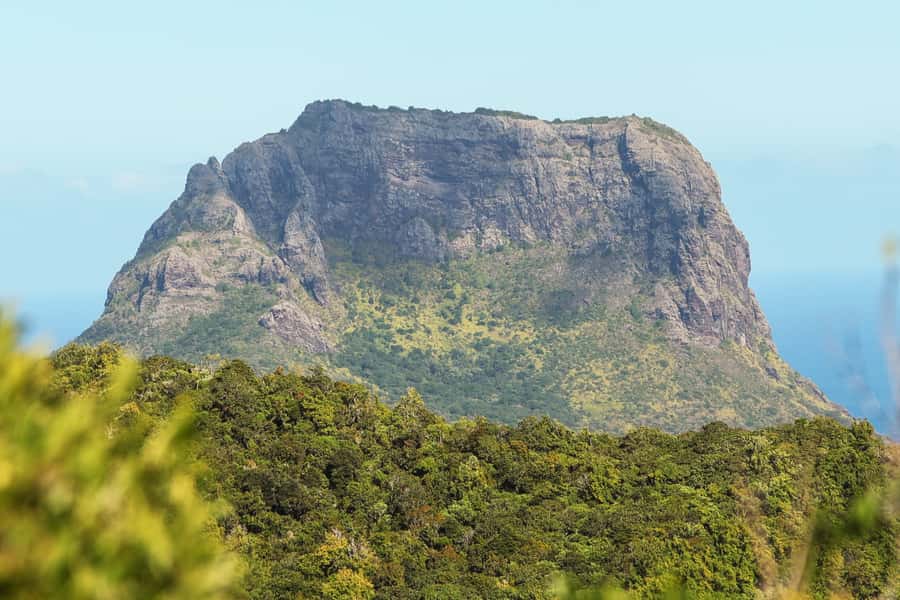
Le Morne works in layers. In daylight, you get dramatic coastline angles and lush hills. At sunrise, the mountain turns into a moving spotlight—gold light hits the sea and you hear birds while you’re still climbing, not just standing there at the top taking pictures.
This hike is also not just “walk up a trail.” The route includes multiple rocky scramble sections, so you’re active the whole time. That makes it more memorable (and more demanding) than a simple viewpoint hike.
And because it’s guided, you’re not guessing how to place your feet on slick rock in the dark or where to look for the best vantage spots when visibility is good.
You can also read our reviews of more tours and experiences in Mauritius.
Starting at Le Morne Public Beach and getting your bearings fast
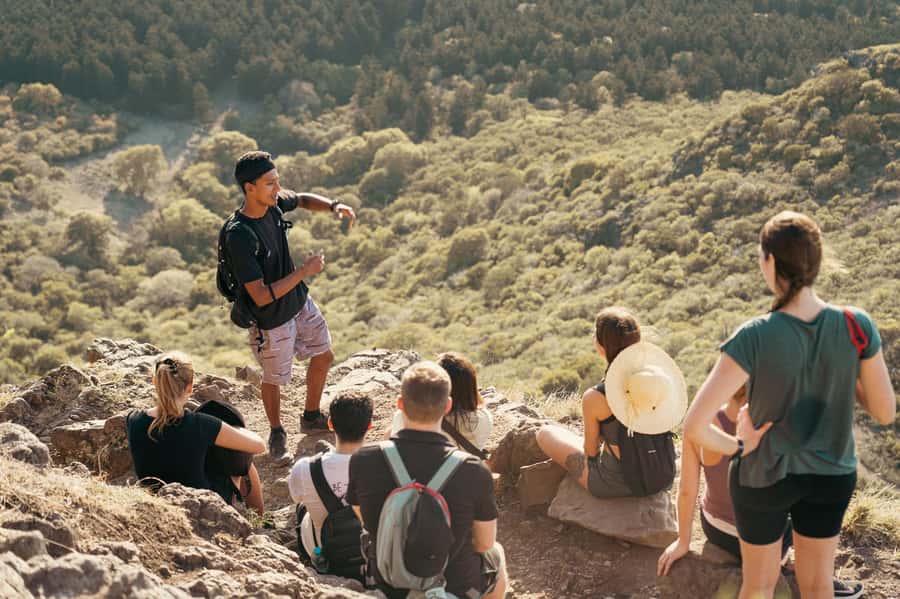
You meet at Le Morne Public Beach, in front of the Slave Route Monument. Plan to arrive a little early—this is where you get the safety briefing that matters later when the trail gets steep and hands-on.
There’s an optional pickup from accommodations on the Le Morne peninsula (free of charge for those staying there). If you’re elsewhere, transportation can be arranged for an additional cost, so it’s worth checking before you assume you’ll be driving yourself.
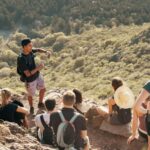
Right after the briefing, you head to the trail entrance with your guide leading. That small-group setup is part of the value: you get the route explained and you move as a unit when conditions change.
Rainforest warm-up: birds, endemic plants, and an easier rhythm
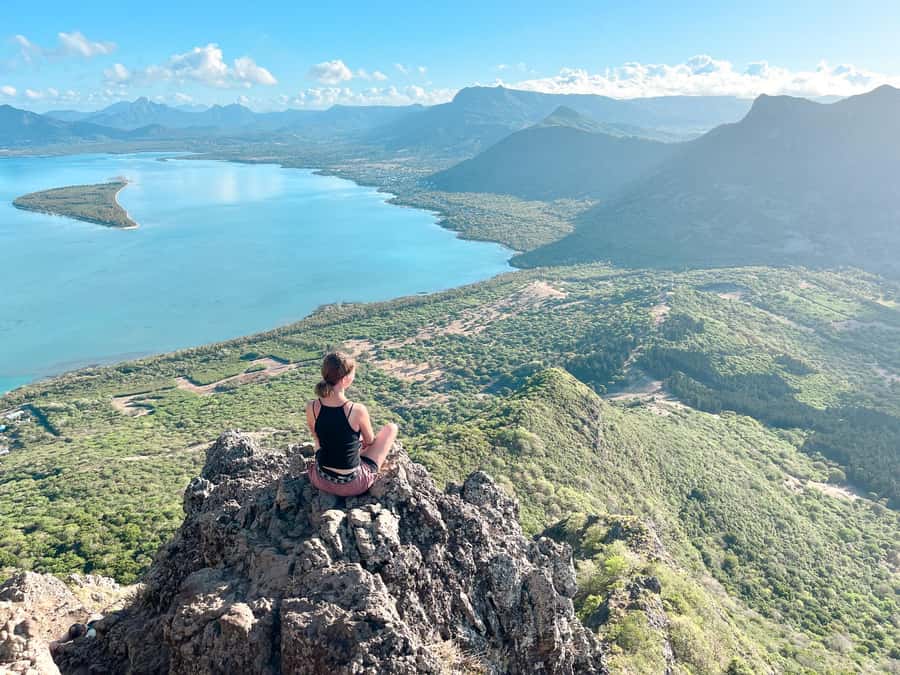
The first stretch is through rainforest. It’s a smart way to start: you ease your body into altitude and effort before the rocky sections demand grip and balance.
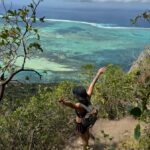
Your guide points out local life along the way—especially endemic birds and plants. If you’ve only seen Mauritius from beaches and hotel paths, this is one of your first real chances to connect the island’s wildlife to the terrain you’re walking through.
Pace matters here. A good guide keeps a rhythm that helps everyone save energy for the scrambles later. If you’re new to hiking, this early rhythm is where you learn how the guide wants you to move.
The four rocky scrambling sections: where safety and confidence really show
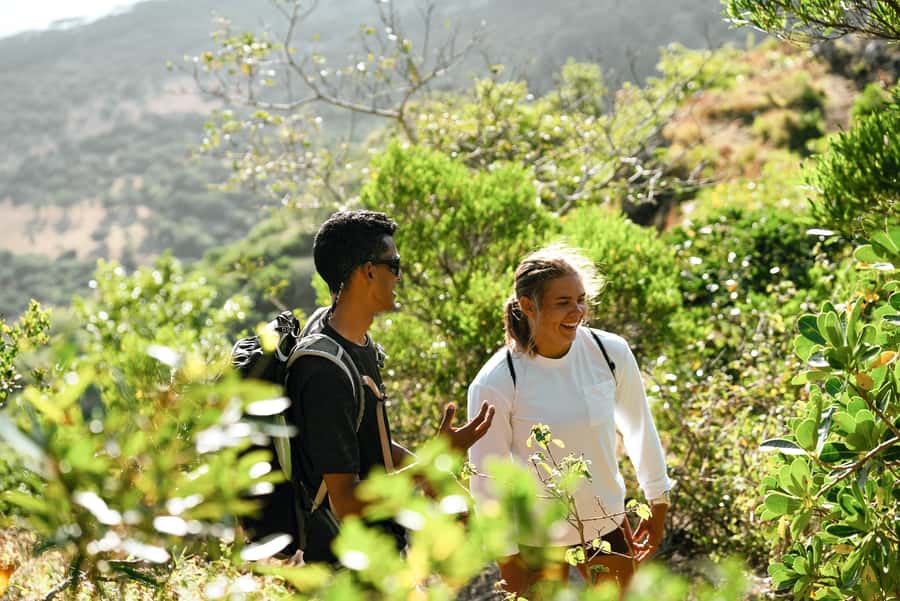
This is the heart of the experience. Along the way you’ll scramble up four rocky sections. Expect moments where normal hiking shoes are not enough—you’ll be using your hands for stability, not just stepping forward.
That’s also where the “guided” part becomes more than a nice-to-have. In the praised experiences, guides like Kevin and Eric are singled out for safety habits such as telling you where to put hands and feet and keeping breaks when needed. When the light is dim near sunrise or if the rock is damp, those cues are the difference between feeling tense and feeling in control.
If any of these apply, skip it: you have vertigo, you’re afraid of heights, you have low fitness, or you’re dealing with medical limits. The tour is also specifically not recommended for people over 60, people with back or heart problems, pregnancy, or anyone without experience.
Trochetia Boutoniona viewpoint: snacks with a purpose
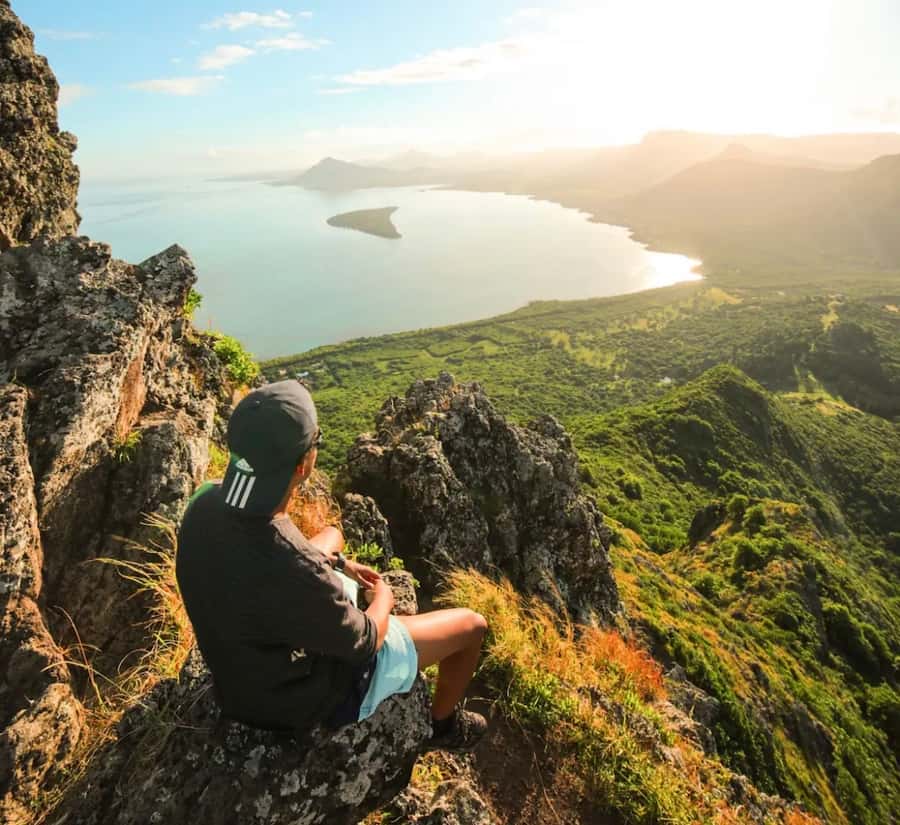
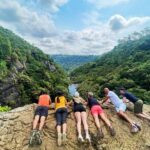
Halfway into the climb, you reach the Trochetia Boutoniona viewpoint—named after Mauritius’ national flower. This isn’t a random rest stop. It’s timed for when you still have something in the tank, and it’s placed where you get a useful change of perspective on the surrounding coast and mountain lines.
You’ll also get healthy snacks here. It sounds simple, but it matters. For a scramble-heavy hike, a small energy reset helps your legs later when the footing is more technical.
Take a minute to look around before you eat. Sunrise hikes can trick you: you can start walking fast when you feel energized. Pausing at this viewpoint helps you slow down, absorb the route ahead, and make sure you’re comfortable with how the next section feels.


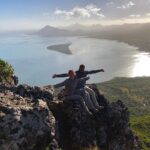

Summit time: memorial cross views and the 270-degree payoff
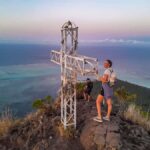
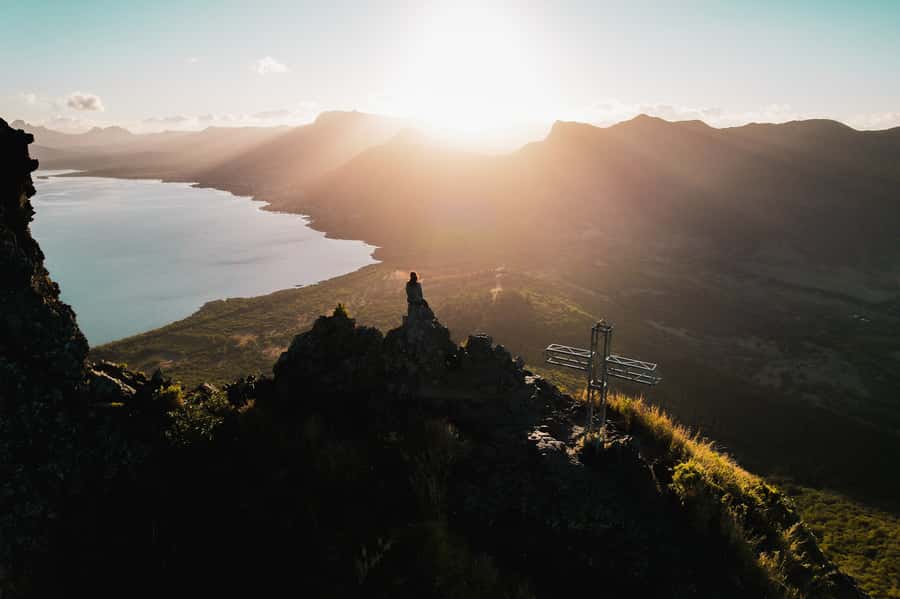
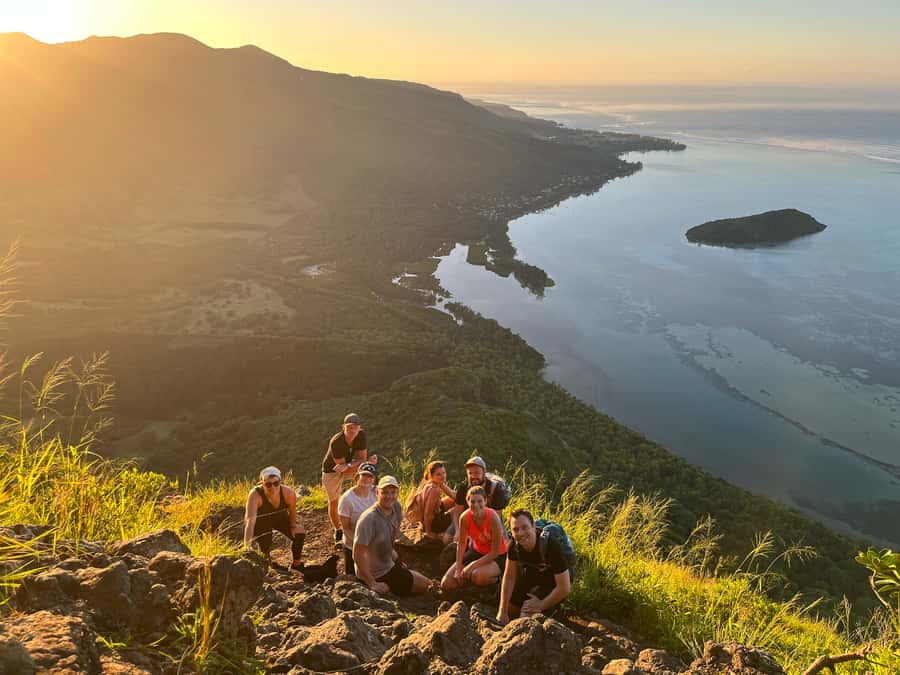
At the top you’ll reach the ~470-meter summit and the memorial cross. This is where Le Morne Brabant’s meaning hits harder than the scenery alone. The mountain is a UNESCO World Heritage site, and your guide shares the significance as you climb—tying the hike to Mauritius history rather than treating it as just a photo session.
The payoff is visual. The summit is often described as giving a wide horizon—one account even highlights a roughly 270-degree view. You’ll see Mauritius from a perspective you can’t get from roads or beach lookouts.
Then you take your photos and head back down. Note that the return is not automatically easier. Going down rocky sections takes control; good guides help you keep your balance and manage your pace rather than letting you rush.
Fitness, timing, and why 4 hours can still feel tough
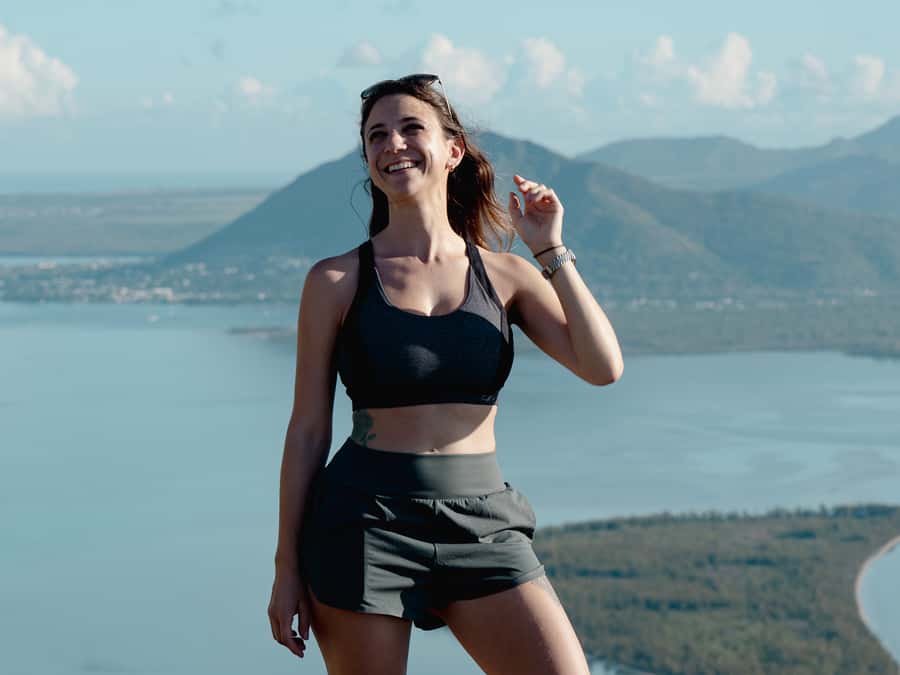
The duration is about 4 hours, which is short by mountain-hiking standards. But sunrise plus scrambling means you’ll feel it. You’re climbing early, moving over technical ground, and doing it with limited time for long breaks.
The tour is designed for outdoor enthusiasts who can handle the effort. It’s also not “training for an ultra”—it’s a focused outing that asks you to be sure-footed and comfortable using your hands on rock.
If you’re wondering whether you’ll be too slow: the best sign is not speed. It’s whether you can stay steady, follow instructions, and pause when your guide asks. If you can do that, you’ll likely find the group pacing works.
The $75 price: what you’re paying for (and what you carry)
At $75 per person, you’re paying for a guided sunrise experience that includes:
- a qualified mountaineer guiding you on a technical route
- healthy snacks
- a structured morning with briefing, pacing, and route leadership
That price can make sense if you value safety and confidence, especially because there are four rocky scrambling sections and the climb happens early. A guide reduces the guesswork on where to place your body and how to manage the steep bits.
It can feel steep if you’re the type who hates following instructions or if you’re planning to do everything solo. But the route is not presented as a beginner “wander.” For most people, the guide is the whole point.
Also remember: you still carry your own essentials like water, footwear, and weather protection. The tour gives snacks, not a full kit.
What to bring for a smooth sunrise (and what will get you turned away)
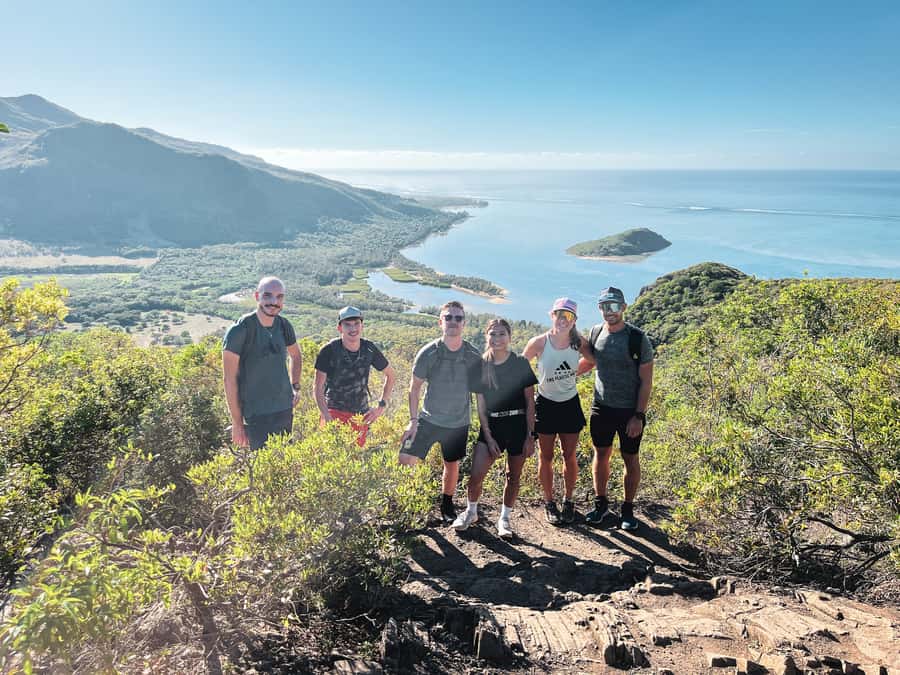
This hike has clear gear rules because the terrain and conditions matter. Bring:
- Hiking shoes (no improvising)
- Sun hat
- Sunscreen
- Water: at least 1.5 liters per participant
- Comfortable clothes
- Insect repellent
Not allowed:
- Sandals or flip-flops
- Headphones
- Smoking
- Alcohol and drugs
- Littering
That might sound strict, but it’s practical. Flip-flops and sandals don’t match rocky scramble terrain, and headphones reduce your ability to hear safety instructions from your guide.
Weather changes and the early-start reality
This activity may be postponed due to adverse weather conditions. With a sunrise itinerary, that matters—you can’t treat it like a casual morning plan.
If rain or low visibility shows up, the scramble sections can feel different fast. The best thing you can do is follow the guide’s decisions and keep your movements controlled. Even when weather isn’t perfect, the guiding approach is still what keeps the group moving safely.
Who should book this climb, and who should skip it
This is a great fit if you:
- love hiking and want an active challenge, not just a viewpoint
- feel comfortable with heights and scrambling
- want a mix of nature and Mauritius history from someone who knows the mountain
It’s a poor match if you:
- have vertigo, fear of heights, or balance issues
- have back or heart problems or other pre-existing medical conditions
- are pregnant, over 60, or have motion sickness
- have low fitness or lack hiking experience
- have hemophilia or insect allergies (not recommended)
- are visually impaired
Also keep the “early start” in mind. If you’re not a morning person, you’ll still do it—but you may enjoy the mountain more if you go in mentally prepared.
Should you book the Mauritius Le Morne sunrise hike?
If you want a Mauritius morning with real effort, real views, and a guide who keeps you safe on rocky sections, I’d book it. The combination of sunrise timing, rainforest wildlife spotting, a Trochetia Boutoniona viewpoint snack break, and the memorial cross summit makes this more than a check-the-box hike.
Skip it if scrambling and heights stress you out, or if any health or mobility limitation puts balance and steady movement at risk. For the right fitness level and mindset, this is one of those experiences that makes Le Morne feel personal—because you earn the view step by step.
FAQ
Where is the meeting point?
Meet your guide at Le Morne Public Beach, in front of the Slave Route Monument.
How long does the hike take?
The total duration is about 4 hours.
Is the tour guided?
Yes. You’ll go with a qualified mountaineer (and a live tour guide) for the hike.
Do I get pickup transportation?
Pickup is optional. If you stay on the Le Morne peninsula, transportation can be provided free of charge. Otherwise, transportation can be organized for an additional cost.
What languages are available?
The live tour guide is available in French and English.
What should I bring?
Bring a sun hat, hiking shoes, sunscreen, water (at least 1.5 liters), comfortable clothes, and insect repellent.
Is there a cancellation option?
Yes. Free cancellation is available up to 24 hours in advance for a full refund.
Is this hike suitable for older adults or people with medical issues?
It’s not suitable for people over 60 and it’s also not recommended for people with conditions listed in the tour info, including pregnancy, back or heart problems, vertigo, motion sickness, and pre-existing medical conditions.