REVIEW · HIROSHIMA
Morning Hiking Tour: Mt. Futaba & Hiroshima’s History
Book on Viator →Operated by Attractive JAPAN · Bookable on Viator
Red torii rise above Hiroshima’s morning calm.
This private walk on Mt. Futaba takes you from Hiroshima Station into quiet forests, then up to Futabayama’s Peace Pagoda for wide city-and-sea views, with breakfast and open-air tea built into the rhythm.
Two things I really like: you get real context for what you’re seeing, especially from guides such as Michi and Naomi, who explain the beliefs and customs as you go. And the tour doesn’t just “hit sights” — it slows down at the top, then cools your head with shinrinyoku forest bathing and tea.
One consideration: it is an uphill hike with stairs/steps and uneven ground. If you’re not comfortable walking for several hours in the morning, you’ll feel it more than you’d want.
In This Review
- Key points to know before you go
- Morning Air and Meeting at Hiroshima Station Shinkansen Exit
- Hiroshima Toshogu Shrine: Culture You Can Actually See
- Kinko Inari Shrine and the Torii-Gate Walk Toward Mt. Futaba
- Summit Payoff at Futabayama Peace Pagoda
- Shinrinyoku on a City-Edge Trail (Yes, It’s Really That Calm)
- Okugu/Okumiya Shrine Breakfast Bento and the Nodate Tea Ceremony
- Price, Group Size, and What You’re Really Paying For
- Who This Mt. Futaba Hike Is Best For
- Should You Book This Mt. Futaba Morning Hike?
- FAQ
- How long is the Mt. Futaba and Hiroshima history morning hike?
- Where do we meet, and where does the tour end?
- Is this a private tour?
- What’s included in the experience?
- Are there dietary options for the food and beverages?
- What should I know about the hiking difficulty?
- Can children join for free?
- What happens if the tour is canceled due to weather?
- What is the cancellation and refund policy?
Key points to know before you go
- Small-group feel (max 6): enough time for questions and a pace that matches your group.
- Sacred route, not just views: shrines, torii gates, and a calm introduction to religious practices.
- Summit payoff: Hiroshima City, the Seto Inland Sea, and Miyajima visible from Futabayama.
- Shinrin-yoku (forest bathing): guided time to reset in the woods.
- Breakfast + tea ceremony: a local bento pause at the Okugu/Okumiya shrine area and a nodate open-air tea moment.
- Easy meeting point: start at Hiroshima Station’s Shinkansen exit, so you’re not wrestling transit first.
Morning Air and Meeting at Hiroshima Station Shinkansen Exit
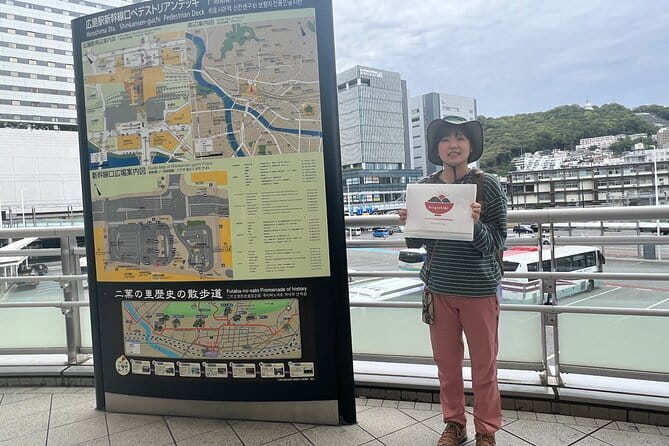
You start right where it’s easiest: Hiroshima Station, at the Shinkansen exit meeting point (listed as Hiroshima Station Shinkansen Exit, with time slots such as 07:30 or 10:00). It’s a smart start. You’re not planning a bus route or guessing which neighborhood the trailhead hides in.
After introductions, the guide lays out the hiking route. That matters more than it sounds. When you know what’s coming—shrines first, then the climb—you walk with less uncertainty and more attention.
This tour also uses a mobile ticket, which cuts down on fumbling with paperwork in the morning rush.
You can also read our reviews of more tours and experiences in Hiroshima.
Hiroshima Toshogu Shrine: Culture You Can Actually See
The first major stop after you get on the move is Hiroshima Toshogu, a shrine visit that includes guided time (about 30 minutes) and the admission ticket. Here’s what you’ll get out of it: you’ll learn how the shrine’s art and cultural details connect to Hiroshima’s identity.
This is one of the best parts for first-timers because it gives you a framework. Once you understand what you’re looking for—design choices, symbolism, and why people treat the place with care—everything else on Mt. Futaba makes more sense.
A number of guides on this route (like Michi) focus on explaining religion and local meaning in a practical, human way. If you’ve ever wandered through shrines thinking you were missing the point, this stop helps you catch up fast.
Kinko Inari Shrine and the Torii-Gate Walk Toward Mt. Futaba
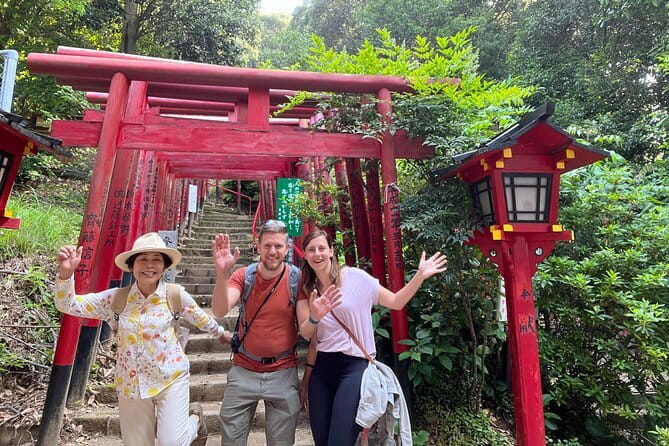
From Toshogu, you head to Kinko Inari Shrine, paired with the hike portion toward Mt. Futaba. This is where the “sacred trekking” feeling really kicks in.
One of the tour’s biggest visual promises is that you’ll pass 100+ red torii gates. Whether you count them or not, you’ll feel the pattern: gate after gate, creating a corridor of repetition that changes your pace and your attention. It’s a great kind of quiet for a morning hike, because your brain has something to focus on besides your breathing.
The tour time here is short (about 25 minutes including shrine time), so it’s not a long shrine marathon. Instead, it acts like a transition: you go from city-to-woods, then into the shrine pathway mindset.
Practical note: torii and shrine approaches often mean steps, uneven paths, and occasional slower sections. Wear shoes you’d be happy to walk on for at least a few hours without babying them.
Summit Payoff at Futabayama Peace Pagoda
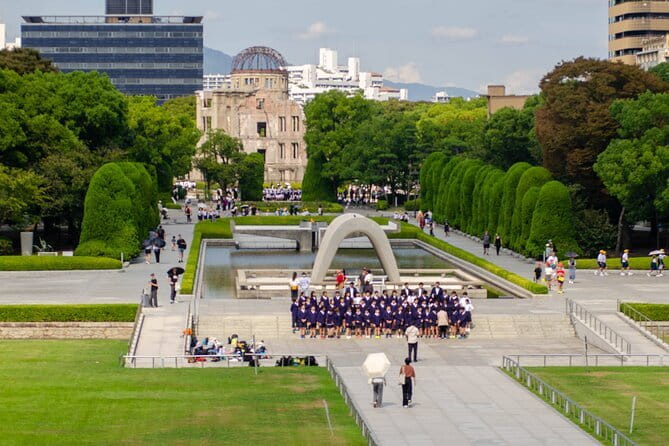
The climb leads to Futabayama Peace Pagoda, and this is the moment you’ll remember later when you’re walking around Hiroshima with a calmer head.
The tour builds a proper viewing window (the timing shows a stop around 08:45–11:15 for the summit experience). From the top, you’re meant to take in views of Hiroshima City, the Seto Inland Sea, and Miyajima. That mix is the point: Hiroshima isn’t only memorial sites and history buildings. You see how the city sits in a larger watery world.
You also get time to understand the significance of recovery from the vantage point—because standing above the city changes how you think about rebuilding. It’s not a heavy lecture from start to finish. It’s more like: look around, take in the geography, then let your guide connect the meaning.
This is also where the tour turns from motion to stillness. Several guests described the morning as invigorating, but the summit helps you feel the difference between just exercising and actually experiencing a place.
Shinrinyoku on a City-Edge Trail (Yes, It’s Really That Calm)
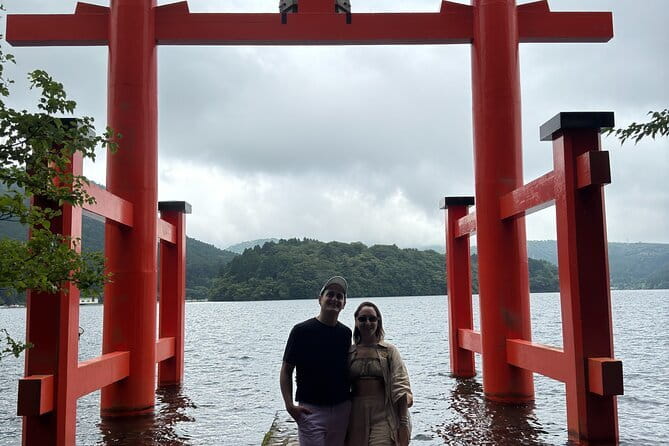
After you’ve taken in the view, you get shinrinyoku, also known as forest bathing. The tour schedule places this after the summit sightseeing, with a relaxed time block (listed around 09:00–11:30).
Don’t treat shinrinyoku like a gimmick. The value is that it interrupts your usual sightseeing mode. You’re not hunting for the next photo angle. You’re slowing down enough to notice the woods itself—sounds, smells, and the physical feeling of shade and cool air.
In the reviews, people consistently mention the serenity of the forest and the way guides shape the experience with explanations. Even if you don’t follow every instruction perfectly, the time out of “tour mode” helps your body and mood.
If you’re visiting Hiroshima for the first time, this part is a needed counterweight. It brings nature into a city that often gets framed through history alone.
Okugu/Okumiya Shrine Breakfast Bento and the Nodate Tea Ceremony
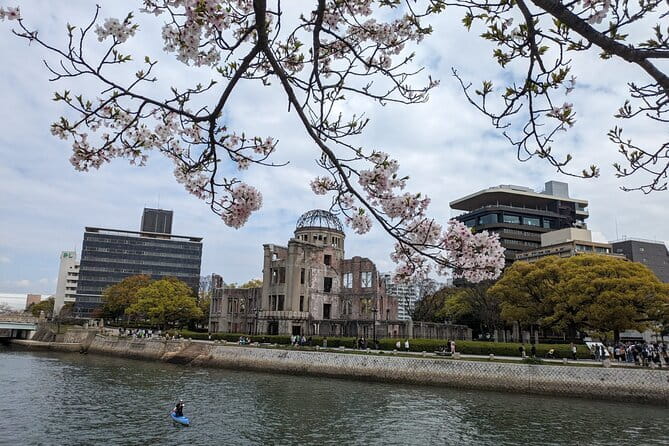
Now the tour does something very Japanese and very practical: it feeds you and then invites you to slow your mind.
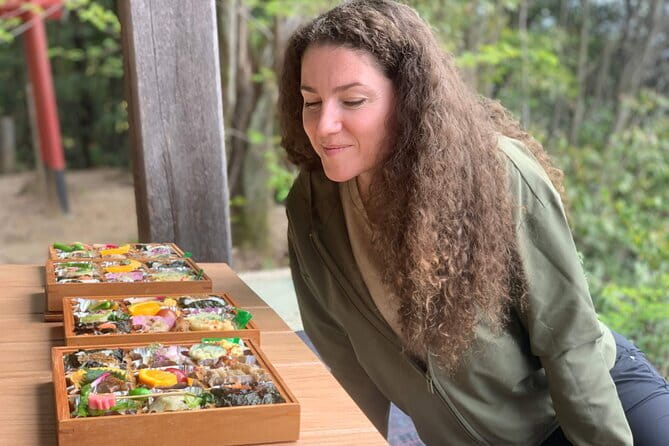
You’ll stop for a special bento box filled with local products at the Okugu/Okumiya Shrine area, described as a breakfast with a spectacular view. This is not just “here’s food.” The timing is the key. You’re hungry from the morning climb, but you’re also standing in a place that makes eating feel like part of the experience rather than a break between chores.
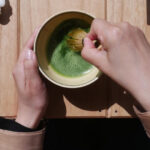
Then comes the tea. The schedule highlights Nodate, an open-air tea ceremony performed by the tour guide (about 2 hours listed for this larger meal-and-ceremony portion). Here’s what you can expect in real life: guided pacing, calm attention, and tea that fits the setting instead of competing with it.
This is the part guests mention most in their own words—hiking plus tea ceremony plus shrine tradition. Guides such as Kota, Lisa, and Michiyo are repeatedly credited for making the religious and cultural elements understandable, not vague.
If you’re a tea person, you’ll love it. If you’re not, the bigger win is the ritual. In a morning tour that could easily become all steps and no meaning, this adds breathing room.
Price, Group Size, and What You’re Really Paying For
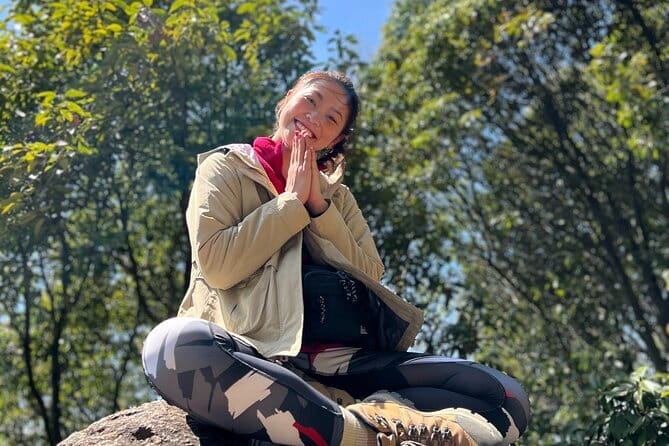
The price is listed at $157.60 per person, for about 3 hours 30 minutes (approx.), and the tour is limited to a maximum of 6 travelers.
That price sounds like a splurge until you look at the bundle. You’re paying for a guide who manages:
- multiple shrine admissions (Toshogu and Kinko Inari are included),
- a summit view window,
- a guided forest-bathing segment,
- breakfast bento,
- and an actual tea ceremony time block (plus the tour being limited to your group size).
In other words, you’re not only paying to get to a mountain. You’re paying for guided structure that turns the morning into a coherent story: belief → walk → view → reset → tea.
Is it worth it if you’re the type who hates structure? Maybe not. But if you want value from guidance—especially around religion and cultural details—this pricing makes more sense.
A final small-money tip: since the itinerary includes food and tea elements, you won’t need to spend your whole morning buying breakfast around the station area.
Who This Mt. Futaba Hike Is Best For
This tour fits best with people who enjoy a mix of nature and culture without rushing.
You’ll probably enjoy it if:
- you want a sacred Hiroshima morning right next to the city,
- you like guided explanations (religion, architecture, meaning),
- you want an easier hike compared to hardcore mountain treks,
- and you value a small-group pace.
Reviews underline that the hike is considered easier than some other local options, but it’s still uphill. A smart approach is to treat it like a solid morning walk with breaks, not a casual stroll.
Also, the group limit helps if you like asking questions. With only a handful of people, the guide can respond instead of lecturing into the crowd.
Should You Book This Mt. Futaba Morning Hike?
I’d book it if you’re in Hiroshima for a short time and you want one morning that does three things well: shows you shrine culture, gives you real skyline-and-sea views, and then slows down with forest bathing and tea.
I wouldn’t book it if you want a purely scenic hike with no cultural stops, or if you know you won’t enjoy uneven uphill walking in the morning.
If you do book, plan your expectations: this isn’t a quick photo sprint. It’s a guided, calm morning where the best moments are the ones you take time for—especially at the summit and during nodate tea.
FAQ
How long is the Mt. Futaba and Hiroshima history morning hike?
The tour runs about 3 hours 30 minutes (approx.).
Where do we meet, and where does the tour end?
You meet at Hiroshima Station at the Shinkansen exit meeting point. The tour ends back at the meeting point at Hiroshima Station.
Is this a private tour?
It’s a private hiking experience limited to a maximum of 6 travelers.
What’s included in the experience?
The tour includes visits to Hiroshima Toshogu and Kinko Inari (admission tickets included), plus breakfast bento, and a guided open-air tea ceremony. It also includes forest bathing time.
Are there dietary options for the food and beverages?
Yes. The food and beverages can be adapted for food allergy, halal, Muslim-friendly, vegetarian, and vegan needs. You’ll need to contact the operator before applying.
What should I know about the hiking difficulty?
Most travelers can participate, but it includes an uphill hike. Comfortable walking shoes are a good idea.
Can children join for free?
Yes. Travelers aged 0–5 years can participate for free.
What happens if the tour is canceled due to weather?
If cancellation is expected due to weather, you’ll need to contact the tour operator directly by the morning of the previous day.
What is the cancellation and refund policy?
This experience is non-refundable and cannot be changed for any reason. If you cancel or request an amendment, the amount paid is not refunded.