REVIEW · AORAKI MOUNT COOK VILLAGE
Mount Cook: 3 Hour Heli Hike to the Tasman Glacier
Book on GetYourGuide →Operated by The Helicopter Line Mount Cook · Bookable on GetYourGuide
Walking on glacier ice feels unreal. This heli-hike is a fast ticket to the Tasman Glacier, with professional glacier guiding led by folks like Kerry and Jess, plus a smooth ride in a capable helicopter cockpit. The trade-off: the flight depends on weather and passenger numbers, so what you see on the ice can vary when conditions are rough.
I like how the whole operation stays tight and safety-focused. You’ll do a proper safety briefing, get fitted with glacier boots and crampons, then spend about two hours walking in the shadow of Aoraki and Mount Tasman. If you’re coming with big expectations of a long, all-day expedition, plan for a shorter-but-intense chunk on the glacier.
Before you go, know it’s not for everyone. This tour needs moderate hiking ability, and it’s not recommended for pregnancy or for kids under 10, with a weight limit of 150 kg (including gear).
In This Review
- Key Things to Know Before Your Tasman Glacier Heli Hike
- From Mount Cook to the Tasman Glacier: The Helicopter Moment
- Glacier Landing and Your 2-Hour Walk on Undulating Ice
- Gear Up: Crampons, Boots, and the Real Reason Guides Matter
- What the Timing Really Feels Like (In Human Terms)
- Price and Value: Does $564 Make Sense?
- Weather Reality Check: What Can Change on the Day
- What to Bring (and What Not to Bring)
- Who This Heli-Hike Is Best For
- The Most Praised Parts: What You’ll Remember Most
- Should You Book the Mount Cook Tasman Glacier Heli Hike?
- FAQ
- How long is the Mount Cook 3 Hour Heli Hike to the Tasman Glacier?
- Where does the tour start?
- What is included in the price?
- What age is the minimum for this activity?
- Is it suitable for pregnant people?
- What fitness level do I need?
- Is there a weight limit?
- What items are not allowed during the tour?
Key Things to Know Before Your Tasman Glacier Heli Hike
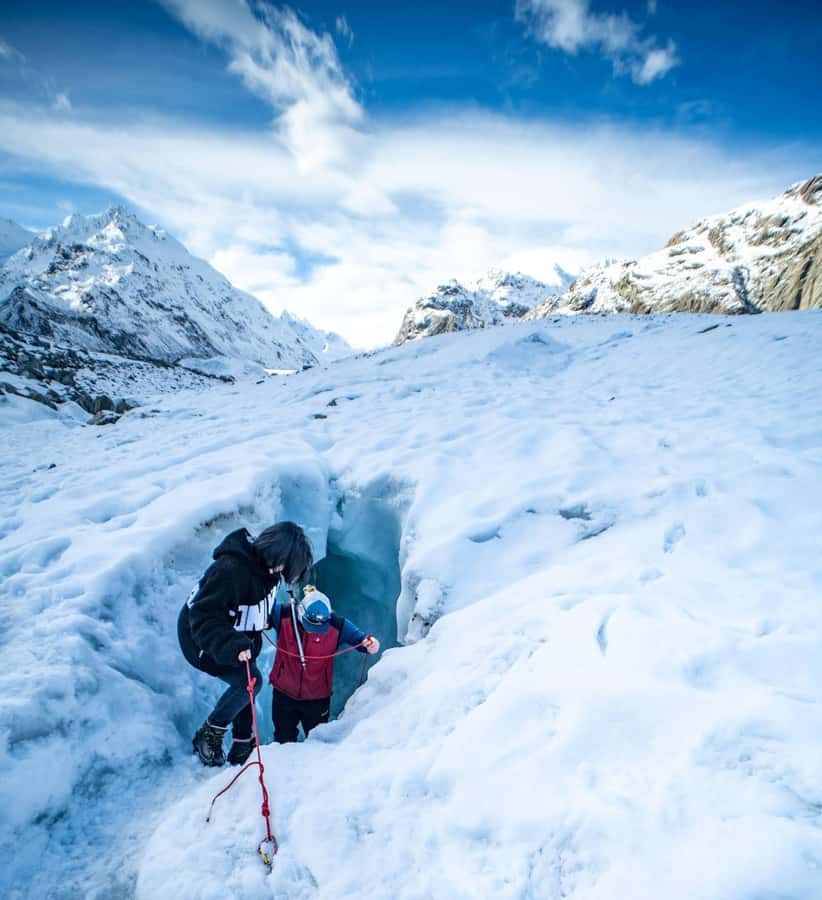
- You land on the ice, not just near it: the glacier landing is part of the experience, so the hike starts right away.
- Crampons and boots are provided: you’ll be fitted with the gear used for real glacier walking.
- Expect a guided route through glacial features: you’ll learn what you’re looking at, including ice formations and sometimes ice caves.
- Hochstetter Icefall is part of the return flight: you’ll fly close to the massive 1,000-meter-high icefall on the way back.
- Small groups keep it personal: capped at 10 participants, which helps with safety and pacing.
From Mount Cook to the Tasman Glacier: The Helicopter Moment
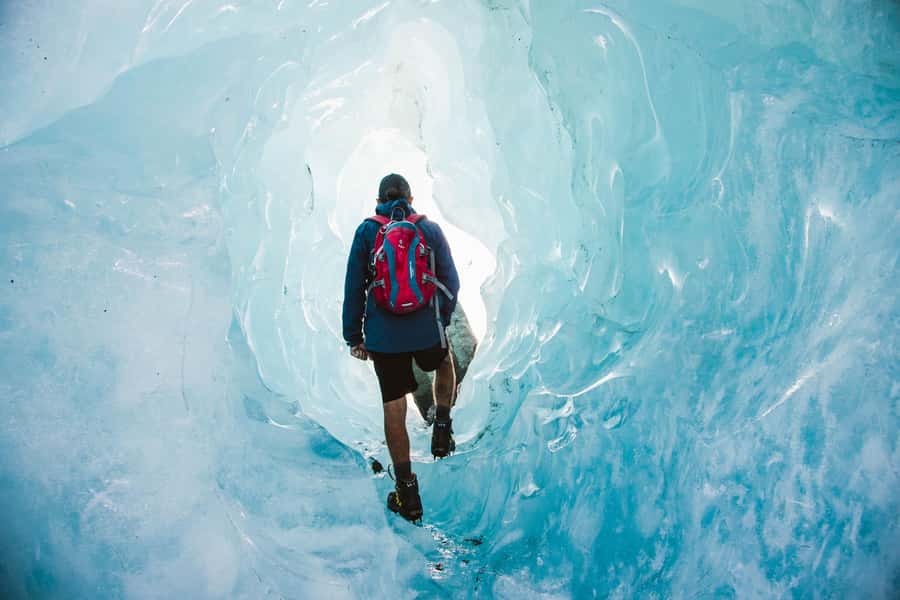
This experience starts at Mount Cook Airport, with a full setup that’s meant to get you from airport check-in to the aircraft quickly, without cutting corners. You’ll do a safety briefing first, and the flow is simple: get briefed, get equipped, then go.
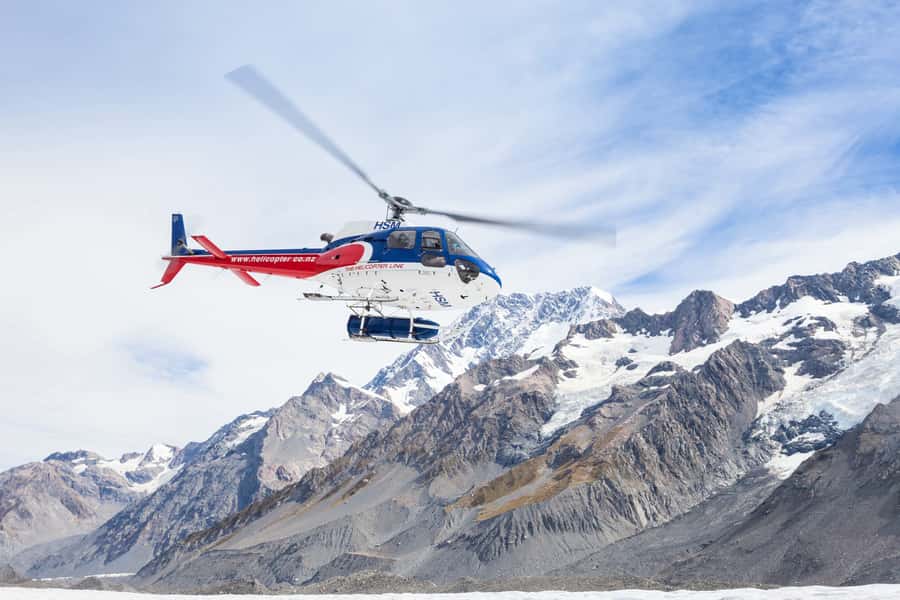
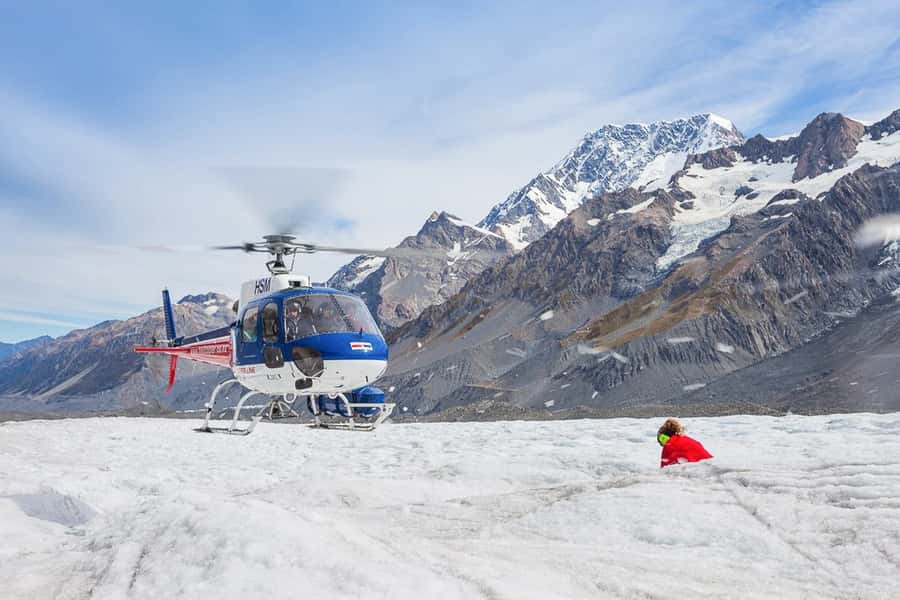
Once you’re in the helicopter, the views do what they’re supposed to do. You fly over the Tasman Glacier Lake and dramatic ice formations, then you swing into position for a glacier landing. It’s one of those rides where you realize the Southern Alps are bigger than any photo makes them look. The pilot’s job matters here, and the smoothness shows up in the way the flight feels steady rather than jerky.
On the return, you’re not just headed home—you’re treated to another big look at the mountains. The route brings you close to the Hochstetter Icefall, a huge feature on the eastern face of Aoraki (Mount Cook), and that 1,000-meter scale is hard to picture until you see it from above.
Glacier Landing and Your 2-Hour Walk on Undulating Ice
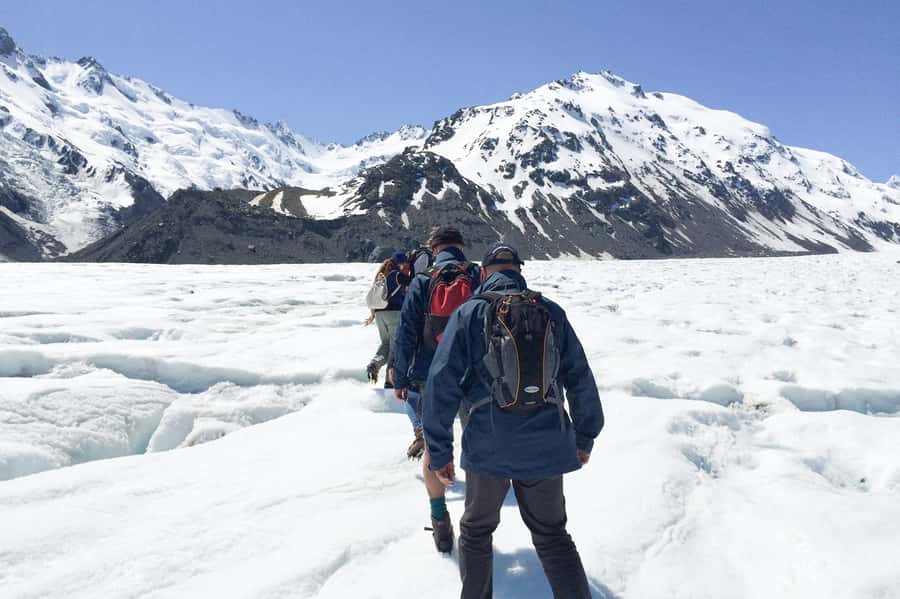
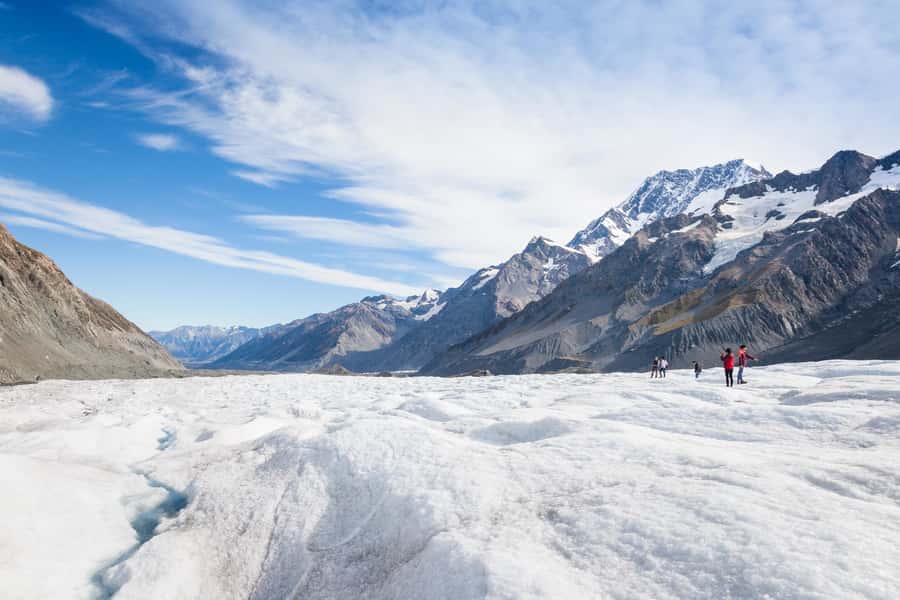
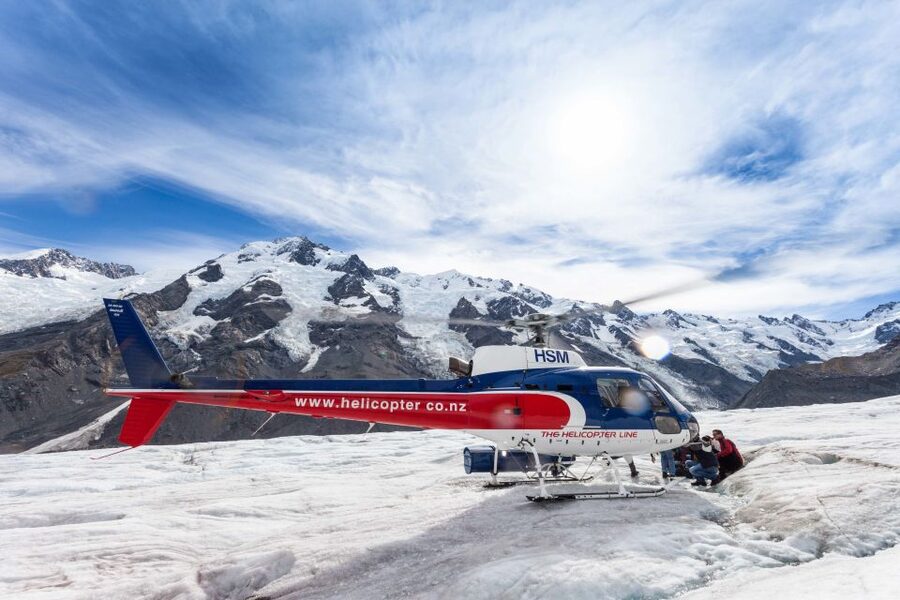
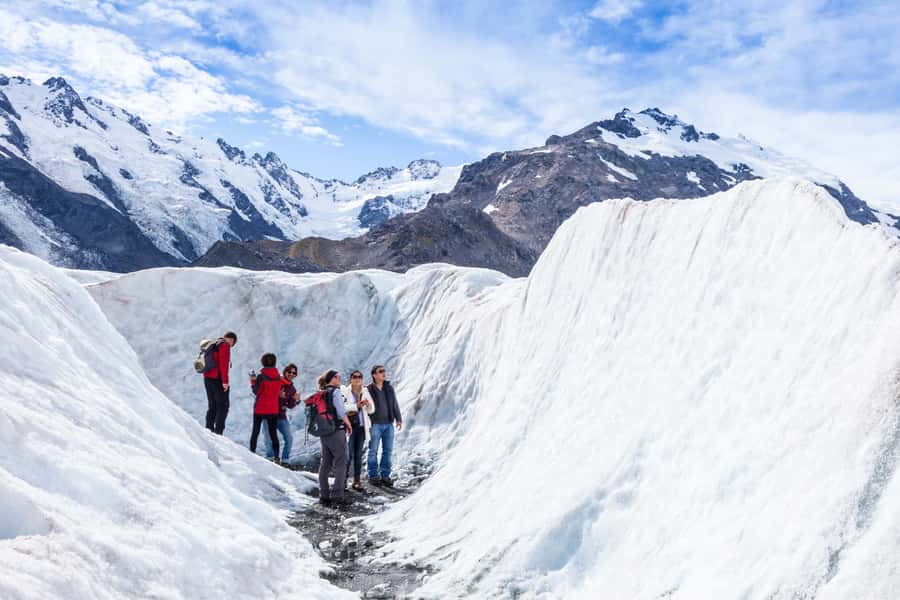
The core of the day is the time on the glacier. After landing on the Tasman Glacier, you spend about two hours walking on ice with a professional guide. This is not a stroll on a flat surface. The glacier terrain can be surprisingly uneven, and that is exactly why the gear and guidance matter.
You’ll be in the shadow of the Southern Alps’ top scenery—Aoraki (Mount Cook) and Mount Tasman. That doesn’t just make for good photos. Being on the ice with towering peaks around you helps put glacial features into perspective: crevasses, seracs, and those stacked layers of ice that look almost architectural.
If weather and snow conditions cooperate, you may get to experience more than surface ice—some guides build in exploration around features like ice caves. In tougher conditions, visibility and access can be limited, so you might not see every ice formation you hoped for. That’s the main variable in this otherwise well-managed adventure.
Gear Up: Crampons, Boots, and the Real Reason Guides Matter
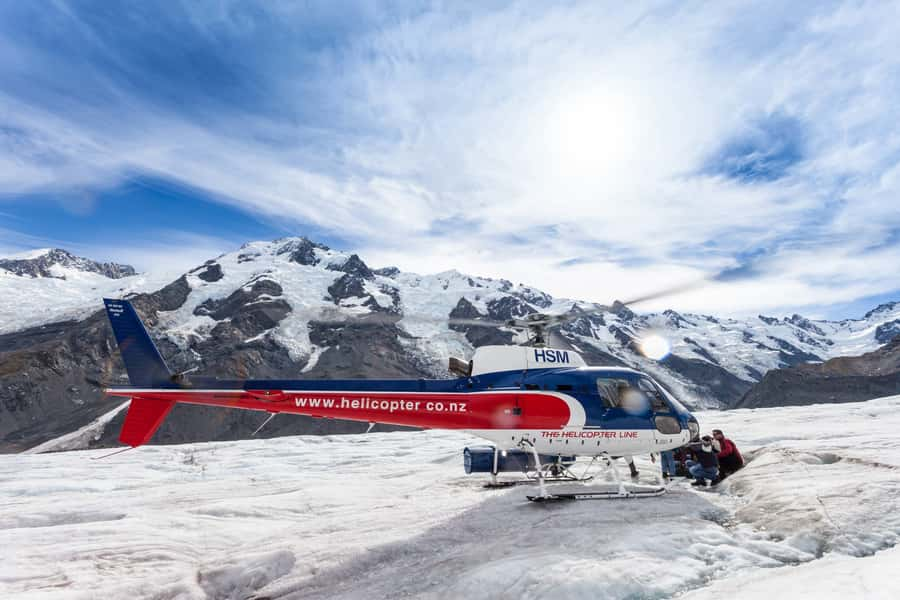
You don’t show up and figure it out yourself. You’ll be provided with glacier boots and ice crampons, and you may be given a waterproof jacket if required. This is one of the places where value shows up quietly. Good gear reduces stress, but proper fitting reduces risk even more.
On glacier tours, the difference between a safe walk and a stressful walk often comes down to how you move. That’s why the guide’s job isn’t just pointing at pretty ice. Your guide teaches how to step, how to stay balanced on uneven surfaces, and what features to watch for as you walk.
From the way guides have been described on the hike—some people specifically calling out how they showed rope securing and rescue-style technique—you can tell the focus is practical and safety-first. You’re not being lectured for an hour. You’re being coached so you can enjoy the ice without constantly second-guessing your footing.
Also, these guides tend to add the human layer you want on a high-stakes activity. Names that come up often include Kerry, Jess, Scott, Matt, Maddie, and Max. People describe them as energetic, calm, and focused on making sure everyone can finish comfortably.
What the Timing Really Feels Like (In Human Terms)
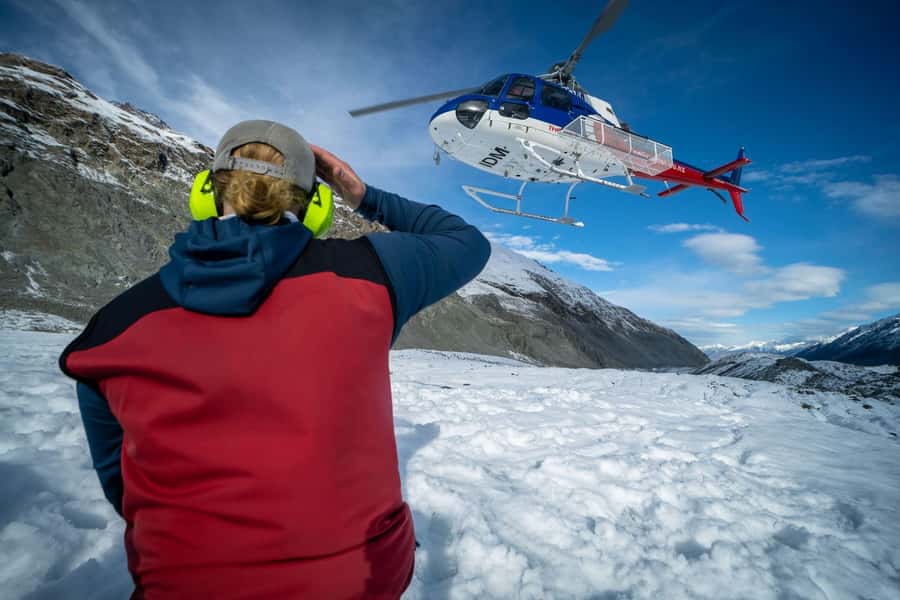
The entire experience is about 3 hours from start to finish. The rhythm is quick: safety briefing, short helicopter flight over the ice, then the hike. You’re not stuck in a long holding pattern. You’ll likely feel a steady, purposeful pace from the moment you check in.
Plan your schedule around the fact that check-in is not the start of the actual hiking. Your requested time is check-in time, and you should allow at least 45 minutes after check-in for the safety briefing and the fitting process. If you arrive late, you don’t speed up the glacier session. The operation prioritizes getting everything right.
During the hike, expect your energy to disappear faster than you think. Even with crampons, walking on ice works your legs and core a bit more than normal hiking. This is still meant for a “moderate fitness” level, but if you show up with couch-level stamina, you’ll feel it by the end.
Price and Value: Does $564 Make Sense?
At $564 per person for a 3-hour experience, this is not a budget activity. The question is whether you’re paying for something unique—and you are.
Here’s why the price can feel justified:
- You get a real glacier landing via helicopter, which is the expensive part other glacier tours often can’t match.
- You get gear and trained instruction (boots, crampons, waterproof jacket if needed, plus guides focused on safe movement).
- You get two big views of Aoraki’s ice world: the flight to the glacier and the flight back close to Hochstetter Icefall.
- Small group size (10 max) means less time waiting and more attention while you’re on the ice.
The best way to think about it: you’re paying for time with a glacier that’s hard to reach, plus the comfort of professional supervision. If you’re the type who wants one truly memorable, high-impact experience on the South Island, this is one of the clearest candidates.
Weather Reality Check: What Can Change on the Day
Heli hikes live and die by weather. The flight is subject to favorable conditions and minimum passenger numbers. If conditions are not right, you’ll either be offered an alternative date or a full refund.
On top of that, even when the flight goes ahead, snow history can affect what you can safely explore on the ice. One guide team can lead you through ice caves one day, and the next day those routes may be limited because of recent snowfall or visibility. That’s not a failure of planning—it’s glacier safety in action.
Your practical takeaway: keep your expectations flexible. If you’re going in thinking you’re guaranteed to do every ice-feature highlight, you’ll feel disappointed if access is constrained. If you go in knowing the goal is a guided glacier walk with epic views, you’re more likely to leave happy.
What to Bring (and What Not to Bring)
The equipment is mostly handled for you, but your comfort depends on your clothing and footwear choices.
Bring:
- Warm clothing and rain gear
- Sturdy, closed-toe shoes that can handle cold conditions
- Sunscreen and sunglasses (yes, even in cold environments)
- A phone or camera for photos
Also useful: gloves and layers you can remove or add, depending on wind and how quickly you warm up.
Not allowed:
- Drones
- Selfie sticks
- Tablets/iPads
This isn’t just a rule list. Keeping hands free and minimizing bulky items helps during glacier walking, and it keeps everyone safer when you’re stepping on uneven ice.
Who This Heli-Hike Is Best For
This is a good fit if you want:
- A high-impact experience in a short window (3 hours)
- A guided walk on ice with crampons and boots
- The helicopter component as part of the adventure, not just transport
You should also be realistic about requirements:
- At least 10 years old
- Moderate hiking ability
- Not recommended for pregnancy
- Weight limit of 150 kg per person (including equipment)
If you’re traveling with kids, this is one of those places where the minimum age matters. Below 10, it’s not suitable. For older kids and teens who can handle a moderate hiking pace on uneven terrain, it can be a fantastic “South Island wow” day.
If you’re in a wheelchair or using mobility aids, this is not described as accessible. The glacier walking and crampon work strongly suggest you’ll need to stand and walk steadily.
The Most Praised Parts: What You’ll Remember Most
This tour’s standout strengths show up again and again in how people describe the experience.
First, the combination of helicopter flight plus glacier landing creates a sense of place that’s hard to fake. The ride is scenic, but the landing is the real flex.
Second, the glacier guides bring both safety and energy. People mention guides who are fun, highly engaged, and excited to explain what you’re seeing. Names like Kerry and Jess come up often, and others like Scott, Matt, Maddie, and Max are praised for care and clarity.
Third, the day is run with professionalism. That shows in details like equipment fitting, safety-minded pacing, and quick, smooth helicopter boarding. Even when weather affects what you see, the experience doesn’t feel chaotic.
One gentle drawback to keep in mind: organization and on-site clothing guidance can feel uneven in rare cases, especially for people who speak limited English. The guide teams do their best, but the tour does operate in English, and people who need extra support should plan for that.
Should You Book the Mount Cook Tasman Glacier Heli Hike?
Book it if you want a top-tier South Island experience that turns big scenery into hands-on glacier time. You’re paying for a glacier landing, real gear, and trained guidance, plus the close-up view of Hochstetter Icefall on the way back. If you’re the type who values safety instruction and wants the glacier walk to be the main event, this hits the mark.
Skip or reconsider if:
- You can’t handle moderate walking on uneven, icy terrain
- You’re pregnant
- You’re traveling with a child under 10
- Weather flexibility isn’t possible for your schedule
- You’re hoping for a long, non-stop ice expedition. This is intense, not all-day.
My advice: treat it as your “one big adventure” day near Mount Cook. Pair it with a relaxed dinner afterward. Your legs will likely feel it, and you’ll want the downtime.
FAQ
How long is the Mount Cook 3 Hour Heli Hike to the Tasman Glacier?
The total duration is about 3 hours.
Where does the tour start?
The meeting point is upstairs in the Mount Cook airport office.
What is included in the price?
It includes hotel pickup and drop-off in Mount Cook Village, a scenic helicopter flight, glacier landing, a 2-hour glacier hike, professional guides, and all equipment (glacier boots, ice crampons, and a waterproof jacket if required).
What age is the minimum for this activity?
Participants must be at least 10 years old.
Is it suitable for pregnant people?
It is not recommended for people who are pregnant.
What fitness level do I need?
The tour requires you to have moderate fitness and hiking ability.
Is there a weight limit?
Yes. The maximum weight limit is 150 kilograms per person, including equipment.
What items are not allowed during the tour?
Drones, selfie sticks, and tablets/iPads are not permitted.