REVIEW · MUNNAR
Munnar mountain hiking (Full day)
Book on GetYourGuide →Operated by Munnar Info · Bookable on GetYourGuide
If you like your sightseeing with a little effort, this Munnar mountain hike fits the bill. The walk takes you from about 1420m up to 2000m, passing tea plantations, then pushing onward into cardamom forests and shola woods, where the air changes and wildlife sightings can happen. Two things I love: the way the guides explain tea and plants as you walk, and the fact that the scenery isn’t just views—it’s a full day of different forest and plantation zones. One drawback to plan for: it’s a long 14–18 km day, so if your fitness is low, you’ll feel it even with breaks.
Here’s the good news. You’re not just dropped at a trailhead and told to figure it out. You get a trained English guide, packed food, mineral water, and entry fees handled—so your day is more about moving through the hills than managing logistics.
In This Review
- Key points to know before you go
- Where this hike goes: from Munnar town to Lekshmi Hills
- The climb and the pace: what 1420m to 2000m really means
- Tea plantations: learning the industry as you walk
- Cardamom forests and shola woods: where the air changes
- Wildlife moments: what to do when you see something
- Food, water, and breaks: why the day feels manageable
- The guide makes it: Rajan, King Raja, and Ramesh on the trail
- What it costs and why it’s such a bargain
- Who should book this Munnar mountain hike
- Should you book Lekshmi Hills for a full day?
- FAQ
- How long is the Munnar mountain hiking tour?
- What distance do you hike?
- What’s included in the price?
- Where is the meeting point and is there pickup?
- What should I bring for the hike?
- Is it suitable for everyone?
Key points to know before you go
- Tea-to-cardamom route: tea plantations first, then cardamom forests as the hike rises.
- 2000m high point: a real elevation gain that cools the air and sharpens the views.
- Wildlife chances: Malabar squirrels, black monkeys, and wild elephants may appear at a distance.
- Shola woods feel different: thick-canopy forest with bird sounds and mossy, green undergrowth.
- 14–18 km in ~7 hours: manageable for moderate hikers, but it’s still a full walking day.
- Included fuel: packed lunch plus refreshments stops, so you won’t overpack or bonk.
Where this hike goes: from Munnar town to Lekshmi Hills
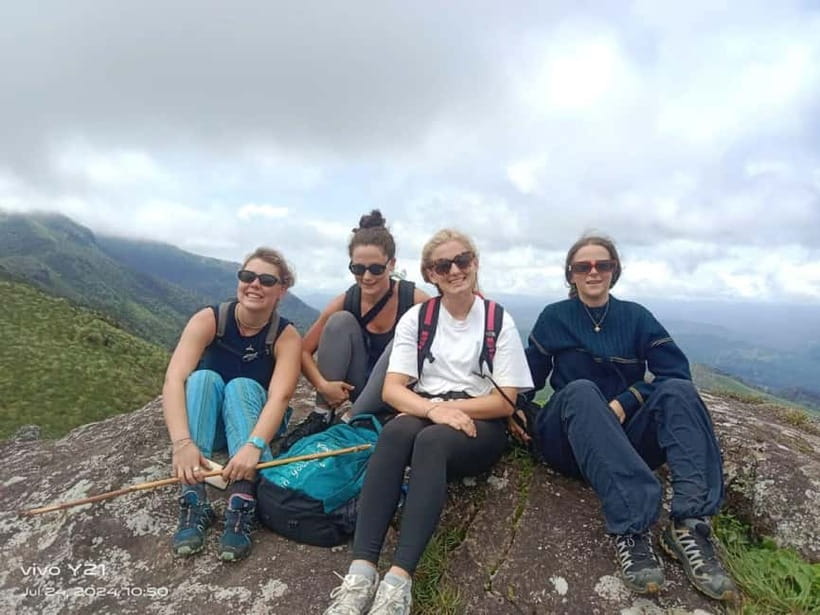
The tour meets at Munnar Info, and pickup is arranged from the Munnar town area in the morning. From there, the day becomes a steady uphill walk through the Western Ghats, starting around 1420 meters and rising toward the highest point near 2000 meters.
What makes this route special is the layering. You begin in the tea country—rows of cultivated bushes, workers’ practices, and the whole tea economy stitched into the trail. As you gain altitude, the plantation world gives way to cardamom forests, and then into the shola ecosystem (those cooler, forested pockets that are a signature of the Western Ghats). If you like noticing how the air, smells, and plant types shift as elevation changes, you’ll enjoy the day from start to finish.
One practical note: you’re outdoors for about 7 hours and walking 14–18 km. This isn’t a short “photo walk.” It’s a real day of legs, even if the pace is guided and broken up.
You can also read our reviews of more tours and experiences in Munnar.

The climb and the pace: what 1420m to 2000m really means
The hike is scheduled as a full-day trek, but it’s not designed like a backcountry endurance race. The route climbs gradually enough that many people with moderate fitness found it doable—especially with planned rest points for snacks and water.
Still, the math matters. 14–18 km plus real elevation gain means you should come with decent walking stamina. Several reviews mention long walking time but also frequent breaks, and one person specifically said their day involved about 6 hours of walking. That lines up with the tour being a “day hike with rhythm,” not a continuous grind.
Expect the top part to feel cooler and a bit thinner-air-ish compared with lower Munnar. That’s part of the appeal: the higher stretches can feel calmer, with more bird activity and that forest shade that cools you down fast.
And if you’re the kind of traveler who checks workout labels: one reviewer felt the marketing word hard didn’t match their actual experience. Translation: don’t assume it’s effortless, but also don’t expect technical climbing. This is hike terrain, not mountaineering.
Tea plantations: learning the industry as you walk

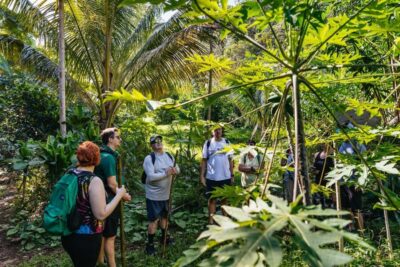
Tea plantations are a huge part of why this trek is worth doing. You don’t just stroll past tea fields—you pass through them with a guide who explains what you’re seeing.
In particular, I’d pay attention to how guides connect:
- tea plant growth and harvesting,
- the difference between tea varieties (as explained by your guide),
- and the history and culture around tea production.
In reviews, guides like Rajan, King Raja, and Ramesh are repeatedly praised for teaching this stuff in a practical way—pointing out plants and explaining why they’re shaped the way they are. One traveler even highlighted medical uses of plants mentioned along the route, which is exactly the kind of on-the-ground detail you don’t get from a quick plantation visit.
Also: you may catch hints of other nearby plantation scents, like coffee. You don’t need to be a coffee nerd for that moment to feel nice—it’s a reminder that this hill region runs on agriculture, not just views.
Cardamom forests and shola woods: where the air changes
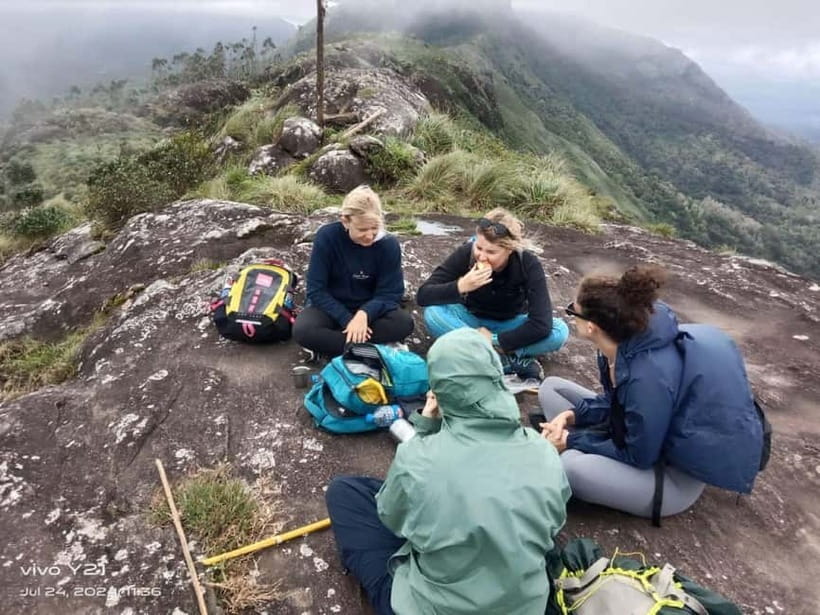
Once the tea fields thin out, the trail moves into a more wild-feeling zone. The air can pick up a spicy cardamom aroma, and the forest character changes as you enter shola woods.
Shola woods are different from open plantation walking. Think thick canopy, cooler shade, bird sounds echoing through trees, and a floor that can look like a green carpet thanks to ferns and moss. It’s the kind of place where you slow down naturally, because you’ll start looking up for movement and listening for calls.
This is also where wildlife sightings become more plausible. You might spot Malabar squirrels and black monkeys, and there’s a chance of seeing wild elephants in the distance. Important reality check: wildlife isn’t a guaranteed show. But these forests and elevation bands are where you have a better chance than on a paved roadside.
If you’re into birdwatching, this is the part of the day to stay alert. One of the best descriptions in the tour info is that the area can be excellent for spotting endemic birds. Even if you don’t identify every species, you’ll likely notice more bird activity once you hit the shola section.
Wildlife moments: what to do when you see something
Let’s talk about the big draw: animals. The tour info and reviews mention Malabar squirrels, black monkeys, and wild elephants. The elephant sighting in particular seems to be common enough that it comes up multiple times, though usually at a distance.
So here’s my practical advice if you want the best odds and the best experience:
- Keep your eyes moving. Wildlife often appears suddenly in tree lines, not in the middle of the trail.
- Stay calm if something shows up. The best viewing tends to come when you don’t panic and start sprinting.
- Don’t block sightlines for other hikers. That’s how everyone ends up with awkward “crowd in the brush” moments.
If elephants do appear close enough that the group has to wait, that’s still part of the tradeoff for doing a real forest walk. Your goal isn’t to “win” a sighting. It’s to share the area respectfully and enjoy the fact that you’re in a living ecosystem.
Food, water, and breaks: why the day feels manageable
This tour includes packed food and mineral water, plus scheduled stops for refreshments. That matters a lot for a 7-hour trek because it reduces decision fatigue. You’re not stuck rationing snacks or trying to find something open halfway up.
Reviews also point out that the food can be homemade and that guides may offer tea or snacks along the way. In one account, a guide provided water, homemade snacks, tea, and lunch—and the traveler specifically said it tasted great. That lines up with the tour’s intention: make sure you’re fueled enough to enjoy the hike instead of just surviving it.
Timing-wise, the descent back toward Old Munnar happens between 3–5 pm. Translation: you’ll still have daylight for views on the way down, and you won’t feel like you’re hiking into darkness.
For gear, the basics are simple and worth following:
- comfortable shoes (good grip helps),
- hiking shoes if you have them,
- sunscreen since midday sun can still hit even under clouds.
Since the tour already includes water and food, you can keep your backpack light.
The guide makes it: Rajan, King Raja, and Ramesh on the trail
This hike is priced around $24 per person, which is low enough that you should pay attention to value beyond the route itself. The clearest value-add is the guide.
Across the reviews, multiple guides get praised for doing the same core thing well: turning the hike into education. You’ll learn about tea, how harvesting works, and the cultural context of the plantation industry. You may also pick up notes on other plants and even their uses.
Names that come up strongly include:
- Rajan: praised for knowledge about the tea gardens and trek path.
- King Raja: praised for plant and bird knowledge, and for making the walk feel personal.
- Ramesh: praised for plant explanations, tea production details, and a general friendly energy.
Even when the hike length and elevation are the same, guides shape how the day feels. A good guide helps you slow down at the right moments—when birds move, when a plant is worth pointing out, or when a viewpoint is worth stopping for.
My advice: ask a few questions early. If you’re curious about tea (or wildlife), that’s usually when guides are most animated. And if you’re sensitive to distractions, you may want to gently request minimal phone use during walking breaks, since one reviewer mentioned phone activity as a small irritation.
What it costs and why it’s such a bargain
At about $24 per person for a ~7-hour guided hike with entry fees, packed meals, mineral water, and an English-speaking guide, the pricing can feel surprisingly fair. The biggest reason is that you’re not paying extra for basic necessities that usually add up on hikes.
What isn’t included: private transportation/pickup and drop-off. The tour does arrange pickup from the Munnar town area via the meeting point setup, but if you’re staying far outside town or want door-to-door private transfer, you may need to handle that separately.
So the value calculation looks like this: you pay a modest fee, and the tour takes care of the “hike basics” (guide + food + water + entry). If you already plan to be in or near Munnar town, it’s an easy way to turn a day into something active and meaningful without blowing your budget.
Who should book this Munnar mountain hike
You’ll likely love this if:
- you can walk 14–18 km with breaks,
- you want more than scenery and want a guided education about tea and forest plants,
- you enjoy watching for wildlife rather than hunting for it.
It may not be a good fit if:
- your fitness is low, because the walk is still long,
- you’re traveling with very young children (babies under 1 year aren’t suitable),
- you’re older than 95 years.
If you’re a solo traveler, this can also work well because the guide relationship is central, and the group size is often small in practice. One review described a group of just three people, which is a sign you might get a more personal experience rather than a big crowd shuffle.
Should you book Lekshmi Hills for a full day?
I’d book it if you want a day where tea, spice, and shola forest are not just “background.” This hike gives you a true altitude change, a clear route through different ecosystems, and enough structure—food, water, guide, and entry—to make it feel smooth.
But book with honest expectations. It’s not a leisurely stroll, and the distance is real. If you’re in decent shape and you like guided nature time, this is one of the best ways to experience Munnar beyond viewing platforms.
FAQ
How long is the Munnar mountain hiking tour?
The duration is listed as 7 hours, with the descent back toward Old Munnar taking place between about 3 and 5 pm.
What distance do you hike?
The trek is described as ranging between 14 to 18 kilometers.
What’s included in the price?
Included are packed food, mineral water, all entry fees, and a trained English guide.
Where is the meeting point and is there pickup?
The meeting point is Munnar Info. Pickup is arranged from the Munnar town area.
What should I bring for the hike?
You’re advised to bring comfortable shoes or hiking shoes and sunscreen.
Is it suitable for everyone?
It’s not suitable for people with low fitness, babies under 1 year, or people over 95 years. Alcohol and drugs are not allowed.