REVIEW · EPIRUS
Vikos Gorge crossing hiking from Monodentri to Vikos village
Book on Viator →Operated by Alpine Zone · Bookable on Viator
One of Greece’s great hikes starts in a tiny village. Vikos Gorge is famous for being incredibly deep for its width, and the route gives you short hiking time with big-view payoffs. I especially liked the mix of canyon width changes and that you keep landing in new viewpoints as you move.
I also loved the stop at the Voidomatis Springs, where the river looks impossibly clear. One drawback to plan for: parts can get rough and there’s a steep uphill section near the end, so you’ll want real hiking shoes and steady footing.
With a maximum of 10 hikers, you’re not swallowed by the group. Your guide—often Alexis, sometimes with co-guide Vassilios—keeps the hike lively with explanations of the rock formations, plants, and local culture, not just a walking pace and a checklist.
In This Review
- Key things you’ll notice on this Vikos Gorge hike
- Why Vikos Gorge’s depth matters for your hiking day
- Getting going: Monodendri meetup and what starts at 8:00
- Descending into Vikos: what the trail feels like on the ground
- Pacing and physical fit: moderate doesn’t mean effortless
- Stop 1 in the gorge: where the views build
- Voidomatis Springs: the clearest reward in the canyon
- Lunch inside the day: homemade veggie pie and sweet fuel
- Finishing in Vikos or Mikro Papigo, then minibus back
- Price ($180.23): what you’re really paying for
- What to bring: shoes and weather are the real deciding factors
- Who should book this Vikos Gorge crossing (and who should think twice)
- Should you book the Vikos Gorge hike with Alpine Zone?
- FAQ
- How long is the Vikos Gorge crossing hike?
- Where do we meet, and what time does it start?
- What’s included in the price?
- What should I bring since hiking shoes aren’t provided?
- What group size should I expect?
- What happens if weather is bad?
Key things you’ll notice on this Vikos Gorge hike
- Guinness-style depth drama: Vikos Canyon is known for extreme depth relative to width, so the views feel big even on a 6–8 hour hike.
- A varied route: Canyon areas get wide and narrow, with shade from trees in parts and rough bits in only a few spots.
- Voidomatis Springs stop: You rest near one of Europe’s cleanest rivers, with crystal-clear water as a real highlight.
- Small group energy: Limited to 10 travelers, so your guide can actually adjust pace and attention.
- Easy return by minibus: You finish in Vikos or Mikro Papigo, then get picked up late afternoon and returned to Monodendri.
Why Vikos Gorge’s depth matters for your hiking day
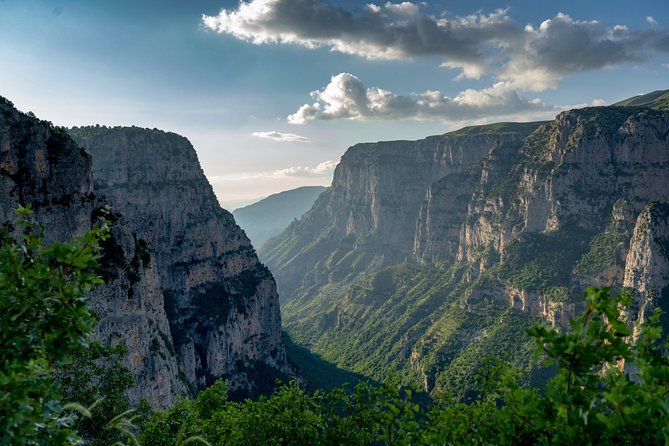
Vikos Gorge isn’t just scenic. It’s famous because it’s the deepest canyon in the world relative to its width, a Guinness record from 1997. That sounds like trivia—until you’re walking along a trail where the walls suddenly feel shockingly tall compared to how narrow the canyon can get.
You don’t need an all-day ordeal to feel the canyon’s scale. The hike is typically in the 6 to 8 hour range, with photo and rest breaks built in. That’s a rare combo: enough time to experience the canyon properly, but not so long that you lose the day to logistics and fatigue.
Also, the canyon changes as you go. Some stretches feel broader, others tighten up. That gives you constant “new frame” views without needing to memorize a map and play explorer.
Getting going: Monodendri meetup and what starts at 8:00
This trip begins in Monodendri at 8:00 am. The listed meeting point is Ριζαρείου Σχολής, Monodendri 440 07, Greece, and you’ll meet your guide near the Agia Paraskevi Monastery area so it’s easy to spot the start.
A few practical notes that matter once you’re on vacation:
- It’s offered in English, so you can actually follow what your guide points out (plants, rock formations, and local context).
- The group cap at 10 travelers keeps the experience from feeling like a slow-moving train of strangers.
- It’s set up with a mobile ticket, and the activity is near public transportation.
The day is designed to be active but not chaotic. You’ll start with that slow-build descent from Monodendri toward the Vikos river area, then spend your time in the gorge, and later finish back up toward a village endpoint.
Descending into Vikos: what the trail feels like on the ground
From Monodendri, you begin by descending toward the riverbed of Vikos. That matters because you’re not just doing a gentle walk along a flat path—you’re traveling into a canyon world where the trail goes up and down.
The route is described as fairly easy for most of the hike, but with a few places that are rough. In real terms, that usually means you should expect rocky footing and take your time where the ground gets uneven. One of the most helpful things here is the guide. Alexis (and sometimes Vassilios) doesn’t just talk—he also sets a pace that keeps you comfortable and confident on the tougher segments.
Here’s what you can realistically plan for:
- Some parts run under trees, so you may get relief from sun.
- The gorge alternates between wider and narrower sections, so the “feel” changes constantly.
- Near the end, there can be a challenging uphill push—some people describe it as a steep climb lasting around half an hour.
If you’re afraid of heights, take that seriously. The canyon setting is dramatic enough that you’ll want good balance and a calm mind on exposed or steep spots.
Pacing and physical fit: moderate doesn’t mean effortless
The tour asks for moderate physical fitness. That’s fair. You’re not sprinting, but you are hiking a canyon route with climbs and uneven ground.
A good way to self-check: if you can handle a multi-hour hike with some rocky steps and a steeper finish, you’ll likely be okay. If you prefer totally flat walking, you might find this one more work than you planned.
The steep uphill near the end is the part that tends to separate “easy day” from “okay, my legs remember this.” People also mention slippery stones at times, so it’s not a day to wear slick soles or shoes that don’t grip.
Stop 1 in the gorge: where the views build
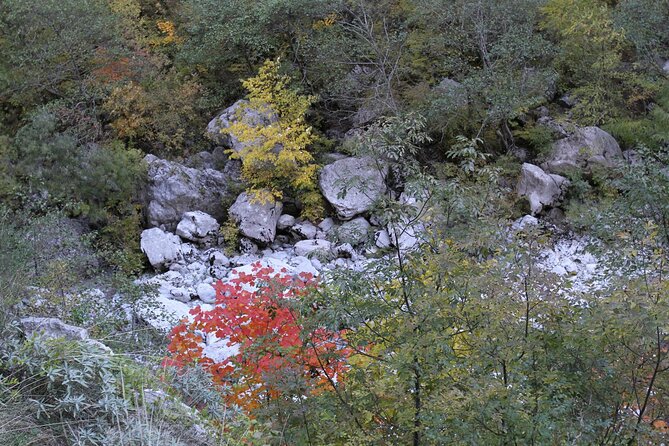
The core of the tour is the Vikos Gorge crossing hike. As you move along the route, you’ll stop in picturesque spots—this isn’t just a straight-line grind.
The canyon itself does a lot of the work for you. You’re hiking through a place that’s wide in some sections and narrow in others, which means:
- the angle of the canyon walls changes constantly,
- the views feel different every time you round a bend,
- and your breaks actually land in worthwhile places, not random spots chosen only for convenience.
This is also where the guide’s explanations pay off. Alexis is repeatedly highlighted for sharing facts about nature, culture, and local history tied to what you’re seeing. That changes the hike from scenic background to a real experience you can understand as you walk.
Voidomatis Springs: the clearest reward in the canyon
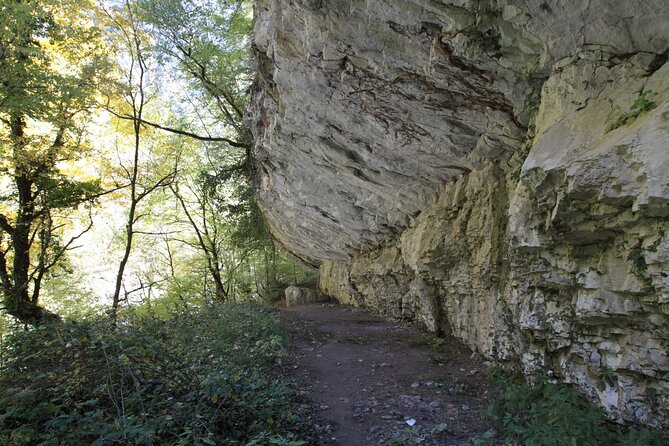
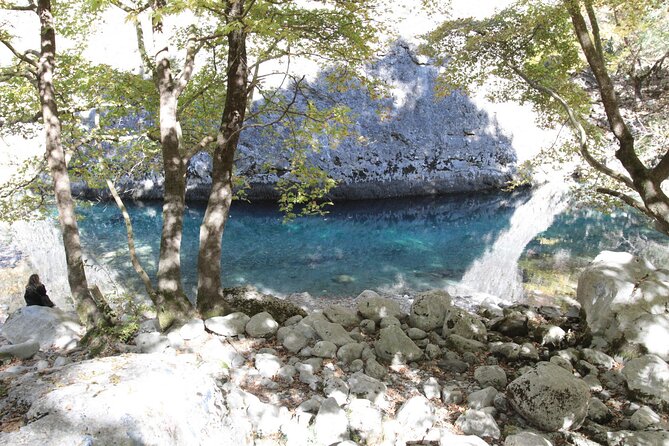
One of the biggest reasons to pick this hike is the time spent near the springs of the river Voidomatis. The Voidomatis is known as one of the cleanest rivers in Europe, and at the gorge level it shows up as clear, vivid water.
In practical terms, the springs stop gives you:
- a chance to rest without feeling like you’re done for the day,
- a strong photo moment (and yes, you’ll want photos),
- and a sensory break from the rocky walking.
Some hikers even talk about the cold—one account mentions about four-degree meltwater used for a quick bath before the final climb. You don’t have to do that, but it’s a good reminder that the water can feel intense if you’re tempted to dip.
Lunch inside the day: homemade veggie pie and sweet fuel
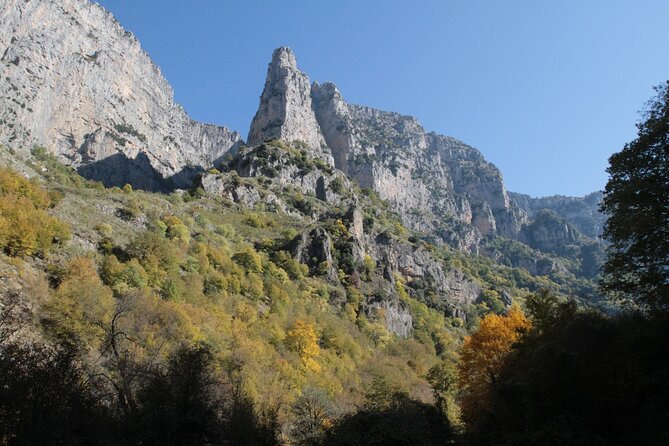
This tour includes a light lunch plus water. The menu is simple but local: homemade veggie pie, fruits, and sweets, along with bottled water.
That kind of fuel matters in a canyon hike. You’re burning energy, and it’s nice not to hunt for food mid-trail. The lunch setup also keeps the timing smoother, so you’re not stopping forever or rushing to make a schedule.
If you’re the kind of hiker who forgets to eat until you’re wiped out, you’ll appreciate that lunch is built in.
Finishing in Vikos or Mikro Papigo, then minibus back
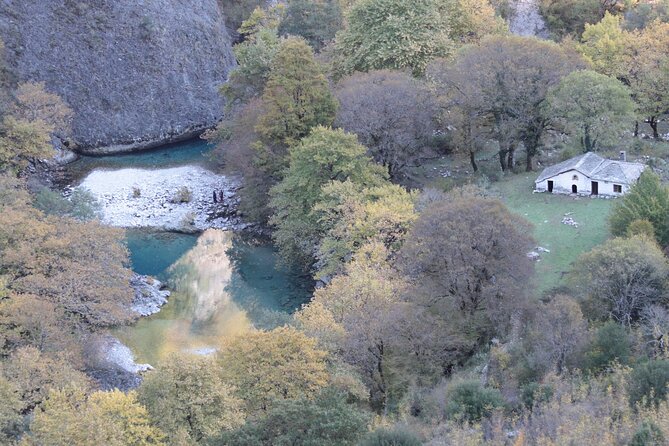
Your hike ends at the village of Vikos or at Mikro Papigo (a bit further). After that, you get picked up by minibus late afternoon.
The activity is described as ending back at the meeting point in Monodendri, so you’re not stuck trying to solve transport after your legs are done. This is one of the underrated value parts of a canyon hike: the less you think about getting home, the more you can focus on the hike itself.
Plan on a full day. The total duration is about 8 hours (approx.), which generally includes the walking time plus rest breaks plus the return logistics.
Price ($180.23): what you’re really paying for
At $180.23 per person, this isn’t a bargain-basement hike. But it’s also not just paying for a person to lead you down a path.
You’re paying for:
- a guided experience in English (Alexis often leading, with Vassilios appearing in some groups),
- included lunch (homemade veggie pie, fruits, sweets) and bottled water,
- the structured route with canyon timing,
- and the minibus return so you don’t need a car.
It also helps that the group stays small (max 10). In a larger group, you’d spend more time waiting and less time hearing explanations that make the place click. Here, the small group size is part of the value.
One more thing: hiking shoes are not provided. That means you should treat this price as covering the guide, route, and food—not gear.
What to bring: shoes and weather are the real deciding factors
The operator doesn’t supply hiking shoes or personal clothing based on weather. So you need to bring your own gear and dress for canyon conditions.
Even if the day looks calm, you should expect:
- rocky and possibly uneven sections,
- slippery stones at times,
- and a steep finish that makes good traction worth its weight in gold.
For clothing, bring layers. Canyon air can feel cooler near water and during morning starts, and you’ll be sweating on the descent and then working hard on the uphill at the end.
Also: good weather is required for the experience to run. If conditions are poor, you’ll be offered a different date or a full refund—so check forecasts close to departure day.
Who should book this Vikos Gorge crossing (and who should think twice)
This tour is a strong fit if you:
- want a famous canyon crossing without an all-day grind,
- like guided interpretation (nature, rock formations, plants, and local context),
- prefer small groups with a pace that can adjust to you,
- and you’re comfortable with moderate hiking and some steep climbing.
It may not be the best match if:
- you’re not comfortable with uneven footing or slippery stones,
- you have major mobility limits,
- or you’re very uncomfortable with heights and steep canyon edges.
For solo travelers, it can work well too—small group hikes mean you’re never truly alone, and the guide can often tailor the pacing. If you’re nervous about hiking alone, this is a safer-feeling structure.
Should you book the Vikos Gorge hike with Alpine Zone?
If your goal is to experience Vikos Gorge as a walk with meaning—not just a scenic background—this is a smart booking. The combination of a small group, a highly engaged guide like Alexis, and the big payoff of Voidomatis Springs makes it feel worth the price.
Book it if:
- you can handle moderate hiking with some rocky sections and a steep uphill finale,
- you want lunch included and a minibus return handled,
- and you’re traveling in weather that looks good.
Hold off (or choose another plan) if:
- you’re hoping for mostly flat terrain,
- you don’t have proper shoes,
- or you’re likely to struggle with that late steep climb.
FAQ
How long is the Vikos Gorge crossing hike?
The hike is about 8 hours total (approx.), with the walk typically described as around 6 to 8 hours depending on pace and stops.
Where do we meet, and what time does it start?
Meet at 8:00 am at Ριζαρείου Σχολής, Monodendri 440 07, Greece. Your guide meets you in the Monodendri area near Agia Paraskevi Monastery.
What’s included in the price?
The price includes bottled water and a light lunch (homemade veggie pie, fruits, and sweets). The tour also offers a mobile ticket and is in English.
What should I bring since hiking shoes aren’t provided?
You’ll need to bring your own hiking shoes and personal clothing appropriate for the weather.
What group size should I expect?
The activity is limited to a maximum of 10 travelers.
What happens if weather is bad?
This experience requires good weather. If it’s canceled due to poor weather, you’ll be offered a different date or a full refund.