REVIEW · PIANO PROVENZANA
Etna Summit Craters
Book on GetYourGuide →Operated by Etna Est · Bookable on GetYourGuide
Etna summit craters feel like another planet. I love the combo of walking up to 3330m and seeing old and recent lava up close, and I love that this tour keeps the group small. The one thing to think about: it’s a semi-sporty trek, so if you want an easy stroll, this won’t fit.
What makes it work so well is the guide-led pacing and safety gear. You start with helmets and trekking sticks, and names like Claudio, Luca, and Nino show up in the guide stories I’ve heard—people who watch your footing, call out hazards, and steer you toward the best vantage points when the volcano is active. The other consideration is serious health screening: this isn’t suitable if you have respiratory issues, heart problems, high blood pressure, or if you’re pregnant.
Also, this is Sicily’s north side experience in the real sense: meeting at Etna Nord Piano Provenzana, then using a 4×4 bus to get you to high altitude before the hike. The drawback here is cost and logistics—your tour price doesn’t include the bus ticket (it’s listed separately), and you’ll want to pack like you’re walking on a windswept mountain.
In This Review
- Key things to know before you go
- From Piano Provenzana to Pizzi Deneri: getting the altitude without guessing
- The trek to 3330m: walking on old and recent lava
- Around the Summit Craters: reading the volcano in real time
- The descent: Bove Valley views and lava-sand channels
- Price and value: what $71 gets you (and what to budget extra)
- What’s included (and how it helps you on a real mountain)
- Who this tour is for, and who should skip it
- The guide experience: safety, pacing, and best viewpoints
- Should you book the Etna Summit Craters tour?
- FAQ
- FAQ
- What is the duration of the Etna Summit Craters tour?
- Where do I meet for the tour?
- How much does the tour cost?
- What is included in the price?
- What is not included?
- Do I need to take a bus before the trek?
- How high do we trek during the tour?
- Are there languages available for the live guide?
- Is this tour suitable for everyone?
- What should I bring and what should I avoid?
Key things to know before you go
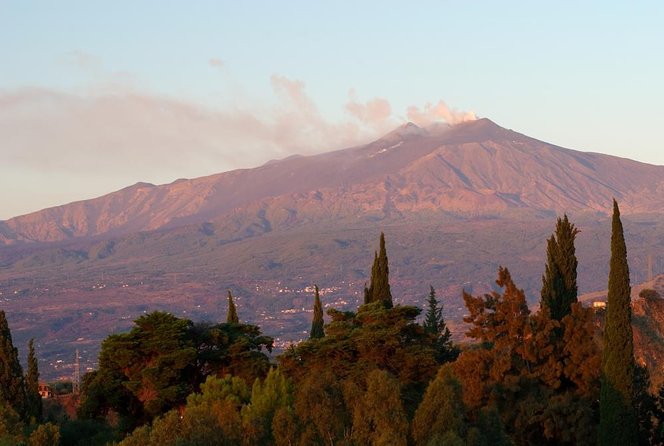
- 4×4 bus to Pizzi Deneri (2850m): you get higher fast, but the bus ticket is not included
- Trek to the edge of the Summit Craters (3330m): walking over old and recent lava fields is the main event
- Flexible summit time: you may stroll around the summit area depending on volcanic activity
- Descent via Bove Valley and lava-sand channels: the views behind you change as you drop in altitude
- Included safety gear: helmets and trekking sticks are provided; trekking shoes are available on request
- Small group (max 10): easier questions, better pacing, and more attention on your footing
From Piano Provenzana to Pizzi Deneri: getting the altitude without guessing
This is a half-day format that’s built for you to spend your energy where it matters. You meet at Etna Nord Piano Provenzana, then you’ll ride up by 4×4 bus. That ride is more than just convenience. On Etna, altitude changes how the air feels and how the ground behaves, so getting to Pizzi Deneri (2850m) quickly helps you focus on the hike instead of burning time.
Right after you’re dropped near the high-altitude stop, you get a chance to take pictures and soak in the view. This is where the scale of Etna hits. From up there, the terrain looks carved and layered, and you start to understand why guides talk about lava flows like they’re timelines. Even before the trek, you’re already looking at the after-effects of past eruptions.
The practical catch: the 4×4 bus ticket isn’t included in the tour price. You should budget for it so you don’t get surprised at checkout or on the day. If you’re traveling with a group or trying to keep costs tight, that extra line item is worth planning for.
You can also read our reviews of more tours and experiences in Piano Provenzana.
The trek to 3330m: walking on old and recent lava
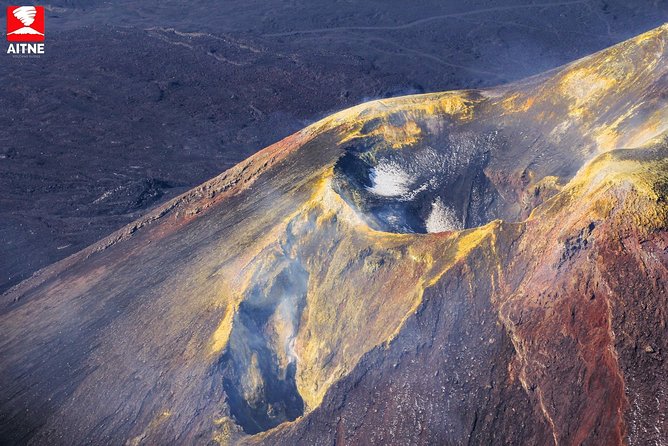
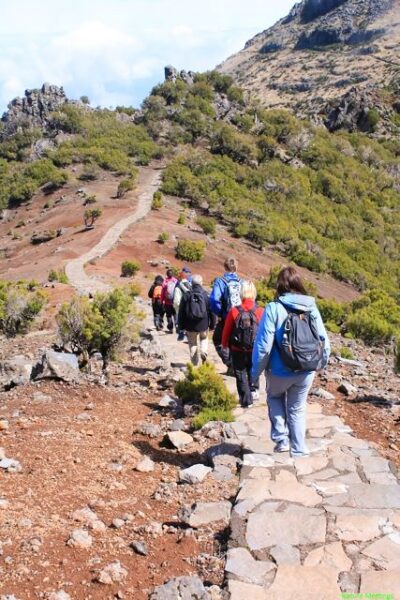
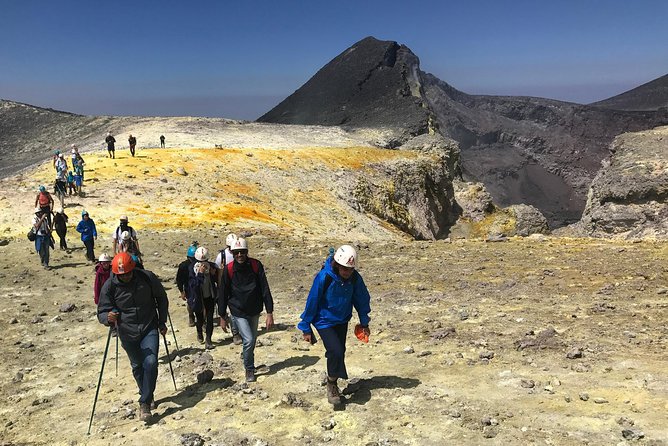
Once trekking starts, you’re heading toward the edge of the Summit Craters at 3330m. This is the heart of the tour, and it’s not meant to be a casual wander. You’ll walk across old and recent lava fields, which means the ground can be uneven, gritty, and visually confusing at first. That’s why you’ll be using trekking sticks and why you should have good traction.
I like that the gear list is clear and realistic. Helmets are included, trekking sticks are included, and trekking shoes are available upon request. If you’re planning to wear your own boots, good. If you don’t have hiking shoes, you’ll want to ask early so you’re not stuck thinking about it at the trailhead.
At this point, you’ll also feel the difference between being on Etna and being near Etna. You’re above a lot of the usual barriers—trees, buildings, busy roads. The open volcanic terrain strips away distractions. It’s powerful and a bit humbling, which is exactly what you want from a volcano day trip.
One more tip that keeps popping up in guide stories: mind your knees. Arturo is associated with that sort of friendly warning, but it’s really about the terrain and your stride. Take slower steps than you think you need, keep your weight stable, and let the sticks do some work.
Around the Summit Craters: reading the volcano in real time
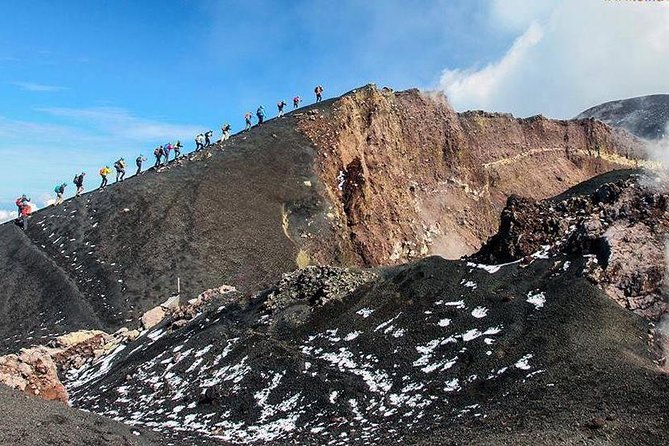
When you reach the summit area, the tour doesn’t treat it like a museum stop where everyone gets the same photos. Instead, you take a stroll around the Summit area based on volcanic activity at the moment. That matters, because Etna isn’t static. Smoke, gas, and visibility can change quickly, and a good guide adjusts where you walk and how long you stay.
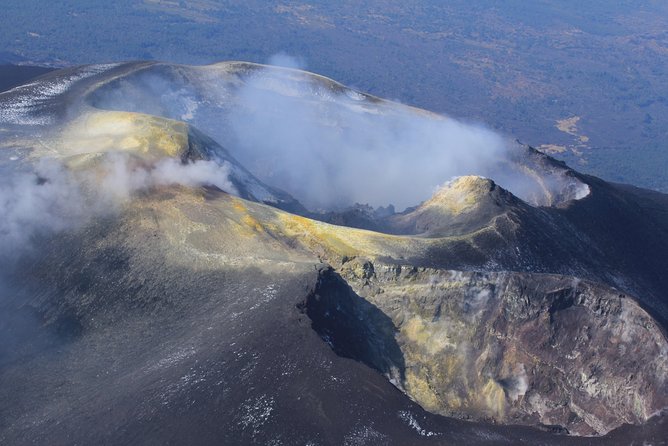
This is also where you can get the most memorable Etna moments. In one case I’ve seen mentioned, the timing lined up with eruption activity—another time, there wasn’t lava visible, but there was strong degassing near the Voragine crater. Either way, you’re getting a live view of how the volcano breathes.
You should also know what to expect from the guide’s approach. Some people love the way guides point out the best viewing spots and keep you safe through the moving conditions. If you’re the type who wants deep, nerdy explanations about Etna’s history every five minutes, you might wish the focus were heavier on facts rather than route management. Still, the trade-off is that the route stays flexible, and that flexibility can be what lets you see what the volcano is doing that day.
If you care about language, it’s a plus that the guides cover English, Italian, and French, so you can ask questions and understand what’s happening without playing guessing games.
The descent: Bove Valley views and lava-sand channels
What I like about this itinerary is that the return doesn’t feel like time you’re just waiting out. The descent starts with the Bove Valley as a dramatic background, then you continue down toward lava sand channels until you reach the starting point.
The Bove Valley part is visually satisfying because it gives you perspective. You’re not just looking at crater walls up close—you’re seeing how the terrain drops away and how the volcano’s structure shapes the view. Even if you’re tired, your brain tends to wake up for this segment because it’s more “landscape” in the literal sense of broad, structural forms. (Sorry—Etna makes it hard not to think in big shapes.)
Then come the lava-sand channels. This is where you’ll really appreciate trekking sticks and long pants. The ground can shift and slide underfoot, and sand can be deceptively deep in spots. If you take it steady and keep your footing deliberate, the descent feels manageable. If you rush, you’ll feel it in your legs fast.
Expect it to be a bit of a leg workout. That’s normal. Many of the people who love this tour do it specifically because it’s active but still guided, with the timing and gear handled for you.
Price and value: what $71 gets you (and what to budget extra)
The tour price is $71 per person for a 6-hour guided experience, with helmets, trekking sticks, insurance, and a guide for the whole tour. For a guided summit hike, that’s usually a fair baseline value because you’re not just paying for someone to walk with you—you’re paying for gear, route leadership, and risk coverage.
But the pricing picture isn’t complete until you account for one key line item: the 4×4 bus ticket is not included and is listed at €60 per person. That’s a big difference from the advertised base price. So when you compare options, treat the bus ticket as part of your real total cost.
Also consider what’s included versus optional. Trekking shoes are upon request, so if you show up without appropriate footwear and haven’t arranged it, you may not get the shoes you need in time. Long pants, gloves, and a packed lunch are also on your prep list, which means you’ll still be investing effort beyond the money.
My practical take: if you want a volcano summit experience with a small group (max 10), included safety gear, and a guide who adjusts to volcanic conditions, this is good value. If you’re counting every euro and hate add-ons, the separate bus ticket may annoy you.
What’s included (and how it helps you on a real mountain)
Here’s the practical gear logic behind the included items:
- Helmets: you’re not wearing them for fashion. On volcanic terrain, your head safety matters, especially when walking near uneven ground and potential hazards.
- Trekking sticks: they reduce strain on knees and improve stability on loose, uneven surfaces.
- Guide for the whole tour: the guide isn’t just “company.” This is route leadership plus safety judgement, especially since the summit walking can change with activity.
- Insurance: worth having when you’re doing a high-altitude trek.
- Trekking shoes on request: good safety comes from traction, not just motivation.
Then there’s what you bring, and it’s not overkill. You’re asked for sunglasses, a hat, sunscreen, water, jacket, packed lunch, gloves, and long pants. That list tells you the tour runs in conditions where sun + wind + temperature swings are common. On Etna, even if it looks bright from below, high altitude can surprise you.
One extra no-contact-lenses note: don’t bring contacts. If you wear them normally, plan for a safe alternative so your eyes don’t get irritated by wind or dust.
Who this tour is for, and who should skip it
This is best for you if you want an active half-day on real volcanic terrain rather than a drive-by viewpoint. You’ll enjoy it most if you’re comfortable walking at altitude and you don’t mind uneven ground.
It’s also a good match if you like small groups. With a cap of 10 participants, the guide can keep an eye on footing and adjust pace, and it’s easier to ask questions in English, Italian, or French.
It’s not suitable if you have:
- heart problems
- respiratory issues
- high blood pressure
- pregnancy
That list matters because you’re going to high elevation and moving over rough ground. If any of those apply, don’t “tough it out.” Choose a different kind of Etna day.
The guide experience: safety, pacing, and best viewpoints
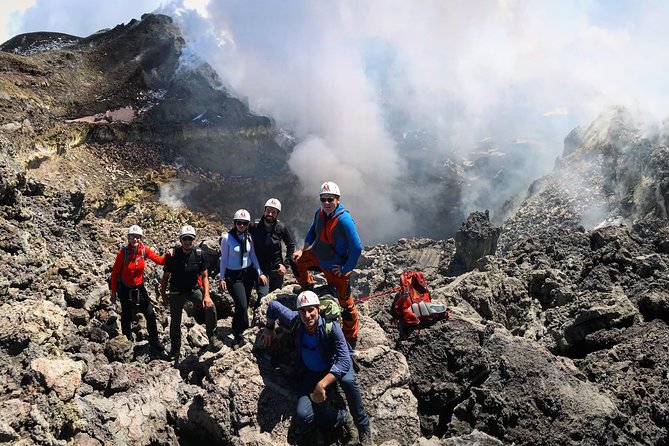
One reason people rate this so highly is the feeling of being in capable hands. Names like Claudio, Luca, Nino, and Lucas show up with a theme: the guide directs you where to stand, how to move, and how to handle changes around the summit.
In at least one story, the guide emphasized different crater-side views and how to time your time on the summit area with what the volcano is doing. In another, the guide was described as very friendly and highly communicative in French. And in the knee-warning story, the humor was paired with real advice, which is a classic good-guide move on hikes.
Still, you might also notice a common trade-off: a few people wish the guides spent more time explaining the mountain’s history and more detailed volcano facts. If that’s you, you might pair this hike with another Etna-focused visit later on your trip where the talking is heavier.
Should you book the Etna Summit Craters tour?
Book it if you want a guided, gear-supported hike to the edge of Etna’s Summit Craters and you’re ready for real walking over lava terrain at altitude. The small-group size, included safety gear, and the fact that the summit walking can respond to volcanic activity all make this feel like an informed way to see a live volcano.
Skip it if you’re looking for an easy outing, if you don’t want to pay for the separate €60 4×4 bus ticket, or if you fall into the listed health categories. And if you’re someone who wants nonstop volcano history talk, be aware that this tour is built around pacing and conditions, not only explanations.
If you’re in the right fitness range and you pack the basics (water, layers, gloves, sun protection), this is one of those Sicily experiences that doesn’t feel like a checkbox. It feels physical. It feels real. And it leaves you with a new respect for how powerful nature can be.
FAQ
FAQ
What is the duration of the Etna Summit Craters tour?
The tour lasts 6 hours.
Where do I meet for the tour?
You meet at ETNA NORD Piano Provenzana.
How much does the tour cost?
The price listed is $71 per person.
What is included in the price?
Included are helmets, trekking sticks, a guide for the whole tour, and insurance. Trekking shoes are available upon request.
What is not included?
Not included are hotel pick up and drop off, food and drinks, and the 4×4 bus ticket (listed as €60 per person).
Do I need to take a bus before the trek?
Yes. You use a 4×4 bus service to reach about Pizzi Deneri (2850m). The bus ticket is not included.
How high do we trek during the tour?
You trek to the edge of the Summit Craters at 3330m above sea level.
Are there languages available for the live guide?
Yes. The live guide is available in English, Italian, and French.
Is this tour suitable for everyone?
No. It is not suitable for pregnant women, people with heart problems, respiratory issues, or high blood pressure.
What should I bring and what should I avoid?
Bring sunglasses, hat, hiking shoes, sunscreen, water, a jacket, packed lunch, gloves, and long pants. Do not bring contact lenses.