REVIEW · PHOENIX
Guided Desert Sunrise or Evening/Sunset 2-Hour Hike at South Mtn
Book on Viator →Operated by Scott Z · Bookable on Viator
City lights fade; desert wakes up. This guided South Mountain sunrise or sunset hike turns Phoenix into a nighttime classroom, with big Phoenix views from a moderate 5-mile route. I especially liked how guide Scott Z ties plants, animals, and rock history into a hike you can actually do. One thing to plan for: the trail gets steeper and rockier, so you’ll want sturdy shoes and a realistic pace.
This experience gives you flexible start times and a relaxed group format (up to 60 people), so you can choose the mood—early sunrise calm or golden-hour glow into real darkness. The hike meets at the Pima Canyon Trailhead and returns to the same spot, which keeps things simple when you’re tired and it’s dark out.
Expect a guided shift from warm-up trail to evening sky. You’ll start with a relatively flat first stretch, then climb toward overlooks while the desert cools down, and once it gets darker you’re set up with flashlights/headlamps and sometimes even blacklight surprises. Plan to bring water, plus a light jacket in winter, because nights can feel chilly on the mountain.
In This Review
- Key highlights you’ll care about
- South Mountain at sunrise or sunset: why this hike feels special
- Pima Canyon Trailhead to the first climb: what the route actually feels like
- Petroglyphs, rock formations, and Sonoran Desert plants you’ll start noticing
- The Phoenix viewpoint moment: city lights, moonlit sky, and night sounds
- What Scott Z brings to the hike: pacing, safety, and little extras
- Price and value: where this hike earns its keep
- Timing, weather, and what to bring for a desert night hike
- Should you book the South Mountain guided sunrise or sunset hike?
- FAQ
- How long is the South Mountain sunrise or sunset hike?
- Where does the hike start?
- Is the hike difficult?
- What should I bring?
- Will we see city views?
- Is admission included?
- What happens if the weather is bad?
Key highlights you’ll care about
- Big Phoenix skyline payoff: see the city lights during sunset or under darker night conditions
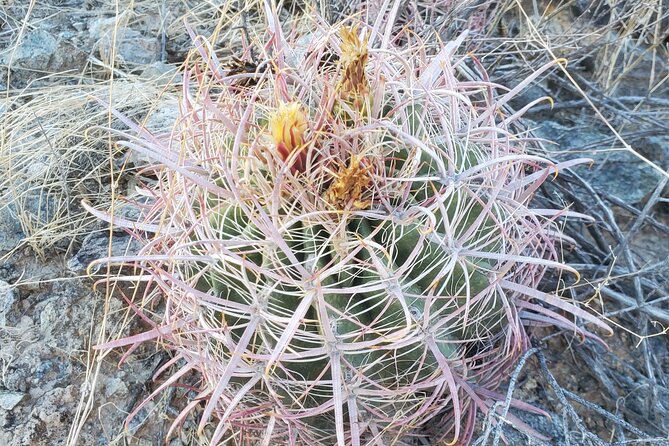
- Petroglyphs + Sonoran Desert learning: rock formations, ancient markings, and local plant and animal notes from Scott Z
- Warm-up first, then a real climb: moderate 5-mile route with steeper, rocky sections
- Night gear is part of the fun: headlamps/flashlights, and in some conditions blacklight viewing for things like algae and a scorpion
- Snacks and comfort help: water plus small extras along the way, including trail mix and lemonade apples
- Moon and timing matter: you might not always need extra light, but you’ll have it if darkness arrives fast
South Mountain at sunrise or sunset: why this hike feels special
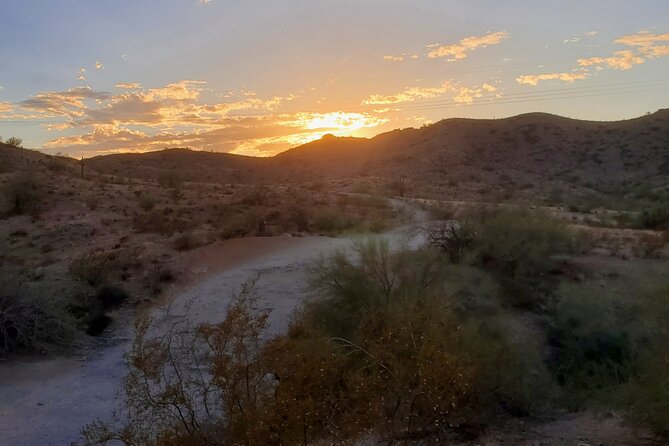
South Mountain in Phoenix is one of those places where the desert and the city both show up. On a daytime hike, you’re fighting heat. On this guided sunrise or sunset option, the temperature drops as you climb, and the whole experience becomes more about light, silence, and spotting details you’d miss at noon.
I like that this route is built for a payoff. You’re not just walking a random trail; you’re heading toward viewpoints where the city becomes a backdrop. Then the guided portion shifts gears—plants become easier to notice as it cools, and night sounds (like owls) and small discoveries become part of the story.
The tone stays friendly and practical. Scott Z is known for keeping people comfortable, including solo hikers and groups with mixed experience levels. If you’re new to hiking, that matters, because confidence changes everything on rocky terrain.
The only trade-off is real: you’re hiking 5 miles with some steeper, rocky sections. If your knees hate uneven ground, you’ll want to go slow and use the guide’s pacing.
You can also read our reviews of more tours and experiences in Phoenix.

Pima Canyon Trailhead to the first climb: what the route actually feels like
Your hike begins at the Pima Canyon Trailhead (4500 E Pima Canyon Rd, Phoenix, AZ 85044). You’ll warm up for the first couple of miles on relatively flatter ground, which is a smart setup. It lets you settle into your stride before the elevation starts to ask more of you.
From there, you’ll gain height and hit some steeper and rocky areas. This is why ankle support matters. Sneakers at minimum are mentioned, but if you have anything with better grip and support, you’ll feel it on the uneven parts.
The duration is usually a sweet spot. It’s listed as about 2 hours for the experience, but plan on roughly 2–3 hours total for the full hike depending on pace and how long you linger at stops. You’ll end back at the meeting point, so you don’t have to worry about logistics when you’re tired.
A simple mindset helps here: treat it like a guided walk with climbs, not a race. Scott Z has a reputation for timing the hike with frequent stops to take in sights and learn, which can make a moderate effort feel more manageable.
Petroglyphs, rock formations, and Sonoran Desert plants you’ll start noticing
The big draw is that you’re not just chasing a view. Along the way, you’ll check out ancient petroglyphs and rock formations. That combination matters because it gives the trail context. Desert hikes can feel like “just rocks” unless someone points out what you’re actually seeing.
Scott Z also connects the plants and animals to the way the Sonoran Desert works. You’ll get taught on local life like the saguaro cactus, and you might even leave with a new favorite plant—like palo verde, which one solo hiker called out specifically. Those details stick because they’re tied to what you pass by, not random facts dumped while you walk.
Wildlife spotting tends to be subtle rather than guaranteed. But the guide may encourage you to listen as it gets darker. One memorable example from the experience is trying to hear for coyotes and picking up owls instead. Another fun night element is spotting small creatures with special lights when conditions allow.
If you like learning while you move, this is the right format. It’s educational without turning the hike into a lecture, and the stops feel built around what’s visible right then.
The Phoenix viewpoint moment: city lights, moonlit sky, and night sounds
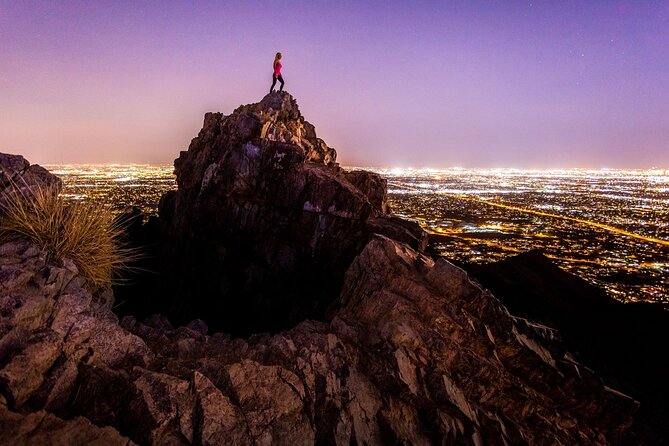
The route is set up to deliver views of Phoenix as you climb. For sunset hikes, you get that classic shift: warm sky colors turning into city lights, while the desert darkens fast around you. For sunrise versions, you get the opposite feel—quiet and cool with the city waking up in the background.
The experience description mentions a moonlit desert sky and returning to the start point at the end. In practice, that’s why lighting matters. Depending on the moon, a flashlight might not always be needed, but you’ll have them provided just in case. So you can focus on the view instead of scanning the ground every second.
Night in the desert also brings sound changes. Coyotes aren’t guaranteed, but the guide may lead you into the right kind of listening during dusk or after dark. If you hear an owl calling, it feels like the desert talking back at you.
One extra layer that can turn the whole thing from pretty to memorable: blacklight viewing under the right conditions. In at least one case, a hiker described seeing algae growing on rocks with blacklights, and even spotting a scorpion using special dark viewing lights. Even if you don’t catch those exact finds, it’s a good sign that the guide knows how to make night exploration visual and fun.
What Scott Z brings to the hike: pacing, safety, and little extras
A good hike guide does two things: keeps you safe and keeps you engaged. Scott Z seems to do both, and that shows up in how people describe the experience—patient, careful with groups, and genuinely enthusiastic.
Safety here is straightforward. You’ll get the route timing, and you’ll be told what to wear and bring. The experience calls out shoes with ankle support as the minimum, plus water. For winter, plan on a light jacket because it can get chilly after sunset or in early morning dark.
Then there’s the comfort side. People mention Scott providing water and snacks like trail mix and lemonade apples. That might sound like small stuff, but on a hike where you’re climbing and it’s getting cooler or darker, those extras keep energy steady. They also make a solo trip feel less lonely.
Scott’s style also seems social without being loud. If you’re a beginner, he reportedly stays patient and helps you feel secure on the trail. If you’re a seasoned hiker, the stops still add value because you’re not just walking—you’re learning how to recognize plants, rocks, and signs.
And yes, photography is part of the vibe. At least one group highlighted Scott as a great photographer, which fits the “views matter” purpose of the route.

Price and value: where this hike earns its keep
The biggest value signal in the info you’re given: park admission is listed as free for this experience, and the hike is guided for a set duration. Even without a specific price shown here, that’s meaningful. You’re not paying extra just to access the trail area; you’re paying for the guide, the timing, and the desert-focused interpretation.
You’ll also see details like mobile ticket delivery and group discounts. Mobile ticket means fewer headaches on arrival. Group format can feel crowded sometimes, but the maximum is capped at 60 people, and the guided stops help keep the group moving as one unit rather than scattering.
Is it worth it compared to hiking on your own? If you want city views, sure, you could do that independently. But the real value is the layer of context: petroglyphs, rock formations, Sonoran Desert plant life, and night discoveries explained in real time. That’s the difference between simply visiting South Mountain and understanding what you’re walking through.
If you’re traveling on a tight schedule, the 1–3 hour window is practical. You can fit this in without losing half a day.
Timing, weather, and what to bring for a desert night hike
This experience runs on dates between 04/25/2026 and 06/03/2026, with daily operating hours listed as 6:00 AM to 9:00 PM. That matters because sunrise and sunset timing depends on the season, and the provided window gives you options within the workable daylight and dark hours.
Weather is a requirement. The experience needs good weather, and if it’s canceled due to poor weather, you’ll be offered a different date or a full refund. That’s the right kind of policy for outdoor activities.
What should you pack? The essentials are simple and explicitly mentioned:
- Water (non-negotiable in a desert climb)
- Shoes with ankle support (sneakers at least)
- A light jacket in winter (nights get chilly)
- Don’t stress too much about flashlights—participants are provided them, and a flashlight may not always be needed depending on the moon
One extra “bring your mindset” tip: eat something before you start, then trust the snack break. The guide has been described providing trail mix and fruit snacks, but energy still helps when you’re climbing.
Should you book the South Mountain guided sunrise or sunset hike?
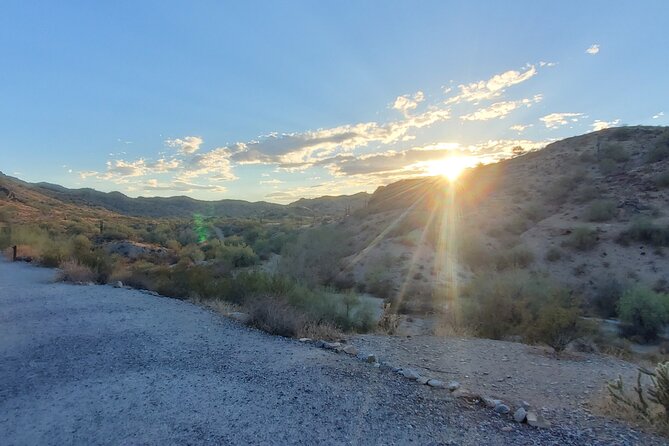
Book it if you want Phoenix views with actual interpretation. This is ideal for first-time visitors who want the desert to feel personal—petroglyphs, saguaro and palo verde moments, rock details, and night sounds—without planning a self-guided route.
It’s also a good fit if you prefer comfort and structure. A guide like Scott Z, who keeps people at ease and provides water and small snacks, makes the hike feel less intimidating—especially for solo hikers or mixed-experience groups.
Skip it only if you dislike uneven ground or you’re not ready for a moderate 5-mile effort with steeper, rocky sections. Also note the schedule and conditions: it depends on good weather, and the experience is listed as non-refundable and not changeable for any reason. If that rigidity would stress you out, plan accordingly.
If you’re the type who likes your trips with facts, views, and a little night science (blacklight fun), this hike is an easy yes.
FAQ
How long is the South Mountain sunrise or sunset hike?
The experience is listed as about 1 to 3 hours (approx.). The hike described is a moderate route covering around 5 miles over roughly 2 to 3 hours.
Where does the hike start?
You meet at the Pima Canyon Trailhead, 4500 E Pima Canyon Rd, Phoenix, AZ 85044, USA. The hike ends back at the same meeting point.
Is the hike difficult?
It’s described as a moderate hike with steeper and rocky areas. Plan for about 5 miles total and choose shoes with ankle support (sneakers at least).
What should I bring?
Bring water and wear appropriate footwear with ankle support. In winter, a light jacket is recommended because it can get chilly. Flashlights may not always be needed depending on the moon, but lights are provided just in case.
Will we see city views?
Yes. A key part of the hike is ascending to outstanding views of Phoenix.
Is admission included?
The experience notes Admission Ticket Free, and you’ll still get the guided hiking portion.
What happens if the weather is bad?
This experience requires good weather. If it’s canceled due to poor weather, you’ll be offered a different date or a full refund.