REVIEW · JASPER
Guided Glacier Hike on The Athabasca with IceWalks
Book on Viator →Operated by IceWalks · Bookable on Viator
Walking on glacier ice feels like time travel.
On this IceWalks tour, I love that you actually step onto the Athabasca Glacier near Jasper, led by ACMG-certified guides who point out the ice formations as you go. It is not a long trek for the sake of a trek, and it is not a technical climb either. You get a guided, interpretive walk that turns a famous glacier into something you can see, touch, and understand.
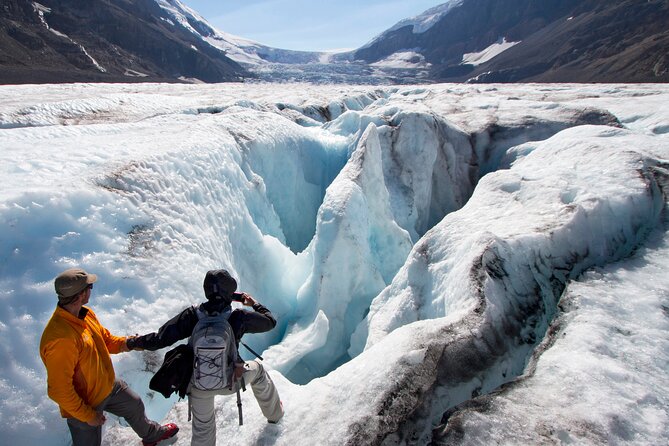
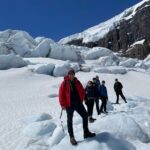
I like two big things right away. First, you walk past eye-catching features such as crevasses, mill wells, meltwater streams, and icefalls, with explanations built into the pace. Second, the group stays small (max 12), so you get real attention with traction gear and footing. That matters on ice, especially if you are traveling with kids or you are an active senior.
One consideration: even though it is only about 5 km roundtrip, the hike to and onto the glacier can feel more strenuous than people expect. And it is not suitable for anyone with certain heart, lung, or mobility issues.
In This Review
- Key things to know before you lace up micro-spikes
- What makes walking the Athabasca Glacier worth your time
- Getting there: Columbia Icefield start and a short shuttle
- Your glacier route: 5 km roundtrip and how the pace feels
- Micro-spikes, boots, and what to wear when weather swings
- The ice features you will spot: crevasses, mill wells, meltwater, and icefalls
- Who this tour fits best (and who should skip it)
- Price and value: is $98.89 worth it?
- Practical tips to make your glacier walk smoother
- Should you book the Athabasca Glacier hike with IceWalks?
- FAQ
- How long is the glacier hike tour?
- Where do we meet for the tour?
- What distance will we walk?
- Do I need technical climbing experience?
- What gear is provided, and what should I bring?
- Is this tour suitable for people with heart, lung, or mobility issues?
Key things to know before you lace up micro-spikes
- Small group size (max 12) for more personal help on uneven ice
- Actual glacier walking on the Athabasca, not just viewpoints
- Traction included with micro-spikes for added grip
- Guided ice-formation spotting (crevasses, mill wells, meltwater streams, icefalls)
- About 3 hours total time for gear-up, shuttle, walking, and education
- Moderate fitness required, with a clear note for heart, lung, and mobility limits
What makes walking the Athabasca Glacier worth your time
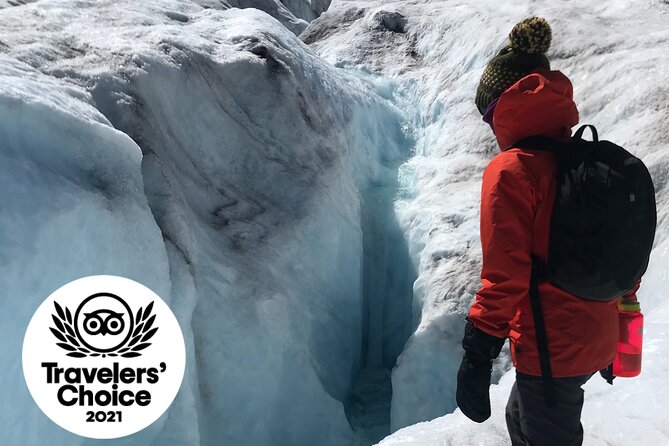
If you love the Canadian Rockies, you already know the photos. What is special here is that you trade the photo stop for the actual walk on glacier ice. You are close enough to understand what you are looking at, instead of guessing from a distance.
The guide-led format is the difference. As you cross the glacier surface, you get taught how these ice features form and what they mean for how glaciers move and change over time. You are not just taking in scenery. You are learning how water and gravity work inside ice.
Another big win is the Rocky Mountain views you get while you hike. You spend real time outside on a glacier walk, so the day feels like an event, not a quick stop. And because the tour is capped at a small number of people, you do not feel rushed or lost in the crowd.
You can also read our reviews of more tours and experiences in Jasper.
Getting there: Columbia Icefield start and a short shuttle
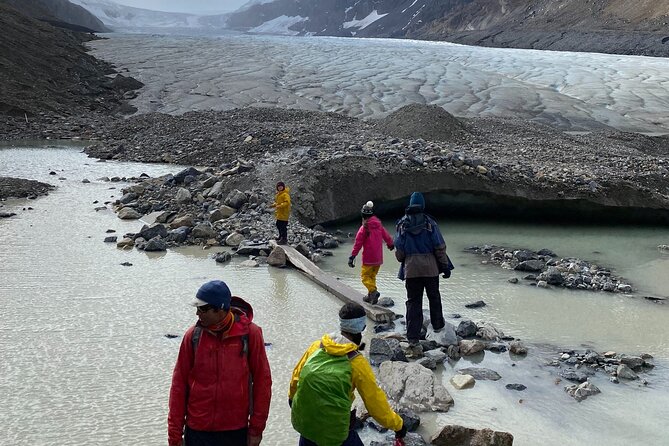
Meet at the Columbia Icefield Discovery Centre parking lot, then get geared up before heading out. This part matters more than you might think. The better you are set up before you hit the ice, the more you can focus on the walk and the stories.
After gear-up, you will be shuttled a short distance to the trailhead. That saves time and keeps the experience from turning into a long transfer day. It is also practical in Rocky Mountain weather, where wind and cold can change quickly.
Your guide will keep you organized from the start: fit you with micro-spikes and make sure you understand the basics of walking on slick surfaces. If you have never worn traction before, do not worry. The tour is built around safety and an interpretive pace.
Your glacier route: 5 km roundtrip and how the pace feels
Plan on about 3 hours total for the guided experience, including gear-up and time spent on the glacier learning. The walking portion is around 5 km roundtrip. That distance does not sound huge, but ice is different than trail dirt.
The walk typically includes both the approach to the glacier and time across the glacier surface. People often underestimate how the footing feels once you are on ice, even when the group is moving slowly and stopping often. Expect frequent stops for education, photos, and quick regrouping, which helps you keep going.
I like that guides build in stops to explain what is in front of you. You get more than a guided march. You get time to look closely at crevasses and other features that you might miss if you are hurrying.
If you want a useful gut-check: treat this as a moderate hike, not an easy stroll. One review note stood out for me: some people find it more strenuous than they expected. You can still have a great time if you are prepared, but go in with realistic expectations about the ice footing.
Micro-spikes, boots, and what to wear when weather swings
This is the part that keeps the experience comfortable and safe. You will be provided micro-spikes for traction. If you do not have your own items, the tour includes rain gear, hiking boots, gloves, and a hat. That is a big value, especially if you are traveling light or already planned to buy gear on the road.
What is not included is warm layers. Bring your own insulating layer so you can stay warm even if the weather shifts mid-tour. On glacier walks, cold can sneak up on you, especially with wind and mist.
A simple packing rule I’d follow: dress for layers you can adjust, not for one fixed temperature. If it rains, you will likely get wet. If it clears, you will feel that too. Having a warm layer gives you options without slowing you down.
One more practical tip: ask your guide what helps. Some guides may offer walking aids like trekking poles, which can make a noticeable difference on uneven ice. Even if you are steady on your feet, poles can reduce strain and help you keep balance.
Finally, keep in mind that the tour requires good weather. If conditions are poor, the operator will offer another date or a full refund. That is important here, because glacier walking is not a do-every-day-at-any-cost activity.
The ice features you will spot: crevasses, mill wells, meltwater, and icefalls
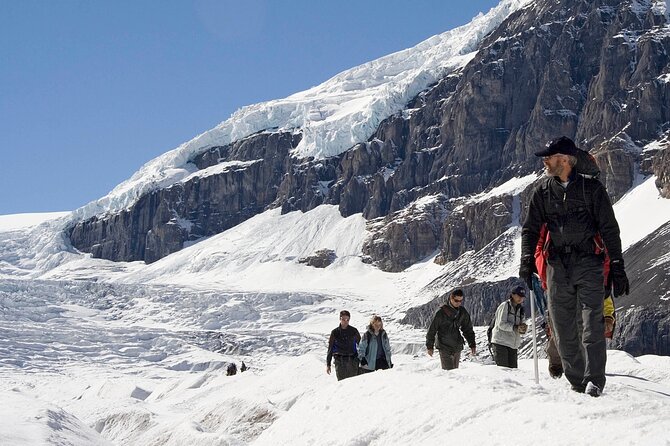
This is where the tour turns from fun to fascinating. The guide’s job is to point out the features you are walking over and explain what you are seeing.
Here are the main formations you can expect to learn about during your walk:
Crevasses
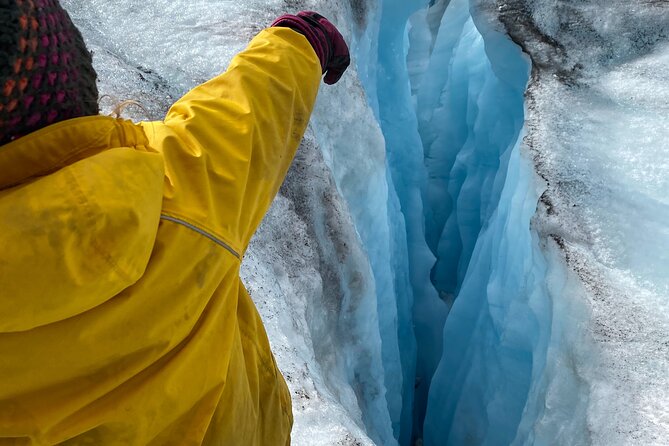
These are deep cracks in the glacier. You may see them from the path and get taught how glaciers fracture as they move and stress changes. Even when you are not staring into a crack, learning where they come from changes the way you read the ice surface.
Mill wells
These are vertical shafts formed by water moving through the glacier and drilling down. They help you understand how meltwater can find pathways into the ice. Seeing mill wells up close is the kind of moment that makes the walk feel scientific without feeling like a textbook.
Meltwater streams
You can spot meltwater running across or near the glacier surface. The guide will explain how surface melt can feed into the glacier system and what that means for how glaciers evolve.
Icefalls
Icefalls form where ice moves over steeper terrain, breaking and deforming as it flows. When you learn the concept first, the view makes more sense while you are still standing there.
What I appreciate is that you are not just told facts and sent on your way. The walk is built so you encounter features first, then get the explanation. That rhythm helps your brain store the experience as something real, not just a story you heard while moving.
Also, the guide emphasizes safety. You will learn the basic do’s of staying on safe footing, and the group stays together so nobody is wandering or trying to get “one more photo” where they should not.
Who this tour fits best (and who should skip it)
This walk is designed for people with moderate fitness. It can work for young children and for active seniors because the tour uses a controlled pace and planned stops for learning.
That said, it is not for everyone. The tour is specifically noted as not suitable for people with heart, lung, and mobility issues. If any of those conditions apply to you, do not assume you can push through. Glacier walking adds cold exposure, uneven footing, and sustained effort for a few hours.
If you are a healthy person who can handle a moderate hike, you will likely be fine. The gear support helps too. Micro-spikes reduce the risk of slipping compared with walking on bare boots, and the guides manage the pace so the group stays together.
One more good fit check: if you like hands-on experiences, this is a great choice. If you prefer to stay purely at viewpoints, you might find a glacier walk more demanding than you expected. This is a get-down-to-it tour.
Price and value: is $98.89 worth it?
At about $98.89 per person, this is not a cheap activity, but it also is not just paying for a bus ride and a quick look. You are paying for a small-group guided walk onto a working glacier, plus the traction gear and support that makes it possible.
Here is where the value comes from:
- ACMG-certified guides lead the experience and handle safety and education
- Micro-spikes are included, and other key items may be provided if you do not have them
- You get an interpretive glacier walk for about 3 hours with real time on the ice
- The group stays small (max 12), which usually means better attention than large tours
If you are comparing it to viewpoint-only options, this is a totally different type of day. You trade a quick look for a physical experience and a guided explanation you can remember.
It also helps that you can get your gear sorted without stress. If you already own boots and a warm layer, you can travel lighter. If you do not, the included gear support reduces friction and extra spending.
Practical tips to make your glacier walk smoother
A little planning makes the difference between a good day and a great one.
Arrive ready to dress in layers
You will have warm layers as your responsibility, so plan on an insulating layer you can put on quickly.
Wear boots you trust
Even though boots may be provided if you need them, bring your own if you have reliable hiking footwear.
Gloves and hat are not optional in cold weather
They help keep you comfortable while you handle gear and stand still for explanations.
Give your guide your full attention during safety moments
When the guide talks about where to step and how to keep traction, do it. That is not just rules for the sake of rules. It is how you stay steady while walking across ice.
Take your time with the ice features
If you can, ask questions when something catches your eye. The whole tour is built around noticing formations like crevasses and meltwater pathways, so your curiosity will be rewarded.
If the forecast looks rough, do not assume you are stuck. The tour requires good weather, but when conditions are poor, you will be offered another date or a full refund.
Should you book the Athabasca Glacier hike with IceWalks?
Book it if you want a true glacier experience in the Jasper area, not just a look from far away. I think this is a smart pick for families with kids who can handle a moderate hike, and for active travelers who like guided learning while they move.
Skip it if you have heart, lung, or mobility concerns, or if you know you struggle with uneven footing for a few hours. This is glacier walking. You are on ice, with cold and traction gear as part of the deal.
If you are on the fence, my advice is simple: this tour is a hands-on, guide-led “you are there” day. At the price point, you are paying for small-group guidance, micro-spikes, and the chance to walk the Athabasca Glacier surface while learning how those amazing ice features form.
FAQ
How long is the glacier hike tour?
The guided glacier adventure is about 3 hours.
Where do we meet for the tour?
You meet at the Columbia Icefield Discovery Centre parking lot, where the guides gear you up before shuttling you to the trailhead.
What distance will we walk?
The tour is a 5 km roundtrip glacier walk.
Do I need technical climbing experience?
No. The experience is designed so you do not need technical climbing experience.
What gear is provided, and what should I bring?
Micro-spikes (traction) are provided. If you do not have them, the tour provides rain gear, hiking boots, gloves, and a hat. You should bring your own warm insulating layer.
Is this tour suitable for people with heart, lung, or mobility issues?
No. The tour is not suitable for people who have medical issues specifically involving heart, lungs, or mobility.