REVIEW · JASPER
Canadian Rockies: Helicopter Flight with Exploration Hike
Book on GetYourGuide →Operated by Rockies Heli Canada · Bookable on GetYourGuide
Flying into the Rockies changes the whole scale fast, and this trip pairs helicopter panoramas with an easy walk to a waterfall. I love how you get the bird’s-eye version of the region first, with glacial scenery and high peaks laid out below you. I also like that the tour does not stop in the air; it lands you in a quieter valley so you can actually move your feet and reach Twin Falls.
The main thing to plan around is that flight time can shift based on conditions, and you’ll want sturdy footwear. Also note the fine print is a little mixed on mobility needs, so if you rely on a wheelchair, confirm details with the operator before you book.
In This Review
- Key highlights I think you’ll remember
- Why a helicopter + hike makes sense in the Canadian Rockies
- Picking 20, 30, or 55 minutes in the air
- Over Wilson Icefield, glaciers, and high peaks
- Landing by the Cline River and the Twin Falls hike
- The pilots and their commentary make the day stick
- Time on the clock, meeting point, and what actually drives the schedule
- What to bring (and what not to bring)
- Price and value: is $272 worth it?
- Comfort and expectations you should set before you go
- Should you book this Canadian Rockies helicopter and Twin Falls hike?
- FAQ
- FAQ
- How long is the Canadian Rockies helicopter and exploration hike?
- Where does the tour start?
- How long are the scenic helicopter flights?
- What does the 55-minute flight include?
- What happens after the helicopter flight?
- How long is the hike?
- Is there a guide or commentary during the flight?
- What should I bring?
- Are there any items that are not allowed?
- Is the tour suitable for wheelchair users?
Key highlights I think you’ll remember
- Wilson Icefield from above, with pilot commentary you can actually hear thanks to provided headsets
- Glaciers, waterfalls, and 10,000-foot peaks in one scenic pass, not a long drive-and-guess day
- Choose your flight length (20, 30, or 55 minutes) and match it to your time and budget
- A landing near the Cline River and Waterfalls Creek, so the hike starts where the scenery feels most wild
- One-hour guided hike to Twin Falls, described as easy and fun through woods and meadows
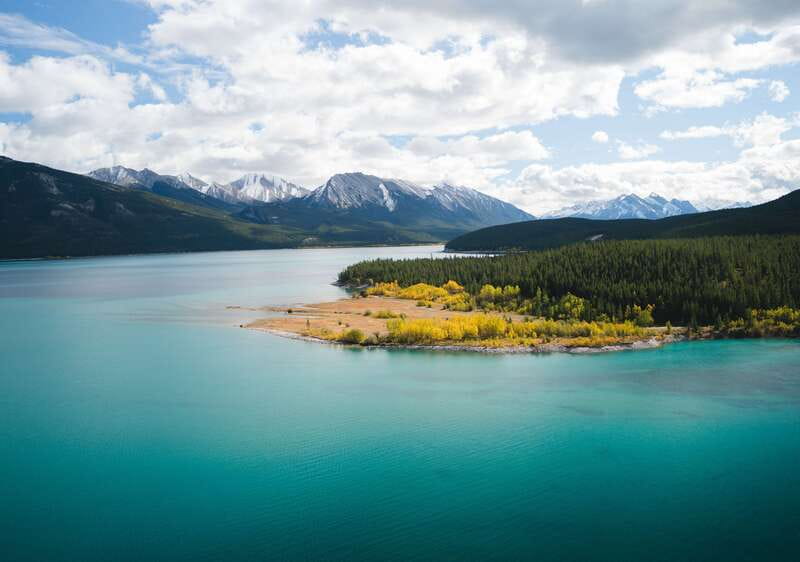
- A strong chance to see Columbia Icefield on the longer 55-minute option, plus Abraham Lake on the return
Why a helicopter + hike makes sense in the Canadian Rockies
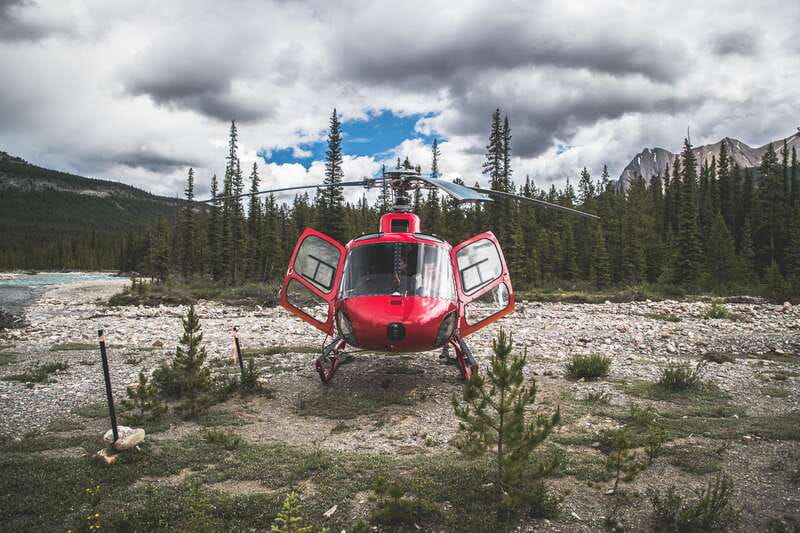
This tour works because it solves two problems at once. Driving viewpoints are great, but they only show you a slice. A helicopter adds the missing third dimension, letting you see how glaciers, rivers, and ridges connect across the valleys.
Then the hike gives the payoff. You get to stand near the waterfall you flew over, and you feel the difference between looking at water and hearing it up close. Even if you only do the one-hour trail, the landing location is chosen so you’re not spending all your time trekking in the middle of nowhere.
And the small group size matters. With limited seats (up to 6), the day feels calmer. You’re not fighting crowds for a good view out the door or trying to squeeze through a tight trail with a dozen strangers.
You can also read our reviews of more tours and experiences in Jasper.
Picking 20, 30, or 55 minutes in the air
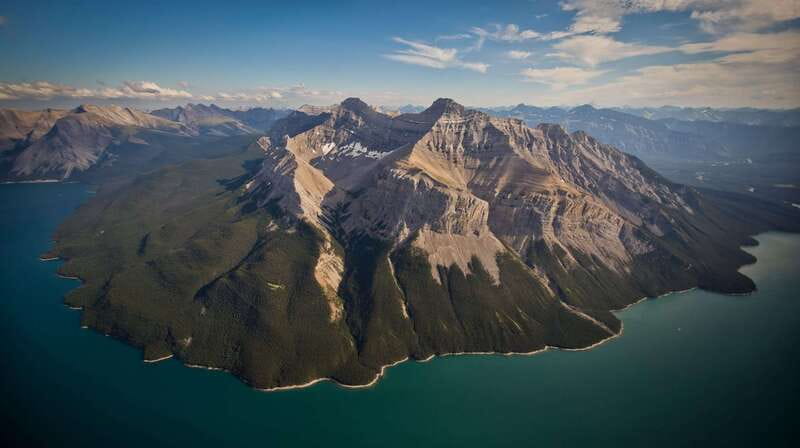
You’ll choose a scenic flight length from 20, 30, or 55 minutes, and that choice affects what you’ll likely see.
- 20-minute flight: Best if you want the helicopter experience without committing a lot of time. You’ll still get big views of mountains and water features from above.
- 30-minute flight: A nice middle option when you want more time over glaciers and ridges, still keeping the whole outing efficient.
- 55-minute flight: This is the one for maximum scenery, because it approaches the Columbia Icefield, the largest expanse of ice in the Rocky Mountains.
In practical terms, the longer flight usually gives your brain more time to map the region. The Rockies are huge, and from ground level it’s easy to think you’re seeing everything. From the air, those same features make more sense when you have enough time to follow the river cuts and ice edges.
If your schedule is tight, go shorter and focus on the touchdown hike. If you really want glacier context, pick the 55-minute option.
Over Wilson Icefield, glaciers, and high peaks
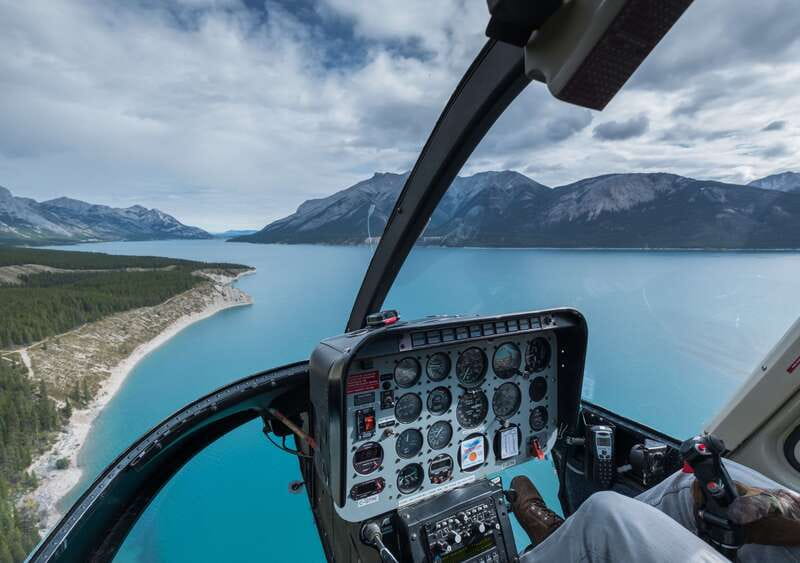
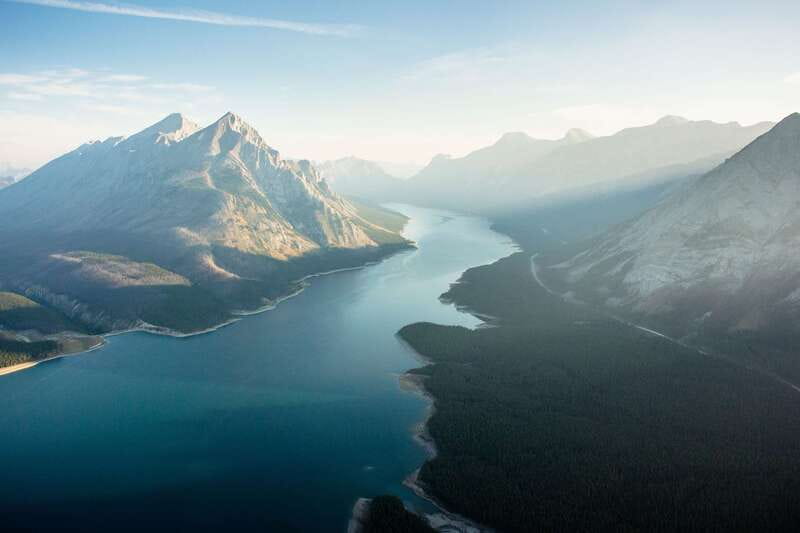
From the moment you lift off, the views are the point. Expect sweeping panoramas of glaciers, waterfalls, emerald-green lakes, and mountain ridges, including peaks around 10,000 feet. You’ll also fly over the Wilson Icefield, which is often the visual highlight people talk about after.
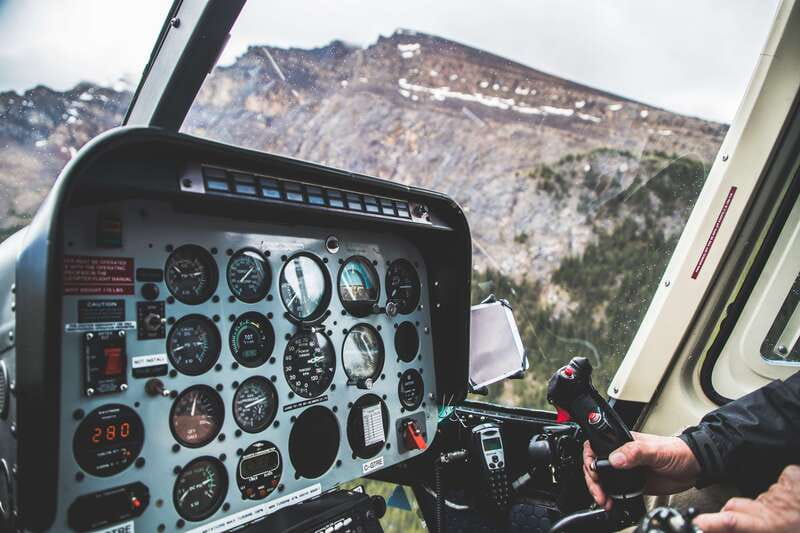
What makes this section better than you might expect is the combination of quiet cockpit tech and live guidance. You get headsets and a professional pilot’s commentary in English. That turns the flight from just watching scenery into something like guided orientation.
As for what you see in the air, keep an eye out for:
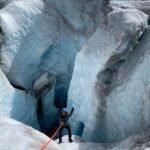
- Glacial boundaries and how ice sits above valleys
- Waterways that look like thin threads from the sky
- Waterfalls that seem small until you realize how much power is feeding them
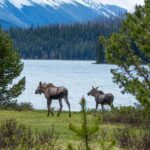
On the way back, you may also enjoy views of Abraham Lake from the helicopter.
One caution: helicopter seats mean you’ll want your camera ready, but don’t try to turn into a full-time photographer. I like the approach of taking a few steady shots early, then switching to slower looking. The best images often come when you stop chasing the perfect angle and just track the terrain.
Landing by the Cline River and the Twin Falls hike
After the flight, you land at the confluence area near the Cline River and Waterfalls Creek. This is where the tour shifts from aerial spectacle to a more grounded experience.
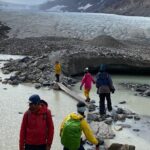
Then you start the one-hour guided hike to Twin Falls. The trail is described as an easy hike through wild alpine woods and meadows, so you’re not signing up for a grueling day. The goal is viewpoint quality and waterfall access, not suffering.
A key detail: you’re walking to an incredible waterfall that’s fed by two lakes. That matters because it explains the sound and volume. The waterfall isn’t a tiny trickle that you could miss. It’s the kind of drop you can feel in the air if you get close enough.
What the hike feels like day-to-day can depend on season. In one April experience, the walk through the forest turned into snowshoe travel, which shows you what can change when conditions are colder. If you’re visiting outside peak summer, plan for the possibility that the “hike” may involve extra gear or firmer footing.
Also, remember the landing location is chosen because it gives you access that would be hard by foot. That’s the real value: you’re spending your energy on the waterfall payoff, not on getting to the base area.
The pilots and their commentary make the day stick
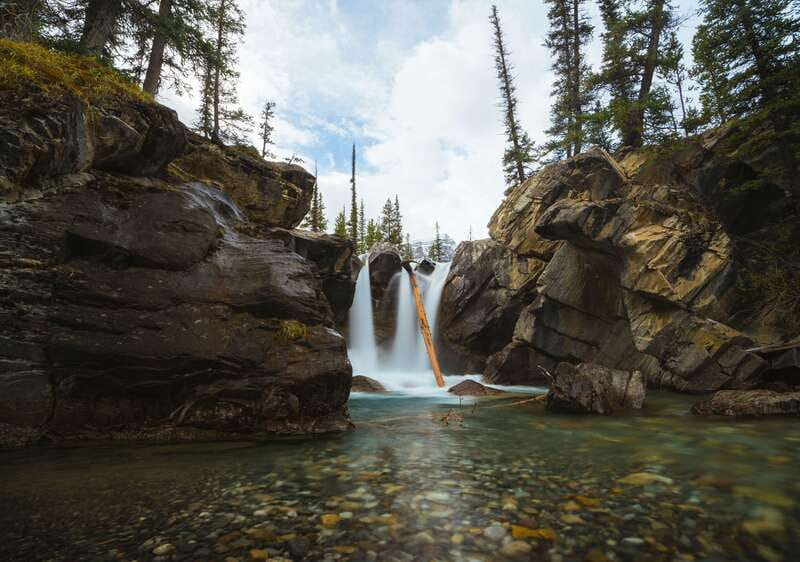
Even the best scenery can feel like a blur if no one gives you a framework. This tour helps because the pilot talks during the flight and your guide is on hand for the hike.
You’ll find different personalities across departures, but the theme stays consistent: pilots share practical facts and local context while keeping the experience friendly. In past tours, names you might encounter include Jordan, Will, Victoria, Ralph, and Renley. People highlighted how pilots explained the area and helped with photos at key moments, including at the waterfall.
That photo help is underrated. If you’re trying to shoot moving water, you quickly learn that timing and angle matter. A guide who’s used to the spot can point out where the light hits and where you’ll get the cleanest waterfall framing.
If you’d rather keep your hands free for balance and comfort, still plan to bring your camera. The tour environment is full of moments you’ll want to remember: ice surfaces, river bends, and the moment Twin Falls comes into view after the hike.
Time on the clock, meeting point, and what actually drives the schedule
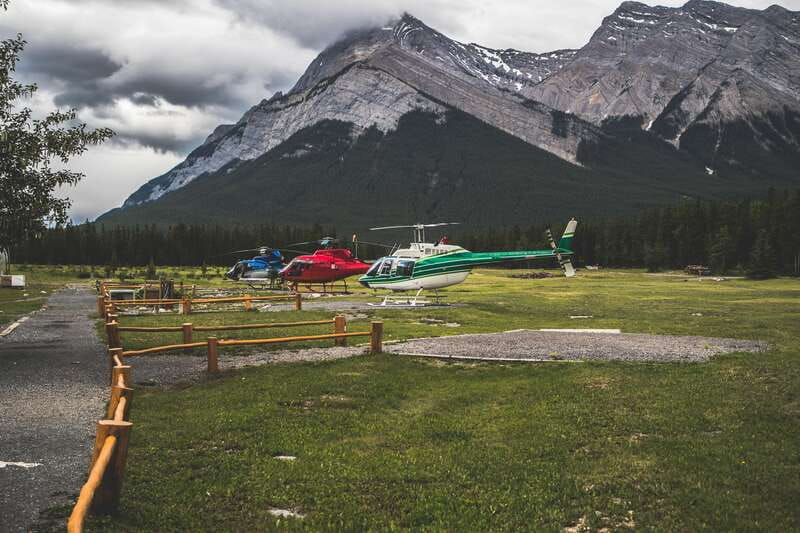
The whole experience runs about 1.5 to 2 hours total. Flights are usually available in the morning, afternoon, and evening, which helps if you’re building a packed Rockies itinerary.
The meeting point is Cline River Heliport, Clearwater County, AB T0M, Canada. Plan extra buffer here, because the local partner will confirm your exact flight details by email, and the time is subject to change.
Why this matters: helicopters can’t operate on pure schedules when clouds, visibility, or wind get involved. Your best move is to avoid overbooking the same day. Give yourself room for the natural reality of mountain weather.
Group size also affects pacing. With a maximum of 6 people, you’ll generally get more room to settle in, ask questions, and take in the view without constant interruption.
What to bring (and what not to bring)
This tour is simple, but your comfort is real. Bring:
- Comfortable shoes (this is a guided hike, and footing matters)
- Camera
Avoid:
- Sandals or flip-flops
- Smoking
Also think about how you handle wind. Helicopters can feel cool at altitude. Even in warmer months, a light layer can be helpful, especially when you’re lingering outside for boarding or after landing.
Price and value: is $272 worth it?
At $272 per person, this is not a budget activity. But it can be good value if you look at what you’re buying, not just the headline price.
You’re paying for:
- A scenic helicopter flight over major glacier and peak scenery
- Headset + live pilot commentary
- A landing that gives you access to a specific waterfall area
- A one-hour guided hike that’s designed for enjoyment, not navigation stress
If you were to replicate this yourself, you’d need transport to remote trailheads, plus you’d still be limited by the ground view. The helicopter component is the difference-maker. It’s what lets you see Wilson Icefield and the Columbia Icefield approach (on the 55-minute option) without spending your day driving between viewpoints.
When does it feel like a smart spend?
- You want a once-in-a-trip Rockies memory, not another car stop
- You’re short on time and want maximum views per hour
- You’re traveling with kids or people who prefer easier hikes but still want a serious nature moment
- You want the waterfall close-up without a long approach
When it might not be the best fit:
- You only want the hike and aren’t interested in aerial views
- You’re extremely weather-sensitive and dislike schedule changes
- You have mobility limits that need extra certainty, given the conflicting notes on wheelchair suitability
Comfort and expectations you should set before you go
The tour is described as a comfortable helicopter ride and an easy hike. That’s a good sign for most people, but you should still expect some movement after landing. You’re going out for about an hour on foot, guided, to reach Twin Falls.
Here’s what I’d plan for:
- Short but real walking time on uneven ground
- Cold or cool conditions depending on season and time of day
- Wind and sound changes during the flight, handled by the headsets
- A need to be ready to move quickly from boarding to seating
One important consideration: the information provided includes wheelchair-related wording that conflicts. It lists wheelchair accessible, but it also says it is not suitable for wheelchair users. If that applies to you, treat this as a must-confirm situation. Ask the operator directly how the landing, hike, and transfer are handled for your specific mobility needs.
Finally, keep an eye on the essentials of good hiking style: comfortable shoes, no slip-on flops, and a mindset of steady walking rather than sprinting for the best view every second.
Should you book this Canadian Rockies helicopter and Twin Falls hike?
I’d book it if you want a true highlight day in the Canadian Rockies: the kind where you see glacier scale from above and then get close to the waterfall on foot. The combination of Wilson Icefield views, a helicopter ride with pilot commentary, and the one-hour Twin Falls hike is a strong recipe for a memorable, efficient outing.
Skip it if you want a purely budget-friendly day or if your mobility needs require extra certainty that isn’t clearly answered by the mixed accessibility notes. If you do book, pick your flight length thoughtfully: the 55-minute option is the one that offers the strongest icefield draw, while the shorter flights still deliver the scenic helicopter experience and keep the total day tight.
If you’re choosing between doing this and just driving viewpoints, I’d lean toward booking the helicopter. The sky-level view changes how you understand the Rockies, and the hike gives you the waterfall payoff right after.
FAQ
FAQ
How long is the Canadian Rockies helicopter and exploration hike?
The experience lasts about 1.5 to 2 hours total.
Where does the tour start?
The meeting point is Cline River Heliport, Clearwater County, AB T0M, Canada.
How long are the scenic helicopter flights?
You can choose a 20, 30, or 55-minute scenic flight.
What does the 55-minute flight include?
With the 55-minute flight, the route approaches the Columbia Icefield.
What happens after the helicopter flight?
You land at the confluence of the Cline River and Waterfalls Creek, then take a guided hike to Twin Falls.
How long is the hike?
The hike is about 1 hour and is guided.
Is there a guide or commentary during the flight?
Yes. You’ll have live commentary by the professional pilot during the flight, and the live tour guide is English.
What should I bring?
Bring comfortable shoes and a camera.
Are there any items that are not allowed?
Sandals or flip flops are not allowed, and smoking is not allowed.
Is the tour suitable for wheelchair users?
The information provided includes both wheelchair accessible and a note that it is not suitable for wheelchair users, so you should confirm details with the local partner before booking.