That uphill to Tibidabo is worth every step. This guided hike strings together Catalan culture and top-of-the-city views with a forest climb through Collserola Natural Park, plus famous landmarks on the way up. You’ll meet at Baixador de Vallvidrera and work your way to 512 m at the Temple of the Sacred Heart of Jesus, where the city, sea, and even distant mountains can show up in one frame.
I especially like the way the route mixes nature and history without feeling rushed, with landmarks like Vil·la Joana and Tibidabo’s big sights along the climb. One possible drawback: it’s a continuous uphill effort for about an hour and a half, so if you want a mostly flat walk, this may feel like work—just well-paced work with a guide.
In This Review
- Key highlights I’d plan around
- Tibidabo From Vallvidrera: A Real Climb With a View That Makes Sense
- Price and value: What you really get for $36.09
- How the hike is paced (and why it feels manageable)
- Starting point: Baixador de Vallvidrera and your first culture pass
- Collserola Natural Park Information Center: Use it as a mindset switch
- Parc de Collserola: the forest stretch that does the heavy lifting
- Collserola Tower photo moment: modern architecture hits the trail
- Temple of the Sacred Heart of Jesus: your 512 m viewpoint moment
- Parc d’Atraccions Tibidabo: historic fun zone views, no restaurant stop
- Snacks, water, and what to pack so the climb feels good
- Getting back down: the guide helps you connect
- Who this is perfect for (and who might feel the slope)
- Weather, cancellations, and the smart way to plan your day
- Should you book this Tibidabo hike?
- FAQ
- Where is the meeting point?
- How long is the hike?
- How far do you walk and how steep is it?
- What’s included in the price?
- Do I need to bring water?
- Will the tour be in English?
- What landmarks do you pass on the way to Tibidabo?
- Is there an option to go higher at the temple?
- Is there food at the top?
- What if it rains?
Key highlights I’d plan around
- A small group (max 15): more attention, easier questions, and better pace on a real climb.
- Forest walking in Collserola Natural Park: shade, rosemary and thyme smells, and calmer air than the city streets.
- The Tibidabo view payoff at 512 m: you get big panoramas without needing to drive or guess the best viewpoint.
- Landmarks as photo breaks: Vil·la Joana, Collserola Tower (Norman Foster, 1992 Olympics), then the Temple at the top.
- Snacks included: typical Catalan snacks during the hike; you’ll still want your own water.
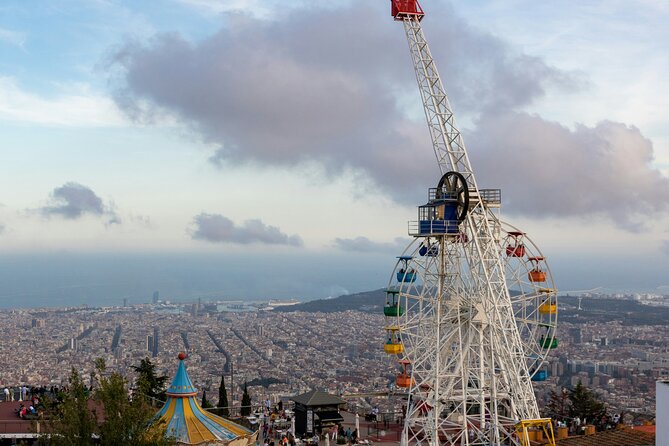
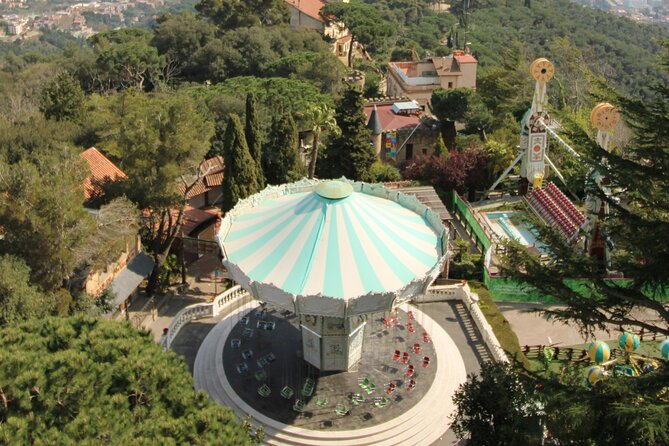
- Tibidabo amusement park upper level: historic grounds (opened 1901) and that iconic noria in the background.
Tibidabo From Vallvidrera: A Real Climb With a View That Makes Sense
If Barcelona has a best side, it might be the one above the rooftops. This hike starts in the Sarrià-Sant Gervasi area at Baixador de Vallvidrera and climbs into Collserola Natural Park toward Tibidabo, the high point above the city.
You’re moving for about 1 hour 30 minutes to 2 hours, and the route covers roughly 5 km with about a 300-meter gradient. The work is concentrated: it’s described as a continuous climb for around an hour and a half. That’s important because it sets expectations—this is not a casual stroll.
The payoff is the panoramic zone around the Temple of the Sacred Heart of Jesus at 512 meters above sea level. When the air is clear, you can see the city, the Mediterranean, and mountains in the distance. That’s the main reason I’d put this on a Barcelona itinerary.
You can also read our reviews of more tours and experiences in Barcelona.
Price and value: What you really get for $36.09
At $36.09 per person, you’re not paying for a bus ride or a ticket booth stop. You’re paying for a guided hike up a real hillside route, plus snacks and free admission for the main listed sights.
Here’s the value breakdown that matters on the ground:
- You’re buying time and ease. The guide helps you stay on track through the park and points out what to notice at each passing landmark.
- You’re not paying extra for the core stops. The itinerary notes admission ticket free for the main segments.
- You’re getting Catalan snacks during the tour. Food isn’t a side detail here; it’s part of pacing yourself on the climb.
- Group size is limited to 15. That keeps it more personal than big-city walking groups.
Could you do part of this on your own? Sure. But paying for a guide is what turns the hike into a smoother, more meaningful experience—especially if you like history and want the “why” behind what you’re seeing.
How the hike is paced (and why it feels manageable)
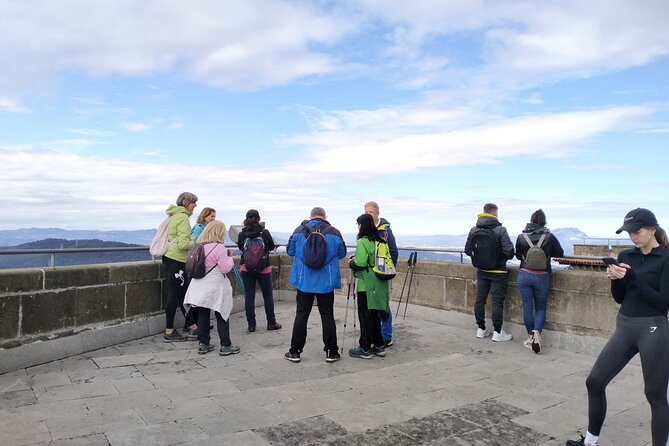
The route is built for steady progress, not sprinting. You’ll be walking a continuous uphill segment, but the guidance is meant to keep the group comfortable and moving.
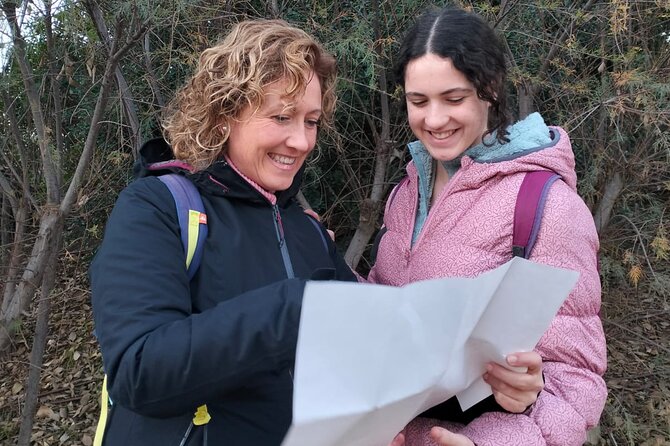
One nice thing from past experiences with the guide Núria: guests describe her as organized with proactive communication and helpful reminders, plus support navigating the way down. People also note she helps with getting back to transport connections afterward.
So while the climb is still a climb, the experience is geared toward “finish strong,” not “survive.” If you have normal fitness and wear good shoes, the hike is designed to be challenging but doable.
Starting point: Baixador de Vallvidrera and your first culture pass
You begin at Baixador de Vallvidrera in Sarrià-Sant Gervasi (08017 Barcelona). This is a strong start because it puts you on the right side of town for getting into Collserola fast, without spending your energy trapped in traffic.
About 10 minutes after the start, you pass Vil·la Joana. It’s a historic 19th-century farmhouse converted into a museum dedicated to Jacint Verdaguer, one of the key poets of Catalan literature. You won’t stop and go in, but it’s worth understanding what you’re looking at: the area isn’t just “green scenery.” It’s cultural territory that Barcelona grew alongside.
If you like travel moments that feel local rather than staged, this opening works. You start your hike with a quick dose of Catalan identity, then shift into the protected park world.
Collserola Natural Park Information Center: Use it as a mindset switch
Within about 15 minutes of starting, you pass the Collserola Natural Park Information Center. You don’t stop there either, but you get a natural cue: protected space, biodiversity, and the bigger story of the area.
This matters because it changes how you walk. Instead of thinking you’re just climbing for views, you start noticing Mediterranean plants and the character of the forest. Even if you can’t name every plant, you can still feel the difference in air and scent.
Parc de Collserola: the forest stretch that does the heavy lifting
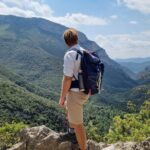
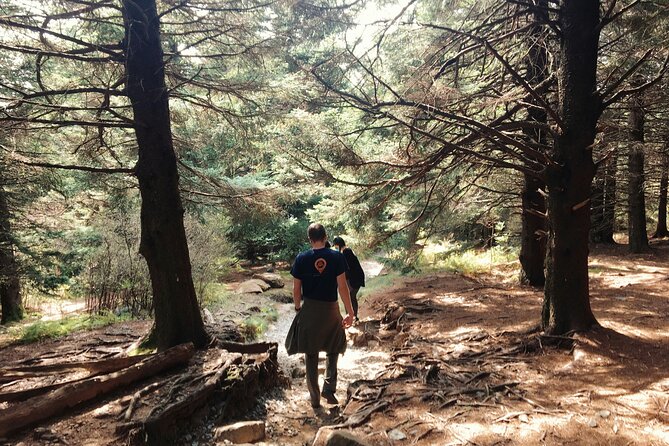
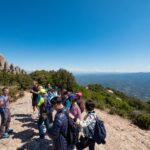
This is where the hike becomes a breather—despite the climb. The route runs along a charming path through Parc de Collserola, described as a green lung of Mediterranean vegetation.
You’ll be shaded by thousands of centuries-old trees, and the guide points out the sensory stuff: rosemary and thyme in the air. That kind of detail isn’t fluff. It makes the walk more enjoyable because your brain has something to focus on besides the slope.
The tour segment here is about 1 hour 30 minutes and marked as admission ticket free, meaning you’re essentially spending that time in nature with a guide doing interpretation as you go.
A practical note: the forest feel can be damp and slippery on wet days. One guest’s experience included wet weather and a downed tree, but the guide handled it. Still, I’d bring footwear with solid grip.
Collserola Tower photo moment: modern architecture hits the trail
About 15 minutes before reaching Tibidabo, you pass Collserola Tower, designed by Norman Foster for the 1992 Olympic Games. You don’t climb it, but you do get an iconic skyline landmark—right as the nature climb transitions into the city’s highest zone.
This pass is a neat contrast moment. It’s Barcelona showing how urban design rises out of the hills. It also gives you a visual anchor if you’re trying to understand where you are relative to the city.
If you like taking photos, treat this as a “before the big reveal” stop. You’re still working, but your mind can already start picturing the panoramic moment ahead.
Temple of the Sacred Heart of Jesus: your 512 m viewpoint moment
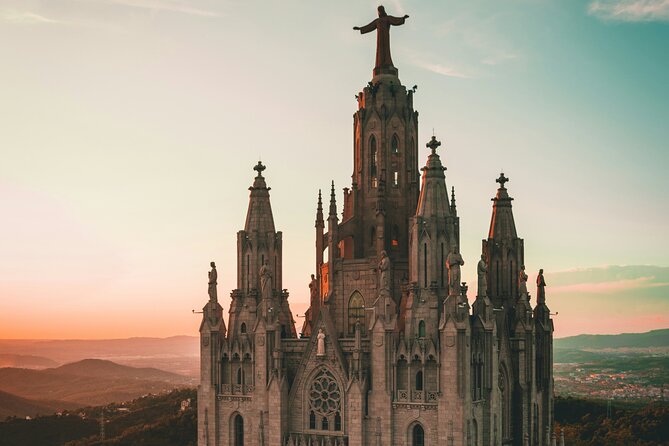
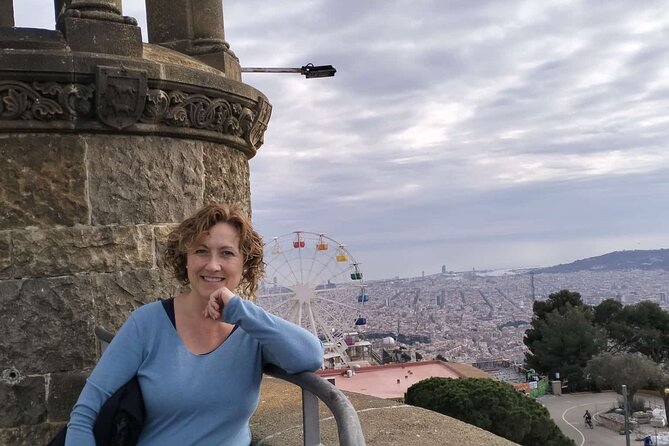
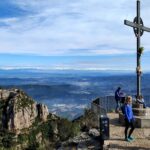
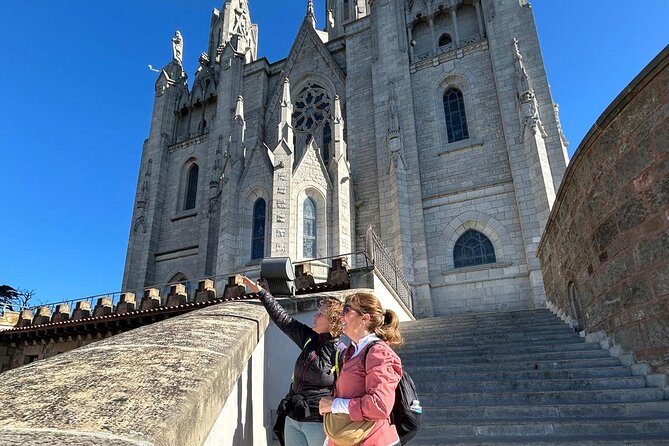
Then comes the main show. At the top, at 512 meters above sea level, the Temple of the Sacred Heart of Jesus gives some of the most spectacular views over Barcelona.
The temple itself is visually impressive: a mix of Gothic and Modernist style, with construction starting in 1902. So even if you’re not a church person, you’re seeing a landmark that has been shaping Tibidabo’s identity for a long time.
From here you can photograph:
- the city spread below
- the Mediterranean
- and, on a clear day, mountains in the distance
Inside, there’s an optional upgrade for people who want even more height. You can take a lift (ticket €5 per person) to the upper terrace at 560 meters, where you can reach the feet of Christ for extra panoramic perspective. The tour notes this is optional—so you can choose based on energy and interest.
One travel tip I’d actually use: aim for the light. A past guest said evening is best, and that makes sense here because the city can look softer and sparkly when the sun is lower.
Parc d’Atraccions Tibidabo: historic fun zone views, no restaurant stop
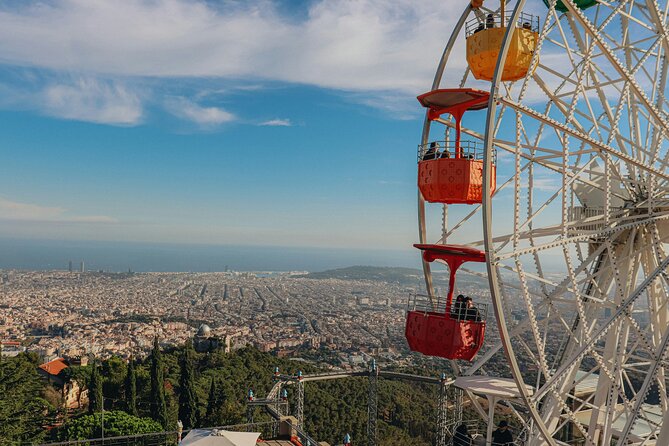
After the temple, you’ll head into Parc d’Atraccions Tibidabo. The tour segment is short—about 5 minutes—but it’s designed so you can walk freely in the upper area and enjoy the views.
This park is historic: it opened in 1901 and is considered one of the oldest amusement parks in Europe. You’re not doing rides here. You’re using the space for the viewpoint and the atmosphere.
What to expect up top:
- You’ll be near the temple area and that classic Tibidabo vantage.
- You can walk the upper level freely to soak in the city-meets-sea perspective.
- There are no restaurants in the park area during this portion, but souvenir shops sell snacks and hot or cold drinks.
If you care about photos, the “must-see” background is the noria (the big Ferris-wheel-like wheel). You can frame shots with it while still keeping the city and sea in your background.
Snacks, water, and what to pack so the climb feels good
Food is included, but it’s not an all-day plan. During the hike, the guide offers typical Catalan snacks. You should still bring a sandwich if you’re hungry, and bring a bottle of water.
Why this matters: the hike notes you might not find water sources along the way. At the top, you can buy food, but don’t build your plan around that being easy or quick.
Also, the snack info includes a heads-up: products may contain allergens. If you have allergies or special dietary needs, it’s smart to mention that to the guide. One guest specifically noted gluten-free cookies were available, which suggests the guide is willing to help when possible.
For clothing and comfort, I’d keep it simple:
- good walking shoes (wet-weather traction matters)
- a small daypack
- a light layer that works for changing temperatures near viewpoints
Getting back down: the guide helps you connect
The hike ends in a different location, so you should think of it as a “mountain-to-transport” experience rather than a loop you complete alone.
From descriptions of the guide’s past approach, Núria has helped guests back toward transit connections such as Tibidabo Funicular and then onward to the train station. That’s not just convenience—it reduces the stress of finishing the climb and wondering what’s next.
If you don’t want to over-plan, this support is one of the reasons the tour is popular.
Who this is perfect for (and who might feel the slope)
This tour fits well if you want:
- a calmer break from Barcelona’s streets
- a nature walk with history and photo stops
- a structured route that gets you to Tibidabo without turning it into an all-day research project
- a guide-led pace with attention and communication
It’s also appealing for families when everyone’s up for a steady hike. One review describes it as enjoyable with kids and notes no obstacles or very steep sections. Still, the official effort is a continuous climb, so I’d treat it as “moderate hiking” rather than “easy.”
I’d suggest skipping or choosing something gentler if:
- you have limited mobility or you know you struggle with sustained uphill walking
- you expect a mostly flat walk
Weather, cancellations, and the smart way to plan your day
This is a weather-dependent experience. It requires good weather, and if it’s canceled due to poor weather, you’ll be offered a different date or a full refund.
So build it like you’d build a viewpoint plan:
- try to schedule it on a day you’d be happy staying outdoors
- have your backup sightseeing ready nearby if the weather shifts
Even with good weather, the forest can feel damp at times. The good news: past experiences include wet conditions handled smoothly, and the guide manages surprises like fallen branches.
Should you book this Tibidabo hike?
I’d book it if you want Barcelona views that come with a story and a walk through real green space. For $36.09, you’re getting a guided climb to the Temple at 512 m, plus key cultural stops along the way, plus Catalan snacks for energy. And the small group size (15 max) keeps it friendly and manageable.
I wouldn’t book it if you mainly want an effortless city stroll or if you hate uphill effort. This is a focused climb, not a flat promenade. But if you can handle a moderate continuous ascent, the route delivers a great trade: work now, skyline payoff later.
If you can swing it, go when the light is good—one guest’s advice about evening lines up with what makes viewpoints feel special.
FAQ
Where is the meeting point?
The tour starts at Baixador de Vallvidrera, Sarrià-Sant Gervasi, 08017 Barcelona, Spain.
How long is the hike?
It runs about 1 hour 30 minutes to 2 hours (approx.).
How far do you walk and how steep is it?
The course covers about 5 km with about a 300-meter gradient, with a continuous climb for about an hour and a half.
What’s included in the price?
You get typical Catalan snacks during the tour. Mobile ticket delivery is included. Admission tickets for the listed tour stops are marked as free where noted.
Do I need to bring water?
Yes. Bottled water is not included, and the tour notes you should bring a bottle because you may not find sources along the way.
Will the tour be in English?
Yes, it’s offered in English.
What landmarks do you pass on the way to Tibidabo?
You pass Vil·la Joana, the Collserola Natural Park Information Center, and Collserola Tower (designed by Norman Foster). Then you reach the Temple of the Sacred Heart of Jesus and the Parc d’Atraccions Tibidabo area.
Is there an option to go higher at the temple?
Yes. At the temple, you can take a lift to the upper terrace at 560 meters altitude for a ticket of €5 per person.
Is there food at the top?
There are no restaurants noted, but souvenir shops sell snacks and hot and cold drinks at the top.
What if it rains?
The experience requires good weather. If it’s canceled due to poor weather, you’ll be offered a different date or a full refund.