REVIEW · REYKJAVIK
Inside the Volcano: Small-Group Tour and Lava Field Hike
Book on Viator →Operated by Gray Line Iceland · Bookable on Viator
You’ll descend into a dormant volcano’s heart. This small-group Thrihnukagigur tour is the rare chance to visit a real magma chamber in Iceland, not just look at a crater from a distance. I especially love the guide-led geology stories, and I love that the walk is built into the experience, not treated like a chore—though you should be ready for uneven lava terrain and fast-changing weather.
This is set up for real comfort and real safety. You get pickup (with traffic-limited meeting points), a helmet and harness, and a cable elevator descent that takes you down about 120 meters (400 feet). One possible drawback: you’ll spend a good chunk of your day hiking on rocky ground, and it’s not the kind of plan that pairs well with fragile ankles or thick socks-and-sneakers vibes.
In This Review
- Key things I’d bet on before you book
- Entering a Dormant Volcano’s Magma Chamber at Thrihnukagigur
- Getting There From Reykjavik: Pickup, Blue Mountains, and Setup Time
- The 2-Mile Lava-Field Hike That Tests Your Boots, Not Your Ego
- The Cable Elevator Descent: Helmet, Harness, and the 400-Foot Drop
- Exploring Inside: Colors, the Rock Dome, and Stories From the Guide
- The Return Walk and the Warm Reset at Base Camp
- Price and Value: Is $468.21 Worth It?
- Small Group, Real Guides: What to Expect From the Crew
- What to Wear and Bring: Iceland Weather Meets a Cold Volcano
- Who This Tour Suits Best (and Who Might Skip It)
- When Weather Changes the Plan
- Should You Book This Inside-the-Volcano Tour?
- FAQ
- How long is the Inside the Volcano tour?
- How big is the group?
- Is pickup available in Reykjavik?
- Where does the tour go before the volcano?
- How much hiking is involved?
- Do I need hiking experience?
- What gear is provided for the descent?
- How far do you descend into the volcano?
- Is food included?
- What happens if weather is bad?
Key things I’d bet on before you book
- Only accessible volcano interior visit on Earth (Thrihnukagigur’s dormant magma chamber).
- Small group max 18 travelers, with a handful in the elevator at a time.
- 400-foot descent using a guided cable elevator plus helmet and harness.
- Moderate hike over uneven lava with sharp, rocky ground—good boots matter.
- Warm lamb soup and hot drinks after the volcano, based on what many guests report.
Entering a Dormant Volcano’s Magma Chamber at Thrihnukagigur
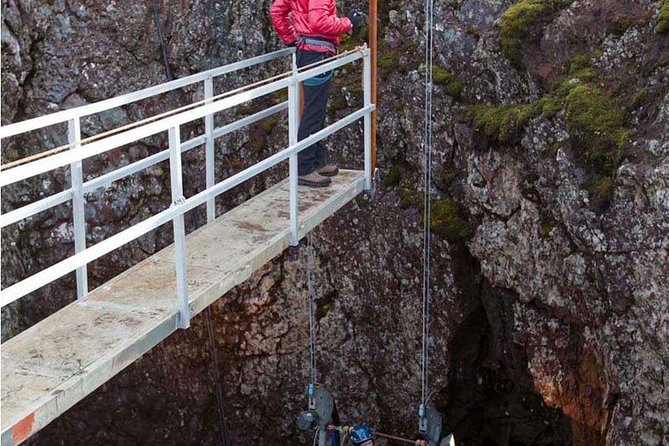
If Iceland has a bucket-list superpower, it’s this: you get to go inside Thrihnukagigur, a now-dormant volcano with an accessible interior chamber. Most volcano experiences stop at viewpoints. This one takes you down to where the magma once shaped the rock, then lets you walk around inside an enclosed, colorful space created by volcanic forces from thousands of years ago.
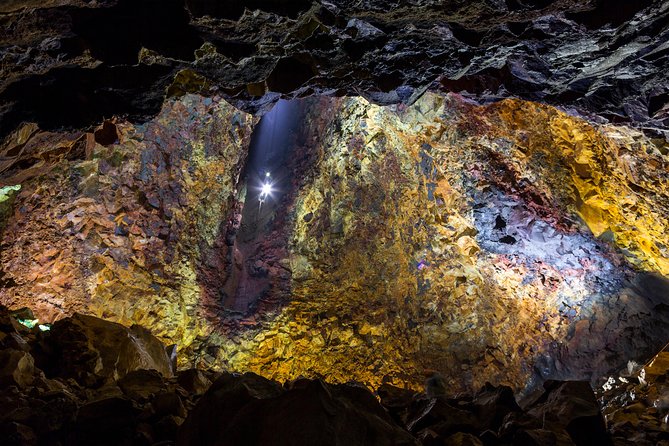
What makes Thrihnukagigur so special is the access. You’re not just seeing a crater from the outside. You’re stepping into the chamber itself, with the rock dome above and mineral-stained colors caused by magma that once touched the surface. Even if you aren’t a geology nerd, the visuals land fast. And the guide’s stories help you connect those colors and shapes to how the volcano formed and how it last erupted.
You can also read our reviews of more tours and experiences in Reykjavik.
Getting There From Reykjavik: Pickup, Blue Mountains, and Setup Time
The tour starts with a drive out of Reykjavik toward the Blue Mountains area (Bláfjöll). Along the way, your guide gives you the grounding info: how Thrihnukagigur formed roughly 4,000 years ago, including the eruption that helped create the magmatic chamber. It’s a good start because it turns the walk and the crater visit from random scenery into a clear story arc.
Pickup is offered from select hotel/guesthouse locations in the capital area. Here’s the practical catch: the city center has traffic restrictions, so you might not be collected from right in front of your hotel. In those cases, you go to the nearest bus pickup point instead. The listed stops include options like Harpa, Hallgrímskirkja, and City Hall (Ráðhúsið), among others. Plan to be ready about 30 minutes early; Iceland runs on timing, and this tour also depends on when you reach the meeting area.
Also, this whole experience is weather-dependent. The tour is scheduled to work in outdoor conditions, but it’s the kind of day where you need to respect the wind and rain.
The 2-Mile Lava-Field Hike That Tests Your Boots, Not Your Ego
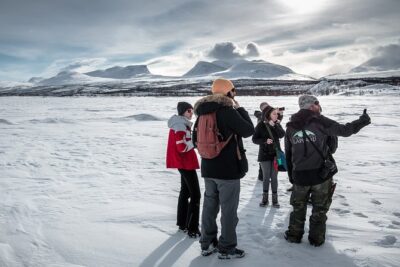
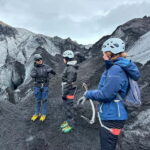
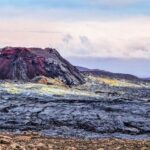
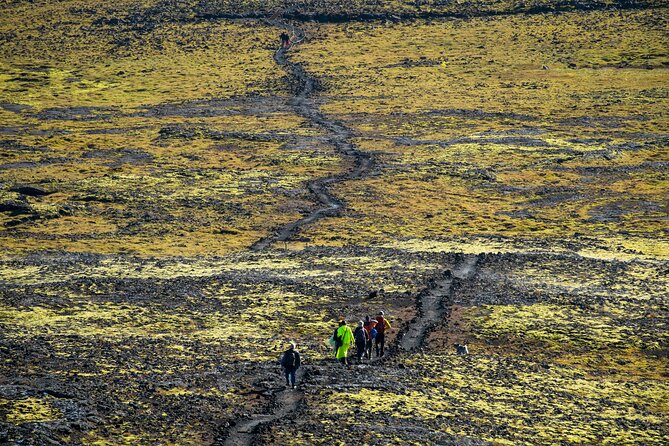
Before you ever see the descent elevator, you earn it with a hike across ancient lava fields. Expect about a 2-mile (around 3 km) guided walk at the start, and then a similar return hike. Add it up and you’re looking at roughly 7 km total walking across uneven mountain terrain in unpredictable weather.
Why I think this hike is worth your attention: it’s not bland walking. The terrain is craggy, with volcanic cones and fissures along the route. So yes, your calves get involved, but your eyes stay busy. It’s also the period when the day’s mood sets—calm, windy, rainy, or somewhere in between.
Difficulty level is described as moderate. No hiking experience is required, but you do need decent physical fitness. The ground can be uneven and sharp, which means footwear isn’t optional. Reviews repeatedly stress that sneakers and jeans don’t work well here. I’d treat this as real hiking, not casual strolling.
My practical advice: wear proper waterproof hiking boots, dress in layers, and bring rain gear you’d actually trust in a downpour. Iceland weather can turn quickly, and the walk out and back can feel longer when it’s wet and windy.
The Cable Elevator Descent: Helmet, Harness, and the 400-Foot Drop
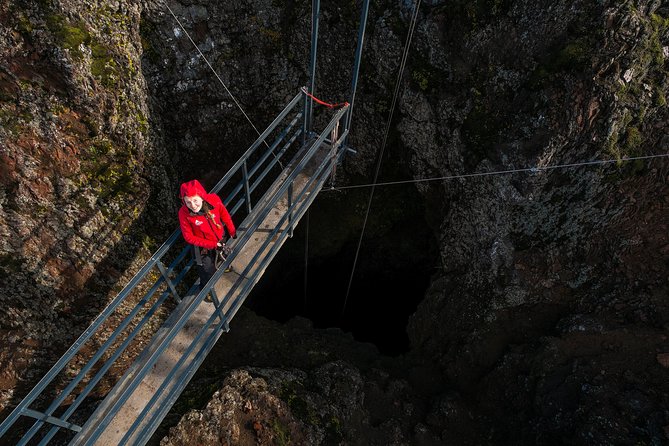
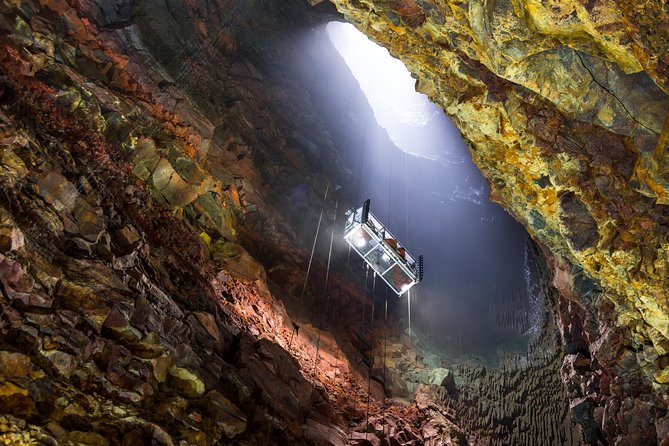
Once you reach the rim, you gear up with a helmet and harness. Then you board the open cable elevator that lowers you into the volcano interior. This is one of those “yes, it’s safe” moments where safety gear and short briefings matter. Most guests describe the elevator as not scary, and the harness is there to keep you secure.
A key detail: you’re not going down alone. The elevator often runs with groups of three or four guests. That small group size helps it feel controlled and focused rather than chaotic.
The elevator ride itself is brief. One review notes it’s about 5 minutes each way. So you’re not bracing for a long, tense descent. You’re going down, looking around as the walls and openings come into view, then reaching the base where the real experience starts.
The descent is around 120 meters (400 feet). If you’ve ever wondered what it would feel like to step into the “inside” of a volcano instead of looking at it on a map, this is the moment.
Exploring Inside: Colors, the Rock Dome, and Stories From the Guide
Inside Thrihnukagigur, the temperature is cold—around 4°C (similar to a fridge, per a review)—and it feels damp and airy compared to the surface. You’ll want to wear warm layers even if Reykjavik starts mild.
Time inside is limited, typically around 20–25 minutes based on guest accounts. That sounds short until you realize how much you can actually see once you’re down there. The rock dome above is a big visual anchor, and the rock surfaces show an array of colors caused by magma that once touched them.
Your guide explains what you’re seeing and what happened during the last eruption. One of the best parts is the narration style: instead of dry facts, guides help you imagine what the chamber looked like when it was active—bubbling liquid magma, moving heat, and the scale of that ancient process.
If you like experiences that feel educational without turning into a lecture, this part is the payoff. You’re standing in the place the story happened.
The Return Walk and the Warm Reset at Base Camp
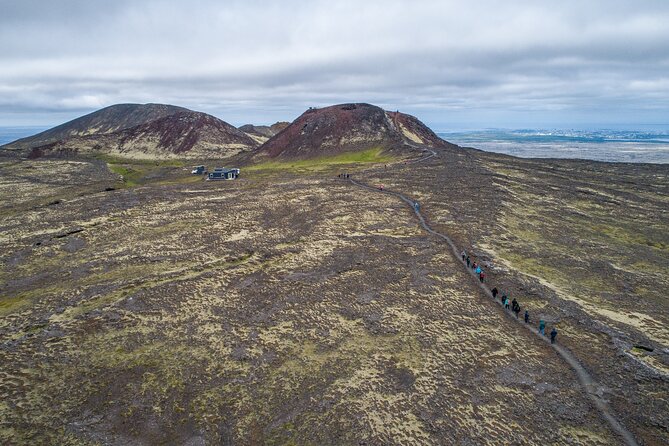
After your time inside, you climb back up and retrace your path across the lava fields. The return hike can feel tough in bad weather. One review described a day with 50 mph winds and driving rain, and that’s the reason to respect Iceland’s “surprise mode.” If conditions are rough, take it slow and let your boots and balance do the work.
Then comes the warm reset. At base camp, you get light refreshments, and many guests specifically call out warm lamb soup. Reviews also mention hot chocolate and drinks, with some guests describing a hearty lamb stew-like meal. This isn’t just a snack-stop; it’s the moment you thaw out after the cold interior and the wet hike.
If you’re thinking about logistics—where you’ll get food and warmth—this is handled in a simple way. You’re not sent off into a restaurant search. You finish, you warm up, and then you’re ready for the drive back.
Price and Value: Is $468.21 Worth It?
At $468.21 per person, this is not a casual add-on. The question isn’t whether it’s expensive—it’s whether it’s rare expensive.
Here’s what you’re paying for:
- Access that’s genuinely one-of-a-kind: entering a dormant magma chamber, not just seeing volcanic rocks.
- Dedicated time in the chamber plus guided interpretation.
- Included safety gear (helmet and harness) and professional guiding.
- Transportation from Reykjavik to the Blue Mountains area and back.
- Group handling (max 18 travelers), plus the elevator logistics that make this possible.
- Warm post-tour food in practice, especially lamb soup, which shows up in many reviews.
If you’re doing Iceland on a tight schedule and want one experience that feels like a true once-in-a-lifetime story, the pricing makes more sense. If you’re trying to fill every hour with the cheapest possible option, this one won’t fit.
Also note: food and drinks aren’t listed as included in the base sense, but in practice you’ll get light refreshments and warm soup at the end, according to guest feedback. Still, if you have strong dietary needs, it’s smart to plan ahead so you’re not stuck hungry after the hike.
Small Group, Real Guides: What to Expect From the Crew
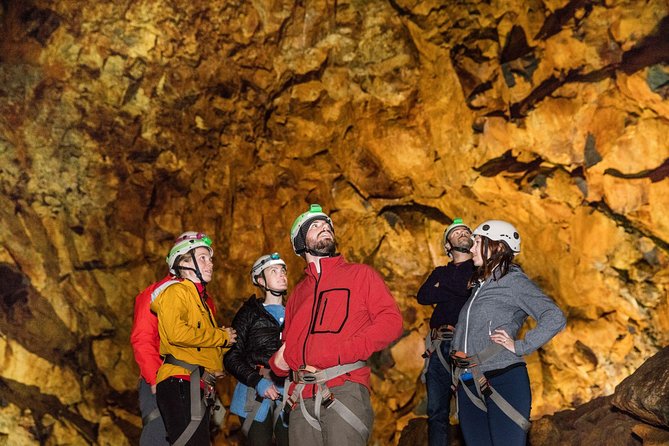
This tour runs with a maximum of 18 travelers, which is a major quality factor. Smaller groups generally mean the guide can manage pacing, gear checks, and questions without rushing everyone.
Guide quality also comes through in the reviews. One guest praised a guide named Jonas for being very helpful and knowledgeable. Humor shows up in multiple accounts too—so the guiding style seems geared toward making geology understandable without making it stiff.
That said, one review mentioned communication problems when trying to get answers before the tour. Another mentioned a no-pickup issue. Those are outliers, but they’re a good reminder: double-check your pickup meeting point details and keep your booking confirmation handy.
What to Wear and Bring: Iceland Weather Meets a Cold Volcano
This is the part that can make or break your comfort. The rules are simple:
- Wear warm, waterproof clothing.
- Use hiking boots. Sneakers and jeans aren’t appropriate.
- Dress in layers, because the day moves from outdoor rain-wind to a cold interior chamber.
- Bring gear you’re willing to get a bit dirty, since you’ll be walking across uneven volcanic ground.
Inside the volcano is about 4°C, so even if you feel fine on the bus, you’ll want real warmth once you’re down. Layers let you adjust as you warm up during the hike and cool down in the crater.
Also, don’t count on having time to borrow something if your clothes aren’t working. This tour is built around starting on schedule, driving out, walking, and descending.
Who This Tour Suits Best (and Who Might Skip It)
I think this tour is perfect if:
- you want a bucket-list experience that’s truly unusual in the world
- you can handle a moderate hike over uneven, rocky ground
- you enjoy guides who connect geology to what you’re seeing
- you want a structured day with pickup, safety gear, and a warm end
It may not be for you if:
- your legs, balance, or knees don’t do well on rough surfaces
- you dislike cold, damp environments (the chamber is chilly)
- you need a slow, low-effort activity (the hike and weather can be intense)
One review even called out that it can be long on the return—so if you’re already tired from other Iceland days, build in rest beforehand.
When Weather Changes the Plan
This experience requires good weather. If it’s canceled due to poor conditions, you’ll be offered a different date or a full refund. That’s exactly what you want to hear for a volcano tour—because safety and visibility matter, especially on the lava-field hike and at the rim before descent.
Given that Iceland can get wild quickly, it’s smart to schedule this earlier in your trip rather than your last day. That gives you flexibility if rescheduling happens.
Should You Book This Inside-the-Volcano Tour?
Book it if you want the one Iceland moment that feels like it belongs only here: descending into a magma chamber you can only reach through this kind of guided setup. The small-group size, the safety gear, the guided geology story, and the warm lamb soup afterward create a complete day—not just a photo stop.
Skip it if you want an easy, predictable stroll or if rough outdoor conditions would push your comfort level too far. In that case, you might prefer a less physically demanding volcano viewpoint day.
My final take: if you can hike moderately and you dress for wind and rain, this is one of the best ways to turn Iceland geology into a lived experience.
FAQ
How long is the Inside the Volcano tour?
The tour runs about 5 to 6 hours.
How big is the group?
The maximum group size is 18 travelers.
Is pickup available in Reykjavik?
Pickup is offered from select hotels and guesthouses in the capital area, and also from cruise ports. For many city-center hotels, pickup is not directly in front of the hotel due to traffic restrictions, so you’ll meet at a nearby bus stop instead.
Where does the tour go before the volcano?
You drive from Reykjavik to the Blue Mountains area (Bláfjöll) before heading to Thrihnukagigur.
How much hiking is involved?
You can expect a total of about 7 km of walking over uneven mountain terrain. The guided hike to the volcano base area is about 2 miles (around 3 km).
Do I need hiking experience?
No hiking experience is needed, but you should have moderate fitness because the ground is uneven and sharp.
What gear is provided for the descent?
The tour provides safety gear, including helmets and harnesses, plus the professional guidance for the descent.
How far do you descend into the volcano?
The descent is about 120 meters (400 feet) into Thrihnukagigur.
Is food included?
Light refreshments are included, and warm lamb soup is commonly served at base camp after the volcano experience.
What happens if weather is bad?
The tour requires good weather. If it’s canceled due to poor weather, you’ll be offered a different date or a full refund.