Quiet Inari beats the usual crowds. This private Kyoto walk takes you through torii gate photo spots and quieter Mt. Inari trails, with your guide handling the route and the explanations. I love the undivided attention you get on a private hike, and I love how the small detours keep the experience calmer and more meaningful than the standard stamp-collecting loop.
The one catch: this is still a hike. You’ll want moderate fitness, and you’ll be walking up and down for about three hours, with no food or hotel pickup included.
In This Review
- What you’ll notice on this Kyoto private hike
- Why a private guide is the real value at Fushimi Inari
- The start point: meeting near Tofukuji at 8:30
- On the way up: Tofuku-ji views before the torii
- Fushimi Inari Taisha: vermilion torii, bamboo, and the calm mountain paths
- The quiet Mt. Inari hike: Shinto explanations on the trails
- The downhill payoff: Fushimi Momoyama Castle from the mountainside
- Complimentary DSLR photos: why it’s better than you think
- Timing and pacing: what the 3-hour walk feels like
- Price and value: is $62.26 a smart buy for a private Inari hike?
- Who this Kyoto experience is for
- Weather and what to do with rain
- My simple planning checklist for your 8:30am start
- Should you book this Kyoto private Fushimi Inari hidden hike?
- FAQ
- How long is the Kyoto Fushimi Inari Hidden Hike private tour?
- What is the price per person?
- Is this tour private?
- What time does the tour start?
- Where do I meet the guide?
- Where does the tour end?
- Are food and drinks included?
What you’ll notice on this Kyoto private hike
- A private guide who keeps you on the quiet paths, not lost in the crowds
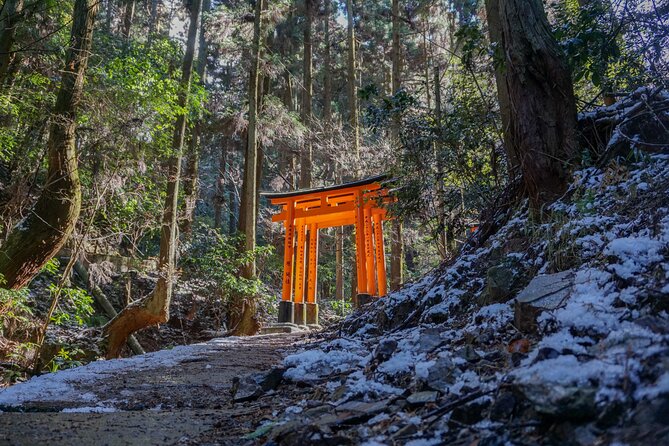
- Vermilion torii gates + bamboo groves on serene mountain paths
- Senbon Torii Gates access with context, not just sightseeing
- Tofuku-ji views on the way up, plus Fushimi Momoyama Castle viewpoints on the way down
- Complimentary DSLR photos taken during the walk and shared after the tour
Why a private guide is the real value at Fushimi Inari
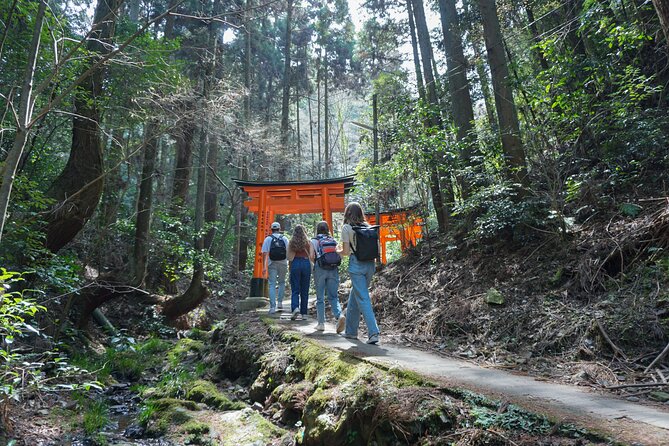
Fushimi Inari Taisha is famous for a reason. The orange-red torii gates are dramatic, and they’re basically built for photos. The problem is that the main route is also a magnet. People move in streams, stop wherever a phone tells them to stop, then surge forward again.
This private setup fixes that. You don’t have to “figure it out.” You follow your English-speaking Kyoto-based guide along a route that aims for quieter trails near Mount Inari. That means your time on the mountain feels more like a guided walk through sacred space than a photo traffic jam.
You also get something most self-guided visits miss: interpretation. Your guide shares Japanese culture, history, and Shintoism along the way. You’ll be looking at torii gates, but you’ll also be learning what makes these places spiritually significant and how the shrine’s story connects to Japan’s belief system. That turns the whole walk from scenery into understanding, and understanding makes better photos.
You can also read our reviews of more tours and experiences in Kyoto.

The start point: meeting near Tofukuji at 8:30
You start at FamilyMart Nakai Tofukuji (12-chōme-232 Honmachi, Higashiyama Ward) at 8:30am. That matters because this is one of those mornings where starting early helps you beat the biggest crush.
The meeting point is easy to find and is described as near public transportation. Still, show up a few minutes early. With a private tour, you’re trying to begin smoothly, not spend your first ten minutes searching for your guide in a busy shrine district.
Because there’s no hotel pickup, this is straightforward: you handle getting yourself there, and then the tour takes over. For many people, that’s a plus. You don’t wait on a van. You just walk in at the start time and go.
On the way up: Tofuku-ji views before the torii
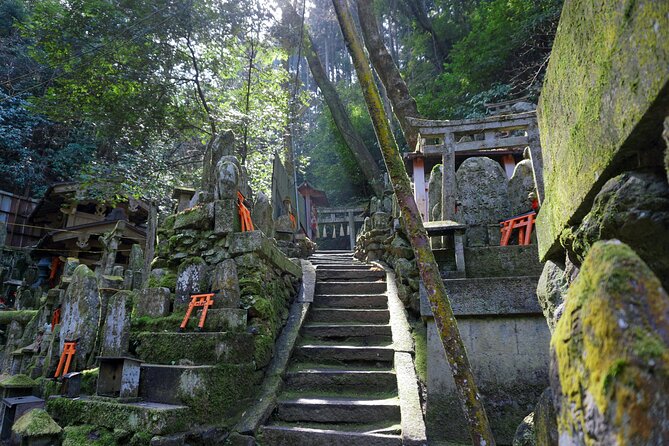
Before you hit the main shrine area, you get a preview from the route up to Mount Inari. One stop is specifically timed for views of Tofuku-ji, one of Kyoto’s Five Great Zen Temples.
Why I like this: it broadens the morning. Instead of only thinking torii gates, you get a reminder that this part of Kyoto is layered—Zen temple culture nearby, Shinto shrine culture here, and mountains and paths stitching it all together. That contrast makes the day feel more complete.
Also, a viewpoint early in the walk helps you settle into hiking mode. You’re warming up, checking your footing, and getting the first taste of why this area looks the way it does.
Fushimi Inari Taisha: vermilion torii, bamboo, and the calm mountain paths
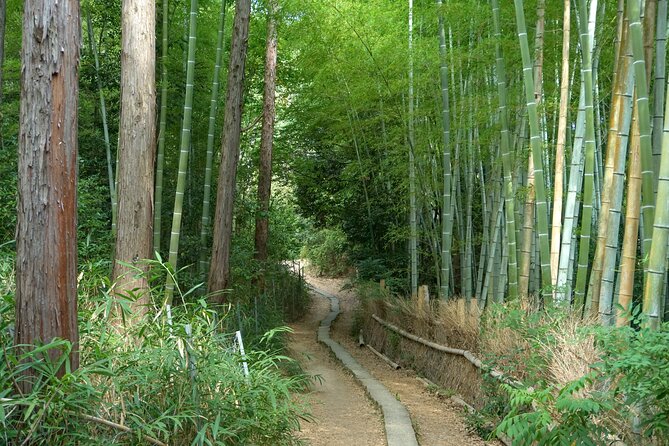
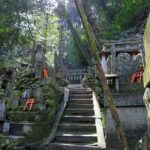
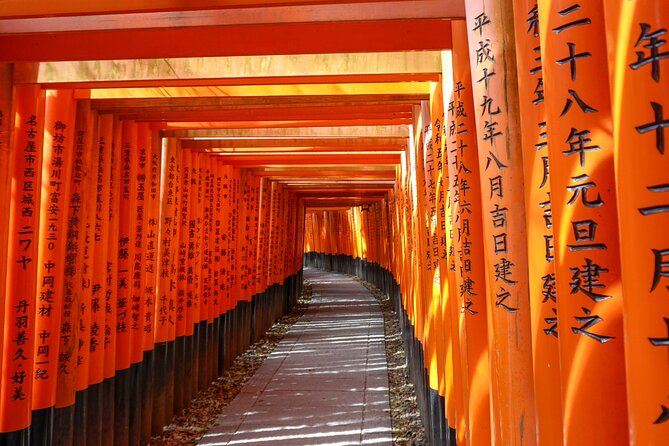
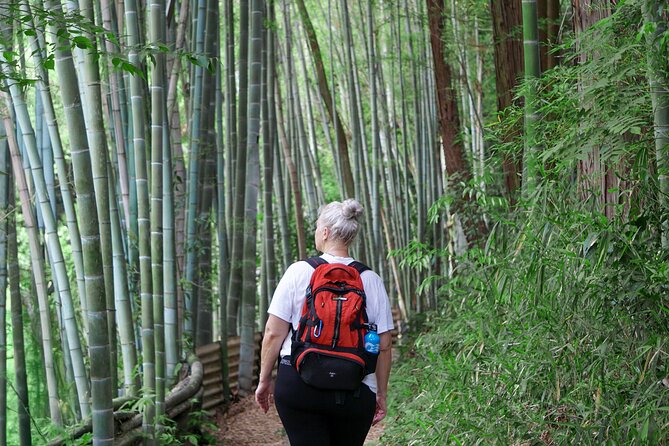
At the shrine, the experience begins with the classic visual hit: vermilion torii gates and a wild bamboo grove atmosphere. Then the route guides you onto serene mountain paths instead of forcing you to stay locked on the busiest main walkway.
This is where the private part pays off again. When you’re on a slower, quieter trail, you can actually look around. Torii gates stop being a blur of orange and become a repeating pattern that leads your eye upward. Bamboo turns what could be a noisy shrine area into something more like a shaded corridor.
From there, you continue toward the iconic Senbon Torii Gates and on to the main shrine area. The important nuance is pacing. You’re not rushing through like you’re collecting a landmark. You’re moving while your guide explains what you’re seeing, why it matters, and what the shrine traditions are tied to.
One more practical note: admission for the Fushimi Inari Taisha shrine area listed for this stop is free. That’s not a “free tour” thing—your tour fee is for the guide and the walking route—but it does mean you’re not paying extra shrine entry on top.
The quiet Mt. Inari hike: Shinto explanations on the trails
The core idea of this tour is simple: step away from the main tourist paths and take the quieter trails near Mount Inari. You still get the famous parts, but you also get breathing room.
As you walk, the guide provides English narration on Japanese history and Shintoism. This is the part you’ll feel in your body more than your phone. When you understand the spiritual context—what torii gates represent and how worship spaces function—you stop treating each gate like a backdrop. You start noticing how the path and the shrine environment shape worship and experience.
And yes, this also improves your photos. When you know what you’re aiming for and why, you can pause without feeling like you missed something. Your guide can also help you position yourself for gate-and-depth shots, where multiple torii lines recede into the mountain haze.
Fitness wise, expect uphill and downhill walking. The tour is about three hours, so it’s not a marathon. But it is not a flat stroll either.
The downhill payoff: Fushimi Momoyama Castle from the mountainside
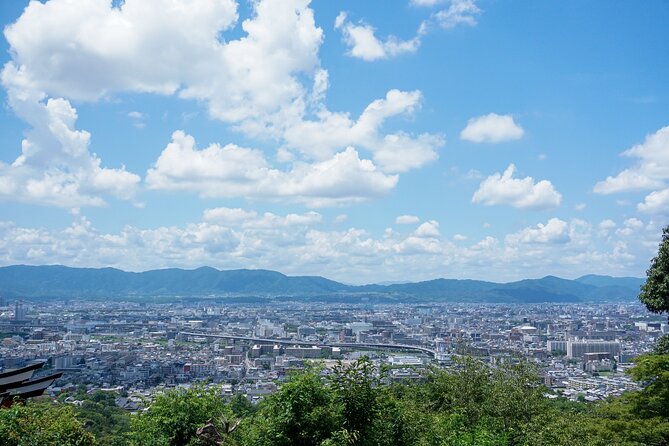
On the way down, the route includes scenic views of Fushimi Momoyama Castle from the mountainside. This viewpoint is a nice way to end the story: you’ve walked through shrine icons and mountain trails, and then you get a broader Kyoto connection.
It also changes the photo geometry. Up near torii gates, your images tend to be vertical lines and repeated arches. At a mountainside viewpoint, you can widen your perspective and see how the shrine area sits within the city’s geography.
This kind of “different view on the way back” is one of the quiet benefits of guided routes. It helps you avoid the letdown feeling that sometimes happens when people only plan a big front-loaded highlight and then coast.
Complimentary DSLR photos: why it’s better than you think
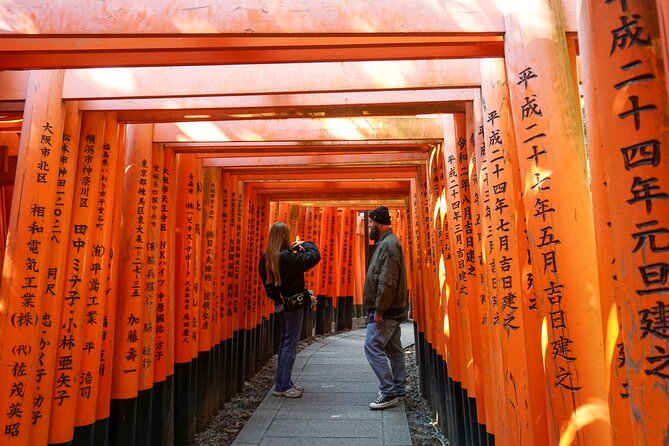
A lot of tours promise photos. This one includes something concrete: complimentary photos taken with a DSLR camera, shared after the tour.
Why that’s valuable: torii gates are crowded, and good shots often require timing. If you’re using your own phone, you’re the one holding the camera and also trying to walk without losing your spot. With a guide taking photos, you can focus on moving, pausing where the route makes sense, and composing without juggling.
It’s also good for groups with different comfort levels. If one person loves photos, they can step forward. If another person just wants to enjoy the walk, they’re not forced into photo duty.
Bring your own camera too if you want, but treat the included DSLR photos as your safety net—extra angles, and less stress.
Timing and pacing: what the 3-hour walk feels like
This tour runs for about 3 hours. That’s long enough to feel like you left the usual shrine loop, but short enough that it doesn’t dominate your whole day.
A typical rhythm here looks like:
- a pre-torii warm-up with Tofuku-ji views
- a guided pass through shrine areas with torii gates and bamboo paths
- time spent moving deeper into quieter Mt. Inari trails
- a return with a scenic viewpoint (Fushimi Momoyama Castle)
Because you’re walking with a guide, you also avoid the mental load of route decisions. Even if you know the area, the private pacing helps you avoid backtracking or getting stuck where the crowd funnels.
Price and value: is $62.26 a smart buy for a private Inari hike?
At $62.26 per person, this is not a budget group tour price. It’s priced for the things you can’t easily replicate alone: private guidance, a route designed for quieter trails, and explanation of cultural and religious context.
Here’s where the value comes from:
- Private guide attention: no waiting for a group to move, and you can ask questions in real time.
- Less time stuck in crowds: better experience per minute.
- Free shrine admission for the stop: you’re not paying extra for entry while still getting the guided experience.
- Included DSLR photos: you’re effectively paying for more than a walk—you’re paying for guided photography moments too.
If you’re traveling with someone who cares about culture and meaning (or if you want great photos without feeling rushed), this price can feel fair. If you’re the type who doesn’t mind crowds and already enjoys planning routes yourself, you might choose cheaper options. But for many people, private is the sweet spot because the tour’s main promise is about not doing the crowded thing.
Who this Kyoto experience is for
This private Fushimi Inari hike works best if you fit one of these profiles:
- You want a quieter, more thoughtful version of Fushimi Inari.
- You like photos but dislike the chaos of trying to time them alone.
- You want Shinto context and a guide to translate what you’re seeing beyond the obvious torii arches.
- You can handle moderate walking for around three hours.
It’s not a match if you need step-free access or you want a fully seated experience—this is described for travelers with moderate physical fitness, and it’s built around mountain paths and up-and-down movement.
Weather and what to do with rain
The tour notes it requires good weather. If it’s canceled due to poor weather, you’ll be offered a different date or a full refund.
One of the practical learnings from past runs: a guide-led hike in April 2025 still happened despite rainy conditions, and the route experience stayed different from the main entrance. That’s consistent with the tour’s approach: even when conditions change, the goal is to keep you on quieter paths when possible.
So if rain is in your forecast, pack smart and plan for slower footing. If conditions turn unsafe, don’t try to stubbornly push through. The operator’s policy is set up for that.
My simple planning checklist for your 8:30am start
You’ll enjoy this more if you show up ready to walk well.
Bring:
- Comfortable shoes for mountain paths
- A light layer (mornings can feel cooler than you expect)
- Your camera (even though you get included DSLR photos)
- Water (food and drinks aren’t included)
Plan for:
- No hotel pickup, so you’ll want to get to the FamilyMart Nakai Tofukuji area by 8:30am
- Being outdoors for about three hours, with a mix of walking and viewpoints
Also, keep your expectations focused. This isn’t a sit-in-and-watch tour. It’s a walking experience where the quality comes from the guide’s route choices and explanations.
Should you book this Kyoto private Fushimi Inari hidden hike?
If you want Fushimi Inari to feel personal—not mass-produced—this is a strong choice. I especially like that the tour is built around the quieter trails near Mount Inari, with Shinto and cultural context added along the way. The included DSLR photos are a practical bonus that reduces photo stress while you’re hiking.
Book it if:
- you value a private guide and clearer navigation
- you want fewer crowds and more meaning
- you’re comfortable with moderate walking for about three hours
Skip it (or consider another option) if:
- you dislike hikes and uneven paths
- you’re only interested in a quick, low-effort shrine photo stop
For many Kyoto trips, Fushimi Inari is a one-time visit. This turns that visit into a morning you remember for more than just the orange torii lines.
FAQ
How long is the Kyoto Fushimi Inari Hidden Hike private tour?
It lasts about 3 hours.
What is the price per person?
The price is $62.26 per person.
Is this tour private?
Yes. It’s a private tour, and only your group participates.
What time does the tour start?
The start time is 8:30am.
Where do I meet the guide?
You meet at FamilyMart Nakai Tofukuji, 12-chōme-232 Honmachi, Higashiyama Ward, Kyoto, 605-0981.
Where does the tour end?
It ends in front of the Romon Gate at Fushimi Inari Shrine (just before the Main Hall of Fushimi Inari Taisha).
Are food and drinks included?
No. Food and drinks are not included. Also, hotel pickup and drop-off are not included.