REVIEW · KALABAKA
Meteora: Easy Hiking Adventure
Book on GetYourGuide →Operated by Meteora Rocks · Bookable on GetYourGuide
Meteora feels human-sized on this hike. You walk the ancient footpaths that once served as the only access routes to the monasteries, and a certified English-speaking mountain guide brings the story to life as you move through forests and up toward the rock tops. I love that the route is paced for families, yet it still delivers big Meteora views when you reach areas like Great Meteoron and Varlaam.
One thing to plan for: the monasteries enforce strict dress codes, and the walk (about 8 km with some uphill) may be uncomfortable if you have back or heart issues. You’ll also want comfy shoes and a backup plan for rain.
In This Review
- Key things I’d watch for before you go
- Why This Easy Meteora Hike Works Better Than a Bus Tour
- Kalambaka Pickup and the Quick Van Transfer to Kastraki
- Hiking Start: Ancient Footpaths, Stair Sections, and Forest Walk
- Visitation of Jesus, Vlahavas Statue, and St Dimitrios Church
- Rock-Top Approach to Great Meteoron and Varlaam
- Descent to Kastraki and the St George Mandilas Handkerchief Tradition
- Dress Code, Footwear, and What to Pack for This 8 km Easy Hike
- Price and Value: Is $49 a Good Deal for Meteora?
- Weather and the Day-Of Plan If It Rains
- Who Should Book This Easy Hiking Adventure
- Should You Book This Meteora Rocks Easy Hiking Adventure?
- FAQ
- How long is the Meteora hike?
- Where does the tour start?
- Is it an easy hike?
- What’s included in the price?
- What isn’t included?
- Do monasteries accept credit cards for entrance?
- What should I wear or bring?
Key things I’d watch for before you go
- A guided route that uses the old access paths with carved and even wooden stairs for moving people and supplies
- Monastery of the Visitation of Jesus (abandoned and restored) plus the Papathymios Vlahavas statue
- St Dimitrios church, once used as rebels’ headquarters during the Greek-Turkish war
- Great Meteoron and Varlaam at the rock top, reached by foot rather than a bus drop-off
- St George Mandilas cave and the handkerchief tradition, seen near the descent back toward Kastraki
Why This Easy Meteora Hike Works Better Than a Bus Tour
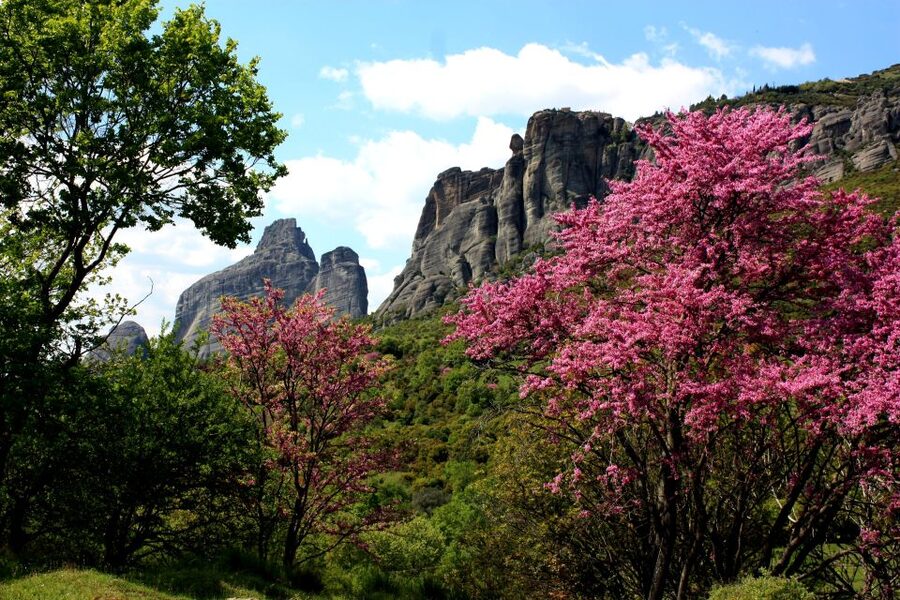
If you’re doing Meteora for the first time, it’s easy to get stuck in a pattern: drive, park, quick look, drive again. This tour changes the rhythm. Instead of treating the monasteries like a lineup of stops, you get there by walking routes shaped by centuries of mountain life.
What makes it especially appealing is the mix of geology and human history. You’re surrounded by the giant rock formations that define Meteora, but you’re also seeing the practical side of how monasteries were reached long before modern roads. The footpaths weren’t sightseeing shortcuts. They were the way people transported supplies and daily needs.
This is also a small-group experience (limited to 12). That matters here because a good guide can point out details you’d otherwise miss—marks in the path, the meaning behind certain landmarks, and the story behind why particular monasteries mattered.
You can also read our reviews of more tours and experiences in Kalabaka.
Kalambaka Pickup and the Quick Van Transfer to Kastraki
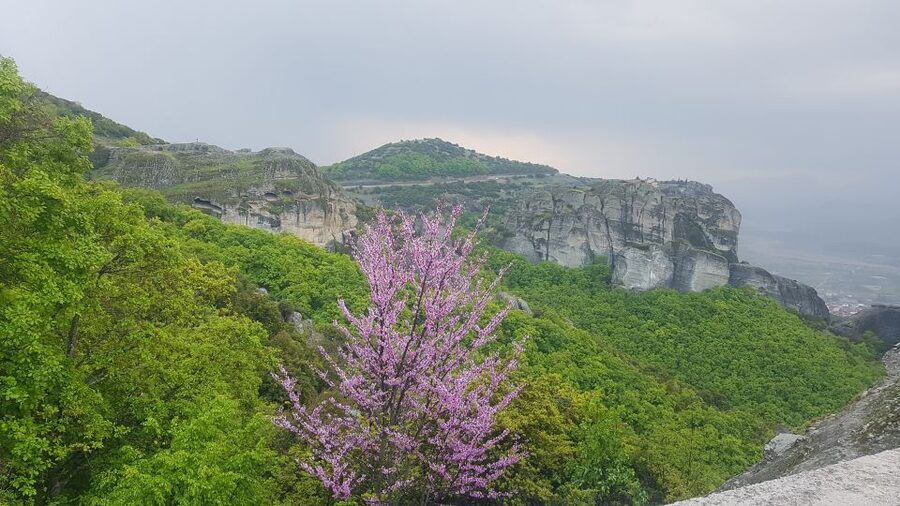
You start in the Kalambaka area and then take a mini-bus ride toward Kastraki, where the hike begins. The transfer is short—about 20 minutes—so you’re not spending most of your time in transit.
The tour includes round-trip transport from your accommodation in either Kalambaka or Kastraki. There’s also bottled water on board and WiFi, which is a nice touch when you’re syncing up with your group or killing a few minutes before the walk starts.
Why this set-up is smart: it keeps the day tight. You’re out in the Meteora area early enough to enjoy the route without feeling like the hike is just an add-on between longer monastery drives.
Hiking Start: Ancient Footpaths, Stair Sections, and Forest Walk
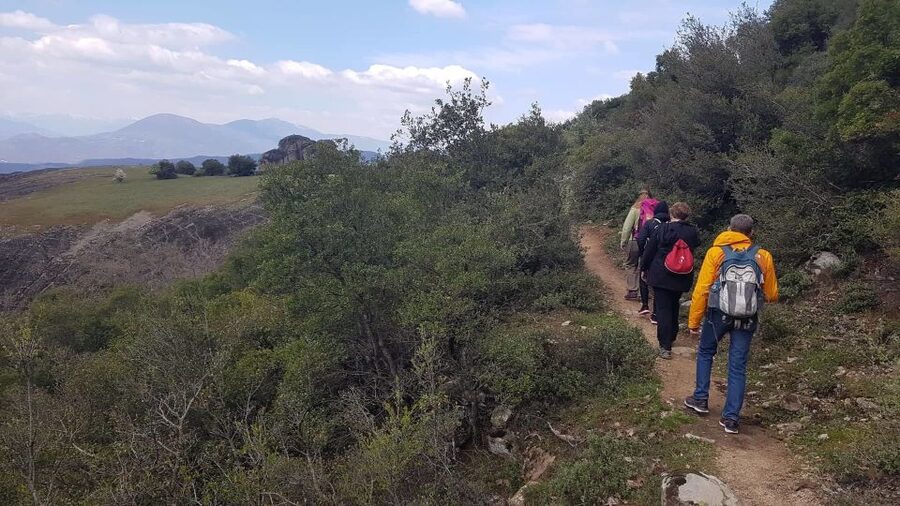
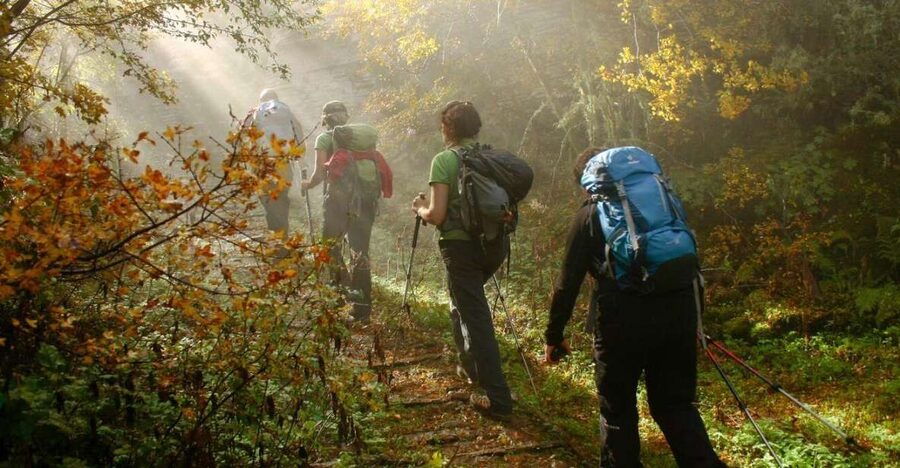
Once you reach Kastraki, the guided portion starts and the path moves through a green, wooded area before you work your way toward key historical points. The walk distance is about 8 km, and the difficulty is rated easy, but easy doesn’t mean flat. Expect some uphill work as you gain elevation toward the rock top viewpoints.
Here’s what I think makes the route genuinely memorable: the path still shows how people used to travel. You can see human modifications along the way, including carved steps and sections with wooden stairs that helped with carrying equipment and everyday necessities.
That’s where the tour feels different from a standard monastery circuit. You’re not only looking at Meteora from below. You’re moving through the same kind of terrain that shaped daily life for generations.
Visitation of Jesus, Vlahavas Statue, and St Dimitrios Church
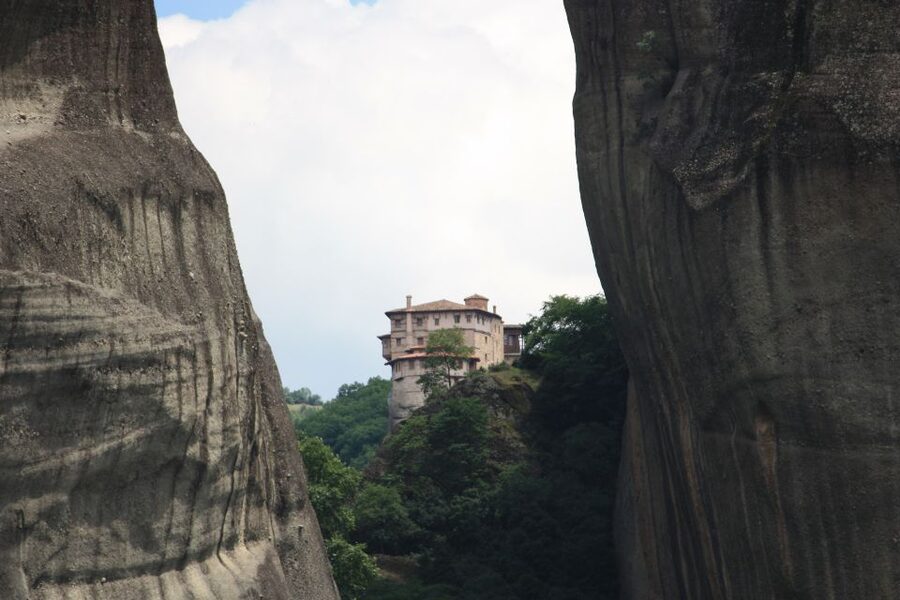
Before you hit the rock top monasteries, the tour takes you through a sequence of history-loaded stops.
First is the Monastery of the Visitation of Jesus, described as both abandoned and restored. This kind of stop gives context: Meteora wasn’t always one unified tourist destination. It was a working religious landscape with a history that includes abandonment and later revival.
Then you’ll see the statue of Papathymios Vlahavas, a fighter during the rebellion against the Turks. It’s a reminder that Meteora history isn’t only about monks and architecture. The rocks provided refuge and strategic importance during conflicts.
The tour also includes St Dimitrios church, which was used as headquarters by rebels during the Greek-Turkish war. The church was destroyed by the Ottomans in the early 18th century. Seeing that timeline matters because it reframes the monasteries as places tied to survival, not just spiritual symbolism.
Practical note: these stops can be both moving and a little sobering. If you like history that connects to real places you can stand on, this portion is a strong reason to choose this hike.
Rock-Top Approach to Great Meteoron and Varlaam
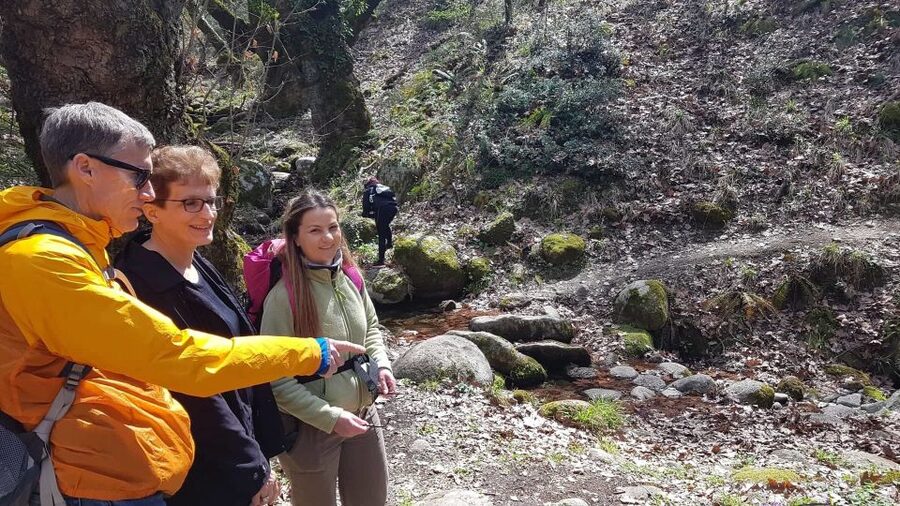
After these earlier points, the route climbs to the top of the rocks. This is the moment when Meteora starts to feel fully exaggerated in the best way—towering rock walls, monasteries perched high, and a sense that the architecture was designed to belong up here.
The tour reaches the monasteries of Great Meteoron and Varlaam. These are among Meteora’s most famous, so you’re getting the big-name sights. The difference is you’re arriving by walking the connecting paths, which makes the experience feel earned rather than rushed.
One important budgeting detail: monastery entrance fees are not included. You’ll pay an extra 5€ for monastery entrance, and credit cards aren’t accepted for that payment. Bring cash so you’re not stuck.
Also, monastery time means you’ll need to switch from hiking mindset to respect-the-place mindset quickly: dress correctly, move at the pace of the group, and follow any instructions from the monastery staff.

Descent to Kastraki and the St George Mandilas Handkerchief Tradition
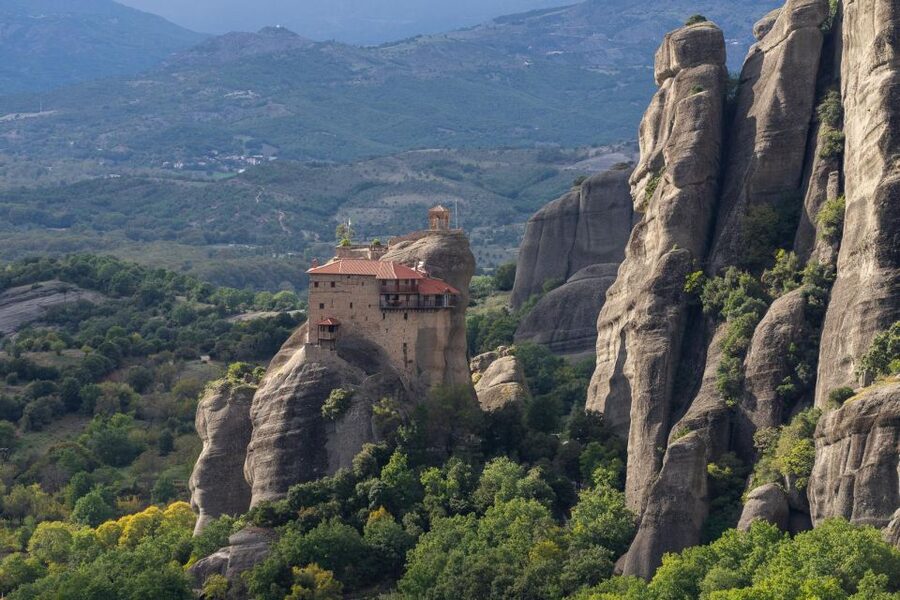
The tour doesn’t just stop at the famous monasteries. After viewing Great Meteoron and Varlaam, you descend through a path back toward Kastraki. This return stretch can be surprisingly nice because your legs get a break from the steepest effort, and your eyes get to linger on the shapes of the rocks from different angles.
Along the way you pass near the cave of St George Mandilas. There’s a tradition here: every year people climb to hang their handkerchiefs. It’s one of those details that makes a place feel living, not only preserved.
Even if you’re not there on the exact day of the tradition, this stop adds meaning to the landscape. You understand that Meteora isn’t frozen in time. It keeps being used for faith and ritual.
Dress Code, Footwear, and What to Pack for This 8 km Easy Hike

You’ll want to come prepared because Meteora monasteries have strict rules. The dress code is enforced, not suggested.
- Men must wear trousers and a t-shirt or shirt with sleeves.
- Women must wear a long skirt.
If your outfit doesn’t fit, you’ll need to solve it before entering. The tour data notes that you should bring comfortable shoes and comfortable clothes, and it also recommends a raincoat and a hat. A second change of clothes is a smart idea because hiking sweat is real, even when the route is rated easy.
What I’d personally prioritize:
- Comfortable walking shoes with grip
- A hat or skullcap
- A small backpack carrying bottled water
- A way to cover up for the monasteries quickly (especially the skirt requirement)
Health and mobility matter too. This is not suitable for wheelchair users and may not work well if you have back problems or heart problems.
Price and Value: Is $49 a Good Deal for Meteora?
At $49 per person for about 4.5 hours, this isn’t a cheap “see Meteora from the road” experience. But it can be good value if you care about walking routes and guide-led context.
Here’s what’s included:
- Round-trip transport from Kalambaka or Kastraki
- A certified English-speaking mountain guide
- Bottled water
- WiFi on board
- Taxes and services
What’s not included:
- Monastery entrance fee: 5€
- Travel insurance
The trade-off you’re making for the lower price point is time and scope. This isn’t a full-day monastery marathon. It’s a guided hike that hits several major points and viewpoints within a shorter window.
So for many people, the value comes from this formula: guided access to history + rock-top sights + transport, all in one easy-to-manage half-day. If your goal is to maximize the number of monastery interiors, you might feel you want more time once you’re up on the rock. But if your goal is a better way to experience Meteora than just parking and peeking, this fits nicely.
Weather and the Day-Of Plan If It Rains
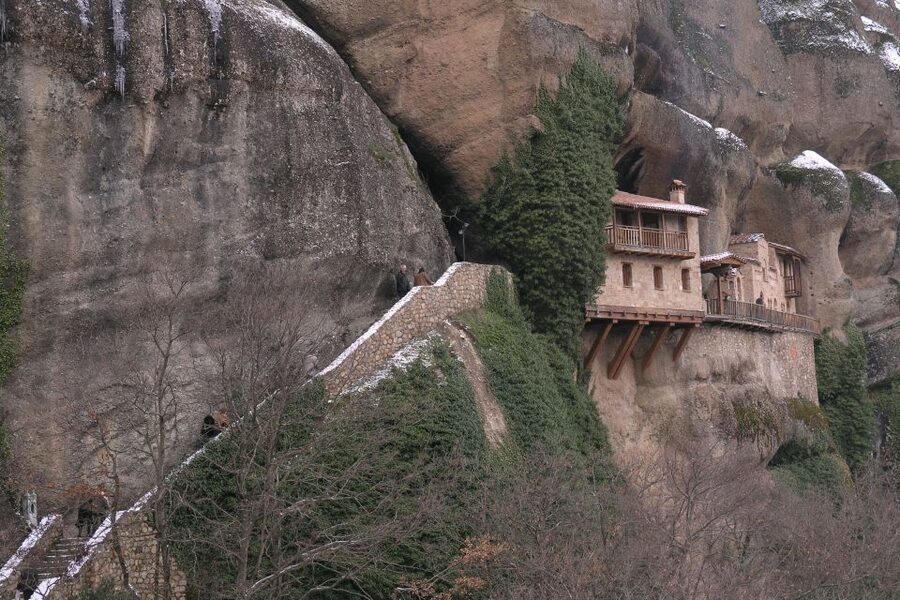
Meteora weather can change fast, and rain can affect how comfortable the walking will be. One provided example shows that if rain prevents the full hike, the operator may adjust and use a vehicle to continue visiting monasteries in less time.
You shouldn’t assume this will happen for every weather scenario, but you can reasonably expect flexibility. If rain hits, you’ll likely still visit monasteries, just with an altered walking plan.
Who Should Book This Easy Hiking Adventure
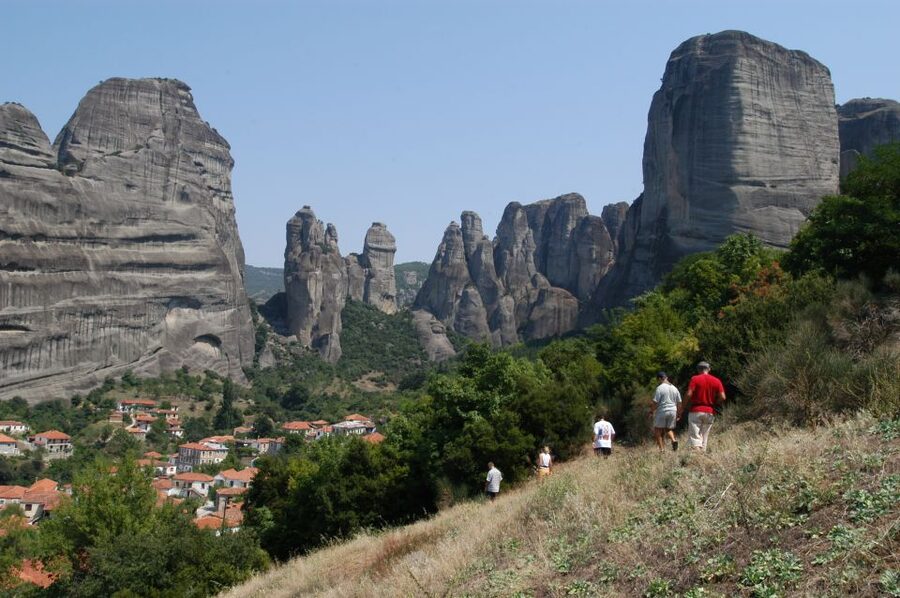
This tour fits best if you want Meteora with fewer bus-only moments and more walking-based context.
I’d steer you toward it if:
- You want a family-friendly hike (easy rating, guided pacing)
- You like history tied to the physical path, not just plaques
- You want to reach famous monastery areas like Great Meteoron and Varlaam without spending hours driving between viewpoints
- You prefer a smaller group experience where a guide can actually manage pace and attention
I’d think twice if:
- You need step-free access (wheelchair users aren’t suitable)
- You have back or heart issues that make uneven paths risky
- You absolutely hate dress code constraints and don’t want to plan around skirts and sleeves
- You’re mainly chasing the longest inside monastery stays
Should You Book This Meteora Rocks Easy Hiking Adventure?
Book it if you want a guided route that connects footpaths, rebels’ history, and rock-top monasteries in a half-day format. The price makes sense when you treat it as transport + a certified guide + a structured hike, not just a ticket to see Meteora from one viewpoint.
Skip it (or plan something else) if you’re physically limited, have trouble with dress code requirements, or you know you need much longer monastery interior time. In that case, a more monastery-focused itinerary may suit you better.
If you’re within the comfort zone—good shoes, correct clothes, and a tolerance for some uphill—this is one of the more satisfying ways to experience Meteora without feeling like you’re only stopping for photos.
FAQ
How long is the Meteora hike?
The guided experience lasts about 4.5 hours.
Where does the tour start?
The tour starts from Kalambaka, where you board a luxury mini-bus, and then the hiking path begins in Kastraki.
Is it an easy hike?
Yes. The difficulty is rated easy, with an approximate hiking distance of 8 km.
What’s included in the price?
Included are round-trip transport from Kalambaka or Kastraki, a certified English-speaking mountain guide, bottled water, WiFi on board, and taxes/services.
What isn’t included?
Monastery entrance fees are not included (5€). Travel insurance is also not included.
Do monasteries accept credit cards for entrance?
No. Credit cards aren’t accepted for paying the monastery entrance fees.
What should I wear or bring?
Wear comfortable shoes and clothes. Because of monastery dress code, men need trousers and a sleeved shirt, and women need a long skirt. A raincoat and hat are recommended, and bringing a second change of clothes can help if you get sweaty.