REVIEW · SAN FRANCISCO
San Francisco Urban Hike: Castro and Twin Peaks
Book on Viator →Operated by Urban Hiker SF · Bookable on Viator
Twin Peaks comes fast on this hike. You start at the Castro Theatre and then thread through Kite Hill, the Seward Street Slides, and an eucalyptus forest behind Sutro Tower, finishing with panoramic lookouts guided by San Francisco locals like Kevin or Alex.
I love the mix of real elevation and real fun: the Seward Street Slides make this feel like a day out, not just exercise. I also like how the route leans on resident paths, so you see everyday San Francisco while you climb.
The only drawback is the workout level: this is about 5 miles with hills and plenty of stairs, so wear proper shoes and be honest about your fitness.
In This Review
- Key highlights you’ll actually feel
- Start at the Castro Theatre and Get Your Bearings
- The Castro Theatre stop: quick culture, then you’re off
- Seward Street Slides: playground joy in the middle of the city
- Kite Hill Open Space: views you can miss if you’re not looking
- Twin Peaks summit time: the payoff for the steps
- Sutro Tower: a close-up photo stop and a quick reality check
- Tank Hill: more views, a calmer park feel, then the stair descent
- How hard is this hike? Real talk on distance, stairs, and weather
- Guides and group vibe: why the narration matters on a route like this
- Value for your time: free stops, included views, and local routes
- Who should book this hike, and who should skip it
- Should you book Urban Hiker SF: Castro and Twin Peaks?
- FAQ
- How long is the San Francisco Urban Hike: Castro and Twin Peaks?
- Where do I meet, and where does the tour end?
- What time does the tour start?
- Is the tour offered in English?
- Do I need a paper ticket?
- What fitness level do I need?
- Is it suitable for children?
- Does the tour run in bad weather?
- Are service animals allowed?
- Is the group size limited?
- How does cancellation work?
Key highlights you’ll actually feel
- A 3-hour urban hike that starts and ends at the Castro Theatre, right where you’ll want to eat afterward
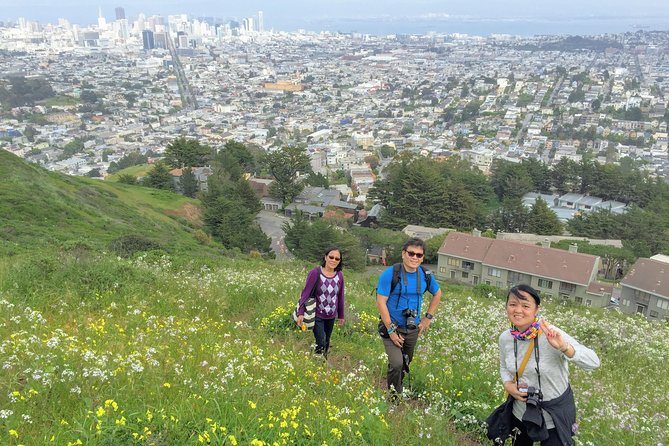
- Twin Peaks and Tank Hill viewpoints with big views over the waterfront, Golden Gate Bridge, and Golden Gate Park
- Seward Street Slides: slide down curved concrete like it’s an old-school playground
- Sutro Tower area + eucalyptus forest with guide-led routes that go beyond the postcard stops
- Small group size (up to 15) with English-speaking guides, often SF natives such as Kevin, Val, Dawn, Alex, and Max
Start at the Castro Theatre and Get Your Bearings
You meet at 429 Castro St, right by the Castro Theatre. The tour runs about 3 hours, starting at 1:30 pm, and ends back at the same spot so you don’t have to scramble for transport afterward.
The theatre stop is short, but it sets the tone. You’ll get a quick look at why this classic movie palace matters in the Castro district, then you’re moving before the “tour bus” feel can set in.
This is also the moment to get practical: wear comfortable shoes or hiking boots, dress in layers, and bring water. San Francisco hills don’t care if you’re on vacation, and the route includes enough slope and stairs that your footwear choice really shows.
You can also read our reviews of more tours and experiences in San Francisco.

The Castro Theatre stop: quick culture, then you’re off
The Castro Theatre stop is around 10 minutes. If you like history that’s tied to neighborhoods you’re walking through, it helps connect the dots between the buildings and the views later on.
Because admission here is listed as free, you’re not wasting time checking tickets or negotiating your way into another line. You’re just getting oriented, then the guide leads you toward the first real “moving” portion of the hike.
If you’re planning coffee or a meal after the tour, you’ve also got a built-in advantage: you finish in the Castro, a neighborhood with plenty of options nearby.
Seward Street Slides: playground joy in the middle of the city
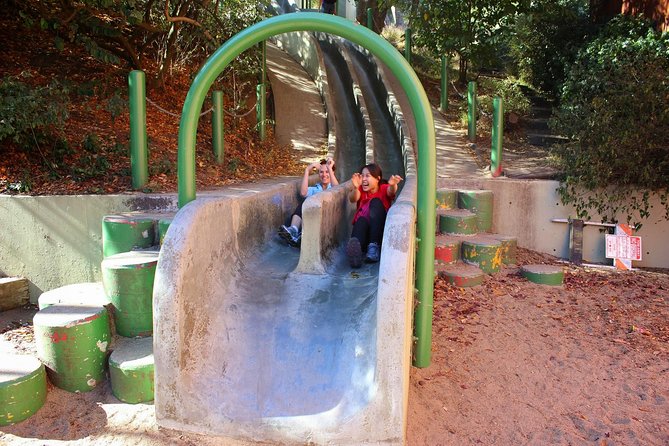
One of the most fun parts is the stop at the Seward Street Slides, with about 10 minutes to enjoy them. It’s exactly what it sounds like: slide down curved concrete in a city park, with an old-school feel that still works.
What makes it memorable isn’t just the slide itself. It’s the atmosphere—kids and adults tend to get equally goofy—and the guide’s local tips about how to do it safely and comfortably.
You’ll want shoes that grip well, because you’re in a hill city where things can get slick. Bring or carry a bottle of water, too, since the fun parts sit right next to the harder climbs.
And if you’re thinking of the traditional cardboard ride: the tour description encourages it, and it’s part of the experience. The key is that you’re doing it the easy, controlled way the guide suggests, not improvising in a hurry.
Kite Hill Open Space: views you can miss if you’re not looking
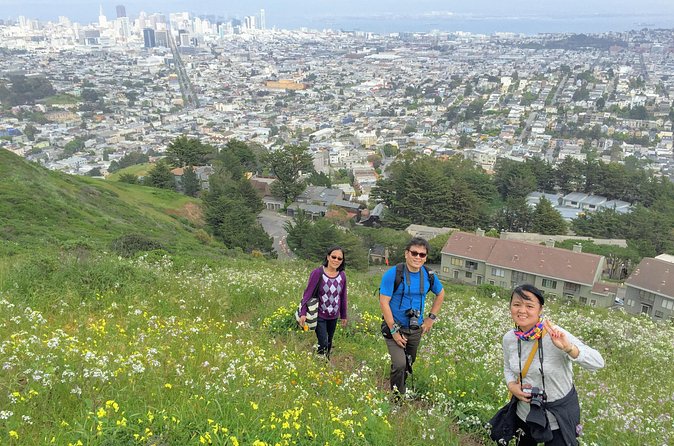
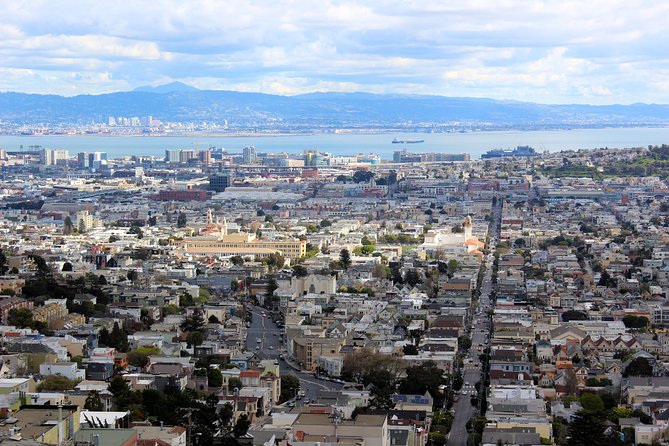
Next comes Kite Hill Open Space, another short stop (about 10 minutes). The best part here is that you don’t just “arrive at a viewpoint.” You get a small hike-up moment to reach a hilltop green space that’s easy to see in the area but hard to find on your own.
From the top, you get views toward downtown San Francisco and toward Twin Peaks. It’s a great spot for photos because the city looks spread out in a way that makes the rest of the walk feel more rewarding—you’re climbing toward something instead of climbing because you’re supposed to.
This is also a good time to reset your pace. Take a breath, sip water, and notice which way the wind is coming from. San Francisco weather can change fast, and layers matter here.
Twin Peaks summit time: the payoff for the steps
Twin Peaks is where the hike starts to feel like a real reward. The stop is around 20 minutes at an overlook, and you’ll get panoramic views stretching over the city waterfront and out toward the East Bay Hills.
There’s a special satisfaction to reaching Twin Peaks on foot rather than by car. You arrive already “earned” by the hills you walked, and the lookout feels bigger because you worked for height and perspective.
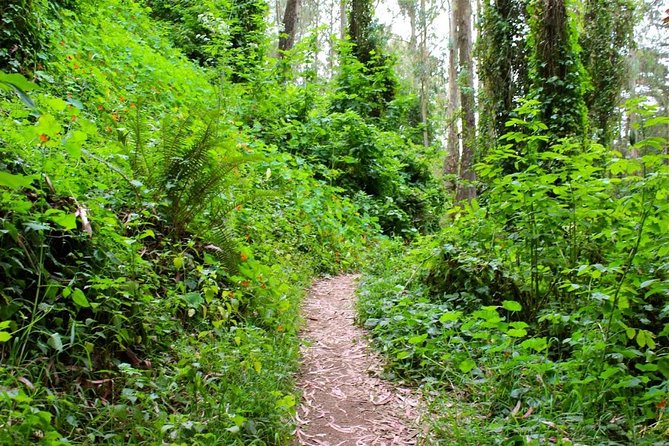
On this route, you’re also guided through a mix of experience styles: you’ll spend time walking through a eucalyptus forest behind Sutro Tower area and then follow an unmarked resident path to get to summit ground. That means the scenery shifts from neat park edge to more wild-feeling hillside walking.
The trade-off is that unmarked paths can feel less obvious than official trails. You’ll be glad you have a guide if you prefer your routes clear and your footing trusted.
Sutro Tower: a close-up photo stop and a quick reality check
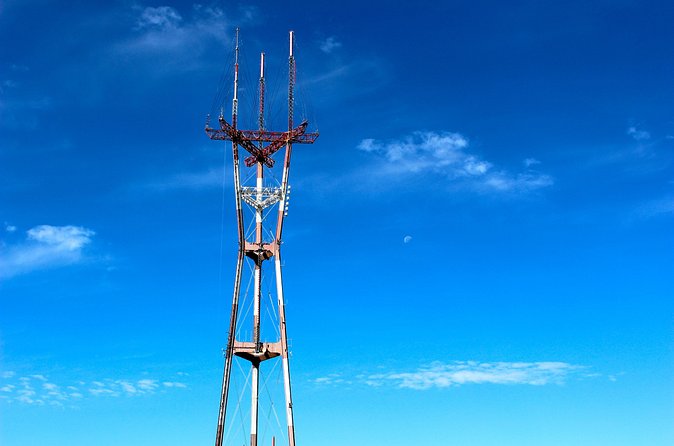
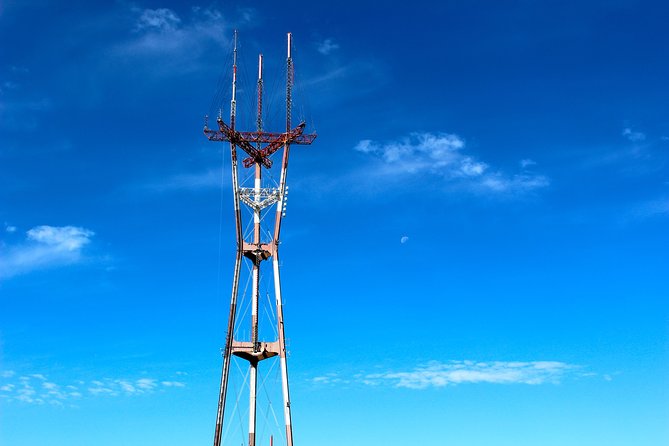
Sutro Tower is a designated stop (about 10 minutes), letting you stand near the base of an almost-900-foot tower. The top is described as the highest point in San Francisco, which helps you understand why the tower area matters for orientation and skyline lines.
You’re not just snapping a picture from far away. The stop is timed so you can get your bearings and then keep moving.
Sutro Tower also sits right by that eucalyptus forest section mentioned earlier. If you love the feel of shade, texture, and a bit of wilderness while still in city limits, this part is a highlight for many people on this hike.
One review detail that stuck with me: for some hikers, the eucalyptus forest became their favorite moment. That makes sense—when you’ve spent the day climbing, the first break in open sun can feel like a reward of its own.
Tank Hill: more views, a calmer park feel, then the stair descent
After Twin Peaks, you head to Tank Hill, another short stop (about 10 minutes). It’s described as a popular neighborhood park for views and dog walking, so it’s not just a “look but don’t touch” kind of place.
Tank Hill’s summit is listed at 650 feet, and you’ll get views of the northern side of the city. You can also see the Golden Gate Bridge and Golden Gate Park from up there, which is a nice change from the downtown-and-waterfront focus earlier.
This is the part where your legs start talking to you. Even though each stop is brief, the route stacks hills, and you’ll feel it if you don’t pace yourself.
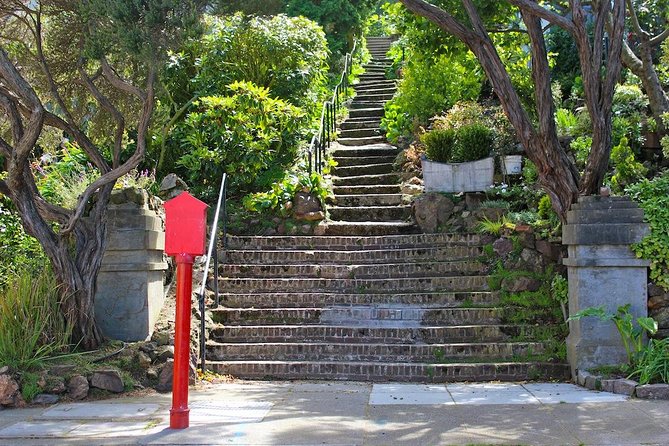
Then comes the long, satisfying finish: the 211-step Pemberton Place Stairway down through neighborhood houses and private gardens. It’s an actual stair descent, not a gentle roll.
If your knees hate stairs, take it slowly and hold the cadence the guide sets. The descent is also when you’ll see more “real neighborhood” San Francisco, with houses that make the city feel intimate instead of distant.
How hard is this hike? Real talk on distance, stairs, and weather
This hike is described as a moderate 5-mile (8 km) walk, with lots of hills and stair segments. Even if the duration sounds short, the time is filled with elevation changes, so you should plan on working a little.
The tour is not recommended for children 12 and younger due to distance and intensity. That’s a useful signal: this isn’t a casual stroll.
A few practical tips make it more comfortable:
- Wear proper hiking shoes or boots with grip
- Bring water, since the route assumes you’ll be on your feet for a good chunk of time
- Dress in layers because you can move between sun, shade, and wind on the hills
The tour runs rain or shine. If it’s raining and you’d rather not go, you can reschedule or request a refund, so you’re not stuck with a soggy day if it’s not your thing.
And because the group max is 15, you’re not getting pulled along by a crowd. That smaller size also helps with navigation—especially when the route includes unmarked resident paths.
Guides and group vibe: why the narration matters on a route like this
A professional guide is included, and that matters more here than on a “flat” city walk. When you’re mixing resident paths, hills, and local landmarks, the guide’s pacing and explanations turn the route into something you can understand instead of just survive.
Many hikers highlight that their guide was friendly and confident leading the ups and downs. Names that come up include Kevin, Val, Dawn, Alex, and Max, with repeated praise for local context and an upbeat attitude.
One detail I really like: guides often tailor the experience to the group. For example, Alex is mentioned as having published a book on these hikes, which signals she’s not just reciting facts—she understands how these routes fit together from a local perspective.
Even when it’s not a “formal lecture,” you’ll still pick up city context. You’re learning San Francisco facts from the guide while you walk through places most visitors miss.
If you’re the type who likes a story behind a view, this tour is built for you.
Value for your time: free stops, included views, and local routes
This is where the tour makes sense as a use of time. Several stops list admission as free, including the Castro Theatre, Seward Street Slides, Kite Hill Open Space, Twin Peaks, and Sutro Tower. Tank Hill is listed as included.
So you’re not paying extra again and again just to stand in scenic places. Instead, your money goes into the guide and the structure of the hike—plus access to time on Twin Peaks and the stair descent.
The other value piece is route authenticity. You’re not only visiting the loudest, most obvious attractions. You’re also walking through neighborhood paths and the eucalyptus forest, which turns the day into a living neighborhood experience rather than a checklist.
And since you end back at the Castro, the tour naturally slots into a real afternoon plan: finish, shower off the hill air, and eat nearby.
Who should book this hike, and who should skip it
You should book if you want:
- City views that come with effort, not just a quick stop
- A route that mixes classic landmarks with resident paths
- A small-group hike with a guide who shares context
You might want to skip if:
- You struggle with hills and stairs
- Your knees don’t like descending 211 steps
- You’re traveling with someone under 12 who might not handle the intensity
Service animals are allowed, which is helpful if you rely on them. Beyond that, the tour is clearly positioned for moderate fitness rather than a low-impact walk.
Should you book Urban Hiker SF: Castro and Twin Peaks?
Yes, I’d book it if you’re okay with an active afternoon and you want a San Francisco viewpoint day that feels more local than touristy. The hike is short enough to fit into a schedule, but intense enough to earn the big outlooks at Twin Peaks and Tank Hill.
I’d also book it for the mix of moods: sliding fun, quiet forest shade, and then skyline payoff. It’s the kind of route where you remember the feeling of the walk, not only the photos.
Just be honest with yourself about the steps and hills. If you show up in grippy shoes, pace your climb, and bring water, this tour gives you a strong return on time in the city.
FAQ
How long is the San Francisco Urban Hike: Castro and Twin Peaks?
It’s approximately 3 hours.
Where do I meet, and where does the tour end?
You meet at 429 Castro St, San Francisco, CA 94114, and the tour ends back at the same meeting point.
What time does the tour start?
The start time is 1:30 pm.
Is the tour offered in English?
Yes, it’s offered in English.
Do I need a paper ticket?
You’ll use a mobile ticket.
What fitness level do I need?
The tour requires a moderate physical fitness level. It covers about 5 miles and includes hills and stairs.
Is it suitable for children?
It is not recommended for children 12 years and younger.
Does the tour run in bad weather?
The tour runs rain or shine. If it’s raining and you’d prefer not to attend, you may reschedule or request a refund.
Are service animals allowed?
Yes, service animals are allowed.
Is the group size limited?
Yes, the tour has a maximum of 15 travelers.
How does cancellation work?
You can cancel for a full refund up to 24 hours in advance. Free cancellation is available up to that point, and within 24 hours no refund is offered.