REVIEW · AQABA
Wadi Rum Mountain Hike & Climb: Burdah, with a bridge at the top! + tour & Lunch
Book on Viator →Operated by Wadi Rum Desert Dreams · Bookable on Viator
One hike, and you’ll hit the sky.
This day trip in Jordan’s Wadi Rum focuses on Burdah Bridge at the top of Burdah Mountain (about 1,300 m), with rocky scrambling and a few “hands-on” steep sections that make the payoff feel earned. What makes it especially fun is that it’s not just one viewpoint—you get a full rhythm of bridges, a canyon walk, desert color changes, and a proper sunset stop at Um Sabatah.
I love how the hike is paired with real Bedouin hospitality: you pause for fresh tea up high, then come back down to a traditional lunch cooked outside on the fire. It’s the kind of pacing that keeps you busy, but not rushed.
One consideration: even if you don’t need prior climbing experience, the terrain has technical spots, and you’ll be moving over uneven rock for hours. If you’re prone to vertigo or hate steep scrambling, this route may feel more intense than a typical Wadi Rum walk.
In This Review
- Key things to know before you go
- Burdah Mountain hike: why the bridge is the whole point
- The climb itself: scrambling, steep sections, and your best strategy
- Wadi Rum Village meeting: start easy, then commit to the day
- After Burdah: fire-cooked lunch that actually fuels the rest
- Umm Fruth Bridge: the shorter climb that’s great for photos
- Abu Khashaba Canyon and Little Bridge: the calmer nature break
- White Desert: the color shift, plus a chance for the less-crowded feel
- Jeep tour window and the best timing for sunset at Um Sabatah
- Who this tour fits best (and who should rethink it)
- Price and value: what you’re really paying for
- A quick note on guides and communication in the desert
- Should you book the Burdah Mountain hike and bridge day?
- FAQ
- How long is the Burdah Mountain hike and full tour?
- What time does the tour start?
- Where do we meet for the tour?
- Is climbing experience required?
- How long is the main hike to the Burdah bridge?
- What’s included in the price?
- What isn’t included?
- Where does the tour end?
- What if the weather is bad?
Key things to know before you go
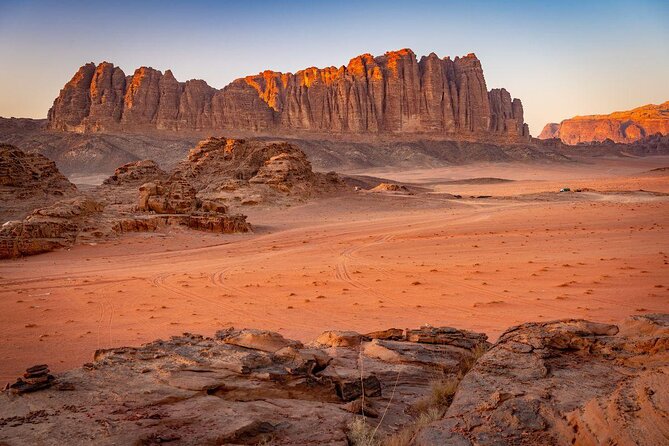
- Burdah Mountain (about 1,300 m) is the headline, with a natural bridge among the world’s highest of its kind.
- 2–3 hours up the rocky trail means you should plan for steady effort, not a casual stroll.
- Fire-cooked Bedouin lunch comes after the big climb, with vegetables, bread, hummus, yogurt, and rotating local treats.
- Umm Fruth Bridge (about 15 meters high) is a shorter, more photo-focused climb next to the Burdah area.
- Canyon and bridge add-ons include Abu Khashaba Canyon’s narrow valley and the small Little Bridge stop with sweet tea afterward.
- Um Sabatah sunset finishes the day at a secluded viewpoint with sweet tea prepared on the fire.
Burdah Mountain hike: why the bridge is the whole point
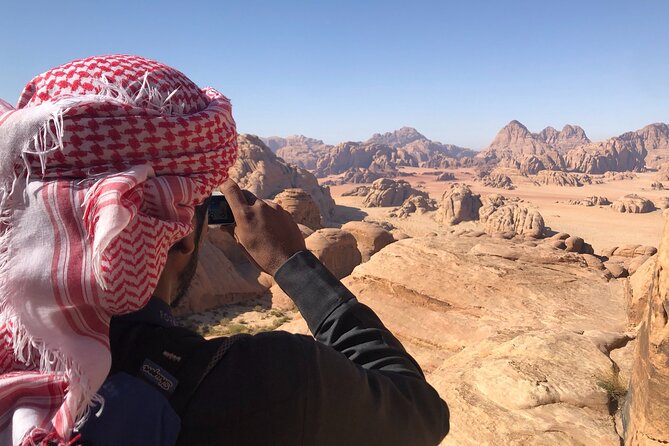
If you want Wadi Rum in one day, this tour is built around the most attention-grabbing reward: the Burdah natural bridge. The hike takes you to a height that changes how everything feels—air gets cooler, shadows move differently, and the view stops being “nice” and starts being wow, I’m actually up here.
The trail is rocky mountain ground, and the description doesn’t hide the fact that some areas are technically difficult. For you, that means you’ll likely use your hands at least a few times, especially on steeper surfaces. The good news is the pace is guided and the focus stays on hiking Burdah as the main focus, not a long series of unrelated stops.
What I like most about centering the day on one big objective is that the effort matches the payoff. You’re not just collecting photos; you’re earning the moment you stand on/near the bridge and take in the view.
You can also read our reviews of more tours and experiences in Aqaba.

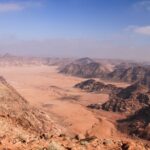
The climb itself: scrambling, steep sections, and your best strategy
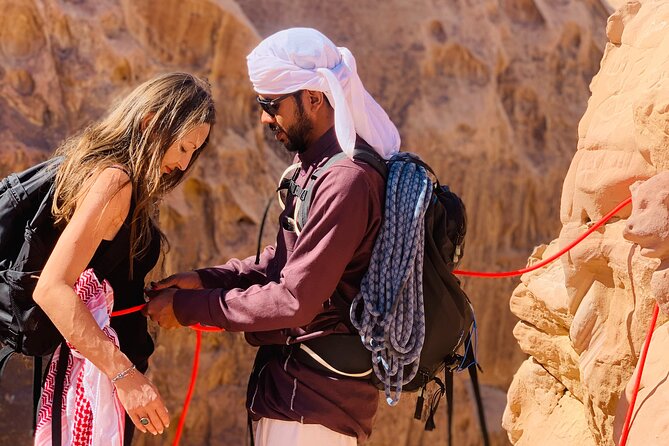
You don’t need previous climbing experience, but you should assume a moderate-to-active day. The hike to Burdah takes about 2 to 3 hours depending on pace, so plan for steady work rather than speed.
Here’s how I’d think about the route before you start:
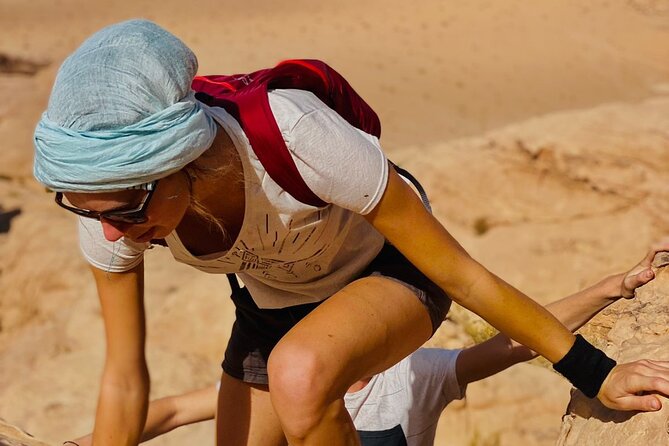
- Rocky, uneven footing: you’ll want shoes with grip. Loose rock and sloped surfaces mean your feet do more thinking than usual.
- Steep surfaces: some sections may feel like mini “climb-ups.” Your guide will help set expectations and timing.
- Scrambling as needed: you’re not doing a full technical ascent, but you might use both hands to get up certain rocky bits.
A smart move is to keep your energy for the middle and upper parts. If you rush the first stretch, you can end up breathing hard right when the terrain gets more demanding. Let the guide’s pace guide you, and take short, controlled pauses when you need them.
At the top, you don’t just race through. You take your time to relax, take pictures, enjoy the view, and drink fresh Bedouin tea. That tea stop matters. It turns the “work” portion into a real break, which is a big deal when you’ll continue with other stops afterward.
Wadi Rum Village meeting: start easy, then commit to the day
The day begins at Wadi Rum Village at the Rest House, with meeting between 09:30 and 10:00, and a start around 10:00 am. Once you’re there, you’ll have a clear local base: there’s a supermarket and a souvenir shop, and the meeting office is nearby. If you need basic supplies, you can usually sort it before you head out.
Small group size helps here. The tour caps at 15 travelers, and that makes it easier to keep the hike moving without losing people every five minutes. You get the benefits of a group day (people to share the fun with) without the feeling of a giant caravan.
Also, note this tour returns you to the meeting point. That matters if you’re using the day to plan your next stop in Aqaba or onward travel.
After Burdah: fire-cooked lunch that actually fuels the rest
Once you finish the Burdah hike, you switch from “climbing mode” to “recovery mode”—and the tour does that with a traditional lunch cooked outside on the fire.
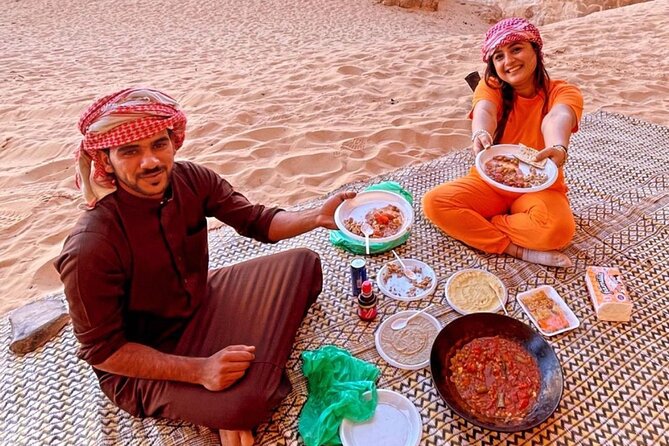
The lunch changes daily, but you can expect a warm meal built around local staples: vegetables, bread, hummus, yogurt, and other local treats. The format is simple, but it’s practical. After a rocky climb, you want real calories, salt, and something hearty to reset your body.
While the food is cooking, you get flexibility. You can explore a nearby area with a shorter walk, or sit down and relax while enjoying the panoramic desert feel around you. That pause is part of why the day doesn’t turn into nonstop movement.
If you’re the type who gets shaky after long hikes, this lunch timing helps you feel normal again before the next bridge-and-canyon stops.
Umm Fruth Bridge: the shorter climb that’s great for photos
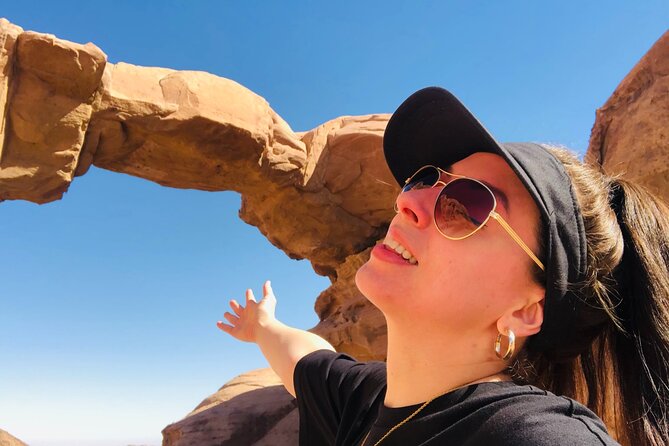
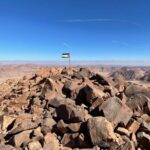
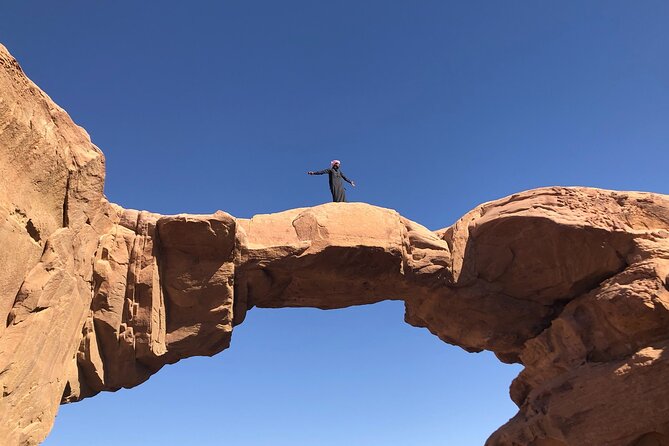
Next up is Umm Fruth Rock Bridge, described as a famous bridge next to the Burdah Bridge area. It’s about 15 meters high, so it’s still an impressive climb. The difference is that it’s not as challenging as Burdah, and it’s time-efficient for what you get.
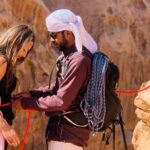
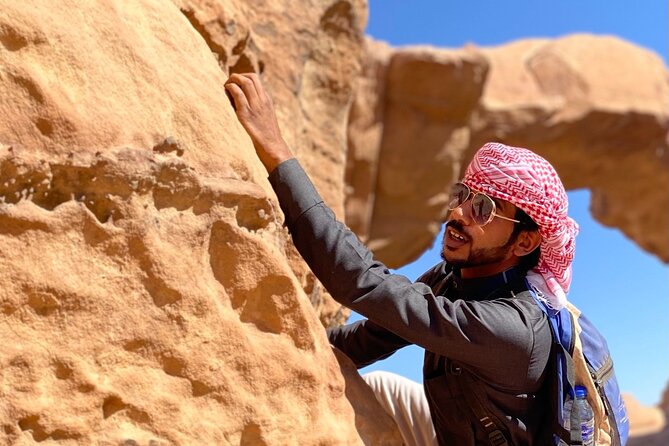
The photo setup is worth knowing: your guide stays on the ground and helps capture the moment by positioning you for the shot. The instructions also mention that locals run up and down the bridge with ease, but for tourists it’s more challenging—good reason they’ve made small holes into the route to make climbing easier.
This stop is a nice contrast to Burdah. You’ll still be scrambling, but it’s not the long vertical grind of the main hike. If you want a “check this view off my list” moment without committing to the steepest terrain again, this is that stop.
Abu Khashaba Canyon and Little Bridge: the calmer nature break
After bridges, you get a more relaxed change of pace with a walk in Abu Khashaba Canyon. This is a deep, narrow valley surrounded by tall rock walls. The big visual change here is green—there’s a contrast between the red desert sand and areas with vegetation.
It’s also described as an oasis of peace. You may notice birds chirping, and the tour notes that locals hang bottles to collect rainwater so birds can drink. That’s one of those small details you only really appreciate when you’re there, listening and watching the valley hold on to life.
Time-wise, the canyon walk is about 30 to 45 minutes. Your guide will pick you up on the other side, so you should expect a “walk through” instead of a round trip along the same path.
Then you move on to Little Bridge in the Khor El Ajram area. This one is called “Little” because it’s only a few meters high and described as easy to climb. Still, the views are said to look bigger than you’d expect in pictures, and it’s a fun quick stretch to get your camera out again.
When you come down from Little Bridge, you get sweet tea in a Bedouin tent. The tent is also where you can relax and buy souvenirs if you want.
White Desert: the color shift, plus a chance for the less-crowded feel
The day turns different again with the White Desert. It’s far into the desert in a more remote area, with less tourist traffic, which is exactly what you want if you’ve spent the morning around popular rock formations.
The White Desert looks totally different from the red desert. You’ll see different colors and rock formations, and the tour specifically mentions spots like Mushroom Rock and Chicken Rock. Even if you’ve seen pictures, it tends to land differently in person because the terrain feels more open and quiet.
This stop is shorter—about 30 minutes—so treat it as a focused viewpoint time. Walk a bit, look around slowly, and then take your photos. You’ll feel less rushed than you might on a day that only has one “main stop.”
Jeep tour window and the best timing for sunset at Um Sabatah
After White Desert, you still have time before sunset, and that’s where the tour uses a jeep tour for sightseeing, visiting Wadi Rum highlights with about 1 hour of vehicle time.
This is practical. Driving lets you cover distance and connect the “different worlds” you’ve seen—bridge country, canyon pockets, white desert rock formations—without turning the day into a 10-hour hike.
Then you finish at the Um Sabatah Sunset Viewpoint. This is the tour’s named best place to watch sunset, and you’re taken to a secluded spot overlooking a wide panoramic view as the sun sets.
You’ll also get sweet Bedouin tea prepared on the fire. You sit on a mattrass or in the sand, and the focus is simple: let the light change, watch the horizon, and enjoy the quiet after the active parts of the day.
If you’ve ever found that sunsets elsewhere feel like waiting for a calendar moment, this one tends to feel more like a payoff to the hike you just did.
Who this tour fits best (and who should rethink it)
This experience is a good match if you:
- want one big hike plus enough variety to keep the day interesting
- are comfortable with rocky paths and some scrambling
- have moderate physical fitness and can handle a full 8.5-hour day
You don’t need a climbing background, but you should still expect steep, technical-looking obstacles. I’d especially think twice if you have injuries that make scrambling risky, or if you’re uncomfortable on steep rock surfaces.
On the positive side, the tour runs with support from an experienced Bedouin guide, and it’s a max 15 travelers format. That’s a good combo for people who want adventure with real human help.
One more practical note: the tour mentions service animals are allowed, and it’s near public transportation. If you’re building a day from Aqaba, that can simplify logistics.
Price and value: what you’re really paying for
The price is $86.04 per person for an experience that runs about 8 hours 30 minutes. When you compare that to the amount packed in—Burdah Bridge hike, extra bridges, canyon walk, white desert time, jeep sightseeing, lunch, and tea at multiple points—it starts to look more like “a guided Wadi Rum day” than a simple hike.
What’s included:
- Lunch
- Transfer to and from Wadi Rum Village
- Bottled water and tea
You’ll also drink tea as part of the mountain stop and at the sunset viewpoint (sweet tea made by the fire is specifically described).
What’s not included:
- Visitors Center transfer, bookable separately for 10 JOD
That last point matters if your starting location is the Visitors Center rather than Wadi Rum Village. If you’re comparing options, factor that extra transfer into your total budget so you don’t get surprised.
Also, the tour uses a mobile ticket, and it’s described as having group discounts. Those can help if you’re traveling with a friend or two and want to keep your overall cost down.
A quick note on guides and communication in the desert
Wadi Rum runs on people who know the terrain, and this tour is explicitly built around an experienced Bedouin guide. In one example connected to the operator, the in-desert guide is Bedouin local Bakhir, with a team member named Lara helping with communication and bookings from the office side since Bakhir can speak English but not write/read it.
That’s not just trivia. It tells you how the operation works: you’re getting someone who can guide you on the ground, and there’s a support person handling the admin pieces so you’re not left guessing.
If you want this day to go smoothly, do one simple thing: show up on time for the 09:30–10:00 meeting window. The hike clock matters once you’re moving through rocky terrain and timing the sunset stop.
Should you book the Burdah Mountain hike and bridge day?
Yes, with one clear condition: book it if you’re up for rocky scrambling and a full active day.
This is the right choice if you want the most iconic Wadi Rum “achievement moment” (Burdah Bridge) plus a smart add-on sequence that keeps variety high: Umm Fruth for height and photos, Abu Khashaba Canyon for a cooler, greener break, Little Bridge for easy climbing and tea, White Desert for a major color shift, then jeep sightseeing and sunset at Um Sabatah.
Skip it (or choose a gentler option) if steep rocky sections make you nervous, or if you prefer long, easy walks over technical scrambling.
If you’re the type who likes earning your views, this one’s built for you.
FAQ
How long is the Burdah Mountain hike and full tour?
The tour is about 8 hours 30 minutes (approx.).
What time does the tour start?
Start time is 10:00 am, with meeting between 09:30 and 10:00.
Where do we meet for the tour?
You meet at the Wadi Rum Rest House in Wadi Rum Village.
Is climbing experience required?
No climbing experience is not necessary, but the trail includes technically difficult areas and steep rocky surfaces where scrambling and sometimes climbing are needed.
How long is the main hike to the Burdah bridge?
The hike and climbing portion takes about 2 to 3 hours, depending on pace.
What’s included in the price?
Lunch, transfer to and from Wadi Rum Village, plus bottled water and tea.
What isn’t included?
Visitors Center transfer is not included and can be booked separately for 10 JOD.
Where does the tour end?
The tour ends back at the meeting point.
What if the weather is bad?
This experience requires good weather. If it’s canceled due to poor weather, you’ll be offered a different date or a full refund.