REVIEW · CAPE TOWN
Cape Town: Lion’s Head Sunrise with coffee or Sunset Hike
Book on GetYourGuide →Operated by Cape Escape Tours · Bookable on GetYourGuide
Lion’s Head is one of the few hikes where you can watch the whole city wake up, then do the same thing again at sunset—360 degrees of payoff. What makes this version smart is the guided route up to the 669m summit, plus a focus on timing, safety, and photos that leave you with more than just a view.
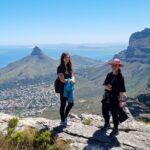
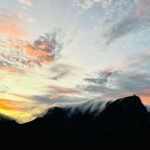
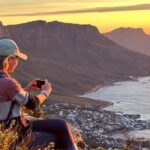
I like that the hike is built around real Cape Town landmarks as you climb: Atlantic coastline views, Camps Bay and Clifton, Seapoint, and the face of Table Mountain looming above you. I also love the human touch from guides such as Patrick (often praised for safety and local stories) and Andy (mentioned for making coffee and taking pictures when the clouds rolled in).
One consideration: this isn’t a casual walk. There are ladders, chain handrails, and sections with height exposure, so it’s not a good fit if you have back problems, limited fitness, or a fear of heights.
In This Review
- Key highlights you’ll notice fast
- Why Lion’s Head sunrise and sunset are such a big deal in Cape Town
- Getting to the Signal Hill car park and meeting your guide
- From silver leaf groves to paragliding pads: the climb starts gentle
- Camps Bay and Clifton viewpoints keep you motivated
- The split decision: circumnavigate pitches or climb them
- Reaching the southeast ridge crest and the final summit push
- Sunrise coffee versus sunset timing: what changes on the top
- What your guide actually adds: safety, local stories, and better timing
- Photos and videos: how the summit moment becomes shareable
- Price and value: what $49 covers and why the guide is the point
- Weather can make or break the plan (and how to adjust)
- What to bring (and what to leave at home)
- Who should book this and who should skip it
- Should you book Cape Escape Tours for Lion’s Head sunrise or sunset?
- FAQ
- Where is the meeting point for the Lion’s Head hike?
- Do I get hotel pickup and drop-off?
- What is included on a sunrise hike?
- Is a headlamp included?
- Do you take photos at the summit?
- How high is the summit?
- Is this hike suitable for children?
- Is it suitable for pregnant women?
- What should I bring and wear?
- Are drones or open-toed shoes allowed?
Key highlights you’ll notice fast
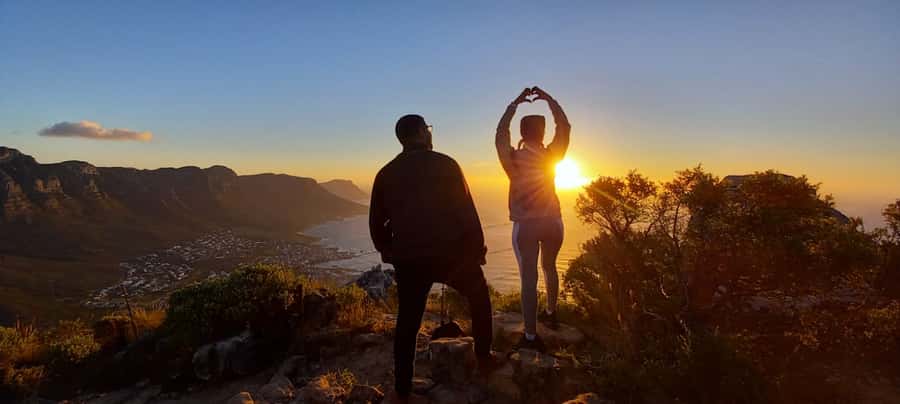
- 360-degree Cape Town views from the summit area, especially at golden hour
- Silver leaf tree start on a gravel path that quickly turns into classic Lion’s Head terrain
- Coffee or tea on sunrise hikes to make the early start feel worth it
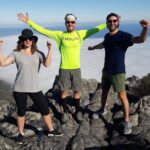
- Photos and videos, including an Insta-style rock photo at the top
- Headlamp provided for sunset timing when the descent gets dark
- Guide-led safety and pacing with equipment like first-aid gear and headlamps
Why Lion’s Head sunrise and sunset are such a big deal in Cape Town
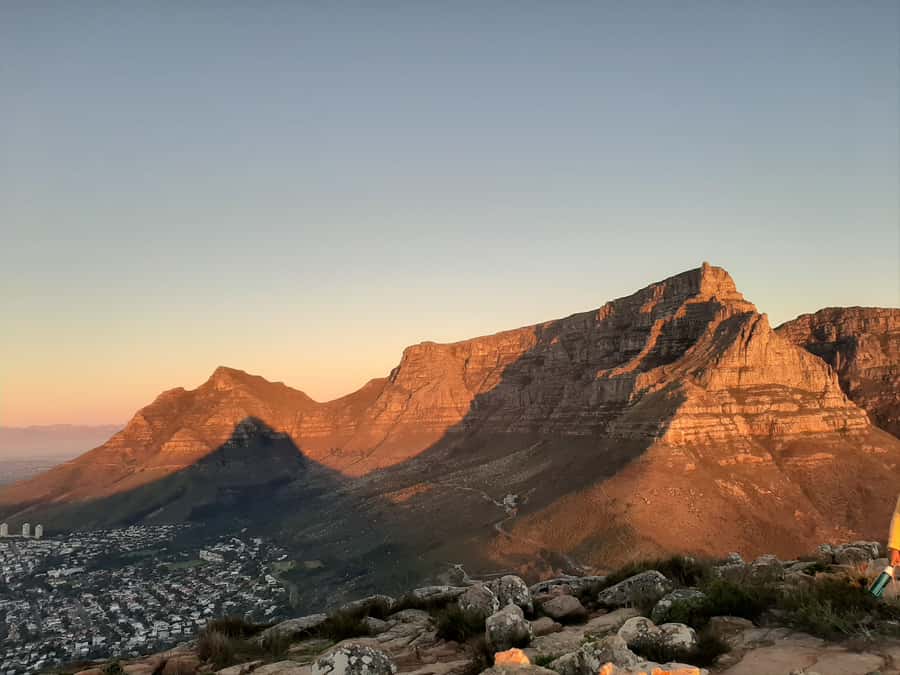
If you’ve got limited time in Cape Town, Lion’s Head is a rare hike that gives city views and mountain views in one go. You get the Atlantic coastline early, then the views start rotating as you climb—Camps Bay, Clifton, Seapoint, and the Cape Town bowl below. By the time you reach the summit ridge, it feels like the whole peninsula is laid out for you.
Sunrise and sunset each have their own rhythm. At sunrise, the hike starts early enough that the “arrive in time” part matters. At sunset, the climb can feel manageable, but the real test is the return in darkness—this is where a proper guide and a headlamp stop you from turning it into guesswork.
You can also read our reviews of more tours and experiences in Cape Town.
Getting to the Signal Hill car park and meeting your guide
You’ll start at the Lion’s Head car park on Signal Hill Road, right next to a coffee truck. On the day, your guide reaches out via WhatsApp with the exact meeting details, which helps if you’re trying to find the group quickly.
If you choose the option with hotel pickup and drop-off, you’ll save yourself the stress of arranging transport for an early morning (sunrise) or a nighttime descent (sunset). If you don’t choose pickup, you’ll head directly to the meeting point and start on your own, which is fine as long as you’re not rushed.
Either way, I’d treat the start as part of the experience: arrive a few minutes early, get water sorted, and double-check your shoes. Lion’s Head terrain punishes bad footing.
From silver leaf groves to paragliding pads: the climb starts gentle
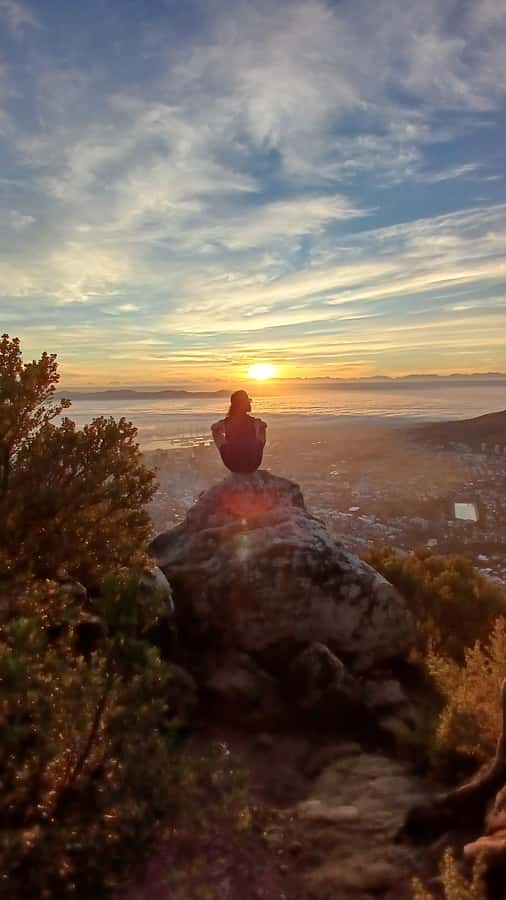
The hike begins on a gravel track through groves of silver leaf trees. This section is a good warm-up and helps you settle into the route before the trail starts doing its steep, rocky thing.
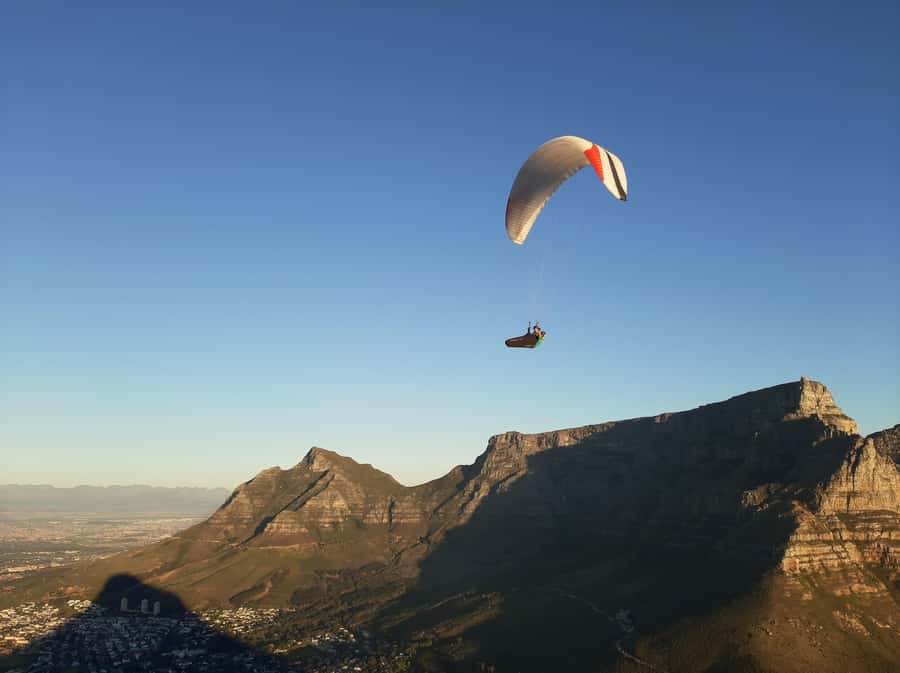
As the path spirals around Lion’s Head, the views change in a way that makes you forget you’re climbing. You start with a taste of the Atlantic coastline and the Table Mountain backdrop. Soon the trail narrows into a more “trail-like” path, and one of the first memorable markers is a paragliding launch pad.
This matters even if you never paraglide. It signals you’re on the classic Lion’s Head circuit—where wind, sun, and exposure all play a role.
Camps Bay and Clifton viewpoints keep you motivated
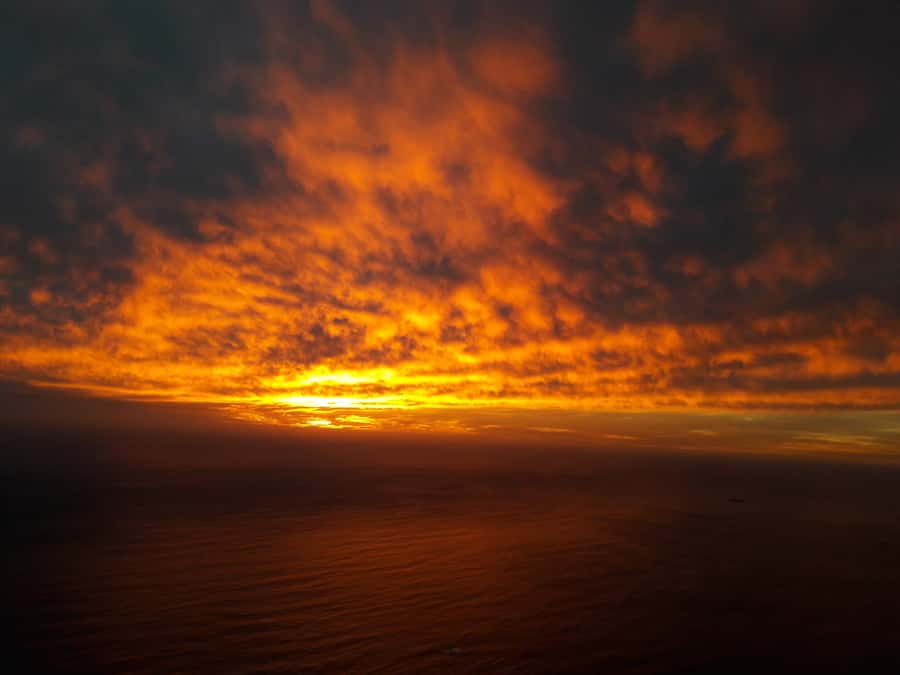
After you pass that first paragliding launch area, the route includes stepped sections and more defined outlook points. You’ll get views over Camps Bay Beach and Clifton, both famous for their color and cliff-lined coast.
This is one of the parts I appreciate most because it breaks the climb into chapters. You’re not just “going up.” You’re checking boxes of the Cape Town coastline as you go, and the guide can point out what you’re actually looking at: coast, bays, and how the terrain shapes what you see.
The split decision: circumnavigate pitches or climb them
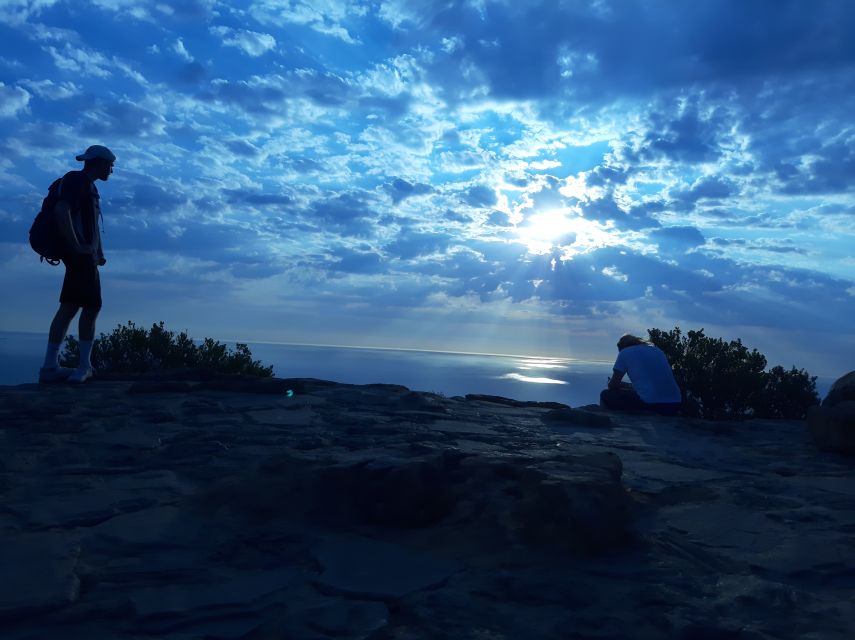
Once you’ve hiked for a while, the trail hits a split on the upward-tending route. From there, you continue with views including Seapoint to your left. Then, after roughly 10 more minutes, you start looking down at the city of Cape Town sprawled beneath you, with the front of Table Mountain rising above.
At this stage, the climb becomes more technical. You’ll go steeply upward to the first ladder, then traverse left along a shelf with a chain handrail. This is the “pay attention” section. The chain isn’t there for decoration—it’s there for balance and confidence on a sloping ledge.
Then you reach a fork where you can choose how the route handles two rock pitches:
- Veer left to circumnavigate them
- Or turn right and climb the pitches
If you’re not keen on vertical rock steps, the left option is usually the calmer choice. Either way, the guide’s calls keep the group moving safely.



Reaching the southeast ridge crest and the final summit push
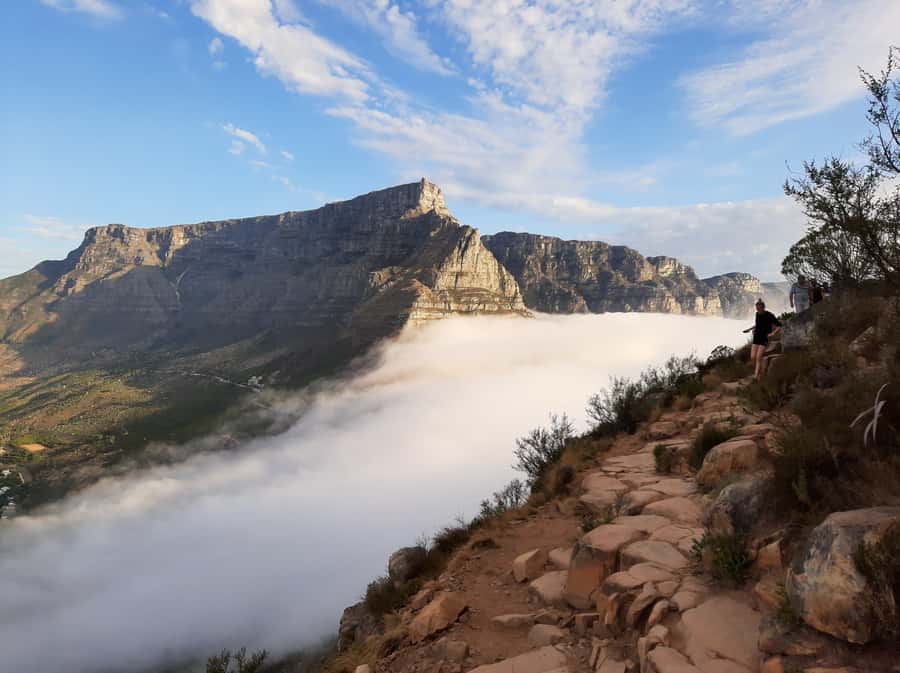
Past the fork, the route can include scrambling and another ladder on the way to the top. If you continue via the path past huge stone pine trees, you’ll gain the crest of the southeast ridge. From there, the trail becomes the obvious, well-worn line—still physical, but more readable.
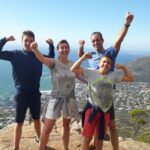
The summit itself sits at 669 meters, and the final approach is where that famous summit feeling shows up: big open views, a 360-degree sense of place, and plenty of spots where it’s easy to take photos without blocking everyone.
One smart tip from how guides operate here: if the top gets crowded (especially at sunset), you’ll likely spend time at the summit area and then move slightly off the busiest spots for more breathing room.
Sunrise coffee versus sunset timing: what changes on the top
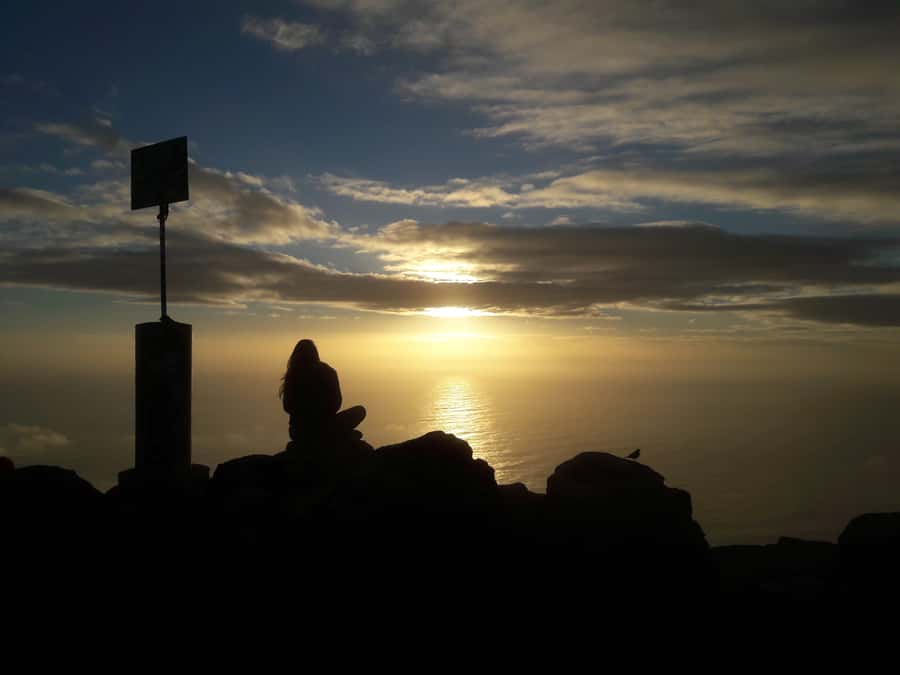
The biggest difference between the two options is simple: sunrise hikes include coffee or tea. It’s served as a small reward, but also a morale booster when you’re heading up in cooler air and early light.
On sunset hikes, the challenge isn’t only the climb. It’s the return when light fades. You’ll get a headlamp, which is a big deal because the terrain is rough enough that guessing at your footing is not fun.
Both options share the same “why you came” moment: the view, the photos, and the Insta-style rock photo stop. If you’re doing this for pictures, plan to treat the photo moment as part of the hike, not an extra task. It can take time to position, wait for the best sky angle, and get a clear frame.
What your guide actually adds: safety, local stories, and better timing
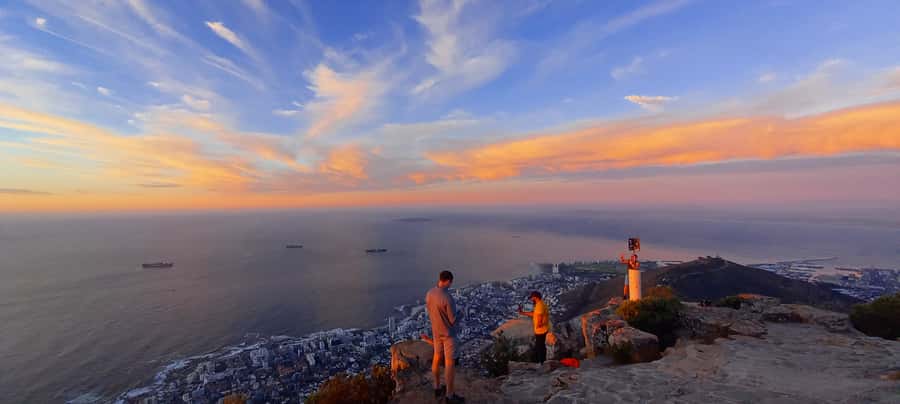
A good Lion’s Head guide does three jobs: keeps you safe, keeps you moving at your level, and turns the views into something you recognize.
Expect a registered hiking guide plus safety and first-aid equipment. You’ll also get a headlamp (included), which matters most on sunset hikes. There’s also height exposure and scrambling in the route, so you want a guide who explains how to move through ladders and handrail sections without rushing.
On the storytelling side, guides are praised for local knowledge—fauna, flora, and the area’s history and geology. That’s not just trivia. When you understand what you’re seeing—coastlines, mountain formations, and vegetation—you end up noticing more on the trail, which makes the climb feel richer even if you’re not a “nature person.”
Guides such as Patrick and Andy come up often in feedback, with particular praise for safety habits, friendliness, and photography. If you care about getting photos you’ll actually use later, that’s a real value add.
Photos and videos: how the summit moment becomes shareable
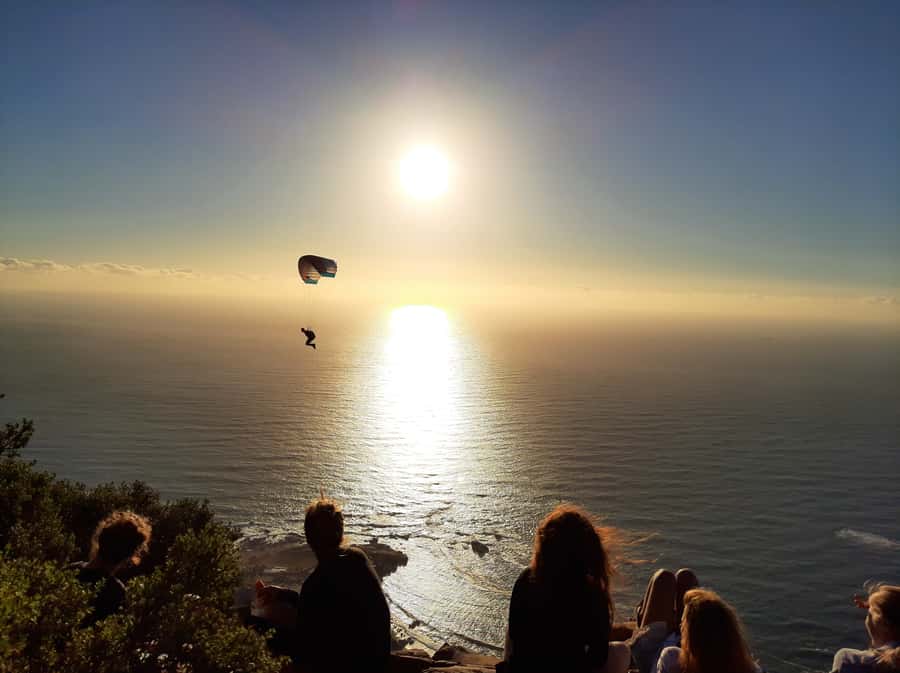
You’ll get photos and videos as part of the experience, including a photo taken at the Instagram rock on Lion’s Head. That’s useful for two reasons.
First, it saves you from the usual scramble of passing your phone around while someone watches the sky for the perfect light. Second, the guide knows where people can stand to get a good composition without turning the summit into a traffic jam.
Even better: guides often manage timing so you’re not stuck in the most chaotic moment at the very top. That can mean a smoother climb, and a more relaxed sunset view if crowds are thick.
Price and value: what $49 covers and why the guide is the point
At $49 per person, what you’re really paying for is competence and risk reduction. This route has ladders, chain handrails, and sections that can be slippery or exposed depending on the conditions. When you add headlamps, safety equipment, and a registered guide, the price starts to look like what it is: paying for a smoother, safer experience.
Also included:
- Registered hiking guide
- Headlamp
- Photos and videos
- Coffee or tea on sunrise hikes only
- Safety and first-aid equipment
- Hotel pickup/drop-off if you select that option
If you’re traveling with limited time, the guide is also a time-saver. You’re less likely to wander onto the wrong path when visibility is poor or when the trail forks into different pitch options.
Weather can make or break the plan (and how to adjust)
This hike is weather dependent. That’s not a vague warning. Lion’s Head can get windy, and on certain days the conditions can make technical sections more challenging than you expected.
A practical approach:
- Check the forecast, especially if you book close to the start time
- Dress in warm layers even if the day sounds mild
- Bring water, because the sun and wind can trick you into not drinking enough
If it’s windy, don’t treat it as a minor detail. Wind affects balance on handrail sections and can change how comfortable you feel on ledges. If you’re uncomfortable with heights, that’s where weather becomes a bigger deal.
What to bring (and what to leave at home)
Bring:
- Comfortable shoes (and ideally hiking shoes with good grip)
- Warm clothing
- Water
Not allowed:
- Oversize luggage
- Smoking
- Drones
- Open-toed shoes
Also, plan to keep things simple. When you’re using ladders and scrambling sections, loose items and bulky bags become a hassle.
Who should book this and who should skip it
This hike suits people who want big Cape Town views and don’t mind a bit of adventure. If you’re comfortable with steep sections, ladders, and some height exposure, you’ll likely love it.
It’s not suitable for:
- Children under 12
- Pregnant women
- People with back problems
- People afraid of heights
- People with low level of fitness
- People suffering health issues (not recommended)
If you’re on the fence, think realistically about your comfort with exposed terrain and the dark descent on sunset hikes. A headlamp helps, but it doesn’t remove the fact that you’re still moving across rocky ground.
Should you book Cape Escape Tours for Lion’s Head sunrise or sunset?
I’d book it if you want a Cape Town view that feels earned, timed to the sky, and supported by a guide who takes safety seriously. The combination of route structure, ladder/handrail navigation, headlamps, and included photos is good value for $49—especially if you’re traveling solo or you’re short on time and want a proven plan.
I’d skip it if you’re uncomfortable with heights, ladders, or scrambling. Also skip if you’re dealing with back issues or a health condition that makes technical footing a concern.
If you do book: choose sunrise for the coffee-and-light moment, choose sunset if you want the city lights mood (and plan for darkness on the way down). Either way, bring warm layers, wear proper shoes, and keep your focus on one step at a time.
FAQ
Where is the meeting point for the Lion’s Head hike?
The meeting point is the Lion’s Head car park on Signal Hill road next to the coffee truck.
Do I get hotel pickup and drop-off?
Hotel pickup and drop-off are included only if you select the option that offers transfers.
What is included on a sunrise hike?
On the sunrise hike, coffee or tea is included, along with a registered hiking guide, headlamp, photos and videos, and safety equipment.
Is a headlamp included?
Yes. A headlamp is included as part of the experience.
Do you take photos at the summit?
Yes. Photos & videos are included, including a photo taken at the Instagram rock at the top.
How high is the summit?
The summit is at 669 meters.
Is this hike suitable for children?
No. It’s not suitable for children under 12.
Is it suitable for pregnant women?
No. It’s not suitable for pregnant women.
What should I bring and wear?
Bring comfortable shoes (preferably hiking shoes), warm clothing, and water.
Are drones or open-toed shoes allowed?
No. Drones aren’t allowed, and open-toed shoes aren’t allowed. Smoking is also not allowed.