REVIEW · FLORENCE
Florence: Hiking Tuscany & Chianti wine 3 wineries and lunch
Book on GetYourGuide →Operated by Out of the box Florence · Bookable on GetYourGuide
Wine tastes better when you walk. This 8-hour Chianti Classico wine-and-hike day from Florence mixes short hikes with visits to three organic/biodynamic wineries, plus tastings and a proper Tuscan lunch. I like that it runs as a small group (max 7), so the guide can actually explain what you’re tasting and keep the pace comfortable.
One thing to plan for: this is real walking on uneven paths. You’ll cover about 8 km with ups and downs (often more down than up), so bring good shoes and skip it if you have back, mobility, heart, or similar limitations—or if you just hate hills.
In This Review
- Why This Wine Hike Works Better Than a Bus Tour
- The Drive Out: Florence to Chianti in an Air-Conditioned Minivan
- Starting the Day in Panzano: The Conca d’Oro Walk
- Stop 1: A 12th-Century Family Winery and Cellar Tour
- Walking Between Wineries: Olive Groves, Vineyards, and Real Pace
- Stop 2: Organic Farming with Lunch Included (and Sometimes Shifted)
- Cheese, Salami, Ham, and Olive Oil Tastings That Actually Add Context
- Stop 3: Modern Artists Meet Traditional Knowledge
- The Total Walking Reality: 8 km, Uneven Ground, and What to Wear
- Small Group Value: Max 7 People, Real Questions, Real Explanations
- What’s Included (and Why It Matters)
- Price and Logistics: Is $239.03 Worth It?
- Who This Chianti Wine Hike Fits Best
- Should You Book This Tour?
- FAQ
- How long is the tour?
- How much walking is involved?
- How many wineries do you visit and how many tastings are included?
- Where do you meet in Florence?
- Is lunch included?
- Is the tour canceled in bad weather?
Why This Wine Hike Works Better Than a Bus Tour
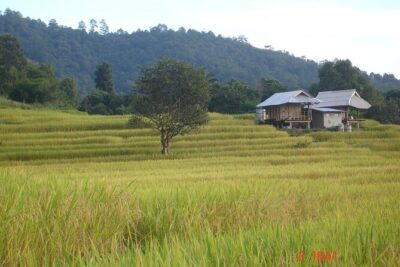
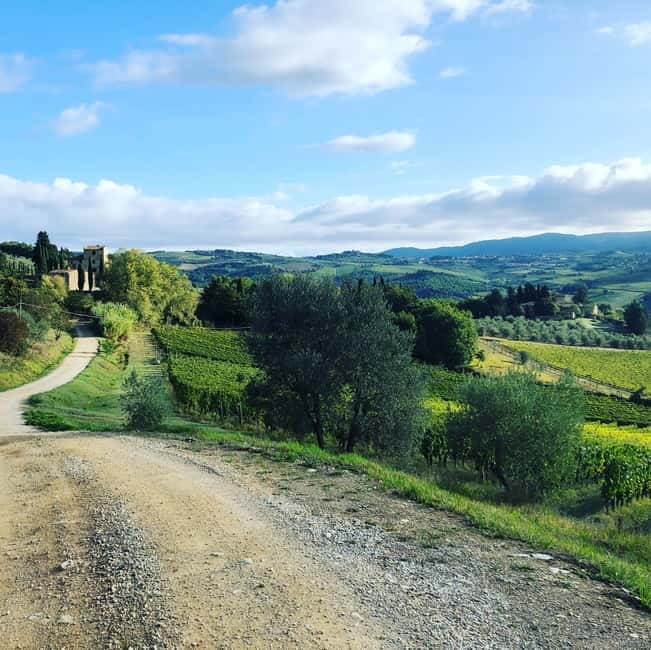
This is one of those Florence-to-Countryside days that doesn’t just dump you into a scenic viewpoint and call it a day. You get driven into the Chianti Classico area around Panzano in Chianti, then you earn the view the slow way: by foot, between vineyards, olive groves, and little stretches of countryside path.
The payoff is practical and sensory. You’ll learn how grapes become wine and how olive oil fits into the same local farming world. And because the group is kept small, the stops feel personal rather than rushed. A day that includes three winery visits and 11 wine tastings also means you’re not stuck doing one long tasting session and calling it variety.
The best part is the mix of old and new. You might start in a medieval stone structure, then finish at a more modern setup where artists and winemaking techniques meet. That contrast helps you understand that Chianti isn’t frozen in time—it’s producing wine now, with deep roots.
The Drive Out: Florence to Chianti in an Air-Conditioned Minivan
You meet in Florence at the bar Café Lietta, with the van from Out of the box Florence. Plan to arrive about 10 minutes early, and know there’s no hotel pickup—so get to the meeting point on your own.
From there, you ride out by air-conditioned minivan. There’s about an hour of driving time, and the route matters: you’re not just traveling to a single winery address. You’re entering the Chianti Classico area, where the roads twist and the countryside changes fast. That matters because the day is built on short walking segments that connect multiple producers.
When you return to Florence later, your drop-off isn’t one single exact spot. You’ll be sent back to the meeting area or to one of two central drop-off locations listed as Piazza Signoria area (P. Signoria, 28) or Via S. Gallo (140/red). The point is simple: you’ll be back in a walkable, central zone.
You can also read our reviews of more tours and experiences in Florence.

Starting the Day in Panzano: The Conca d’Oro Walk
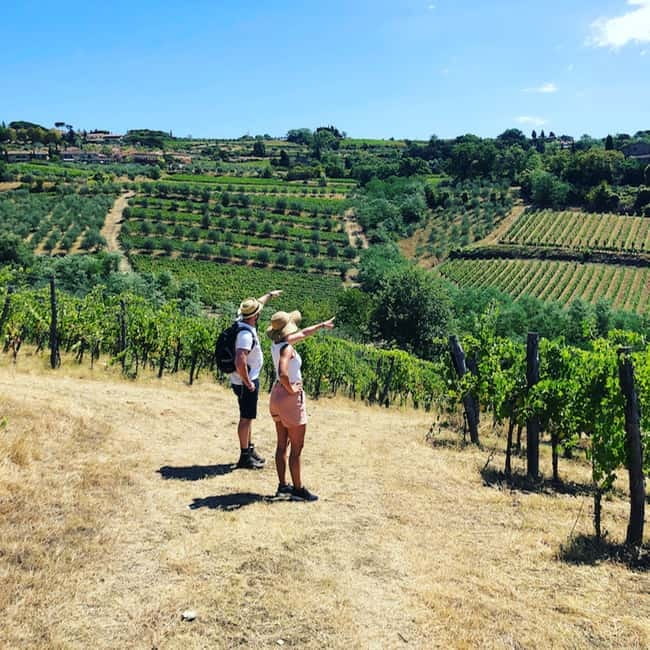
The day’s first real wow moment happens right away after the minivan drop. You begin with a walk through Conca d’oro, described as a natural amphitheater. The idea is that this kind of terrain helps shape the growing conditions in the Chianti Classico area, and you’re walking through a space tied directly to the wine identity here.
You’ll then move along paths that lead into vineyards toward the first winery stop. This is the part where comfortable shoes really pay off. Even though the walking is described as on easily-accessible paths suitable for any skill level, the ground is uneven and there are ups and downs. You want footing you trust.
I also like how the day starts outdoors before you taste anything. It sets the right mental frame: you’re not touring like a museum. You’re touring like a farmer’s landscape meets a wine cellar route.
Stop 1: A 12th-Century Family Winery and Cellar Tour
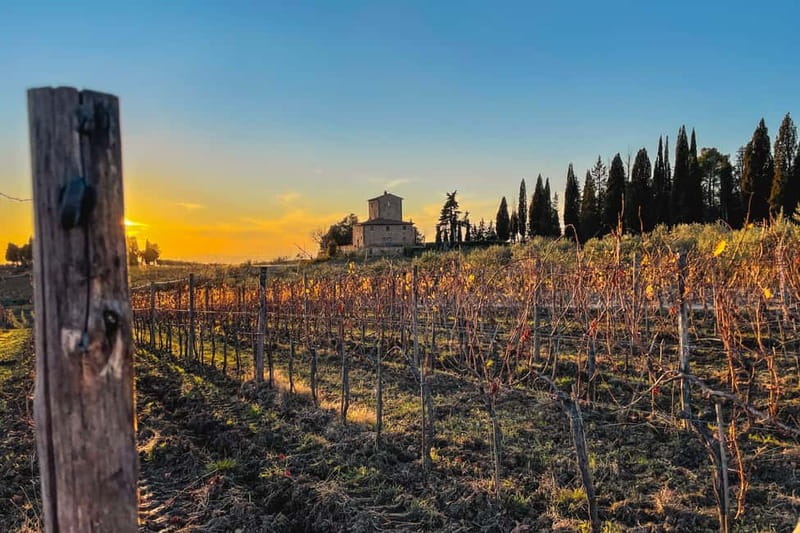
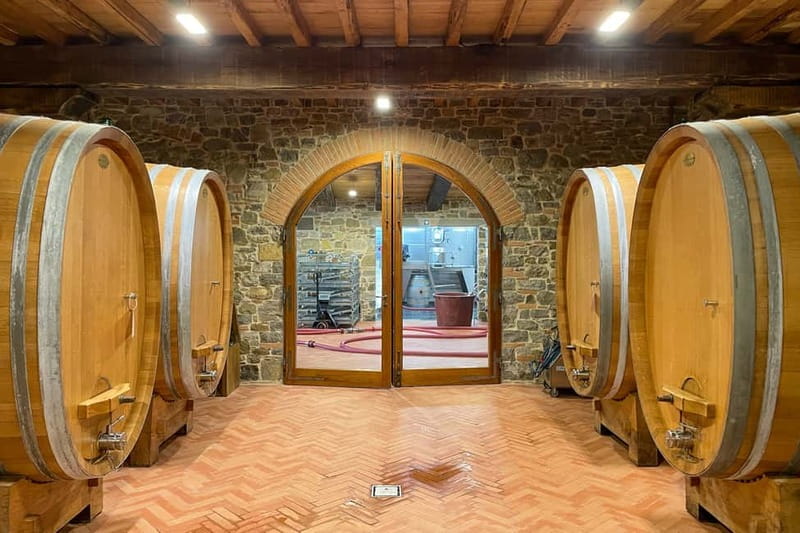
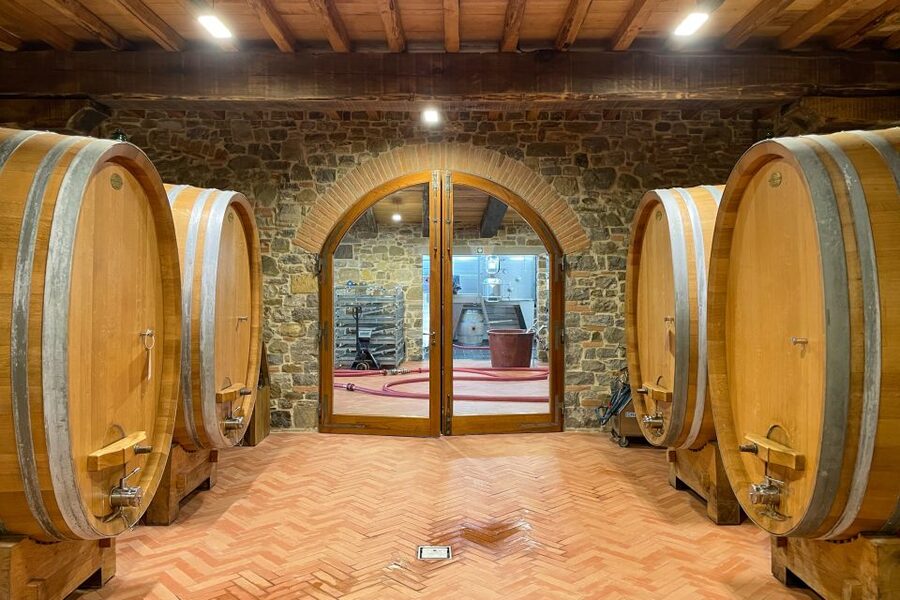
The first winery stop is a long-established family operation that’s housed in a medieval building. The cellar you visit is framed as the second oldest building in Panzano in Chianti, and it’s tied to older uses in the village past.
What I like about this first stop is the grounding. You’re not just meeting a tasting room. You’re stepping into a structure that helped store wine and connected the community over generations. That makes the wine tasting feel connected to place, not just to a brand.
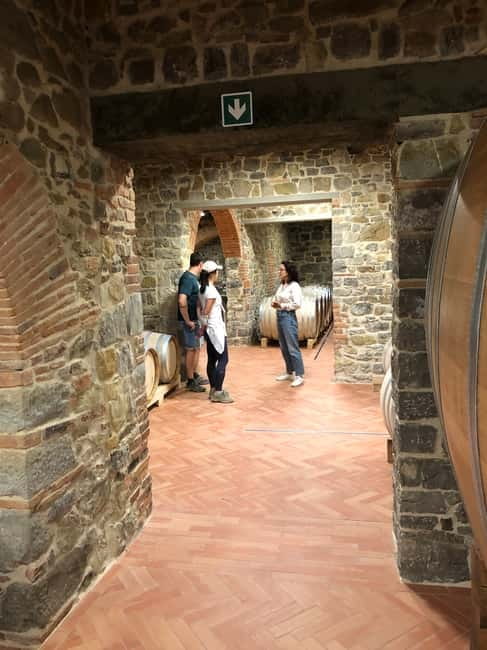
You’ll taste local wines and food in this historical setting, and the guide will connect what you’re seeing—storage style, aging context, farming choices—to what ends up in the glass. The day is designed so you walk, taste, then walk again. That rhythm keeps the experience from turning into one long sit-down event.
Walking Between Wineries: Olive Groves, Vineyards, and Real Pace
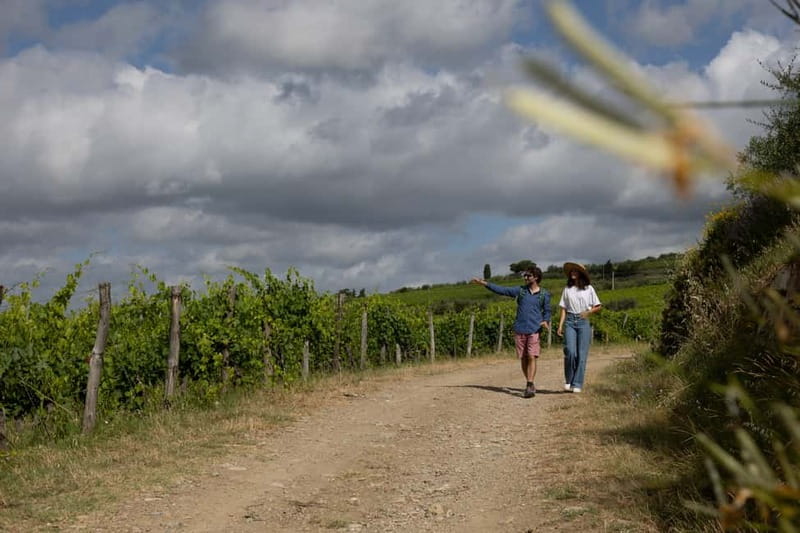
After the first cellar visit, you continue on foot through olive groves and more vineyard terrain toward the next winery. This walking segment is short enough to feel doable for most people, but it still gives you that countryside feel you came for.
This is where the small-group size matters again. With a group capped at 7, the guide can manage the pace and make sure you’re not constantly waiting. You’ll notice changes in vegetation as you go—vine rows, olive trees, and typical Tuscan countryside details that a quick photo-stop can’t teach.
There’s also a sustainability angle here that isn’t just marketing language. The producers you visit are described as organic or biodynamic, and that context becomes clearer when you’re walking among the working parts of the farm rather than just arriving for tastings.
Stop 2: Organic Farming with Lunch Included (and Sometimes Shifted)
The second winery stop brings you another guided experience tied to local farming families. Here, the day includes a Tuscan lunch plus a wine tasting. The lunch is described as starter and pasta, and it’s hosted at a family organic winery.
A helpful detail: lunch timing can shift. Sometimes the lunch is served at the second stop as planned; other times it may be postponed to the next stop depending on supplies and winery flow. So if you’re picky about meal timing, don’t schedule anything tight right after the tour ends.
What makes this stop valuable is that it isn’t only about eating. You’re tasting alongside what you’re learning about the farm and winemaking work. And because you’re walking again afterward, the meal is meant to reset your energy rather than end the day.
Cheese, Salami, Ham, and Olive Oil Tastings That Actually Add Context
In the middle of the day, you’re not just drinking wine. You also get tastings that include cheese and cured meats like salami and ham, plus extra virgin olive oil tastings.
If you’ve ever had Italian wine and thought, sure, but where does olive oil fit, this is the answer. The guide connects the role of olive trees and olive oil production to the same general regional agriculture. You’ll see how local producers treat these products as part of one working system, not separate hobbies.
This is also a good time to slow down and taste consciously. Take a sip, then switch to the olive oil, then circle back. The flavors don’t land the same way, and that contrast is part of what you’re paying for.
Stop 3: Modern Artists Meet Traditional Knowledge
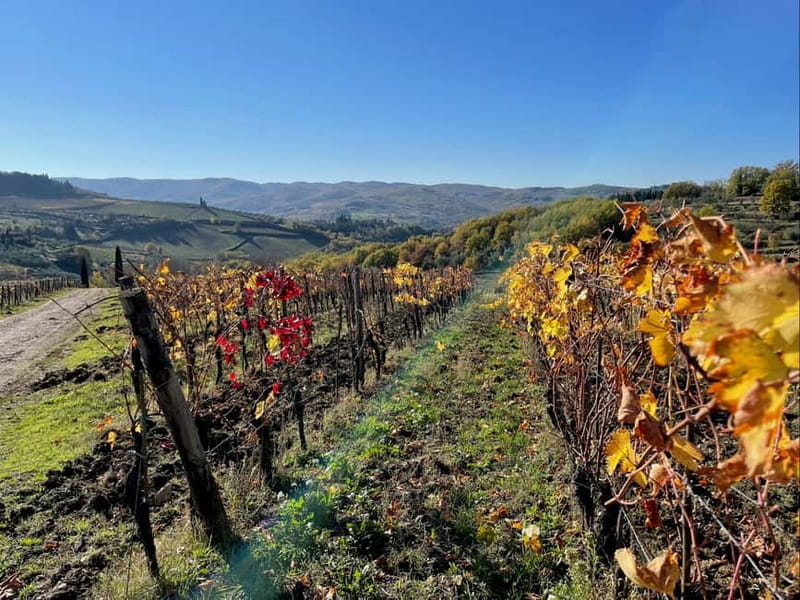
The last winery stop is described as modern, created by Italian artists, and positioned high on the hills overlooking Montefioralle. You’ll finish with a final wine tasting at this hilltop setting.
I like the structure of ending here: you start in a centuries-old building, then move through working vineyards and olive groves, then finish with a place that shows how design and modern technique can still operate with old wisdom. The day’s message becomes clearer: Chianti is both tradition and ongoing craft.
Expect a final tasting that combines modern techniques with time-tested knowledge. And because this is the last stop, you’ll feel like the day has come full circle: you’ve walked the ground, learned the production basics, and now you taste the results from a different kind of winery environment.
The Total Walking Reality: 8 km, Uneven Ground, and What to Wear
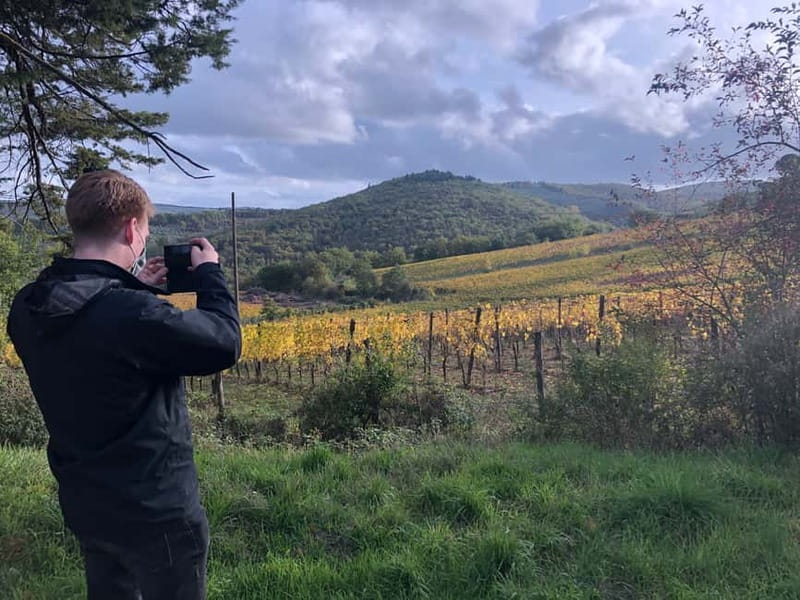
This tour involves about 8 km of walking over the day. The paths are described as easily accessible and suitable for any skill level, but uneven terrain and ups and downs are still part of the deal.
So plan for:
- Good hiking shoes (not fashion sneakers)
- Water and a sun hat or cap
- Biodegradable sunscreen (as listed)
- Comfortable clothes you don’t mind getting dusty
Also note what’s not allowed: luggage or large bags, and backpacks. You’ll want to travel light so you don’t feel stuck managing extra items during hikes.
One more practical detail: the tour runs rain or shine. It can be canceled with an orange or red weather alert. So you’ll want weather-appropriate clothing, but you also shouldn’t count on the itinerary changing every time it threatens to rain.
Small Group Value: Max 7 People, Real Questions, Real Explanations
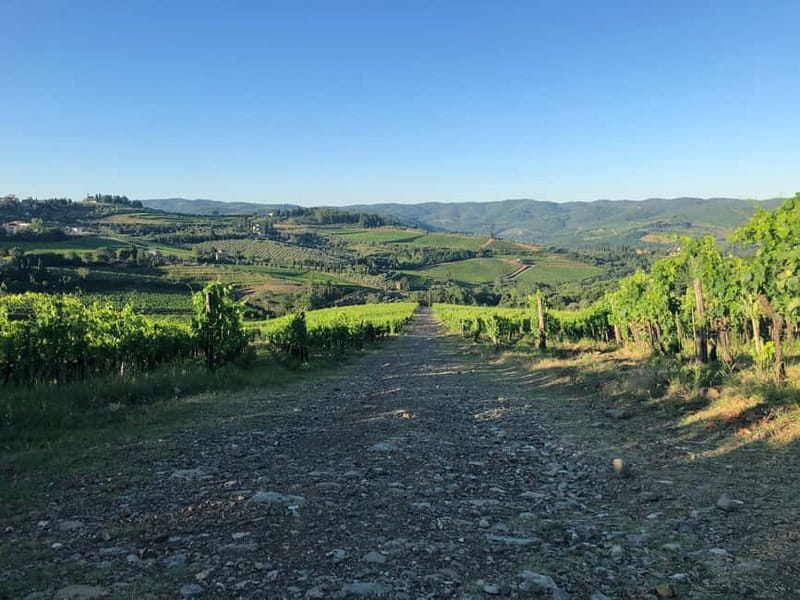
For me, the biggest value here is the group size. A max of 7 participants means you’re not just filling seats. You have time to ask questions and you get guide pacing that fits real people.
Guides named Lorenzo and Stefano show up in the experience style—both are described as passionate, with strong wine-making process explanations. You’ll also find the guide stops for details beyond wine, like local fruit and flower observations during the walk, and that kind of extra context is what makes this day feel like more than a standard itinerary.
And you’re not only learning at tastings. You’re learning while walking. That’s the difference between memorizing facts and building understanding.
What’s Included (and Why It Matters)
You’re not just paying for transport. The included items are built to create a complete food-and-wine story:
- Air-conditioned minivan and local transfers
- 8 km of walking on the provided routes
- Expert wine hiking guide
- Visits to 3 organic/biodynamic small family wineries
- 11 wines tasted
- Extra virgin olive oil tasting
- Cheese and salami/ham tastings
- Lunch at a family organic winery (starter + pasta)
- A saffron producer element
- A sustainable local tourism experience
When you compare this to a basic wine-tasting outing, the value improves fast. The day combines multiple producers, food, and olive oil, plus actual hiking time that connects the tasting stops to the land.
Price and Logistics: Is $239.03 Worth It?
At $239.03 per person for an 8-hour day, this is not the cheapest option from Florence. But it’s also not a bare-bones tasting.
You’re paying for:
- Three winery stops rather than one,
- Multiple tastings including wine and olive oil,
- A guided hiking component over about 8 km,
- Transport by minivan,
- Lunch included.
You’re also getting a small-group limit (max 7), which tends to cost extra compared with big bus tours. For the value equation, that small group plus the number of tastings is the key.
If your goal is solely to drink and snack, you might find cheaper tastings. If your goal is to understand the farm-wine-olive system while enjoying countryside walking, this price starts making sense.
Who This Chianti Wine Hike Fits Best
This is a great match if you want:
- A break from museum days in Florence
- An active tour that still feels relaxed
- A focus on organic/biodynamic producers
- Wine learning plus food plus countryside time
It may not be the right fit if you:
- Have mobility issues, wheelchair needs, or significant heart problems
- Have back problems or pre-existing medical conditions
- Are pregnant
- Prefer minimal walking or fully flat routes
If you’re an average visitor who can handle uneven ground and about 8 km across the day, you’ll likely enjoy the pacing.
Should You Book This Tour?
Yes, if you want a day that feels like Chianti Classico is something you experience, not just read about. The combination of walking between producers, three winery visits, and wine plus olive oil plus lunch gives you a fuller picture in one shot.
I’d hesitate if you’re sensitive to hills or uneven terrain, or if you’re coming with luggage you can’t carry lightly. Also, if weather stress makes you anxious, remember the tour runs rain or shine unless there’s an orange/red alert.
If you’re the type who likes to ask questions, taste with intention, and enjoy guided time outdoors, this is a strong Florence day trip.
FAQ
How long is the tour?
The tour lasts 8 hours.
How much walking is involved?
You’ll walk about 8 km on easily-accessible paths, with uneven ground and ups and downs.
How many wineries do you visit and how many tastings are included?
You visit 3 organic/biodynamic wineries, with 11 wines tasted. The day also includes extra virgin olive oil tastings and cheese and cured meat tastings.
Where do you meet in Florence?
You meet at the bar Café Lietta. Arrive about 10 minutes early and look for the sign Out of the box Florence or the guide with the van.
Is lunch included?
Yes. Lunch is included and is described as a starter and pasta at a family organic winery. Lunch timing can sometimes be postponed depending on winery supplies.
Is the tour canceled in bad weather?
It runs rain or shine, but it can be canceled with an orange or red weather alert.