REVIEW · GRANADA
From Granada: High Sierra Nevada hiking experience
Book on GetYourGuide →Operated by NEVADA GUIDES · Bookable on GetYourGuide
First time you hear the Sierra Nevada goats, you’re hooked. This hike takes you well above Granada to the high, glacial valleys of Sierra Nevada, then pushes you toward Tajos del Campanario with big geology lessons along the way. I love that the day is built around real mountain terrain—streams, shiny rocks, and quiet, off-the-path walking—and I also love the guide setup, including Jaime (and his dog Kai in many groups) sharing what makes this range special.
You’ll start with a car ride to about 2,500 meters, learn how the ice excavated the rocks over thousands of years, and end with dramatic views of Mulhacén, Veleta, and Alcazaba from the north-face area. One drawback to plan for: even though the hike is described as moderate, there are steep spots and rocky ground, and you’ll gain altitude fast—so it’s not the right fit if you have heart or respiratory issues.
In This Review
- Glacier Valley to Big Peaks: what makes this Sierra Nevada hike special
- How the Sierra Nevada Day Starts in Granada
- Road to San Juan Valley: glacier carving at 2,500m
- Tajos del Campanario Push: steep but doable with the right pace
- Wildlife, waterfalls, and the Africa–Euroasia geology story
- Mulhacén, Veleta, and Alcazaba: the north-face viewpoint payoff
- What 7 Hours Feels Like: group size, pace, and footwear reality
- Gear, warmth, and altitude comfort (what you get and what you bring)
- Price and Value for $69: what you’re paying for
- Should you book this High Sierra Nevada hike?
- FAQ
- Where do we meet for the Granada to High Sierra Nevada hike?
- How long is the tour, and how much time is spent walking?
- How far do we hike, and how much elevation do we gain?
- Is this hike suitable for beginners or people with little hiking experience?
- Are food and water included in the price?
- What gear is provided, and what should I bring?
- Who should not do this tour?
Glacier Valley to Big Peaks: what makes this Sierra Nevada hike special
- Small group (up to 8) means you get a more personal rhythm and more time for questions and photos.
- Off-the-beaten-path walking gives you that rare kind of silence you don’t get on popular trails.
- Glacier geology at San Juan Valley turns the hike into a living field lesson: you see the results of ice carving the rocks.
- Wildlife chances are real—including Spanish mountain goats and birds.
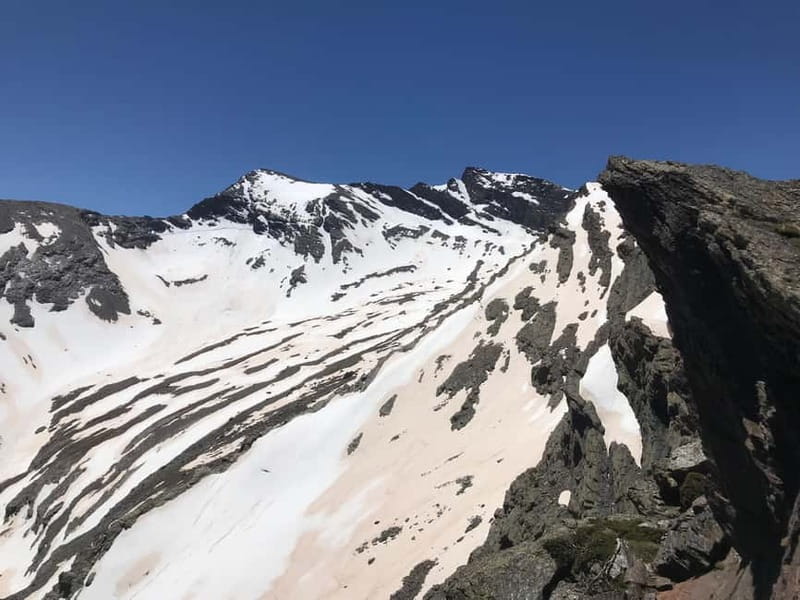
- A high viewpoint finish where you admire Mulhacén (3,480m), plus Veleta and Alcazaba.
- Weather-flexible guidance helps you still get meaningful views even when winter conditions slow the climb.
How the Sierra Nevada Day Starts in Granada
You meet at a statue in the middle of Granada’s main square, then you get picked up for the drive. The whole experience runs about 7 hours, but the walking time is closer to 5 hours (breaks included), with about 1 hour of transfers total.
That car ride is a big deal. Instead of spending your whole day grinding uphill from sea level, you’re carried straight to the high world first—around 2,500m—so the hiking feels like a concentrated mountain day, not a slog.
The guides here are professional mountain guides (UIMLA) with 30+ years on Sierra Nevada trails. That matters on steep, rocky terrain where a safe pace and smart stops make the difference between a tough day and a memorable one.
You can also read our reviews of more tours and experiences in Granada.
Road to San Juan Valley: glacier carving at 2,500m
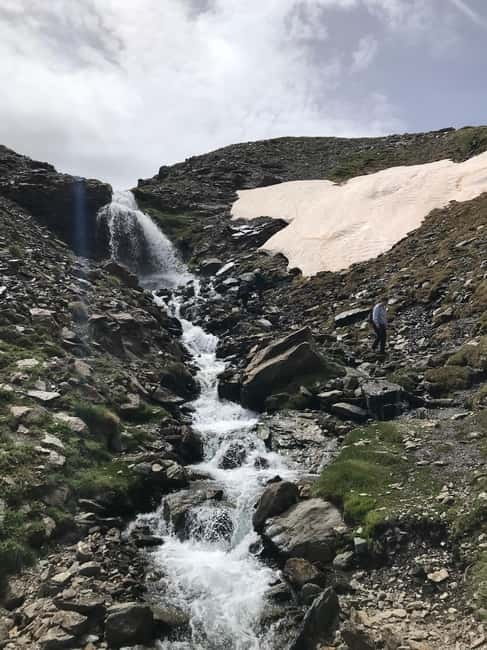
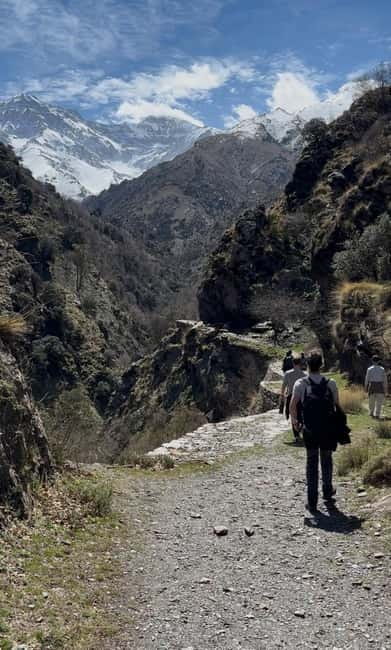
From the transfer drop-off at the top of the Sierra Nevada Road (about 2,500 meters above sea level), your hike heads to the San Juan Valley—described as the most beautiful glacier valley in the area. This is where the day shifts from scenic to educational in a good way.
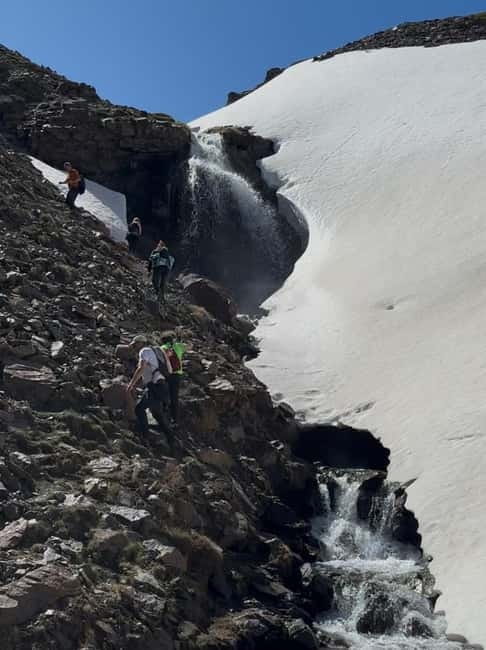
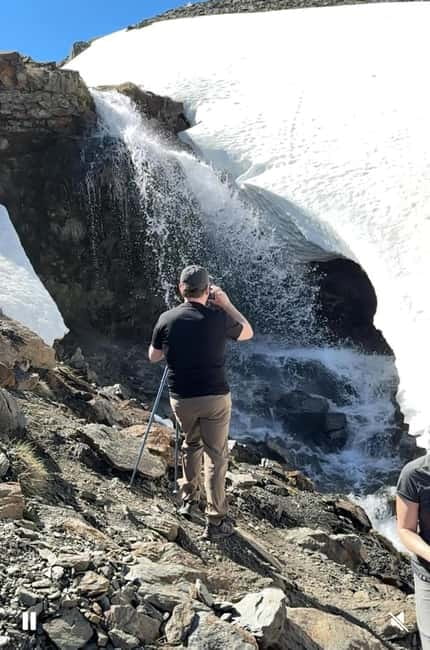
You’ll learn how ice has been excavating the rocks for thousands of years. You can feel the logic of it in the terrain: the valley has that shaped-by-ice look, and the guide helps you connect what you’re seeing to why it exists. Expect shiny rocks, and keep an eye out for waterfalls and pristine streams along the way.
One of the quiet thrills I’d aim for here is the change in sound. As you go higher, the city noise disappears fast. Even when you’re moving, it gets calm. That calm is part of the value of this hike—less crowded walking, more time to notice small things like the flow of water, the rock texture, and the way the light hits in high-altitude valleys.
Tajos del Campanario Push: steep but doable with the right pace
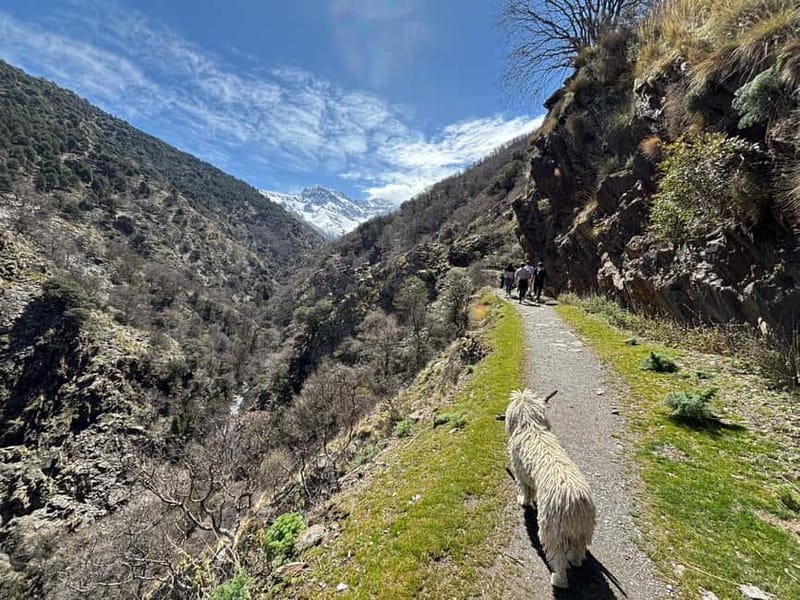
After the San Juan Valley area, you climb toward Tajos del Campanario. The goal is to reach over 3,000 meters (often described as the top), but your exact height can vary with conditions—especially in winter.
The good news: the guide sets an easy pace for the whole group, with several rest stops. You don’t need to be a former athlete, but you should be ready for “moderate” to mean some steep effort and real footing. The route isn’t a smooth path. It’s rocky, with uneven ground in places, and that’s why hiking poles are included.
The hike distance is about 8 km (5 miles), and the elevation gain is listed as around 600 meters (1,900 feet). That doesn’t sound huge on paper, but altitude plus steep sections plus rocky steps makes it feel harder than casual city walking.
There’s also a practical safety feature: if you start to feel tired, there are spots where you can wait for the rest of the group on the way back. That turns the day into a team effort instead of a forced grind.
Wildlife, waterfalls, and the Africa–Euroasia geology story
This is one of the tours where you’ll actually pay attention to what you normally ignore on hikes—rocks, plants, and the big geographic story behind the scenery.
The range has a unique origin tied to the collision between Africa and Euroasia. In plain terms, that collision helped shape a mountain world with dramatic faces and high-altitude ecosystems. The guide points out plants and insects that are only found here, so you’re not just walking through scenery—you’re passing through a specialized habitat.
For wildlife, the highlight is the chance to observe Spanish mountain goats in their natural habitat. You may also spot birds, including eagles and migrating birds from Africa, depending on the season and where the group is that day. One reason this tour tends to work well is that the guide looks for the best spots rather than forcing you down a single cookie-cutter viewpoint.
Water is another constant theme: streams and waterfalls show up along the route. If you love the sound of running water in the mountains, this part will stick with you.
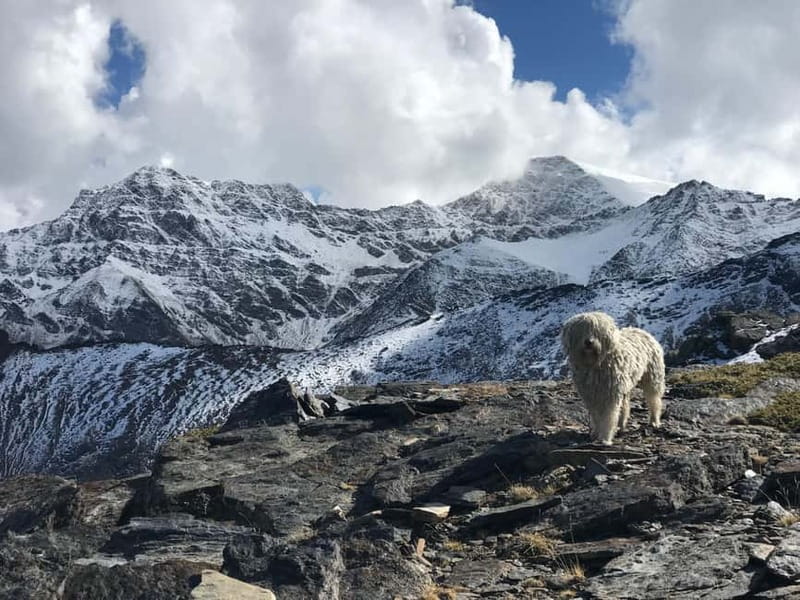
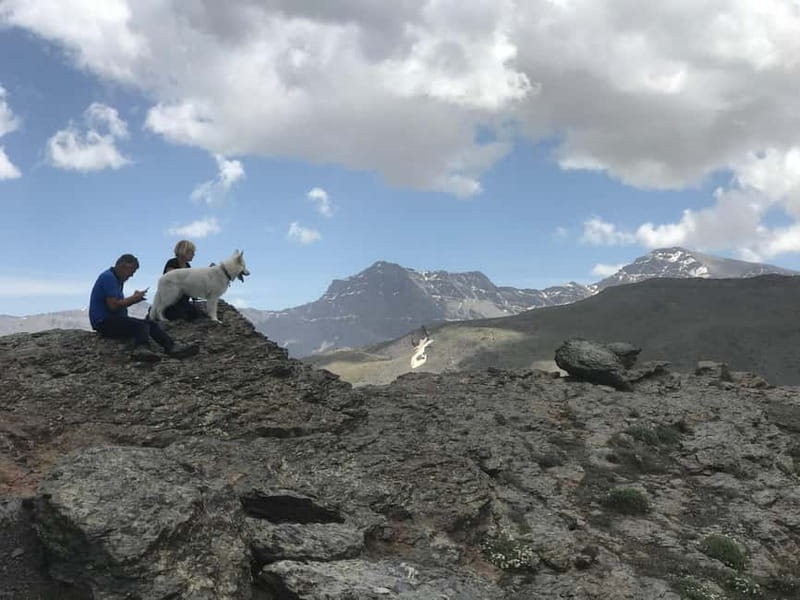
And yes—there’s often a mascot moment. In many groups the guide is paired with Kai, a well-behaved mountain dog that shows up as a friendly presence on the walk. In some sessions there are also small extra touches from the guide, like sharing candies (not something to count on, but a nice example of the human side you may see on the day).
Mulhacén, Veleta, and Alcazaba: the north-face viewpoint payoff
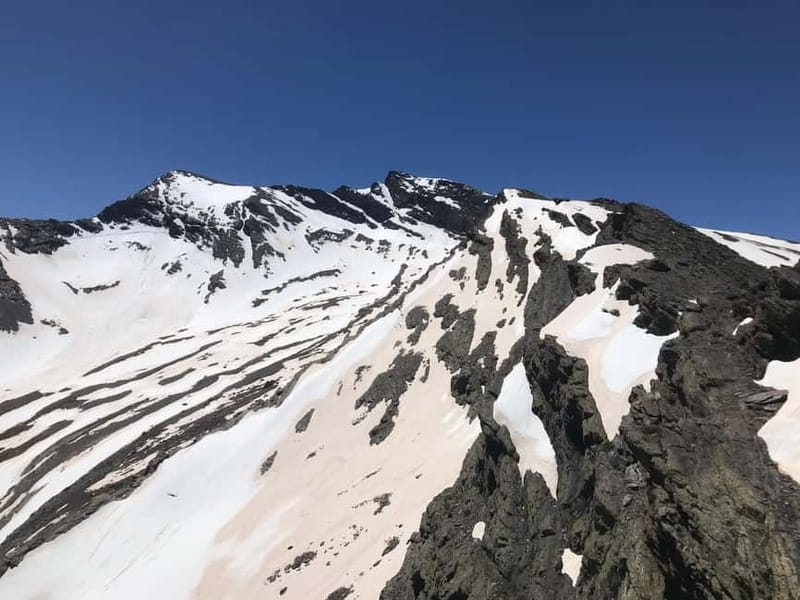
At the higher point near Tajos del Campanario, you get the reward view: the dramatic north face of Mulhacén. Mulhacén is the highest mountain in Sierra Nevada and 3480 meters, and it’s also the highest peak in the Iberian peninsula.
From that viewpoint area, you’ll admire Veleta and Alcazaba too—so you’re not looking at one peak. You’re seeing a whole cluster of Sierra Nevada power, spread out under the high sky.
This is the best reason to do the hike instead of just taking a car for photos. You arrive after moving through the glacier valley and learning what carved the terrain. Then the view makes sense in your head, not just your phone.
Also, it helps that the guide knows “secret spots” after decades of hiking Sierra Nevada. Those spots matter. They can mean better angles, calmer footing for a quick rest, and a moment where the whole group can breathe and take in the high-mountain air.
What 7 Hours Feels Like: group size, pace, and footwear reality
This is a small group tour limited to 8 people. That size affects everything: easier pacing, fewer bottlenecks, and more time for the guide to steer you to the right places.
The day is described as moderate on the REI-style scale (from easy to strenuous depending on how you personally feel). In the real world, expect a mix:
- Some steep sections
- Rocky ground underfoot
- Occasional wind and temperature drops at altitude
Footwear matters more than you might think. Training shoes are allowed, but rocky, unstable footing is part of the hike experience. In practice, good grip helps a lot—especially if there’s snow or ice in winter. Also skip sandals or flip-flops (and no high-heeled shoes, obviously).
One detail I really appreciate: the guide gives stops for rest and pictures. That turns the day into a rhythm instead of nonstop climbing.
If you’re prone to fatigue, don’t panic. The route includes places to pause so you can keep going comfortably as a group.
Gear, warmth, and altitude comfort (what you get and what you bring)
You don’t need fancy climbing gear. You do need to dress for high altitude weather changes.
What’s included:
- Hiking poles
- Backpack
- A professional mountain guide (UIMLA) with liability and assistance insurance
- Warm clothes if necessary: polar fleece, rain jacket, gloves, and hats
- In winter, snowshoes free of charge
What you must bring:
- Sunscreen is the only item explicitly listed, but it’s a good idea to think layers too since temperatures can swing at elevation.
Also note what’s not allowed: high-heeled shoes, sandals, or flip-flops.
A practical tip: even if you plan to hike in trainers, plan for the day to feel colder at altitude than you expect. In several winter-leaning conditions, groups have dealt with snow, and the guides have adapted routes based on what the mountain allows.
And altitude? You’ll feel it. Not because you need mountaineering skills, but because you’re going high quickly and spending time at that elevation.
Price and Value for $69: what you’re paying for
At $69 per person for about 7 hours, this is strong value if you want three things at once: safe guiding, high-altitude access, and real mountain context.
Here’s where the money goes:
- Transfers from Granada city center (so you don’t lose half your day)
- A UIMLA professional guide with decades of Sierra Nevada experience
- Small-group attention (limited to 8)
- Safety coverage (liability and assistance insurance)
- On-hike support gear like poles and backpack
- Plus weather readiness: warm layers if needed, and snowshoes in winter
You also get an “experience stack” that’s hard to assemble on your own: glacier-valley geology explanations, off-the-path walking, and a viewpoint finish at high elevation.
Food and water aren’t included, but you can buy them at the starting point of the hike in a mountain hostel. And if your day ends at a small cabin spot, one tip worth remembering is to grab soup and ome tapas there if it’s available.
Should you book this High Sierra Nevada hike?
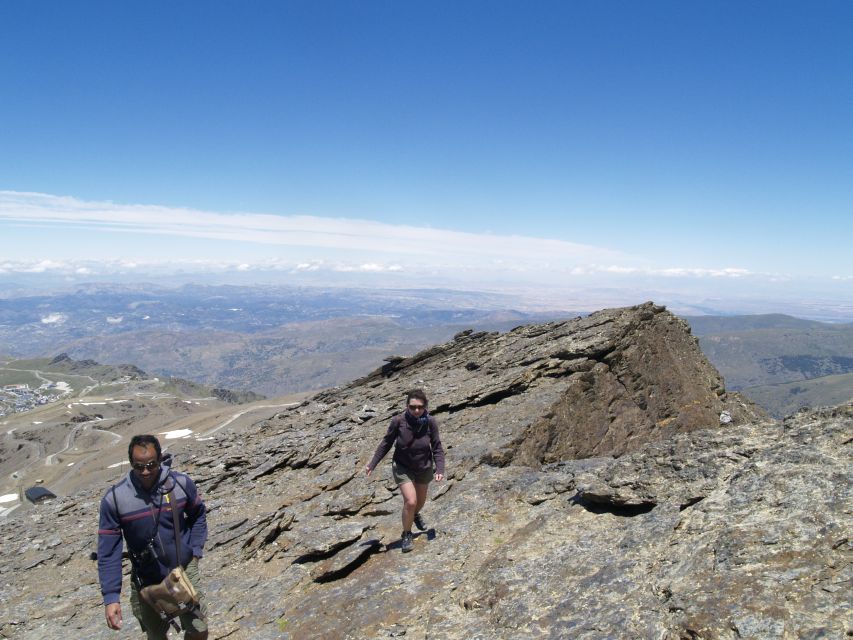
Book it if you want a high-altitude day that feels calm and intentional, not crowded. This is a good match if you’re generally fit and can handle steep rocky sections without needing a perfectly smooth trail.
Skip it if you have heart problems or respiratory issues, since high altitude and exertion aren’t a friendly mix.
Also book it if you care about the “why” behind what you see. The guide approach here isn’t just directions—it’s explanations of glacier carving, plant life, and the larger Africa–Euroasia story that shaped the mountains you’re climbing.
If your goal is “big views with a human guide who can adapt when weather changes,” this one delivers.
FAQ
Where do we meet for the Granada to High Sierra Nevada hike?
You meet at the statue in the middle of the square in Granada city center.
How long is the tour, and how much time is spent walking?
The full experience is about 7 hours. Roughly 5 hours is walking time (breaks included), plus about 1 hour total for transfers to and from Granada.
How far do we hike, and how much elevation do we gain?
The hike is about 8 kilometers (around 5 miles), with elevation gain listed as about 600 meters (about 1,900 feet).
Is this hike suitable for beginners or people with little hiking experience?
It’s described as moderate and you don’t need previous hiking experience. You do need a moderate physical level and should be comfortable with steep, rocky sections.
Are food and water included in the price?
No. Food and water are not included, but you can buy them at the starting point of the hike in a mountain hostel.
What gear is provided, and what should I bring?
Hiking poles and a backpack are included. You should bring sunscreen. If conditions require it, you’ll be provided warm clothes such as fleece, a rain jacket, gloves, and hats, and in winter you can get snowshoes for free.
Who should not do this tour?
It’s not suitable for people with heart problems or respiratory issues.