REVIEW · GRAND CANYON NATIONAL PARK
Grand Canyon South Kaibab Day Hike
Book on Viator →Operated by The Desert Hiking Company · Bookable on Viator
The Grand Canyon hits different on the South Kaibab. This small-group hike drops you from Yaki Point into the canyon on a ridge path built for big, wide views, plus a guide who points out geology, ecology, and canyon stories as you go. I love that it’s not just a walk between viewpoints; you get guided context and a smart pace check throughout.
Two things I especially like: you’re traveling in a tiny group—max 7 travelers—and your day includes lunch, snacks, and even trekking poles and a backpack so you’re not juggling gear. One possible drawback: the return climb is real, so if you get winded easily or you’re unsure about your stamina, you’ll want to go slow and plan for that uphill effort.
In This Review
- Key highlights you’ll feel on day one
- South Kaibab from Yaki Point: why this day hike feels special
- What’s included in your day (and what you’ll want to bring)
- The route you’ll follow: Yaki Point to Ooh Aah Point and Cedar Ridge
- Start at Grand Canyon National Park, then down from Yaki Point
- The ridge descent: panoramic views you don’t get elsewhere
- Ooh Aah Point: the classic “stop and breathe” moment
- Cedar Ridge: where the views and the walk connect
- Possibly Skeleton Point, then the steady return climb
- Pacing, hydration, and safety: how to enjoy the climb up
- The guide makes it: small-group attention, real canyon talk
- Lunch with a view: what that break does for you
- Price and value: what $270 buys you on the South Rim
- Who should book this South Kaibab day hike
- Should you book the Grand Canyon South Kaibab day hike?
- FAQ
- How long is the Grand Canyon South Kaibab day hike?
- Where is the meeting point, and where do we end?
- What part of the Grand Canyon do we hike?
- What’s included in the price?
- What should I bring since bottled water isn’t included?
- Is the entrance fee included?
- How strenuous is the hike?
- How big is the group?
- Can I cancel for a full refund?
Key highlights you’ll feel on day one
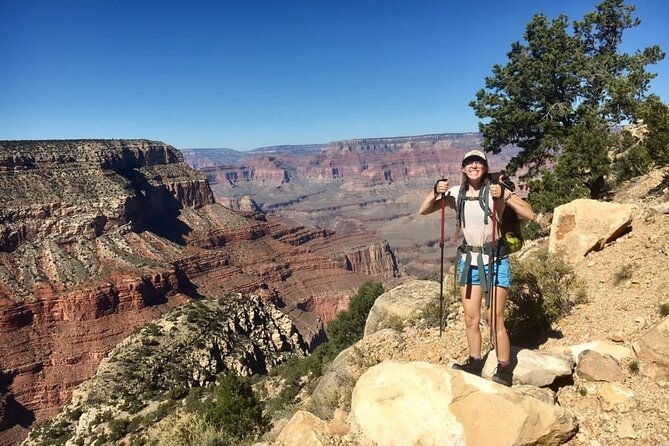
- Yaki Point start with sweeping canyon views that many people don’t see from other trails
- Ooh Aah Point and Cedar Ridge along the ridge route, with photo stops built into the flow
- Possibility of Skeleton Point depending on your group pace and preferences
- Small group size (max 7) for real conversation, not just background commentary
- Included lunch + snacks, plus guide support to keep energy steady
- Gear included: backpack and trekking poles, which makes the hike easier to manage
South Kaibab from Yaki Point: why this day hike feels special
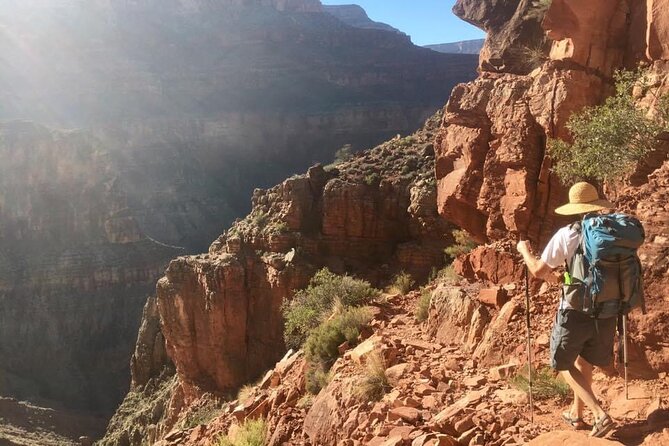
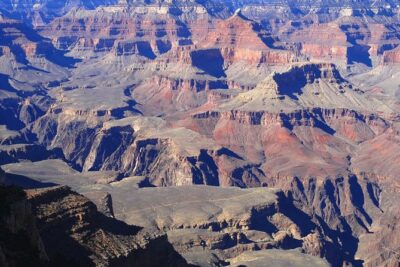
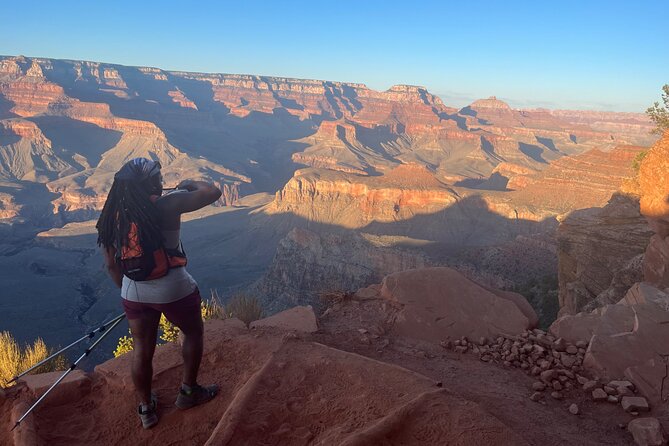
The South Kaibab Trail is famous for a reason, but what makes this hike so practical—and fun—is the way it’s built around viewpoints you can actually enjoy. You start at Yaki Point, then descend along a ridge that gives you a broad look across canyon walls and layers. It’s one of those routes where you keep saying, wait, that view is even better than the last one.
What I like is that the route isn’t just “walk down, walk up.” Along the way, your guide shares what you’re looking at: how the canyon formed, what the rocks tell you, and how plant life and wildlife survive in a place with such extreme changes in temperature and light. You end up moving through the scenery with your eyes open, not just your phone out.
There’s also a clear rhythm to the day. Even with a moderate challenge, the pace is adjusted to the group, with safety and hydration treated as part of the experience—not a lecture you ignore.
You can also read our reviews of more tours and experiences in Grand Canyon National Park.
What’s included in your day (and what you’ll want to bring)
This is a 6-hour day hike, built for a full morning experience that doesn’t drag into the afternoon. You’re starting and ending back at the same meeting point, so you’re not figuring out extra logistics mid-hike.
Your package includes:
- Lunch
- Snacks
- Backpack and trekking poles
- A licensed and certified guide
What’s not included (and matters more than it sounds):
- Bottled water isn’t included, so you’ll want to be ready with water plans.
- The entrance fee is not included.
- Gratuity for the guide is not included.
One small but real advantage here: when trekking poles and a backpack are included, you can travel lighter and reduce the chance you show up under-prepared. It’s also easier on first-timers who might not want to buy hiking gear before their trip.
The route you’ll follow: Yaki Point to Ooh Aah Point and Cedar Ridge
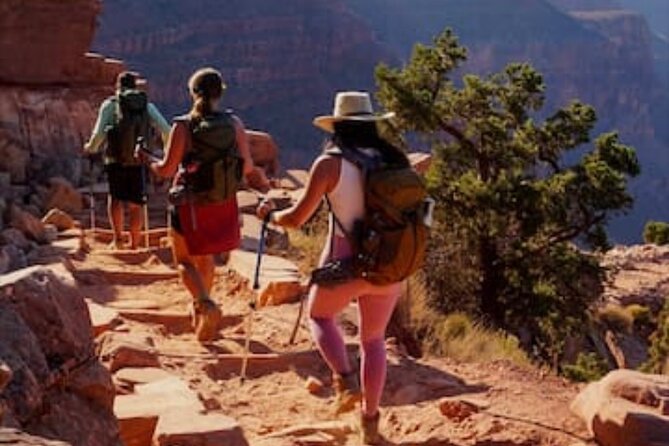
Even though the day is described as a South Kaibab hike, the experience is really about moving through distinct “zones” of the canyon. Here’s the way to think about it, stop by stop, so you’ll know what you’re working toward.
Start at Grand Canyon National Park, then down from Yaki Point
Your meeting point is 6 S Entrance Rd, Grand Canyon Village, AZ 86023, and the activity ends back at that same location. From there, you’ll set up for the trail and head to the start at Yaki Point.
Yaki Point is a smart way to begin because you get big initial canyon views right away. That helps you mentally prepare for the descent and keeps everyone engaged early, not 45 minutes into the hike when people start to wonder why they’re there.
The ridge descent: panoramic views you don’t get elsewhere
The heart of this hike is the ridge path that runs with wide-open sightlines. You’re descending, but you’re not stuck staring at your feet the whole time. The goal is panoramic canyon views along the way, the kind you typically associate with more dramatic lookouts—except here you get them as you walk.
If you’re prone to rushing, this is where the guide’s pacing matters. A good guide keeps you moving steadily without turning the hike into a sprint, and you’ll also get practical prompts to pause for photos and to check in how you’re feeling.
Ooh Aah Point: the classic “stop and breathe” moment
Along the route, you’ll make your way to Ooh Aah Point. This is one of those spots where stopping feels worth it. You’ll get time to soak in the views and take photos without feeling like you’re being herded.
A nice detail: the day isn’t just about seeing the canyon—it’s also about learning what you’re looking at. So at stops like this, the guide can translate the geology and canyon story into something you can actually picture.
Cedar Ridge: where the views and the walk connect
Next comes Cedar Ridge, another segment that keeps the day scenic while still moving you forward. If you like hiking where your environment is constantly interesting, this is a key part of why the day feels like more than “transport to a viewpoint.”
This is also where the pacing adjustment becomes noticeable. Since the group is kept small, the guide can slow down or speed up based on the people in front and behind, rather than forcing everyone into the same cadence.
Possibly Skeleton Point, then the steady return climb
Depending on group pace and preferences, the route may include Skeleton Point. The “possibly” is important: it signals that this isn’t a rigid checklist where everyone gets the same experience no matter what.
After the trail’s highlights, you’ll turn back and work your way up toward the start. This part is the one to respect. One fit hiking pair described the return as challenging, with about 3,300 feet of elevation gain on their climb out. You might not get that exact number in your experience, but the point stands: going down is only half the day. Plan to take the uphill seriously.
Pacing, hydration, and safety: how to enjoy the climb up
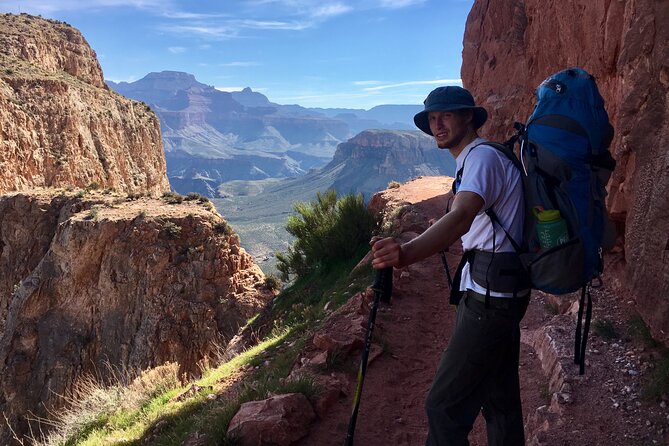
A moderate strenuous hike can feel very different depending on how you pace. The tour description is clear that the guide will adjust the pace for your group and keep an eye on safety, hydration, and energy. In other words, the day is managed, not improvised.
Here’s what you should do to make the day feel great:
- Treat the descent as warm-up, not as an excuse to race.
- Take the stop opportunities. They’re there for views and regrouping.
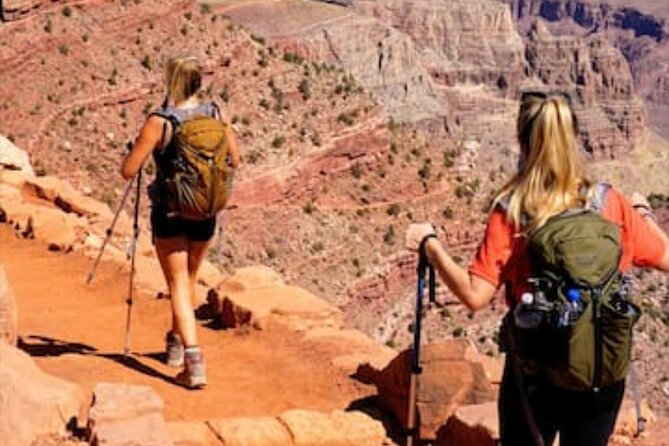
- Use the included trekking poles from the start. They’re helpful on both the descent and the climb.
- If weather shifts, don’t assume your plan is fixed. One guide instance included planning around thunderstorm forecasts and starting early to reduce exposure to afternoon storms.
That weather-awareness matters in the Grand Canyon. You’ll be outside for hours, and afternoon conditions can change quickly. If you’re visiting in warmer months or shoulder season with storm potential, you’ll sleep better if you’re ready to adapt.
The guide makes it: small-group attention, real canyon talk
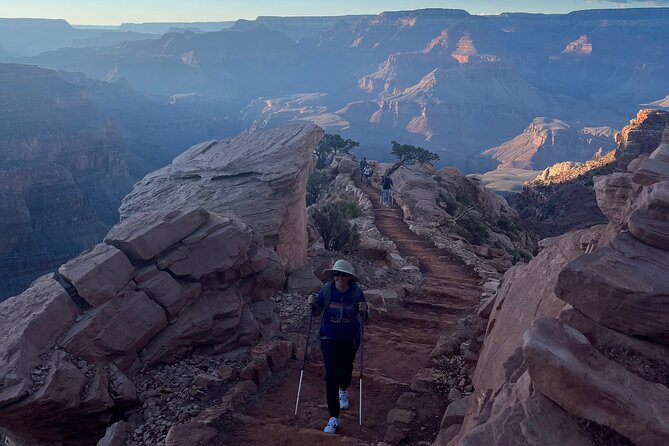
This hike is capped at 7 travelers, and that single fact changes the whole vibe. In a larger group, you end up watching the guide talk to a blob of people. In this format, you’re more likely to get direct answers, guidance on pacing, and conversation that feels natural.
The guide approach is practical and friendly. Guides like Lewis, Chris, Louis, and Josh have been praised for being punctual, personable, and genuinely into the canyon—sharing geology, ecology, and canyon history in a way that doesn’t feel like a lecture. A recurring theme is that the pace feels right: not rushed, not dragging.
You’ll also notice how often the day includes small moments that help you feel cared for, like the guide setting you up with gear at the trailhead and keeping check-ins steady while climbing. It’s the difference between doing a hike and doing a guided hike that fits your group’s comfort level.
Lunch with a view: what that break does for you
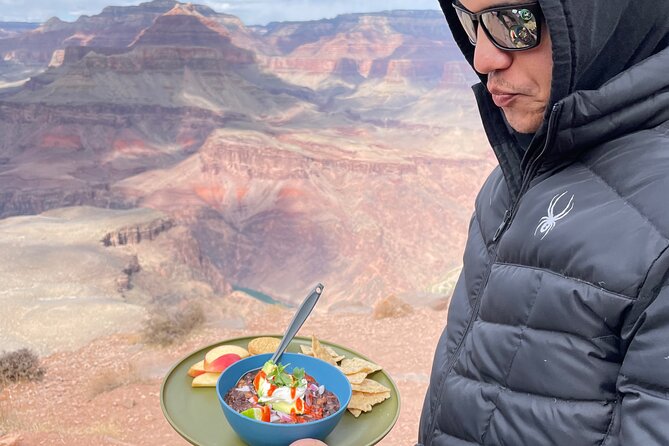
Lunch isn’t just a calorie break on this hike. It’s a turning point. You’ll have a long enough pause to actually enjoy the moment, and it’s timed around the middle of the day so you don’t fade during the uphill return.
The included lunch and snacks have real value here. When you’re working your way down canyon steps and then reversing course, your energy needs to stay steady. The day is designed so you’re not relying on whatever you brought in your pack that morning, and the snacks help fill the gaps between planned stops.
And yes—some guides bring a more personal touch. For example, one guide arranged a homemade picnic halfway through. Another provided lunch wraps during the hike. You can’t count on the exact style every day, but you can count on the idea: food isn’t an afterthought.
Price and value: what $270 buys you on the South Rim
At $270 per person for about 6 hours, this isn’t a budget hike. But the better question is what you’re actually paying for.
You’re getting:
- A licensed, certified guide
- Lunch and snacks
- Trekking poles and a backpack
- A small group (max 7)
If you’ve ever priced out hiking poles, a day pack, and a guided service that moves you to the right trail starting point, the costs add up quickly. Here, some of those essentials are included, so your total cost stays easier to estimate than if you had to bundle everything yourself at the last minute.
Also, guides do more than point. They help you pace, manage safety, and translate what you’re seeing into something meaningful. For a first Grand Canyon hike, that can be the difference between ticking off a view and actually understanding what makes the canyon work.
One more cost note: entrance fees and bottled water are not included. So factor those into your trip budget when you plan.
Who should book this South Kaibab day hike
This works best if you:
- Want an iconic Grand Canyon trail with guided stops rather than a self-guided scramble
- Prefer a small group and a guide who can adjust pace for your comfort
- Have moderate physical fitness and are willing to handle an uphill return
- Like learning while you hike—geology, ecology, and canyon history are part of the experience
It may be less ideal if you:
- Have limited tolerance for steep climbs. Even with pacing support, the return is the hard part.
- Don’t want to invest attention in safety and hydration.
- Are expecting a super short, easy stroll. This is a day hike with a clear physical demand.
Should you book the Grand Canyon South Kaibab day hike?
I think you should book it if you want the classic Grand Canyon feel but also want help making the day smoother. The big wins are the small group size, the included trekking poles and lunch, and the chance to see ridge views from Yaki Point through stops like Ooh Aah Point and Cedar Ridge—with a guide keeping the day safe and comfortable.
If you’re on the fence because of the climb, don’t assume it’s impossible. Just plan to go slower than you think you need to, use the poles, and take every chance to regroup. This is the kind of hike where good guiding turns a tough uphill into a day you’ll remember for the right reasons.
FAQ
How long is the Grand Canyon South Kaibab day hike?
It’s about 6 hours (approx.).
Where is the meeting point, and where do we end?
You meet at 6 S Entrance Rd, Grand Canyon Village, AZ 86023, and the hike ends back at the meeting point.
What part of the Grand Canyon do we hike?
You’ll hike the South Kaibab Trail, starting at Yaki Point, and you may visit stops such as Ooh Aah Point and Cedar Ridge, with Skeleton Point depending on the group’s pace and preferences.
What’s included in the price?
The price includes lunch, snacks, a backpack, trekking poles, and a licensed and certified guide.
What should I bring since bottled water isn’t included?
Because bottled water isn’t included, you’ll want to make your own water plan before you go.
Is the entrance fee included?
No. The entrance fee is not included.
How strenuous is the hike?
It’s described as moderately strenuous, and the pace will be adjusted to fit the group. You should have moderate physical fitness.
How big is the group?
The group size is capped at maximum 7 travelers.
Can I cancel for a full refund?
Yes. Free cancellation is available up to 24 hours in advance for a full refund; within 24 hours, the amount paid is not refunded.