REVIEW · KINGSTOWN
La Soufrière Volcano Hike, St Vincent and the Grenadines
Book on Viator →Operated by Lavaman · Bookable on Viator
A crater hike is the real St Vincent test, and La Soufrière delivers big views from a real volcano setup: about 4,048 ft / 1,234 m up, with a crater roughly 500 m wide and 60 m deep. I love getting close to the crater and seeing the active-volcano scale in person, and I also love that the climb is managed with real hiking support like walking poles and safety-first guidance from Lavaman (Desron Rodriguez).
One consideration: this is a stair-and-slope climb, so come with moderate fitness and be ready for a physically demanding day.
The full outing runs about 7 hours and typically starts with pickup from Kingstown in an air-conditioned vehicle. You’ll get bottled water, WiFi on board, device chargers, and first-aid support, so you can focus on the hike instead of logistics.
In This Review
- Key highlights you’ll feel on the day
- La Soufrière in plain numbers: height, crater, and why it’s special
- From Kingstown to the trail: pickup, ride comfort, and what the day starts like
- Your La Soufrière hike: what the climb asks of you
- At La Soufrière: crater views and up-close nature on an active volcano
- Safety and support with Lavaman (Desron Rodriguez)
- What’s included, what’s not, and how to plan your day
- Volcano-day tips that actually help (not just “check the weather”)
- Price and value: why $90 makes sense for the full setup
- Who should book this La Soufrière hike?
- Should I book the La Soufrière Volcano hike with Lavaman?
- FAQ
- How long is the La Soufrière volcano hike?
- What is the price per person?
- Is pickup available from Kingstown?
- Does the tour include admission tickets?
- Is lunch included?
- What’s included in the tour package?
- What’s not included?
- Who can join? What fitness level is required?
- What’s the maximum group size?
- What if weather conditions are poor?
Key highlights you’ll feel on the day
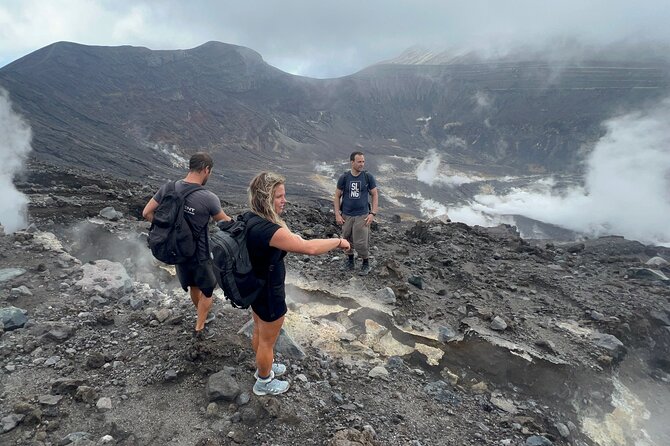
- Crater access at major height: around 4,048 ft / 1,234 m, with a crater about 500 m wide
- St Vincent’s active-volcano context: eruptions recorded in 1718, 1812, 1902, 1987, and April 9, 2021
- Safety-first guidance with Lavaman (Desron Rodriguez): Red Cross certified, tourism-approved guide
- Trail support that matters: walking poles, bottled water, and first-aid kit for peace of mind
- Comfort on the way out: air-conditioned private transportation with WiFi and device chargers
- Route flexibility: the hike can be accessed from both windward (north eastern) and leeward (north western) sides
La Soufrière in plain numbers: height, crater, and why it’s special
La Soufrière is the main event on the hike: a stratovolcano on St Vincent’s northern side. You’re going up to about 4,048 ft / 1,234 m, and the crater you’re aiming for is around 500 m wide with a drop of about 60 m. That size matters because it changes how the volcano feels. This isn’t a “stand far back and look” moment. Even without getting technical, the scale hits you fast once you’re in the crater area.
What I like about this hike is the combination of big visuals and close-up nature. The trail is described as having wide diversity and giving you a close encounter with flora and fauna. In practical terms, that means the hike isn’t just about the top photo. You’ll get little changes in what you see as you move up, and the air and textures can feel different as the altitude climbs.
And because La Soufrière is active (eruption history includes 1718, 1812, 1902, 1987, and April 9, 2021), you’re not hiking a dead museum volcano. You’re hiking a living system, which is exactly why a good guide and solid safety habits make such a difference on an active mountain.
From Kingstown to the trail: pickup, ride comfort, and what the day starts like
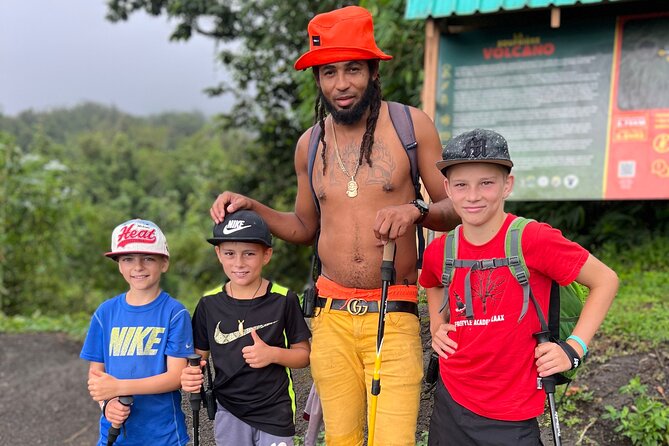
Most people underestimate how much the ride and waiting time affects a hiking day. Here, that part is covered well. Pickup is offered from the Kingstown area, and you’re traveling in an air-conditioned vehicle with private transportation. There’s also WiFi on board and device chargers, which are genuinely handy if you need to keep your phone camera batteries alive for the crater views.
The drive time depends on the approach, since the hike can be accessed from both the windward (north eastern) and leeward (north western) sides. When the windward side is used, it’s described as taking about an hour from Kingstown. Either way, the point is simple: you’re not trying to figure out buses, transfers, or where the trailhead is. Your guide handles the route and keeps the plan moving.
The outing is about 7 hours total (approx.), which usually means you’ll be doing the climb and crater time plus travel back to town in one long day. If you’re the type who likes a full schedule, this works. If you hate feeling rushed, still plan to arrive early because volcano hikes don’t like delays.
Your La Soufrière hike: what the climb asks of you
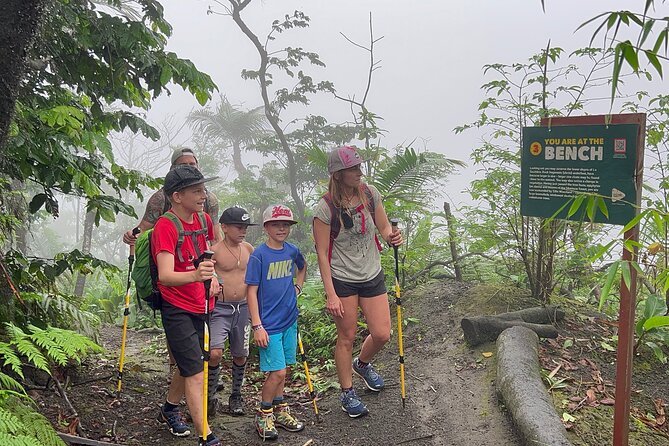
You’ll want moderate physical fitness for this one. The overall description says it’s suitable for an average hiker, but “average” doesn’t mean “easy.” One of the recurring ideas from people who’ve done it is that the climb can feel difficult at points, with a lot of steps—especially early on. Think of it like this: you’ll likely spend the first stretch working your legs and breathing rhythm before the views start rewarding you.
A big advantage here is the pacing and support system. Walking poles are included, which is exactly what you want for steep sections. Poles reduce strain on your knees during downhills and help you keep balance on uneven ground. They also give you a steady rhythm so you can keep moving without constantly stopping to recover.
Your guide also matters for how hard the day feels. Lavaman (Desron Rodriguez) is described as providing safety guidance and hiking at a pace that keeps people together. That’s not just comfort—it’s safety logic on a volcano hike. With a group moving across changing terrain, gaps and distractions are where problems start. A guide who manages movement helps keep the whole hike calm.
Also note group size: there’s a maximum of 36 travelers. That’s not a tiny group, so you’ll want to pay attention to instructions and be comfortable sharing space on a narrower trail. The upside is that you’ll still be in a guided environment with equipment and direction.
At La Soufrière: crater views and up-close nature on an active volcano
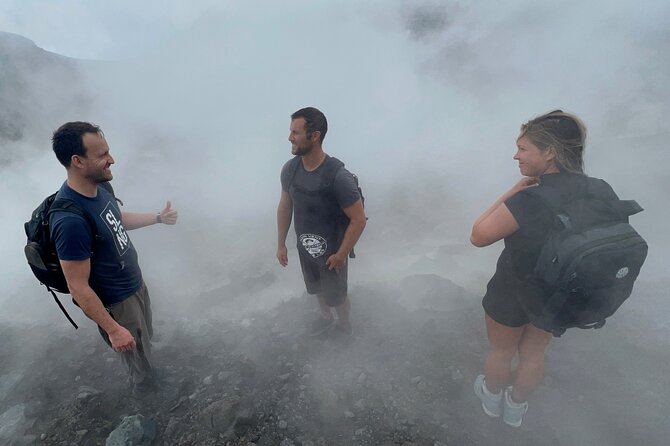
Reaching the crater is the moment that turns a hike into a memory. You’re heading toward a crater about 500 m across and 60 m deep, and once you’re down in that area (or as close as the day allows), you get a more realistic sense of how powerful this place is.
The volcano’s history adds weight to what you’re seeing. La Soufrière has erupted multiple times, including April 9, 2021. That doesn’t mean you should expect drama. It means you should expect seriousness. This is why a safety-first guide is a big deal here: you’re dealing with an active environment, not a themed hike.
What makes the experience feel complete is the pairing of crater views with living nature. The climb is described as offering a close encounter with flora and fauna, and that diversity tends to make the trail more interesting than a single long “stairway to the viewpoint.” Even if your main goal is crater photos, you’ll likely appreciate the smaller stops and changes in plant life along the way.
One practical note: crater visibility and comfort are weather-dependent. The tour states it requires good weather, and volcano visibility can be affected by cloud cover and conditions. Plan for the idea that the hike itself is on your schedule, but the view quality can still swing based on what the day brings.
Safety and support with Lavaman (Desron Rodriguez)

For an active volcano hike, the guide is part of the product. This one is led by Lavaman (Desron Rodriguez), and he’s listed as Red Cross certified and tourism approved. That combination matters because it signals a focus on basic field safety, not just leading people to a view.
You’re also traveling with an included first-aid kit. That may sound standard, but on a steep hike it’s comforting to know you’re not relying on luck or improvisation.
The support doesn’t stop at the basics. Device chargers and WiFi on board aren’t safety gear, but they help you keep your phone ready for photos and navigation if you need it. You’ll also have bottled water in the mix.
A funny-but-useful detail: the included gear list mentions a theragun. If you’ve ever finished a hike and felt your muscles turn into rubber springs, you’ll understand why this could be valuable, especially for people who are more sensitive the next day.
Some people also bring up radios/walkie talkies in their setup. That’s not listed as a must-have item in the core details you’re given, but it fits the safety logic of keeping everyone coordinated on a challenging route.
What’s included, what’s not, and how to plan your day
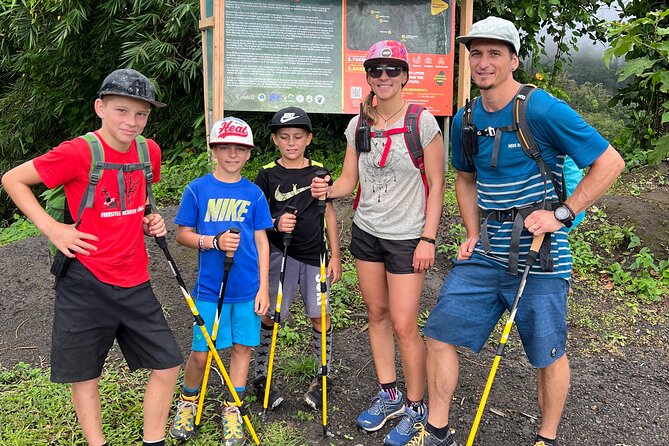
Here’s the practical part: the tour includes a lot of the things that make a hike smoother, and it leaves out a few items so you can keep control over your budget.
Included:
- Bottled water
- Walking poles
- Air-conditioned vehicle
- Private transportation
- WiFi on board
- First-aid kit
- Device chargers
- Theragun
- Red Cross certified, tourism approved tour guide
- All fees and taxes
Not included:
- Alcoholic beverages
- Lunch
- Admission ticket
That last point is easy to miss. Since admission isn’t included, you’ll want to budget for it and be ready to pay separately if it’s required for entry to the volcano area. Also, because lunch isn’t included, plan your food strategy. You’ll likely want snacks that are easy to eat while waiting or after the climb, especially if the day runs long and you’re saving your energy.
If you’re the type who hates carrying a heavy pack, you’ll still be okay because bottled water is included and poles are provided. Just don’t forget your personal essentials: sun protection, light layers, and footwear that’s actually made for uneven ground.
Volcano-day tips that actually help (not just “check the weather”)
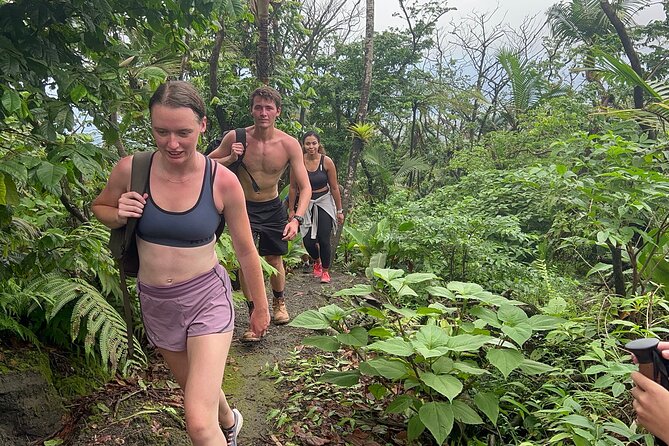
The tour requires good weather, so make weather checks part of your routine, not a last-minute guess. Visibility matters for crater views, and the ability to safely hike depends on the conditions on the day.
On the “bring the right stuff” side, I’d treat this as a real hike:
- Wear shoes with grip for steep or rocky sections
- Bring a light layer for changing temperatures at altitude
- Use the included poles and adjust them to your height
- Plan for hydration even though bottled water is included (drink steadily)
If you’re coming from cruise schedules or tight holiday plans, build in breathing room. Volcano hikes can’t always control clouds, mist, or other conditions. The tour’s weather requirement is there for a reason.
And if you’re someone who gets nervous on steep climbs, don’t ignore that feeling. The whole point of choosing a Red Cross certified, tourism-approved guide is to get support when your brain starts doing panic math. Go slow early, use the poles, and let the guide manage the group rhythm.
Price and value: why $90 makes sense for the full setup
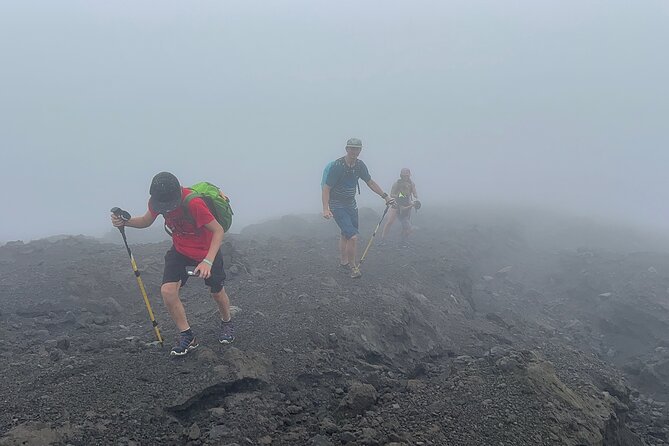
At $90.00 per person, this hike isn’t trying to be a bare-bones tour. You’re paying for guided safety with Lavaman, plus transportation, gear, and included essentials that would cost you time and extra money elsewhere.
What makes the value feel real:
- Transportation is included (air-conditioned vehicle, private rides)
- Walking poles and bottled water are included, which helps you hike comfortably without renting gear
- Safety is built in with an included first-aid kit and a certified, approved guide
- Extra comfort perks exist too: WiFi and device chargers on board
The tradeoffs are that you still cover admission separately and you’ll need to handle lunch. Alcohol is also not included, so if you’re planning to celebrate after the hike, you’ll want to plan that on your own.
So, is it worth it? If you want a guided, safety-minded volcano hike where you show up and let the logistics happen, it’s a fair deal. If you prefer to do everything DIY and you already have your own poles and transportation sorted, the value drops a bit.
Who should book this La Soufrière hike?
This hike fits best if you:
- Want a guided active-volcano experience with a crater goal
- Prefer pickup and a structured day over finding trailheads yourself
- Are an average hiker with moderate fitness
- Like seeing more than one type of scenery, including the flora and fauna along the way
It’s less ideal if you:
- Can’t handle steep climbs and lots of steps
- Need a short, low-effort hike
- Are counting on lunch being included and don’t want to plan meals
If you’re traveling solo, this can still work well because the structure is there. You’ll be hiking with a group up to a max of 36, but the guide’s job is to manage pacing so the day doesn’t turn into chaos.
Should I book the La Soufrière Volcano hike with Lavaman?
If you want crater-level views of an active volcano in St Vincent, and you want the day run with real safety support, I think you should book it. The combination of Lavaman (Desron Rodriguez) leading the hike, walking poles and bottled water included, and first-aid support makes this feel like a serious outing, not just a photo stop.
Book it especially if you’re the type who values getting to the right place, with the right gear, without juggling tickets and transport. Just go in with the right expectations: it’s a steep hike, good weather is required, and you’ll plan for admission and lunch on your own.
FAQ
How long is the La Soufrière volcano hike?
The experience lasts about 7 hours (approx.).
What is the price per person?
The price is $90.00 per person.
Is pickup available from Kingstown?
Pickup is offered, and the tour starts from the Kingstown area.
Does the tour include admission tickets?
No. Admission Ticket is not included.
Is lunch included?
No. Lunch is not included.
What’s included in the tour package?
Included items are bottled water, walking poles, an air-conditioned vehicle, private transportation, WiFi on board, a first-aid kit, device chargers, a theragun, and a Red Cross certified, tourism-approved tour guide.
What’s not included?
Alcoholic beverages and lunch are not included.
Who can join? What fitness level is required?
Travelers should have a moderate physical fitness level.
What’s the maximum group size?
The tour has a maximum of 36 travelers.
What if weather conditions are poor?
The tour requires good weather. If it’s canceled due to poor weather, you’ll be offered a different date or a full refund.