REVIEW · STAVANGER
Lysefjorden cruise & Preikestolen guided hike – winter
Book on GetYourGuide →Operated by Rødne Fjord Cruise · Bookable on GetYourGuide
Preikestolen in winter feels like a secret. I love the off-season stillness on the rock, and I love how the Lysefjord cruise sets up the hike with big views from the water. The drawback is simple: this is real winter hiking with exposure, so if heights or slippery footing freak you out, you’ll feel it.
This is built as a day you can actually handle. You ride by minibus from Stavanger (starting at Strandkaien), take a fjord cruise with commentary, then switch to a guided climb with seasonal gear like snow spikes, poles, and a head lamp if needed. In past seasons, guides such as Alan and Erlend have been praised for calm safety coaching and storytelling, and I’ve even heard about a hiking dog named Baba joining the experience for extra morale.
In This Review
- Key points before you go
- Stavanger to Lysefjord: getting set up in the right winter mood
- Lysefjord cruise: caves, cliffs, and Hengjanefossen in winter light
- Forsand transfer: the switch from sea air to mountain air
- Preikestolen winter hike: pacing, spikes, poles, and photo stops
- The plateau view: why winter quiet changes everything
- Timing, duration, and what $269 gets you in a winter day
- Winter gear checklist: what matters most for comfort and traction
- Who should book this winter Lysefjord and Preikestolen hike
- Small-group benefit: why having only up to 8 people is a big deal
- Should you book the Lysefjord cruise and Preikestolen winter hike?
- FAQ
- What time and where does the tour start in Stavanger?
- Is there a fjord cruise included, or is it all hiking?
- How long is the hiking portion to Preikestolen?
- What winter gear is provided?
- What food is included during the tour?
- What languages are the guides available in?
- Who might want to avoid this tour?
Key points before you go
- Winter footing support: spikes if needed, plus hiking poles to keep you moving confidently
- Two big moods in one day: fjord glow from the boat, then a high-wind plateau at Preikestolen
- Crew brings you close to Hengjanefossen: the bow moves toward the waterfall area, sometimes with ice in the mix
- A guide-led pace: short breaks for breath and photos, with help when conditions get tricky
- Small group feel: up to 8 participants, which matters when you’re spread on narrow icy ground
- Return by undersea tunnel: you come back to Stavanger via the world’s longest undersea tunnel route
Stavanger to Lysefjord: getting set up in the right winter mood
The day starts in Stavanger at Strandkaien, and right away you’re in winter mode. Expect it to feel cooler and darker than you’re used to, so dress like you’re going outside for real—not like you’re just popping onto a photo platform for five minutes.
What I like about this format is that it reduces guesswork. You’re not out there assembling routes in winter conditions. Instead, you get guided structure: boat first, then the hike, with transport arranged by minibus. That matters because winter in Norway can change fast, and you don’t want to be improvising while you’re already tired.
One practical detail: the tour runs about 9 hours, so plan on a long, active day. This isn’t a quick hit. Bring water, and keep your energy steady—winter hikes burn calories even when you don’t feel sweaty.
You can also read our reviews of more tours and experiences in Stavanger.
Lysefjord cruise: caves, cliffs, and Hengjanefossen in winter light
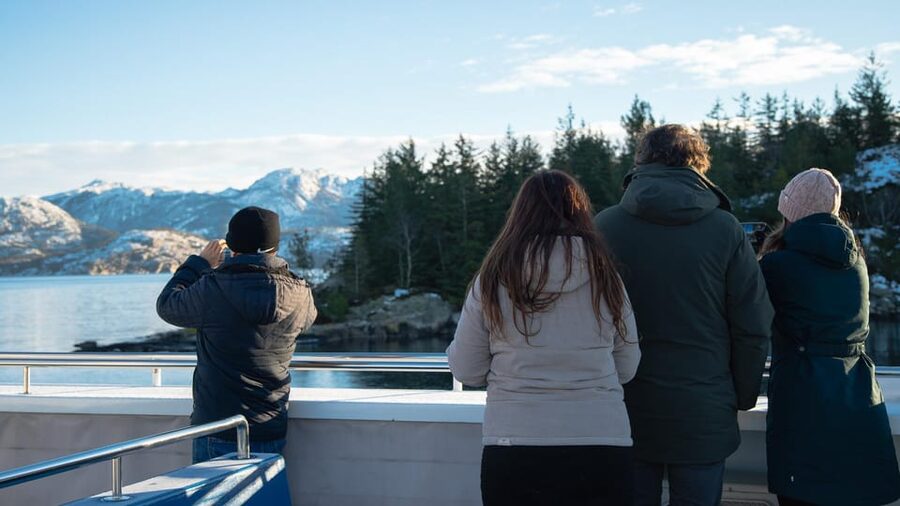
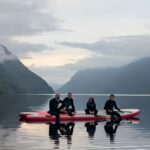
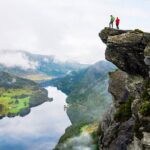
The fjord portion is where the scenery does its first big sales pitch. You’ll spend roughly 2 to 2.5 hours cruising the Lysefjord, passing islands, sheer mountains, and waterfalls. The boat also gives you a totally different angle on Preikestolen—you’re not just imagining the rock up there; you can see it as part of the fjord wall.
Two specific winter moments I’d flag:
First, you’ll go by Fantahåla (Vagabond’s Cave). Even when you’re bundled up, it’s the kind of natural landmark that makes you look twice, then again, because the scale feels bigger than you expect.
Second, the cruise reaches the area around Hengjanefossen. This is where the crew brings the bow close to the waterfall, and in winter that can mean frozen edges and ice-cold drama. It’s not just pretty; it’s a reminder that fjords are active systems, not frozen backdrops.
If you’re wondering about comfort, the boat is the easier leg of the day. Still, you’ll be outside at times for photos, so treat it like part of the hike. A windbreaker and warm layers matter here too.
Forsand transfer: the switch from sea air to mountain air
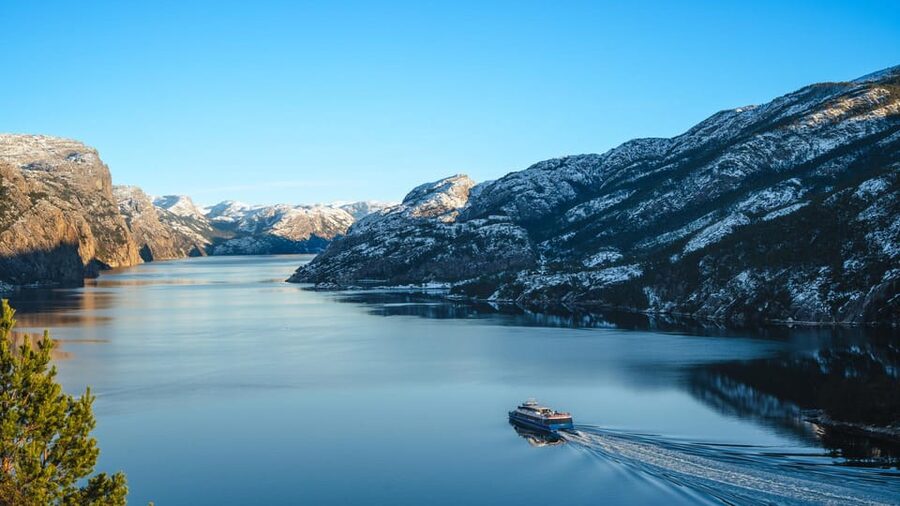
After the fjord cruise, you transition quickly to the hiking stage. You’ll hop by minibus and arrive around Forsand village as the base for the climb. This is a good moment to reset your brain: you’ve been watching from water level; now you’re moving upward through winter terrain.
This is also where the mountain guide becomes central. They’ll manage the timing, help you understand conditions, and set expectations for what the group can handle. You’ll typically be given or directed on how to use winter hiking equipment like snow spikes (if needed) and hiking poles, plus head lamps as appropriate for darker winter hours.
In past experiences on this trip, guides such as Erlend have been praised for gear support—basically, making sure you’re not guessing how to do winter hiking. That is exactly what you want, because good winter technique beats bravado every time.
Preikestolen winter hike: pacing, spikes, poles, and photo stops
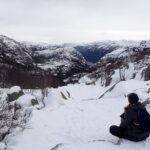
Now the main event: a guided hike up to the Preikestolen plateau. You’re on the trail for about 5 hours, and winter adds extra friction—literally. Snow and ice slow your steps, and wind can dry your face faster than you expect.
The best thing about having a mountain guide is pacing. They can manage the group so nobody gets left behind, and they can adjust when the trail gets slick. This tour specifically builds in opportunities to pause, catch your breath, and take photos along the way—so you’re not just pushing uphill with no plan.
Gear is practical here:
- Snow spikes are provided if needed for traction
- Hiking poles help you move safely on uneven ground
- Head lamps help with visibility for winter timing
- If you’re a newcomer to winter hiking, following instructions is the difference between a confident day and a stressful one
One thing to be honest about: Preikestolen sits with exposure. If you’re afraid of heights or have vertigo, the hike and plateau can be more than you want. The tour is not marketed for people who struggle with heights or vertigo, and the winter conditions can make those feelings stronger.
If you get the chance to hike with a dog named Baba (seen in past runs), it can also be a morale boost. Just remember: the dog is not a substitute for good winter footing. Keep your eyes on the ground and your balance.
The plateau view: why winter quiet changes everything
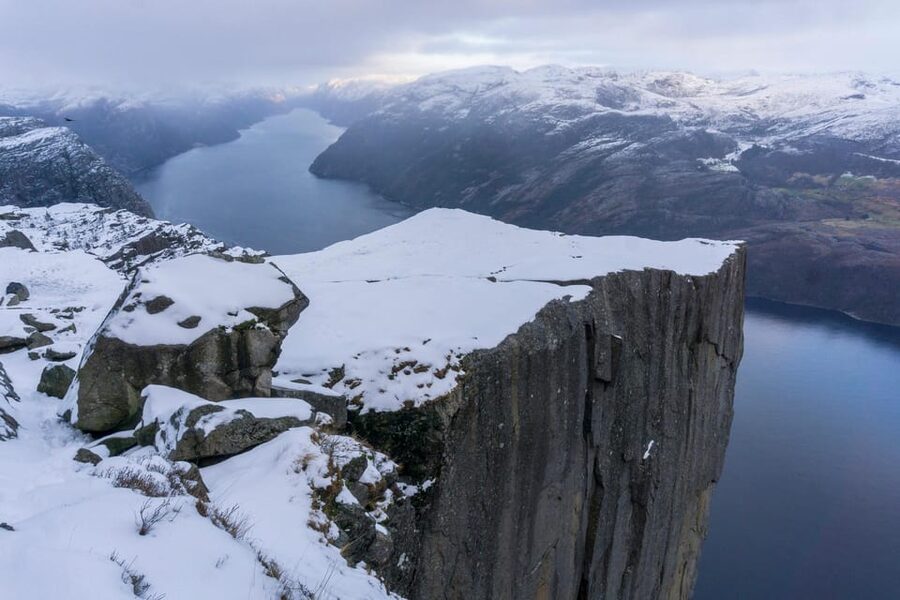
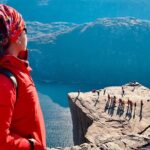
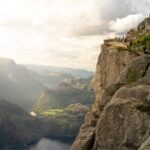
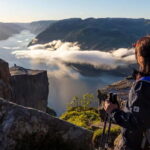
Reaching the top is the payoff. Preikestolen is famous, but winter changes the emotion. In off-season conditions, the plateau can feel like you have more space to breathe and look around, because the crowd energy is lower.
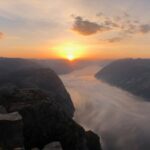
From the guide-led viewpoint, you’re able to soak in a panoramic scene over fjord Norway—the kind where your brain keeps switching between “wow” and “how is that all real?” You’re high enough to feel the wind and open sky, and winter makes that contrast sharper.
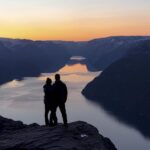
What I especially like about doing this as a winter hike is the sense of stillness. Even if there are other people at the rock, the winter atmosphere tends to quiet things down. You get time to study the contours of the fjord and the cliff lines rather than rushing through a checklist.
Also, the order of the day helps. Seeing Preikestolen from the boat first makes the final arrival feel earned. You’ve already been orienting yourself all day, so when you finally step onto the plateau, you understand what you’re looking at.
Timing, duration, and what $269 gets you in a winter day
At $269 per person for a 9-hour day, you’re paying for coordination. In Norway winter, coordination is not fluff. It’s transport, a small group cap (up to 8), and a guide who’s managing real conditions.
Here’s what you’re getting that you’d otherwise have to piece together yourself:
- Fjord cruise time on Lysefjord (with close-up waterfall cruising)
- A professional guide for both the overall experience and the hike
- Winter hiking support gear like spikes (if needed), poles, and head lamps
- A lunchpack to keep you fueled mid-hike (and dietary issues can be handled if you contact them in advance)
- Minibus transport, plus Stavanger hotel drop-off
- Return to Stavanger through the world’s longest undersea tunnel route
That last detail isn’t just neat trivia. It changes the feel of the day: you’re not stuck in traffic stress or wondering how you’ll get home after a hike. The ride back is part of the plan, and winter fatigue hits faster than you think.
About food: snacks and drinks are available from an onboard kiosk for extra cost. I’d plan your expectations around that and treat the lunchpack as your main meal.
Winter gear checklist: what matters most for comfort and traction
The tour lists a strong winter packing list, and I agree with the emphasis. If you want the day to feel safe and not miserable, prioritize warmth and wind protection.
Bring:
- Warm layers plus a windbreaker
- Hat and gloves
- Thermal clothing and warm socks
- Winter hiking shoes (not just regular sneakers)
- A daypack
- A jacket and winter sports gear if you have it
- Water (yes, even in cold weather)
A quick reality check: you might think you can just wear one extra sweater and be fine. Winter hiking isn’t that simple. Wind and wet snow steal heat fast, and your feet need proper insulation and grip.
If you’re sensitive to cold, consider how long you’ll be outside waiting for the group and during photo stops. That’s when warmth becomes comfort, not just a nice-to-have.
Who should book this winter Lysefjord and Preikestolen hike
This experience fits best if you want big winter views and you’re comfortable with active hiking.
It’s a great choice for:
- People who like winter nature and want fewer crowd vibes
- Travelers who prefer a guided plan over self-navigation in cold conditions
- Photographers who want angles from the fjord and then from the plateau
It’s not a good fit for:
- People with mobility impairments
- Children under 8
- Anyone afraid of heights or with vertigo
- People prone to seasickness
- People with low fitness
If you’re on the fence about fitness, the best approach is to be honest about winter hiking. This is not just a stroll. If you’ve hiked on icy slopes before, you’ll recognize the demands.
Small-group benefit: why having only up to 8 people is a big deal
A small group isn’t just a comfort perk. It’s a safety tool in winter. When you’re on an icy trail, there’s less mixing of speeds and less crowding at photo stops.
With a maximum of 8 participants, guides can:
- Keep a closer eye on footing
- Adjust the pace without turning it into a bottleneck
- Help with questions about gear and form
- Keep everyone together, especially if conditions change
From past experiences, guides like Alan and Erlend have been praised for making people feel secure—exactly what you want when the ground is unpredictable and the drop-off at the plateau is very real.
Should you book the Lysefjord cruise and Preikestolen winter hike?
Book it if you want a winter day that mixes fjord drama with a high-view reward, and you like the idea of guided winter hiking gear and a small group. The value is strongest for people who don’t want to gamble on winter logistics and who want the off-season feel at Preikestolen.
Skip it if you’re dealing with vertigo, height anxiety, mobility limitations, or seasickness. This is a winter hike with exposure and cold wind, not a gentle scenic walk.
FAQ
What time and where does the tour start in Stavanger?
The tour starts at Strandkaien in Stavanger. The total duration is about 9 hours, and starting times depend on availability.
Is there a fjord cruise included, or is it all hiking?
There’s a fjord cruise on Lysefjorden before the hike, followed by a guided climb to Preikestolen.
How long is the hiking portion to Preikestolen?
The hike is about 5 hours.
What winter gear is provided?
You get winter hiking support including snow spikes (if needed), hiking poles, and a head lamp if appropriate for the season and conditions.
What food is included during the tour?
A lunchpack is included. If you have dietary issues, you can email [email protected].
What languages are the guides available in?
The live guide offers English and Norwegian.
Who might want to avoid this tour?
It is not suitable for children under 8, people with mobility impairments, people afraid of heights, people with vertigo, people prone to seasickness, or people with low fitness.