REVIEW · AORAKI MOUNT COOK NATIONAL PARK TE WAHIPOUNAMU
Mount Cook: 3-Hour Tasman Glacier Heli-Hike
Book on Viator →Operated by Totally Tourism - The Helicopter Line · Bookable on Viator
A glacier under your boots in 3 hours sounds unreal. This Tasman Glacier heli-hike pairs a scenic helicopter flight with a guided walk on the ice, plus big Southern Alps views from the air.
What I like most is the hands-on “gear-first” approach: crampons, boots, poles, and warm layers are included so you spend less time figuring things out and more time on the glacier.
The other thing I really value is the return flight moment. You get another look at the Hochstetter Icefall while you’re back in the helicopter, which makes the whole outing feel like more than just a hike.
One consideration: this trip is weather dependent, and the tour notes that an ice-cave walk is usually part of the experience but can change if conditions don’t allow it. It’s still worth going, just plan your expectations around the day’s weather.
In This Review
- Key things to know before you fly to the Tasman Glacier
- Why this Tasman Glacier heli-hike feels worth the money
- The helicopter ride: 30 minutes of glacier views and pilot commentary
- Landing on the ice: that high-elevation first step
- The guided hike on Tasman Glacier: traction, technique, and time on the ice
- Gear that makes or breaks a glacier day
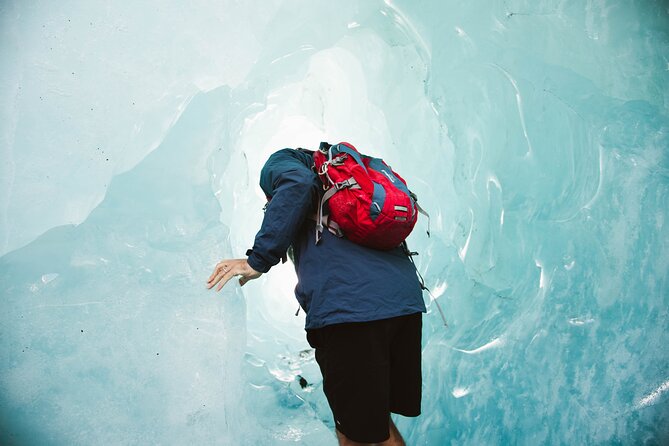
- Weather reality: ice caves are usually included, not guaranteed
- Group size and the physical side: moderate fitness, real traction
- Timing, pacing, and how to avoid a schedule headache
- Price and value: what $601.48 buys you at Mount Cook
- Who should book this heli-hike?
- What to bring so you feel comfortable on the day
- Should you book the Mount Cook Tasman Glacier 3-hour heli-hike?
- FAQ
- How long is the Mount Cook Tasman Glacier heli-hike?
- How long is the helicopter flight?
- Where does the tour start and end?
- What’s included in the hike portion?
- What gear is provided for glacier walking?
- Is lunch included?
- Is the tour suitable for kids?
- What fitness level do I need?
- Can I expect ice caves on every tour?
- What happens if the tour is canceled due to weather?
Key things to know before you fly to the Tasman Glacier
- 3 hours total (half-day) with about 30 minutes of helicopter time and a 2-hour guided hike on the ice
- Small group size (maximum 20 travelers), which usually means less crowding once you’re actually on the glacier
- You’ll land around 1,200 meters above sea level, so expect cold conditions even on decent days
- The experience includes real traction tools: crampons + quality walking boots + walking poles
- You may see the Hochstetter Icefall on the return helicopter ride
- Ice-cave time can depend on weather, so the plan can flex
Why this Tasman Glacier heli-hike feels worth the money
Mount Cook (Aoraki) is one of those places where the scenery already feels dramatic from the ground. This tour adds a different angle: you watch the glacier first from the sky, then you step onto it. That shift matters. From the helicopter, the Tasman Glacier reads like a moving system across the valley. On foot, it turns into texture—cracks, ice formations, and the way the surface changes under your steps.
At $601.48 per person, it’s not a budget activity. The value comes from what you’re paying for: helicopter transport, a glacier landing, guided instruction, and the full set of safety gear needed to walk on ice. You’re also not trying to “figure it out alone” on a complex surface. Someone is there to help you move safely and understand what you’re looking at.
The route is also built for a good day’s pacing. You get a true glacier experience without a full-day commitment. In about 3 hours, you’ll go from airport base to ice to back again.
You can also read our reviews of more tours and experiences in Aoraki Mount Cook National Park Te Wahipounamu.
The helicopter ride: 30 minutes of glacier views and pilot commentary
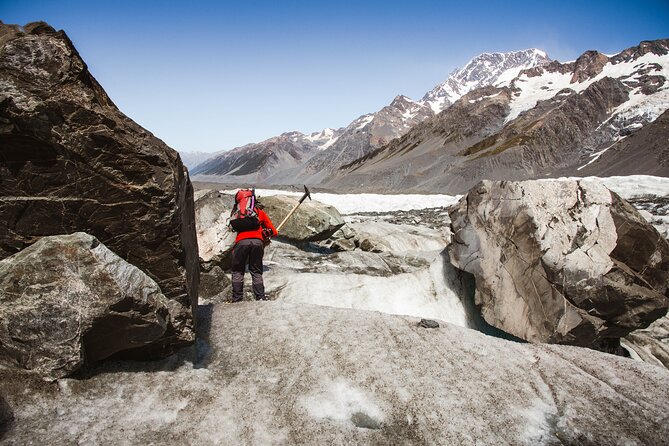
The tour begins at Mount Cook Airport, and the helicopter time is roughly 30 minutes per your day plan. That’s a sweet spot. Long enough to appreciate the scale of the Tasman Glacier, short enough that you’re not stuck staring out a window for hours.
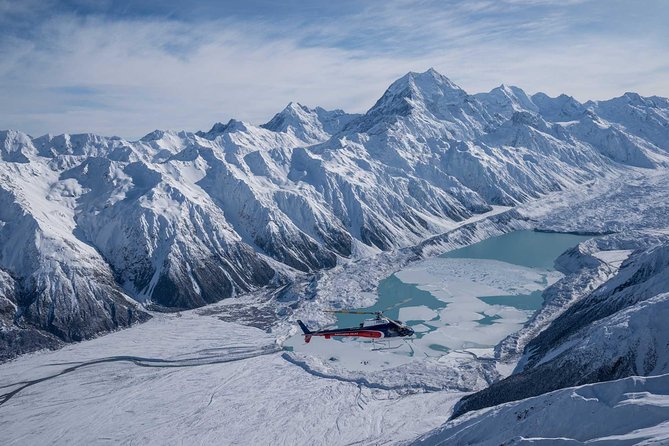
What helps the helicopter portion feel more meaningful is the pilot commentary included with the flights. Even if you’re not the type to study glaciology, hearing what you’re looking at turns the ride into a guided overview. You get aerial views of the Tasman Glacier and the Tasman Glacier lake before you land, which helps you “place” the glacier in your mind before you walk on it.
On the way back, the helicopter adds a final visual payoff: a chance to see the Hochstetter Icefall during the return flight. Icefalls are part of how glaciers shift and break down, so seeing one from the air gives you perspective on how dynamic the ice really is.
Landing on the ice: that high-elevation first step
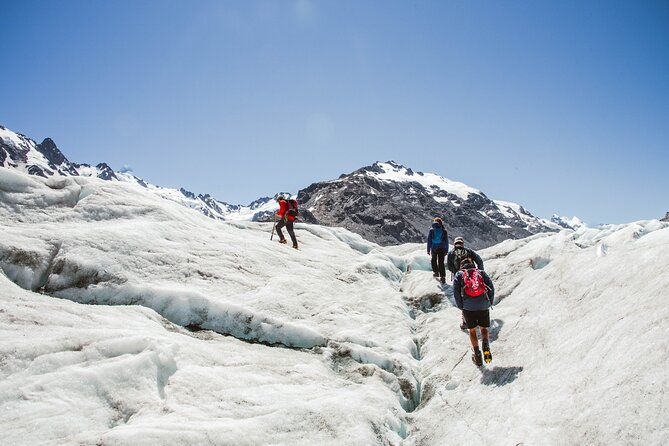
After the first aerial look, you land on the glacier at about 1,200 meters above sea level. That elevation doesn’t just mean cooler air. It usually means sharper cold, wind that can sneak through layers, and that faint sense that the weather is playing the lead role.
The tour description includes a snow landing with the mighty Aoraki/Mount Cook before you. That matters because it cues you into the environment immediately: you’re not walking on a groomed snowfield; you’re stepping onto a living glacier surface.
Also, keep in mind how the outing is structured. The tour is designed around a short runway-to-ice transition. Once you land, you’ll shift quickly from “watching” to “moving,” and that’s where the provided gear becomes crucial.
The guided hike on Tasman Glacier: traction, technique, and time on the ice
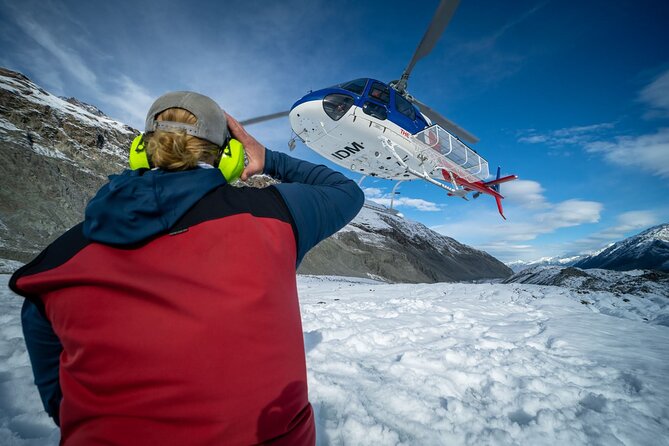
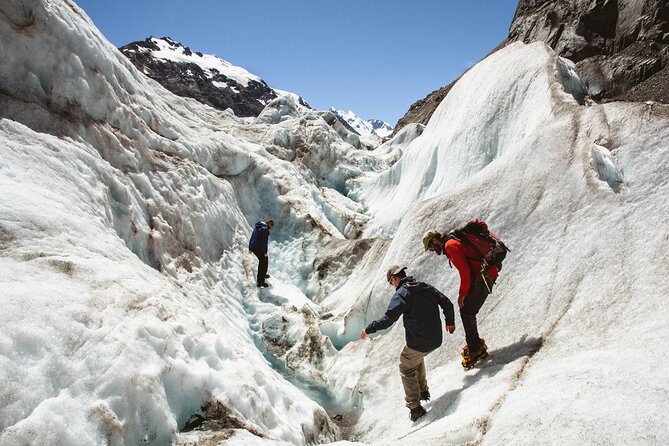
The highlight is the 2-hour guided hike on the Tasman Glacier. This is where the heli-hike earns its name. You get more than a photo stop. You’re actually walking on ice formations up close with a guide.
The key safety and comfort tools are included: crampons, walking boots, and walking poles. Crampons are what turn “slippery” into “climbable,” and poles help you keep balance as the ground slopes and changes. The glacier isn’t flat, and you’ll do better if you walk with focus and short, steady steps.
What’s nice is that multiple guide styles have been praised for communication and patience in real-world conditions. Names that show up in past experiences include Connor Bensen, Matt, Scott, Emma, and Maddie. Even if you don’t get the same guide, it’s a good sign that instruction is taken seriously, not treated as a formality.
Gear that makes or breaks a glacier day
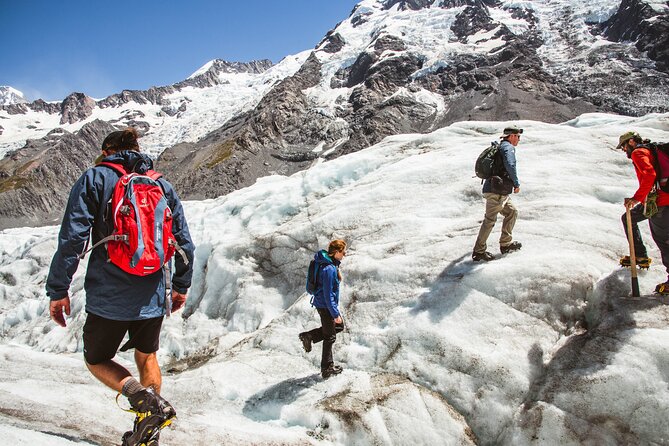
This tour does a lot right on the gear side, and it shows up in how you’ll feel after you land.
Included gear includes:
- Walking boots
- Crampons
- Walking poles
- Woolen socks
- Waterproof jackets and trousers (if required)
That’s a big deal because glacier weather can be wet, windy, and cold in a way that’s hard to predict. The woolen socks and waterproof outer layers are there to handle moisture and chill, two things that can turn a great experience into a miserable one fast.
One small practical tip from past customer advice: if there’s any sprinkling or light wetness in the air, it helps to bring waterproof gloves. The tour provides key layers, but extra glove comfort can help your hands stay functional for photos and for adjusting gear.
What to wear on top of the provided layers? The tour recommends sturdy footwear and warm layers, so plan for cold. If you arrive in light summer gear, you’ll feel it even before the first flight.
Weather reality: ice caves are usually included, not guaranteed
Here’s the honest part: good weather is required. And when weather is marginal, the plan can shift. The tour notes that a walk among ice caves is usually part of the tour, but it’s dependent on weather.
So what should you do with that information? Don’t treat this like a guaranteed checklist item. Treat it like a weather-dependent opportunity. If the ice-cave segment happens, great. If not, the glacier hike and ice formations are still the core experience, and you’ll still spend real time on the ice.
The fact that past outings have had cancellations due to conditions is also a clue: build in buffer time on your Mount Cook schedule so you’re not forced into a tight connection or a rushed departure plan.
Group size and the physical side: moderate fitness, real traction
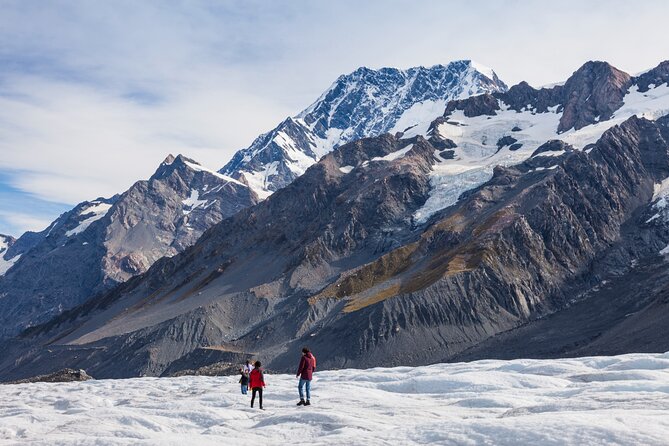
This is not a “sit and admire” tour. Even with crampons and poles, you’ll be walking on an uneven glacier surface for about 2 hours.
The tour asks for moderate physical fitness. It also sets a minimum age of 10 years. In practice, what matters is your ability to stand, walk steadily, and maintain attention on uneven ground. Glacier walking is not hard like a mountain scramble, but it does demand consistency.
There’s also a weight rule that’s worth checking before you book. The tour lists:
- Total weight per passenger: 331 lbs
- A maximum allowable weight for a person on a rear helicopter seat: 150 kg
If you’re near the upper limit, it’s worth confirming details so you’re not surprised by seat assignments.
And don’t ignore the small-group factor: the tour has a maximum of 20 travelers. Once you’re on the ice, that can affect how smoothly gear checks and movement work.
Timing, pacing, and how to avoid a schedule headache
The tour is listed as 3 hours (approx.). That’s the overall window, not the time you spend hiking only. So while the hike is 2 hours, you should expect additional time for getting kitted up, flying in, and returning.
One past experience included a longer-than-expected start and a shortened overall flow. That’s not something you can control, and it can happen when operations adjust around conditions. If your day is packed with other plans, give yourself a cushion.
For a smoother experience, I’d plan this as your morning or early block of time. A morning run can help with weather variability, and it keeps the rest of your day open for scenic drives, short walks around the village, or just relaxing.
Price and value: what $601.48 buys you at Mount Cook
Let’s talk value without the marketing gloss. You’re paying for:
- Return scenic helicopter flights
- A glacier landing
- Guided hike (2 hours)
- Informative pilot commentary
- Glacier gear: crampons, boots, poles
- Warmth support: woolen socks
- Waterproof gear where needed
If you try to approximate this with separate components (a guide, glacier traction gear, and helicopter access), the cost adds up quickly. The more important point: the included gear and instruction lower the risk and stress of doing something on a glacier surface.
Yes, it’s expensive. But at Mount Cook, the glacier is the product. The only realistic way to put you on it in a short time window is helicopter access plus guided safety.
Who should book this heli-hike?
This is a strong fit if you:
- Want a hands-on glacier experience, not just a viewpoint
- Enjoy being guided and don’t want to improvise gear on ice
- Can handle a moderate fitness walking requirement
- Want stunning aerial views plus real glacier time in one half-day
It’s also a great option for multigenerational trips, since past experiences have included older adults enjoying the hike with the guide’s support. The key is readiness to walk carefully and follow instructions.
If you want a fully guaranteed ice-cave itinerary, this may not feel right. The tour clearly signals that ice-cave access is weather-dependent.
What to bring so you feel comfortable on the day
The tour doesn’t include lunch, and it recommends a small backpack with snacks and drinks. I agree. Even if you’re not hungry, having something on hand helps you reset if the schedule shifts.
Bring:
- A small backpack with snacks and drinks
- Warm layers for cold conditions
- Waterproof gloves if you’re sensitive to wet hands or cold fingers
- Layers you can adjust quickly while waiting for flight and gearing up
Also, wear what works for cold traction. The tour provides boots, but your clothing underneath still has to handle wind and chill.
Should you book the Mount Cook Tasman Glacier 3-hour heli-hike?
Book it if your dream is simple: fly over the Tasman Glacier, step onto it, and spend meaningful time walking on ice with the right gear. The combination of helicopter views and a guided glacier hike is hard to beat for a half-day schedule, and the included crampons/poles/warm layers take a lot of uncertainty out of the equation.
Pass or reconsider if:
- Your calendar is too tight for weather changes
- You’re expecting a guaranteed ice-cave stop
- You’re not comfortable walking steadily for about 2 hours on an uneven glacier surface
If you do book, give yourself breathing room. Weather drives this experience. With a flexible schedule and warm preparation, you’ll be set up for a memorable, properly equipped day on the Tasman Glacier.
FAQ
How long is the Mount Cook Tasman Glacier heli-hike?
The tour is listed as about 3 hours total.
How long is the helicopter flight?
The flight time is about 30 minutes.
Where does the tour start and end?
It starts at Mount Cook Airport and ends back at the meeting point.
What’s included in the hike portion?
You get a 2-hour guided hike on Tasman Glacier, along with crampons and walking poles.
What gear is provided for glacier walking?
You’ll be provided walking boots, crampons, walking poles, woolen socks, and waterproof jackets and trousers (if required).
Is lunch included?
No. Lunch is not included, and it’s recommended that you bring snacks and drinks in a small backpack.
Is the tour suitable for kids?
The minimum age is 10 years.
What fitness level do I need?
The tour says a moderate physical fitness level is required.
Can I expect ice caves on every tour?
A guided walk among ice caves is usually part of the tour, but it depends on weather.
What happens if the tour is canceled due to weather?
The experience requires good weather. If it’s canceled due to poor weather, you’ll be offered a different date or a full refund. Free cancellation is available up to 24 hours in advance for a full refund.