REVIEW · SEATTLE
Mt. Rainier highlights – old forest, falls and glaciers
Book on Viator →Bookable on Viator
Mt. Rainier in one day sounds almost too neat. This tour gives you the big-picture hits—Paradise glaciers for a picnic, then waterfalls and old-growth forests—without the stress of driving and parking. I like that it feels structured but not rushed, with short stops for views and a real chance to slow down near the ice.
The vibe is also refreshingly human: a small group (up to 14), guided hikes, and frequent photo moments. The one thing to consider is the physical side: the main glacier hike is short, but it is uphill, and the tour is not a good fit if you have knee or hip problems.
In This Review
- Key Highlights That Make This Tour Worth It
- Why Mt. Rainier Paradise Fits in One Long Day
- Getting From Seattle: Pickup Points and Van Comfort
- Paradise Visitor Center: The One-Mile Glacier Picnic That Anchors the Day
- A practical tip for the hike
- Waterfalls and Panoramic Pull-Offs: Narada and Christine
- Reflection Lake: The Summer Magic vs. Winter Road Reality
- Old-Growth Forest Time at Longmire (Lower Elevation)
- Winter and Spring Mode: Snowshoeing With Gear Included
- What’s Included (and What You’ll Need to Handle)
- Footwear matters
- Price and Logistics: Is $179 Good Value for Mt. Rainier?
- Pace, Hike Levels, and the Most Common Fitness Reality
- Who Should Book This Tour (and Who Should Skip It)
- Should You Book This Mt. Rainier Highlights Tour?
- FAQ
- How long is the Mt. Rainier highlights tour?
- Where do I meet in Seattle?
- Is lunch included?
- What hike or snowshoeing will I do?
- What gear is included?
- How big is the group?
- Is this tour suitable if I have knee or hip problems?
- What happens if the weather is bad?
Key Highlights That Make This Tour Worth It
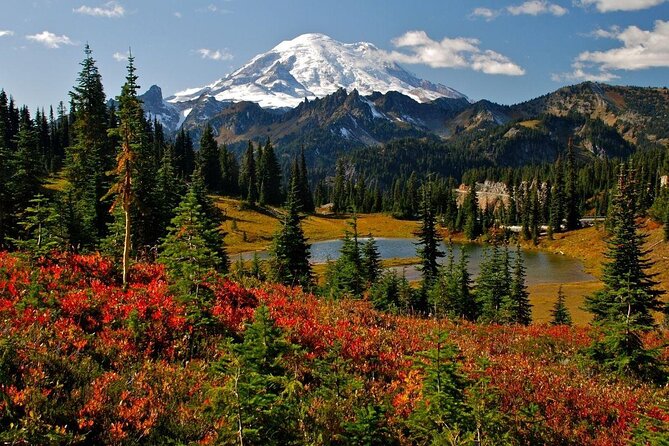
- Glacier picnic at Paradise: about a mile hike each way to eat next to big ice views
- Waterfalls with real payoff: Narada Falls to the bottom and Christine Falls by the old stone bridge
- Old-growth forest time: lower-elevation walking near Longmire with seriously old Douglas firs
- Reflection Lake in season: summer reflections; winter reality check when the lake is frozen and roads close
- Snowshoe option when trails turn snowy: November–June snowshoeing with gear provided
- Small-group pace: up to 14 people, with guides who adjust the hike level
Why Mt. Rainier Paradise Fits in One Long Day
Mt. Rainier is huge, and that’s the trick. You can’t see glaciers, waterfalls, and forest in Seattle time without planning. This tour solves that by focusing on the Paradise area and nearby highlights that pack a lot into your day.
At Paradise, you’re high up (around 5,500 feet) and closer to the stuff most people came for. You’ll hike from the Visitor Center area toward glacier views, then bounce to viewpoints and walks that feel like a highlight reel. It’s a smart format if you want variety, not just one long hike.
The most useful part for you: the day has multiple “small wins,” like photo pull-offs and short walks. That matters because weather in the mountains can swing fast. You’re not stuck doing only one thing if visibility changes.
You can also read our reviews of more tours and experiences in Seattle.
Getting From Seattle: Pickup Points and Van Comfort
You start in downtown Seattle, meeting at 415 Pine St. There’s also an optional pickup/drop-off near the Space Needle if you request it. Either way, the goal is simple: easy access without complicated rendezvous.
The drive to the park is about 2 hours each way, so you’re committing to a full day. The upside is the tour handles the transportation. You get an air-conditioned vehicle and a guided schedule that keeps the day flowing.
Small group size is a real comfort factor here. This is capped at 14 travelers, and that usually makes a difference for legroom, ease at stops, and how calmly the group moves. (One trip isn’t ruined by the chaos that happens when a vehicle is packed to the limit.)
Paradise Visitor Center: The One-Mile Glacier Picnic That Anchors the Day
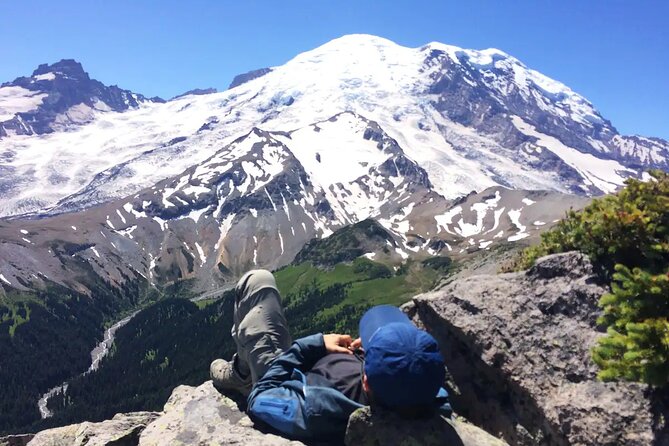
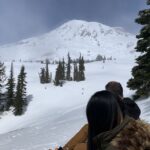
This is the center of gravity. You’ll begin at the Paradise Visitor Center area, then hike roughly one mile toward glacier views and picnic close to the ice. Afterward, you head back up for about another mile.
It’s not long in distance, but it’s not flat either. Expect uphill effort, especially with thinner mountain air. If you do this hike slowly, using the trekking poles if you have them, it feels manageable for many moderate-fitness people. If your legs hate steep grades, plan on taking breaks and pacing early.
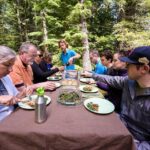
The picnic part is where the value really shows. You’re not eating in a parking lot while looking at a distant postcard. You’re eating next to a glacier scene—big, dramatic, and very “I’m really here” in a way screens can’t recreate.
A practical tip for the hike
Bring a layer you can adjust. At Paradise, weather often feels different from sea level. Even on a decent day in Seattle, you might want a warmer top in the park.
Waterfalls and Panoramic Pull-Offs: Narada and Christine
After the hike and picnic, the tour pivots to viewpoints and waterfall access. This is a great section because it gives your legs a break while still hitting memorable sights.
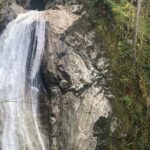
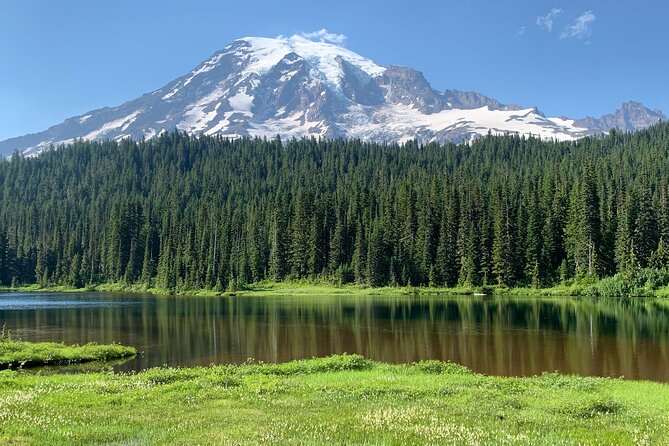
Narada Falls is a standout: you’ll hike to the bottom of a 168-foot fall. That short stretch is worth it because the base view feels powerful, and the surrounding forest keeps the experience immersive.
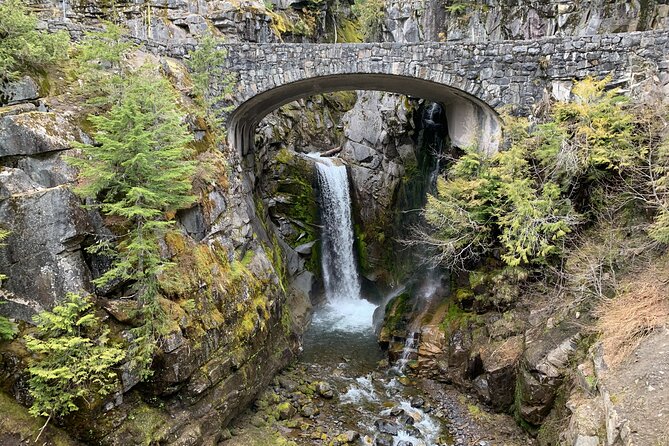
Christine Falls is more of a viewpoint stop, where you’ll see the falls under an old stone bridge. It’s quick, but it’s visually distinct. If you’re thinking in terms of variety, Narada and Christine work as a pair—one dramatic and reach-for-the-photos, the other classic and charming.
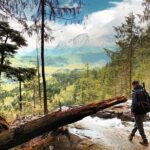
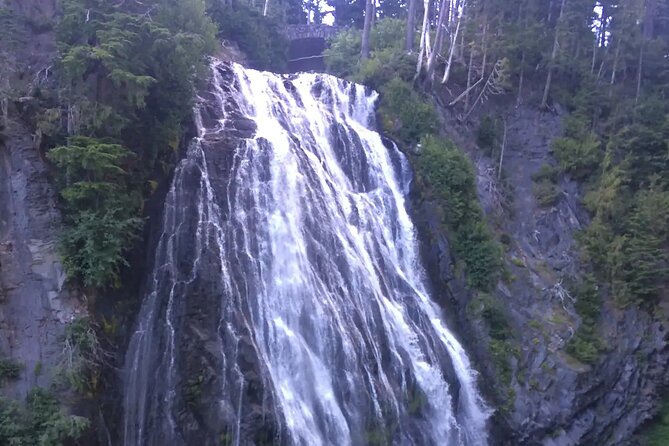
Between stops, you’ll also get panoramic viewpoints where Mt. Rainier and the Cascades can show up clearly. When the clouds cooperate, these pull-offs are the kind of photos that make you forget the long drive.
Reflection Lake: The Summer Magic vs. Winter Road Reality
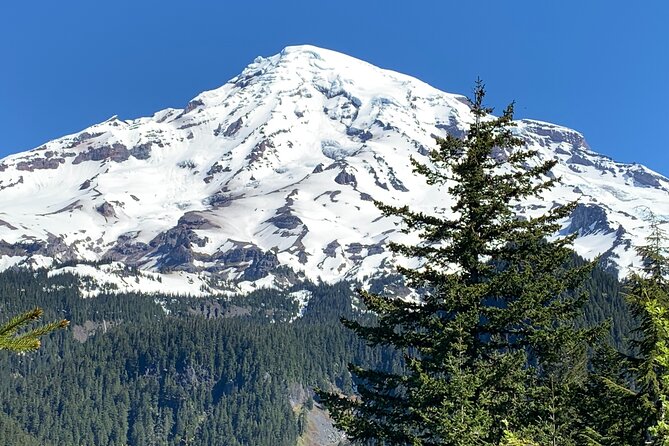
Reflection Lake is one of those places where timing matters. In summer, Mt. Rainier often reflects in the water, which is exactly what people hope for.
In winter, the lake is frozen, and the road is closed. That doesn’t make the stop pointless—it just changes what you can see. The tour still gives you the route to check the area, but you should assume the reflections are not guaranteed outside the warmer months.
This is why the tour format helps you. If you’re visiting in a season where conditions change, you’re not counting on one perfect view for your whole day. You’ve got glaciers, waterfalls, and forests as backups.
Old-Growth Forest Time at Longmire (Lower Elevation)
One of my favorite parts of this kind of day is when it stops being only “mountain views” and turns into “place.” Longmire is that shift. You’ll take a walk in the old-growth forest area near Longmire, which sits at a lower elevation than Paradise.
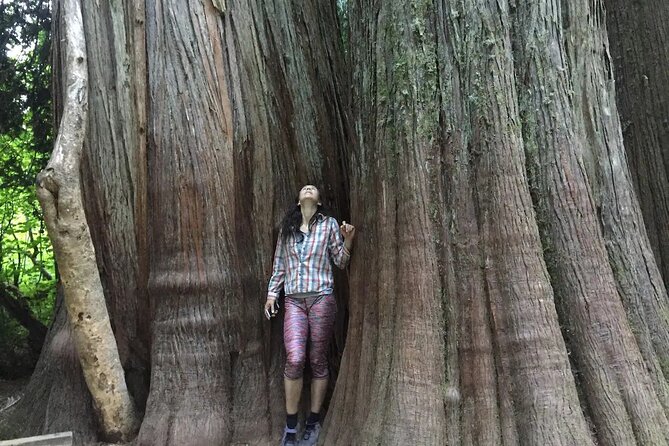
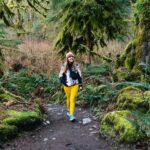
This is where the trees do the talking. In this area, you’re in forest with very old Douglas firs, and the walking pace feels calmer. It’s also a good option if your legs are tired from the earlier uphill part. Even when the weather is less dramatic, the forest itself still feels alive.
This stop is usually around 30 minutes, which means it’s enough time to look closely without turning into a long additional hike.
Winter and Spring Mode: Snowshoeing With Gear Included
From November through June, the tour switches from hiking to snowshoeing. The big win: no experience is required. You’re provided snowshoes and crampons, and the guides handle the movement safely so you can focus on the scenery.
You’re still in the same general high-elevation environment, so traction matters. This is exactly where crampons can change everything. They reduce the slip risk and let you feel steadier during icy sections.
Snowshoe season also changes the feel of the park. It’s quieter and often more surreal. Instead of chasing reflections, you’re reading the terrain—snow texture, tree shapes, and how the trail follows the land.
If you hate unpredictability, this is one of the best ways to reduce it. You get the right gear instead of trying to rent or guess what you need.
What’s Included (and What You’ll Need to Handle)
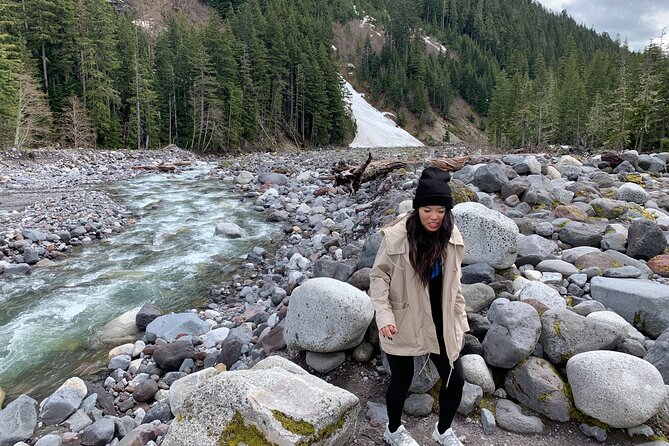
You get a lot of the “annoying logistics” covered:
- Bottled water
- Trekking poles
- Air-conditioned vehicle
- Snowshoes and crampons (for snow seasons)
- All fees and taxes
Lunch is not included. You can bring your own lunch, and the day typically includes a restroom stop where you can pick up picnic items. There’s also a cafeteria at the Visitor Center in the park, which gives you a real backup if you don’t want to pack.
For your glacier picnic plan, think simple: enough food and layers for a cool, windy spot. Even if the hike is short, the pause near the ice can feel crisp.
Footwear matters
Bring shoes you trust on steep grades and uneven surfaces. If you have trekking poles, use them early. Your future self will thank you on the way back uphill.
Price and Logistics: Is $179 Good Value for Mt. Rainier?
At $179 per person for a 10 to 11 hour day, this tour isn’t cheap. But it can still feel like good value because it bundles several costly or stressful parts:
- long-distance transportation from Seattle
- park-day scheduling with multiple stops
- key outdoor gear (at least trekking poles, and snow gear in winter)
- fees and taxes included
- small-group hiking support
Where you save money isn’t just the ticket. It’s the chance to avoid renting gear, navigating timing, and trying to coordinate driving plus parking in a high-demand national park.
What you’re still paying for, honestly, is time and convenience. The drive is long, and the day includes a lot of moving. If you want full control of every minute, you might prefer a rental car. If you want a guided route that hits big highlights without the stress, this price can make sense.
Pace, Hike Levels, and the Most Common Fitness Reality
The tour is built for travelers with moderate physical fitness. It’s not a casual stroll, mainly because the early uphill grade to the glacier picnic can feel steeper than you expect for a one-mile stretch.
The good news: the guides keep the group together and often adjust. Some guests mentioned having options for more hiking versus less, and the guide support can make steep moments feel calmer.
Still, this is not recommended if you have knee or hip problems. Even with trekking poles, steep uphill and downhill can be hard on joints. If that’s your situation, you’ll likely be happier with a gentler plan.
Who Should Book This Tour (and Who Should Skip It)
This is a strong pick if you want:
- Mt. Rainier highlights without driving
- a glacier picnic plus waterfalls plus forest in one day
- small-group energy with frequent photo stops
It’s a weaker pick if you:
- need step-by-step flat walking only
- have knee/hip issues
- hate long vehicle days (the ride from Seattle is about 2.5 hours each way for many people, plus park time)
Families and solo travelers can work well here because the itinerary mixes active hiking with shorter scenic stops. Just be honest about your comfort with steep grades.
Should You Book This Mt. Rainier Highlights Tour?
I’d book this tour if your priority is a guided, organized day that hits glaciers, waterfalls, and old-growth forest without the hassle of planning around driving and changing weather. The glacier picnic at Paradise is the anchor, and the waterfall stops add variety that makes the long day feel justified.
Skip it if you want an easy day physically, or if joint issues will make uphill and rocky ground miserable. Also, if you’re the kind of traveler who gets agitated by long drives, you’ll want to plan your expectations.
Bottom line: for $179, you’re buying structure, gear, and access to the best-known Paradise-adjacent sights, with a small-group pace that keeps the day moving but not chaotic.
FAQ
How long is the Mt. Rainier highlights tour?
It runs about 10 to 11 hours total.
Where do I meet in Seattle?
The meeting point is 415 Pine St, Seattle, WA 98101. You can also request pickup/drop-off near the Space Needle.
Is lunch included?
No. Lunch food is not provided. You can bring your own picnic or buy food during a stop for groceries, and there is a cafeteria at the Visitor Center.
What hike or snowshoeing will I do?
At Paradise, you’ll hike about a mile to the glacier picnic area and hike back about a mile. In winter and spring (November to June), you’ll snowshoe instead of hiking.
What gear is included?
The tour includes trekking poles, bottled water, and snowshoes and crampons (used for the snow seasons).
How big is the group?
The maximum group size is 14 travelers.
Is this tour suitable if I have knee or hip problems?
It’s not recommended for travelers with knee or hip problems.
What happens if the weather is bad?
The experience requires good weather. If it’s canceled due to poor weather, you’ll be offered a different date or a full refund.