REVIEW · MARRAKECH
2 Day Private Tour to Toubkal Summit from Imlil
Book on Viator →Operated by Toubkal Top Travels · Bookable on Viator
Two days in Morocco’s Atlas Mountains moves fast. This private climb from Imlil to the Toubkal summit mixes big-height hiking with Berber villages and a night in the refuge, run by a professional guide team that takes care of the hard parts. I especially like the day-by-day structure (start early, summit, then come back with time to rest) and the way the guides support different paces using multilingual help (English, French, Spanish, Arabic). The main drawback is simple: you need strong physical fitness for trekking at high altitude, and you’re dependent on good weather to actually reach the plan.
You’ll spend Day 1 walking the Aït Mizane valley, hitting the Sidi Chamarouch sanctuary and a nearby waterfall, then settling into the Toubkal refuge at 3207m. Day 2 is an early-morning push to 4167m, with a non-technical summit experience designed for hikers who want the peak without technical climbing. If you’re short on stamina, this is not the kind of trip where you can casually “wing it.”
In This Review
- Key points worth knowing before you go
- From Marrakech to Imlil: the morning start that sets your pace
- Day 1: Aït Mizane valley, Sidi Chamarouch, and the 3207m refuge night
- The refuge at 3207m: why the overnight stay is the smart part
- Day 2: Early summit push to 4167m, then down by mid-afternoon
- Your guide and mule team: the real value in a private Toubkal climb
- Fitness, pace, and who this tour suits best
- Price and value: does $174.22 make sense for what you get?
- Weather and tickets: the parts that can change your day
- Should you book the 2-day private Toubkal summit tour from Imlil?
- FAQ
- What time does the tour start?
- Where does the trek begin on Day 1?
- How long is the walking on Day 1?
- What happens on the Day 2 summit morning?
- Do you need technical climbing skills for the summit?
- What’s included in the price?
- Is private transportation included?
- What languages do the guides speak?
- What if the weather is bad?
- How flexible is cancellation?
Key points worth knowing before you go
- Private group experience so the pace and questions stay with your guide and team, not a crowd.
- Refuge night at 3207m keeps you close to the summit route and makes the second day more realistic.
- Aït Mizane valley + Sidi Chamarouch sanctuary adds real culture and scenery beyond just the summit.
- Summit plan without technical climbing targets the big view payoff with trekking-style effort.
- Multilingual mountain guides (English, French, Spanish, Arabic) make the “what now?” moments easier.
- Hamid and the team are repeatedly described as organized, supportive, and focused on safety and comfort.
From Marrakech to Imlil: the morning start that sets your pace
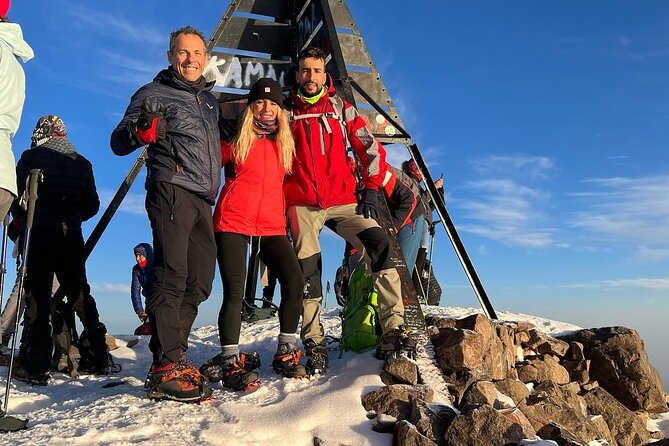
This tour is built around an early start from Marrakech. You’re picked up from your accommodation in the city and driven toward Imlil and the Toubkal National Park area where the trek begins. The stated start time is 7:30am, and the schedule then moves into the park area and trekking toward Aït Mizane and the nearby villages.
That drive matters more than you might think. Getting out of Marrakech early helps you start the hiking day before you’re stuck in late-morning heat or fatigue. It also gives your guide time to get you lined up with the plan: where you’re walking, what to expect on the route, and how you’ll manage your timing to reach the refuge that night.
One practical note: the tour includes pickup, but the listing also says private transportation isn’t included. In plain terms, confirm whether your ride is truly private or shared when you book, even though pickup is part of the experience.
You can also read our reviews of more tours and experiences in Marrakech.
Day 1: Aït Mizane valley, Sidi Chamarouch, and the 3207m refuge night
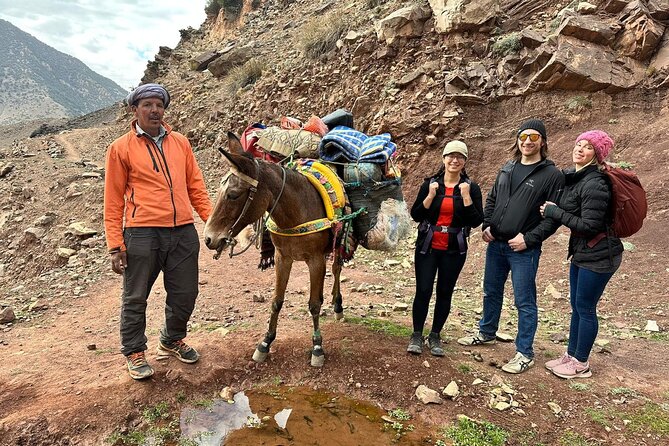
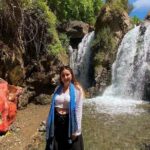
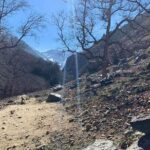
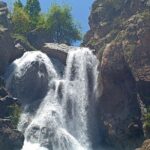
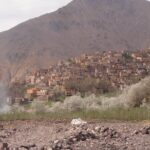
Day 1 is where the hike feels like a journey, not just a workout. You trek through the Aït Mizane valley, heading toward Aremd, then on to the sanctuary of Sidi Chamarouch and a waterfall close by. Those stops break up the walking and give you moments to look around, chat, and reset.
The walk time is set for about 4–5 hours, which is a good sign if you want a challenging experience without turning it into an all-day slog. Lunch is planned around 13:00, and you arrive at the refuge around 16:00 after reaching Toubkal Refuge (3207m).
Once you reach the refuge, you get a block of free time from 16:00 to 20:00, then dinner at 20:00. That free time is genuinely useful. It’s when you can catch your breath, adjust layers, and get ready for the summit push the next morning.
The route also gives you more than “walk here, walk there.” You pass through village life and religious/cultural sites along the way, so even on Day 1, the Atlas Mountains feel lived-in.
The refuge at 3207m: why the overnight stay is the smart part
Sleeping at the Toubkal refuge (3207m) is the key advantage of this two-day format. It’s not just where you sleep. It’s what makes the next day’s summit attempt workable.
When you’re closer to the higher trail, your second day is shorter and more focused: fewer hours spent simply getting altitude. That matters because the summit day is scheduled to start early and reach the top by the morning.
The tour includes accommodation at the refuge as per the itinerary, plus meals. You’ll also have dinner on Day 1, then breakfast on Day 2. That food timing is helpful at altitude because you don’t want to gamble your energy on guessing meals along the way.
If you’re the type who likes comfort after effort, the refuge night is where this trip earns trust: you’ve already done the biggest Day 1 work, and then you get a planned downtime window before dinner.
Day 2: Early summit push to 4167m, then down by mid-afternoon
Day 2 starts very early: wake up at 5:00, eat breakfast, then begin the climb at 6:00. The plan aims for summit at about 9:00, with time right after for souvenir photos. Then you go down to the shelter for lunch at 12:00 and return to Imlil/Armed village area by around 16:00 (the schedule describes a guesthouse in Armed village).
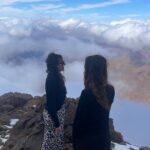
A big selling point here is that the summit experience is designed as a trekking hike: Mount Toubkal (4167m) is the highest peak in North Africa, and this route is described as allowing a trekking experience to the peak without climbing. In other words, you’re not signing up for a technical rock scramble.
What you should expect is effort and altitude. Even when a climb is “only trekking,” 4167m is still serious. Your guide’s job is to manage pace, hydration, and energy so you can keep moving without burning out too soon.
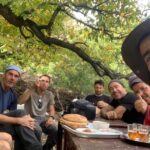
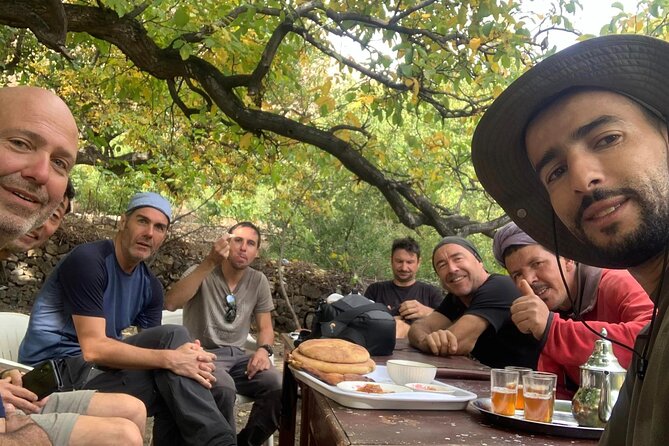
Also, take comfort in the tone of the guide support described in past trips. A guide named Hamid shows up repeatedly in feedback as supportive, organized, and attentive to group wellbeing. People describe him lending jackets and gloves, helping with food and warmth, and taking care of the group throughout the trail.
Your guide and mule team: the real value in a private Toubkal climb
This isn’t just a “hike with a route.” It’s a guided mountain operation that includes both a mountain guide and a muleteer team. That mule team part matters for a two-day summit attempt because it’s one less thing for you to carry, and it makes the hike feel more focused on walking and pacing.
The guide also offers multilingual support in English, French, Spanish, and Arabic. That’s practical. When you’re moving in remote terrain, you want answers fast, not later, and you want clarity about what comes next.
The best aspect, based on the way the guide team is described, is the care and organization around safety and morale. Many people highlight how Hamid keeps the mood light, encourages you consistently, and helps the hike feel possible. You can also see a pattern: the guides aim to adjust to the group’s needs, not force everyone into one pace.
In a private format, that flexibility is easier to deliver. Your group isn’t competing with strangers for the guide’s attention. That’s what makes the experience feel secure, especially on summit morning when energy management is everything.
Fitness, pace, and who this tour suits best
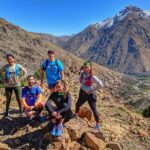
The itinerary is clearly built for hikers. The additional info says travelers should have a strong physical fitness level. At the same time, the tour description says the guides can accommodate all fitness levels. That seems contradictory until you read it as: you need fitness to do it, but the pace and support are managed so you’re not left behind.
So who is this for?
- You want a serious but doable challenge in two days
- You’re okay with an early morning start and a high-altitude day
- You like guided logistics (meals, timing, and a team that manages the route)
Who might hesitate?
- If you’re new to trekking or struggle with steep walking for extended stretches
- If you get nervous about altitude and want more gradual acclimatization (not offered in this two-day structure)
Even without technical climbing, the heights are real: you’re going from the Imlil area (1740m) up to the refuge (3207m), then to the summit (4167m).
Price and value: does $174.22 make sense for what you get?
At $174.22 per person, you’re paying for a full guided experience with more than just a leader. Included items are:
- Breakfast, lunch, and dinner (2 of each lunch and dinner, per the itinerary)
- Accommodation as per the plan (including the refuge night, plus the guesthouse night in the Armed village area)
- Mountain guide and muleteer team
Not included:
- Private transportation (even though pickup is offered)
Here’s the real value math: if you had to piece this together yourself, you’d need (1) a qualified guide, (2) mule support for a comfortable two-day summit plan, and (3) lodging and meals timed to the summit schedule. You also get the benefit of multilingual guidance, which reduces friction when your questions matter.
The biggest “hidden” cost in mountain trips is time. This itinerary gives you a working sequence with set meals and set move times. That structure saves you from the stress of guessing what to do next.
So yes, the price looks reasonable when you treat it as a fully managed two-day summit system rather than just a walk in the mountains.
Weather and tickets: the parts that can change your day
This is a weather-dependent experience. The additional info states it requires good weather, and if it’s canceled due to poor conditions, you’ll be offered a different date or a full refund. That’s the right kind of policy for Toubkal, where visibility and trail conditions can make a big difference.
On the paperwork side, you get a mobile ticket, and the itinerary notes an admission ticket as free. You’ll also receive confirmation within 48 hours of booking, subject to availability.
For you, the practical takeaway is simple: plan Marrakech sightseeing with some flexibility. If you’re locking everything rigidly to one exact day, you may end up stressed if weather shifts.
Should you book the 2-day private Toubkal summit tour from Imlil?
Book this if you want:
- A private two-day structure with a guide team and mule support
- A refuge night that makes the summit day feel planned, not random
- A mix of hiking and real Atlas life stops like Aït Mizane and Sidi Chamarouch
- The chance to summit Toubkal (4167m) via a trekking route without technical climbing
Don’t book (or at least rethink) if:
- You’re not confident with trekking at elevation
- You hate early mornings and long walking days
- Your schedule is too rigid to handle weather-related date changes
If you’re physically up for it and you like the idea of being cared for by a team that focuses on pace, safety, and group wellbeing, this is a strong way to earn the big summit views without turning the trip into a logistics headache.
FAQ
What time does the tour start?
The experience start time is listed as 7:30am, with pickup from your Marrakech accommodation.
Where does the trek begin on Day 1?
Day 1 is driven from Marrakech toward Imlil and the Toubkal National Park area, where you start the trek around the Imlil route.
How long is the walking on Day 1?
Day 1 includes about 4–5 hours of walking, ending with arrival at Toubkal Refuge (3207m) around 16:00.
What happens on the Day 2 summit morning?
You wake at 5:00, eat breakfast, start climbing at 6:00, and aim to reach the summit around 9:00. Then you descend for lunch at about 12:00 and return around 16:00.
Do you need technical climbing skills for the summit?
The tour description says the summit experience allows a trekking experience to the peak without climbing, meaning it’s trekking-focused rather than technical climbing.
What’s included in the price?
Included items are breakfast, mountain guide and muleteer team, accommodation as per itinerary, and two lunches and two dinners.
Is private transportation included?
Private transportation is listed as not included, though pickup is offered. It’s worth confirming the exact ride arrangement when you book.
What languages do the guides speak?
Guides provide multilingual support in English, French, Spanish, and Arabic.
What if the weather is bad?
The experience requires good weather. If it’s canceled due to poor weather, you’ll be offered a different date or a full refund.
How flexible is cancellation?
Cancellation is listed as free. You can cancel up to 24 hours in advance for a full refund; if you cancel less than 24 hours before the start time, the amount paid is not refunded.