REVIEW · SICILY
Etna: Cable Car & Hiking Tour to Summit
Book on Viator →Operated by Sicilying SRL · Bookable on Viator
Etna at 3,000 meters is a whole different planet. This tour takes you from Rifugio Sapienza up by cable car, then hikes with a certified alpine and volcano guide so you can see summit craters most visitors never reach. I especially liked the hands-on guidance at crater level and the built-in photo breaks along the route. One thing to keep in mind: how high you go is tied to volcanic monitoring rules, so you may not reach the very highest points shown in some descriptions.
Logistics are mostly straightforward, and the pacing works for a 5-hour outing. You’ll start at Nicolosi, climb to about 2,500m by cable car, then continue on foot toward the maximum altitude allowed, including viewpoints around the Barbagallo Craters. The route is best for people with moderate fitness and solid footwear, since you’ll be walking on volcanic terrain and sand during parts of the descent.
In This Review
- Key things to know before you go
- What makes this Mount Etna hike worth your time
- Getting up from Nicolosi: cable car to Rifugio Sapienza
- Valle del Bove and the crater-watching route you’ll actually hike
- Barbagallo Craters: where the summit views get personal
- When volcano monitoring limits your highest point
- The 2002 descent: volcanic sand and why good boots matter
- Certified guidance, included gear, and what safety actually looks like
- Price and value: tour fee plus the €54 cable car ticket
- Timing and meeting points: do not wing this morning
- What to pack for this Etna summit crater hike
- Who this tour is best for (and who should think twice)
- Should you book this Mount Etna cable car & summit hiking tour?
- FAQ
- How long is the Etna cable car and hiking tour?
- Is lunch included?
- Do I need to buy the cable car ticket separately?
- Where and when do I meet if I do not have pickup?
- What time is pickup from central Catania?
- What fitness level is required?
Key things to know before you go
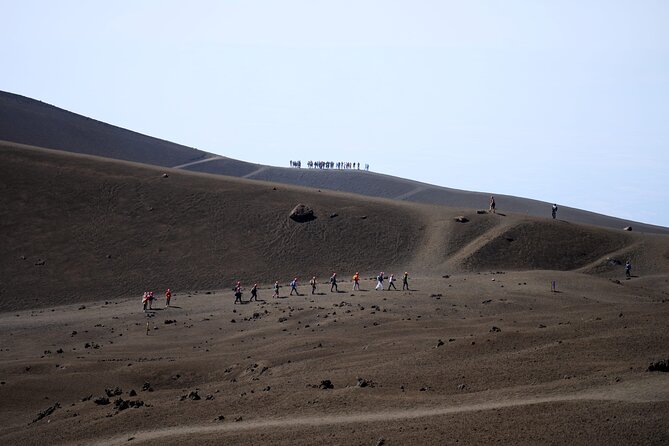
- Summit crater time, not just a far-off viewpoint: you hike into the summit zone with a guide.
- Altitude is “up to” the allowed maximum: your exact high point depends on conditions.
- Comfort items are included: wind jacket, helmet, hiking sticks.
- Cable car is a separate cost: the tour fee does not include the €54 cable car ticket.
- Arrive early and double-check the meeting point: one unlucky group reported being left behind for a meeting-location mix-up.
What makes this Mount Etna hike worth your time
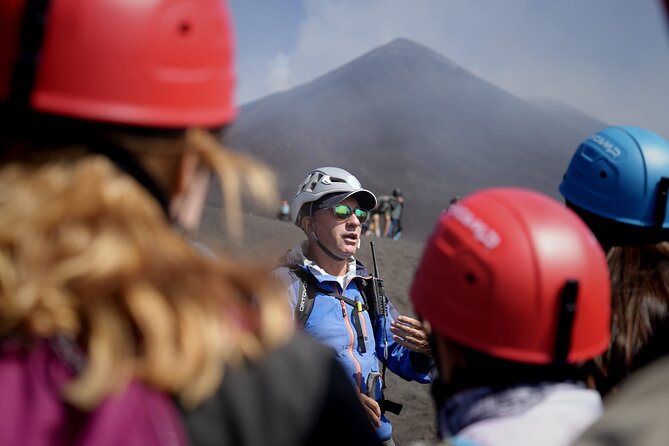
A lot of Etna experiences stop when the views start getting good. This one pushes farther, into the summit area where the volcano looks less like a mountain and more like a living system with scars, layers, and still-active shapes.
I like that it’s built around a guide who’s focused on safety and on reading what you’re walking past. The route is tied to volcanic monitoring limits, which means you’re not just chasing altitude for bragging rights—you’re getting access in a controlled way. And because you reach crater viewpoints around 3,000 meters (over 10,000 feet), the air and the angles feel dramatic fast.
The other big plus is the crater variety on the day. You’ll pass craters linked to the 2001 eruption, then later you’ll walk down over volcanic sand connected with the 2002 craters. That means you’re not just seeing one “photo spot.” You’re moving through multiple chapters of Etna’s recent activity.
You can also read our reviews of more tours and experiences in Sicily.
Getting up from Nicolosi: cable car to Rifugio Sapienza
Your day starts in Nicolosi with the tour meeting point, and it’s designed around the classic Etna launch point: Rifugio Sapienza. If you chose pickup, it’s from central Catania at approximately 7:30 AM, which can save you stress if you don’t want to navigate on your own before the climb.
Once you’re at Sapienza, the cable car lifts you to about 2,500 meters. That’s a practical win. You’re saving your legs for the hike where the crater views happen, not burning energy on the long approach road.
Here’s the trade-off: because the cable car ticket is not included (it’s €54 per person), you should plan your budget accordingly. It’s still a smart setup for a 5-hour tour—just don’t assume the tour price is the full cost of getting up the mountain.
Valle del Bove and the crater-watching route you’ll actually hike
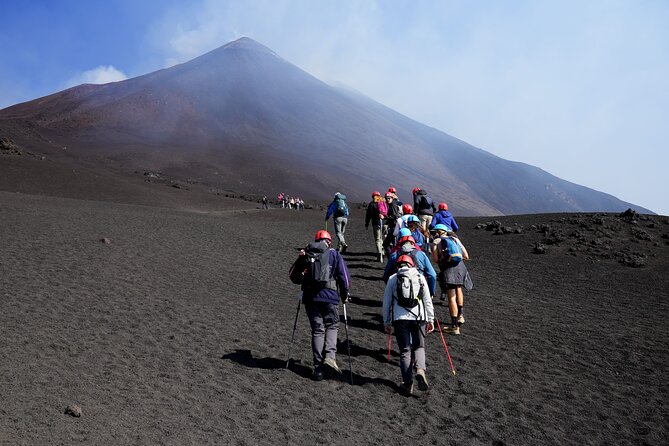
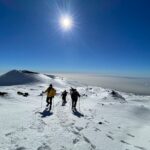
After the cable car, your climb becomes a guided walk through the summit landscape. The uphill trek lasts around 1.5 hours, and that time is split with extended breaks for resting and photos. Those pauses matter on Etna, because the ground can be loose and the wind can change fast with altitude.
One item in the plan is a stop at Valle del Bove. This is a major feature of Etna’s geography, and having it on your route helps turn your hike from a narrow crater mission into a broader “how the mountain is shaped” experience.
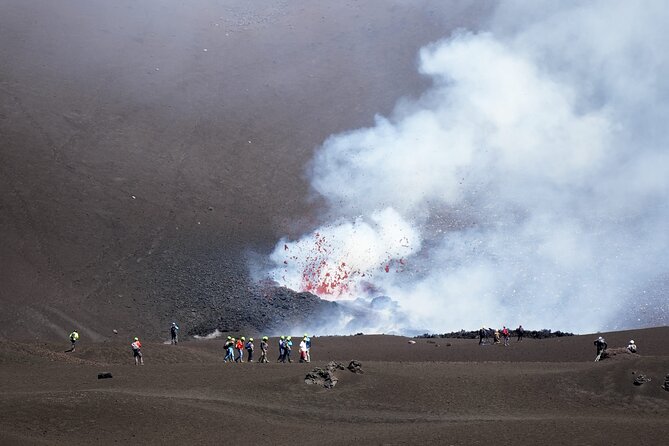
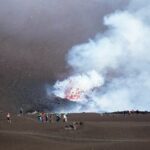
Then you’ll move through the crater zones, including areas connected to the 2001 eruption. You’ll also spend time around the craters Silvestri of Mount Etna as part of the summit exploration. Even if you’re not a geology nerd, the guide’s job is to translate what you’re seeing into something you can recognize: where the ground came from, why some areas look jagged, and what to watch for underfoot.
Barbagallo Craters: where the summit views get personal
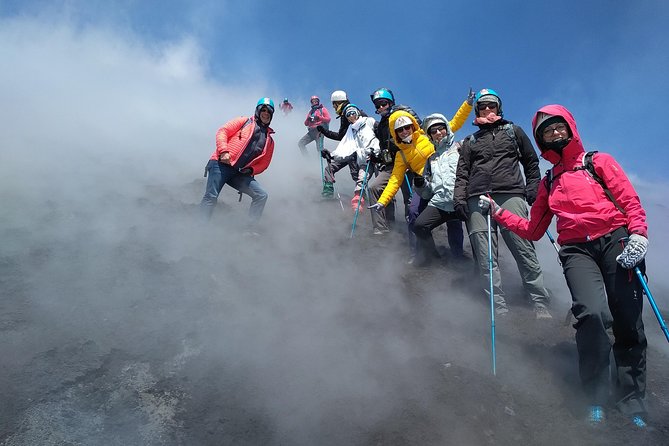
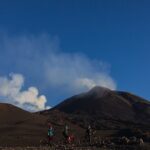
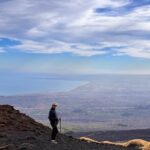
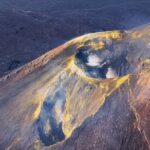
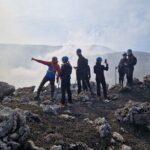
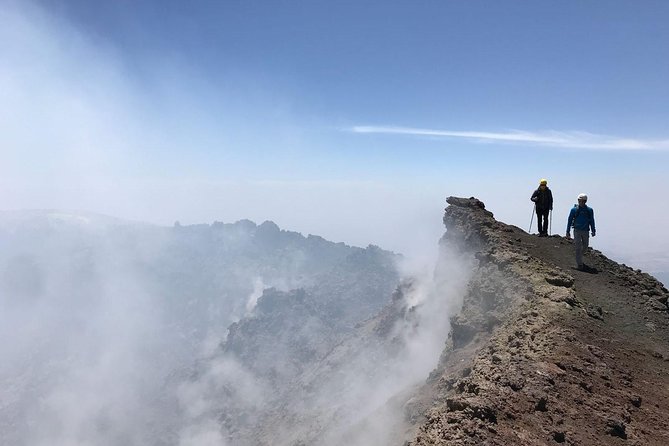
The highlight is time near the Barbagallo Craters, reached at around 3,000 meters. This is the moment when you can look out across summit craters and surrounding lava fields from close range, not from a distant overlook.
This part of the route is especially valuable because you’re above the “normal Etna” viewing height. At these elevations, small differences in terrain become huge visual clues. You start to understand how the crater rows, lava flows, and ash layers stack on top of each other over time.
You’ll get a long stop near the craters, which is exactly what you want in a place like this. Short pauses are fine in a museum. At Etna’s summit zone, you need time to orient yourself, take photos, and let the guide explain what matters before the terrain moves you on.
When volcano monitoring limits your highest point
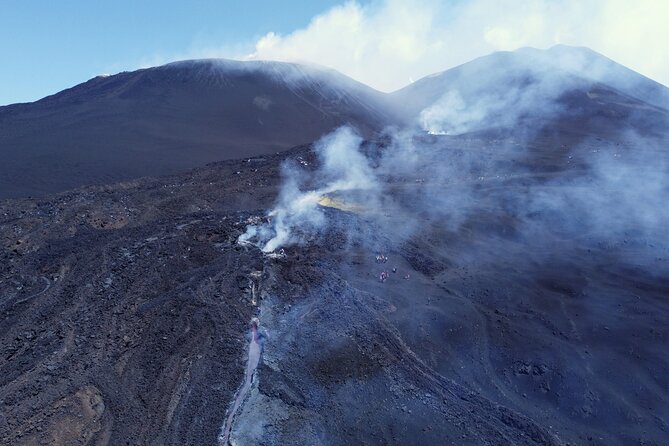
This tour does not promise a single fixed maximum altitude. The plan says you hike toward the maximum altitude allowed by volcanic monitoring. In other words: you’re not guaranteed the highest “possible Etna” that day, even if you trained for it.
That limitation isn’t just a minor detail. It affects the feel of the tour. If conditions restrict crater access, you might spend more of the hike time in zones slightly below the very top. You’ll still enjoy the summit crater area and the crater viewpoints that are available, but the day can be less about reaching a peak number and more about seeing what’s accessible safely.
Also, altitude can be more than legs and lungs. Weather can matter a lot on Etna, and the experience requires good weather. If conditions force a change, the operator offers a different date or a full refund. That’s a big reassurance when you’re planning a tight Sicilian itinerary.
The 2002 descent: volcanic sand and why good boots matter
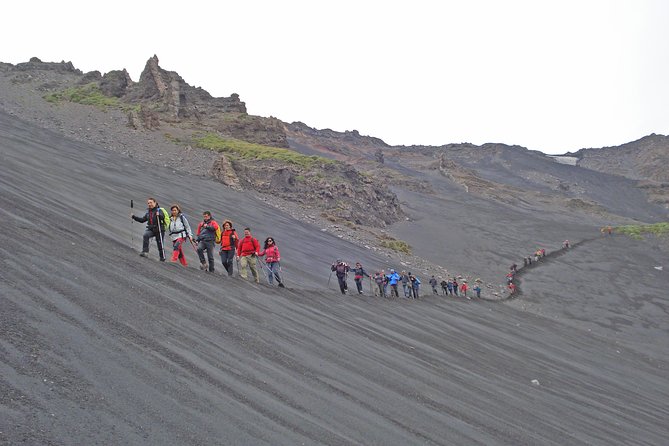
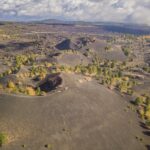
After the summit crater time, you descend toward the 2002 craters. This segment includes a walk across volcanic sand—one of those Etna details you don’t fully appreciate until you’re stepping into it.
The walking surface can be uneven and it can pull at your footing. That’s why the tour includes hiking sticks: they help you balance and reduce fatigue when the ground is loose. It’s also why your footwear choice matters more than people think. If your boots are flexible or your soles are slick, this part of the day can feel slower and more tiring.
Then the route brings you back up to about 2,500 meters for the cable car return to Rifugio Sapienza. That “down, then cable car” rhythm is efficient for a 5-hour experience, especially compared with longer treks that keep you on foot the whole time.
Certified guidance, included gear, and what safety actually looks like
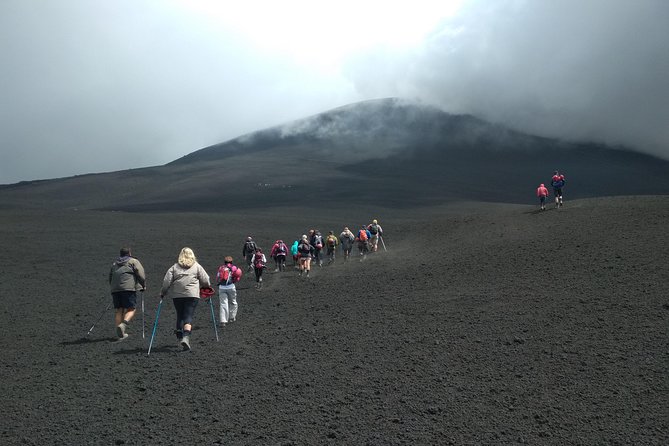
The tour includes a certified alpine and volcano guide. That’s not a marketing line—it’s the difference between guessing and knowing what you’re looking at and where you should place your steps.
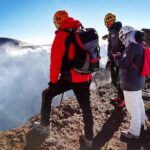
You also get hiking sticks, a wind jacket, and a helmet. Even if you’ve hiked elsewhere, this gear package is designed around the realities of high-altitude volcanic terrain: wind exposure, colder temperatures than you expect in Sicily, and the need for stable footing.
One more thing I value on this kind of tour is how guidance changes your pacing. When a guide sets breaks and manages the route, you spend less time “hustling” and more time actually taking in what you came for. That’s how you end up enjoying the hike instead of just surviving it.
Price and value: tour fee plus the €54 cable car ticket
The tour price is $65.90 per person, for about 5 hours. But you’ll also need the cable car ticket, priced at €54 per person, which is not included.
So what’s the value? I’d frame it like this: the tour fee is paying for the guide, the hike organization, and the included safety/comfort gear (sticks, wind jacket, helmet). The cable car is paying for the mountain access piece that gets you to the start of the crater walk.
For your budget planning, think of it as two parts:
- What you pay for the hike experience with a guide
- What you pay for getting the altitude shortcut
If you’re the type who wants summit views and the safety reasoning that comes from having an expert leading the way, the math tends to work. If you’re already comfortable navigating volcanic terrain and you’re mainly hunting photos, you might compare options carefully because the separate cable car cost can surprise people at checkout.
Timing and meeting points: do not wing this morning
The tour has multiple schedules if you skip pickup. There’s a meeting time of 9:00 AM with a tour start at 9:30 AM, and there’s also a later slot with meeting at 10:30 AM (compatible with the public bus arrival at Rifugio Sapienza) and a tour start at 11:00 AM. The day is short, so you want to be on time.
If you do pickup, plan for that early central Catania departure at about 7:30 AM. That makes the day easier, especially if you’d rather not figure out timing between bus arrivals and the cable car area.
One practical tip: arrive with extra buffer around the meeting point. On Etna days, small delays can snowball. And at least one unhappy situation reported a meeting-point mix-up that led to someone missing the tour. That’s a rare failure mode, but it’s the kind of risk you can cut down by showing up early and confirming the exact spot before you’re standing there with your day already starting.
What to pack for this Etna summit crater hike
The tour gives you a wind jacket and a helmet, which is helpful. Still, you’re responsible for your comfort and safety on the ground.
I’d plan around these basics:
- Sturdy shoes with grip for volcanic sand and uneven terrain
- Warm layers under the included wind jacket (temps at 3,000m can feel sharp)
- A small personal kit for the day: water and a snack strategy, since lunch is not included
- Sun protection (altitude plus bright Sicily light is no joke)
Even though the hike includes breaks for rest and photos, the day still moves. You’ll feel it in your legs and your breath at altitude, so don’t plan it as a lazy stroll.
Who this tour is best for (and who should think twice)
This experience fits best if you want a guided summit crater walk with real context and safe access, not just scenic stops. It’s also a good match if you like structure: cable car up, hike with planned breaks, crater time, then an organized descent.
You should consider skipping it if you’re looking for an easy, minimal-effort outing. The tour asks for moderate physical fitness, and you’ll be walking through volcanic sand. It also isn’t a good choice if you’re very sensitive to altitude swings, since the route is designed for elevations around 3,000 meters.
It’s also a smart option for English speakers who want guided crater learning. The tour is offered in English, and the guide’s role is to explain what you’re seeing while you hike.
Should you book this Mount Etna cable car & summit hiking tour?
If your goal is to reach the summit crater area and stand close to Barbagallo-style crater views, I think this tour is a strong booking. The combination of a certified volcano guide, the included gear, and a route that actually takes you through crater zones makes it more than a sightseeing shortcut.
Book it if:
- You want crater-level views and explanations, not just distant scenery
- You’re comfortable with moderate hiking and volcanic terrain
- You’d rather be guided through altitude and access limits than self-navigate
Think twice if:
- You’re counting on hitting a specific highest altitude number regardless of monitoring rules
- You’re the type who gets stressed by early starts and precise meeting points
- You’re not ready for a hike that includes volcanic sand on the way down
Overall, it’s one of the more “do the real Etna thing” formats in the Rifugio Sapienza area. Just budget for the separate cable car ticket, arrive early, and treat the day like a real mountain outing, not a casual walk.
FAQ
How long is the Etna cable car and hiking tour?
The tour runs for about 5 hours.
Is lunch included?
No. Lunch is not included.
Do I need to buy the cable car ticket separately?
Yes. The cable car ticket costs €54.00 per person and is not included in the tour price.
Where and when do I meet if I do not have pickup?
If you skip pickup, the meeting times are 9:00 AM for a 9:30 AM tour start, or 10:30 AM with a 11:00 AM tour start.
What time is pickup from central Catania?
Pickup from central Catania is offered at approximately 7:30 AM.
What fitness level is required?
The tour is best for people with moderate physical fitness, since you’ll hike at altitude and walk on volcanic terrain.