REVIEW · SICILY
Etna Summit Craters E-bike
Book on Viator →Operated by Into Etna - Bike and Hike experience · Bookable on Viator
Etna crater country sounds wild, and this e-bike tour makes it practical. You’ll start at the Etna South Cable Car area, hop on top-range enduro e-bikes, and climb volcanic sand toward the 2500–2600 meter zone with scheduled rests and viewpoints.
What I like most is the mix of riding and real Etna context: you don’t just stop for photos, you get explanations about the volcano’s constant evolution. A second big win is the small group size (max 8), which keeps the ride feeling controlled even on rough ground.
One thing to consider: this is not for everyone. You need moderate fitness, good weather matters, and it’s not recommended for people with certain health conditions like heart or respiratory issues, diabetes, or epilepsy.
In This Review
- Key Highlights You’ll Care About on Etna
- Entering Etna’s World from the South Cable Car Area
- Getting Up to 2500–2600 Meters on Volcanic Sand (Not Just a Bike Ride)
- The Best Viewpoint: Valle del Bove and the Summit Craters Ahead
- The Descent Plan: Toward the Crater of 2001 and Back Again
- The Guide Factor: Why This Tour Feels Calm and Clear
- E-Bike Setup, Helmet, and What You May Need to Add
- How Physically Demanding Is It, Really?
- Price and Value: Why $168.20 Can Feel Fair
- Logistics That Matter: Meeting Point, Mobile Ticket, and Staying Flexible
- Who This Tour Suits Best (And Who Should Skip It)
- Should You Book the Etna Summit Craters E-Bike Tour?
- FAQ
- How long is the Etna Summit Craters e-bike tour?
- Where does the tour start and end?
- Is the tour offered in English?
- What group size is the tour?
- What’s included in the price?
- What bike equipment is not included?
- What happens if weather is bad or I need to cancel?
Key Highlights You’ll Care About on Etna
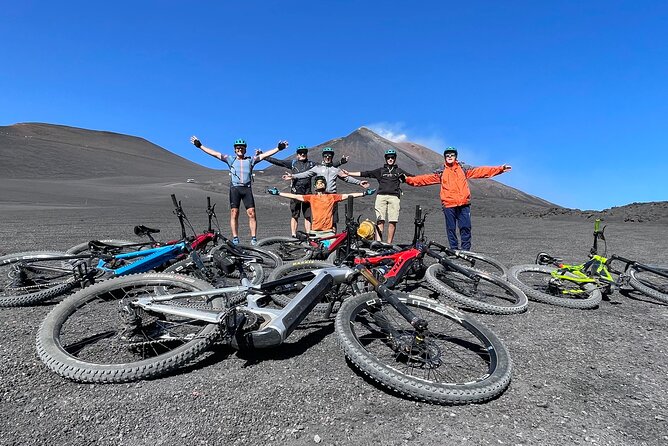
- Small group limit of 8 helps you get attention when the terrain gets tricky.
- High-range full enduro e-bikes are built for off-road volcanic sand, not flat-city cruising.
- Volcano guide + e-bike instructor means you learn both the mountain and the bike basics.
- Views with planned pauses while climbing to around 2500–2600 meters.
- Summit Craters viewpoint over Valle del Bove with guided explanations before you descend.
- Descent includes the crater of 2001 for a clear, satisfying route back down.
Entering Etna’s World from the South Cable Car Area
Your day kicks off at the meeting point at the Etna South Cable car parking area (Etna Tourist Service S.R.L., Contrada Cantoniera, Nicolosi, CT 95030). That’s a smart start because it places you right where Etna’s south-side routes begin, without wasting time on long transfers.
You’ll also get a briefing before rolling out. This isn’t just rule-reading. It’s there for safety on off-road ground and for comfort while you learn how to handle the e-bike on volcanic sand. Since the tour language is English, you should expect explanations to be clear and focused on what you’ll actually do during the ride.
If you want a practical tip: be ready to follow the group rhythm. This tour is built around staying together through climbs, stops, and a controlled descent.
You can also read our reviews of more tours and experiences in Sicily.
Getting Up to 2500–2600 Meters on Volcanic Sand (Not Just a Bike Ride)
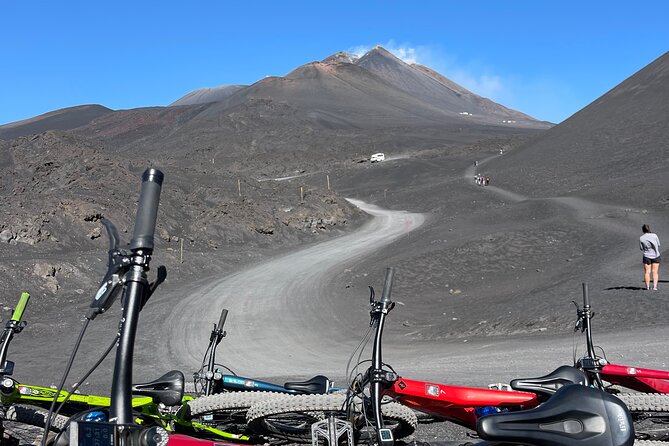
Once the whole group is ready, you’ll cycle off-road on volcanic sand. That’s the moment the tour feels different from a normal “easy ride.” Volcanic sand can be loose and unpredictable compared with paved paths, so the e-bike support matters. The operator provides full enduro e-bikes, which are a big part of why this works: they’re meant for rough surfaces.
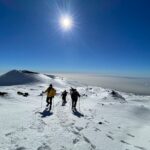
You’ll climb up to the 2500/2600 meter altitude band, with several breaks along the way. Those stops are useful for more than sightseeing. They give your body a chance to adjust to altitude and give the guide time to reset the group for the next stretch. The tour is about experiencing Etna efficiently, not racing up it.
One more detail that matters for first-timers: the briefing includes how to behave with the e-bikes. On rough terrain, the difference between smooth riding and stressful riding is often simple habits—spacing, braking control, and knowing when to slow down. The combo of a nature/volcano guide and an e-bike instructor helps keep that from turning into trial-and-error.
The Best Viewpoint: Valle del Bove and the Summit Craters Ahead
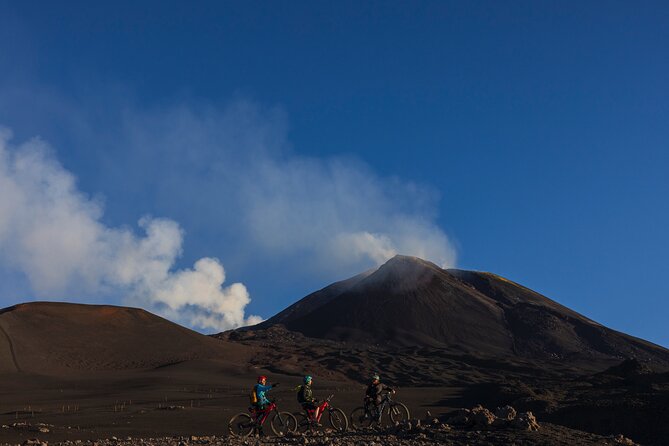
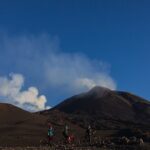
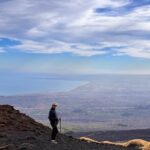
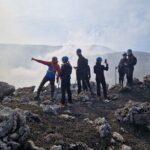
After about an hour, you’ll reach the most panoramic point on Etna from this route—overlooking Valle del Bove on one side, and the Summit Craters structure in front of you. This is the part of the tour that makes the early climbing feel worth it.
Instead of treating the summit as a photo stop, the guide explains what’s happening on Etna—its ongoing evolution and the processes that shape the mountain. That context turns a viewpoint into an understanding of why the terrain looks the way it does. You’ll often see people rush through crater areas with no idea what they’re looking at. Here, you get the story while your eyes are still on the real thing.
Then you’ll have about 30 minutes at this summit area before the descent begins. Thirty minutes is a good amount of time: long enough to take in the view, but not so long that the group drifts into scattered, impatient energy. It also keeps the pace of the overall ride coherent.
The Descent Plan: Toward the Crater of 2001 and Back Again
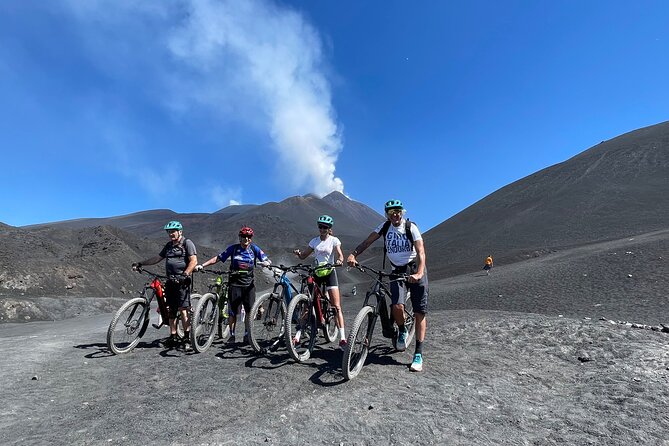
Downhill is where the tour can feel extra fun—if you respect the rules your instructor gives you. You’ll start descending first toward the crater of 2001, then continue down back to the place where the experience begins and ends.
This is a smart sequencing choice. Riding down toward a specific crater landmark helps the route feel purposeful, not like you’re simply reversing the climb. And crater areas are the kind of place where “just go and look” isn’t very satisfying. Having a guided descent route helps you connect the earlier explanation with what you’re seeing on the way down.
Also, remember: “downhill” doesn’t always mean “easy.” Volcanic surfaces can still be challenging. The e-bike support helps, but good technique still matters. The tour structure—controlled pacing, planned stops, and a guide managing the group—keeps that from turning into a white-knuckle event for people who aren’t used to rough terrain.
The Guide Factor: Why This Tour Feels Calm and Clear
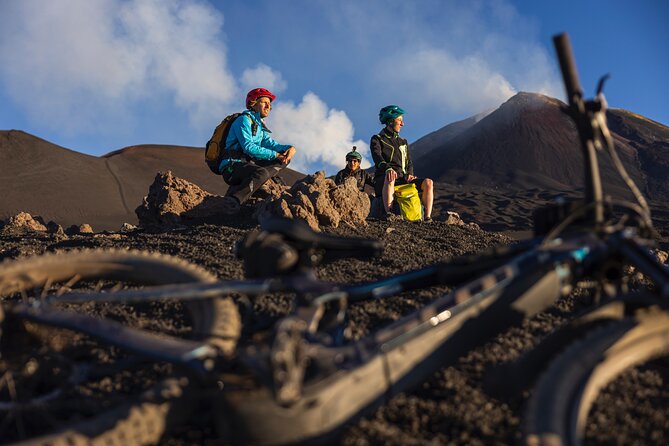
One theme that shows up strongly in the feedback is the quality of the guides. The nature/volcano guide and e-bike instructor don’t just recite facts—they help people feel comfortable doing the ride. Rafaella, in particular, is singled out for being kind, patient, and very good at offering a steady stream of Etna info that makes the time on the mountain more meaningful.
That matters because Etna can feel intimidating even when you have an e-bike. Loose ground, altitude, and crater-scale views add up fast. When the guide is patient and the group pace is organized, the whole outing feels less like a challenge and more like a real experience.
Another nice detail from the feedback: people appreciated the calmer feel when the outing happens later in the day. If you have flexibility, a time slot with gentler conditions can make the ride feel less hurried and more enjoyable.
E-Bike Setup, Helmet, and What You May Need to Add
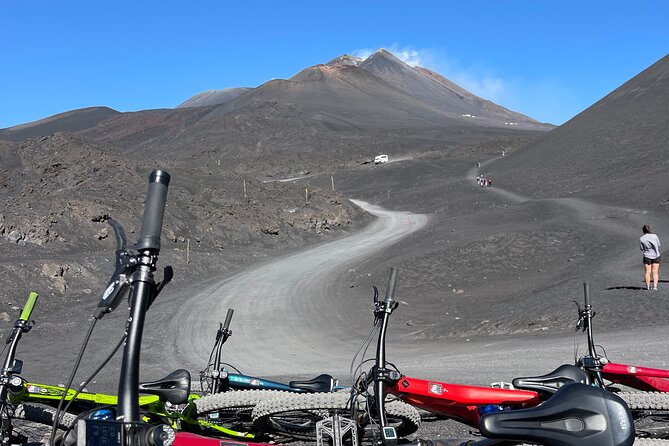
Included gear is straightforward: you get a helmet and an e-bike that’s described as full enduro top quality from 120 cm. If you’re traveling with kids or shorter riders, double-check fit based on that 120 cm guideline before you go—don’t assume it automatically means the bike is the right size.
Not included items are where you should be a little proactive. Gloves, a backpack, a waterproof jacket, and padded bike shorts may cost extra or be provided on request. For this kind of off-road ride, those items aren’t luxury—they help you stay comfortable through volcanic grit and potential mountain weather changes.
My practical suggestion:
- Wear closed shoes with grip.
- Bring or arrange gloves if you don’t want road grime and sand to start irritating your hands.
- If weather looks changeable, plan for a waterproof layer. Etna days can shift quickly.
The tour includes a briefing, but your comfort often comes down to what you wear once you’re rolling.
How Physically Demanding Is It, Really?
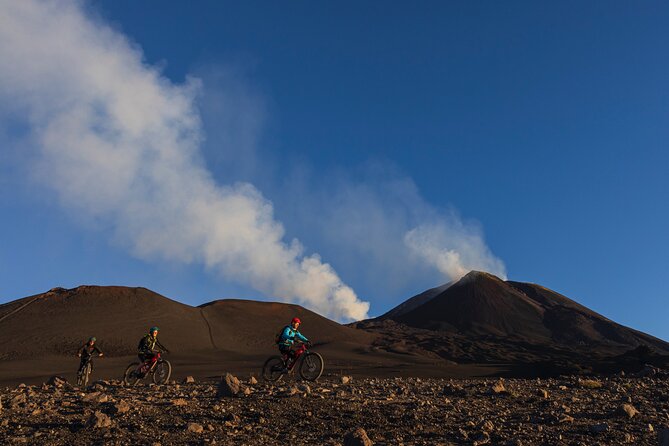
You should plan for moderate physical fitness. This is not described as an extreme endurance test, but it’s also not a gentle cruise. You’re climbing on volcanic sand and riding in altitude conditions, with enough effort that your body will notice.
The e-bike support reduces the strain, but you’re still doing the activity with your balance, your braking, and your posture. If you’re unsure, think of it like this: you don’t need to be a hardcore athlete, but you do need to be comfortable moving for a few hours and doing controlled riding on uneven ground.
The health note is important and explicit. This tour is not recommended for people with respiratory and heart problems, diabetics, and epilepsy. If any of those apply to you, don’t try to “push through.” The altitude and physical demands can be a bad mix.
Price and Value: Why $168.20 Can Feel Fair
At $168.20 per person for about 3 hours, the price looks like a serious activity—because it is. But it also includes what you’d otherwise pay for separately: the high-range e-bike, a helmet, and a guide/instructor team focused on both the volcano and the bike operation.
You’re also paying for a small group size (maximum 8). In mountain activities, that’s not a marketing detail—it affects how safe and how relaxed the ride feels. When there are fewer people, the guide can keep everyone together and correct issues faster. You get better explanations and less waiting.
And there’s a value tip hidden in plain sight: because the climb and viewpoints are structured, you’re not guessing your way around Etna. You’re following a planned route with stops built into the timing. That saves energy and reduces the stress of figuring it out on your own.
If you’re cost-conscious, look for group discounts when available. The operator mentions group discounts, and with e-bike activities, sharing logistics can help make the overall plan more affordable.
Logistics That Matter: Meeting Point, Mobile Ticket, and Staying Flexible
The tour ends back at the same meeting point, so you don’t have to worry about complicated drop-offs. The meeting point is near public transportation, which is useful if you’re not bringing a car to Nicolosi.
You’ll also receive a confirmation after booking (as long as you book far enough in advance), and you’ll use a mobile ticket. That’s usually one less step on the ground.
Two more real-world factors to keep in mind:
- The experience requires good weather.
- If it’s canceled due to poor weather, you’ll be offered a different date or a full refund.
In practice, that flexibility is worth something on Etna, where conditions can change quickly.
Who This Tour Suits Best (And Who Should Skip It)
This is a great fit if you want Etna’s summit craters and Valle del Bove views without turning the day into a steep hike. You’ll get a mix of riding, viewpoint time, and real volcano talk—built for people who want the experience to feel accessible, not just scenic.
It also suits riders who are comfortable with moderate physical effort and don’t mind rough ground as part of the adventure. If you’re the type who likes getting explanations while you look, this is a better match than a purely visual sightseeing option.
Skip it if:
- You have the health concerns listed by the operator (respiratory/heart issues, diabetes, epilepsy).
- You’re looking for a fully flat, low-impact ride.
- You’re likely to panic on uneven off-road surfaces—this tour is controlled, but it’s still not a pavement stroll.
Should You Book the Etna Summit Craters E-Bike Tour?
I’d book it if your priority is seeing the summit craters area and Valle del Bove from a high viewpoint with a guide who explains what you’re looking at. The small group size, the enduro e-bikes, and the structured route (including the crater of 2001) add up to solid value for an outing that feels more like guided discovery than just transportation.
I wouldn’t book it if you fall into the health restrictions, or if you’re sensitive to altitude and off-road riding. And if weather is unstable on your dates, keep your schedule flexible so you can take a day that actually works for riding.
If your goal is a memorable Etna day that’s both practical and informative, this is one of the better ways to do it.
FAQ
How long is the Etna Summit Craters e-bike tour?
It’s about 3 hours.
Where does the tour start and end?
It starts at the Etna South Cable car parking lot area, at Etna Tourist Service S.R.L., Contrada Cantoniera, Nicolosi, CT 95030, Italy. The tour ends back at the same meeting point.
Is the tour offered in English?
Yes. The experience is offered in English.
What group size is the tour?
The tour has a maximum of 8 travelers.
What’s included in the price?
You get an e-bike full enduro top quality from 120 cm, a nature/volcano guide plus an e-bike instructor, and a helmet.
What bike equipment is not included?
Gloves, a backpack, a waterproof jacket, and padded bike shorts are not included (they can be extra charge or on request).
What happens if weather is bad or I need to cancel?
The experience requires good weather. If it’s canceled due to poor weather, you’ll be offered a different date or a full refund. You can cancel for a full refund up to 24 hours in advance.