REVIEW · SICILY
Excursion on the summit craters of Etna, with cable car and 4×4 bus
Book on Viator →Operated by Etna Together · Bookable on Viator
Etna looks different from close up. This is a guided jump from Rifugio Sapienza (about 1,900 m) into the realm of Etna’s active craters, using a cable car first and then off-road minibuses to get you high fast. I like that the climb is led by Alpine and volcanological guides specifically authorized for active volcano terrain—so you’re not just walking in the dark.
The big payoff is reaching roughly 3,340 m to see fumaroles, explosions, and ash/steam puffs firsthand. You’ll also get a descent that’s part science lesson, part adventure, crossing sandy ground and recent lava craters back toward the valley. One consideration: if summit winds are strong and visibility turns low, the top can feel harsh—plus the tour is English-friendly, but you may catch more Italian than you expect depending on the day and group.
In This Review
- Key highlights you’ll feel right away
- From Rifugio Sapienza to the active craters: how the climb really works
- Cable car up to 2,500 m: where you save energy and build your bearings
- 4×4 minibuses to 2,800 m: faster access to the real action
- Trek to ~3,340 m: the part that decides whether you’ll love the day
- Valle del Bove and the crater panorama: what to watch for at the top
- The sandy descent back to the valley: fun on paper, real on your legs
- Price and value: what you’re really paying for at $168.58
- Who should book this Etna summit craters outing (and who should skip it)
- Practical gear tips that match what the tour actually calls for
- Language and guide communication: an honest expectation
- Should you book this Etna summit craters tour?
- FAQ
- What is the start time for the Etna summit craters excursion?
- Where is the meeting point?
- How long does the tour last?
- Is pickup included?
- What does the price include?
- Is lunch included?
- Is the tour available in English?
- What fitness level do I need?
- Is this tour safe for everyone with health conditions?
- What happens if weather is poor?
Key highlights you’ll feel right away
- Cable car to 2,500 m, then 4×4 to 2,800 m for smart altitude pacing
- Authorized volcanological guides focused on active crater safety and context
- Trek to about 3,340 m where you can watch Etna’s current activity
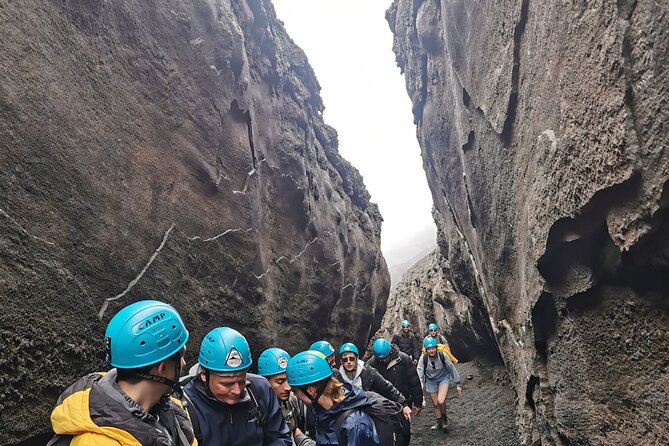
- Helmets mandatory from 2,900 m, with protection included
- Descent through sandy terrain and recent eruption craters for a fun, moving finish
- Small group size (max 15 people) that keeps the pace manageable
From Rifugio Sapienza to the active craters: how the climb really works
This excursion is built around a simple idea: you don’t need to “earn” altitude with hours of walking at the start. You begin near Rifugio Sapienza in the Nicolosi Nord area (around 1,900 m). From there, you use a cable car to jump to about 2,500 m.
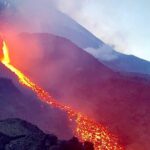
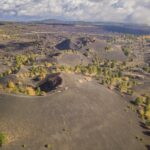
Then the tour switches gears. Instead of hiking the steepest sections straight away, you ride in special off-road minibuses (4×4) up to around 2,800 m. At that height, the trekking begins in earnest—this is when the scenery changes into that raw, lunar-like terrain Etna is famous for, created by very recent lava flows (including activity as recently as January 2024).
What I like about this setup for you is that it keeps the day realistic. You still hike, but you’re not starting the hardest effort at the lowest altitude. That matters because the air gets thinner fast on Etna.
Also, your guides aren’t “general” hikers. They’re Alpine and volcanological guides who are qualified and authorized to accompany people on an active volcano. That shows up in how the day is structured: higher elevations are staged carefully, and the top part of the experience is treated as active territory, not a postcard stop.
You can also read our reviews of more tours and experiences in Sicily.
Cable car up to 2,500 m: where you save energy and build your bearings
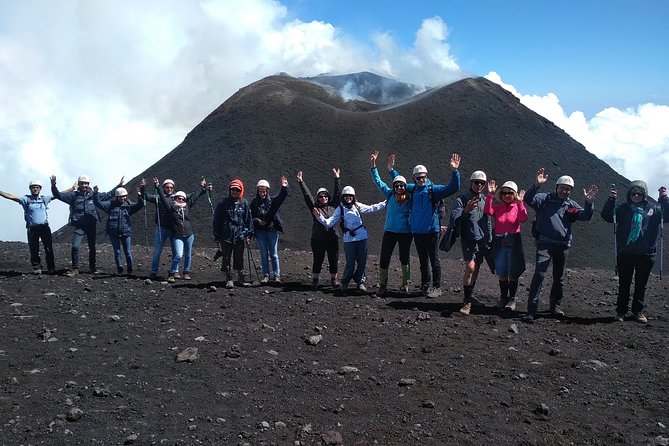
The cable car is more than transport. It’s your first altitude reset—an easier warm-up that gets you up to roughly 2,500 m without turning the morning into a grind. You’ll start at about 1,900 m, so you already feel the change in air and temperature as the morning progresses.
If you tend to get winded early on climbs, this part is a real advantage. You get time to settle in, listen to guide instructions, and prepare yourself for what comes next: the off-road ride and the hike over volcanic terrain.
One small practical tip: use the cable car time to check your layers. At these heights on Etna, weather can flip quickly. The tour’s recommended gear includes windbreakers, and even if you don’t feel it at the base, wind and chill often arrive sooner than you think once you’re higher.
4×4 minibuses to 2,800 m: faster access to the real action
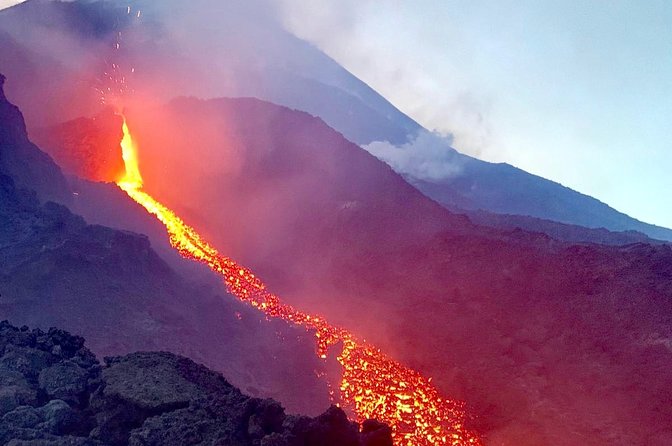
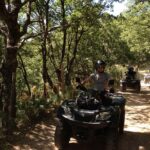
After the cable car, you transfer to special off-road minibuses. This is where the itinerary becomes more “adventure” and less “tour bus.” You climb again, reaching about 2,800 m, and then the group transitions into the trekking phase.
Why this matters: if you’re paying for a summit crater outing, the value is in the time spent near active features—fumaroles, craters, and the volcanic landscape that’s still evolving. The 4×4 section helps the day stay efficient, so you’re not spending your limited 5.5 hours mostly in transit.
It also means you’ll experience the terrain changing in stages:
- easier travel at first (cable car),
- then rugged access (4×4),
- then walking on volcanic surfaces toward the craters.
That rhythm is good for your body and good for the day’s pacing.
Trek to ~3,340 m: the part that decides whether you’ll love the day
This is the summit portion. After reaching about 2,800 m, the actual trekking begins, and the route takes you to approximately 3,340 m.
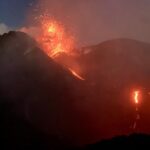
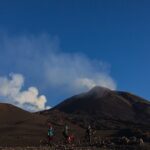
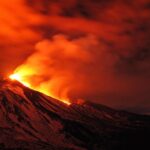
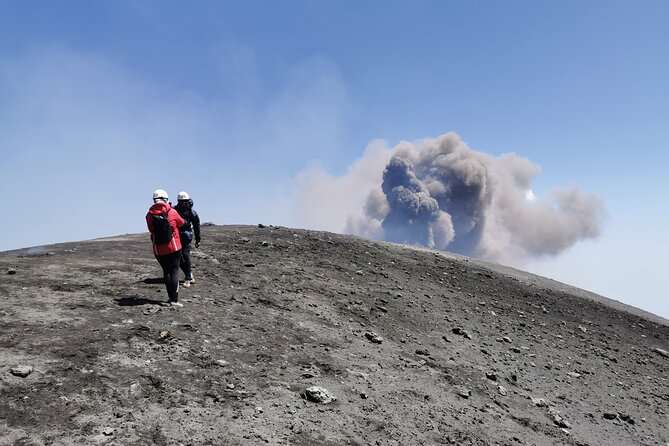
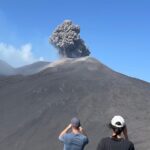
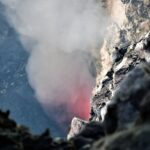
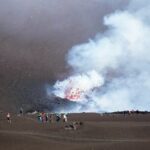
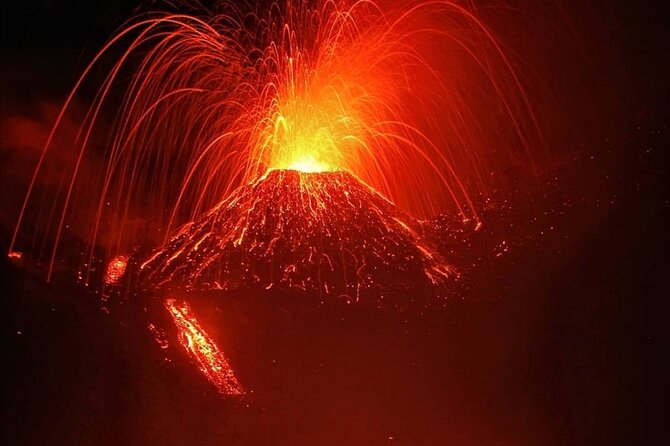
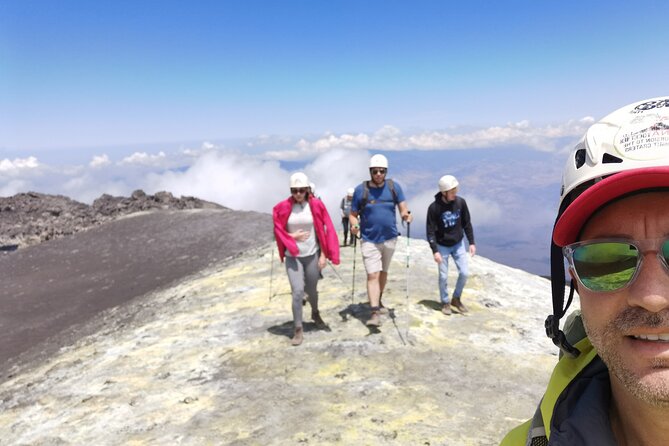
Along the way, expect the volcanic “texture” to take over: very recent lava fields and a setting that can feel surreal—part rocky, part dust, part bare ground. The tour aims to place you where Etna’s 4 active craters can be observed, with fumaroles and the potential for continuous explosions. You may also see puffs of ash and steam, which is exactly the kind of phenomenon people travel for.
Now, let’s talk about how to plan your own mindset. You’re going to the summit of an active system. That means conditions can be dramatic. Wind is one of the big variables. On days with strong winds and limited visibility, the top can feel more strenuous, and it may reduce how much you can comfortably take in.
I’m not saying to fear the summit. I am saying: if you’re the type who wants smooth weather and perfect views every minute, this is not that kind of trip. This is Etna, and Etna can be moody.
Valle del Bove and the crater panorama: what to watch for at the top
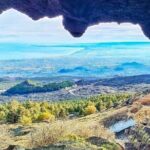
The itinerary includes a key stop at Valle del Bove. Even if you only get glimpses, it’s the kind of location that helps you orient the whole volcano system. You’re seeing how Etna’s slopes and volcanic formations connect, not just standing at a single viewpoint.
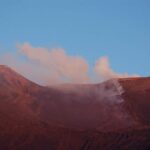
Then comes the summit craters phase. The goal at about 3,340 m is to admire Etna’s active craters—specifically, the four active craters and the ongoing activity around them: fumaroles, frequent gas release, and explosive moments. The experience isn’t only visual. You’re in a place where the environment is active, and that changes the whole feeling of being there.
Here’s how to make this moment count, practically:
- Dress for wind, not sun. Even on bright days, summit wind can be biting.
- Keep your movements steady and slow during the highest part of the trek.
- If visibility is limited, focus on what you can see changing in real time—steam and ash puffs can still be noticeable even when the distant view fades.
And yes, the tour’s biggest “wow” is the real-time activity. If you catch a stronger moment of explosions or ash/steam puffs, that’s the kind of memory that sticks.
The sandy descent back to the valley: fun on paper, real on your legs
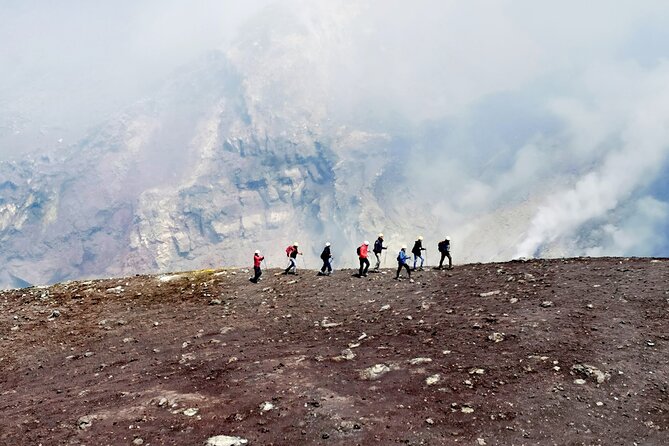
After the summit area, the descent is carried out over mainly sandy surface. That detail matters. Sand can be tricky—your step sinks a little, and you use more effort than you’d expect from flat-looking ground.
The good news: the itinerary is designed so the descent still feels like a continuation of the story. You’ll pass through craters tied to the most recent eruptions (2002/2003) and other points of volcanic interest down toward lower elevations. The day then brings you back to the cable car level (about 2,500 m), where you return to the starting point area.
For your comfort, I’d plan for:
- tired legs (this is a full day even if it’s only 5.5 hours),
- loose footing (bring shoes with grip),
- and a water/energy strategy that doesn’t leave you waiting too long.
Lunch isn’t included, but the tour notes that you can buy something to eat at the meeting point before leaving. That’s smart: make sure you start the crater portion fueled.
Price and value: what you’re really paying for at $168.58
At $168.58 per person, this excursion isn’t “cheap,” but it also isn’t trying to be a bare-bones transfer. You’re paying for a full stack of volcano-focused logistics:
- roundtrip cable car access,
- 4×4 minibus transport to high terrain,
- guided trekking with authorized volcanological professionals,
- insurance included,
- and required safety gear like a protective helmet (mandatory from 2,900 m).
The total time is around 5 hours 30 minutes, which is a tight window for a high-elevation crater trek. That’s part of the value: you’re not spending your whole day commuting and lingering.
Group size is capped at 15 people, which tends to keep the pace and coordination more manageable at altitude and on uneven terrain.
Pickup is offered as an extra add-on at 30 euros per person, so if you’re staying near Nicolosi, you’ll likely decide based on how easy it is to reach the meeting point on your own. A mobile ticket is included, which simplifies check-in.
One more note on demand: the tour is often booked about 25 days in advance on average. If Etna is a main priority for your Sicily plan, I’d book earlier rather than later, especially during peak season.
Who should book this Etna summit craters outing (and who should skip it)
This experience is for people with moderate physical fitness. You’re trekking at high altitude and walking over volcanic surfaces, including sandy sections during descent.
The tour also states an important safety limit: it’s absolutely forbidden for anyone with cardiovascular problems. If that applies to you, don’t try to “tough it out.” Choose a different Etna activity that’s not built around summit altitude.
Who tends to enjoy it most:
- you want direct contact with an active volcano setting,
- you like hikes that are intense but time-limited,
- you want guides who can talk about what you’re seeing in a safety-first way,
- and you’re okay with the idea that wind and visibility may affect comfort.
Who might find it frustrating:
- you need a very quiet, classroom-style explanation in English the entire time,
- you dislike exposure to wind at altitude,
- you’re hoping for guaranteed top-of-summit conditions every season.
One review detail that matters for your planning: conditions like rain before departure can make provided clothing damp, and summit winds can be brutal with limited visibility. That doesn’t mean the tour is bad. It means you should treat weather as a major variable and dress like it matters.
Practical gear tips that match what the tour actually calls for
You’ll be given a protective helmet and you may request trekking poles. You should bring (or plan to wear) hiking shoes with good footing and windbreakers as recommended.
I’d also think in layers. On Etna, the temperature difference between base and summit areas can feel dramatic, and wind can strip warmth fast. Pack for wind first, rain second, and keep it simple enough that you can manage in a group.
Finally, remember that lunch isn’t included. If you tend to get lightheaded when you’re hungry, grab something at the meeting point before you leave.
Language and guide communication: an honest expectation
The tour offers English. That’s a helpful start.
Still, a practical expectation is that your guide may speak mostly Italian depending on the group, and English narration might be more limited. If you’re the type who wants continuous, detailed English commentary, you may feel the gap on the day.
The core experience—transport to high altitude, helmet safety, and seeing active craters—doesn’t require perfect language. But your satisfaction with the storytelling part might depend on how the group is handled that day.
Should you book this Etna summit craters tour?
Book it if Etna is the centerpiece of your Sicily trip and you want a structured route that gets you to crater height without spending the day stuck in transit. The combination of cable car access, 4×4 minibuses, a high trek up to around 3,340 m, and crater viewing of ongoing activity is exactly what this tour is built for. With a 4.8 rating and 92% recommendation based on the feedback you’re likely to see, it’s clearly resonating with the people who come prepared for variable weather.
Don’t book if you have a cardiovascular condition or you want a guaranteed comfortable summit experience in calm conditions. This is an active volcano setting. Wind and visibility can change quickly.
If you do book, you’ll get the best day by showing up ready for altitude, wind, and real terrain. Bring good shoes, a windproof layer, and patience for the summit environment.
FAQ
What is the start time for the Etna summit craters excursion?
The tour starts at 9:00 am.
Where is the meeting point?
The meeting point is at Monte Gebel Di Mariangela Carbonaro, Contrada Cantoniera, Nicolosi, CT 95030, Italy.
How long does the tour last?
It lasts about 5 hours 30 minutes.
Is pickup included?
Pickup is offered as an extra service for an additional cost of 30 euros per person. The standard meeting point is where the activity starts.
What does the price include?
It includes a return cable car ticket, a 4×4 minibus ticket, an Alpine/volcanological guide, trekking poles on request, a protective helmet (mandatory from 2,900 m), insurance, and recommended equipment guidance (hiking shoes and windbreakers).
Is lunch included?
No. Lunch is not included, but you can buy something to eat directly at the meeting point before leaving.
Is the tour available in English?
Yes, the tour is offered in English.
What fitness level do I need?
You should have a moderate physical fitness level. The day includes trekking at high altitude.
Is this tour safe for everyone with health conditions?
No. It is absolutely forbidden for anyone suffering from cardiovascular problems.
What happens if weather is poor?
This excursion requires good weather. If it’s canceled due to poor weather, you’ll be offered a different date or a full refund.