REVIEW · MARRAKECH
3-Day Berber Villages Hike from Marrakech
Book on Viator →Operated by Toubkal Trekking · Bookable on Viator
You can trade Marrakech noise for mountain mornings. This 3-day Berber villages hike brings you into the High Atlas on old footpaths, with sunrise views, a local guide, and traditional mountain gites. I especially like the practical pickup from Marrakech plus mule support for luggage, and I love that wildlife spotting is part of the day rather than a side note. The main drawback to plan around is the operator notes a formal dress code, which feels odd for hiking and means you’ll want to pack something nicer than you’d normally bring.
If you’re coming from Marrakech, this trip is a clean way to get out fast. You start at 8:30am, walk through places like Imlil and small villages high up in the valleys, and you’ll be back at a reasonable time without doing a full-on Jebel Toubkal summit push.
This is also a trip for people who don’t need luxury to enjoy comfort. You’ll be moving at a moderate fitness level, traveling as a small group (max 15), and you should expect all-weather operation—so layers matter as much as your boots.
In This Review
- Quick Hits Before You Pack
- From Marrakech to Imlil: What 8:30am Really Means
- Day 1: Imlil Valley and Tacheddirt at 2314m
- Day 2: Crossing High Atlas Country and Seeing Peaks Over 4000m
- Day 3: Azzaden Valley Village, Then Back to Imlil
- Mountain Gites, Meals, and What Comfort Really Looks Like
- Guides and Family Fit: How This Hike Actually Works
- Price and Value: Why $280 Can Be Fair Here
- Weather, Gear, and the Formal-Dress Head-Scratcher
- Who Should Book This 3-Day Berber Villages Hike?
- FAQ
- How long is the hike?
- Where does the hiking start?
- What time does the tour start?
- Is pickup from Marrakech included?
- Is there a local guide?
- What’s included in the price?
- Are sleeping bags provided?
- How big is the group?
- Does it run in bad weather?
- What is the cancellation cutoff for a full refund?
- Should You Book This Berber Villages Hike?
Quick Hits Before You Pack
- A small-group hike (max 15) with a local guide who’s known for strong, friendly leadership.
- Pickup and private transport from Marrakech to the hiking area, with the route starting at Imlil.
- Mules for luggage, so you carry less than you might on a do-it-yourself trek.
- Real mountain villages, including Tacheddirt at 2314m and a stop in the Azzaden valley.
- Food is part of the experience, with breakfasts, lunches, and dinners included for the full 3 days.
- Sleeping bags are not included, so you’ll need to bring your own or arrange one.
From Marrakech to Imlil: What 8:30am Really Means
The day starts with an easy win: you’re picked up from a centrally located meeting point in Marrakech and brought to the trail area. The start time is 8:30am, which helps you actually get hiking time on day one instead of losing half the morning to transfers.
I like that the transport is listed as private and includes round-trip service. When you’re heading into mountain terrain, that matters. It lowers stress, and it usually means fewer last-minute surprises with where you meet, how you get grouped, and when you depart.
One practical thing to consider: the trip runs in all weather conditions. That’s not a deal-breaker, but it changes what you should pack. If rain, wind, or cold come in, you’ll want a system for layers and quick dry clothing, because the mountain doesn’t care about your itinerary.
You can also read our reviews of more tours and experiences in Marrakech.
Day 1: Imlil Valley and Tacheddirt at 2314m
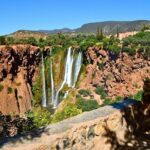
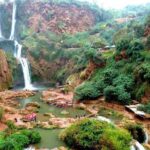
Day one is about arrival energy. You begin in Imlil valley, a favorite staging area for trekkers in Morocco’s High Atlas. It’s also a useful piece of context: Imlil is about a five-hour hike from the base of Jebel Toubkal, so you’re starting in a place that’s built for mountain walking culture.
What I like here is the spring logic. The description calls out that in spring the foothills can be full of flowers, which means the scenery isn’t just about rocks and cliffs—it can be colorful and alive right when you’re fresh enough to enjoy it.
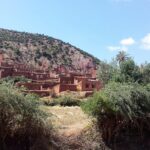
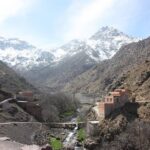
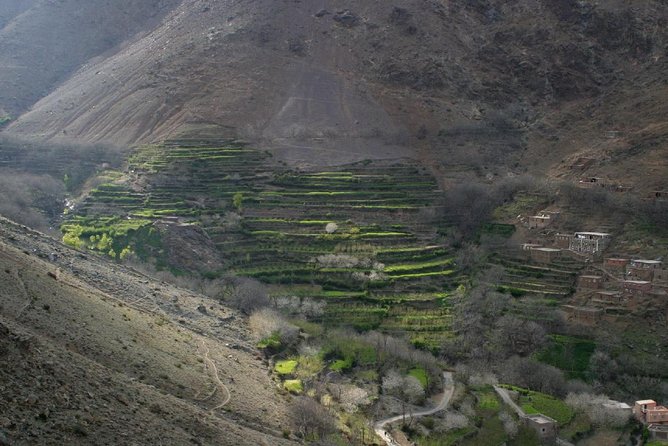
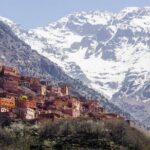
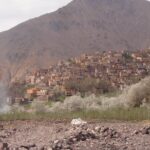
From there, you move toward Tacheddirt (also Tachdirt), a small village at 2314m. This is one of those villages where the details tell you what the trip is really like: it has about 200–300 people, and there’s no road or track, just a winding footpath. That kind of access shapes everything: the pace is human, the walking feels more direct, and you don’t get the usual sense that you’re on a “tour route.”
A nice bonus: this kind of day structure tends to land well with families, because you’re not just marching in a straight line. You have a sense of place—village, elevation, path quality—so kids (and adults) can feel like they’re seeing something real, not just doing exercise.
Day 2: Crossing High Atlas Country and Seeing Peaks Over 4000m
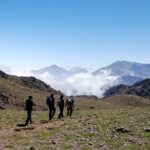
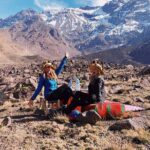
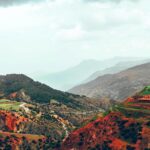
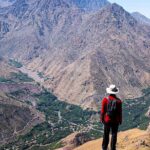
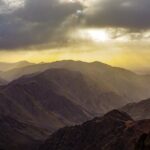
Day two is where the High Atlas starts to flex. The info you’re given focuses less on one named stop and more on the big mountain context: the range includes several peaks over 4000m, including Toubkal (4167m) and Ighil m’Goun (4071m).
Even if you don’t go for a summit, knowing these peak numbers changes how you interpret the hike. You’ll understand why the air can feel thinner at higher points, why the horizon gets so wide, and why the terrain looks both harsh and oddly beautiful. This is the kind of day where you’ll likely notice your body adjusting to elevation and exposure, especially if you’re walking longer stretches without many breaks.
This is also the day where wildlife is part of the promise. The tour description highlights species like the Moorish gecko, bee-eaters, and the Lanner falcon. You shouldn’t expect guaranteed sightings (mountain animals are never scheduled), but you can treat it like a game. I’d keep an eye out from safe spots during pauses—because in open areas, birds often show up first.
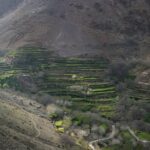
The trip also emphasizes that the region is mainly inhabited by Berber communities. For you, that translates to a different travel feel than a typical “heritage stop.” You’re not only looking at buildings—you’re walking through agricultural and village territory where life is built around the mountains.
Day 3: Azzaden Valley Village, Then Back to Imlil
Day three keeps a similar rhythm: walk through mountain village life, then ease back toward the hub area. You have a stop in the Azzaden valley, described as a nice village in the high atlas mountains. After that, you return to Imlil, including an hour listed at Imlil.
This “last day” structure matters. It helps you avoid the most common problem on multi-day hikes: arriving too exhausted to enjoy the final descent or transition. By bringing you back to Imlil near the end, the schedule gives you a cleaner landing back into the transport portion.
If you’re traveling with kids or you’re trying to keep energy steady, this end plan is a good fit. It gives you closure: you’ve walked between villages, slept in mountain gites, and you finish in the place most people recognize as the gateway to this region’s bigger climbs.
Mountain Gites, Meals, and What Comfort Really Looks Like
This is not a hotel stay. It’s “mountain gite” lodging as per the itinerary. The practical upside is that these gites are built for the hiking reality: you’re there to eat, rest, and recover for the next walk, not to hang out all day in a lounge.
Meals are included for the full trip: breakfast (2), lunch (3), and dinner (2). I like that lunch is included across three days, because it usually means fewer compromises on the trail and less time searching for food while you’re focused on distance and elevation.
What’s especially worth your attention: sleeping bags are not included. That’s not a tiny detail. In mountain areas, the difference between “fine overnight” and “I can’t sleep” can be your bedding setup. If you run cold at night, I’d treat a proper sleeping bag as mandatory rather than optional.
Guides and Family Fit: How This Hike Actually Works
The hike is led by a local guide, and that’s where a lot of the value comes from. The tour notes highlight leadership, and the experience history around this company includes guides described as very friendly and good at English. That matters even on a moderate hike, because communication helps with pace, safety, and navigating village paths.
There’s also the human-factor support: mules for luggage and private transport. If you’ve ever tried to do a multi-day hike with bags that are heavier than expected, you already know why that’s good. It means you can focus your energy on your legs, not your shoulders.
On family fit, the highlights specifically call this an ideal choice for families. And the kind of feedback attached to the operator includes trips organized for families with children around ages 9–13, with distances that were described as just about right. If your kids can handle a steady walking day and you’re not asking for a stroller-friendly route, this is the sort of trek that can feel adventurous without being extreme.
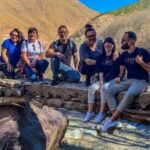
One more group detail: the maximum group size is 15 travelers. That usually helps keep the vibe from turning into a crowded parade and keeps the guide’s attention more personal.
Price and Value: Why $280 Can Be Fair Here
At $280 per person, you’re not paying only for walking. You’re paying for a bundle: accommodation, guide, private transport from and back to Marrakech, mules for luggage, and most meals.
Here’s how I see the value: if you were to piece together transport, a local guide, and mountain lodging yourself, you’d likely spend time and money coordinating. This tour packages that work, and in Morocco’s mountains, coordination is not just admin—it affects how smoothly each day goes.
Also, the included elements reduce decision fatigue. You don’t need to figure out where to eat lunch on trail days or how to move baggage from one village area to another. For many people, that’s the difference between a relaxing adventure and a stressful logistics project.
Weather, Gear, and the Formal-Dress Head-Scratcher
The operator states the trip operates in all weather conditions. That means you should plan for changes: sun to clouds, warm afternoons to cooler mornings, and wind that can cut quickly in mountain passes.
Gear-wise, I’d keep it simple and functional:
- Solid boots with good grip
- Layer system (base, mid layer, outer layer)
- A daypack for water and snacks even though meals are included
- Rain protection if the forecast turns
Now the odd bit: formal dress code. For a hike, that’s not what most people expect. I don’t know what formality level will be enforced day to day, but I’d bring at least one nicer outfit for evenings or indoor areas at the gites, just in case.
Finally, remember: sleeping bags are not included. If you show up without one, you’ll either have to buy or borrow last minute, which is rarely fun on the mountain.
Who Should Book This 3-Day Berber Villages Hike?
Book this if you want:
- Authentic village walking instead of a single-point sightseeing day
- A trip with a local guide and small-group feel
- A multi-day format that’s demanding enough to feel real, but not written as a summit challenge
- A structure that works for families with kids who can walk
You might think twice if:
- You hate all-weather conditions or are unwilling to layer up for cold and wind
- You don’t want to plan for a sleeping bag
- You strongly prefer self-guided travel with no group pace
FAQ
How long is the hike?
It’s a 3-day experience, with the duration listed as approximately 3 days.
Where does the hiking start?
The trip starts in Imlil Valley, with day one including a stop in Imlil.
What time does the tour start?
The start time is 8:30am.
Is pickup from Marrakech included?
Yes. The tour includes private transport from and back to Marrakech, and pickup is offered from a centrally located meeting point.
Is there a local guide?
Yes. The experience includes a local guide.
What’s included in the price?
Included items are: accommodation as per the itinerary, local guide, private transport from and back to Marrakech, mules for luggage, and meals (breakfast 2, lunch 3, dinner 2).
Are sleeping bags provided?
No. Sleeping bags are not included.
How big is the group?
The tour has a maximum of 15 travelers.
Does it run in bad weather?
Yes. It operates in all weather conditions, so you should dress appropriately.
What is the cancellation cutoff for a full refund?
You can cancel up to 6 days in advance for a full refund.
Should You Book This Berber Villages Hike?
If you want a mountain trek that feels grounded in village life, this one is a strong choice. You get a guided, structured route starting from Imlil, mountain gite lodging, real village stops like Tacheddirt (2314m), and a support system that includes mules for luggage.
Just be honest with yourself about the gear needs. Bring a sleeping bag, pack layers for changing mountain weather, and plan for that formal dress code detail. If that sounds manageable, you’re set for three days that trade city time for High Atlas walking, simple meals, and the kind of mountain quiet that’s hard to find anywhere else.