REVIEW · TBILISI
3-Day Hiking Group Tour in Kazbegi
Book on Viator →Operated by TrekGeorgia · Bookable on Viator
Three days, endless mountain views. This Kazbegi trek packs big scenery with smart structure: Gergeti Glacier day plus the Chaukhi Pass (3338m) payoff, all supported by an expert guide and comfortable base nights in Kazbegi. I like the mix of culture and hiking (Ananuri and the Trinity Church fit naturally into the route), and I love how well the guides manage energy, pace, and safety. One consideration: this is serious walking at altitude, so if you have limited walking ability, the climbs will feel like a deal-breaker.
It also runs with real logistical ease for a hiking tour: pick-up is available from Tbilisi, you ride in an air-conditioned minivan, and you switch to 4×4 when roads can’t handle it. You’ll get lunch boxes for three days and meals that remove the usual scramble for food at the end of a long hike. And with weather driving route changes, you’ll want to pack for cold wind, sun, and sudden clouds without assuming the forecast will be perfect.
In This Review
- Key highlights to know before you go
- How the 8:30am start keeps the hikes enjoyable
- Tbilisi to Ananuri: culture stops that don’t slow you down
- Juta village and the hike toward Chaukhi Pass (3338m)
- Kazbegi base camp: two nights that make a big difference
- Day 2 to the Gergeti Trinity Church and onward to the glacier
- Day 3 in Truso Valley: the different-feeling hike you’ll remember
- Value for $590: what’s actually included (and why it matters)
- The guide makes the trip: Dito, Nugo, and why people keep praising this team
- Logistics that affect comfort: small group size, transport, and weather changes
- What you should pack for Chaukhi, gorges, and a glacier day
- Who this Kazbegi trek is best for (and who should reconsider)
- Should you book this 3-day Kazbegi hiking group tour?
- FAQ
- What time does the tour start?
- How long is the Kazbegi hiking tour?
- Is pickup from Tbilisi included?
- What does the price include?
- What meals are included each day?
- How many people are in the group?
- What fitness level do I need?
- What if weather is bad?
- Should I bring drinks?
Key highlights to know before you go
- A true high-mountain day: the Gergeti area hike is the hardest day and the one with the most dramatic payoff
- Juta to Chaukhi Pass (3338m): a long climb into the Greater Caucasus with river crossings and rocky sections
- Small-group feel: maximum 10 travelers, so the guide can keep an eye on everyone’s pace
- Hands-on guidance from the team: multiple guides are cited in reviews, including Dito and Nugo, with strong English and careful planning
- Guesthouse stay in Kazbegi: two nights with breakfast and dinners included, plus food that people remember
How the 8:30am start keeps the hikes enjoyable
This tour begins at 8:30am, which is a small detail that matters more than you’d think. Earlier starts help you reach trail sections before weather shifts, and they keep Day 1 from feeling like you’re still warming up when everyone else is already high on the mountain road.
You also avoid the most common hiking-tour problem: wandering around town in the morning trying to figure out what’s next. Here, you’ve got a plan from the first day, with transport lined up so you can focus on feet, breathing, and photography.
You can also read our reviews of more tours and experiences in Tbilisi.
Tbilisi to Ananuri: culture stops that don’t slow you down
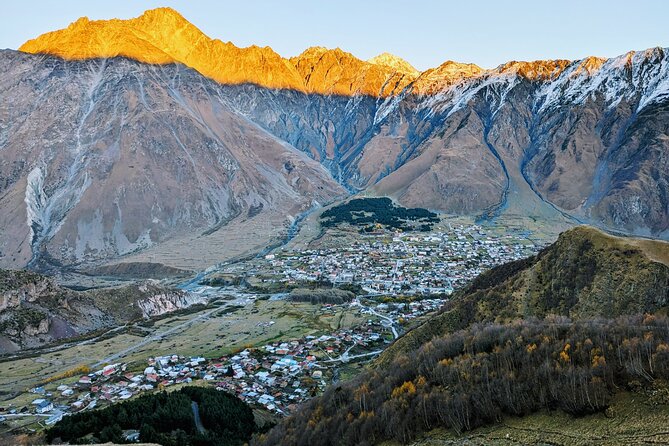
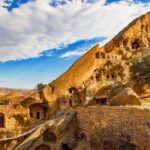
Day 1 begins with the drive toward the Military Highway, one of Georgia’s most famous road corridors. You’ll stop at the Ananuri Castle Complex, listed as from the 16th–17th centuries, which gives you a break from hiking without making the day feel like sightseeing only.
Why I like this stop for your day: it gives you context for where you are. The fortress setting is also a good moment to check gear—water level, layers, and whether your daypack actually carries comfortably.
The only drawback to keep in mind is timing. Castle stops take time, and you still have a full walking day ahead, so treat the visit as a quick, meaningful pause rather than an all-day museum experience.
Juta village and the hike toward Chaukhi Pass (3338m)
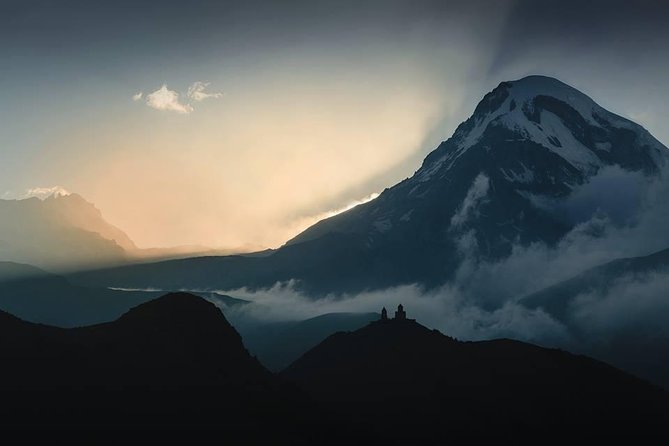
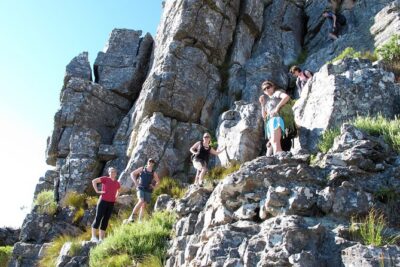
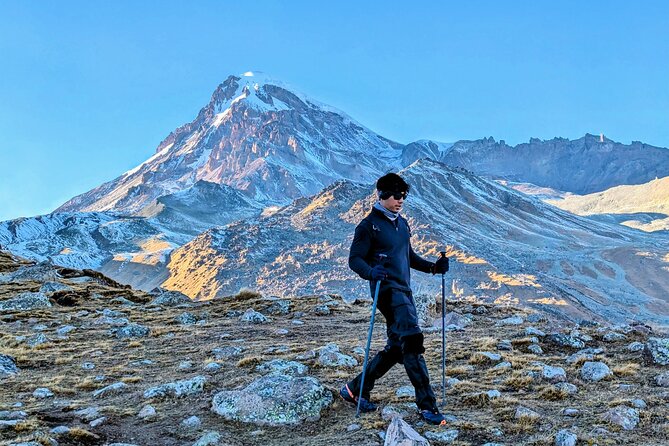
After Ananuri, you head onward to Juta, where the hiking really starts. This part of the itinerary is built for the “boots-on” Georgia experience: you’ll hike through the Greater Caucasus region, crossing small mountainous rivers, hills, and rocks.
The described distance is 8 km until you reach Chaukhi Pass (3338m). That altitude changes everything: your breathing slows, your legs tighten sooner, and you’ll feel the cold wind even when the sun is out.
This is the kind of hike where a guide earns their fee. In the reviews, guides like Dito and Nugo are repeatedly described as attentive and safety-minded, and you can expect that same approach here—especially because rocky sections and river crossings can turn “easy terrain” into a balance test.
Kazbegi base camp: two nights that make a big difference
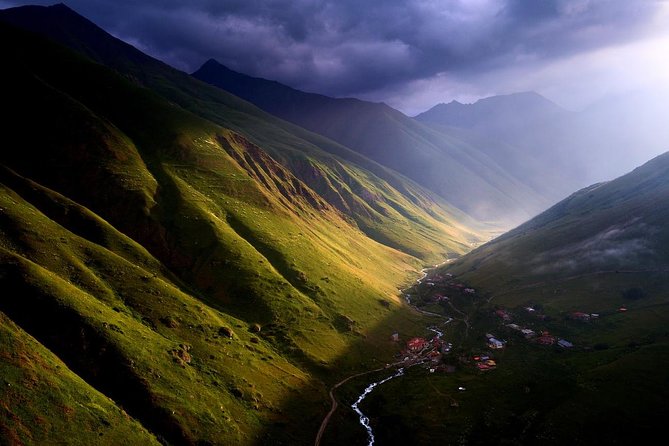
You’ll spend two nights in a Kazbegi guesthouse, which is one of the smartest ways to structure a multi-day trek. You don’t have to end each day thinking about dinner options or where to sleep; you just roll into the routine and reset your body.
Food is a standout. Reviews point to good, abundant meals and even a memorable pastry cook at the guesthouse, which matters after days of packed lunches. Having dinner covered for two evenings (with lunch boxes on hiking days) helps you keep calories steady, and steady calories are what keeps your feet from turning cranky on Day 2.
If you’re picky about sleep, bring earplugs and treat mountain guesthouses as rustic but functional. That’s the trade for being so close to the trail start.
Day 2 to the Gergeti Trinity Church and onward to the glacier
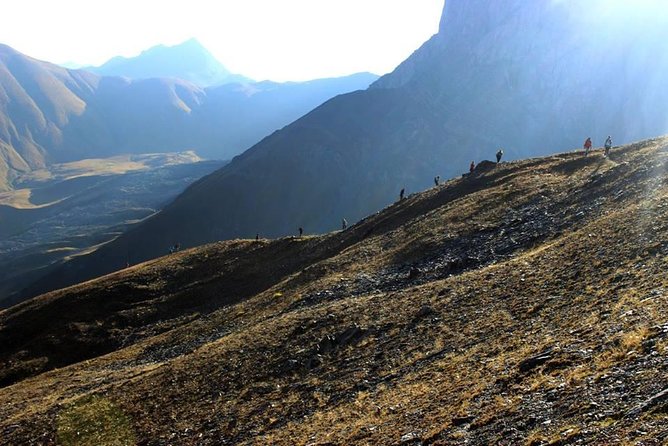
Day 2 is described as the hardest, and it’s also the one with the most “look up and wow” moments. You’ll move from Kazbegi to Gergeti Trinity Church, then continue toward the Gergeti Glacier area.
From there, the route follows the mountain range and passes through narrow gorges, including Sabertse Pass along the way. Even if you’re used to hiking, narrow gorge sections can feel mentally intense—less room to stroll, more focus needed on footing.
The goal is Gergeti Glacier at about 3200m, described with a 6 km² width (noting this is likely an area figure in the tour description) and about 8.92 km length. Either way, what you care about is the height and the exposure. This isn’t a stroll; it’s a “work for the views” day.
What makes this day worth it is the combination: a spiritual landmark (the Trinity Church) plus a big glacial destination. You’re not just walking to a random viewpoint—you’re moving through Georgia’s mountain geography in a way that feels meaningful and dramatic.
Day 3 in Truso Valley: the different-feeling hike you’ll remember
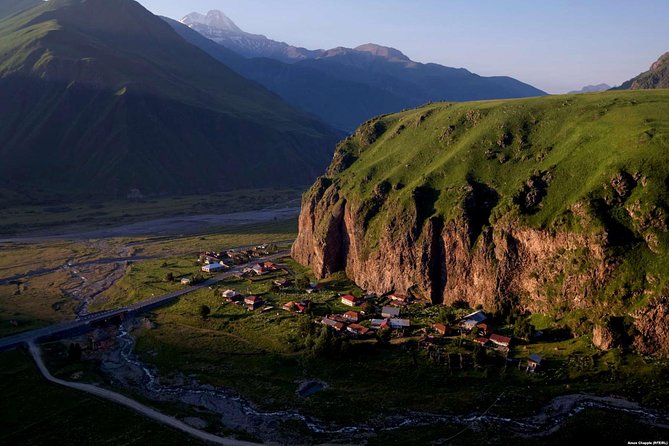
After the intensity of Day 2, Day 3 gives you variety instead of repeating the same terrain. You’ll head to Truso Valley near Kazbegi, and the hike is described as an easier one—about 6 hours (both way 20 km).
This is the right kind of day for your body. After two altitude-heavy days, you’ll still work, but you’re less likely to feel like every step is a fight against cold and steepness.
The “different experience” angle is the point. Truso Valley gives you a fresh feel compared to the gorge and pass sections earlier in the trip. For me, it turns the whole tour from a sequence of challenges into a balanced journey through different pieces of the Caucasus.
Value for $590: what’s actually included (and why it matters)
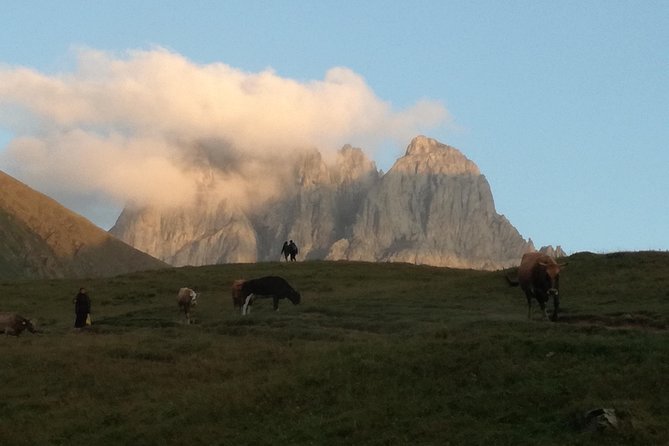
At $590 per person, this price can look high if you think of it like a simple sightseeing trip. But it’s really a bundled package: lodging, transport, a guide, and most meals.
Here’s what you’re getting that reduces your risk and stress:
- 2 nights accommodation in Kazbegi guesthouse
- Air-conditioned minivan plus 4×4 transfers between Kazbegi and Juta village
- 3-day expert leadership with experienced adventure guides
- Meals that follow you: breakfast for 2 days, lunch boxes for 3 days, and dinner for 2 days
That last part is underrated value. When food is arranged, you’re not making last-minute choices after a hike, and you’re less likely to end up hungry, under-fueled, or tempted by whatever is easiest.
So the value calculation is really about effort saved and comfort gained. If you’d otherwise need to book a local driver, arrange lunches, and scramble for a guesthouse, the package starts to feel much more reasonable.
The guide makes the trip: Dito, Nugo, and why people keep praising this team
The reviews consistently tie the success of the trip to the guides. Names that come up include Dito and Nugo, and one traveler also credits Dimitri for responsive pre-trip communication.
What stands out in those comments is not just friendliness. People highlight that the guides are careful with safety, thoughtful about pacing, and good at keeping you fed. There’s also mention of strong English, with Dito described as both a mountaineer and an intellectual who can share context about Georgia.
That matters because on mountain days, the guide’s job is more than route navigation. A good guide helps you manage altitude comfort, decide when to push and when to slow, and keep the group working together instead of falling into “survival mode.”
Even one review mentioning pregnancy-related concerns reinforces the key point: these guides try to accommodate real-life needs rather than treating the hike as one-size-fits-all.
Logistics that affect comfort: small group size, transport, and weather changes
This is a group tour with a maximum of 10 travelers. That small size helps you move at a natural pace. It also makes it easier for the guide to notice who’s lagging, who needs a break, and who’s pushing too hard.
Transport is split by terrain. You travel by air-conditioned minivan, then use 4×4 cars for the Kazbegi to Juta village sections and the return. That’s practical because the road conditions around trailheads can be rough, and you don’t want to waste hiking energy wrestling with logistics.
Weather is also a real factor. The tour notes that routes can change due to weather and road conditions, and it requires good weather. The good news is that the structure is designed for adaptation. If clouds roll in or rain shows up, you’ll likely adjust without losing the overall trip.
What you should pack for Chaukhi, gorges, and a glacier day
Even without assuming conditions, this trip runs at high altitude and includes rocky footing and narrow gorges. Plan for layers and quick changes.
Bring:
- Sturdy hiking boots with grip for rocks and uneven ground
- Warm layers plus a wind shell, since passes at 3338m and the glacier area at 3200m can feel cold fast
- Rain protection you can actually use while hiking
- Sun protection (glasses and sunscreen), especially if skies clear after clouds
- A daypack that’s comfortable for long hours, plus water and snacks even with lunch boxes
Also plan for the “small stuff” that makes trekking easier: trekking poles if you like them, and a simple system for keeping your phone and camera dry.
Who this Kazbegi trek is best for (and who should reconsider)
You’ll get the most enjoyment if you have moderate physical fitness and you’re comfortable with a considerable amount of walking. The tour itself is honest about it not being suitable for those with walking difficulties.
I’d also treat Day 2 as the deciding factor. The Gergeti glacier day is the hardest and involves gorge sections and a high destination. If you’re unsure about your tolerance for altitude climbs and long segments on uneven ground, you might feel stretched on the second day.
On the other hand, this isn’t a technical mountaineering expedition. It’s hiking-focused, and the repeated praise for planning and accommodation suggests the guides can help you succeed within your limits.
Should you book this 3-day Kazbegi hiking group tour?
Book it if you want a well-run Kazbegi trek with real variety: Ananuri for context, Juta for high pass hiking, Gergeti for a glacier day, and Truso Valley for a different kind of mountain feel. You’ll also appreciate the built-in structure—transport, lodging, and meals—so your energy stays on the trails.
Consider passing or choosing a lighter alternative if you know long uphill hikes at altitude aren’t your thing. This tour has a clear “walk a lot” identity, and the glacier day won’t be gentle.
FAQ
What time does the tour start?
The tour starts at 8:30am.
How long is the Kazbegi hiking tour?
It’s a 3-day tour (approximately 3 days).
Is pickup from Tbilisi included?
Pickup is offered, and the tour notes start near public transportation.
What does the price include?
It includes 2 nights of accommodation in a guesthouse in Kazbegi, transport by air-conditioned minivan, 4×4 cars from Kazbegi to Juta village and back, 3-day expert guide leadership, and meals (breakfast for 2 days, lunch boxes for 3 days, and dinner for 2 days).
What meals are included each day?
Breakfast is included for 2 days, lunch boxes are included for 3 days, and dinner is included for 2 days. Lunch for the first day is not included.
How many people are in the group?
The tour has a maximum of 10 travelers.
What fitness level do I need?
The tour requires moderate physical fitness and involves a considerable amount of walking. It may not be suitable for those with walking difficulties.
What if weather is bad?
This experience requires good weather. If it’s canceled due to poor weather, you’ll be offered a different date or a full refund, and routes may be altered due to weather and road conditions.
Should I bring drinks?
Alcoholic drinks are not included, though they are available to purchase.