REVIEW · ANTIGUA GUATEMALA
Acatenango Volcano 2-Day Hike
Book on GetYourGuide →Operated by Old Town Outfitters · Bookable on GetYourGuide
Two volcanoes, one night, and you feel it. This Acatenango 2-day hike in Guatemala takes you from Antigua up through changing forests to a high camp, with Volcán Fuego erupting just 4 km away.
What I like most is the payoff: the summit reaches 3,975 m and you get 360° views across the highlands up toward the Mexican border. The other big win is the route itself—corn fields to cloud forest to rocky scree—so you’re watching the mountain’s weather and plants switch as you climb.
The trade-off is that it’s physically demanding and cold at altitude. Plan for a steep, rocky final push (and near-freezing camp nights), and don’t show up in sandals.
In This Review
- Key things to know before you go
- Acatenango and Fuego: why this hike feels different
- Day 1: La Soledad to camp (where the hike trains your senses)
- Warm-up through farm fields
- Ancient tropical cloud forest (and birdwatching chances)
- Microclimates become real
- Private campsite below the tree-line (about 3,750 m)
- Day 2: summit push to 3,975 m and the descent that teaches the mountain
- The summit: 360° views and a real altitude moment
- Descent (about 3 hours) via an alternate route
- What’s included (and how that changes the value)
- Guides, pace, and the small details that matter
- Packing checklist that fits this exact altitude reality
- Who this hike is best for (and who should think twice)
- Price and Logistics: is $245 good value for Acatenango?
- Should you book the Acatenango 2-Day Hike?
- FAQ
- Where is the meeting point for the Acatenango hike?
- What time does the tour end?
- What is included in the price?
- Do I need to bring hiking boots?
- How cold is it at camp?
- Is rain gear needed?
Key things to know before you go
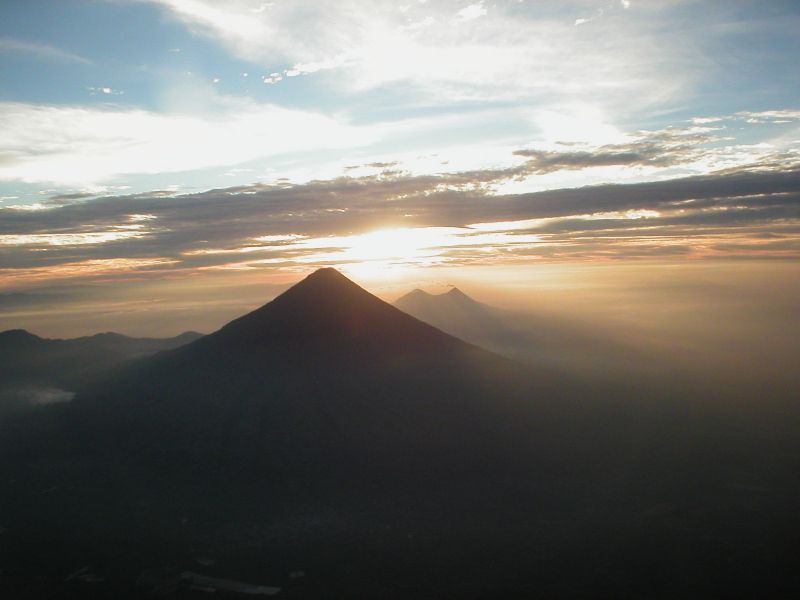
- Overnight camp with Fuego eruptions: you watch the action from a private campsite carved into the mountainside.
- A route that changes ecosystems fast: farm fields, cloud forest, then conifer and dry forest before you reach the barren summit.
- A short but steep summit push: about 45 minutes up scree to the 3,975 m summit.
- Early-morning conditions: bring a headlamp/torch for the climb start at dawn.
- You’ll need your own serious footwear: hiking shoes only—no sandals, and no rental mentioned.
- Meals and camping gear are covered: sleeping bag, sleeping pad, and tent are included at high altitude.
Acatenango and Fuego: why this hike feels different
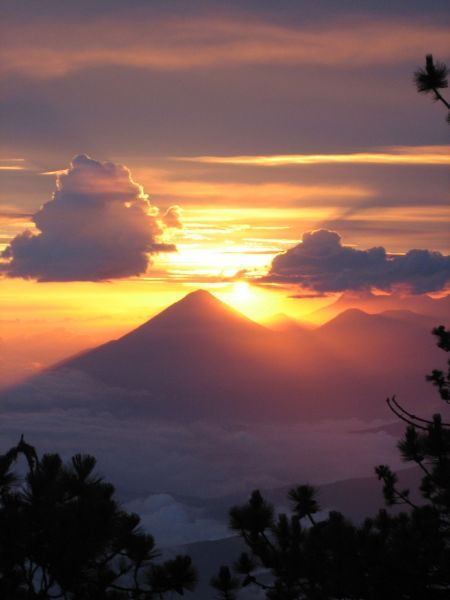
Acatenango is no casual hike. It’s the 3rd highest volcano in Central America, and on this route you don’t just “see volcanoes”—you track them close up, day and night.
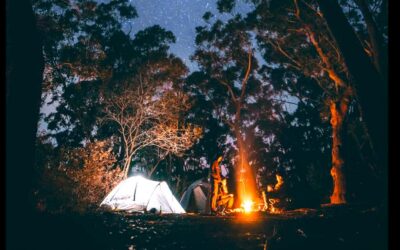
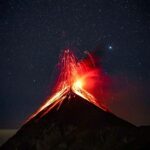
The most distinctive part is the combo: you sleep on Acatenango’s slopes with Volcán Fuego erupting nearby. Being roughly 4 km away makes the eruptions feel immediate instead of distant fireworks. From the campsite—around 3,750 m—you can spend quiet time looking out over the Antigua valley, then turn your attention toward the other peak when the mountain starts performing.
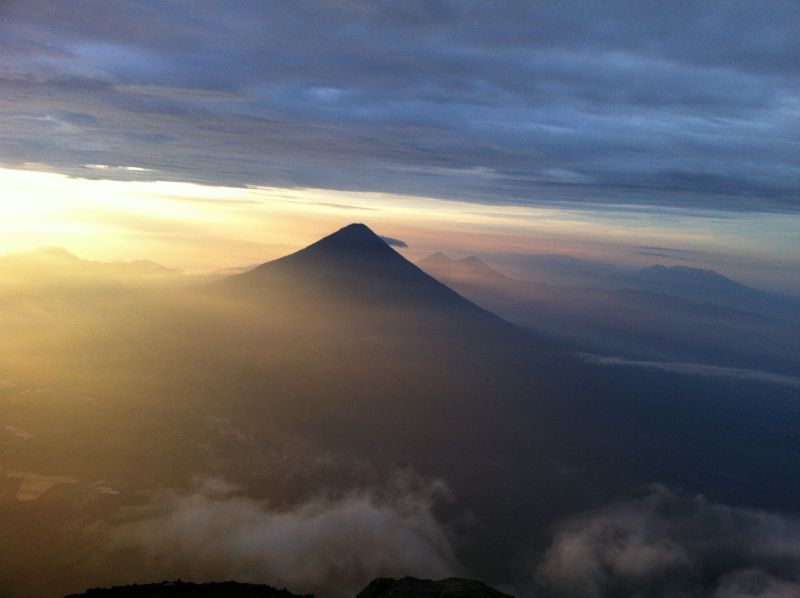
And then there’s the summit moment. Getting to Acatenango’s top at 3,975 m means the world opens. You’re not just looking at a single view; you’re scanning the full ring of the Guatemalan highlands, with visibility stretching up toward the Mexican border when the weather allows. If you like big-picture geography, you’ll appreciate what your guide points out once you’re up there.
You can also read our reviews of more tours and experiences in Antigua Guatemala.
Day 1: La Soledad to camp (where the hike trains your senses)
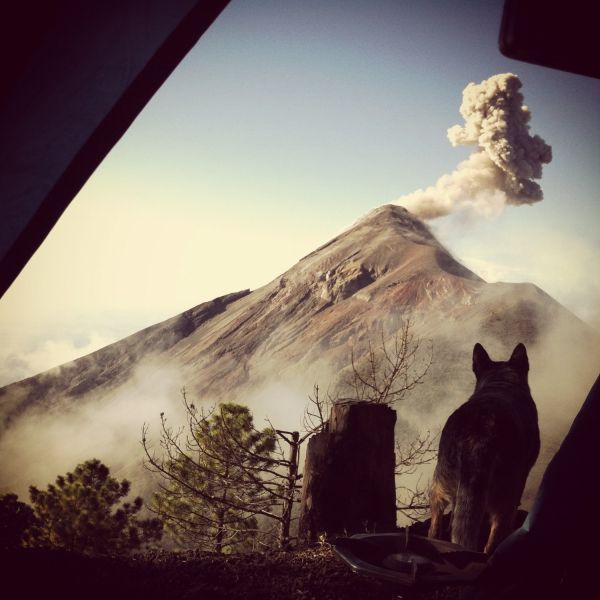
Your day starts from Antigua. The group meets at the Old Town Outfitters shop at 5a. Avenida Sur #12, on the corner of 5th av and 6th calle (one block south of Central Park). The tour notes a meeting time of 9:00am, and the hike begins after the drive to La Soledad.
Warm-up through farm fields
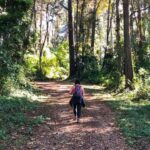
Once you reach La Soledad, the first leg is a steep ascent through local farm fields. This part is straightforward: it warms your legs and sets the pace. It’s also where you start learning how the day will feel—work early, then settle into rhythm.
Ancient tropical cloud forest (and birdwatching chances)
Higher up, the trail shifts into ancient tropical cloud forest with rich biodiversity and native birds. The tour also mentions the possibility of seeing the famous Quetzal. You might not spot one, but even without the bird, this forest change matters: the air tends to feel cooler and damp, and the footing can be slick depending on recent weather.
Microclimates become real
As you continue, the route transitions through temperate coniferous forest and then into tropical dry forests. You pass near or around the tree-line, and that’s when the mountain starts looking more exposed. The point isn’t just scenery. It’s a practical lesson in why altitude changes your comfort fast—temps, wind, and even your breathing.
Private campsite below the tree-line (about 3,750 m)
Your camp is set just below the tree-line, with expansive views of the Antigua valley and Volcán Fuego. At around 3,750 m, you’ll feel the air get thinner and the nights get serious.
By the evening, you’ll have dinner that’s freshly prepared, plus hot beverages. One review note I keep in mind: someone shared tips like wet wipes, tissues, and warm clothing being a must—small comforts that make the night easier when you’re tired and the temperature drops.
Day 2: summit push to 3,975 m and the descent that teaches the mountain
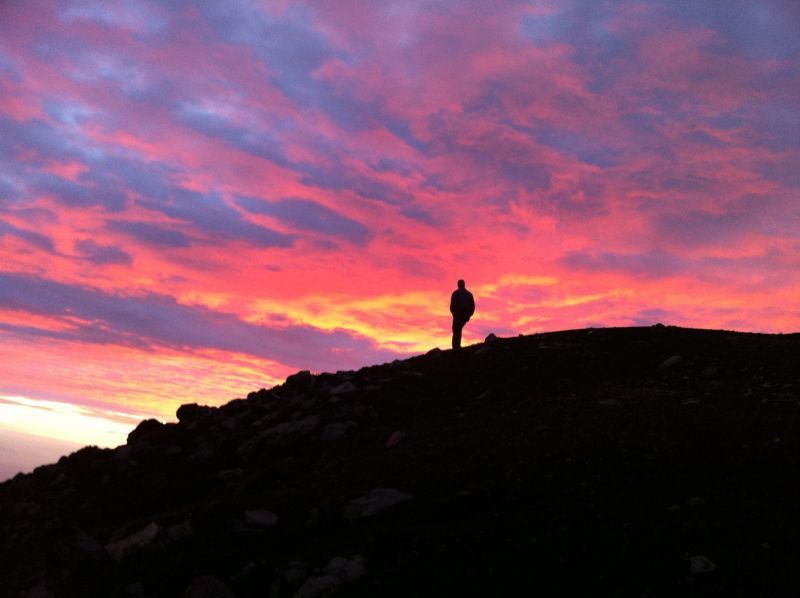
After an early camp breakfast, you go for the summit. The plan includes a 45-minute ascent along a steep, rocky scree trail to Acatenango’s top at 3,975 m.
The summit: 360° views and a real altitude moment
The summit experience is about exposure and perspective. The trail is rocky, and scree can slide underfoot, so you’ll want steady steps rather than hero moves. Once you reach the top, the views are described as 360° across the highlands up toward the Mexican border.
This is the moment your patience from Day 1 pays back. You also get time at the top to orient yourself—your guide will point out what you’re looking at, and you can spend time simply watching the weather shift around the rim of the mountains.
A practical note: the climb is early, which is why the gear list calls out flashlights/headlamps. Even with good daylight, headlamps help you avoid fumbling gear while your body is working hard.
Descent (about 3 hours) via an alternate route
After time on the summit, you’ll start descending for about 3 hours using a different route. This matters because it shows you more of Acatenango’s microclimates instead of walking the exact same trail both ways.
Expect varied footing as you drop toward the trees. Your knees will feel it, too. If you’re the type who appreciates smart technique, use trekking poles if you have them—one review mentioned poles make a big difference on this kind of down-slope pounding.
You’ll return to La Soledad and then transfer back to Antigua, finishing around early afternoon (about 13:00hrs).
What’s included (and how that changes the value)
At $245 per person for a 2-day/1-night experience, the real question is what you’re paying for. Here, you’re not just buying a view—you’re paying for logistics, staffing, food, and altitude camping support.
Included:
- Round-trip transportation from the Old Town Outfitters office in Antigua
- Park entrance fees plus a local community guide from La Soledad
- A bilingual local guide with certified first-aid training
- Freshly prepared picnic lunch, dinner, and breakfast plus juice/coffee/tea and snacks
- Camping support: sleeping bags, sleeping pads, and comfortable tents for high-altitude camping
That’s the backbone of the value. Many “budget” versions of mountain hikes end up costing more once you factor in gear rentals, meal planning, and getting the group safely up and back. Here, the setup is handled for you—so your main job is being properly dressed and carrying what you bring.
What you should still account for (not included):
- Hiking boots/trekking shoes (no sandals)
- A rain cover for a larger backpack (a 35L+ pack is mentioned)
- A warm layer/windbreaker and cold-weather items for near-freezing nights
- Rain jacket from May through October
- At least 4 liters of water
- Flashlight/headlamp
- Tips for your guide
- Personal toiletries/meds
If you hate gear shopping, this package helps. If you love traveling light, it will push you to pack well anyway—because you’ll need water and warm layers.
Guides, pace, and the small details that matter
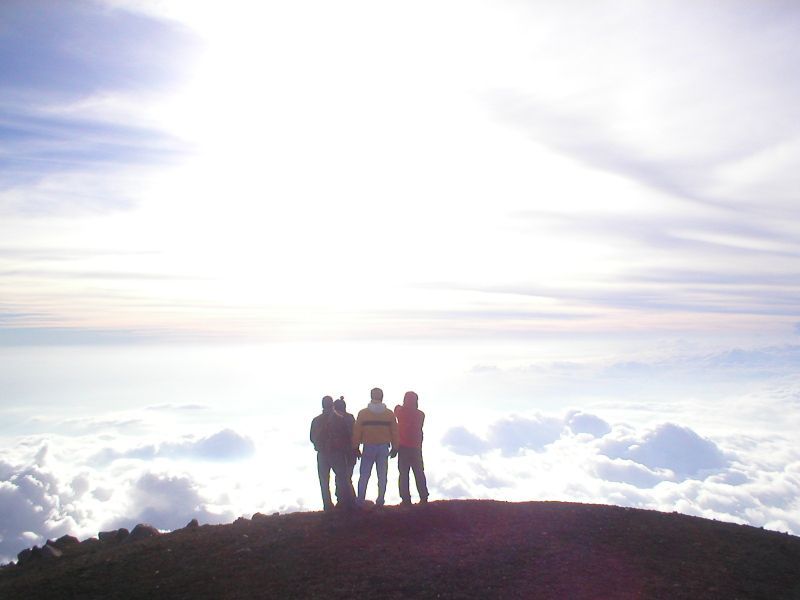
The tour runs with a local team, and the reviews emphasize how supportive the guiding feels when the trail gets tough.
Guides you may meet include people like David and Willy, who are described as walking at the group’s pace and staying supportive on tougher track. Another review highlights Rudy for attentive, fun, and safe guidance plus excellent cooking. A separate note mentions Giovanni handling camp setup quickly and neatly at the base area.
The takeaway for you: this isn’t a “race to the top” style hike. It’s structured, but the mountain doesn’t care about ego—so supportive pacing helps a lot. If you’re fitter but not fast, or you’re hiking steady rather than speedy, this kind of approach can make the difference between enjoying the day and just surviving it.
Packing checklist that fits this exact altitude reality
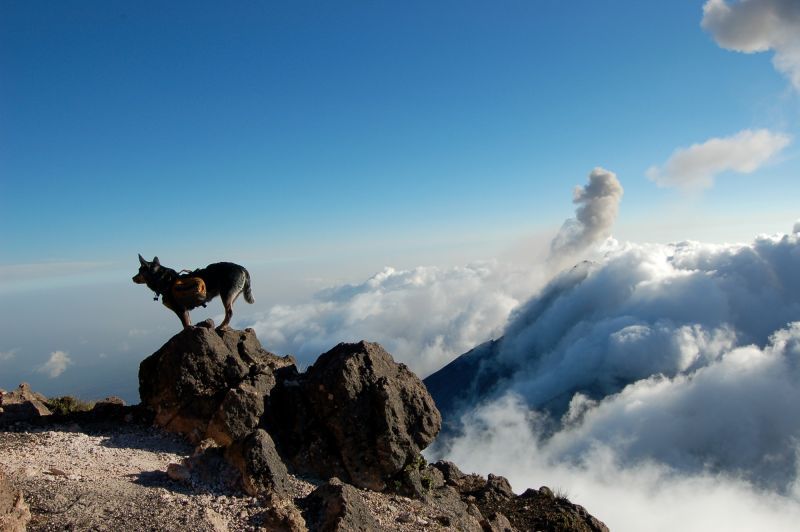
Don’t treat packing like a generic hiking list. This hike calls out the stuff that actually affects comfort at elevation.
Bring:
- Comfortable shoes for the trail (closed-toe; no sandals)
- Warm clothing plus breathable layers
- Sun hat and sunglasses
- Sunscreen
- Change of clothes for camp
- Thermal clothing
- A daypack for the hike
- Reusable water bottle(s)
- Breathable hiking pants
- Jackets and outer layer for cold and wind
- Personal medication
- Sunglasses/sunscreen for strong high-altitude sun
Also plan for early morning visibility:
- Flashlight or headlamp/torch
And water:
- The hike data explicitly says plan for 4 liters minimum. That’s not a casual suggestion. At altitude, with long effort, dehydration creeps up fast.
If you’re hiking in wet season, the tour notes a rain jacket May through October. Even outside those months, bring a way to keep gear dry (the provided list doesn’t include it for you, so you’ll need to cover your own stuff).
Who this hike is best for (and who should think twice)
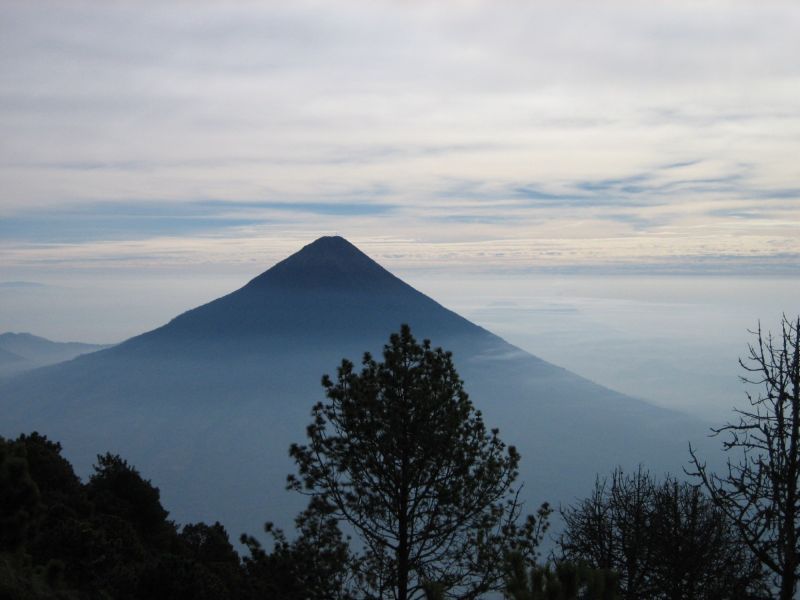
This fits best if:
- You want a true altitude challenge with a strong payoff
- You like route variety (not just a straight “up and down” trail)
- You’re comfortable camping at high elevation
- You want the Fuego eruptions as part of the main experience, not a bonus
You might rethink it if:
- You’re not ready for steep, rocky sections and scree footing
- You struggle with cold nights or you’re not willing to pack real warmth
- You don’t want to manage 4+ liters of water during the hike
The nice part is that the guiding is described as supportive and paced, which helps a lot. Still, you should expect effort. This is one of those Guatemala hikes where you feel every altitude meter.
Price and Logistics: is $245 good value for Acatenango?
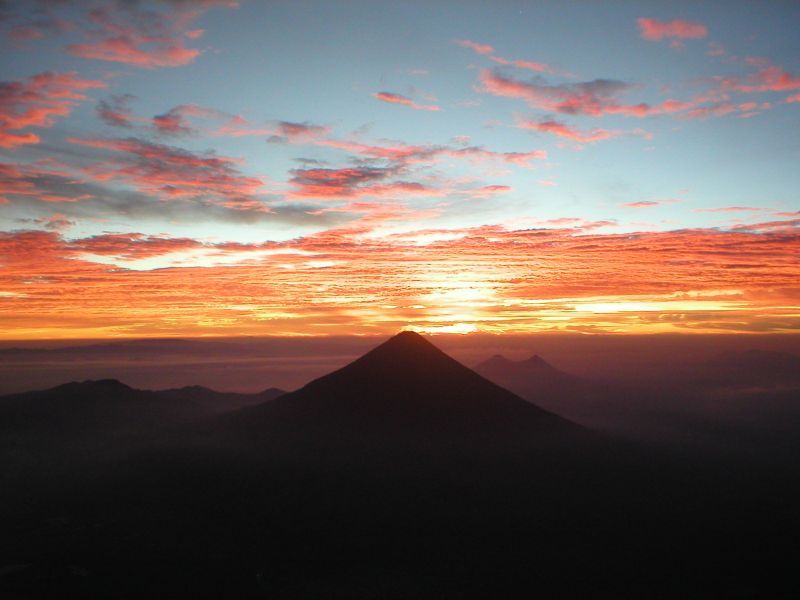
For a 2-day, 1-night volcano trek from Antigua with transportation, park fees, community guiding, bilingual instruction, first-aid certification, meals, and camping gear included, $245 is fairly reasonable.
Here’s why: the biggest costs on mountain tours are usually (1) staff and safety, (2) food service, and (3) camping setup. This package includes sleeping bags, sleeping pads, and tents. You also get guided time at the summit and a descent that shows you more microclimates rather than repeating everything.
The cost becomes less attractive only if you’re missing key items and must buy them last minute—especially trekking shoes, warm layers, and a rain option in wet season. If you already have the basics, you’re set up to get good value quickly.
Should you book the Acatenango 2-Day Hike?
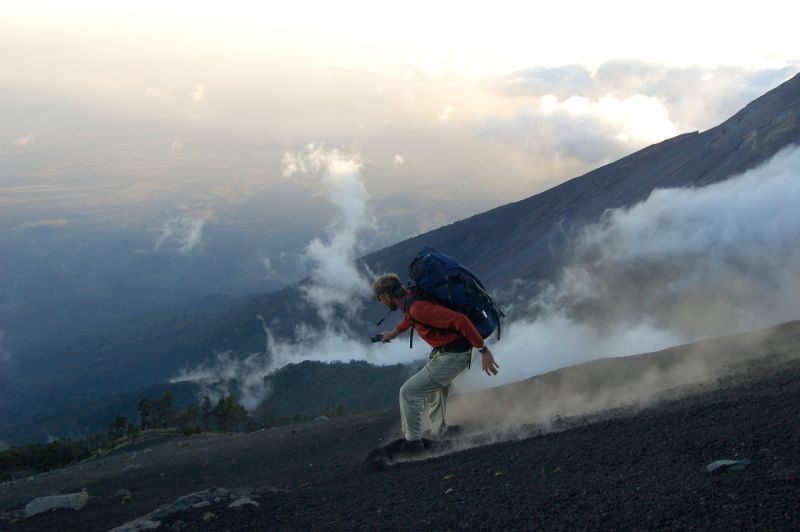
Book it if you want the full volcano combo: Acatenango summit at 3,975 m plus a night camp where Volcán Fuego erupts close enough to watch for hours. The route’s ecosystem changes are part of the reward, not just the summit photo.
Skip or choose a gentler option if you’re worried about cold nights, rocky scree footing, or carrying enough water for altitude hiking. This one asks for comfort planning as much as fitness.
If you do book, make your life easier by packing for warmth, bringing proper footwear, and arriving ready to move steadily—then let the views do the talking.
FAQ
Where is the meeting point for the Acatenango hike?
You meet at the Old Town Outfitters shop in Antigua at 5a. Avenida Sur #12, on the corner of 5th av and 6th calle, one block south of Central Park. The group meeting time is listed as 9:00am.
What time does the tour end?
The tour returns to La Soledad and transfers back to Antigua, ending around 13:00hrs (early afternoon).
What is included in the price?
The price includes round-trip transportation from the Old Town Outfitters office in Antigua, park entrance fees, a community guide from La Soledad, a bilingual guide with certified first-aid training, all meals (breakfast, lunch, dinner, plus snacks and hot drinks), and camping gear such as sleeping bags, sleeping pads, and tents.
Do I need to bring hiking boots?
Yes. Hiking boots or trekking shoes are required. Sandals are not allowed, and the tour notes that footwear is not included.
How cold is it at camp?
Camp is around 3,750m, and the tour notes that night-time temperatures can get near freezing, so you’ll need cold-weather clothing/thermal layers.
Is rain gear needed?
The tour specifies bringing a rain jacket May through October. A rain jacket outside those months isn’t required in the info provided, but you should still be ready for weather at altitude.