REVIEW · SEOUL
Bukhansan National Park: The Summit Course
Book on Viator →Operated by Sam LEE · Bookable on Viator
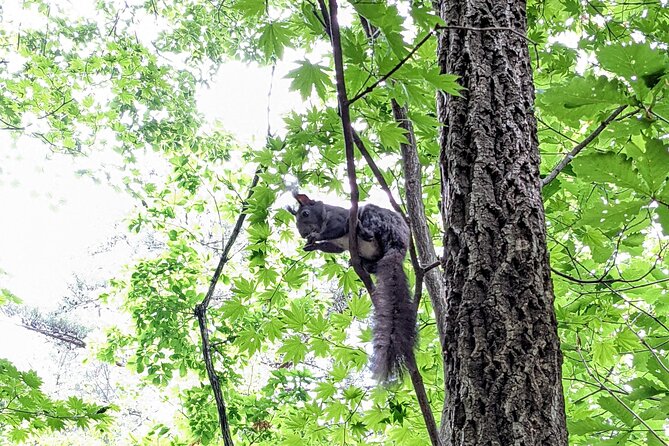
Seoul’s highest peak is a short train ride away. This guided hike in Bukhansan National Park turns a tough climb into a clear, manageable plan, with a route designed to reach the summit in about 4 hours instead of the usual longer walk. I love the way the mountain’s mood shifts with the seasons, so the trail feels different even on familiar days in Seoul.
Two things stand out right away: the small-group feel (up to 20 people) and the guide team’s focus on getting you to the right spots safely. With Koa leading and Sam (Sam Lee) coordinating, the hike keeps moving without turning into a chaotic line of people guessing their way uphill.
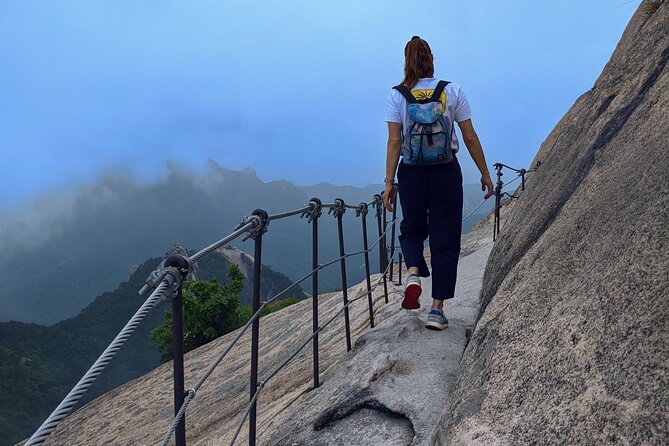
One consideration before you book: this is a steep, vertical hike. You’ll gain around 600 meters of elevation fast, and the Baek-un-dae peak includes a rope-aided section with a 25–45 degree climb for about 20–30 minutes, so it’s not a great match if you have knee issues or a big fear of heights.
In This Review
- Quick hits before you lace up
- Why Bukhansan feels like a break from Seoul
- The 4-hour summit plan: how you save time without skipping the peak
- Meeting at Bukhansan UiSeoul and the value of starting early
- Climb details: 600 m up fast, then the rope-aided Baek-un-dae stretch
- The steep ascent
- The highlight: Baek-un-dae with ropes
- What the summit gives you: Seoul’s highest view, minus the guesswork
- Descent matters too: staying safe when your legs get tired
- Optional tofu lunch after the hike: simple, local fuel
- Price and value: what $64.89 buys you on a steep guided summit day
- Who should book this, and who should rethink it
- Should you book the Bukhansan Summit Course?
- FAQ
- How long is the Bukhansan summit hike?
- Where do I meet, and when does it start?
- What level of fitness do I need?
- Is lunch included?
- Are hiking poles included?
- Is it safe if I’m afraid of heights?
- How many people are in the group?
Quick hits before you lace up
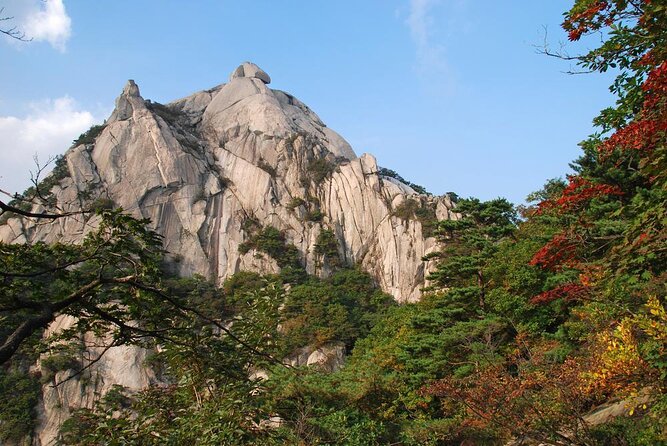
- Faster summit route: about 4 hours to the peak, saving time versus the more typical 6-hour approach
- Big climb in a short distance: roughly 600 m elevation gain over about 2.1 km up the slope
- Rope-aided section near Baek-un-dae: a steep, exposed-feeling 20–30 minute stretch (with ropes)
- Small group, safer flow: max 20 travelers, and guides keep you on track
- Optional tofu lunch after the hike: tofu-focused meal (with meat options too), 9,000–15,000 KRW
- Hiking poles rental needs advance notice: poles cost extra and aren’t automatically included
Why Bukhansan feels like a break from Seoul
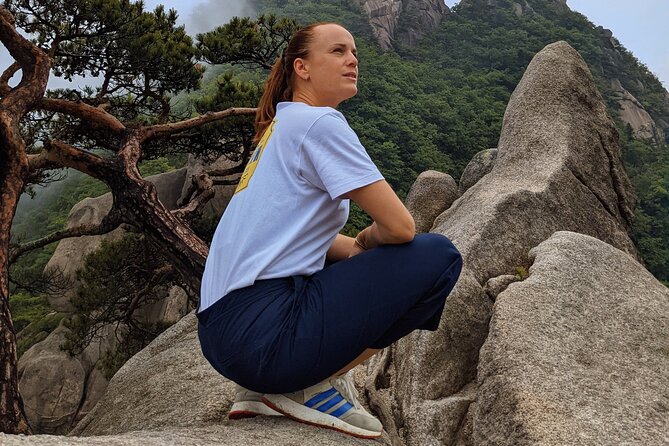
Bukhansan National Park sits on the edge of Seoul, so the contrast hits quickly. One minute you’re in the city’s rhythm; the next, you’re on trails where air gets cooler and the sounds thin out. The seasonal changes are part of the experience. You don’t just get a summit photo—you get the sense that the mountain is doing its own thing.
And because this is one of the most visited hiking areas in Korea, you’ll see plenty of people on the trails. That’s exactly why a planned, guided route matters. Even with experienced hikers around you, things can go wrong when everyone tries to go at their own speed. The guides set the pace and keep the group moving in a controlled way.
The goal here is clear: reach Seoul’s highest peak at 836 m (Baek-un-dae) and come back. It’s not a long, wandering day in the woods. It’s a focused, mountain-only mission.
You can also read our reviews of more tours and experiences in Seoul.

The 4-hour summit plan: how you save time without skipping the peak
This course is built around a simple idea: get you to the top efficiently. The faster route aims for about 4 hours total hiking time to the summit, instead of the more typical 6 hours some people plan for.
Here’s what that means on the ground. The ascent is steep and direct. You’re looking at about a 600 m elevation change over roughly 2.1 km. In plain terms, it’s like climbing a large chunk of a tall building, fast. The tour notes that this kind of climb normally takes around 100–120 minutes.
So yes, you’ll move. But the point isn’t to sprint. It’s to keep steady effort and avoid wasting energy on unnecessary detours. Guides do that well: they pick the simplest line and help you stay calm when the trail tilts steeply under your feet.
This route also rewards people who enjoy structured hikes. If you like knowing what comes next—rather than guessing your way through a busy national park—this is your style.
Meeting at Bukhansan UiSeoul and the value of starting early
The meeting point is at Bukhansan UiSeoul in South Korea, and the start time is 8:00 am. Morning matters more on this hike than you might expect. You’ll get daylight, steadier footing, and less of the late-day fatigue that can creep in as the trail gets steeper.
Getting there also isn’t complicated. The meeting area is near public transportation, so you’re not stuck in a long transfer. You bring a mobile ticket, which is handy if you’re bouncing between Seoul stops and don’t want extra paperwork.
With a max group size of 20, you’re not going to feel lost in a crowd. Still, the early start means you’ll want to show up ready—comfortable shoes, water in hand, and a plan for how you’ll handle the uphill sections without rushing.
Climb details: 600 m up fast, then the rope-aided Baek-un-dae stretch
This is where the hike earns its reputation as a real workout.
The steep ascent
You’ll feel the climb quickly because it stacks elevation gain over a relatively short distance. That’s why the tour asks for moderate physical fitness. If you’re used to regular walking but not frequent climbs, you’ll still have a shot—just expect to slow your pace, breathe intentionally, and take the trail step-by-step.
The tour also flags a knee warning. If you have knee issues, this outing isn’t recommended, even with hiking poles available for rent. Poles can help some people reduce strain, but they don’t cancel out steep downhills and uneven steps.
The highlight: Baek-un-dae with ropes
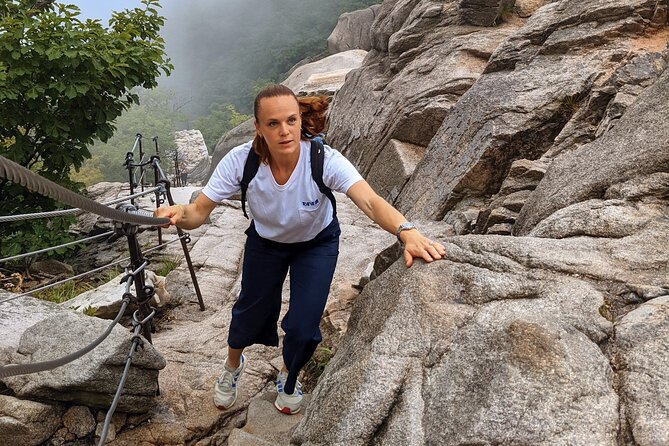
The key moment is near Baek-un-dae peak. The climb there requires some steep, rope-aided movement—described as a 25–45 degree-angle section lasting about 20–30 minutes.
If you have a fear of heights, the tour says this part can be avoided by having a break. I’d treat that as guidance to manage exposure rather than a promise that every person can completely skip the steepness. Your comfort matters, and you’ll want to communicate with the guide before you start that section.
The big practical takeaway: don’t treat the ropes like an optional thrill ride. Use them the way they’re intended—support, balance, and confidence. When guides keep you moving in the right spots, the rope section becomes less about bravery and more about technique.
What the summit gives you: Seoul’s highest view, minus the guesswork
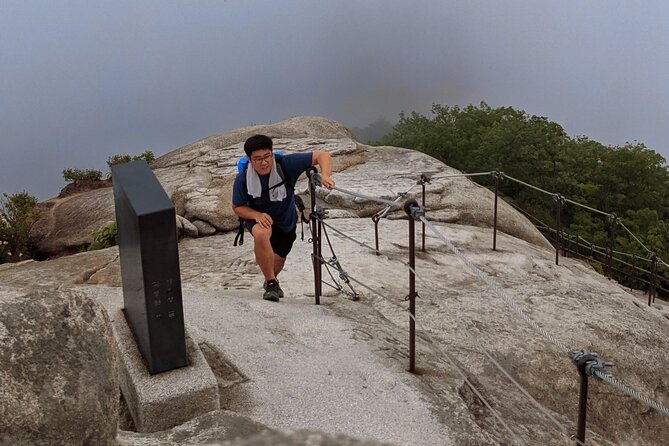
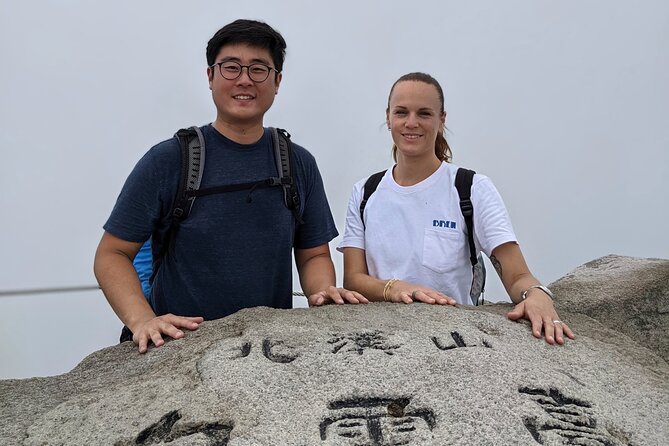
Reaching Baek-un-dae at 836 m is the headline. But the real payoff isn’t only the height. It’s the way you arrive there with your effort translated into something tangible: a top you worked for, and a view that makes the steep climb feel worth it.
The route is designed to get you there without wandering in circles. So when you reach the summit area, you’re not thinking about what you might have missed—you can simply enjoy the moment and take in the surrounding mountain lines.
And since the tour mentions sensing seasonal change, you’ll likely notice differences from one time of year to another. Even if you’re not chasing dramatic weather, your senses pick up the mountain’s shift through light, temperature, and trail texture.
If you like photos, you’ll get them. If you prefer a calm moment, you’ll also find that. The guides focus on safety and flow, so you’re less likely to feel stuck waiting forever while the trail bottlenecks.
Descent matters too: staying safe when your legs get tired
A lot of people underestimate the downhill. You spend most of the day thinking about the climb, then your body punishes you on the way back. That’s why the guides’ role is so important here.
With Koa working with the group and Sam supporting the overall flow, the hike is organized so you keep moving at an appropriate pace. The standout in the feedback is how often they prioritize safety first, without killing the fun. That shows up in small choices: where you pause, how the group stays together, and how you handle the rougher steps.
There’s also a practical group dynamic. In a small group, it’s easier for the guide to notice who’s slowing down, who needs a quick breather, and who is ready to push a bit. In other words, you’re not just another dot in a long line of hikers.
And because this route is more time-efficient, you’re less likely to burn energy on extra sections. That helps on the descent, too.
Optional tofu lunch after the hike: simple, local fuel
After the hike, there’s an optional lunch at a place specializing in tofu dishes. The lunch isn’t included in the tour price, and you pay individually—listed at 9,000–15,000 KRW.
What I like about this option is that it connects the mountain day to Korean comfort food in a straightforward way. They make tofu items from scratch, and the description notes vegan/vegetarian friendly choices, with meat also available. If you’re a mixed group with different diets, this kind of menu tends to work.
Timing matters: lunch is positioned after the hike, so you’re not rushing to eat while your legs are still screaming. If you’re trying to maximize energy for the rest of Seoul, this is a good place to refuel before you head back into the city.
Price and value: what $64.89 buys you on a steep guided summit day
At $64.89 per person, this hike is priced like a guided activity, not just a ticket to a park. Is it worth it? For the right person, yes—because you’re paying for three things that matter on a steep mountain:
First, you’re paying for the route planning. Saving time (about 4 hours instead of around 6) isn’t cosmetic. On a steep hike, wasted minutes add up to fatigue, and fatigue increases mistakes.
Second, you’re paying for safety management. The tour notes that hundreds of people get rescued every year on this mountain, which is a big reality check. You’re not buying a magic shield—but you are buying a guide system that helps you avoid careless shortcuts and keeps you on the safer path.
Third, you’re paying for the small-group format and guide attention. Up to 20 travelers means you’re more likely to get real support than a one-size-fits-all herd.
If you’re an experienced hiker who knows the routes well, you might be tempted to go independently. If you want a structured plan, a clear summit goal, and a guide-led approach to the rope-aided section, this price starts to look like good sense.
Who should book this, and who should rethink it
This hike suits you best if:
- You’re moderately fit and used to steep walking
- You’re okay with early mornings (it starts at 8:00 am)
- You want a guided route that hits Seoul’s highest peak with less time wasted
You should probably skip (or choose a gentler option) if:
- You have knee issues. The tour explicitly says it’s not recommended.
- You strongly dislike steep, exposed climbing. The Baek-un-dae rope section is described as a 25–45 degree-angle climb for 20–30 minutes.
- You can’t handle a fast elevation gain. The climb is direct: about 600 m over 2.1 km.
One more practical note: the tour offers hiking pole rental, but only if you inform in advance, and the poles aren’t automatically necessary unless you have bad knees. Since knee issues are already a deal-breaker for recommendation, I’d treat this as a minor assist for people who are otherwise okay—not as a fix for serious problems.
Weather also counts. This experience requires good weather. If it gets canceled due to poor weather, you’ll be offered a different date or a full refund. On days where visibility and trail conditions are questionable, it’s good to have that protection.
Should you book the Bukhansan Summit Course?
Book it if you want a fast, guided way to hike Seoul’s highest peak with less stress and better odds of staying on a safe route. I’d especially recommend it to first-time Bukhansan hikers who feel unsure about which trail is best, or who don’t want to spend half the day navigating.
Skip it if your knees aren’t reliable or if the rope-assisted climbing near Baek-un-dae sounds like a deal-breaker. This isn’t a casual stroll. It’s a focused summit push, and the mountain expects you to respect gravity.
If you’re the type who likes clear pacing, a small group, and a guide who keeps the hike organized, this is one of the strongest ways to experience Bukhansan without turning your day into a trial-and-error project.
FAQ
How long is the Bukhansan summit hike?
It’s about 4 hours 30 minutes in total (approx.).
Where do I meet, and when does it start?
You start at Bukhansan UiSeoul, South Korea, and the start time is 8:00 am. It ends back at the meeting point.
What level of fitness do I need?
The tour requires moderate physical fitness level.
Is lunch included?
Lunch is optional and paid by individuals after the hike. It’s priced at about 9,000–15,000 KRW, and the meal specializes in tofu dishes.
Are hiking poles included?
Hiking poles are not included by default. You can rent them at an extra cost, but you must inform the provider in advance. The poles aren’t really necessary unless you have bad knees.
Is it safe if I’m afraid of heights?
There is a rope-aided, steep section near Baek-un-dae peak. If you have a fear of heights, the tour notes that this 20–30 minute part can be avoided by having a break.
How many people are in the group?
The tour has a maximum of 20 travelers.