REVIEW · SAN SEBASTIAN
Camino de Santiago hike in San Sebastian
Book on GetYourGuide →Operated by Local Experts Tours · Bookable on GetYourGuide
Don’t start with Santiago; start with the sea. This 5-hour Camino de Santiago walk from San Sebastián pairs blue-water views with Jacobean wayfinding, then drops you into Pasaia’s working seaport mood. What I like most is the way the route mixes ocean cliffs and forest air, and the fact that the guides focus on real context, not just directions—exactly the kind of support that makes the Camino feel personal.
There is one real consideration: this isn’t a smooth, flat stroll. If you have back issues, mobility limits, or heart problems, the climb into Mount Ulia and the coastal walking won’t be a good match.
In This Review
- Key things to know before you go
- Why the Kursaal area is a smart place to begin
- The coastal start: Donostia to the climb of Mount Ulia
- Wayfinding with scallop shells and yellow arrows
- The Faro de la Plata viewpoint payoff
- San Pedro (Pasaia): stone houses, quays, and seafaring atmosphere
- The guide factor: history, nature, and what you’ll actually notice
- Price and value: what $46 buys in real terms
- What to bring (and what to skip)
- Itinerary walkthrough, stop by stop
- 1) Meet at Kursaal in San Sebastián
- 2) Mount Ulia: hiking with sea and forest vibes
- 3) San Pedro (Pasaia): visit the fishing town ending
- 4) Return by taxi to the Kursaal area
- Who should book this Camino de Santiago outing from San Sebastián
- Should you book this tour?
- FAQ
- What is the duration of the Camino de Santiago hike?
- Where do I meet the guide?
- Where does the walk end?
- Is the taxi return included?
- What languages are the guides?
- Is lunch included?
- What should I wear or bring?
- Is it suitable for everyone?
- Are rain items provided?
- How much does it cost?
Key things to know before you go
- Mount Ulia viewpoint energy: you’ll climb up to a natural balcony over the Cantabrian Sea for big, open-air breaks.
- Jacobean navigation marks: the path uses scallop-shell symbolism and yellow arrows, so you get the Camino feel as you walk.
- Faro de la Plata is your landmark: the route is framed around sweeping views toward this iconic lighthouse.
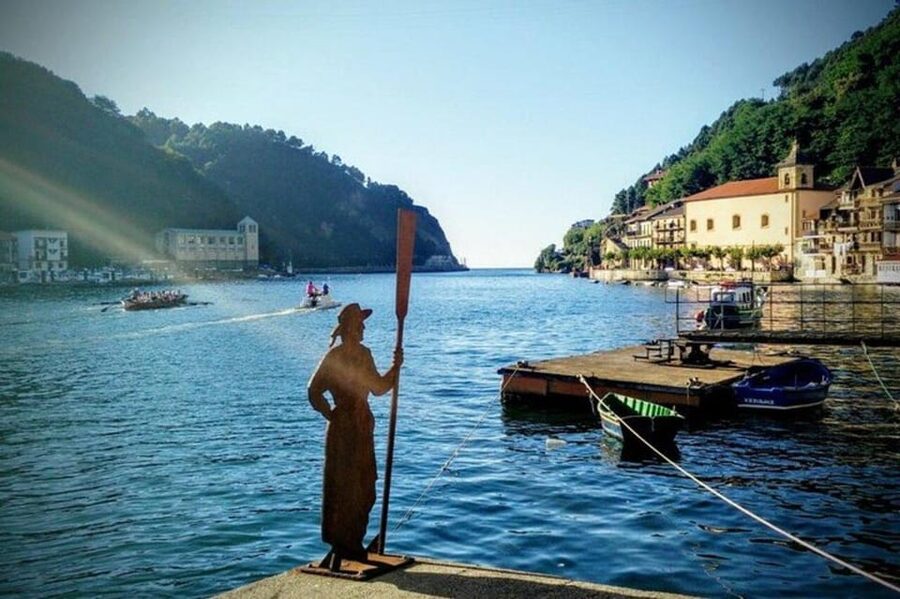
- San Pedro (Pasaia) is the emotional landing: stone houses and quays give you that working-pilgrim atmosphere.
- Guides change the whole experience: several reviews single out strong explaining and even guide-provided visuals.
- You’re set for the day, logistics-light: taxi return is included, so you can focus on the walk.
Why the Kursaal area is a smart place to begin
Meeting at the Kursaal means you start in a part of San Sebastián that feels built for easy orientation. You’ll meet at the Kursaal ticket office (Av. de Zurriola, 1, 20002 Donostia). It’s also a convenient launch point to get moving toward the coastline quickly, without complicated transfers.
There are two start-name options listed around the Kursaal/Palacio de Congresos y Auditorio Kursaal area, and both essentially keep you in the same easy zone. For your first Camino in this region, that matters: you want to spend your attention on the route, not hunting for a trailhead.
You can also read our reviews of more tours and experiences in San Sebastian.
The coastal start: Donostia to the climb of Mount Ulia
From Donostia, you build up from seaside city energy into the greener, wilder feeling of Mount Ulia. The itinerary is simple: start, hike, then head to the end point in San Pedro (Pasaia). But the emotional shift is anything but simple. As you climb, the air changes—saltiness stays, but it mixes with that calmer forest feel you get when you leave the busiest streets behind.
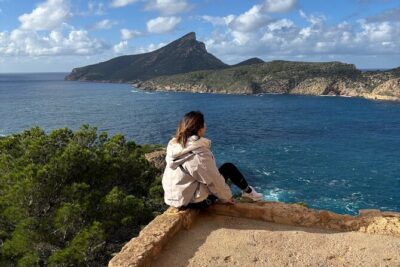
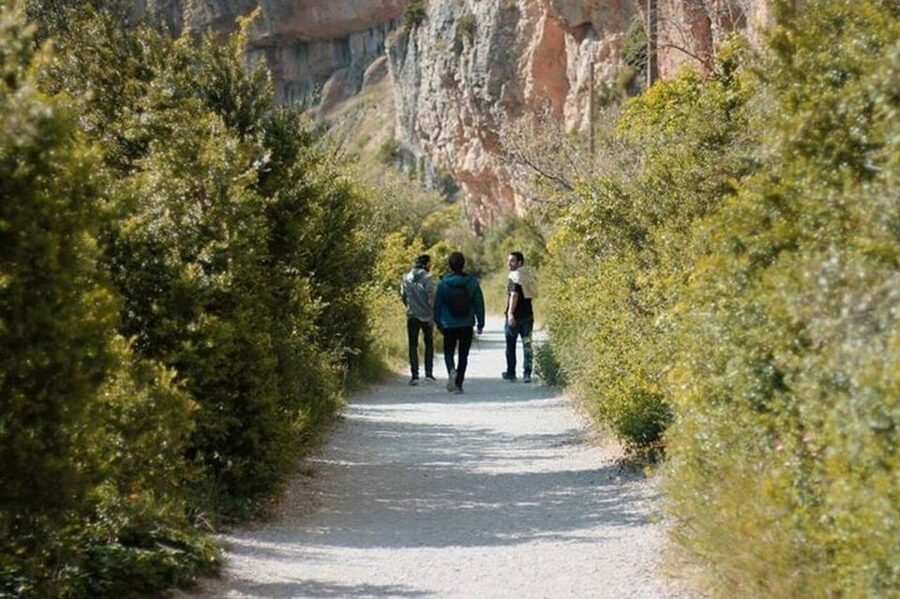
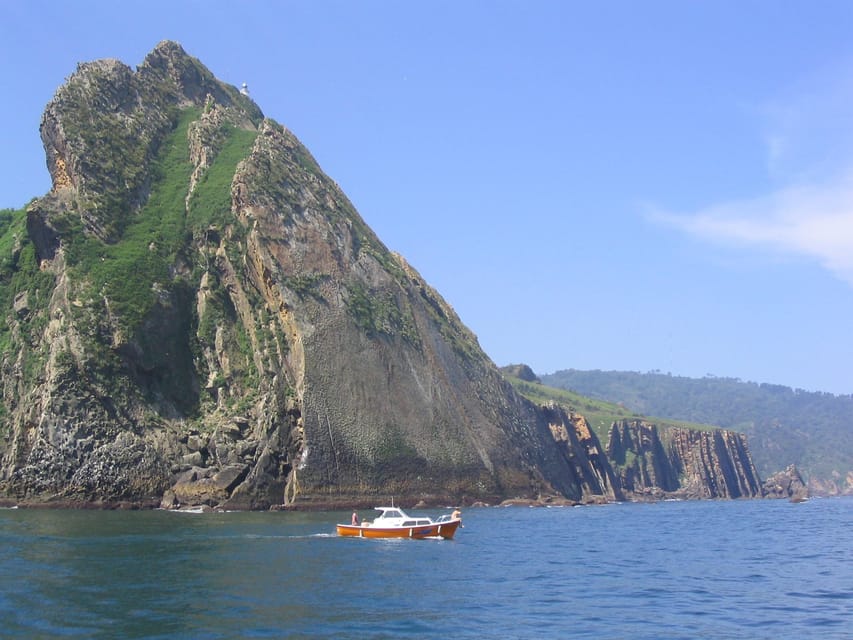
Mount Ulia is a natural balcony over the Cantabrian Sea, and the route is designed so your uphill effort pays you back in views. Expect ocean-facing stretches where the horizon does most of the talking. The Camino element isn’t only symbolic here; you follow wayfinding as you go, so the walk feels like a real Jacobean route rather than a random scenic hike.
Practical tip: wear comfortable shoes. The walking surface on coastal and hillside routes can vary, and this tour is short enough that you’ll want to keep your feet happy from minute one.
Wayfinding with scallop shells and yellow arrows
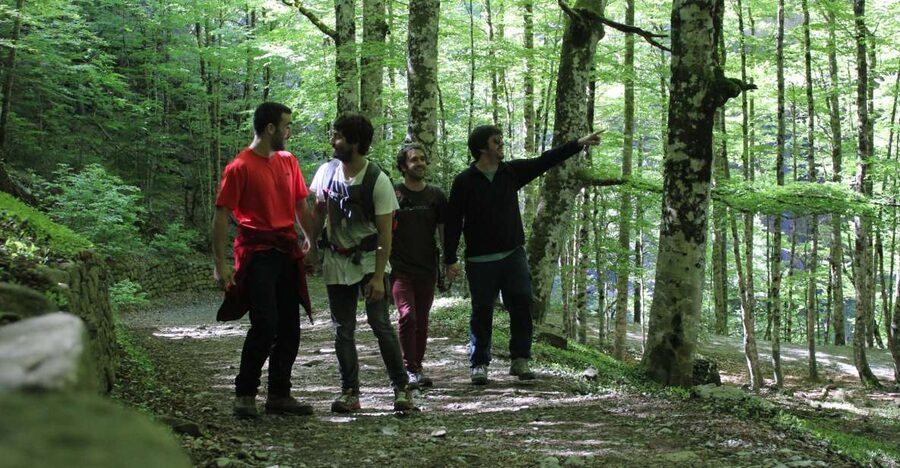
One of the best parts of this outing is that it feels like you’re using the Camino system for real. The route is described as being marked by scallop shells and yellow arrows, which are the classic signals that help pilgrims stay on track. Even if you’re new to the Camino, that structure makes you feel confident.
This is also where a guide earns their keep. A good guide helps you connect the marks you’re seeing with the story of the route—why that kind of signage matters, and how pilgrims historically relied on consistent cues while walking long distances. In other words: you’re not just walking, you’re learning how the Camino works on the ground.
The Faro de la Plata viewpoint payoff
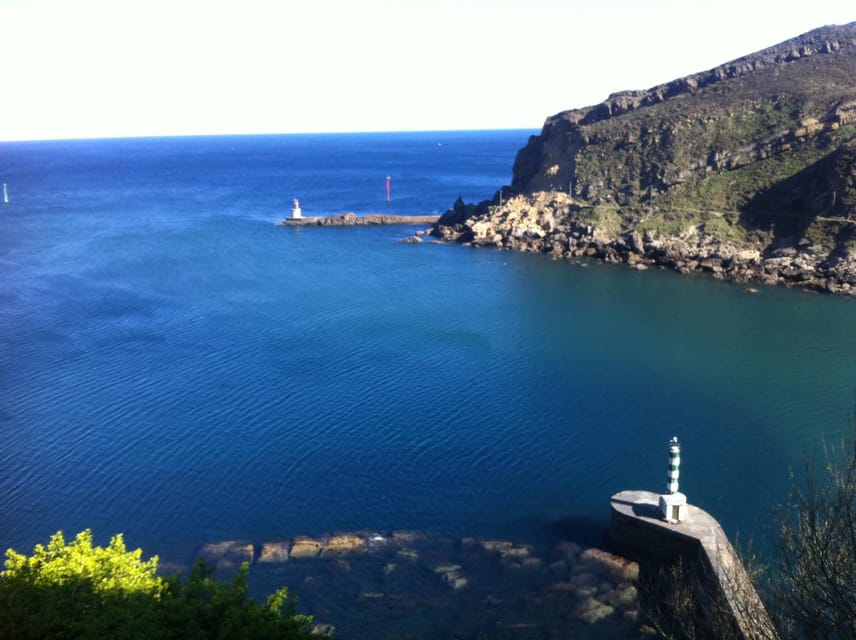
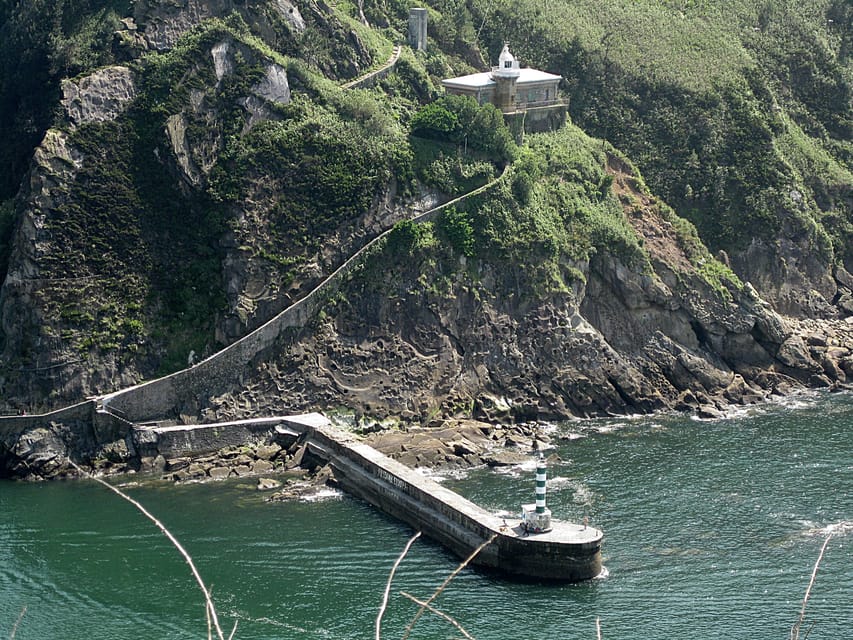
As you move through Mount Ulia, the route is framed toward one of the Basque coast’s standout landmarks: the Faro de la Plata. The lighthouse shows up as an iconic reference point in your walking narrative, especially when viewpoints open up toward the bay.
This is the part you’ll remember later. The effort is real, but the reward is big sky, long sea lines, and that sense of standing above something that has always mattered to sailors. That’s a huge reason pilgrims keep returning to coastal routes: the sea is part of the Camino’s personality.
San Pedro (Pasaia): stone houses, quays, and seafaring atmosphere
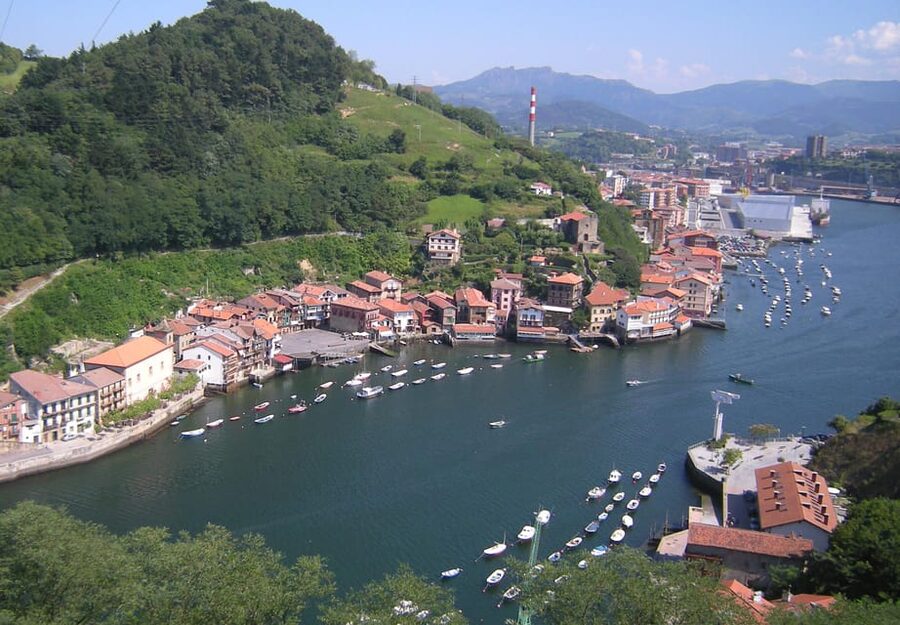
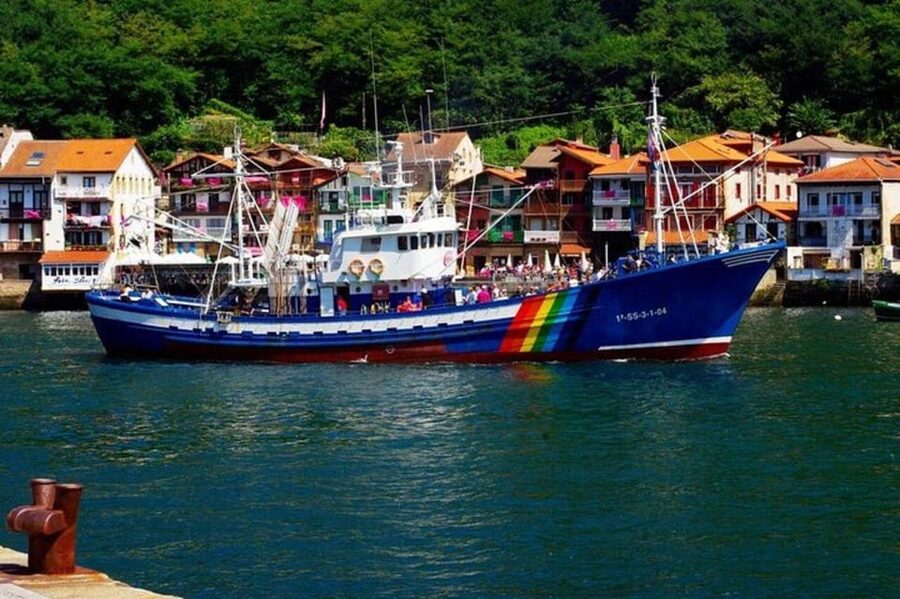
Your hike ends in San Pedro (Pasaia), a small fishing town made of stone houses and charming quays. This is the kind of place where you feel the Bay of Biscay’s working rhythm instead of only the tourist version of “the coast.”
Why this ending matters: it’s a classic contrast for a Camino outing. You start with open sea views and wayfinding symbols, then you land somewhere human-scale, where the coastline isn’t just scenery—it’s a livelihood. That’s exactly the atmosphere that helps you understand why so many people follow routes that bend toward places like Santiago de Compostela.
Also, the tour wraps with time to explore the town on foot. Even if you’re tired from the climb, the finishing vibe makes it easier to linger, take photos, and absorb local details without rushing.
The guide factor: history, nature, and what you’ll actually notice
Guides do three jobs on this hike: they explain what you’re seeing, they add context for why it matters, and they keep you from feeling lost in an area that can look similar mile to mile.
The reviews give you a clear picture of what “good” looks like. One guide named Jonathan earns praise for great insights on the Basque region, plus Basque area history woven into the hike. Another reviewer describes a guide who shared history with visual pictures, which is a smart technique on a coastal walk—images help you “hold” details in your head while the views keep moving.
You’ll also hear about the route’s blend of sea, forest, and Camino tradition. The whole point is to help you notice things you might otherwise skip: how the coastline shapes movement, how the forest edges change the feel of the trail, and how the Jacobean wayfinding reinforces the Camino mindset.
That said, balance matters. One review rated the experience as average and mentioned the guide being a bit disengaged and not as strong on local area knowledge as guides they’d had on other tours. So if you’re the type who wants lots of deep local detail every minute, you might want to review recent feedback for your specific guide date before you lock in.
Price and value: what $46 buys in real terms
At $46 per person for about 5 hours, you’re paying for more than a walking route. The value comes from three parts that reduce your friction:
- A live guide (Spanish or English) for interpretation during the walk
- Wayfinding support using Camino-style marks, so you don’t spend your energy figuring things out
- Taxi return included, which matters because you’re ending in San Pedro and returning to the Kursaal area
The tour does not include lunch, rain gear/umbrella, or hotel pickup. But taxi return included is a big deal for a coastal Camino-style outing where point-to-point logistics can be annoying. You’re basically buying back time and mental bandwidth: the day stays simple.
If you do this on your own, you might save money. But you’d likely lose the narrative glue—the way the guide connects the sea, the climb, the signs, and the town ending into a coherent Camino experience.
What to bring (and what to skip)
Keep your packing basic and practical:
- Comfortable shoes and comfortable clothes
- Plan for variable coastal weather. Rain clothes or an umbrella are not included.
Also, this isn’t listed as a tour for unaccompanied minors, and it’s specifically not suitable for people with back problems, mobility impairments, or heart problems. If you’re unsure whether the climb fits you, it’s worth thinking harder than you normally would. The walk is described as a hike that climbs into Mount Ulia.
Finally, bring your usual Camino mindset: a willingness to walk at your own pace with the group and actually look around. Coastal routes reward attention.
Itinerary walkthrough, stop by stop
1) Meet at Kursaal in San Sebastián
You start at the Kursaal ticket office area (Av. de Zurriola, 1). This is where you get briefed, meet your guide, and get your bearings before the climb. Starting from this well-known hub keeps the first 15 minutes from turning into stress.
2) Mount Ulia: hiking with sea and forest vibes
Mount Ulia is where the route earns its name as a coastal Camino experience. You climb, you look outward, and you feel the shift from city air to open viewpoints. The guide helps you track the Camino essence through the route’s described marks and the story behind them.
Possible drawback here: uphill effort. The tour is short, but it still asks your body to work during the most scenic stretch.
3) San Pedro (Pasaia): visit the fishing town ending
After the main walking segment, you arrive in San Pedro (Pasaia). The town visit is your chance to see stone houses and quays up close and to enjoy a finishing atmosphere tied to seafaring life. This part helps the day feel complete, because you’re not only walking—you’re landing.
One review also mentions the day ending with a delicious pinxto. The tour doesn’t state lunch or food inclusions, so treat pinxto as something you may find or be guided toward rather than something guaranteed as part of the official package.
4) Return by taxi to the Kursaal area
Taxi return is included, with drop-off back around Palacio de Congresos y Auditorio Kursaal / Kursaal. That makes the whole day easier to plan: you finish the walk, then you’re handled for the return.
Who should book this Camino de Santiago outing from San Sebastián
I’d point this one toward three kinds of travelers:
- First-time Camino walkers who want a taste of Jacobean wayfinding without committing to a long trek
- People who like coastal hiking more than museum-style tourism, especially with a guide interpreting what you see
- Travelers who prefer simple logistics: start at a central spot, walk a defined route, end and get a taxi back
It’s also a good option if you want a guided day that blends nature and culture. The reviews repeatedly praise guides for history context and for adding meaning to the route—not just pointing the way.
Should you book this tour?
If you want a guided Camino experience that’s built around ocean views, Mount Ulia, and a satisfying finish in San Pedro (Pasaia), this is an easy yes to consider. The guides sound like the main strength—especially when they add context with visuals and personal care—and the included taxi return removes a common headache for point-to-point walks.
But choose carefully if you have health or mobility concerns tied to uphill and uneven coastal walking. And remember: no lunch is included, so plan for your own meal before or after.
FAQ
What is the duration of the Camino de Santiago hike?
The tour lasts 5 hours.
Where do I meet the guide?
You meet at the ticket office of the Kursaal building in San Sebastián, at Av. de Zurriola, 1, 20002 Donostia.
Where does the walk end?
The hike ends in San Pedro (Pasaia).
Is the taxi return included?
Yes. Taxi return is included, and you return to the Kursaal area.
What languages are the guides?
The live tour guide offers Spanish and English.
Is lunch included?
No, lunch is not included.
What should I wear or bring?
Bring comfortable shoes and comfortable clothes.
Is it suitable for everyone?
It is not suitable for people with back problems, mobility impairments, or heart problems. Unaccompanied minors are not allowed.
Are rain items provided?
No. Rain clothes or an umbrella are not included.
How much does it cost?
The price is $46 per person.