REVIEW · CANMORE
Canmore: Canyons & Cave Paintings – 2.5hr Hiking Tour
Book on Viator →Operated by Banff & Canmore Tours · Bookable on Viator
Rock art is closer than you think. This Canmore hike takes you into Grotto Canyon to see ancient pictographs in person, guided by locals who connect the symbols to life on the land. I also love the small group limit of 12, which keeps the hike feeling calm and personal instead of crowded.
You start from the Canmore Recreation Centre and head into Kananaskis Country, where your guide brings the canyon to life with clear, practical storytelling. In the group I reviewed, guides like Jacob and Ben stood out for blending nature details with First Nations history, and for keeping the pace friendly on the trail.
One thing to plan around: the tour depends on good weather, and if conditions aren’t right you may be offered a different date or a different route. Also, bottled water isn’t included, so plan to bring your own.
In This Review
- Key things to know before you go
- From Canmore to Kananaskis Country: the setup that matters
- Grotto Canyon hiking: what the trail experience feels like
- Rock art 101: seeing pictographs up close (and why it’s special)
- First Nations storytelling that stays connected to the ground
- Gear and comfort: poles, ice cleats, and what to pack
- Timing, group size, and how the 3 hours works in your day
- Value check: is $86.05 fair for this experience?
- Weather and route changes: the flexible part you’ll appreciate
- Who should book this tour (and who should think twice)
- Should you book Canyons & Cave Paintings in Canmore?
- FAQ
- How long is the Canmore: Canyons & Cave Paintings hike?
- Where do I meet for the tour?
- How many people are in the group?
- What’s included in the price?
- What should I bring since bottled water isn’t included?
- Is the tour suitable for most travelers?
- What happens if the tour is canceled due to poor weather?
Key things to know before you go
- Max 12 travelers keeps the hike intimate and conversation-friendly.
- Pictographs on a sheltered rock face means you’re seeing rock art up close, not from far away.
- Guides like Jacob and Ben focus on First Nations stories and safety as you hike.
- Poles and ice cleats when needed take some worry out of footing and traction.
- Departure times vary, so you can pick a slot that fits your day in Canmore.
- Some weather-day route changes may happen if conditions aren’t ideal.
From Canmore to Kananaskis Country: the setup that matters
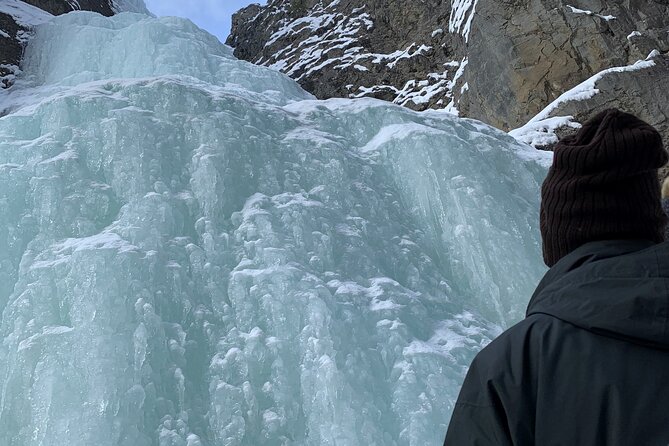
This is a short, focused outing. You meet at the Canmore Recreation Centre (1900 8 Ave, Canmore) and the tour wraps back at the same spot. From there, you’re transported to the hiking area in and around Kananaskis Country, which is a huge part of why this tour is so easy to fit into a visit. You don’t have to figure out directions, parking, or timing for multiple stops.
The tour runs about 2.5–3 hours, depending on how the day moves. That time window is handy: it’s long enough to feel like a real hike, but short enough that you can still eat, explore Canmore, or do another activity afterward.
You’ll also notice the tour sells itself on simplicity. You get a mobile ticket, and you’ll get confirmation at booking. The schedule includes multiple departure times, so you’re not forced into a single start hour.
If you’re traveling in peak season, book earlier. This one averages around 33 days ahead, which usually means popular departure times go first.
You can also read our reviews of more tours and experiences in Canmore.
Grotto Canyon hiking: what the trail experience feels like
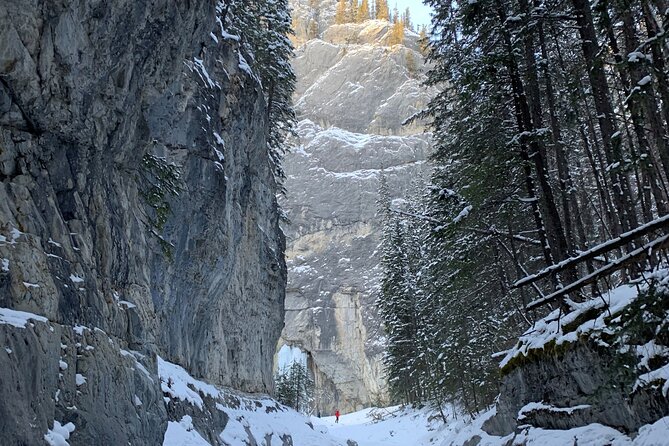
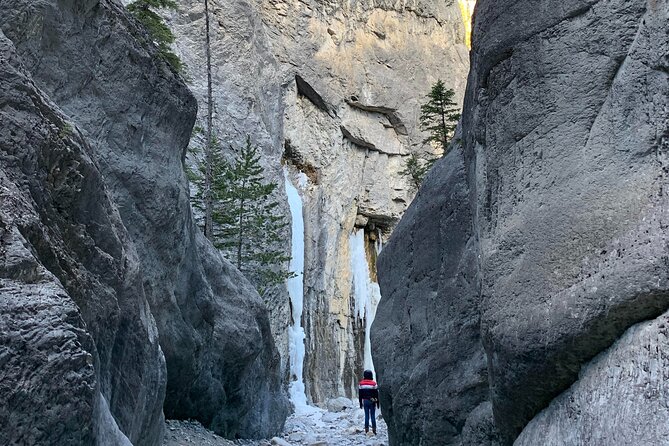
The heart of the tour is the guided hike through the canyon area at Grotto Canyon. The route is described as easy for most travelers, so you’re not looking at a grueling day out. Instead, the pace is set up for enjoying the walk and making time for stops and explanations.
What makes this hike more than a scenic walk is the way you’re guided. Your certified guide leads you through rugged terrain, but the focus is on watching your footing while also learning what you’re seeing. In the reviews, safety and group management came up more than once, which matters on a canyon trail where you want steady steps and clear guidance.
One detail I really like for day planning: this tour can start early. In the sample I reviewed, starting early helped keep the trail quieter, so you get more of that calm canyon feeling instead of weaving through lots of people. Even if every day isn’t empty, the small group size (max 12) already does a lot to limit the chaos.
Rock art 101: seeing pictographs up close (and why it’s special)
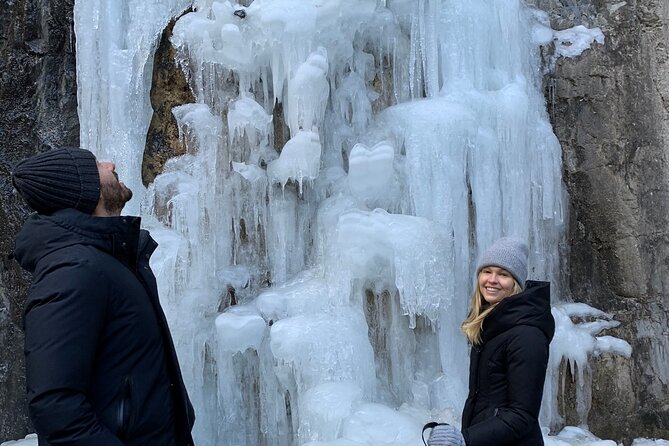
The big payoff is the stop at a sheltered rock face with ancient pictographs—rock art made with pigments. You gather and your guide points out the symbols directly in the setting where they were created, and that changes how you experience the art.
It’s not just about the visuals. Your guide explains what the symbols can represent: significant events, spiritual beliefs, and everyday life. You’re also guided through the basic visual clues, like the contrast between the canyon’s natural tones and the pigments used in the paintings—described as reds and blacks made from ochre.
Here’s the practical reason this matters: seeing pictographs in their original canyon context makes them feel less like a museum item and more like a form of communication tied to place. You can also ask questions at the spot, which is hard to do if you’re just passing by on your own.
If you care about history, art, and nature all in one outing, this is built for that mix. The tour’s design keeps you moving through the canyon, then slows down at the rock art so you actually absorb it.
First Nations storytelling that stays connected to the ground
The guide portion of this tour is where the experience becomes memorable in a specific way. As you hike, you hear stories about the First Nations peoples who once roamed these lands and how they connected to the environment around them.
This isn’t presented as a disconnected lecture. You hear the context as you’re walking through the canyon, so the stories match what you can see: rock, water, terrain, and the layout of the land. In the reviews, guides such as Jacob and Ben were praised for bringing that connection to life, including details that felt local and personal.
Jacob was described as sharing stories with humor and knowledge that felt passed down through mentorship—he even trained guides for other tours in the area. Ben was noted for being friendly and well prepared outdoors, with a clear ability to blend history with what’s happening in front of you.
Whether your guide is Jacob, Ben, or someone else, the key idea is the same: the tour links the pictographs to people and lived experience. That makes the art feel grounded, not abstract.
Gear and comfort: poles, ice cleats, and what to pack
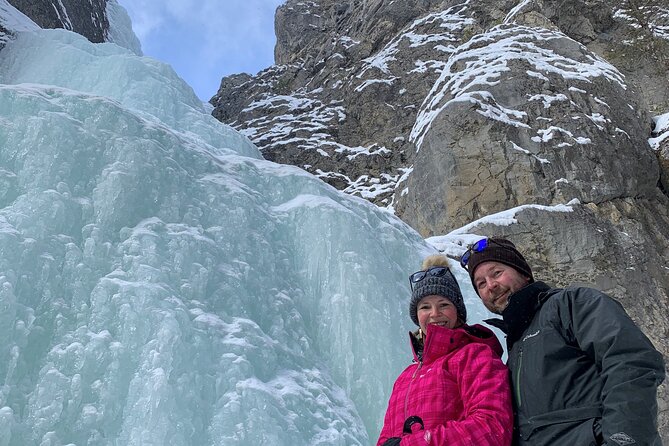
This tour provides a lot of the basics for a canyon hike:
- Hiking poles
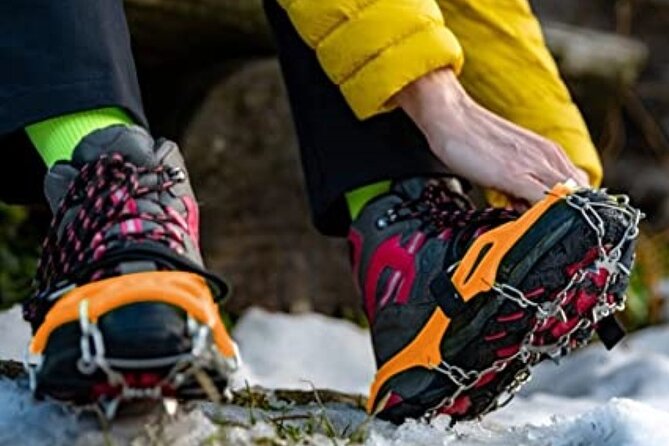
- Ice cleats when required
- A professional certified guide
That matters because it reduces the guesswork. You don’t have to decide whether you should rent poles or figure out traction for slick sections. If conditions call for ice cleats, you get them.
One item is explicitly not included: bottled water. So bring a bottle or plan to buy water before you depart. For a 3-hour hike, dehydration sneaks up faster than you think, especially if you’re enjoying photo stops and lingering near the rock face.
For clothing, the tour requires good weather. That’s not just a comfort note—it’s a safety and scheduling reality. If weather is bad, the tour may be changed or refunded, so dress for conditions and be ready for the day to shift.
Timing, group size, and how the 3 hours works in your day
You’re out for about 2.5–3 hours, and that length hits a practical sweet spot. Long enough to feel like you left town and got into the mountains. Short enough to keep your schedule flexible.
The small group cap of 12 is a real quality upgrade. With fewer people, you get more time at the pictographs and a better chance to hear the guide’s explanations without straining. It also tends to help the guide manage footing and timing, which is crucial in rocky canyon terrain.
Departure times also help. If you’re planning your day around sunrise light, a meal reservation, or another Banff-area stop, you can choose a departure that fits. This is one of those tours that doesn’t try to eat your entire day—just enough outdoors to make it feel worth the travel time.
Value check: is $86.05 fair for this experience?
At $86.05 per person, you’re paying for guided access plus some equipment. What you’re not paying for is “extras” that inflate price.
Here’s what makes the value feel solid:
- You get a certified guide for the full hike
- Poles are provided
- Ice cleats are provided when traction is needed
- The experience includes a meaningful cultural learning component (the pictographs and the First Nations stories)
- The group size is capped at 12, so it’s not a big crowd event
Also, the experience is about more than photos. The guided explanations are the whole point. If you’re the type who likes to understand what you’re looking at—why the symbols are there, what the guide notices, how the stories connect to place—this price starts to feel more like “pay for expertise and context” than just “pay for a walk.”
If you’re only chasing views and don’t care about history or interpretation, you might find a self-guided option more budget-friendly. But if you want a guided canyon hike with pictographs at the center, the pricing looks reasonable for the format.
Weather and route changes: the flexible part you’ll appreciate
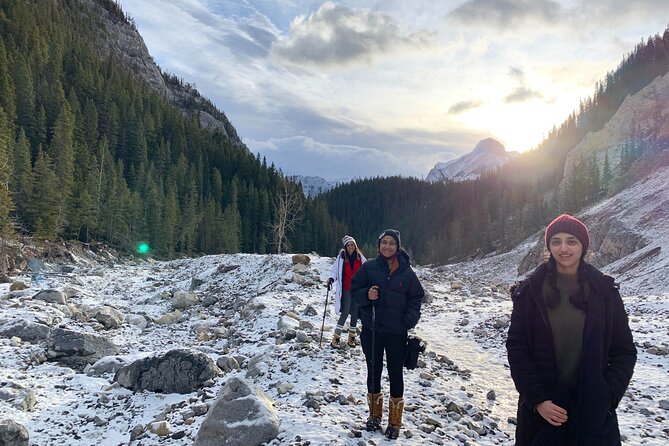
This tour requires good weather. That’s not a small footnote—it affects whether you go, how you go, and sometimes where you go.
In one of the experiences shared, on a day when canyon weather wasn’t ideal, the guide offered an alternate option to choose from. The group went to an abandoned mining town and walked a trail that once served as the main street, seeing remnants of past inhabitants.
Even if you never end up in an alternate spot, the takeaway is useful: the guides don’t seem stuck to one rigid plan if conditions are unsafe or unpleasant. You’re likely to get a workable option rather than a total dead end.
If you’re planning multiple outdoor activities in the area, keep some breathing room. Weather can be a factor, and the tour’s willingness to adjust is a plus.
Who should book this tour (and who should think twice)
This tour is a good match if you want:
- A guided hike that stays manageable for most people
- Up-close pictographs with interpretation, not just a glance
- A small-group feel with a max of 12
- First Nations storytelling delivered as part of the walk, while you’re actually in the setting
You might want to skip it if:
- You’re traveling with a schedule that can’t flex at all, because good-weather requirements can affect what happens that day
- You don’t want to spend time learning and listening and would rather hike without stops or commentary
This is also a smart pick for parents who want something shorter and guided. In the experience I reviewed, it worked well for a group with older hikers because the hike was described as easy and the guide kept things safe and organized.
Should you book Canyons & Cave Paintings in Canmore?
If your goal is meaningful nature time in Canmore with ancient rock art at the center, I think this tour is worth it. The mix of Grotto Canyon hiking plus guided pictograph viewing is the main draw, and the small-group cap is a practical advantage.
At $86.05, you’re paying for the guide and the context. For me, that’s the difference between seeing something and understanding it. The guides named in the experiences—Jacob and Ben—also give you a sense of what to expect: friendly, local, outdoors-ready, and focused on safety.
My one caution is simple: plan for weather. If the forecast is iffy, the tour may shift, and you’ll want to have water and a flexible mindset for outdoor conditions.
If that sounds like your kind of day, book it early, pick a departure time that fits your schedule, and show up ready to walk, listen, and look closely at the symbols on the rock.
FAQ
How long is the Canmore: Canyons & Cave Paintings hike?
It lasts about 3 hours.
Where do I meet for the tour?
Meet at the Canmore Recreation Centre, 1900 8 Ave, Canmore, AB T1W 1Y2, Canada.
How many people are in the group?
The tour has a maximum of 12 travelers.
What’s included in the price?
You get a professional certified guide, hiking poles, and ice cleats when required.
What should I bring since bottled water isn’t included?
Bring bottled water or plan to purchase water before you set off, since bottled water is not included.
Is the tour suitable for most travelers?
Yes, most travelers can participate.
What happens if the tour is canceled due to poor weather?
If the experience is canceled because of poor weather, you’ll be offered a different date or a full refund.